Mattel(MAT)

Search documents
芭比娃娃、风火轮制造商美泰公司与OpenAI合作,今年将推出AI产品
Sou Hu Cai Jing· 2025-06-13 05:04
Core Insights - Mattel has partnered with OpenAI to integrate generative AI into toy development and IP revitalization, marking OpenAI's first collaboration with a toy manufacturer [1][4] - The partnership aligns with OpenAI's strategy to promote AI across various industries and aims to enhance Mattel's expanding entertainment segment [1][4] Group 1: Partnership Details - The collaboration will focus on creating AI-powered products, with the first product expected to be released later this year [4] - Mattel emphasizes the importance of privacy and security in the development of these AI products [4] - Mattel's Chief Franchise Officer, Josh Silverman, stated that the company will retain control over its IP and will not license it to OpenAI [4] Group 2: Business Expansion - In 2023, Mattel achieved significant success with the movie "Barbie," targeting adult audiences [4] - The company is planning a series of films based on its classic toys, including Hot Wheels, Polly Pocket, Barney, Uno, and Masters of the Universe [4] - Mattel is also venturing into digital gaming, with plans to launch its first self-published game by 2026 [4] Group 3: Employee Tools - As part of the partnership, Mattel employees will gain access to tools like ChatGPT Enterprise to enhance creative brainstorming and product development efficiency [5]


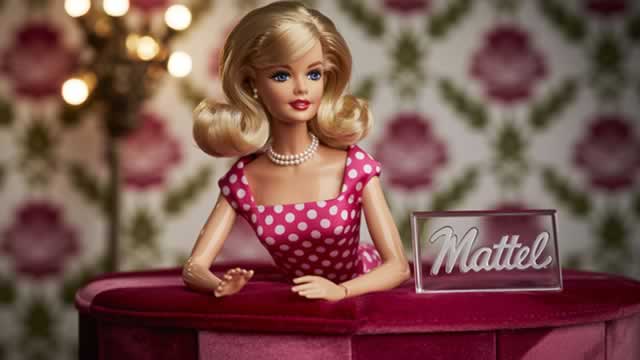
Barbie's about to get a brain — and it's powered by OpenAI
Business Insider· 2025-06-13 04:11
Group 1 - Mattel has partnered with OpenAI to integrate artificial intelligence into its toy brands, focusing on innovation, privacy, and safety [1][2] - The first AI-powered product is expected to launch later this year, with Mattel retaining full control over its intellectual property [2] - Mattel plans to use OpenAI tools like ChatGPT Enterprise in its business operations, reflecting a strategic shift amid declining toy sales [3] Group 2 - The toy industry is experiencing weaker demand, influenced by consumer spending pullbacks and uncertainty regarding trade policies [4] - Mattel has withdrawn its annual forecast and is increasing prices on some products in the U.S. to counteract tariffs, raising its cost-savings target for the year from $60 million to $80 million [7] - To mitigate the slowdown in toy sales, Mattel has been leveraging entertainment avenues such as movies, TV shows, and mobile games [8]
元安回应万字长文;智能眼镜销量暴涨800%;谷歌云大面积中断
Guan Cha Zhe Wang· 2025-06-13 00:58
Group 1 - Yuan An, a long-time employee of Alibaba, announced his departure and clarified that his resignation was voluntary and not due to financial reasons, emphasizing the pursuit of dreams over money [1] - The smart glasses market has seen an explosive growth, with sales increasing over 800% year-on-year, and global shipments expected to reach 12.8 million units by 2025, with China leading the market [1] - Quark, a subsidiary of Alibaba, launched a high school entrance examination model to provide personalized college application strategies for students [2] Group 2 - AMD unveiled its new AI chip MI400 at the Advancing AI 2025 conference, which will be integrated into a complete server system named Helios [4] - Micron Technology announced an expansion of its investment in U.S. memory manufacturing to $200 billion, creating approximately 90,000 jobs [5] - Ant Group's Ant Financial is applying for a stablecoin license in Hong Kong, aiming to establish its global headquarters there [5] Group 3 - Google introduced a voluntary departure plan for employees, offering at least 14 weeks of salary as compensation [2] - SpaceX's Starship's eighth test flight failed due to a hardware issue with one of its Raptor engines, but no public injuries or property damage were reported [5] - JinkoSolar signed multiple cooperation agreements for its Tiger Neo 3.0 modules, marking the start of mass production and delivery [7]




芭比娃娃制造商美泰与OpenAI合作,预计今年推出首款人工智能产品
news flash· 2025-06-12 15:43
Group 1 - The core point of the article is that Mattel, the manufacturer of Barbie dolls, has partnered with OpenAI to develop artificial intelligence toys and games, with the first AI product expected to launch later this year [1] Group 2 - The collaboration aims to leverage AI technology to enhance the play experience for children [1] - This move reflects a growing trend in the toy industry towards integrating advanced technology into traditional play products [1]
Mattel Mulls AI-Powered Toys With OpenAI Partnership
PYMNTS.com· 2025-06-12 13:53
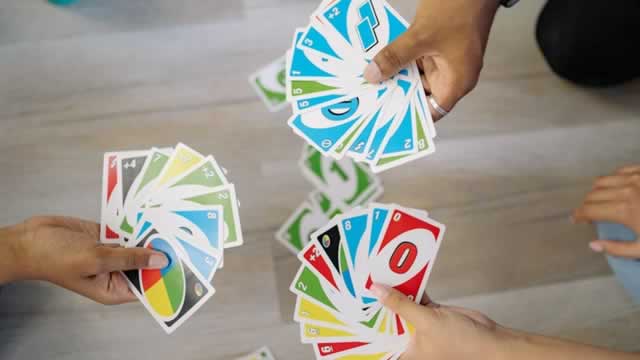
Group 1 - Mattel has partnered with OpenAI to integrate artificial intelligence into its products, potentially creating digital assistants based on its popular brands like Barbie and Hot Wheels [2][3] - The collaboration aims to enhance interactivity in products such as the Magic 8 Ball and Uno, with an announcement expected towards the end of the year [2][3] - Mattel retains control over the products being developed and is not licensing its intellectual property to OpenAI, with initial discussions starting in late 2024 [3][4] Group 2 - Mattel's CEO Ynon Kreiz is shifting the company's focus from traditional toy manufacturing to producing films, TV shows, and mobile games based on its characters [4] - OpenAI is actively seeking partnerships with companies that have strong intellectual property to create new products based on iconic brands [4][5] - The collaboration is seen as a critical phase in the creative design process, allowing both companies to explore how AI can enhance their capabilities [5]

金十整理:5月通胀还好吗?多家知名企业宣布在美实施涨价策略
news flash· 2025-06-11 07:38
Core Viewpoint - Multiple well-known companies in the U.S. are implementing price increases in May, indicating a trend of rising costs across various sectors. Group 1: E-commerce and Retail - E-commerce giants Temu and Shein issued nearly identical price increase notifications [1] - Retail giants Walmart and Macy's announced price hikes in May [1] - Toy manufacturer Mattel announced price increases for certain products in the U.S. in early May [1] Group 2: Apparel and Footwear - Nike announced price increases for athletic shoes priced between $100 and $150, with a maximum increase of $5 [1] - Apparel brand Ralph Lauren plans to raise prices more significantly than initially planned to offset tariff impacts [1] Group 3: Technology and Automotive - Microsoft raised the suggested retail prices for its Xbox consoles and controllers globally in early May [1] - Ford increased the prices of three models produced in Mexico, with the highest increase reaching $2,000 [1] - Subaru announced price hikes for several models, effective in June [1] Group 4: Tools and Consumer Goods - Tool manufacturer Stanley Black & Decker raised prices in April and plans to increase them again in the third quarter [1] - Procter & Gamble indicated that it may need to pass price increases onto consumers, with potential price hikes visible as early as July [1]




3 Toys & Games Stocks to Keep an Eye on Amid Rising US Sales
ZACKS· 2025-06-09 12:46
Industry Overview - The Zacks Toys - Games – Hobbies industry is experiencing robust demand for smart toys, STEM toys, sports toys, and fashion dolls and accessories, with companies focusing on digital initiatives and marketing strategies to drive growth [1][3] - The industry includes companies that design, manufacture, and sell various games and toys, ranging from traditional action figures to video game platforms and military simulation games [2] Trends Impacting the Industry - STEM toys are gaining popularity as parents seek educational experiences that promote problem-solving and creativity, with significant growth potential in markets like China and Brazil [3] - Industry participants are expanding their presence in emerging markets in Eastern Europe, Asia, and Latin and South America, which offer greater revenue growth opportunities compared to developed markets [4] Sales and Market Performance - U.S. toy industry sales increased by 6% with a 3% rise in units sold through April 2025, driven by strong adult demand for trading cards and building sets, with adult buyers spending $1.8 billion in Q1 2025 [5] - The Zacks Toys – Games – Hobbies industry has outperformed the S&P 500 Index, rallying 13.4% compared to the S&P 500's 11.9% increase [9] Cost and Valuation Concerns - The industry faces cost inflation due to rising raw material prices and higher employee-related expenses, prompting firms to launch new products and shift towards technology-driven toys [6] - The industry is currently trading at a forward P/E of 13.05X, lower than the S&P 500's 21.94X and the sector's 19.89X, indicating potential undervaluation [12] Company Performance - JAKKS Pacific is benefiting from its Freight on Board business model and licensing initiatives, with shares gaining 18.9% in the past year and projected earnings growth of 9.5% for 2025 [15][22] - Mattel has seen strong performance from brands like Disney Princess and Barbie, with shares up 8% in the past year and 2025 earnings expected to remain stable at $1.62 [18][19] - Hasbro is experiencing growth from its MAGIC ecosystem and licensing operations, with shares increasing by 13.4% in the past year and a projected earnings increase of 5.2% for 2025 [21][22]

Mattel (MAT) Up 12.6% Since Last Earnings Report: Can It Continue?
ZACKS· 2025-06-04 16:36
Company Overview - Mattel (MAT) shares have increased by approximately 12.6% since the last earnings report, outperforming the S&P 500 [1] - The most recent earnings report is essential to understand the key drivers affecting the stock [1] Earnings Estimates - Estimates for Mattel have trended downward over the past month, with a consensus estimate shift of -9.87% [2] - The overall outlook indicates a downward shift in estimates, leading to a Zacks Rank of 3 (Hold) for the stock [4] VGM Scores - Mattel has a Growth Score of B and a Momentum Score of B, with a Value Score of A, placing it in the top 20% for this investment strategy [3] - The aggregate VGM Score for Mattel is A, which is significant for investors not focused on a single strategy [3] Industry Performance - Mattel is part of the Zacks Toys - Games - Hobbies industry, where Jakks Pacific (JAKK) has seen a gain of 14.2% over the past month [5] - Jakks reported revenues of $113.25 million for the last quarter, reflecting a year-over-year increase of +25.7% [5] - For the current quarter, Jakks is expected to post earnings of $0.48 per share, indicating a change of -26.2% from the previous year [6] - Jakks has a Zacks Rank of 1 (Strong Buy) based on the direction and magnitude of estimate revisions, along with a VGM Score of A [6]
Mattel Stock Is Now Compelling (Rating Upgrade)
Seeking Alpha· 2025-06-03 18:33
Core Insights - The article discusses the performance of Mattel, Inc. (NASDAQ: MAT) shares, which have declined approximately 13% since a previous recommendation to sell ahead of earnings [1] Group 1: Company Performance - Mattel's shares have experienced a decline of about 13% over the past two years [1] Group 2: Investment Strategy - The author employs a quantitative investment strategy that combines fundamental analysis with momentum research to identify potential investment opportunities [1] - The software developed by the author tracks levels of optimism and pessimism in stock prices, aiming to exploit market assumptions [1] Group 3: Analyst Position - The author holds a beneficial long position in Mattel shares and plans to purchase an additional 300 shares [2]
Mattel: Attractive Even With Meaningful Tariff Exposure
Seeking Alpha· 2025-06-01 02:52
Group 1 - Mattel's shares have shown positive performance over the past year, but have experienced significant volatility in the last three months [1] - The stock initially surged due to encouraging guidance for 2025, but then fell sharply due to tariff concerns [1]