
Morgan Stanley(MS)

Search documents
美联储召开首次银行资本公开会议:阿尔特曼受邀出席、鲍威尔保持低调
Di Yi Cai Jing· 2025-07-24 02:00
Core Insights - The Federal Reserve is moving towards faster implementation of capital regulatory reforms, despite opposition, with a goal to finalize rules before Powell's term ends [2][3] Group 1: Regulatory Focus - The recent Federal Reserve meeting discussed key topics such as stress testing mechanisms, the calculation of GSIB surcharge, the implementation path for Basel III Endgame, and potential reforms to the eSLR [3][4] - Analysts noted that there was a consensus among participants to simplify regulations rather than increase capital levels, highlighting the complexity and high costs of current rules [3][4] - As of Q1 2025, U.S. large banks are expected to hold $196 billion in excess capital, representing 16% of their total capital, indicating a robust capital position that may be constraining credit and innovation [3] Group 2: AI in Regulatory Discussion - AI was introduced as a new topic in the regulatory agenda, with OpenAI's CEO discussing its rapid integration into financial services and the potential risks it poses, such as consumer fraud [5] - The dialogue around AI is seen as a proactive response from the Federal Reserve to address emerging financial risks associated with technological advancements [5] Group 3: Leadership and Transparency - Federal Reserve Chair Powell remained low-profile during the meeting, engaging privately with select attendees, amidst external pressures from the Trump administration regarding financial regulation [6] - Bowman emphasized the need for a diverse perspective in future regulatory frameworks, aiming for increased transparency and market feedback as key objectives of the current review [6]


昨夜,大涨!特朗普最新宣布


Zheng Quan Shi Bao· 2025-07-24 00:22
Market Performance - The US stock market saw significant gains on July 23, with the Dow Jones Industrial Average rising by 507.85 points, or 1.14%, closing at 45010.29 points. The Nasdaq Composite increased by 127.33 points, or 0.61%, closing at 21020.02 points, marking its first close above the 21000-point threshold. The S&P 500 index rose by 49.29 points, or 0.78%, closing at 6358.91 points [1][3][4]. Trade Agreements - President Trump announced a trade agreement between the US and Japan, which has heightened market expectations for further trade agreements before the August 1 tariff deadline. The agreement includes a reduction of the reciprocal tariff rate from 25% to 15% and Japan's commitment to invest $550 billion in the US [2][6][7]. Sector Performance - In the S&P 500, nine out of eleven sectors experienced gains, with the healthcare and industrial sectors leading with increases of 2.03% and 1.75%, respectively. The utilities and consumer staples sectors saw declines of 0.79% and 0.07% [8]. - Major technology stocks mostly rose, with AMD increasing over 3%, and other companies like NVIDIA, Boeing, and TSMC rising over 2%. Financial stocks also saw gains, with Mizuho Financial up over 6% and UBS Group up over 3% [8]. Chinese Stocks - The Nasdaq Golden Dragon China Index rose by 0.75%, with notable increases in stocks such as iQIYI, which rose over 4%, and Tiger Brokers, which increased over 3%. However, some stocks like NIO and Li Auto saw declines of over 1% [9].


Morgan Stanley Faces Probe Over Anti-Money Laundering Practices
PYMNTS.com· 2025-07-23 14:25
Core Viewpoint - Morgan Stanley is under investigation by the Financial Industry Regulatory Authority (FINRA) regarding its money laundering prevention measures and client vetting practices [2][3]. Investigation Details - The investigation focuses on Morgan Stanley's client risk ranking and practices from October 2021 to September 2024 [3]. - FINRA is seeking information on both U.S. and international clients within Morgan Stanley's wealth management and trading desks, including details on senior foreign political figures and their associates [4]. Regulatory Context - FINRA, while not a government agency, has the authority to impose fines on broker-dealers that violate its regulations [5]. - Morgan Stanley is also facing scrutiny from multiple federal agencies, including the SEC, OCC, and FinCEN, regarding its client vetting processes [6]. Related Regulatory Developments - The investigation coincides with the Treasury Department's announcement of a two-year delay on a new anti-money laundering rule for investment advisers, now set to take effect in 2028 [7][8]. - The delay aims to balance regulatory costs and benefits while addressing risks posed by illicit finance [8].
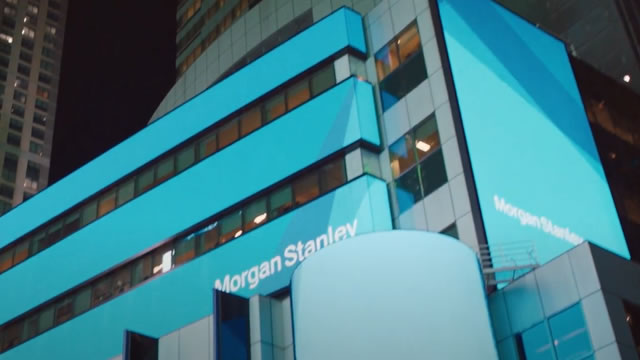
大摩重磅预测:美联储今年不降息,恐延至2026年3月
智通财经网· 2025-07-23 08:24
Core Viewpoint - Morgan Stanley predicts that the Federal Reserve will maintain its assessment of the economy as growing at a "solid pace," with a robust labor market and slightly elevated inflation [2][3]. Economic Assessment - The Federal Reserve is expected to emphasize the risks associated with its dual mandate of employment and inflation [2]. - Recent indicators show that U.S. economic activity continues to grow steadily, with a low unemployment rate and a slight increase in inflation [2]. - Morgan Stanley forecasts a 2.2% annualized growth rate for Q2 GDP, while the Atlanta Fed's GDPNow model predicts 2.4% and the New York Fed's Nowcast model estimates 1.7% [2]. Labor Market Insights - The labor market remains in good condition, with employment growth slowing but the unemployment rate unchanged compared to 12 months ago [2][11]. - Employment growth is expected to slow from an average of 130,000 jobs per month in the first half of 2025 to about 50,000 jobs per month in 2026 [11]. Inflation and Tariff Impact - Inflation is described as "slightly high," with June's CPI report reflecting new price pressures from tariffs [2][5]. - Morgan Stanley anticipates that tariffs will lead to a rise in overall and core PCE price indices, reaching 3.0% and 3.2% respectively by 2025 [5]. - Core PCE inflation is expected to peak at an annualized rate of 4.1% by the end of Q3 2025 before declining [5]. Federal Reserve Policy Outlook - The Federal Reserve is likely to keep the target federal funds rate unchanged at 4.25%-4.50% until March 2026, with potential rate cuts of 25 basis points at subsequent meetings [11]. - Morgan Stanley expects the Fed to delay rate cuts but suggests that the magnitude of cuts may exceed market expectations [11]. Trade and Economic Uncertainty - The uncertainty surrounding trade policies continues to pose risks to the Fed's dual mandate [4]. - Fed Chair Powell is expected to acknowledge the pressures from tariffs and emphasize the ongoing uncertainty in trade, immigration, fiscal, and regulatory policies [4].
花旗,要求投行初级员工披露跳槽邀约
Xin Lang Cai Jing· 2025-07-23 06:33
来源:瑞恩资本RyanbenCapital 外电报道,花旗集团跟随高盛、摩根士丹利、摩根大通等银行的做法,要求投资银行部初级分析员交代 有否已接受其他机构聘书,即短期内跳槽的讯息,反映大型投行越来越关注有初级职员被挖角的情况。 摩根士丹利5月引入了一项新政策,要求初级银行家一旦接受其他工作邀约,须立即向公司报告,未遵 守者可能面临被解雇的风险。 版权声明:所有瑞恩资本Ryanben Capital的原创文章,转载须联系授权,并在文首/文末注明来源、作 者、微信ID,否则瑞恩将向其追究法律责任。部分文章推送时未能与原作者或公众号平台取得联系。 若涉及版权问题,敬请原作者联系我们。 更多香港上市、美国上市等境外IPO资讯可供搜索、查阅,敬请浏览: www.ryanbencapital.com 业界称,一些美国私募基金往往承诺更高的薪酬招聘大型投行的初级分析员,让各家大行须采取应对措 施。 根据报道,高盛、摩根士丹利、摩根大通也有类似举措: 高盛每三个月要求若干初级员工填写文件; 摩根大通,将实时解雇18个月内接纳其他聘书的员工; 报道引述花旗一份内部通知称,要求入职一年的分析员填写一份"声明书",确认他们是否已接 ...


摩根士丹利(MS.US)深陷洗钱泥潭 AI重塑华尔街风控迫在眉睫
智通财经网· 2025-07-23 04:21
Group 1 - Morgan Stanley is under investigation by FINRA for customer identity verification issues related to money laundering risks, highlighting the need for advanced AI models in customer screening and risk management [1][2] - The investigation focuses on customer and risk rating reports from October 2021 to September 2024, with potential fines due to shortcomings in anti-money laundering measures [1][2] - Morgan Stanley has invested significantly in anti-money laundering projects and customer verification processes, which have positively impacted its core business [1] Group 2 - FINRA has requested information from Morgan Stanley's wealth management and trading departments, indicating ongoing scrutiny of customer risk rating deficiencies [2] - The traditional screening systems have shown vulnerabilities, prompting the need for AI-driven solutions to enhance compliance and reduce human error in transaction monitoring [2] - Following the rise of ChatGPT, Wall Street firms are investing heavily in developing proprietary AI assistants to improve operational efficiency and risk analysis [2] Group 3 - A Bank of America survey indicates that AI-related software spending is a top priority for companies, with expectations for AI spending to reach 27.7% of software budgets by mid-2025, increasing to 31.6% by 2026 [3] - Anthropic, a competitor to OpenAI, reported an annual revenue of approximately $3 billion, demonstrating strong demand for generative AI applications in the business sector [3] - The surge in Anthropic's revenue is attributed to the sale of customized AI models to enhance operational efficiency within enterprises, indicating a significant growth trend in enterprise-level AI applications [3]
印度经济与战略 - 印度繁荣的基石-India Economics and Strategy-uilding Blocks of India's Prosperity
2025-07-23 02:42
Summary of Key Points from the Conference Call Industry Overview - The focus is on India's economic landscape, particularly the role of its 28 states and 8 Union Territories in driving growth and stability. [1][2][11] Core Insights and Arguments 1. **Importance of State Policies**: States must implement growth-enhancing policies to secure India's economic potential. Without understanding state dynamics, investor confidence in India's macroeconomic story is compromised. [1][2][3] 2. **Global Economic Contribution**: India is projected to contribute 20% of global growth in the next decade, with its economy expected to reach US$10.6 trillion by 2035. Key states like Maharashtra, Tamil Nadu, and Gujarat are anticipated to have economies nearing US$1 trillion each. [2][4] 3. **Competitive Federalism**: The success of India's federal structure, where states compete for investments and improve business conditions, is crucial for economic growth and stock market performance. [3][12][14] 4. **State-Level Economic Disparities**: Economic disparities among states can lead to social distress and migration pressures, highlighting the need for balanced growth across regions. [16][41] 5. **Assessment Framework**: A proprietary framework assesses states based on economic progress, social well-being, productivity, and fiscal management, identifying Maharashtra, Gujarat, and Telangana as top performers. [5][18][24] Additional Important Insights 1. **Challenges in Growth**: States face various challenges, including disparities in fiscal capacity, governance, and infrastructure, which can hinder overall progress. [6][19][70] 2. **Investment and Infrastructure Development**: Significant infrastructure growth has been noted, with central government initiatives leading to improvements in highways, airports, and metro networks. However, regional disparities persist. [70][71] 3. **Socioeconomic Progress**: States have made strides in social indicators, but historical laggards like Bihar and Jharkhand still have significant ground to cover. [73][75] 4. **Policy Framework Variability**: States exhibit varied policy priorities, with some focusing on economic growth while others prioritize social welfare. This variability affects overall development outcomes. [77][78] 5. **Fiscal Dynamics**: States' fiscal health varies widely, with some maintaining fiscal prudence while others face high debt burdens, impacting their ability to fund development projects. [66][68] Conclusion - Understanding the diverse economic and policy landscape of India's states is essential for investors and policymakers. The interplay of competitive federalism, state-level governance, and infrastructure development will shape India's economic trajectory in the coming years. [12][41][43]
全球宏观评论-逐步走低-Global Macro Commentary North America July 22 Drifting Lower
2025-07-23 02:42
Summary of Key Points from the Conference Call Industry Overview - The conference call primarily discusses the **Global Macro Environment** with a focus on **North America** and **Emerging Markets**. Core Insights and Arguments - **US Rates and Currency Movements**: - US rates rallied by 3-4 basis points across the curve despite a lack of fundamental catalysts, supported by lower oil prices (WTI: -1.5%) and technical factors as Fed leadership remains in focus [6][6][6] - The US dollar weakened, with the DXY index at 97.38 (-0.5%), as yield differentials favored other safe-haven currencies [6][6][6] - **Japanese Government Bonds (JGBs)**: - Following the upper house election, JGBs modestly steepened, with 2-year JGBs rallying approximately 2 basis points while 30-year JGBs sold off by 1 basis point [6][6][6] - **Philippine Peso (PHP)**: - The PHP strengthened by 0.2% against the USD ahead of a meeting between Philippine President Marcos and US President Trump, which resulted in a trade agreement reducing proposed US tariffs on Philippine goods from 20% to 19% [6][6][6] - **UK Public Sector Borrowing**: - An upside surprise in UK Public Sector Net Borrowing was reported at £20.7 billion, exceeding the consensus estimate of £17.5 billion, leading to a 0.2% strengthening of GBP against EUR [6][6][6] - **European Bond Market**: - European duration extended its rally, with 10-year Bund yields closing 2 basis points lower, reflecting unchanged inflation expectations and lower ECB pricing, with approximately 33 basis points of cuts expected through March 2026 [6][6][6] Additional Important Information - **Emerging Markets**: - CEEMEA rates bull-flattened, particularly in Poland and the Czech Republic, with notable moves in South Africa where ZAR outperformed [9][9][9] - The National Bank of Hungary (NBH) maintained its policy rate at 6.5% and lowered its reserves requirement ratio from 10% to 8%, indicating a cautious monetary policy approach [9][9][9] - **Economic Releases**: - Upcoming economic releases include Singapore CPI, Taiwan Industrial Production, and South Africa CPI, with forecasts indicating slight increases in inflation metrics [12][12][12] - **Auction Preview**: - A Treasury auction of $13 billion in 20-year bonds is scheduled, with predictions indicating a 0.2 basis point through based on historical auction performance [16][16][16] This summary encapsulates the key points discussed in the conference call, highlighting significant movements in rates, currencies, and economic indicators across various regions.
石油手册图表集:解读石油市场的 200 张图表-The Oil Manual – Chartbook 200 Charts that Decode the Oil Market
2025-07-23 02:42
Summary of Key Points from the Conference Call Industry Overview - The conference call primarily discusses the **oil market**, focusing on supply and demand dynamics, price forecasts, and inventory levels. Core Insights and Arguments 1. **Price Forecast**: Post-summer surplus is expected to drive Brent crude prices down to approximately **$60/bbl**, but not significantly lower than that [7][10][31]. 2. **Oil Inventories**: Observable oil inventories increased by around **235 million barrels** from February to June, indicating a substantial oversupply of approximately **1.6 million barrels per day (mb/d)**. However, this surplus has been unevenly distributed, with non-OECD stocks absorbing most of it [10][12][26]. 3. **Demand Growth**: Total oil liquids demand is projected to grow by about **0.8 mb/d in 2025**, which is below the historical trend of **1.2 mb/d**. Crude oil demand is expected to grow only **0.3 mb/d** due to tariff uncertainties and structural changes in China [10][18][79]. 4. **Non-OPEC Supply**: Non-OPEC crude oil supply is anticipated to increase by **0.7 mb/d in 2025**, driven by countries like the US, Canada, Brazil, Guyana, and Argentina. Total oil liquids supply from non-OECD countries is expected to grow by **1.2 mb/d**, surpassing global demand growth [10][18][115]. 5. **OPEC Production**: OPEC is expected to announce a new quota that would unwind **2.2 mb/d** of voluntary cuts. Actual production levels are assumed to remain stable, leading to a projected surplus of **1.5 mb/d in Q4 2025** [10][23][160]. 6. **Refinery Demand**: There has been little to no growth in demand for refined products, which are key drivers of refinery crude demand. The last three months showed a flat demand trend for these products [18][85]. 7. **Gasoil/Diesel Market**: The market for gasoil and diesel is experiencing severe tightness, driven by refinery closures, low inventories, and logistical bottlenecks [34][36][40]. Additional Important Insights 1. **Storage Economics**: To facilitate oil inventory builds, the forward curve must create favorable storage economics, requiring a full contango scenario [10][31]. 2. **Global Demand Trends**: Global seaborne energy imports indicate softening oil demand, particularly in Europe, while China's oil demand is recovering but remains below late 2023 levels [75][88]. 3. **Investment Climate**: Capital expenditures in the oil sector have recovered to around **$500 billion**, with attractive prospective internal rates of return (IRRs) of approximately **20.7%** [131]. 4. **US Supply Dynamics**: The median break-even price for US shale remains around **$50/bbl**, indicating competitive economics despite a wide distribution of profitability among wells [134][139]. 5. **OPEC Compliance**: There is a growing divergence in estimates of OPEC production compliance, with some countries showing improved adherence to quotas while others do not [160][183]. This summary encapsulates the key points discussed in the conference call, providing insights into the current state and future outlook of the oil market.
X @Bloomberg
Bloomberg· 2025-07-23 01:34
Morgan Stanley is reportedly being probed by the Financial Industry Regulatory Authority over its vetting of clients for risk of money laundering https://t.co/bTOXh6Izmn ...