
Microsoft(MSFT)

Search documents
Mega Cap Stocks Just Keep Winning, And Pushing PWB Higher and Higher
247Wallst· 2026-01-29 14:32
19,305,444-$47.929.95%$433.71[First Solar][FSLR]• Vol: 956,495-$24.759.92%$224.67[ServiceNow] [NOW]• Vol: 8,185,764-$12.399.56%$117.23[Las Vegas Sands][LVS]• Vol: 2,183,217-$5.859.55%$55.41[United Rentals][URI]• Vol: 154,938-$79.068.75%$824.13 Mega Cap Stocks Just Keep Winning, And Pushing PWB Higher and Higher - 24/7 Wall St.[S&P 5006,977.90 -0.25%][Dow Jones49,276.80 +0.53%][Nasdaq 10025,902.00 -1.01%][Russell 20002,667.12 +0.47%][FTSE 10010,288.20 +1.08%][Nikkei 22553,530.70 -0.60%][Stock Market Live Jan ...






MSFT Down in First Round of Mag 7 Earnings, Job Market Shifts FOMC
Youtube· 2026-01-29 14:30
分组1 - The Federal Reserve has indicated no immediate changes in monetary policy, with a focus on the economy and dual mandate [2][6][7] - Large-cap tech earnings are in focus, with notable movements in stocks like Microsoft, Meta, and Tesla [2][3][5] - Analysts are optimistic about Microsoft, with price targets set at $600 by Key Bank and $530 by Wolf Research, suggesting a buying opportunity [4][5] 分组2 - The unemployment rate has shown signs of stabilization, dropping from 4.6% to 4.4%, alleviating some fears regarding the labor market [6][8][9] - Jobless claims remain strong, with 210,000 revised claims and 209,000 first-time filers, indicating a resilient labor market [10][11][12] - The labor market is adapting to the effects of AI, showing stability but not significant growth [11]

[DowJonesToday]Dow Jones Navigates Mixed Earnings and Steady Fed Stance
Stock Market News· 2026-01-29 14:09
The Dow Jones Industrial Average (^DJI) was up 12.19 points (0.0249%) today, reaching 49015.60, as the broader market reacted to a combination of a steady Federal Reserve policy and a mixed bag of corporate earnings reports. The Federal Reserve maintained interest rates as anticipated, following three 25-basis-point increases in the latter half of 2025, with Chair Jerome Powell noting an "improved" economic outlook and a stabilized labor market. This monetary policy stability provided a backdrop for individ ...


Navigating a Nuanced Market: Futures Edge Up as Tech Earnings Drive Divergent Moves and Fed Holds Steady
Stock Market News· 2026-01-29 14:07
U.S. stock index futures edged higher on Thursday, January 29, 2026, as investors continued to digest a flurry of tech earnings and the Federal Reserve's latest monetary policy decision. The premarket session saw mixed signals, with some tech giants experiencing significant movements, while broader market sentiment remained cautious following the Fed's widely anticipated decision to hold interest rates steady. This dynamic landscape underscores a market increasingly responsive to corporate performance, part ...


美股期指小幅走高 金银铜等集体大涨|今夜看点
Sou Hu Cai Jing· 2026-01-29 14:07
智通财经1月29日讯(编辑 夏军雄)周四,美股股指期货小幅走高,投资者正在权衡多家大型科技公司 发布的财报,以及美联储最新的利率决定。欧洲主要指数普遍上涨。 (来源:英为财情) Meta在盘前交易中大涨9%,此前该公司给出了好于预期的一季度销售指引。同为"科技七巨 头"(Magnificent Seven)成员的特斯拉股价也上涨2%,其第四季度业绩超出市场预期。 不过,微软股价下跌近7%,限制了大盘涨幅。微软报告称,第二财季云业务增长放缓,同时对第三财 季的营业利润率给出了偏弱的指引。 目前,投资者将目光转向苹果,该公司计划于周四美股收盘后公布财报。 【特斯拉:预计2026年资本支出将超过200亿美元】 据报道,特斯拉表示,2025年资本支出达85.3亿美元。预计2026年资本支出将超过200亿美元。 【卡特彼勒2025年全年营收为36.3亿美元,同比增长4%】 在其他财报方面,卡特彼勒盘前股价上涨逾1%,这家工业巨头公布的第四季度业绩大幅好于华尔街预 期。 美联储周三维持利率不变,符合市场预期。联邦公开市场委员会(FOMC)表示,多项指标显示"经济 活动正以稳健的步伐扩张",失业率"已显现出一定的稳定迹象" ...
These Analysts Slash Their Forecasts On Microsoft Following Q2 Results - Microsoft (NASDAQ:MSFT)
Benzinga· 2026-01-29 14:00
Core Viewpoint - Microsoft Corp. reported strong second-quarter financial results, exceeding market expectations in revenue and earnings per share [1][2]. Financial Performance - Microsoft reported second-quarter revenue of $81.3 billion, representing a 21% year-over-year increase, surpassing the consensus estimate of $80.25 billion [1]. - The company achieved non-GAAP earnings per share of $4.14, exceeding the consensus estimate of $3.86 [1]. Cloud Revenue - Microsoft Cloud revenue surpassed $50 billion this quarter, indicating robust demand for its service portfolio [2]. Market Reaction - Following the earnings announcement, Microsoft shares fell by 6.8% to $448.82 in pre-market trading [2]. Analyst Ratings - Piper Sandler analyst Hannah Rudoff maintained an Overweight rating on Microsoft but reduced the price target from $650 to $600 [3]. - Keybanc analyst Jackson Ader also kept an Overweight rating while lowering the price target from $630 to $600 [3].

微软Rho-alpha模型能否把机器人真正带入物理智能的世界?
机器人大讲堂· 2026-01-29 14:00
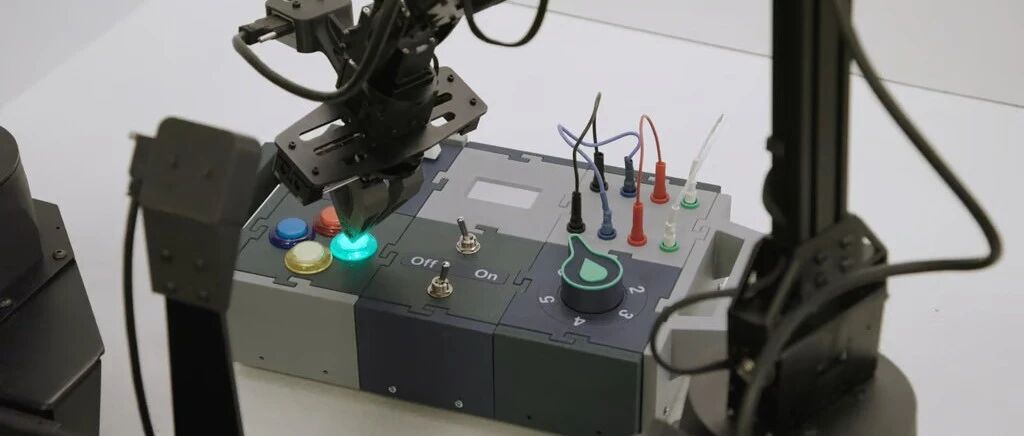
Core Viewpoint - Microsoft has launched the Rho-alpha model, a robot-specific model that integrates visual, language, and tactile perception, marking a significant advancement in robotics by enabling robots to operate in complex real-world environments [1][5][7]. Group 1: Rho-alpha Model Overview - Rho-alpha is designed to convert natural language instructions into control signals for robots, facilitating collaborative tasks [5][10]. - The model aims to break the limitations of robots operating only in highly controlled environments, allowing for autonomous action generation in unpredictable settings [7][10]. - This technology, termed "Physical AI," extends AI capabilities from the digital realm to direct interaction with the physical world [7][10]. Group 2: Key Differentiators - Rho-alpha incorporates tactile perception into its core decision-making process, a significant departure from existing VLA (Visual-Language-Action) models that primarily rely on visual data [9][10]. - The model's ability to dynamically adjust actions based on tactile feedback enhances its operational dexterity, allowing robots to determine not just what an object is, but also whether it can be manipulated [9][10]. - Rho-alpha's training integrates real robot demonstration data, simulation tasks, and large-scale visual question-answering datasets, addressing the data scarcity issue in robotics [10][11]. Group 3: Technological Shift in Robotics - The focus of humanoid robotics is shifting from hardware and control algorithms to foundational models as the new competitive core [12][14]. - Different technological approaches are emerging in the industry, with Microsoft pursuing a "foundation model + cloud + ecosystem" strategy, contrasting with Tesla's "hardware + data loop" and Google's "algorithm + top-tier robot body" [14]. - Rho-alpha is still in the research phase and faces challenges such as generalization in diverse scenarios, cost control, and safety assurance for large-scale deployment [14].
These Analysts Slash Their Forecasts On Microsoft Following Q2 Results
Benzinga· 2026-01-29 14:00
Microsoft Corp. (NASDAQ:MSFT) reported better-than-expected second-quarter financial results after market close on Wednesday.Microsoft reported second-quarter revenue of $81.3 billion, up 21% year-over-year. The total beat a Street consensus estimate of $80.25 billion, according to data from Benzinga Pro. The company reported non-GAAP earnings per share of $4.14, beating a Street consensus estimate of $3.86.“Microsoft Cloud revenue crossed $50 billion this quarter, reflecting the strong demand for our portf ...
Stanley Druckenmiller’s Duquesne Family Office: Top 5 Growth-at-Reasonable-Price Picks
Yahoo Finance· 2026-01-29 13:58
Quick Read Stanley Druckenmiller’s family office holds concentrated positions in Microsoft (MSFT), Nvidia (NVDA), Google (GOOGL), Amazon (AMZN) and Meta (META). Amazon Q3 operating margin reached 11.1% as AWS profitability scales. Amazon net income grew 36.4% to $21.19B. Nvidia trades at a 0.70 PEG ratio despite Q3 revenue growing 62.5% to $57.01B with 107.4% ROE. Investors rethink 'hands off' investing and decide to start making real money Stanley Druckenmiller never had a losing year in three d ...

美股异动 | 微软(MSFT.US)盘前跌逾6% 资本支出创历史新高 AI“狂烧钱”吓坏投资者
智通财经网· 2026-01-29 13:55
高盛认为,市场对微软股价的负面反应,主要反映了投资者对连续几个季度高于预期的资本支出的焦 虑。375亿美元的单季支出(含融资租赁)表明微软正在积极构建AI基础设施。然而,这种投入并未立即 转化为Azure增长率的同比例跃升。 智通财经APP获悉,周四,微软(MSFT.US)盘前跌逾6%,报450.20美元。2026财年第二季度,尽管微软 (MSFT.US)营收与利润双双超出华尔街预期,且整体云业务营收首次突破500亿美元大关,但Azure云服 务收入增速的放缓以及创纪录的资本开支,引发了投资者对人工智能(AI)投资回报周期的忧虑。 分析称,这实际上是微软的一种战略取舍。公司正在将宝贵的算力资源优先分配给Copilot等战略性产品 以及内部研发项目,而非仅仅为了追求短期的Azure外部收入。高盛相信,这种策略最终将在技术堆栈 的多个层面推动更具战略意义的AI定位,并在中期内带来更好的回报。 财报显示,微软第二季度营收达到810亿美元,同比增长17%,高于市场预期1%;非GAAP每股收益 (EPS)为4.41美元,同比增长23%,超出市场预期5%。备受关注的Azure云业务在固定汇率下增长38%, 也略高于华尔街 ...