Microsoft(MSFT)

Search documents
8 Undervalued Tech Stocks That Could Rip Higher After Q4 Results
Investing· 2026-01-22 08:06
Group 1 - Microsoft Corporation continues to expand its cloud services, contributing significantly to its revenue growth, with a reported increase of 20% year-over-year in cloud revenue [1] - NVIDIA Corporation has seen a surge in demand for its GPUs, particularly in the AI sector, leading to a remarkable 50% increase in sales compared to the previous quarter [1] - Both companies are positioned to benefit from the ongoing digital transformation across various industries, with analysts predicting sustained growth in their respective markets [1] Group 2 - The overall market sentiment remains positive, with technology stocks, including Microsoft and NVIDIA, showing resilience amid economic uncertainties [1] - Investment in AI technologies is expected to drive further innovation and revenue opportunities for both companies, as they continue to lead in their fields [1] - Analysts highlight the importance of strategic partnerships and acquisitions for both Microsoft and NVIDIA to maintain their competitive edge in the rapidly evolving tech landscape [1]




Palantir Billionaire Peter Thiel Sells Nvidia Stock -- 100% of His Portfolio Is Now Invested in 3 AI Stocks
The Motley Fool· 2026-01-22 08:05
Group 1: Peter Thiel's Investment Strategy - Peter Thiel's entire portfolio is now invested in Tesla, Microsoft, and Apple after selling his stake in Nvidia [1] - Thiel Macro outperformed the S&P 500 by 16 percentage points over the past year, indicating strong performance [1] Group 2: Tesla - Tesla accounts for 39% of Thiel's portfolio and has lost about 5 percentage points of market share in electric cars over the past year, losing its market leader position to BYD [2][4] - The investment thesis for Tesla now focuses on physical AI, including autonomous driving and humanoid robots [2] - Tesla's full self-driving software relies solely on cameras, providing a cost advantage over competitors like Waymo, which uses a more expensive sensor array [3] - CEO Elon Musk claims that Tesla's humanoid robot, Optimus, could become the company's most important product, potentially accounting for 80% of its value [4] - Grand View Research estimates that robotaxi sales will grow at 99% annually through 2033, while Morgan Stanley expects humanoid robot sales to increase at 54% annually through 2035 [5] Group 3: Microsoft - Microsoft represents 34% of Thiel's portfolio and is leveraging its strengths in enterprise software and cloud computing to monetize AI [6][8] - The company has introduced generative AI copilots across its software suites, with monthly active users increasing from 100 million to 150 million in the September quarter [8] - Microsoft Azure has gained approximately 3 percentage points of market share since 2022, bolstered by new AI services and data center capacity [9] - Microsoft holds a 27% equity stake in OpenAI, granting it exclusive rights to advanced models until 2032, making Azure the only public cloud that integrates models like GPT-5 [9] - Wall Street anticipates Microsoft's earnings to grow at 14% annually over the next three years, leading to a current valuation of 32 times earnings, which is considered expensive [11] Group 4: Apple - Apple constitutes 27% of Thiel's portfolio and leads the market in smartphone sales while maintaining a strong position in other consumer electronics [12] - The company has not released a major new product since 2017 and has yet to capitalize on AI opportunities, although it plans to use Alphabet's Gemini models to enhance Siri [13] - Apple has a vast user base of over 2.3 billion active devices, providing a significant opportunity to sell AI subscription services [14] - Wall Street expects Apple's earnings to grow at 10% annually over the next three years, resulting in a current valuation of 33 times earnings, which is viewed as pricey [15]



微软CEO纳德拉:AI领域的竞争并非你死我活,不是零和博弈
Sou Hu Cai Jing· 2026-01-22 07:37
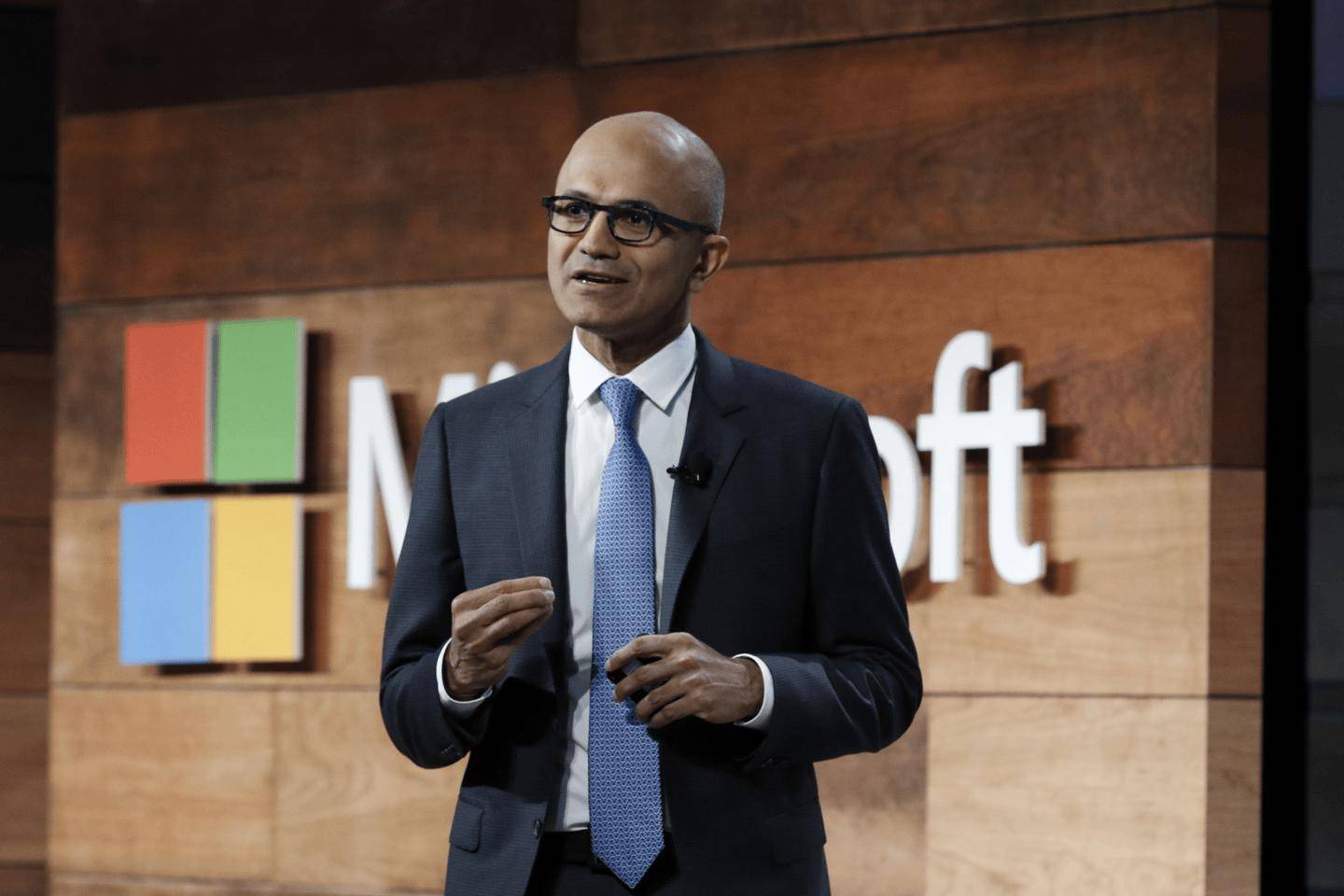
IT之家 1 月 22 日消息,据《商业内幕》今日报道,微软 CEO 萨提亚 · 纳德拉认为,AI 领域的竞争并非一定是你死我活的零和博弈。 纳德拉强调,从宏观层面看,科技行业在全球经济中的地位仍将持续上升。"如果以 GDP 占比来看,五年之后,科技行业的比重一定会更高。这个行业竞争 很激烈,但并不像外界渲染的那样只有输赢。" 在瑞士达沃斯录制的"All-In"播客节目中,纳德拉表示,当前 AI 竞争异常激烈,不过竞争本身并不值得担忧。"每隔十年出现一批全新的竞争对手,反而能 让企业保持活力。现在确实是一个高度紧张的阶段,但有竞争存在,我还是会高兴。" 在经营理念上,纳德拉表示,微软更关注的是客户真正需要什么,而不是把所有企业都当作对手,与微软前 CEO 比尔 · 盖茨以及苹果前 CEO 史蒂夫 · 乔布 斯的态度高度一致。 IT之家从报道中获悉,盖茨在 2005 年曾表示,竞争让整个计算机行业保持敏锐,无论是谷歌、苹果,还是自由软件领域,强大的对手都会促使企业不断进 步。 ▲ 图源微软 史蒂夫 · 乔布斯在 1997 年回归苹果后,也重新审视了竞争的意义。他从强调微软的失败,转而主张苹果专注自身成长。乔布斯 ...
大行评级|杰富瑞:微软估值较其他超大规模云服务企业具吸引力,评级“买入”
Ge Long Hui· 2026-01-22 07:25
Core Viewpoint - Jefferies reports that Microsoft's stock price has dropped 18% since the first fiscal quarter, despite announcing investment commitments of $250 billion in OpenAI and $30 billion in Anthropic, with a 23% compression in valuation multiples as investors shift towards semiconductor stocks [1] Group 1: Financial Performance - Microsoft is expected to significantly expand its capacity this year due to a large backlog of orders, indicating potential for upward movement [1] - The estimated price-to-earnings ratio for Microsoft's fiscal year 2027 is 23 times, which is attractive compared to Amazon and Google's ratios of 24 and 25 times respectively [1] Group 2: Competitive Positioning - Microsoft's operational visibility, remaining performance obligations (RPO) value, and AI monetization pathways are clearer compared to Amazon and Google [1] Group 3: Investment Recommendation - Jefferies maintains a "Buy" rating for Microsoft with a target price of $675 [1]
瑞穗:下调Atlassian、Cloudflare、微软三家公司目标价
Ge Long Hui· 2026-01-22 07:11
Group 1 - Mizuho Securities has lowered the target prices for several technology companies, including Atlassian, Cloudflare, and Microsoft [1] - The target price for Atlassian has been reduced from $245 to $225, for Cloudflare from $280 to $255, and for Microsoft from $640 to $620 [1] - Despite the target price reductions, Mizuho maintains an "outperform" rating for all three companies [1] Group 2 - Research indicates that the release of budget allocations towards the end of the year is expected to be less aggressive than usual [1] - Investor concerns regarding the disruptive impact of AI on the industry continue to suppress valuation multiples for many software companies, particularly in the SaaS sector [1]


AI浪潮下的估值阵痛?瑞穗“连砍三刀”:下调Atlassian(TEAM.US)、Cloudflare(NET.US)及微软(MSFT.US)目标价
智通财经网· 2026-01-22 07:03
Group 1 - Mizuho Securities has lowered the target prices for several tech companies, focusing on Atlassian, Cloudflare, and Microsoft [1] - The target price for Atlassian has been reduced from $245 to $225, for Cloudflare from $280 to $255, and for Microsoft from $640 to $620, while maintaining a "buy" rating for all three [1] - Analyst Gregg Moskowitz noted that the overall performance of market research for Q4 is solid, with strong demand for AI applications and healthy cybersecurity needs [1] Group 2 - There is a noted slowdown in the release of year-end budgets compared to previous years, and investor concerns about AI disrupting industries continue to suppress valuation multiples for many software companies, particularly in the SaaS sector [1] - From a valuation perspective, the current enterprise value-to-sales multiple is 55% lower than the five-year peak and 30% lower than the average [1] - The firm believes that the risk-reward ratio for the next twelve months is attractive, despite high uncertainty potentially leading to challenges and volatility [1]
微软宣布Xbox应用全面拥抱Arm架构Win11 PC
Xin Lang Cai Jing· 2026-01-22 06:52
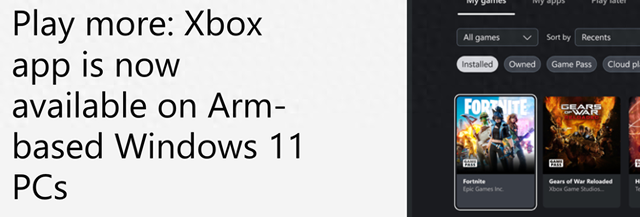
Group 1 - Microsoft has officially announced that the Xbox app now fully supports all Arm-based Windows 11 PCs, marking a significant step in enhancing cross-device gaming experiences [1] - Arm architecture Windows 11 PC users can now download and play a large number of games directly through the Xbox PC app, with over 85% of Game Pass games currently compatible with Arm devices [3] - The company is actively working with partners to adapt more titles for Arm devices, and the Prism emulator now supports AVX and AVX2 instruction sets for running x86/x64 software on Arm devices [3] Group 2 - Popular games such as "Gears of War: Ultimate Edition" and "Fortnite" can now run smoothly on Arm devices, thanks to support from Epic Anti-Cheat (EAC) [3]
大行评级丨花旗:降微软目标价至660美元,非Azure业务2026年预估值微幅下调+OpenAI相关支出增加
Ge Long Hui A P P· 2026-01-22 05:29
格隆汇1月22日|花旗发表报告指,对微软(MSFT.US)维持建设性看法,预期Azure业务在2026财年下半 年将加速增长。然而,由于个人电脑需求疲软导致非Azure业务2026年预估值微幅下调,加上OpenAI相 关支出增加,将公司目标价由690美元下调至660美元,评级"买入"。 报告指,经销商调查显示微软季度业绩微幅下滑,但合作伙伴调查与CIO调查结果更为乐观,指出 Azure持续保持动能且订单管道强劲。尽管第二财季业绩可能呈现好坏参半,但该行对微软下半年业绩 乐观,因强劲订单与扩增产能将推动Azure加速增长并引发预测上调趋势。微软仍属超大型科技股首 选,其多元高投资报酬率的人工智能变现途径,可望带动营收与获利持续加速增长。 ...
Nvidia, Microsoft Trading On Solana? Ondo Finance Launches 'Full TradFi Portfolio' Of Stocks, ETFs, Gold On The Blockchain
Benzinga· 2026-01-22 03:08
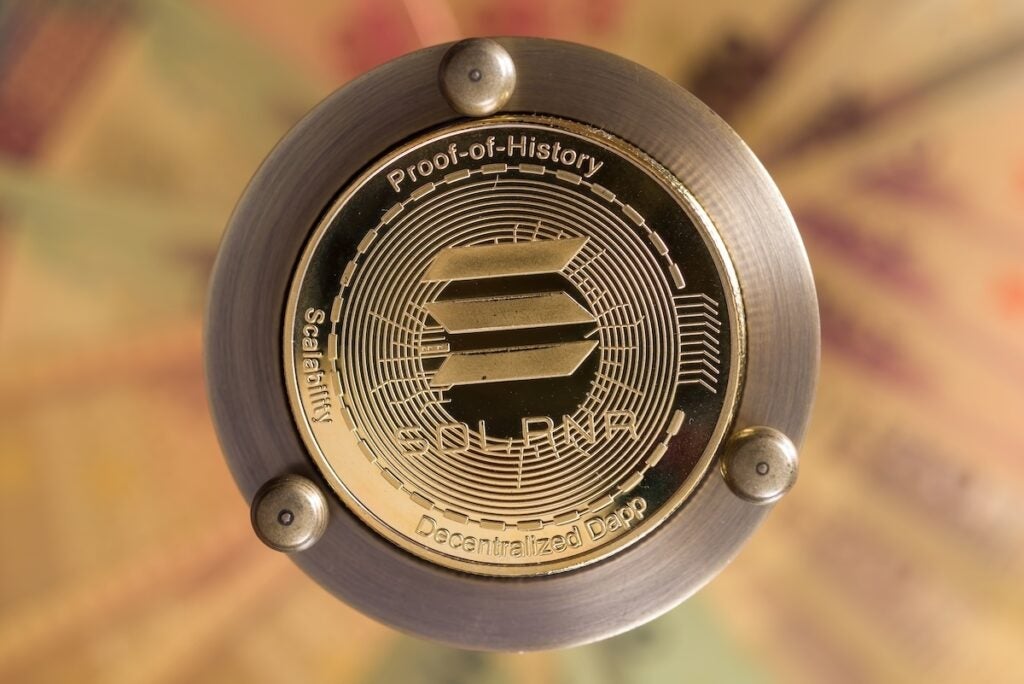
Core Viewpoint - Ondo Finance has launched hundreds of blockchain-based financial assets on the Solana network, marking a significant expansion in the tokenization of traditional financial assets [1][2][4]. Group 1: Launch of Assets - Ondo Finance introduced over 200 assets, including stocks from major companies like NVIDIA and Microsoft, ETFs, treasury bonds, and precious metals on Solana [2][4]. - The assets were launched through the Jupiter Exchange, a decentralized finance protocol on Solana [3]. Group 2: Expansion of Offerings - This launch expands Ondo Finance's tokenized offerings beyond Ethereum and BNB Chain, where it already has over 200 traditional financial assets trading [4]. - The total value of all tokenized offerings on Ondo Finance exceeds $2 billion, indicating a robust market presence [4]. Group 3: Industry Context - The announcement follows the New York Stock Exchange's plans to develop a platform for trading and on-chain settlement of tokenized securities, highlighting a growing trend in the financial industry towards tokenization [5]. - The Solana network is recognized as a popular platform for decentralized finance, enhancing the visibility and accessibility of these new financial products [2].
You Need To Watch Microsoft and Amazon Before Investing in PBW ETF
247Wallst· 2026-01-22 02:53
Core Insights - The Invesco WilderHill Clean Energy ETF (NYSEARCA:PBW) has experienced a significant increase in share price, climbing 74% over the past year, from approximately $20 to $35 [1] Company Performance - The ETF's share price growth indicates strong investor interest and confidence in clean energy investments [1]