
NIO(NIO)

Search documents
李斌分拆芯片资产,22亿已到账
2 1 Shi Ji Jing Ji Bao Dao· 2026-02-27 16:07
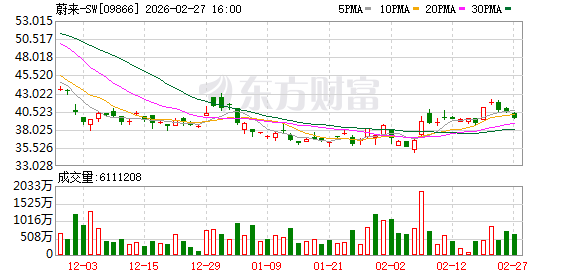
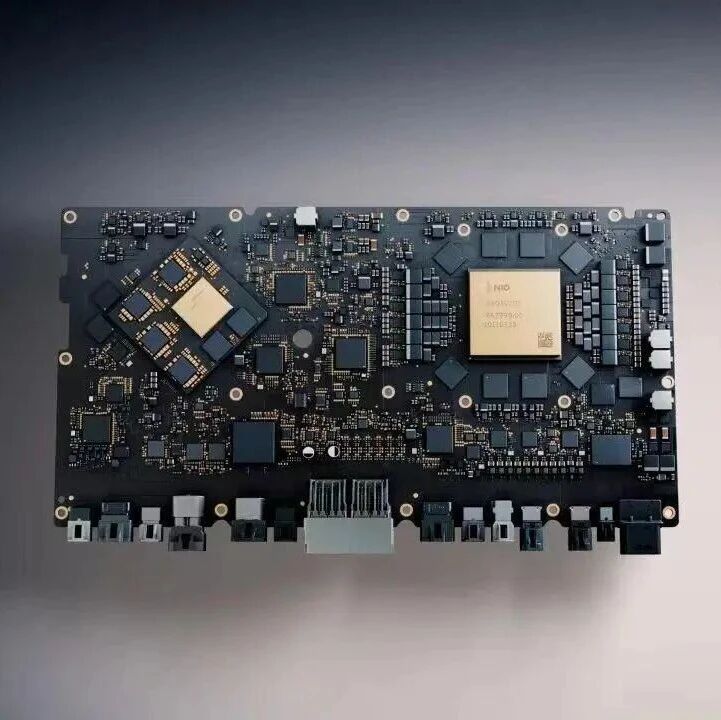
Core Viewpoint - NIO's subsidiary, Shenji, has completed its first round of external financing, raising 2.257 billion yuan, which will help accelerate the development of its self-developed chip technology and reduce financial pressure on the parent company [2][8]. Financing Details - Shenji raised 2.257 billion yuan in its angel round, achieving a post-money valuation of approximately 10 billion yuan [7]. - The financing was led by institutions such as Hefei Guotou and IDG Capital, with investors holding a total of 27.3% equity [7][10]. - NIO will maintain a controlling stake of 62.7% in Shenji and will consolidate its financial statements [10]. Product and Technology - Shenji, established in June 2025, is the core of NIO's self-developed chip system, focusing on the entire process of chip research, production, and technology licensing [4]. - The first product, Shenji NX9031, is the world's first 5nm automotive-grade intelligent driving chip, which is expected to be launched in March 2025 [4]. - The chip's actual computing power is about four times that of NVIDIA's Orin-X, with a memory bandwidth of 546 GB/s, and has already been installed in over 150,000 vehicles [6]. Market Position and Strategy - The commercialization of Shenji chips aims to break the monopoly of international giants in the high-end automotive chip sector, enhancing the competitiveness of domestic chips [6]. - The development cost of the Shenji NX9031 is estimated to be between 2.25 billion and 3 billion yuan, comparable to the cost of building 1,500 battery swap stations [6]. - NIO's self-developed chips are projected to provide a cost advantage of approximately 10,000 yuan per vehicle compared to NVIDIA's Orin-X [7]. Future Prospects - Shenji's business scope is expanding beyond automotive applications to include robotics and AGI-related chip and hardware solutions, indicating a broader market potential [10]. - NIO aims to achieve annual Non-GAAP profitability by 2026 and is implementing a mechanism to operate its chip assets independently [12].


今日新闻丨蔚来芯片子公司完成22亿元首轮融资!丰田1月全球销量82.2万辆!蔚来电池科技有限公司成立!
电动车公社· 2026-02-27 16:07
Group 1 - Toyota achieved global sales of 822,000 units in January 2026, marking a 4.7% year-on-year increase and setting a record for January sales [2][5] - The Toyota Group, including Daihatsu and Hino, reported total sales of 887,000 units [2] - Despite a generally poor global automotive market in January, Toyota's growth was primarily driven by fuel vehicles, with electric models like the Platinum 3X maintaining reputation and sales [5] Group 2 - NIO Battery Technology (Shanghai) Co., Ltd. was officially established on February 26, with a registered capital of 100 million RMB [6] - The newly established Shanghai battery company will focus on research and development, complementing the manufacturing focus of the Anhui battery company established in 2022, creating a "R&D + production" dual-track strategy [7] - NIO's chip subsidiary, Anhui Shenji Technology Co., Ltd., completed its first round of equity financing, raising over 2.2 billion RMB, with a post-investment valuation nearing 10 billion RMB [8] - Anhui Shenji is the first domestic company to develop 5nm automotive-grade chips and has achieved large-scale commercialization, with over 150,000 units shipped since production began in 2024 [8] - This financing success positions NIO alongside BYD, Xpeng, and Li Auto as a company that has successfully spun off its chip division, indicating progress in the domestic high-end chip market and supporting NIO's long-term plans in autonomous driving and intelligent systems [9]


纳斯达克中国金龙指数跌1.4%
Ge Long Hui A P P· 2026-02-27 15:39
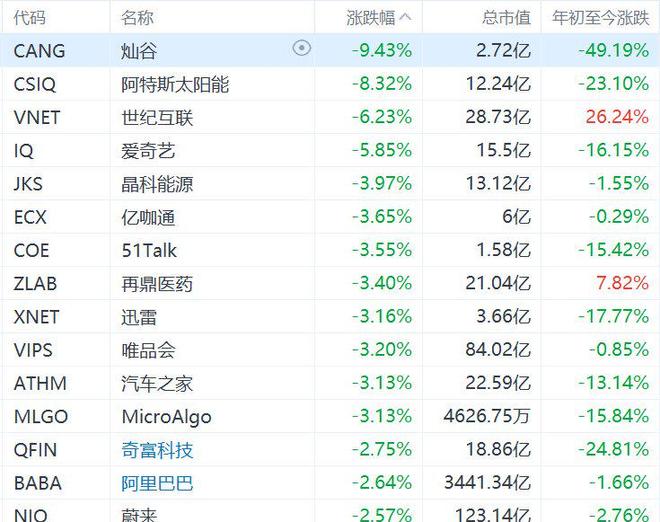
Group 1 - The Nasdaq China Golden Dragon Index fell by 1.4%, indicating a general decline in Chinese concept stocks [1] - Notable declines among individual stocks include Cango down over 9%, Canadian Solar down over 8%, and Century Internet down over 6% [1] - Other companies such as iQIYI, JinkoSolar, Yika Technology, Xunlei, and Vipshop also experienced declines of over 3% [1] Group 2 - Cango (CANG) reported a decline of 9.43% with a total market capitalization of $272 million and a year-to-date drop of 49.19% [2] - Canadian Solar (CSIQ) decreased by 8.32%, with a market cap of $1.224 billion and a year-to-date decline of 23.10% [2] - Century Internet (VNET) fell by 6.23%, holding a market cap of $2.873 billion and a year-to-date increase of 26.24% [2] - iQIYI (IQ) saw a drop of 5.85%, with a market cap of $1.55 billion and a year-to-date decline of 16.15% [2] - JinkoSolar (JKS) decreased by 3.97%, with a market cap of $1.312 billion and a year-to-date decline of 1.55% [2] - Yika Technology (ECX) fell by 3.65%, with a market cap of $600 million and a year-to-date decline of 0.29% [2] - Other companies like 51Talk, Zai Lab, Xunlei, and Vipshop also reported declines ranging from 2.75% to 3.55% [2]



美股科技股,集体下跌
Di Yi Cai Jing Zi Xun· 2026-02-27 14:59
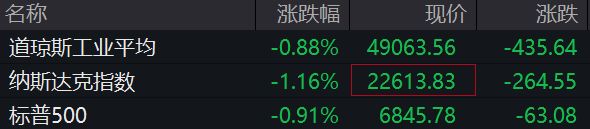
Group 1: Technology Stocks Performance - Major technology stocks experienced a decline, with Oracle falling over 4%, Broadcom and SanDisk dropping more than 3%, and Nvidia, Microsoft, and Micron Technology decreasing by over 2% [1][2] - Specific stock performance includes Oracle at -4.16% ($144.060), Broadcom at -3.43% ($310.655), and Nvidia at -2.50% ($180.269) [2] Group 2: Chinese Stocks Performance - Most popular Chinese stocks saw declines, with the Nasdaq Golden Dragon China Index down 0.8%, Century Internet dropping over 6%, and NIO falling over 2% [3] - Notable declines include Century Internet at -6.41% ($10.660) and NIO at -2.43% ($4.966) [5] Group 3: US Market Indices - On February 27, all three major US indices opened lower, with the Nasdaq down 1.16%, the Dow down 0.88%, and the S&P 500 down 0.91% [4]




Nio Blitzes SUV Market: Flagship ES9, Onvo L80 Set For May Launch
Yahoo Finance· 2026-02-27 14:30
Core Insights - Nio Inc. is planning an aggressive expansion in the SUV market, introducing new flagship and sub-brand models to compete with Tesla and Li Auto in China's electric vehicle sector [1] Product Strategy - The company will showcase its ES9 SUV around April 10, with expectations for showroom availability in May and deliveries starting in June [3] - Nio's Onvo division is set to launch the L80 vehicle in the second quarter, coinciding with the sub-brand's second anniversary [3][4] Battery-Swap Service - Nio achieved multiple single-day records for its battery-swap service during the 2026 Spring Festival, with a peak of 177,627 daily swaps, indicating strong demand for its infrastructure [4][5]
独家丨蔚来芯片子公司完成首轮融资,投后估值近百亿元
雷峰网· 2026-02-27 13:52
Core Viewpoint - NIO's chip subsidiary, Anhui Shenji, is set to announce its first round of financing, with a post-investment valuation nearing 10 billion RMB, indicating strong industry interest in NIO's chip project [2]. Group 1: Company Overview - Anhui Shenji Technology Co., Ltd. was established in June 2025 to oversee chip research and development, production, and technology licensing, with a registered capital increased from 10 million to 75.29 million RMB [2]. - The chip development team at NIO has grown to over 500 members since the project was initiated in 2021 [3]. Group 2: Product Development - The Shenji NX9031 chip, launched in March 2025, is a significant breakthrough in NIO's technology strategy, being the world's first 5nm automotive-grade intelligent driving chip, boasting four times the computing power of NVIDIA's Orin-X and a memory bandwidth of 546GB/s, double that of NVIDIA's Thor-U chip [3]. - The design and development of the Shenji NX9031 took two years, with an additional year for performance testing, incorporating comprehensive safety circuits for real-time anomaly detection and self-correction [3]. Group 3: Financial Implications - NIO's self-developed chips are expected to reduce vehicle costs by at least 10,000 RMB per unit, with the company spending billions on NVIDIA chips in 2024, highlighting the cost-saving potential of their own chips [3]. - The investment in the Shenji NX9031 chip's development is comparable to the cost of building 1,000 battery swap stations, amounting to several billion RMB, which is a key factor in NIO's decision to spin off its chip business for market-oriented operations [3]. Group 4: Strategic Partnerships - Shortly after its establishment, Anhui Shenji began seeking external investment, leading to the formation of a joint venture with Aixin Yuanzhi and OmniVision in Chongqing, indicating a strategic move to develop a technology ecosystem [4][5].
手机集体涨价后,汽车会是下一个吗?
Di Yi Cai Jing· 2026-02-27 13:25
Core Viewpoint - The automotive industry is facing a significant shortage of DRAM chips, leading to increased costs and potential price hikes for vehicles due to rising chip prices [1][2][4]. Group 1: Chip Price Increases - The price of general DRAM is expected to rise by 55% to 60%, while NAND Flash prices are projected to increase by 33% to 38%. High-end automotive-grade DDR5 chips have seen price surges of up to 300% [1]. - Since the second half of 2025, automotive storage chips have experienced substantial price increases, with car-grade DRAM prices rising by 180% in three months and DDR4 prices increasing over 150% [2]. - The current shortage is attributed to a shift in supply dynamics, as major DRAM manufacturers are reducing production of lower-margin DDR4 chips in favor of higher-margin HBM and DDR5 chips [2][3]. Group 2: Impact on Automotive Costs - The cost of DRAM chips for a mid-range electric vehicle, which typically requires 5 to 6 chips, has increased from approximately 700 yuan to about 2000 yuan, reflecting a nearly threefold rise [4][5]. - The overall cost pressure on automotive manufacturers is expected to lead to an increase in vehicle prices, with estimates suggesting a cost increase of 1000 to 3000 yuan due to rising storage chip prices [5]. - Some manufacturers, like Volkswagen and BYD, have secured priority supply through long-term agreements, but the overall price increases remain unavoidable [5]. Group 3: Market Dynamics and Consumer Behavior - The average price of passenger vehicles in China has risen, with the average price reaching 186,000 yuan in January 2026, an increase of 15,000 yuan [6]. - The average price of new energy vehicles also saw a significant rise, reaching 195,000 yuan in January 2026, up from 179,000 yuan in December 2025 [6]. - The ongoing "trade-in" policy for vehicles in 2026 is expected to stimulate consumer demand, particularly in the mid-to-high-end market segment [6].



六座SUV行业深度研究报告:六座SUV的蓝海机遇与红海竞争
Huachuang Securities· 2026-02-27 13:06
Investment Rating - The report maintains a recommendation for the six-seat SUV industry, highlighting both blue ocean opportunities and red ocean competition [2] Core Insights - The six-seat SUV market is expected to see the launch of five new models priced around 200,000 yuan in 2026, with top models potentially achieving monthly sales of 10,000 to 20,000 units [2][22] - The high-end six-seat SUV market is experiencing intense competition, with a significant increase in supply expected in 2026, outpacing market expansion [2][6] - The 200,000 yuan segment remains a potential blue ocean market, as current models often fail to meet consumer demands due to size and pricing issues [6][24] Summary by Sections Total Market Overview - The six-seat SUV market is projected to grow, with an estimated total of 150,000 units sold in 2025, reflecting a year-on-year increase of 21,000 units [13] - The market is expected to continue expanding with the introduction of new models, particularly in the 200,000 yuan segment [6][10] Blue Ocean Opportunities - The 200,000 yuan segment for six-seat SUVs is identified as a significant market opportunity, with current models not meeting consumer expectations in terms of size and pricing [6][22] - The report notes that the proportion of six-seat SUVs priced below 250,000 yuan is only 4.9%, compared to 28% for those above this price point, indicating room for growth [24] Red Ocean Competition - The high-end six-seat SUV market is set to intensify with 22 new models expected to launch in 2026, leading to fierce competition [2][6] - The report highlights a shift in product strategy from size combinations to price combinations, indicating evolving consumer preferences [2][10] Investment Recommendations - The report suggests focusing on companies like Leap Motor and Great Wall Motors, with specific models expected to drive significant sales growth [7][10] - Geely is also recommended due to its ongoing product cycle contributing to sales and profit increases [7][10]



砸三四十亿造芯!蔚来芯片公司获超22亿融资,估值近百亿
Guo Ji Jin Rong Bao· 2026-02-27 12:39
Core Insights - NIO's chip subsidiary, Anhui Shenji Technology Co., Ltd., has completed its first round of equity financing, raising over 2.2 billion yuan, with a post-investment valuation nearing 10 billion yuan [1] - The funds raised will primarily be used for the research and promotion of high-end automotive-grade chips, supporting NIO's long-term strategies in autonomous driving and embodied intelligence [1] - Shenji Company aims to break the monopoly of foreign chip manufacturers in the automotive core chip sector, addressing issues such as supply chain instability and high procurement costs [3] Financing and Ownership Structure - After the financing round, NIO will retain a 62.7% controlling stake in Shenji Company, while investors will hold a combined 27.3% stake, and the remaining 10% will be held by management incentive plans [3] - The development cost of the Shenji NX9031 chip is estimated to be between 3 billion to 4.5 billion yuan, equivalent to the cost of building 1,500 battery swap stations [1] Product Development and Market Strategy - The Shenji NX9031 chip has been shipped in over 150,000 units since its production began in 2024 and is currently installed in all NIO brand models [2] - Shenji Company plans to expand its product offerings beyond automotive applications to include chips for embodied robotics and general artificial intelligence solutions [3] Industry Context and Competition - The competition in the domestic automotive chip self-research sector is intensifying, with other major players like BYD, Xpeng Motors, and Li Auto also developing their own chips [4] - The trend of automotive companies spinning off their chip businesses and attracting external capital is seen as a necessary evolution for independent development and commercialization of chip technologies [3]
企业密集斩获大额融资 车载芯片“高端局”战火已燃
Jing Ji Guan Cha Bao· 2026-02-27 11:36
Core Insights - The semiconductor industry is experiencing a shift from "small and scattered" financing to a "head concentration and high-end focus" model, driven by the urgent need for a self-controllable automotive supply chain and policy support [1][2] - The domestic automotive industry's push for chip localization is accelerating, with significant financing rounds for companies like NIO's chip subsidiary and others in the automotive chip sector [2][5] - The capital is increasingly directed towards advanced processes (14nm and below), AI computing chips, high-end storage chips, and semiconductor manufacturing, marking a transition from "quantity accumulation" to "quality leap" in automotive chip localization [1][5] Financing Trends - NIO's chip subsidiary, Anhui Shenji Technology, completed a financing round of 2.257 billion yuan, with a post-investment valuation nearing 10 billion yuan, focusing on high-end intelligent driving chips [2] - Other notable financing events include nearly 700 million yuan for Yanwei Semiconductor and over 300 million yuan for Yuan Vision, indicating a trend of significant investments in the automotive chip sector [2][5] - State-owned enterprises and industrial funds are playing a crucial role in these financing rounds, aiming to build a self-controllable chip supply chain [2][6] Industry Developments - Major Chinese automakers, including SAIC, Changan, and BYD, are preparing to launch models equipped with 100% self-manufactured chips by 2026, highlighting the industry's commitment to establishing proprietary chip systems [3] - The automotive chip ecosystem is gradually improving, with the establishment of a national-level automotive chip standard verification platform, which will reduce reliance on external testing and shorten verification cycles [7] - The capital landscape in the semiconductor sector is shifting towards high-end and core areas, with significant investments in advanced processes and AI computing chips, indicating a focus on technology barriers and high added value [5][6] Future Outlook - The next 3 to 5 years are critical for the localization of automotive chips, with high-end intelligent driving chips and power chips expected to expand their market presence, enhancing the competitiveness of the Chinese automotive industry [7] - The Chinese semiconductor industry is entering a more mature and confident development phase, supported by strategic investments from national funds [6]
