NIO(NIO)

Search documents
车企盯上有钱人,“9系”大战一触即发
虎嗅APP· 2026-03-25 00:32
Core Viewpoint - The "9 Series" battle represents a critical competition among domestic electric vehicle brands, significantly impacting their market positioning and survival, as they aim to capture high-end consumers and redefine luxury in the automotive sector [2][4][16]. Group 1: Market Context - The Chinese automotive market is undergoing a severe reshuffle, with profit margins dropping to a five-year low of 4.1% by 2025, and even lower to 1.8% in December [7][10]. - The market for vehicles priced below 200,000 yuan is dominated by large manufacturers like BYD and SAIC, leaving new entrants struggling to gain traction [10][11]. - The emergence of the "9 Series" is a strategic response from manufacturers seeking to escape the low-price competition and secure higher profit margins in the premium segment [12][16]. Group 2: Competitive Landscape - The "9 Series" includes flagship models from various brands, characterized by high prices (generally above 300,000 yuan), advanced technology, and spacious designs, targeting affluent customers [4][5]. - Key players in the "9 Series" include NIO, Li Auto, and BYD, each with different financial health and market strategies, ranging from established leaders to those still seeking profitability [4][6][16]. - The competition is not only among the "9 Series" brands but also against established luxury brands like BMW, Benz, and Audi (BBA), which are facing challenges in maintaining their market share [16][32]. Group 3: Strategic Implications - The battle is expected to be most intense in the business market, where many "9 Series" models cater to high-net-worth individuals, influencing brand perception and market dynamics [20][21]. - The family market will see increased competition, but it is anticipated to be less fierce compared to the business segment, as "9 Series" vehicles are well-suited for family needs [22]. - The introduction of models like the Leap Motor D19, which aims to combine affordability with high-quality features, could create a new competitive landscape focused on value [23][24]. Group 4: Product Differentiation - All "9 Series" models share common features of spaciousness and high intelligence, leading to potential product homogeneity, which necessitates unique selling propositions to stand out [26][28]. - Early-stage leaders like Li Auto and Xpeng are expected to leverage their established market presence and technological advancements to gain an initial advantage [27][28]. - Long-term success will depend on the ability to innovate and provide unique customer experiences, balancing high-end services with financial sustainability [31][32]. Group 5: BBA's Response - BBA's strategy to counter the "9 Series" includes aggressive pricing, launching new models, and enhancing technological capabilities through partnerships with tech companies [34][36]. - Despite these efforts, BBA's response may not effectively address the fundamental shifts in market dynamics, as the "9 Series" brands continue to innovate and capture market share [32][42]. - The ongoing transformation in consumer preferences towards smart and electric vehicles indicates that BBA must adapt quickly to maintain relevance in the evolving market landscape [40][41].



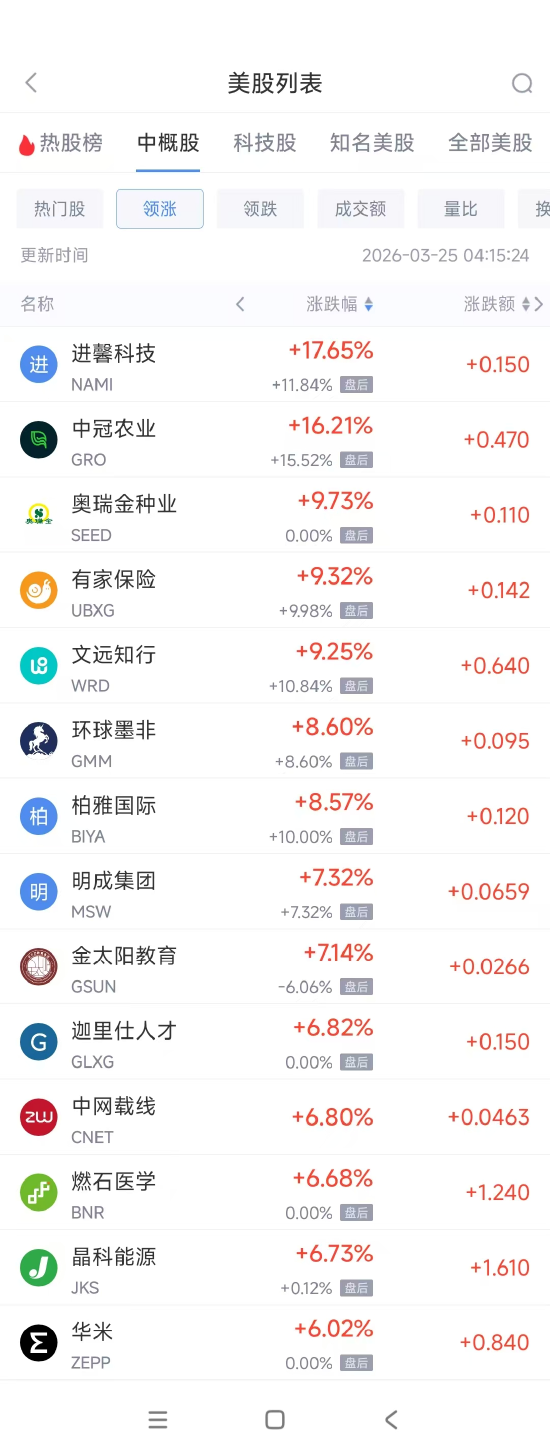
3月25日热门中概股涨跌不一 理想汽车涨3.62%,禾赛科技跌14.16%
Xin Lang Cai Jing· 2026-03-24 20:20
Group 1 - The Nasdaq Golden Dragon China Index (HXC) closed down by 0.43% on March 25, indicating mixed performance among Chinese concept stocks [1][8] - Among the rising stocks, notable gains included TSMC up 1.42%, Pinduoduo up 1.91%, and Li Auto up 3.62% [1][8] - Declining stocks included Alibaba down 0.47%, Netease down 1.09%, and Bilibili down 3.38% [1][8] Group 2 - The U.S. stock market saw declines on Tuesday, with technology stocks leading the drop, as all three major indices partially retraced gains from Monday [2][9] - The Dow Jones Industrial Average fell by 84.41 points, or 0.18%, closing at 46,124.06 points; the Nasdaq dropped by 184.87 points, or 0.84%, to 21,761.89 points; and the S&P 500 decreased by 24.63 points, or 0.37%, to 6,556.37 points [2][9]


Is NIO (NIO) Stock Outpacing Its Auto-Tires-Trucks Peers This Year?
ZACKS· 2026-03-24 14:41
Company Performance - NIO Inc. has returned 14.1% year-to-date, outperforming the average loss of 11.4% in the Auto-Tires-Trucks sector [4] - The Zacks Consensus Estimate for NIO's full-year earnings has increased by 27.7% over the past 90 days, indicating improved analyst sentiment and a stronger earnings outlook [3] - NIO Inc. holds a Zacks Rank of 2 (Buy), suggesting a favorable investment outlook [3] Industry Comparison - NIO belongs to the Automotive - Foreign industry, which includes 23 companies and is currently ranked 75 in the Zacks Industry Rank; this group has seen an average loss of about 6% year-to-date [5] - Strattec Security, another stock in the Auto-Tires-Trucks sector, has also outperformed with a year-to-date increase of 0.3% and holds a Zacks Rank of 1 (Strong Buy) [4][5] - The Automotive - Original Equipment industry, which includes Strattec Security, is ranked 87 and has experienced a decline of 4.1% since the beginning of the year [6]

Li Auto Surges 4% on a $1 Billion Buyback: Is LI or NIO the Better Chinese EV Bet?
247Wallst· 2026-03-24 12:38
Core Viewpoint - Li Auto announced a $1 billion share repurchase program, which has led to a 4% increase in its stock price, despite a 31.2% year-over-year decline in Q4 deliveries to 109,194 units. The company holds $8.11 billion in cash and anticipates the launch of the new L9 model in Q2 2026 as a key growth driver [1][5][9]. Summary by Sections Li Auto's Performance - Li Auto's Q4 deliveries fell 31.2% year-over-year to 109,194 units, and guidance for Q1 2026 indicates a further decline of 16% to 21% in revenue [1][8]. - The company has a strong cash position of $8.11 billion, allowing it to support stock buybacks without jeopardizing operations [7][14]. - The upcoming launch of the Li L9 in Q2 2026 is expected to be a significant growth catalyst, featuring upgrades in powertrain, autonomous driving, and chassis technology [9][15]. Nio's Performance - Nio reported Q4 deliveries of 124,807 units, a 71.7% increase year-over-year, and achieved its first GAAP quarterly profit [2][10]. - Vehicle margins improved to 18.1%, up from 13.1% year-over-year, indicating better pricing and cost control [12]. - Nio reduced R&D spending by 44.3% and SG&A by 27.5%, contributing to a more sustainable profitability structure [13]. Comparative Analysis - Li Auto is viewed as a more capital-secure option, while Nio is seen as a riskier high-growth play due to its momentum from a multi-brand strategy and recent profitability milestone [3][17]. - Nio's financial position is weaker, with only $1.61 billion in cash against $15.97 billion in liabilities, raising concerns about its sustainability [14]. - Analyst consensus suggests a target price of around $22 for Li Auto, contingent on the success of the L9 launch, while Nio's stock has increased by approximately 29% over the past year [16][17].

蔚来-SW(09866):Q4毛利率环比大幅提升,产品结构优化、规模效应显现
Western Securities· 2026-03-24 10:40
Investment Rating - The report assigns a "Buy" rating to the company, indicating a strong expectation for future returns exceeding market benchmarks by over 20% [5][10]. Core Insights - The company reported total revenue of 874.9 billion yuan for 2025, a year-on-year increase of 33.1%, with a gross margin improvement of 3.7 percentage points to 13.6%. The Non-GAAP net loss narrowed by 39.0% to 124.3 billion yuan [1][5]. - In Q4 2025, the company achieved revenue of 346.5 billion yuan and a Non-GAAP operating profit of 12.5 billion yuan, marking a significant turnaround to profitability [1][2]. Financial Performance Summary - Q4 2025 automotive revenue reached 316.1 billion yuan with deliveries of 124,800 vehicles, resulting in an average selling price (ASP) of 253,000 yuan per vehicle, a substantial increase from 221,000 yuan in Q3 2025. The high delivery volume of the ES8 model, which had a gross margin close to 25%, contributed significantly to this performance [2][3]. - The overall gross margin for Q4 2025 was 17.53%, with the automotive segment achieving a gross margin of 18.1%, reflecting a quarter-on-quarter increase of 3.4 percentage points [2]. - The company expects to launch multiple new models in 2026, including the ES9 and L80, with a revenue guidance for Q1 2026 projected to double year-on-year to between 244.8 billion and 251.8 billion yuan, alongside expected deliveries of 80,000 to 82,000 vehicles [3][4]. Future Projections - Revenue forecasts for the company are set at 1,284 billion yuan for 2026, 1,571 billion yuan for 2027, and 1,808 billion yuan for 2028, with expected net profits of 4.0 billion yuan, 35.9 billion yuan, and 73.2 billion yuan respectively [3][4].
【新能源周报】新能源汽车行业信息周报(2026年3月16日-3月22日)
乘联分会· 2026-03-24 08:42
Industry Information - The transportation volume during the Spring Festival in the Qiongzhou Strait reached a record high, with a 61.66% increase in the number of new energy vehicles transported from Haian to Haikou [9] - In January and February 2026, the electricity consumption growth rate for charging and swapping services reached 55.1% [10] - The National Development and Reform Commission launched a new batch of major foreign investment projects with a planned investment of $13.4 billion [11] - The export value of electric vehicles from Shanghai in the first two months of this year increased by 112.6% year-on-year [11] - Chongqing's automotive industry cluster layout and capacity planning revealed that by 2026, the total vehicle production capacity will exceed 4.31 million units [12] - A new 50GWh energy storage battery project with an investment of 10 billion yuan was signed in Suzhou [13] - The first national-level "road and air integrated" testing base in China has officially opened [19] - The first bolt-type battery swapping standard has been released, promoting standardization in the battery swapping industry [19] - The China Charging Alliance reported an increase of 918,000 charging infrastructure units in January and February, a year-on-year increase of 44.8% [20] Policy Information - The Ministry of Industry and Information Technology, the National Development and Reform Commission, and the State Administration for Market Regulation held a meeting to promote the implementation of a 60-day account period commitment and accelerate breakthroughs in autonomous driving technology [14] - The Hainan government released standards for lithium battery recycling, aiming to improve resource utilization efficiency [24][25] - The Jiangsu government plans to support the construction of over 2,500 new public charging guns by the end of 2026, with a focus on high-power charging [38] - The Shenzhen government is piloting a "vehicle-battery separation" insurance model to reduce the insurance burden on new energy vehicle owners [10] - The Chongqing government plans to build 88 supercharging stations along highways by 2025 [38] Company Information - BYD has established 4,597 fast charging stations covering 279 cities [6] - Ideal Auto plans to launch a dual-battery route for all models starting in 2026, utilizing both self-developed and CATL batteries [6] - NIO has delivered its 80,000th ES8 pure electric SUV [6] - Xiaomi's new generation SU7 has been officially launched, featuring 25 safety assistance functions [6] - A new generation of solid-state batteries from EVE Energy has successfully rolled off the production line, accelerating the industrialization process [19]

异动盘点0324 | 金浔资源涨超14%,光通信概念股再度拉升;黄金股集体回暖,新能源汽车概念股纷纷上涨
贝塔投资智库· 2026-03-24 04:04
Group 1 - Western Cement (02233) reported a revenue of RMB 9.621 billion for the fiscal year 2025, a year-on-year increase of 15.3%, with a net profit attributable to shareholders of RMB 880 million, up 40.5% [1] - Jin Xun Resources (03636) saw its stock rise over 14% after announcing an expected comprehensive profit of approximately RMB 300 million to RMB 330 million for the fiscal year ending December 31, 2025, significantly up from RMB 202 million for the previous year [1] - LeShuShi (02698) reported a revenue of approximately USD 567 million for 2025, a 24.9% increase year-on-year, with a net profit of about USD 121 million, up 27.4% [1] Group 2 - Optical communication stocks surged, with Changfei Fiber Optic (06869) rising 7.27% and other related companies also seeing gains, as the optical communication sector's performance exceeded expectations for 2025 [2] - China Resources Beer (00291) rebounded over 4% after reporting a revenue of RMB 37.985 billion for 2025, a decrease of 1.68%, and a net profit of RMB 3.371 billion, down 28.87% [2] - Zhongguang Nuclear Mining (01164) experienced a decline of over 2% after announcing an expected decrease in pre-tax profit by approximately HKD 200 million for 2025 [2] Group 3 - Wynn Macau (01128) reported a total revenue of HKD 24.418 billion for the fiscal year ending December 31, 2025, a year-on-year increase of 3.39%, but a net profit attributable to shareholders of HKD 1.63 billion, down 49.05% [2] - Li Fu China (02136) saw its stock drop nearly 9% after reporting a revenue of RMB 1.211 billion for 2025, a decrease of 3.35%, and a net loss of RMB 31.131 million, widening by 54.84% [3] - Maidi Weikang (02159) reported a revenue of RMB 468 million for the fiscal year ending December 31, 2025, a year-on-year increase of 45.55%, with a net profit of RMB 9.988 million, recovering from a loss of RMB 45.245 million in the previous year [4] Group 4 - Estée Lauder (EL.US) is in talks with Spanish beauty group Puig regarding a potential merger, which led to a nearly 8% drop in its stock price [5] - Energy storage stocks collectively rose, with CleanSpark (CLSK.US) up 6.17%, as the ongoing geopolitical tensions are expected to accelerate global energy transition [5] - Gold stocks rebounded, with AngloGold (AU.US) rising 7.01%, as spot gold prices recovered after a significant drop [6]





汽车行业2026一季度业绩前瞻
2026-03-24 01:27
Summary of Automotive Industry Conference Call Industry Overview - The automotive industry is facing dual pressure on volume and profit in Q1 2026, with wholesale volume expected to decline by approximately 8% year-on-year, while new energy vehicle sales are projected to slightly decrease. Exports are the only bright spot, with a year-on-year increase of 55% [1][2][3]. Key Points Performance Expectations - **Overall Industry Performance**: Q1 2026 is anticipated to be the low point for volume and profit in the passenger car sector, with most automakers expected to see profit declines exceeding 20% year-on-year due to rising costs from copper, aluminum, lithium carbonate, and the appreciation of the RMB [1][2][3]. - **Geely Auto**: Expected to report profits exceeding 4 billion yuan, with a quarter-on-quarter increase of over 10%, driven by the high profitability of the Geely 9X model and a year-on-year export growth of 140% [1][4]. - **Heavy Truck Sector**: Strong export performance with a year-on-year increase of 30% in January-February 2026. China National Heavy Duty Truck Corporation (CNHTC) is expected to see a profit increase of 60% to 500 million yuan [1][2][3]. Segment Performance - **Intelligent Vehicle Sector**: Outperforming the overall vehicle sector, with Huayang Group expected to see a nearly 20% year-on-year growth, benefiting from Xiaomi's automotive sales and new product lines [1][7]. - **Parts Sector**: Mixed performance with leading companies like Fuyao Glass and Xingyu maintaining lower pressure due to strong overseas expansion. Companies like Kingood are expected to benefit from the rising aluminum prices [1][6]. Sales and Profitability - **Sales Disparities**: Despite overall industry decline, companies like NIO and Seres are expected to show significant sales growth due to new model launches, while BYD and XPeng are facing larger declines [2][3][4]. - **Profit Expectations**: Most passenger car companies are expected to see a year-on-year profit decline of over 20%. Geely is projected to stand out with a profit of over 4 billion yuan [4][5]. Market Trends - **Two-Wheeler Sector**: The sector continues to show strong growth in large-displacement exports, with Chuanfeng Power's exports expected to increase by 60% year-on-year, although overall performance is expected to remain flat due to tariff impacts [1][10]. Additional Insights - **Investment Strategy**: The investment strategy for 2026 focuses on performance and valuation, with recommendations in areas such as AIGC-enabled "power shortage," L4-level intelligence, and robotics. Key companies recommended include Weichai Power, Xpeng Motors, and Top Group [2]. - **Challenges**: The industry faces challenges from rising raw material costs and currency fluctuations, which are expected to negatively impact profitability in Q1 2026 [3][4]. This summary encapsulates the key insights and performance expectations for the automotive industry as discussed in the conference call, highlighting both opportunities and challenges within various segments.



What's Going On With The Jump In Nio Stock?
Benzinga· 2026-03-23 17:14
Group 1: NIO Stock Performance - NIO stock is experiencing significant momentum, trading 9% above its 20-day SMA and 8.3% above its 100-day SMA, indicating improving short-term strength [4] - Over the past 12 months, NIO shares have increased by 31.74%, currently positioned in the middle of the 52-week range of $3.02 to $8.02 [4] - The stock's moving-average structure shows a "two-speed" message, with the 20-day SMA above the 50-day SMA, but a longer-term death cross remains a concern [5] Group 2: Technical Indicators - The RSI is at 52.73, indicating neutral territory, while the MACD is bullish, suggesting that upside momentum is currently prevailing [6] - The combination of RSI above 50 and a bullish MACD indicates mixed momentum for NIO stock [6] Group 3: Analyst Consensus and Ratings - NIO carries a Hold Rating with an average price target of $7.28, reflecting a momentum-driven setup rather than fundamentals [7] - Key resistance is identified at $6.00 and key support at $5.50, which are critical for timing entries and risk control [7][8] - Recent analyst actions include upgrades from HSBC to Buy with a target of $6.80 and Freedom Capital Markets to Buy with a target of $7.00, while Barclays maintains an Underweight rating with a target of $4.00 [8] Group 4: Recent Price Action - At the time of publication, NIO shares were up 6.08% at $5.77 [9]
——汽车行业周报:宇树科技披露招股书,小米发布新一代SU7-20260323
Guohai Securities· 2026-03-23 09:06
Investment Rating - The report maintains a "Recommended" rating for the automotive industry [1] Core Insights - The automotive industry is experiencing a structural transformation with opportunities in high-end domestic brands and accelerated penetration of smart technologies. Despite challenges such as the reduction of new energy vehicle purchase tax incentives, the overall sentiment for 2026 remains optimistic [4][13] - The report highlights significant growth in companies like Yushu Technology, which reported a revenue of 1.71 billion yuan in 2025, a year-on-year increase of 335.4%, and a net profit of 600 million yuan, up 674.3% [11] - Xiaomi's new generation SU7 was launched with advanced safety and intelligent driving features, indicating a trend towards enhanced vehicle technology [12] Summary by Sections Recent Trends - The automotive sector's performance from March 16 to March 20 shows a decline of 4.4%, with passenger vehicles increasing by 0.8% while commercial vehicles decreased by 4.0% [14] - The report notes that the A-share automotive sector outperformed the Shanghai Composite Index during this period [14] Key Companies and Earnings Forecast - The report provides a detailed earnings forecast for key companies, recommending stocks such as BYD, Geely, and Great Wall Motors, with various ratings from "Buy" to "Increase" based on their projected earnings per share (EPS) and price-to-earnings (PE) ratios [6][54] - For instance, BYD is projected to have an EPS of 5.33 in 2026 with a "Buy" rating, while Great Wall Motors is expected to have an EPS of 1.70 with an "Increase" rating [54] Industry Indicators - In February 2026, the automotive production and sales figures were reported at 1.672 million and 1.805 million units respectively, showing a year-on-year decline of 20.5% and 15.2% [34] - New energy vehicles accounted for approximately 42.4% of total new vehicle sales, indicating a significant market share despite the overall decline [34]