Nissan Motor(NSANY)

Search documents
Exclusive-France to review Nissan Europe's supplier payments, letter shows
Yahoo Finance· 2025-09-24 07:37
By Daniel Leussink TOKYO (Reuters) -The French government is reviewing whether Nissan's European business paid suppliers on time, and it has asked the automaker to submit extensive financial records for 2024, correspondence reviewed by Reuters showed. The French economy ministry's competition department informed Nissan Automotive Europe of the review last month, saying it was part of a broader effort to ensure companies were paying their suppliers promptly, according to an August 19 letter. It plans t ...
日产N7销量破万 天籁PLUS也要放大招
Xi Niu Cai Jing· 2025-09-24 06:28
Group 1 - Nissan has achieved significant success in the electric vehicle market, with the N7 model delivering over 10,148 units in August, marking a breakthrough for Dongfeng Nissan in the new energy sector [2] - To meet the growing market demand, Nissan has doubled the production capacity of the N7 and improved delivery efficiency, with a reduced waiting period for new orders to 2-4 weeks, and in some areas as fast as 1-2 weeks [2] - The Nissan N6 hybrid model stands out in the mid-size segment due to its economic and comfort advantages, offering a pure electric range of at least 150 km under WLTC conditions, enabling users to charge once a week [2] Group 2 - Nissan is accelerating its electrification and intelligent transformation in response to fierce competition in the Chinese electric vehicle market, with local R&D teams leading vehicle development and reducing the development cycle to under 24 months [3] - The company is forming deep partnerships with leading technology firms such as Momenta, Huawei, and iFlytek to enhance product competitiveness and create an intelligent ecosystem [3] - The upcoming upgrade of the fuel flagship model, Teana PLUS, will focus on user demand for intelligent features, with significant improvements in the smart experience expected [3]


日产(中国)张雪燕:计划2030年实现汽车生命周期降低30%碳排放
Zhong Guo Jing Ying Bao· 2025-09-23 18:45
Core Viewpoint - Nissan aims to reduce carbon emissions by 30% over the lifecycle of each vehicle by 2030 and by 50% during the driving process of new models in key markets including China, the US, Japan, and Europe, striving for carbon neutrality and minimizing the impact of carbon emissions on society and the planet [1] Group 1: Sustainability Initiatives - Nissan has launched the "Nissan Green Plan 2030" and "Nissan Society Plan 2030" to accelerate the realization of its 2030 vision, focusing on sustainable development issues such as climate change, water resource protection, and air and water quality improvement [1] - The company emphasizes that sustainable development is not just a superficial concept but has been integrated into the core of its operations, affecting all stages from design to manufacturing and sales [2] Group 2: Environmental Impact Reduction - Nissan's parts export division has been practicing sustainability by implementing logistics visualization systems, promoting electrification, and using recyclable packaging, which has resulted in an annual reduction of approximately 12,000 tons of carbon emissions [2] - The company is increasingly opting for low-carbon transportation methods, such as rail and inland waterway transport, to replace higher carbon-emitting air transport [2] Group 3: Collaboration and Research - Since 2013, Nissan has supported the writing of the "New Energy Vehicle Blue Book" and is currently involved in the "Automobile Low Carbon Blue Book" project, contributing to the documentation of the green and low-carbon transformation of the Chinese automotive industry [3] - The company values deep collaboration with industry, academia, and research sectors, focusing on translating research findings into actionable steps within production processes [3]
叫板FSD?日产新智驾上街了
汽车商业评论· 2025-09-23 17:37
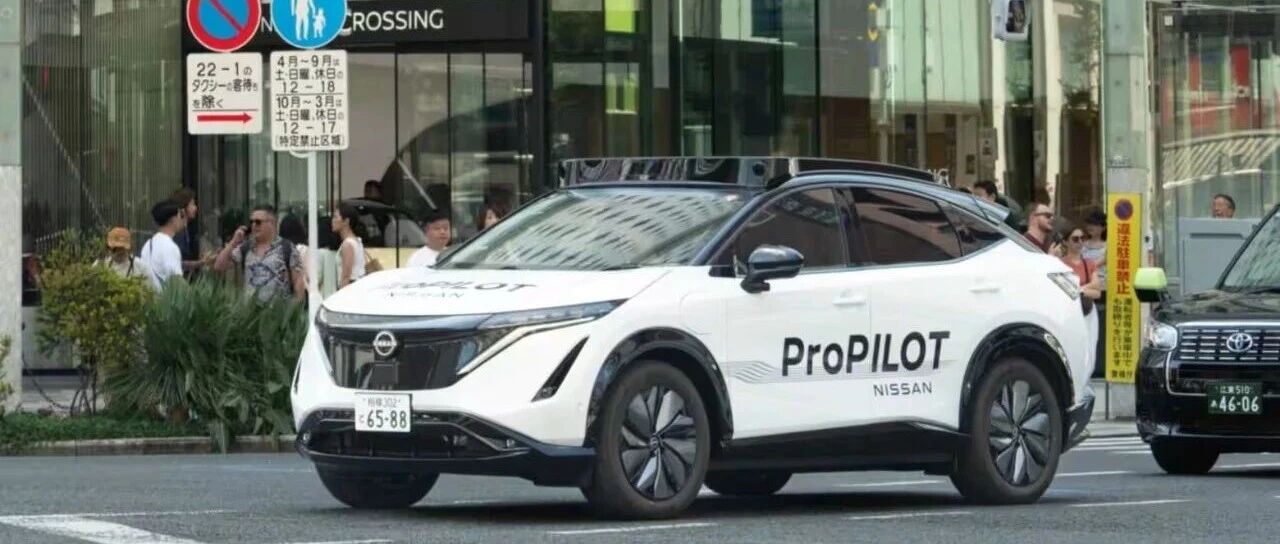
Core Viewpoint - Nissan aims to compete with Tesla by launching its next-generation ProPILOT driver assistance system, which utilizes technology from UK-based Wayve, with plans for implementation in mass production vehicles by the fiscal year 2027 [4][10]. Group 1: Technology Development - The new ProPILOT system, currently in L2 level, will require drivers to monitor the vehicle and road conditions at all times, similar to Tesla's Full Self-Driving (FSD) system [4][16]. - The ProPILOT system has evolved from its initial launch in 2016, with the latest version capable of handling complex urban environments using fewer sensors [7][9]. - Wayve's AI Driver software, which focuses on real-world data absorption and transfer capabilities, will be the core component of Nissan's next-generation ProPILOT [7][13]. Group 2: Strategic Partnerships - Nissan's collaboration with Wayve marks a significant step from theoretical partnerships to practical road testing, with a dedicated development center established in Yokohama to adapt to Japan's unique driving conditions [8][10]. - The partnership aims to deliver safer and smarter mobility technologies, leveraging Wayve's expertise in AI and real-world driving data [8][10]. Group 3: Market Positioning - Nissan's strategy emphasizes a "Japan first, then overseas" approach, showcasing its prototype's capabilities in Tokyo's urban settings [9][10]. - The company plans to initiate small-scale L4 autonomous services in Japan by the fiscal year 2027, starting with vehicles equipped with safety drivers [10][16]. - Nissan's focus on L2 capabilities in urban environments reflects a broader trend among Japanese automakers to explore diverse partnerships and regulatory pathways for autonomous driving [16].
Nissan's Next-Gen ProPILOT Demo: Global AV Race Heating Up
ZACKS· 2025-09-23 17:16
Core Insights - The development of autonomous vehicles (AVs) is accelerating, with significant investments from automakers and tech companies [1] - Nissan is launching its next-generation ProPILOT technology in Japan, aiming to address the declining driver population and plans to introduce an autonomous ride-share service by 2027 [1][9] Nissan's Initiatives - Nissan's upcoming ProPILOT system combines its "Ground Truth Perception" with Wayve's AI Driver software, designed for urban environments rather than just highways [2] - The demo fleet utilizes the Ariya electric SUV, equipped with advanced sensors for improved decision-making and navigation in complex scenarios [3] - Nissan aims to position its technology competitively against Tesla's Full Self-Driving system, although ProPILOT will remain at Level 2 autonomy requiring driver supervision [4][5] Competitive Landscape - In the U.S., Waymo leads in robotaxi services, operating fully driverless Level 4 services in multiple cities and providing around 250,000 paid rides weekly [6][7] - Amazon's Zoox is developing a purpose-built robotaxi, with limited testing already underway in Las Vegas and plans for expansion [8][10] - Tesla's Full Self-Driving package is in beta, requiring human oversight but benefiting from extensive real-world data collection due to its large fleet [11][12] Global Developments - China is advancing rapidly in AV deployment, with companies like Baidu and Pony.ai operating commercial driverless services, supported by government initiatives [13] - The competition in the AV space is intensifying, with various companies pursuing their unique paths while pushing the boundaries of technology [14]

光庭信息:公司直接或间接客户为国内外众多主机厂和汽车零部件供应商,包括吉利汽车、长城汽车、丰田汽车等
Mei Ri Jing Ji Xin Wen· 2025-09-23 00:49
Group 1 - The company, Guangting Information, has established collaborations with a variety of domestic and international automotive manufacturers and parts suppliers, including Geely, Great Wall, Chery, Seres, FAW Group, GAC Group, Toyota, and Nissan [1] - The company emphasizes a philosophy of shared innovation and collaboration within its industrial ecosystem, aiming for mutual benefits among its partners [1] - The company is actively engaging with major automotive clients to enhance its product offerings and market presence [1]



光庭信息:主要客户包括吉利汽车、长城汽车、奇瑞汽车、赛力斯、一汽集团、广汽集团、丰田汽车、日产汽车等
Jin Rong Jie· 2025-09-23 00:47
Core Viewpoint - The company, Guangting Information, is actively collaborating with various domestic and international automotive manufacturers and parts suppliers, emphasizing a shared and win-win approach to innovation and ecosystem development [1] Group 1: Clientele and Partnerships - Guangting Information has established relationships with a wide range of major automotive manufacturers, including domestic brands such as Geely, Great Wall, Chery, Seres, FAW Group, and GAC Group, as well as international brands like Toyota and Nissan [1]

Nissan continues to shuffle global leadership
Yahoo Finance· 2025-09-22 14:26
Group 1 - Nissan Motor Co. is implementing significant changes in its global leadership to address financial struggles and accelerate its recovery plan [1][3] - Massimiliano Messina has been appointed as chairperson of the management committee for the AMIEO region, effective October 1, and will report to Guillaume Cartier [2][3] - The leadership changes aim to enhance organizational focus, promote empowerment and accountability, and clarify leadership functions to improve regional autonomy [3] Group 2 - Victorino Esnaola has been appointed SVP of finance and information technology for the AMIEO region, reporting to Messina [4] - Nissan is reorganizing its global finance team to improve efficiency and collaboration, with several key appointments announced [4][5] - George Leondis has been appointed as performance control, M&A and partnerships champion, while Roberto Delgado will oversee revenue and corporate operating profit as central controller [5]
日产汽车联手Wayve升级ProPilot,目标2028年对决特斯拉FSD
Huan Qiu Wang Zi Xun· 2025-09-22 07:49
来源:环球网 【环球网科技综合报道】9月22日消息,据japantimes援引彭博社报道,日产汽车将在2028财年前推出新 一代ProPilot驾驶辅助系统,借助英国AI初创公司Wayve Technologies的软件,首次实现复杂城市路况下 的高阶辅助驾驶。 日产辅助驾驶工程部总经理饭岛彻也强调:"感知能力已接近人类水平,产品化打磨是下一步重点。" 据悉,日产汽车计划在2027年上线Robotaxi试点,采用Ariya电动SUV车队,结合新一代ProPilot,为老 龄化导致的出租车司机短缺提供解决方案。该公司表示,借助Wayve AI的通用性,公司目标在成本与 系统精简度上形成差异化优势,尽快切入北美、欧洲及亚洲其他市场。(青云) 日产汽车方面表示,新系统在技术水准上可对标特斯拉FSD套件,并计划2027年启动自动驾驶共享出行 服务,加快抢占全球智能出行市场。 据介绍,历代ProPilot主打高速公路单车道辅助,最新版本沿用2+级自动驾驶定义,驾驶员仍需随时接 管,但通过Wayve深度学习算法,系统仅用少量摄像头即可识别信号灯、路口、行人等城市要素,完成 跟车、变道、避障等操作。 ...
Nissan showcases assisted driving system using UK startup Wayve's technology
Reuters· 2025-09-22 02:07
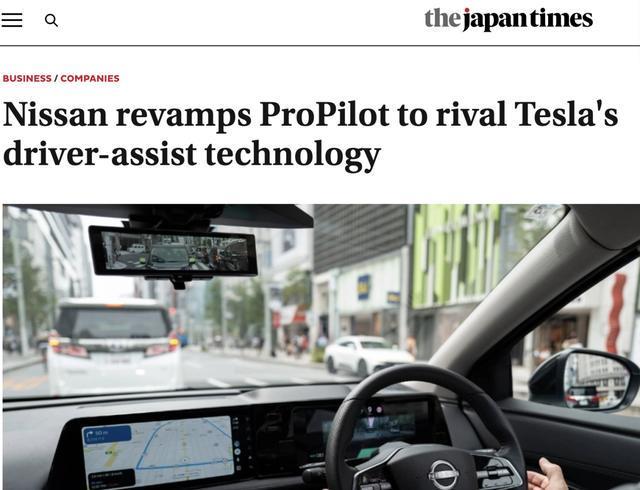
Group 1 - Nissan Motor has initiated testing of a new driver-assistance system [1] - The technology for this system is sourced from British startup Wayve [1] - The planned launch of the system is set for the 2027 financial year in Japan [1]