Qualcomm(QCOM)

Search documents
苹果基带,不及高通?
半导体芯闻· 2025-09-23 10:38
Core Viewpoint - Apple's new C1X modem is being heavily promoted, but industry analysts believe Qualcomm's Snapdragon X75 still outperforms it in terms of speed and efficiency [1][2]. Group 1: Performance Comparison - Apple claims that the C1X modem is faster and 30% more efficient than Qualcomm's Snapdragon X75, but analysts argue that Qualcomm's chipset remains superior in overall throughput and performance [1]. - All iPhone 17 models, except for the iPhone Air, are equipped with Qualcomm's Snapdragon X80 processor, indicating Apple's lack of confidence in its own modem [1]. Group 2: Technical Limitations - The C1X modem lacks mmWave support, limiting the new iPhone's capabilities to below 6GHz, while the Snapdragon X80 can provide full functionality [1]. - Apple's claims of extended battery life due to the C1X and N1 wireless chip, stating up to 27 hours of video playback, are seen as an attempt to mask the modem's deficiencies [2]. Group 3: Future Outlook - Apple's modem plans are still immature, with reliance on Qualcomm expected to continue until at least 2027 due to licensing agreements [2]. - Rumors about a future C2 modem with mmWave support suggest that Apple is aware of the current hardware limitations in the iPhone Air [2].



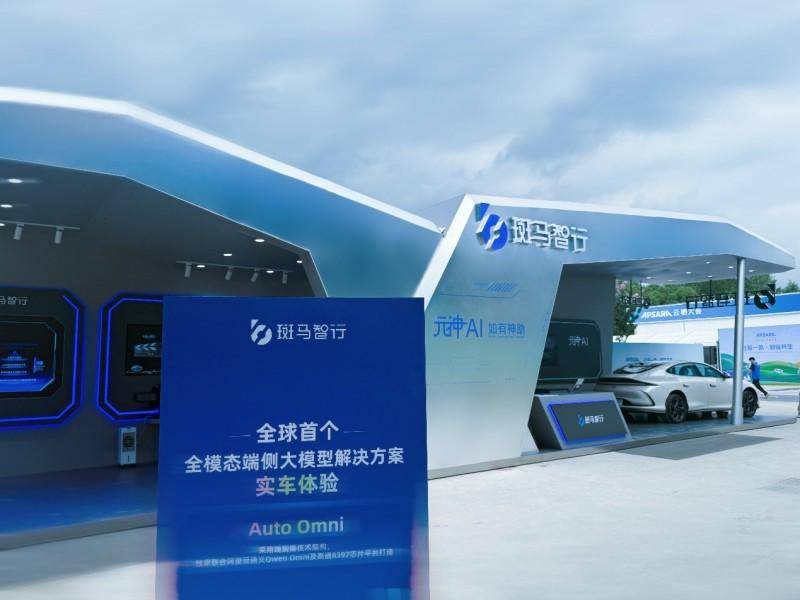
2026年量产!斑马智行全球首发全模态AI座舱,云栖大会开放实车体验
Yang Zi Wan Bao Wang· 2025-09-23 07:49
Core Insights - Alibaba Cloud has launched Qwen3-Omni, the industry's first native end-to-end multimodal AI model, ahead of the Yunqi Conference [2] - Zhaima Zhixing will be the first to integrate this technology, showcasing the Auto Omni solution at the conference [2] - The Auto Omni solution features an end-to-end architecture, leveraging Alibaba Cloud's Qwen Omni and Qualcomm's Snapdragon 8397 chip, promising significant advancements in product experience [2] Industry Developments - The Snapdragon 8397 platform, Qualcomm's fifth-generation smart cockpit chip, offers a substantial computational boost to 320 TOPS, making it a preferred choice for high-end smart vehicles [2] - The year 2025 is anticipated to be the "year of end models on vehicles," as mainstream cockpit SoC chip capabilities increase, allowing 7B parameter multimodal models to operate smoothly on-device [2] - The first vehicles equipped with the Snapdragon 8397 chip are expected to enter mass production in 2026, marking the debut of the next-generation AI smart cockpit utilizing the Auto Omni solution [3]
年复合增长率高达20.45%!这一新赛道将成为汽车智能化的关键?
Zhong Guo Qi Che Bao Wang· 2025-09-23 02:19
Core Insights - The global automotive AI chip market is projected to grow from $13.8 billion in 2024 to $34.3 billion by 2029, with a compound annual growth rate (CAGR) of 20.45% [2] - AI chips are becoming the central component for enabling key applications such as autonomous driving, smart cockpits, and predictive maintenance in the automotive industry [3][4] - The market is driven by advancements in technology, increasing efficiency of AI algorithms, and stricter regulations on ADAS and active safety features [4] Market Dynamics - The automotive AI chip market is expanding with applications ranging from in-vehicle smart functions to platforms for intelligent perception, decision-making, and control [3] - Major drivers include the rising penetration of autonomous driving, the complexity of ADAS systems, and the demand for AI processing capabilities in smart cockpits [4] - The shift from general-purpose AI chips to automotive-grade AI chips is evident, with a focus on low latency and low power consumption [4] Competitive Landscape - The competition in the automotive AI chip market is becoming increasingly differentiated, with companies like NVIDIA and Qualcomm holding significant market shares [5] - NVIDIA's Orin chip has been installed in over 5 million vehicles, while Qualcomm's SA8155P chip has a 40% penetration rate in high-end models [5] Technological Advancements - The computational density of AI chips is continuously improving, with expectations for single-chip performance to reach 2000 TOPS in the coming years [6] - The rise of integrated storage-compute architectures is breaking traditional bottlenecks, enhancing data throughput and energy efficiency [6] Industry Trends - Edge computing and cloud collaboration are emerging as key trends in the development of automotive AI chips, enabling real-time decision-making and efficient data flow [7] - The market is witnessing a shift from traditional hardware sales to "Compute as a Service" (CaaS) models, providing flexible service options for users [8] Strategic Directions - Companies are advised to establish a "general-purpose computing platform + dedicated acceleration module" approach to enhance computational efficiency and adaptability [9] - Building a closed-loop ecosystem of "chip-algorithm-data" is crucial for rapid technological iteration and optimization [9] Future Outlook - The development of automotive AI chips is not only a race of technological iteration but also a transformation of industrial ecosystems and business models [10] - As chips become the "digital engine" of vehicles, the entire industry stands at a pivotal point of transformation towards smart automotive solutions [10]


QUALCOMM Incorporated (QCOM) Collaborates with HARMAN to Reshape the Automotive Cockpit
Yahoo Finance· 2025-09-22 21:38
Group 1 - Qualcomm Incorporated (NASDAQ:QCOM) is collaborating with HARMAN to reshape the automotive cockpit, utilizing QCOM's Snapdragon Cockpit Elite compute power alongside HARMAN's modular Ready portfolio [2][3] - The partnership aims to deliver AI-driven in-cabin experiences, including real-time ADAS visualization and emotion-aware interfaces, while also streamlining automakers' development cycles [3] - Initial deployments of this collaboration will focus on Europe and China, where there is a growing demand for intelligent, connected vehicles [3] Group 2 - Qualcomm is recognized for enabling industry innovation and accelerating digital transformation globally through AI-powered platforms and Snapdragon technologies [4] - The company is listed among the best stocks to buy, indicating strong market confidence in its growth potential [4]
台积电3nm,大涨价!
半导体芯闻· 2025-09-22 10:36
Core Viewpoint - The article discusses the rising costs associated with TSMC's latest 3nm "N3P" process technology, highlighting that Qualcomm and MediaTek are paying significantly higher prices for their chipsets compared to previous generations, which may lead to increased prices for flagship devices [2][3]. Pricing and Cost Implications - TSMC has not offered price discounts for its 3nm "N3P" process, resulting in customers paying up to 24% more for their SoCs [2] - MediaTek reportedly pays about 24% more than before, while Qualcomm pays approximately 16% more for the same technology [2] - The wafer prices for the 3nm "N3P" process have increased by about 20% compared to the previous 3nm "N3E" process, indicating that Apple may also be affected by these cost increases [3] Market Impact - The increased costs for Qualcomm and MediaTek are expected to be passed on to their partners, potentially leading to higher prices for flagship smartphones [3] - TSMC's upcoming 2nm wafers are projected to be 50% more expensive than current technologies, with Apple securing over half of the initial production capacity, making it difficult for Qualcomm and MediaTek to obtain sufficient supply in the future [3]

芯片巨头联手,高通躺枪
半导体行业观察· 2025-09-22 01:02
Core Viewpoint - Nvidia's investment of $5 billion in Intel is a strategic move that could reshape the semiconductor industry, impacting various companies including AMD, Arm, and MediaTek, while potentially benefiting TSMC due to its advanced technology [2][3][4]. Group 1: Impact on Companies - AMD is expected to face pressure due to the collaboration between Intel and Nvidia, particularly in the AI server market where Nvidia could gain market share by integrating x86 architecture into its AI servers [4][5]. - Arm may experience a shift in market focus towards x86, which could weaken its recent momentum in the AI server sector, raising concerns about Nvidia's future product roadmap potentially sidelining Arm [5][6]. - MediaTek could be adversely affected as Nvidia diversifies its AI PC market strategy, potentially increasing competitive pressure on MediaTek's Arm-based solutions [3][4]. Group 2: Implications for Intel and Nvidia - The partnership allows Nvidia to enhance its CPU compatibility for rack-mounted systems, providing customers with more options and strengthening its position in the AI PC market [2][4]. - Intel stands to benefit from this collaboration by refreshing its narrative in the AI PC space, potentially alleviating some competitive pressure from AMD in the client market [4][5]. - The integration of Nvidia GPUs into Intel's x86 SoCs could create a formidable challenge for AMD's existing products, increasing competition in the client market [5][6]. Group 3: TSMC's Position - TSMC is likely to remain unaffected by this deal as Nvidia has not shifted GPU production to Intel, maintaining TSMC's role as a key supplier for Nvidia's advanced GPU and packaging technologies [6]. - The collaboration between Intel and Nvidia may actually benefit TSMC in the long run, as improved financial health and product offerings from Intel could lead to increased chip orders for TSMC [6].


台积电前五大客户,将洗牌
半导体行业观察· 2025-09-22 01:02
Core Viewpoint - The global semiconductor industry is experiencing intense competition in AI applications, with predictions that TSMC's major customer rankings will change by 2026, while Apple remains the largest customer with significant revenue contributions [2][4]. Group 1: Customer Rankings and Revenue Contributions - In 2025, TSMC's top customers are expected to be Apple (25-27%), Nvidia (11%), MediaTek (9%), Qualcomm (8%), AMD (7%), Broadcom (7%), and Intel (6%). By 2026, the rankings will shift, with Apple (22-25%), Broadcom (11-15%), Nvidia (11%), MediaTek (9-10%), Qualcomm (8%), AMD (7%), and Intel (7%) [3][4]. - Apple is projected to contribute TSMC's highest revenue in 2024, estimated at NT$624.3 billion, marking a 14.2% year-on-year increase and accounting for 22% of total revenue [7][8]. - Broadcom is anticipated to rise rapidly, potentially becoming one of TSMC's top three customers by 2026, driven by partnerships with AI companies like OpenAI [4][5]. Group 2: Apple's Strategic Moves - Apple has reportedly secured over half of TSMC's 2nm production capacity for 2026, allowing it to leverage advanced manufacturing processes ahead of competitors [6][7]. - TSMC's 2nm production is set to begin in the second half of 2025, with Apple being the primary customer for the initial capacity [8]. - Apple's strategy of early reservations for advanced process technology is expected to provide a competitive edge, enhancing product performance and customer benefits [8]. Group 3: TSMC's Expansion and Production Capacity - TSMC is expanding its production capabilities in the U.S., with strong demand for advanced processes, including the A16 level, from American clients [10]. - The company plans to invest a total of $165 billion in new facilities, including six new wafer fabs and advanced packaging facilities [11]. - By 2028, TSMC's overseas production capacity is projected to account for 20% of total capacity, with a focus on meeting the strong demand from U.S. clients [10].


The day I realised my H1B visa is a golden handcuff
Medium· 2025-09-21 15:12
Core Insights - The narrative highlights the challenges and limitations faced by professionals on H1B visas in the US, particularly regarding job mobility and personal freedom [11][12][14] - The decision to return to India and start a company is framed as a response to the frustrations of working under visa constraints and a desire to contribute to India's technological self-reliance [16][27] Group 1: Personal Journey and Career Decisions - The individual experienced a significant career shift after leaving Qualcomm, driven by a desire for professional freedom and the ability to create products in India [16][21] - The realization of the limitations imposed by the H1B visa led to a sense of disillusionment and a decision to return to India to start a company [14][17] - The support from family, particularly the brother, played a crucial role in the decision to establish a new venture in India [19][25] Group 2: Company Formation and Growth - The company, later known as Zoho, was founded with a vision to create technology products in India, employing over 19,000 people globally and serving millions of customers [26] - The narrative emphasizes the importance of collaboration among family members and friends in the early stages of the company’s formation [22][25] - The success of the company is presented as a counter-narrative to the brain drain phenomenon, suggesting that returning to India can lead to significant growth and innovation [27][28]


3 Bargain Stocks for Investors on a Budget
The Motley Fool· 2025-09-21 09:05
Core Viewpoint - The article discusses the financial challenges faced by American households and suggests three bargain stocks that could be considered for investment, emphasizing the need for cost-effective investment strategies in a tight financial environment [1][2][3]. Group 1: Pfizer - Pfizer's stock has seen a 60% decline from its late-2021 high, primarily due to the waning demand for its COVID-19 vaccine and treatment, with projected revenue dropping from $100 billion in 2022 to $63 billion in 2023 [5][6]. - Despite current challenges, Pfizer has a robust pipeline with 18 phase 3 oncology drugs, including Elrexfio and Sigvotatug vedotin, which could generate over $1 billion in annual sales each by 2030 [7][8]. - The stock is currently priced at about 8 times next year's expected per-share earnings, with a forward-looking dividend yield of 7.1%, making it attractive for investors seeking regular cash flow [9]. Group 2: Uber Technologies - Uber Technologies is trading at over 30 times this year's projected per-share profit, but its growth potential is significant, driven by changing consumer preferences away from car ownership, particularly among younger generations [10][12]. - A Deloitte survey indicates that 44% of 18- to 34-year-olds are considering forgoing car ownership, which supports Uber's growth trajectory as this demographic matures [12][13]. - The company's ability to maintain its growth rate positions it well for future valuation increases, despite current pricing levels [13]. Group 3: Qualcomm - Qualcomm is positioned to benefit from the growing mobile AI market, which is expected to expand at an annualized rate of nearly 29% through 2033, as mobile devices increasingly handle AI tasks onboard [14][16]. - The company has made strides in the automotive sector, collaborating with BMW on an automated driving assistance system, enhancing its market presence [17]. - Qualcomm's stock is currently priced at only 14 times this year's anticipated per-share earnings, indicating potential for upside as the demand for affordable mobile AI processors increases [18].


2nm,大战打响
半导体行业观察· 2025-09-21 02:59
Core Viewpoint - The semiconductor industry is engaged in a continuous and evolving competition, particularly focused on the advancement of process nodes, with the 2nm node being the latest battleground that will reshape the industry's landscape [2][19]. Foundry Competition - The competition among foundries is characterized by the need to secure advanced process orders by being the first to achieve mass production, with the risk of falling back to price wars for those lagging behind [2][3]. - TSMC is recognized as the leader in advanced processes, having established a stronghold since the 7nm node and is now focusing on the 2nm node, which is expected to significantly enhance performance and reduce power consumption [3][4]. - Samsung aims to reclaim its position by introducing its 2nm process earlier than TSMC, despite facing challenges with yield issues in previous nodes [6][8]. - Intel is attempting to regain its competitive edge with its IDM 2.0 strategy, planning to launch its 2nm process by the end of 2025, leveraging new technologies like RibbonFET and PowerVia [8][9]. Emerging Players - Rapidus, a new entrant backed by the Japanese government, aims to focus on advanced processes rather than competing on scale, with plans to start 2nm trial production in 2025 [10][11]. Fabless Companies Dynamics - Fabless companies are cautious about adopting new technologies due to high costs, but many are shifting towards more aggressive strategies to maintain competitiveness in the rapidly evolving market [11][12]. - Apple is positioned as a key player, securing early access to TSMC's 2nm capacity for its upcoming products, which is crucial for its AI strategy [12][13]. - Qualcomm is aligning with TSMC for its 2nm process to maintain competitiveness in the Android ecosystem, while AMD plans to utilize TSMC's 2nm for its high-performance computing products [14][15]. - NVIDIA is strategically waiting for stable yields before committing to 2nm, focusing on maximizing performance and efficiency for AI applications [16][17]. - MediaTek is also planning to adopt 2nm technology for its flagship products, aiming to enhance its market position against competitors [17][18]. Industry Outlook - The 2nm node is seen as a critical juncture that will determine the future landscape of the semiconductor industry, with companies racing to achieve stable production to secure their market positions [19][20].