Starbucks(SBUX)

Search documents
X @The Wall Street Journal
The Wall Street Journal· 2025-08-17 19:21
The coffee chain that won't leave Starbucks alone is now coming for America. 🔗 https://t.co/TAhmdmJrOb https://t.co/Kw76Ic3X0z ...

2 Great Dividend Stocks for the Long Haul You'll Likely Wish You Bought 10 Years From Now
The Motley Fool· 2025-08-17 15:50
Group 1: Tractor Supply - Tractor Supply offers a dividend yield of approximately 1.5%, with an annual payment of $0.92 and a quarterly payment of $0.23, supported by a low payout ratio of 44% [5][6] - The company has a strong history of dividend increases, with 16 consecutive years of growth, indicating a commitment to returning cash to shareholders [6] - The Neighbor's Club loyalty program has 41 million members, contributing to 80% of sales, which enhances customer retention and supports growth [7][8] Group 2: Starbucks - Starbucks provides a higher dividend yield of around 2.6%, with annual payments totaling $2.44, but has a payout ratio exceeding 100%, raising concerns about sustainability [10] - Recent financial performance shows GAAP earnings per share of $0.49 against a quarterly dividend of $0.61, indicating the company is currently paying out more than it earns [11] - Management is optimistic about future performance, implementing strategies to revitalize the business, which could lead to improved earnings and support for the dividend [12][13] Group 3: Investment Perspective - Both companies present a complementary investment opportunity, with Tractor Supply offering a reliable income stream and Starbucks providing potential for higher returns despite greater risk [14]


Top Wall Street analysts recommend these three stocks for attractive growth potential
CNBC· 2025-08-17 14:48
Group 1: Market Overview - A softer-than-expected July inflation report has improved investor sentiment and revived hopes for a rate cut [1] - Traders are awaiting more economic data to gain further insights about the state of the U.S. economy [1] Group 2: Stock Recommendations - Investors are encouraged to search for stocks with strong long-term growth potential to enhance portfolio returns [2] - Recommendations from top Wall Street analysts can assist in identifying attractive stocks based on in-depth analysis of financials and growth prospects [2][3] Group 3: Pinterest (PINS) - Pinterest reported mixed results for Q2 2025, with revenue surpassing expectations but earnings missing consensus estimates [4] - BMO Capital analyst Brian Pitz increased the price forecast for Pinterest stock to $41 from $40 and reiterated a buy rating [5] - Q2 performance was impacted by a 25% drop in advertising pricing due to rising market share in previously unmonetized markets [6] - Pitz views Pinterest as a "Clear AI Winner," benefiting from AI-powered search functions and algorithm upgrades [7] - Gen-Z constitutes more than half of Pinterest's user base, providing valuable customer insights for advertisers [8] Group 4: CoreWeave (CRWV) - CoreWeave reported market-beating revenue for Q2 and issued better-than-anticipated guidance for Q3, but reported a larger-than-expected loss [9] - Jefferies analyst Brent Thill reiterated a buy rating on CoreWeave stock with a price target of $180, highlighting an 86% year-over-year jump in remaining performance obligations (RPO) [10] - Thill remains optimistic due to expansion deals with two hyperscalers and a ramp-up in capacity, adding 600 megawatts of contracted power [11] Group 5: Starbucks (SBUX) - Jefferies analyst Brent Thill upgraded Starbucks stock to buy from hold and increased the price target to $115 from $100 [13] - The stock has underperformed, sinking by 16% over the past six months, but Thill believes the risk/reward profile has improved [13] - Turnaround initiatives under new leadership are expected to drive improvement in U.S. comparable sales in Fiscal 2026 [13] - Thill anticipates gaining more visibility on Starbucks' earnings outlook as turnaround efforts become clearer, particularly regarding cost-saving initiatives [14] - The goal is to revive operating margins to 17% seen in Fiscal 2019, compared to 10.3% in Fiscal 2025 [14]


星巴克中国“卖身”,现在是最好的时机
虎嗅APP· 2025-08-17 10:23
Core Viewpoint - Starbucks China is reportedly in talks to sell its business, with a valuation between $5 billion to $10 billion, amid increasing competition and declining price competitiveness in the market [5][14]. Group 1: Current Challenges - Starbucks China faces a significant crisis due to low product cost-performance, which has become increasingly evident over the past two years [6]. - The rise of competitors like Luckin Coffee and Kudi, which have engaged in aggressive price wars, has made Starbucks' pricing appear unreasonable [7][10]. - The introduction of lower-priced options by competitors has shifted consumer price expectations, making it difficult for Starbucks to maintain its premium pricing strategy [10][11]. Group 2: Self-Rescue Strategies - Starbucks has initiated its first official price reduction in 25 years, lowering prices on several non-coffee beverages by 2 to 6 yuan [9]. - The company has also focused on launching new products, particularly in the non-coffee category, to attract consumers [12]. - Despite these efforts, the new product offerings have not matched the popularity of competitors' successful launches, indicating a struggle to innovate effectively [12][13]. Group 3: Value Proposition - Despite current challenges, Starbucks China still possesses significant value, including approximately 8,000 stores, which are considered high-quality assets [15][16]. - The company reported a net revenue of $730 million for Q2 of fiscal year 2025, with a year-on-year growth of 5%, although the average transaction value per order has decreased by 4% [16][17]. - Starbucks maintains a strong presence in social and business gathering spaces, which continues to provide it with a competitive edge [18]. Group 4: Market Position and Future Outlook - Starbucks retains significant bargaining power with shopping malls, having established favorable lease agreements in the past [21][22]. - The brand's presence is still seen as a marker of quality for shopping centers, although this could change with the rise of new domestic brands [23][24]. - The timing of the potential sale is viewed as optimal, as the company still holds considerable value, but future market conditions remain uncertain [14][24].
韩国星巴克禁止携带大型工作设备
Jing Ji Guan Cha Wang· 2025-08-16 12:54
Core Viewpoint - Starbucks Korea has updated its policy to prohibit customers from bringing large office equipment such as desktop computers and printers into stores, aiming to ensure a pleasant and convenient in-store experience for all customers [1] Group 1: Policy Changes - The new policy specifically targets "cafe scholars," individuals who work or study for extended periods in cafes [1] - Laptops and small personal devices remain allowed, but larger items are banned due to their impact on seating and shared space [1] - Starbucks emphasizes the need to maintain the comfort of shared spaces while continuing to uphold the "third space" concept [1] Group 2: Market Context - High office rental costs in South Korea, particularly in Seoul, have forced many employees to seek alternative workspaces in cafes [1] - The increase in remote work demand during the pandemic has led to a crowded environment in Starbucks locations [1] - Some customers have expressed dissatisfaction with the new policy, feeling it negatively affects their dining experience [1] Group 3: Cultural Insights - Experts note that South Korea has a strong tea house culture, and cafes are becoming a new cultural hub, but excessive use has prompted the need for policy adjustments [1]
星巴克中国“卖身”,现在是最好的时机
Hu Xiu· 2025-08-16 07:24
Core Viewpoint - Starbucks is negotiating to sell its Chinese business, with a valuation between $5 billion to $10 billion, amid increasing competition and pricing pressures in the market [2][25]. Group 1: Business Challenges - Starbucks China faces significant challenges, primarily due to low product value for money, exacerbated by aggressive pricing strategies from competitors like Luckin Coffee and Kudi [5][14]. - The company has officially announced its first price reduction in 25 years, lowering prices on several non-coffee beverages by 2 to 6 yuan, but this may not be sufficient to compete with local brands [8][10][12]. - Despite efforts to innovate and introduce new products, Starbucks struggles to match the popularity of competitors' offerings, such as Luckin's "Fresh Coconut Latte" [20][21]. Group 2: Market Position and Opportunities - Starbucks China operates approximately 8,000 stores, which are considered valuable assets, and the company has not reached a point of large-scale store closures [28][32]. - The brand still holds significant influence in shopping malls, maintaining prime locations and favorable lease agreements, which adds to its market value [39][41]. - The current timing for a sale is seen as optimal, as the company still possesses notable value, and delaying could lead to a decrease in perceived worth [25][26][47]. Group 3: Future Implications - The sale of Starbucks China would not eliminate the brand from the market; rather, it would shift control from Starbucks' U.S. headquarters to investment firms, allowing the brand to continue operating in China [48]. - The evolving market landscape and the rise of domestic brands could pose future risks to Starbucks' market position, especially if consumer preferences shift significantly [44][46].
3 Restaurant Stocks That Will Outperform in Q3 and Q4
MarketBeat· 2025-08-15 21:34
Group 1: Restaurant Stocks Overview - Restaurant stocks face headwinds, but companies like Chipotle Mexican Grill, Wingstop, and Starbucks are expected to outperform and increase stock prices due to unique catalysts [1] - Analyst trends forecast substantial upside for Chipotle, Wingstop, and Starbucks, likely driven by Q3 earnings reports [1] Group 2: Chipotle Mexican Grill - Chipotle's share price has retreated to a multiyear low after weaker-than-expected Q2 results, but analysts believe the sell-off is overdone and have upgraded the stock to Overweight [2][3] - Factors that could offset weakness include accelerated store openings, improved restaurant-level margins, and the CEO's confidence in regaining mid-single-digit comp CAGR [3] - The consensus price target for Chipotle is $60, indicating a 40% upside potential [4] - Long-term growth is supported by an international growth strategy and accelerated openings [5] Group 3: Wingstop - Wingstop's share price faced challenges due to slowing growth, but early-year results exceeded expectations, and plans to accelerate store openings are in place [7] - Revenue growth is expected to sustain or accelerate from Q2 levels, with a bullish sentiment reflected in analyst ratings [8] - Analysts predict a potential stock price range of $400 to $440, which would mark a new all-time high [9] Group 4: Starbucks - Starbucks is undergoing a CEO-led transition expected to yield visible results soon, with an upgrade to Outperform and a price target of $115 [11] - Labor-cost increases are becoming more apparent, while cost-saving opportunities are anticipated to rise [11] - Comp store sales are expected to improve due to the Green Apron Service initiative aimed at enhancing customer satisfaction [12] - Analysts have increased the price target since the Q2 release, forecasting a 10% upside, with a potential high-end target of $165, representing a 75% increase [13]


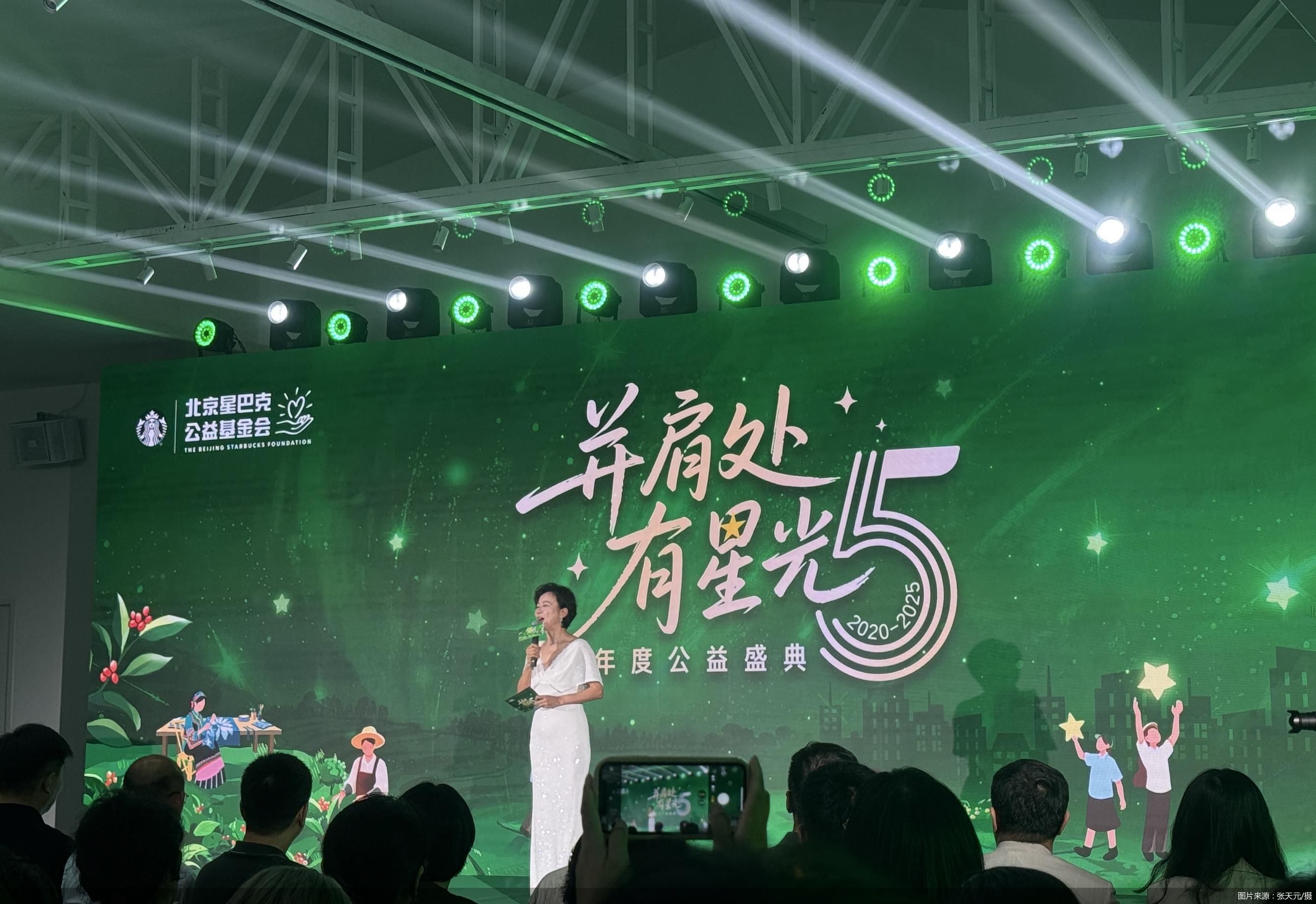
北京星巴克基金会五年累计投入超4100万元 助力乡村振兴与社区繁荣
Zheng Quan Ri Bao Zhi Sheng· 2025-08-15 10:46
Core Insights - The Beijing Starbucks Foundation celebrated its fifth anniversary, having invested over 41 million yuan in public welfare, benefiting approximately 200,000 people [1][3] - The foundation's first public welfare project, the "Exhibition Heart Plan," will receive a donation of 2.4 million yuan over the next three years to support employment for youth with intellectual disabilities [1][4] - Starbucks aims to create a sustainable public welfare model, focusing on rural revitalization and non-heritage inheritance, while also addressing urban community development and disability inclusion [3][6] Summary by Categories Public Welfare Investment - The foundation has invested over 41 million yuan in various public welfare initiatives, directly impacting around 200,000 individuals [1][6] - The "Future Star Community" project has reached over 200 communities, engaging more than 300,000 residents in local public welfare activities [6] Employment Support for Youth with Disabilities - The "Exhibition Heart Plan" aims to address three major barriers to employment for youth with intellectual disabilities, successfully helping over 2,000 individuals transition to employment [4][5] - The second phase of the "Exhibition Heart Plan" will collaborate with local support centers to enhance a collaborative employment system, benefiting over 6,500 individuals [5] Community and Cultural Initiatives - The foundation has developed a comprehensive public welfare network that includes support for rural coffee farmers, with over 10,000 farmers benefiting from revitalization projects [6] - Starbucks employees actively participate in community service and cultural heritage projects, bridging connections between rural and urban areas [5][6]

北京星巴克基金会五年投入超4100万元,宣布升级公益项目
Xin Jing Bao· 2025-08-15 09:23
Core Insights - The Beijing Starbucks Foundation has invested over 41 million yuan in public welfare initiatives over the past five years, benefiting approximately 200,000 people [1] - The foundation's first public welfare project, "Exhibition Heart Plan," will receive an additional donation of 2.4 million yuan over the next three years to support employment opportunities for youth with intellectual disabilities [1] - The foundation aims to integrate social and commercial value, focusing on rural revitalization in Yunnan and urban community development [1] Group 1 - The foundation was established in July 2020 and is registered with the Beijing Civil Affairs Bureau [1] - It has created a public welfare network that covers both rural and urban areas, addressing various social issues such as aging, disabilities, and environmental concerns [1] - The foundation has developed a long-term revitalization strategy in Yunnan, focusing on industry support, talent cultivation, and cultural heritage [1] Group 2 - The "Exhibition Heart Plan" project has successfully assisted over 2,000 youth with intellectual disabilities in obtaining career transition services, with more than 200 securing internships and jobs [2] - The upgraded phase of the project will collaborate with the Haidian District Family Support Center for Individuals with Intellectual Disabilities, aiming to benefit over 6,500 individuals [2] - The project will focus on building a collaborative system among schools, enterprises, communities, and government, and will develop specialized training courses for roles such as baristas and pastry chefs [2]
累计投入超4100万元 北京星巴克基金会成立五周年
Bei Jing Shang Bao· 2025-08-15 08:15
北京商报讯(记者 张天元)8月15日,北京商报记者了解到,北京星巴克公益基金会迎来五周年庆典。通过聚焦云南乡村振兴与非遗传承,探索城市社区发 展和残障融合,基金会已累计投入超4100万元公益资金,直接惠及约20万人。庆典活动上,基金会的首个公益项目"展心计划"迭代升级,未来三年基金会将 捐赠240万元,继续为心智障碍青年(心青年)点亮求职之路。 据介绍,早在基金会成立前,星巴克就开启了招募残障伙伴、开设手语门店的探索。2021年,星巴克基金会发起首个公益项目"展心计划",聚焦心智障碍青 年就业领域,一期项目通过从零构建起覆盖特校、企业、社会组织、政策倡导的"融合就业"全链条支持体系,成功帮助2000多位心青年获得职业转衔服务, 其中200多人走上实习和就业岗位。展心计划二期项目将再度与北京市海淀区融爱融乐心智障碍者家庭支持中心合作,聚焦和深化"校-企-社-政"协同体系, 继续深化建设咖啡师、面点师等特校实训课程,开发企业"融合岗位",探索社区就近灵活就业新机会等。 成立五年来,北京星巴克公益基金会聚焦"生机社区""融合社区""韧性社区"三大领域。截至目前,未来星社区项目已覆盖200多个社区,带动超30万居民参 ...