SoftBank(SFTBY)

Search documents
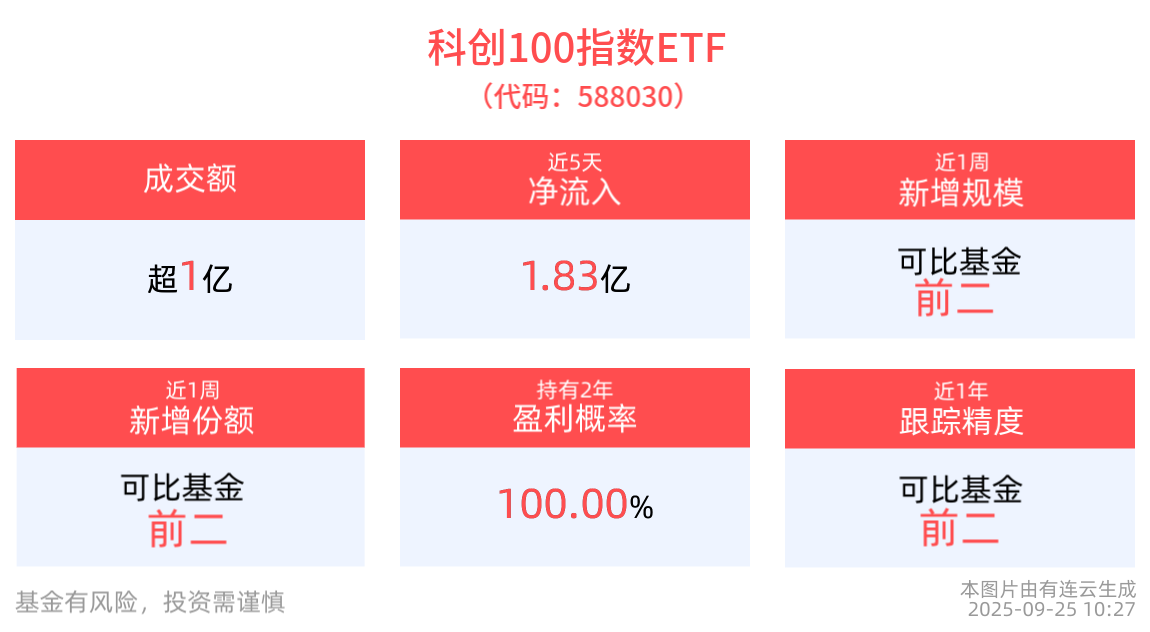
阿里巴巴宣布与英伟达开展Physical AI合作,科创100指数ETF(588030)反弹翻红,近5日“吸金”合计1.83亿元
Xin Lang Cai Jing· 2025-09-25 02:51
Group 1: Market Performance - The Shanghai Stock Exchange Sci-Tech Innovation Board 100 Index increased by 0.22% as of September 25, 2025, with notable gains from companies such as Jingwei Hengrun (up 6.46%) and Rongchang Bio (up 5.76%) [3] - The Sci-Tech 100 Index ETF (588030) also rose by 0.22%, with a latest price of 1.4 yuan, and has seen a cumulative increase of 2.73% over the past week [3] Group 2: AI Infrastructure Investment - Alibaba's CEO announced at the 2025 Alibaba Cloud Conference that the company is actively advancing a 380 billion yuan AI infrastructure project and plans to invest even more [4] - OpenAI, Oracle, and SoftBank revealed plans to build five new AI data centers in the U.S. under the "Gateway to the Stars" initiative, with total investments expected to exceed 400 billion dollars over the next three years [4] Group 3: Pharmaceutical Developments - Heng Rui Medicine announced a licensing agreement for its innovative drug SHR-A1811 with Glenmark Specialty S.A., receiving an upfront payment of 18 million dollars and potential milestone payments up to 1.093 billion dollars [4] Group 4: ETF Insights - The Sci-Tech 100 Index ETF has shown significant growth, with a recent increase of 385 million yuan in scale, ranking second among comparable funds [6] - The ETF's recent net inflow was 4.1263 million yuan, with a total of 183 million yuan net inflow over the last five trading days [6] Group 5: Sector Composition - The top three sectors in the Sci-Tech 100 Index are Electronics (37.51%), Pharmaceutical Biology (18.97%), and Power Equipment (12.8%), highlighting a strong focus on technology [6][7] - The top ten weighted stocks in the index account for 23.82% of the total index, indicating concentrated investment in key players [7]





【环球财经】OpenAI称“星际之门”要在美新建5座数据中心
Xin Hua She· 2025-09-24 12:33
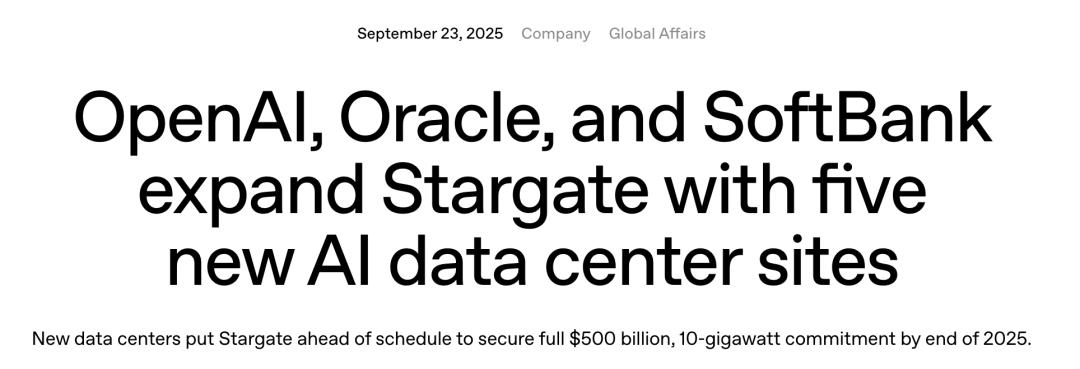
OpenAI、甲骨文与软银今年1月在特朗普重返白宫第二天宣布"星际之门"项目,计划今后4年投资5000 亿美元,在美国建设支持人工智能发展的基础设施。 美国《华尔街日报》7月披露,该项目推进受阻,已下调目标,计划年底前只建造一座小型数据中心。 知情人士当时称,OpenAI与软银作为项目联合主导方,一直就选址等问题存在分歧。 新华财经北京9月24日电美国开放人工智能研究中心(OpenAI)23日宣布,其与美国甲骨文公司和日本 软银集团合作的"星际之门"项目将在美国新建5座人工智能数据中心。 OpenAI当天在其网站发布声明说,将与甲骨文公司在得克萨斯州沙克尔福德县、新墨西哥州唐娜安娜 县和美国中西部某地合作建造三座数据中心。设在得州阿比林市的"旗舰"数据中心也将扩容。另两座数 据中心则由OpenAI与软银合建,分别设在俄亥俄州洛兹敦市和得州米勒姆县。 声明说,这5座数据中心、阿比林市数据中心以及与美国云计算公司"核心编织"合作的其他项目,将 让"星际之门"项目今后三年内规划功率容量接近7吉瓦、投资额超过4000亿美元。 据报道,阿比林市长韦尔登·赫特认为,虽然数据中心的建设给当地带来一些就业机会,但其巨大的资 ...
刚刚,大涨!重磅消息传来!
券商中国· 2025-09-24 12:25
Core Viewpoint - The article highlights significant investments in AI infrastructure by major companies, including OpenAI, Oracle, and SoftBank, with a total investment exceeding $400 billion over the next three years for new AI data centers in the U.S. [1][2][3] Group 1: AI Infrastructure Investments - OpenAI, Oracle, and SoftBank announced plans to build five new AI data centers in the U.S., with an expected investment of over $400 billion, aiming to enhance AI capabilities and support the "Stargate" project [2][3]. - The new facilities will significantly increase computational power, supporting services like ChatGPT, which already has 700 million weekly users [3][4]. - The collaboration among these companies is seen as a crucial step towards fulfilling their commitment to invest $500 billion in AI infrastructure over four years [3][4]. Group 2: Alibaba's AI Initiatives - Alibaba is also ramping up its AI infrastructure investments, with a three-year plan involving 380 billion yuan (approximately $53 billion) [1]. - The company announced a partnership with NVIDIA in the Physical AI sector, indicating a strategic move to enhance its AI capabilities [1]. Group 3: Micron Technology's Performance - Micron Technology reported a revenue of $11.315 billion for Q4 of fiscal year 2025, a 46% year-over-year increase, driven by strong demand for DRAM products, which accounted for 79% of total revenue [5][6]. - The company anticipates continued tight supply in the DRAM market and improving conditions in the NAND market, projecting Q1 2026 revenue between $12.2 billion and $12.8 billion, exceeding analyst expectations [6][7]. - Micron's CEO noted that the demand for storage chips, particularly HBM, is expected to grow significantly, with a projected increase in HBM shipments outpacing overall DRAM growth [7].


【环球财经】“星际之门”项目将在美新建5个AI数据中心
Xin Hua She· 2025-09-24 09:24
三家企业表示,上述5个AI数据中心,加上之前在得克萨斯州的旗舰数据中心以及与"核心编织"公司正 在推进的合作项目,总计可使"星际之门"项目达到近7千兆瓦的计划容量,未来三年内投资将超过4000 亿美元。 据开放人工智能研究中心官网发布的新闻公报,新建的5个数据中心中,最新宣布的两个分别位于俄亥 俄州和得克萨斯州,由软银集团和开放人工智能研究中心合作开发,可在未来18个月内扩展至1.5千兆 瓦容量。 开放人工智能研究中心今年7月和甲骨文公司达成协议,未来5年投资超过3000亿美元,在得克萨斯州、 新墨西哥州和美国中西部某地合作开发3个共计4.5千兆瓦容量的数据中心。 新华财经旧金山9月24日电(记者吴晓凌 熊茂伶)美国开放人工智能研究中心、甲骨文公司和日本软银 集团23日联合宣布,三家企业联手打造的"星际之门"项目将在美国新建5个AI(人工智能)数据中心。 美国总统特朗普今年1月在白宫宣布,三家企业联手打造"星际之门"项目,投资5000亿美元用于在美国 建设支持AI发展的基础设施。 (文章来源:新华社) ...
OpenAI, Oracle, SoftBank Unveil $500 Billion Stargate Plan With 5 New US AI Data Centers As Nvidia Commits $100 Billion To Support ChatGPT-Parent - Oracle (NYSE:ORCL)
Benzinga· 2025-09-24 09:08
Group 1 - OpenAI, Oracle, and SoftBank announced plans to build five new data centers in the U.S. as part of the $500 billion Stargate project aimed at advancing artificial intelligence capabilities [1][2] - The new data centers will be located in Shackelford County, Texas; Dona Ana County, New Mexico; and an undisclosed site in the Midwest, with two additional centers in Lordstown, Ohio, and Milam County, Texas [2] - The project is expected to create approximately 25,000 onsite jobs [2] Group 2 - The Stargate initiative aims for a total capacity approaching seven gigawatts, with over $400 billion in investments planned over the next three years, and a long-term goal of reaching 10 gigawatts [3] - OpenAI CEO Sam Altman emphasized the necessity of building the compute infrastructure to unlock the full potential of AI [4] - Oracle's CEO highlighted the company's AI infrastructure as crucial for OpenAI's rapid growth [5] Group 3 - The U.S. administration supports the Stargate project as a means to maintain national security and global competitiveness against rivals like China [6] - Nvidia announced plans to invest up to $100 billion in OpenAI, providing advanced chips to support the Stargate rollout, which will include deploying 10 gigawatts of Nvidia-powered systems for AI training and inference [7] - The deal with Nvidia is seen as a pivotal moment in the AI arms race, pressuring competitors like Meta, Amazon, Alphabet, and Microsoft to increase capital spending [8]

“星际之门”项目将在美新建5个AI数据中心
Xin Hua She· 2025-09-24 08:36
开放人工智能研究中心今年7月和甲骨文公司达成协议,未来5年投资超过3000亿美元,在得克萨斯州、 新墨西哥州和美国中西部某地合作开发3个共计4.5千兆瓦容量的数据中心。 新华社旧金山9月23日电(记者吴晓凌 熊茂伶)美国开放人工智能研究中心、甲骨文公司和日本软银 集团23日联合宣布,三家企业联手打造的"星际之门"项目将在美国新建5个AI(人工智能)数据中心。 据开放人工智能研究中心官网发布的新闻公报,新建的5个数据中心中,最新宣布的两个分别位于俄亥 俄州和得克萨斯州,由软银集团和开放人工智能研究中心合作开发,可在未来18个月内扩展至1.5千兆 瓦容量。 三家企业表示,上述5个AI数据中心,加上之前在得克萨斯州的旗舰数据中心以及与"核心编织"公司正 在推进的合作项目,总计可使"星际之门"项目达到近7千兆瓦的计划容量,未来三年内投资将超过4000 亿美元。 美国总统特朗普今年1月在白宫宣布,三家企业联手打造"星际之门"项目,投资5000亿美元用于在美国 建设支持AI发展的基础设施。(完) ...
OpenAI一口气建5个算力中心,英伟达喂饱孙正义和甲骨文
3 6 Ke· 2025-09-24 08:31
Core Insights - Nvidia plans to invest $1 billion in OpenAI, which will be used to build five new data centers in collaboration with Oracle and SoftBank, increasing the capacity of the "Stargate" project to nearly 7GW, equivalent to seven large nuclear reactors [1][10] - The partnership between OpenAI, Oracle, and Nvidia strengthens a triangular relationship, with OpenAI purchasing Oracle's cloud services, Oracle acquiring Nvidia GPUs, and Nvidia investing in OpenAI [2][10] - OpenAI's future plans for computational infrastructure will involve new partnerships and ideas, indicating a shift away from previous collaborations with Microsoft [5][14] Data Center Development - The five new data centers will be developed in partnership with Oracle and SoftBank, with three located in Texas, New Mexico, and an undisclosed Midwestern location, and two operated by SB Energy in Ohio and Texas [6][10] - The existing data center in Abilene, Texas, is a joint venture between OpenAI and Oracle, which is undergoing expansion to reach a capacity of 4.5GW [7][9] - Oracle is constructing eight data center halls in Abilene, each with a capacity of approximately 100MW, which will house over 400,000 GPUs, totaling 1.4GW [9] Financial Considerations - Nvidia's $100 billion investment in OpenAI is structured to be released in tranches, with $10 billion allocated for every 1GW of capacity completed, with the first phase expected to be completed by mid-next year [10][12] - The cost of building each 1GW AI data center is estimated at $500 billion, raising questions about OpenAI's ability to finance the remaining costs beyond Nvidia's investment [12] - Moody's has expressed concerns regarding OpenAI's cash flow to meet its contractual obligations with Oracle, highlighting potential financial risks [12] Strategic Shifts - The "Stargate" initiative is now seen as a collective term for all of OpenAI's data center projects, with SoftBank's CEO Masayoshi Son initially positioned to lead the project [13] - Microsoft appears to be sidelined in the "Stargate" project, indicating a cooling relationship between Microsoft and OpenAI [14]
软银集团ALL in AI,5年精简35%子公司
3 6 Ke· 2025-09-24 04:09
Core Insights - SoftBank Group is undergoing a transformation focused on the "AI revolution," with significant investments in AI-related companies through its Vision Funds [2][7] - The number of subsidiaries has decreased to 965 as of March 2023, marking the first time below 1,000 since FY2016, reflecting a strategic shift towards consolidating AI-focused enterprises [2][9] - SoftBank's stock price has doubled since the beginning of 2025, driven by investor optimism regarding its commitment to AI investments [9] Group 1 - SoftBank Group's Vision Funds have invested in 335 companies, primarily in the AI sector, as of June 2025 [2][7] - The company sold its stake in Fortress Investment Group, which was initially acquired for $3.3 billion in 2017, to refocus on more synergistic investments [4][7] - The reduction in subsidiaries is part of SoftBank's strategy to pursue a "group strategy" aimed at maximizing synergies among AI enterprises [2][9] Group 2 - SoftBank's annual report indicates a 35% decrease in subsidiaries from 1,475 in FY2019 to 965 in FY2023 [2] - The company has faced significant financial fluctuations, with a record net profit of ¥4.9879 trillion in FY2020 followed by a historic loss of ¥1.708 trillion in FY2021 [4] - SoftBank's market capitalization has reached the fourth position in Japan, following Toyota, Mitsubishi UFJ Financial Group, and Sony, as of September 22, 2023 [9]
软银集团ALL in AI,5年精简35%子公司
日经中文网· 2025-09-24 02:58
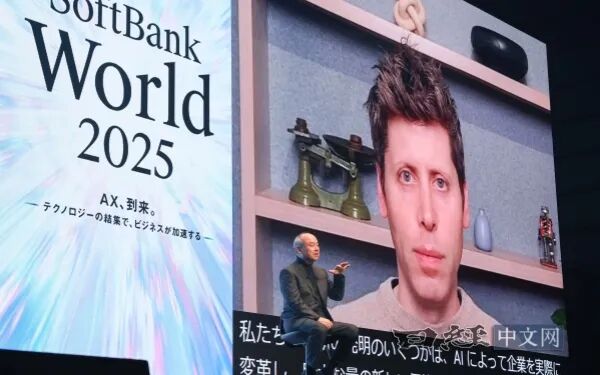
软银集团会长兼社长孙正义在线上与OpenAI首席执行官萨姆·奥尔特曼对话(7月,东京都港区) 软银集团2021财年经历了史上最大亏损之后,孙正义开始正式投身"AI革命"。截至2025年6月底,软银 集团通过愿景基金1号和2号共投资了335家公司,其中大部分都是AI相关企业…… 日本软银集团(SBG)正在整合旗下子公司。截至3月底,软银集团子公司为965家,比1年前减少了 23%。这是因为软银集团出售了在人工智能(AI)基础设施业务上难以产生乘积效应的美国投资基金。 以通过同志联合来追求乘积效应的"群战略"为前提,软银正在试图转型为汇集AI精锐企业的组织体。 软银集团的年度报告显示,子公司数量低于1000家是自2016财年(截至2017年3月)以来、时隔7年的 首次。较2019财年的1475家减少了35%。上一财年的锐减是因为全部出售了美国堡垒投资集团(Fortress Investment Group)的持股。 2017年 ,软银集团以33亿美元(按当时汇率计算约3700亿日元)收购了堡垒投资。当时"软银愿景基金 (SVF)"刚刚成立,希望通过收购堡垒投资来吸收投资公司的运营经验。 软银集团目前的股价表现坚挺 ...
OpenAI一口气建5个算力中心!英伟达喂饱孙正义和甲骨文
量子位· 2025-09-24 01:21
Core Viewpoint - OpenAI has announced a new investment plan in collaboration with Oracle and SoftBank to build five new data centers, supported by a recent $1 billion investment from NVIDIA, enhancing the existing partnership dynamics among these companies [1][4][16]. Group 1: New Data Centers - OpenAI will collaborate with Oracle and SoftBank to develop five new data centers as part of the "Stargate" project, increasing the planned capacity to nearly 7GW, equivalent to seven large nuclear reactors [2][3][8]. - Three of the new data centers will be built in Texas, New Mexico, and an undisclosed Midwestern location in partnership with Oracle [9]. - The remaining two data centers will be operated by OpenAI and SB Energy, a subsidiary of SoftBank, located in Ohio and Texas [10]. Group 2: Investment Dynamics - NVIDIA has announced a plan to invest $100 billion in OpenAI to build 10GW of data center capacity, which is approximately equivalent to 4-5 million GPUs [16]. - This investment will be disbursed in tranches, with $10 billion allocated for each 1GW facility completed, with the first phase expected to be completed by mid-next year [17]. - Concerns have been raised regarding whether OpenAI has sufficient cash flow to meet its obligations to Oracle, especially since the cost of building each GW capacity data center is estimated at $50 billion [19]. Group 3: Shifts in Partnerships - Microsoft, a former key partner of OpenAI, appears to be sidelined in the new "Stargate" initiative, indicating a shift in the strategic alliances within the AI sector [6][23]. - The relationship dynamics have shifted, with Oracle benefiting from the new developments while Microsoft seems to have lost its influential position [7][19].