Toyota(TM)

Search documents
丰田新车投入周期将从7年延长至9年
日经中文网· 2025-11-18 03:05
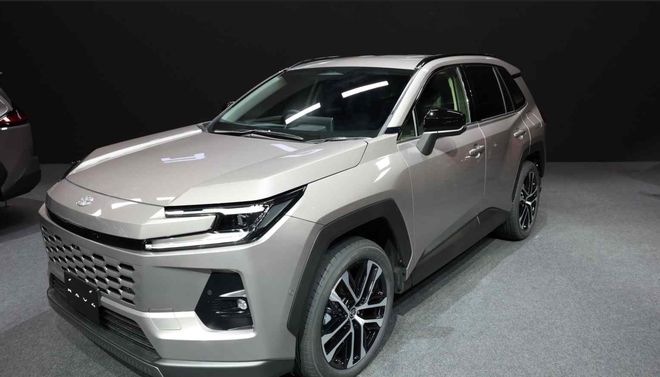
Group 1 - Toyota is extending the average full model change cycle for its main models from 7 years to 9 years, focusing on electric vehicle development and software updates to maintain vehicle value [2][4] - The recent update of the SUV "RAV4" marks the first major update in about 7 years, with plans for a new model to be launched in the 2025 fiscal year [4] - The shift to a longer model cycle aims to avoid rapid price declines associated with frequent new model releases, allowing for better resale value of used cars [5] Group 2 - The introduction of software-defined vehicles (SDVs) allows for performance enhancements without the need for new hardware installations, potentially changing the business model for comprehensive updates [4] - Toyota's adjustment in the sales cycle may impact the pricing strategies for dealers, as the wholesale prices will be set flexibly based on model and sales conditions, rather than decreasing over time [5] - The change in model cycles could also affect material suppliers, such as steel manufacturers, as there may be increased trends in using new materials for partial updates [5]



日本这些产业仰仗中国
Di Yi Cai Jing Zi Xun· 2025-11-17 15:08
Core Viewpoint - The recent provocative remarks by Japanese politicians regarding Taiwan have negatively impacted Japanese retail and consumer goods companies, leading to significant stock price declines, particularly for Shiseido, which saw an 11% drop [2]. Automotive Industry - Japanese automotive brands, particularly Lexus, Toyota, and Subaru, are increasingly reliant on the Chinese market, with Lexus imports reaching 138,412 units in the first nine months of the year, a 4% increase, although overall imports have been declining over the past four years [2]. - The market share of Japanese automakers in China has decreased to 11.2% in 2024, down 3.2 percentage points from 2023, with Toyota's sales dropping by 6.9% to 1.776 million units, Honda's sales down 30.9% to 852,000 units, and Nissan's sales down 12.2% to 696,000 units, marking the lowest levels since 2008 [3]. - If political tensions continue, Japanese automotive exports and local sales in China are expected to be significantly affected, with a noted decline in competitiveness for Japanese brands [4]. Consumer Electronics and Appliances - Japan's exports of home appliances to China have sharply decreased, with only about 50,000 units exported annually, including 30,000 refrigerators and 20,000 washing machines [5]. - The value of home appliance imports from Japan has declined from $1.016 billion in 2022 to $785 million in 2023 and is projected to be $708 million in 2024, indicating a downward trend in demand [5]. Sportswear Industry - ASICS, a prominent Japanese sports brand, has experienced rapid growth in China, with projected sales of approximately 5 billion yuan in 2024 and a sales growth rate of nearly 30%, outpacing most other major markets [6]. Alcohol and Beverage Industry - Japan ranks fourth in the import of spirits to China, with a total value of $3.0737 million in the first eight months of 2025, primarily driven by whiskey imports, which saw a 41.9% increase [7]. - Japanese sake exports to China have significantly increased over the past decade, with exports to mainland China and Taiwan growing by 495.9% and 165.9%, respectively, indicating a strong market presence [7]. Tourism Industry - The number of Chinese tourists visiting Japan is projected to exceed 6.98 million in 2024, a 187.9% increase, with Chinese tourists accounting for 20%-25% of total visitors [8]. - Chinese tourists are the largest spenders in Japan, contributing 1.73 trillion yen to the economy, which is 21.3% of total foreign tourist spending [9]. - The potential decline in Chinese tourists due to political tensions could lead to an estimated economic loss of 2.2 trillion yen for Japan, equivalent to approximately 101.16 billion yuan [9].


日本汽车、家电边缘化,这些产业仰仗中国
Di Yi Cai Jing· 2025-11-17 13:30
Group 1: Japanese Automotive Industry in China - Japanese automotive brands are experiencing a decline in competitiveness in the Chinese market, with potential further market share shrinkage if the Japanese government does not correct its course [1][3] - The market share of Japanese automakers in China has dropped to 11.2% in 2024, a decrease of 3.2 percentage points from 2023, with major companies like Toyota, Honda, and Nissan facing significant sales declines [3] - Toyota's sales in China for 2024 are projected at 1.776 million units, down 6.9%, while Honda's sales have plummeted by 30.9% to approximately 852,000 units, marking the lowest level since 2014 [3] Group 2: Impact of Political Relations - The deterioration of Sino-Japanese political relations, influenced by provocative statements from Japanese politicians, is expected to adversely affect Japanese industries reliant on the Chinese market, including automotive, alcohol, and tourism [1][8] - Analysts suggest that if political tensions continue, Japanese automotive exports and local sales in China will be significantly impacted [3][4] Group 3: Japanese Consumer Goods and Retail - Japanese retail and consumer goods companies are seeing stock price declines due to their reliance on Chinese consumers, with Shiseido's stock dropping by 11% following political tensions [1] - The import of Japanese household appliances to China has been decreasing, with a drop from $1.016 billion in 2022 to an estimated $708 million in 2024 [5] Group 4: Japanese Alcohol and Tourism - Japan's whiskey imports to China have shown significant growth, with a 41.9% increase in import value in the first eight months of 2025, amounting to $2.436 million [6] - Chinese tourists are a major consumer of Japanese sake, with exports to China growing by 495.9% over the past decade, making China the largest export market for Japanese sake [7] Group 5: Economic Impact of Reduced Tourism - A significant reduction in Chinese tourists visiting Japan could lead to a 0.36% decrease in Japan's GDP, equating to an estimated economic loss of 2.2 trillion yen (approximately 101.16 billion yuan) [9]
丰田将旗舰车型生命周期延长至9年,未来专注于软件更新
Guan Cha Zhe Wang· 2025-11-17 10:40
Core Insights - Toyota will extend the sales cycle of its flagship models from an average of 7 years to 9 years, utilizing software updates to maintain product value [1][3] - This shift represents a significant change in the automotive industry's business model, moving away from integrating new features solely in new vehicles [1] - Toyota will still make functional and aesthetic changes to key models while adopting a flexible pricing strategy for wholesale prices based on model and sales conditions [3] Group 1 - The average 9-year sales cycle for Toyota's flagship models is unprecedented, with previous cycles being around 5 years and gradually extending to 7 years [3] - The RAV4 is expected to undergo its first full model change in approximately 7 years, with a release planned for the fiscal year 2025 [3] - Toyota is currently facing a high volume of orders, leading to extended delivery times, which may result in owners having more opportunities to purchase popular models without significant depreciation [3] Group 2 - For models exclusively offered in China, Toyota will maintain development efficiency to adapt to local market conditions [4] - In comparison to other manufacturers, Honda typically changes models every 6-7 years, while Nissan may take nearly 10 years, whereas Tesla updates every 3-5 years and some Chinese manufacturers may do so annually [4]
狂赚430亿,1个丰田利润顶5.5个比亚迪!
Jin Tou Wang· 2025-11-14 08:18
Core Insights - The combined profit of China's top eight automotive companies is less than half of Toyota's profit, highlighting a significant disparity in profitability [1] - Over the past five years, the profits of 11 major Chinese automotive groups have decreased by 70%, with total profits dropping from 215.1 billion to 65.4 billion RMB [3] - The automotive industry's profit margin has reached a historical low of 3.4% as of August this year [3] Profitability Challenges - The decline in profits is attributed to severe product homogenization, leading to price wars where the lowest price becomes the only competitive advantage [4] - Chinese automotive companies are facing challenges in establishing technological barriers and differentiation, which forces them into price competition [4] Comparison with Toyota - Toyota's high profitability is supported by efficiency management, technological barriers, and global resilience, representing a mature system advantage [6] - In contrast, BYD's success is driven by scale effects, full-chain autonomy, and technological iteration, allowing it to carve out a niche in the Chinese electric vehicle market [6] Supply Chain Dynamics - Toyota's payment cycle to suppliers is only 54 days, while Chinese companies have payment cycles ranging from 170 to 275 days, affecting cash flow and financial costs [7] - High inventory levels and slow turnover in Chinese companies lead to significant profit erosion, while Toyota maintains cost stability amid raw material price fluctuations [7] Market Position and Future Outlook - Chinese automotive companies need to transition from scale expansion to value creation, focusing on lean management, patent barriers, global profitability, and value-added services [9] - The industry may face a significant shake-up, with predictions that over 100 companies could be eliminated if profitability does not improve, leaving only those with strong technology and brand recognition [9]

通用汽车下令数千家供应商剥离中国供应链,2027年前完成;苹果获得微信小游戏抽成15%;阿里秘密启动千问项目,对标ChatGPT
雷峰网· 2025-11-14 01:01
Group 1 - General Motors has ordered thousands of suppliers to eliminate Chinese components from their supply chains, aiming to complete this by 2027 [5][6] - Alibaba has secretly launched the "Qianwen" project to develop a personal AI assistant app, competing directly with ChatGPT [8] - Apple has reached an agreement with Tencent to take a 15% commission from WeChat mini-games, potentially earning 9 billion yuan annually [9][10] - Domestic GPU company Muxi has received approval for its IPO on the Sci-Tech Innovation Board, aiming to raise 3.904 billion yuan [10][11] - Tencent reported a Q3 profit of 63.13 billion yuan, with employee numbers exceeding 115,000 [15][16] Group 2 - Faraday Future announced it will adopt Tesla's NACS charging standard for its future models, allowing access to over 28,000 Tesla Superchargers [13][14] - Transsion Holdings plans to issue H-shares and list on the Hong Kong Stock Exchange, despite a 3.33% revenue decline in the first three quarters of the year [15] - The Ministry of Public Security in China is proposing new safety standards for vehicles, including limiting acceleration to under 5 seconds [19][20] - The Chinese government is mandating the use of domestic AI chips in cloud services, prioritizing Huawei's Ascend series [24][25] - Baidu's CEO stated that the majority of search results are now generated by AI, with a significant increase in rich media content [26] Group 3 - Microsoft CEO Satya Nadella revealed that the company has access to all research data from OpenAI's chip development [33][34] - Synopsys announced a layoff of about 2,000 employees as part of a restructuring plan to focus on AI chip design [35][36] - AMD's CEO Lisa Su expressed confidence in the company's growth, aiming to capture a significant share of the AI market currently dominated by NVIDIA [42][43] - Toyota plans to invest up to $10 billion in the U.S. over the next five years, marking a significant increase in its historical investment [45][46]





丰田北美电池工厂正式投产 追加在美投资100亿美元
Xin Lang Cai Jing· 2025-11-13 20:37
Core Viewpoint - Toyota has officially launched its North American battery plant with a total investment of $14 billion, marking a significant step in its expansion into the electric vehicle market [1] Investment and Expansion - The company plans to invest an additional $10 billion in hybrid production capacity in the U.S. over the next five years, bringing its total investment in the U.S. to over $60 billion [1] - The new battery plant is Toyota's largest battery production investment in the U.S. and the first battery facility outside Japan [1] Market Position and Competition - Currently, approximately half of Toyota's vehicles in the U.S. are hybrid or electric, which is twice the industry average [1] - However, the company faces competitive risks as rivals are restructuring their hybrid market strategies [1]
Toyota to recall over 126K vehicles in US over engine stall risk
New York Post· 2025-11-13 17:05
Group 1 - Toyota is recalling 126,691 Tundra and Lexus vehicles in the U.S. due to manufacturing debris that may stall the engine [1][3] - The recall is being overseen by the U.S. National Highway Traffic Safety Administration (NHTSA) [1][3] - A remedy for the issue is currently under development and will be performed once available [3]

Toyota Q2 Earnings Miss Expectations, Revenues Rise Y/Y
ZACKS· 2025-11-13 16:11
Core Insights - Toyota reported fiscal second-quarter 2026 earnings per share of $4.85, missing the Zacks Consensus Estimate of $5.07 but increasing from $2.90 in the same quarter last year [1][8] - Consolidated revenues reached $83.94 billion, up from $76.92 billion in the prior-year quarter [1][8] - The company had consolidated cash and cash equivalents of ¥8.11 trillion ($54.6 billion) as of September 30, 2025, with long-term debt increasing to ¥23.63 trillion ($159 billion) [1] Segmental Results - The Automotive segment's net revenues increased 7% year over year to ¥11.06 trillion ($74.5 billion), but operating profit declined 39.5% to ¥574.1 billion ($3.9 billion) [2] - The Financial Services segment's net revenues rose 14.4% to ¥1.19 trillion ($8.01 billion), with operating income increasing 40.2% to ¥228.2 billion ($1.54 billion) [2] - All Other businesses reported net revenues of ¥393 billion ($2.64 billion), a 16.3% increase year over year, but operating profit fell 5.7% to ¥31.4 billion ($212 million) [3] FY26 Guidance - For fiscal 2026, Toyota projects total retail vehicle sales of 11.3 million units, up from 11.01 million units in fiscal 2025 [4] - Expected sales for fiscal 2026 are ¥49 trillion, compared to ¥48.04 trillion in fiscal 2025, while operating income is projected to decline by 29% to ¥3.4 trillion [4] - Pretax profit is estimated at ¥4.18 trillion, down from ¥6.41 trillion in fiscal 2025, with R&D expenses expected to rise to ¥1.5 trillion and capex forecasted at ¥2.3 trillion [5]

Northstar Clean Technologies ($ROOOF) | Toyota ($TM) | WeRide ($WRD) | ECARX ($ECX)
Youtube· 2025-11-13 13:57
Group 1 - Northstar Clean Technologies has signed a 5-year contract with the city of Calgary to reprocess asphalt shingles, supporting Calgary's waste diversion goals and securing feedstock for its Empower Calgary facility [1][2] - Toyota Motor has commenced production at its new $14 billion battery plant in North Carolina, which will produce 30 gigawatt hours annually, contributing to Toyota's total US investment of nearly $60 billion [2] - We Ride and Grab have received approval for autonomous vehicle testing in Singapore, planning to quadruple test runs by year-end and launch the first autonomous shuttle service by early 2026 [3] Group 2 - E-CARX has secured a second contract from Volkswagen to supply advanced digital cockpit solutions, enhancing in-car connectivity with integrated Google automotive services [3][4]