Toyota(TM)

Search documents
2025日本移动出行展前瞻:电动化终于迈向日本市场
Guan Cha Zhe Wang· 2025-10-24 10:27
Core Insights - The 2025 Japan Mobility Show, taking place from October 29 to November 9, represents a significant shift in the Japanese automotive market, focusing on electric vehicle (EV) transformation and consumer demand changes [1][12] - Japanese automakers, including Toyota and Honda, are accelerating their transition towards electric and hybrid vehicles in response to competition from companies like BYD and Tesla [1][12] Group 1: Toyota's Strategy - Toyota will showcase its electric product concepts, including a new Corolla replacement model available in both pure electric and hybrid versions, aligning with its European strategy [3][4] - Lexus plans to unveil a new ES sedan and a six-wheeled LS concept car, indicating a commitment to both electric and luxury segments [3][4] - Toyota is also developing a new independent ultra-luxury brand to compete with Rolls-Royce and Bentley, alongside introducing a new coupe concept under its "Century" series [4] Group 2: Honda's Focus - Honda will present two new electric concept cars, including the third model of its next-generation 0 series electric vehicles, emphasizing small and easy-to-handle electric cars [6][12] Group 3: Nissan's Approach - Nissan will focus on mass production vehicles, introducing the new Elgrand with third-generation e-POWER technology and an upgraded Ariya electric crossover [9][12] - The company aims to showcase its commitment to electrification through various global electric models, including the third-generation Leaf and models developed in collaboration with the Chinese market [9] Group 4: Mazda's Innovations - Mazda will display two concept cars that represent its future design direction and next-generation power systems, including efforts in carbon-neutral fuel and carbon capture technology [11][12] Group 5: Market Trends - Data from JATO Dynamics indicates that the share of pure internal combustion engine vehicles in Japan has fallen below 50% for the first time in 2023, with projections showing a further decline to 42.3% in 2024 [12][15] - The market for hybrid vehicles has stabilized at a penetration rate of 33.8% in the first half of 2025, while pure electric vehicles remain at a low 1.3% [12][15] - The growth in the light vehicle segment is driving the increase in pure electric models, with Japanese consumers showing a willingness to adopt electric products if quality and quantity improve [15] Group 6: Competitive Landscape - BYD plans to introduce a dedicated micro electric vehicle for the Japanese market, indicating its strategy to compete in the unique microcar segment [17] - Hyundai and Kia will also present new electric models at the show, including the Nexo hydrogen fuel cell crossover and electric commercial vehicles, highlighting the competitive landscape in the Japanese EV market [19][20]





SMMT discloses figures for September 2025 UK new car pre-registrations
Yahoo Finance· 2025-10-23 14:48
Core Insights - The Society of Motor Manufacturers and Traders (SMMT) has published pre-registration figures for the UK new car market for September 2025, detailing the number of cars disposed of by manufacturers and the gross income from these transactions [1][5]. Volume of Pre-Registrations - Volvo leads the pre-registered car sales with 528 units, followed by MG with 107 units, Audi with 10 units, and Volkswagen with 8 units. Other manufacturers include Seat (88), Skoda (20), Renault (7), and Vauxhall (2) [2]. Market Share and Revenue - In the 2024 market landscape, Volkswagen holds an 8.52% market share, Audi at 6.27%, MG at 4.18%, Vauxhall at 4.04%, Skoda at 4.03%, Volvo at 3.40%, Renault at 2.97%, and Seat at 1.88% [3]. - Revenue generated from pre-registrations shows Volvo leading with £20.9 million, followed by MG with £2,009,409, Audi with £385,685, Skoda with £578,350, Vauxhall with £38,175, Renault with £31,383.33, Seat with £1,868,421, and Volkswagen with £213,603 [3][4]. Industry Opportunities - SMMT has indicated that the UK's automotive remanufacturing sector presents opportunities for economic advancement and enhanced resource self-reliance [4].

雷克萨斯在中国,有新进展
Guan Cha Zhe Wang· 2025-10-23 09:28
Group 1 - Lexus Shanghai Jinshan factory is set to be completed by mid-2026, with 100 employees currently on-site [1] - The Lexus Shanghai office building has officially opened, with approximately 80 employees currently working there, and the number is expected to reach around 280 by April 2026 [1] - The Shanghai electric vehicle project is a key part of Toyota's electrification strategy, with plans to establish a wholly-owned company for Lexus electric vehicles and batteries, aiming for production in 2027 with an initial capacity of 100,000 units per year [1][3] Group 2 - Lexus (Shanghai) New Energy Co., Ltd. has been established, making Toyota the second foreign company to build a factory in Shanghai after Tesla [3] - The company acquired a 1,127,800 square meter industrial land in Jinshan, with a transaction price of 1.353 billion yuan [3] - Lexus is set to unveil its new 6-wheel MPV concept car at the Tokyo Motor Show on October 30, which will succeed the LS series [3][4] Group 3 - Toyota's chairman defined the future direction of the Lexus brand as "exploration" and "not imitating anyone," emphasizing the need for innovation in the automotive field [5] - Lexus achieved over 180,000 sales in the Chinese market in 2024, marking a year-on-year increase, and was the only imported luxury car brand to achieve such growth [9] - In the first half of the year, Lexus sold 85,000 units in China, reflecting a 12.2% year-on-year increase, also making it the only imported luxury brand to grow in this competitive market [9]

美国汽车创新联盟敦促特朗普政府放弃机器人关税,警告将推高新车价格
Zhi Tong Cai Jing· 2025-10-23 05:48
Core Viewpoint - The Alliance for Automotive Innovation urges the Trump administration not to impose new tariffs on factory robots and machinery, warning that such tariffs could increase production costs and lead to vehicle shortages, further driving up new car prices, which are already at historical highs [1] Group 1: Industry Concerns - The Alliance represents nearly all major automakers, including General Motors, Toyota, Volkswagen, and Hyundai, and submitted comments following a national security investigation initiated by the U.S. Department of Commerce [1] - The organization highlighted that approximately 40% of all new robots and industrial machinery installed in the U.S. in 2024 will be used in automotive production facilities [1] - Automakers request that any tariffs imposed should exempt robots and equipment actually used in U.S. production [1] Group 2: Additional Industry Voices - Tesla, not a member of the Alliance, also called on the Trump administration to avoid imposing tariffs, stating that such tariffs could weaken investment and slow down the construction of new factories or upgrades to existing ones [2] - Various foreign governments, including China, Canada, Japan, Switzerland, and the EU, have submitted opinions opposing the proposed tariffs [4] Group 3: Broader Economic Implications - The American Retail Federation warned that tariffs and potential equipment shortages could raise business costs and consumer prices, noting that its members widely use robotic technology in stores, warehouses, and distribution centers [5] - The U.S. Chamber of Commerce indicated that some critical machinery is only produced abroad, including extreme ultraviolet lithography equipment used in semiconductor manufacturing, and that tariffs could undermine efforts to build domestic semiconductor manufacturing capabilities [5]


那些「宁死」不买电车的人
3 6 Ke· 2025-10-23 04:07
Core Viewpoint - The automotive market is at a crossroads between traditional fuel vehicles and electric vehicles (EVs), with a significant penetration of EVs but a persistent demand for fuel vehicles. In September, the penetration rate of new energy vehicles in the passenger car market reached 57.8%, indicating that for every two new cars sold, one is an EV. However, fuel vehicle sales also saw a positive growth trend, with approximately 945,000 units sold in September, marking four consecutive months of growth [1]. Group 1: Consumer Perspectives on Fuel Vehicles - Many consumers express a strong attachment to fuel vehicles, citing nostalgia and a preference for the driving experience they offer. For instance, one consumer mentioned that they would opt for a second-hand fuel vehicle if all new fuel vehicles were discontinued [2]. - Older drivers often find it difficult to adapt to the quietness of electric vehicles, preferring the sound and performance characteristics of fuel vehicles. They appreciate the mechanical feel and craftsmanship of traditional cars, which they believe are superior to many electric models [3][5]. - Concerns about the safety and reliability of electric vehicles are prevalent among fuel vehicle owners. Issues such as battery safety and the risk of electric vehicle fires are frequently mentioned, alongside doubts about the long-term value retention of electric vehicles compared to fuel vehicles [10][12]. Group 2: Market Trends and Consumer Behavior - The increasing presence of electric vehicles on the roads is noted, with a significant rise in their numbers in residential areas. This shift is partially attributed to rising fuel prices, which have increased from 6 yuan to 8 yuan per liter for 92-octane gasoline [6]. - Younger consumers show a growing interest in electric vehicles, but many still prefer fuel vehicles for their reliability and convenience. The availability of charging stations and the practicality of long-distance travel remain significant concerns for potential electric vehicle buyers [15][21]. - The competitive landscape for electric vehicles is intensifying, with consumers increasingly aware of the technological advancements in the sector. However, many still prioritize the established reliability and performance of fuel vehicles over the newer electric options [19][27].

丰田中国回应“渠道改革”:系误读
第一财经· 2025-10-23 03:03
Group 1 - The core viewpoint of the article is that Toyota is implementing a channel reform, adopting a "single city, single store" model, which means only one joint venture brand 4S store will be retained in a city, selling both GAC Toyota and FAW Toyota full model range [1] - Toyota China clarified that the media report was a misinterpretation, stating that the current approach is a small-scale pilot in a few low-tier cities where only FAW Toyota or GAC Toyota is sold together, aimed at providing consumers with more convenient services and product choices [1]
丰田中国回应“渠道改革”:系误读
Di Yi Cai Jing· 2025-10-23 02:48
Core Viewpoint - Toyota is reportedly implementing a channel reform by adopting a "single city, single store" model, but this has been clarified as a misinterpretation by Toyota China, which states that the initiative is only a small-scale pilot in select lower-tier cities [1] Group 1 - Toyota is said to be retaining only one joint venture 4S store per city, selling the full range of models from both GAC Toyota and FAW Toyota [1] - The initiative aims to provide consumers with more convenient services and a wider selection of products [1] - The current implementation is limited to a very small scale and does not involve a forced categorization or transformation of all regions into a single channel [1]
The Next Adventure Begins: 2026 RAV4 Arrives this Winter
Prnewswire· 2025-10-22 14:00
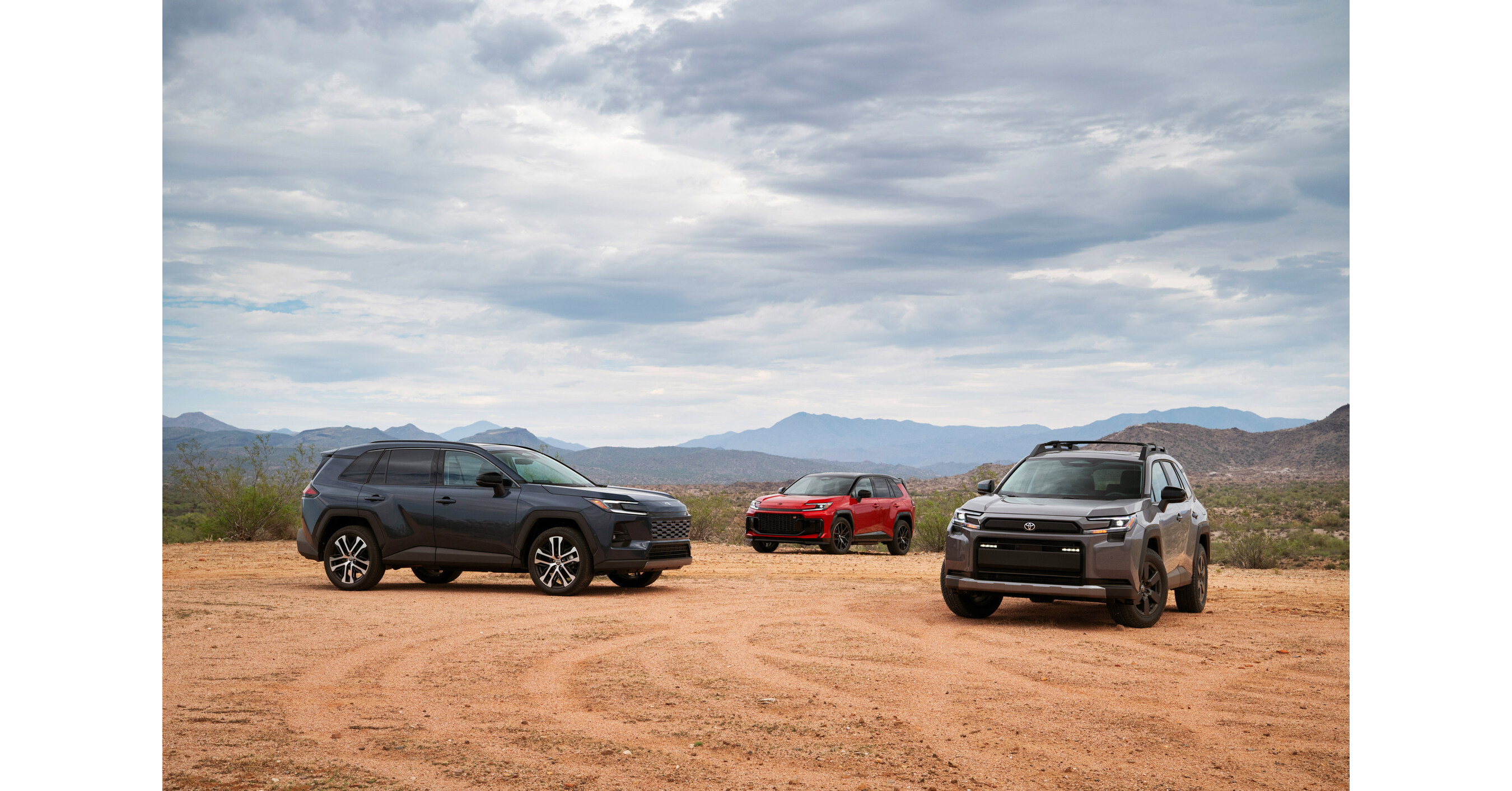
Core Insights - The 2026 Toyota RAV4 is set to launch with significant updates, including a fully electrified lineup featuring Hybrid and Plug-in Hybrid models, marking a shift towards sustainability in the small SUV segment [3][8] - The RAV4 has been the best-selling small SUV in America for nearly 30 years, with over 6.4 million units sold since its introduction in 1996 [1][2] Design and Performance - The 2026 RAV4 will be available in three distinct exterior styles: core, rugged, and sport, with various grades including LE, XLE Premium, Limited, Woodland, SE, XSE, and the new GR SPORT model [2][36] - The new model features enhanced chassis rigidity and suspension components for improved handling and comfort, with a focus on a smooth driving experience [2][17] Powertrain and Efficiency - The RAV4 Hybrid models will utilize the 5th generation Toyota Hybrid System, offering up to 44 MPG combined fuel economy for FWD models, and 236 net combined horsepower for AWD models [4][20] - The Plug-in Hybrid models will feature a 23% increase in all-electric driving range, reaching up to 52 miles, and a combined output of 324 net horsepower [5][26] Technology and Safety - The 2026 RAV4 will introduce the latest Toyota Audio Multimedia system, featuring 5G connectivity, a customizable home menu, and enhanced voice assistant capabilities [6][62] - All models will come standard with Toyota Safety Sense 4.0, which includes advanced safety features such as Pre-Collision Detection and Lane Tracing Assist [7][71] Interior and Comfort - The interior design includes a new center stack for better organization, a 12.3-inch digital gauge cluster, and improved seating comfort with a focus on functionality [12][13][14] - The RAV4 will offer a variety of color options and materials across its lineup, enhancing the overall aesthetic appeal [15][38] Production and Availability - The 2026 RAV4 Hybrid models are expected to arrive at U.S. dealerships in December 2025, while the Plug-in Hybrid models will follow in spring 2026 [8][3] - The models will be built on the Toyota Next Generation Architecture-K (TNGA-K) unibody platform, with production facilities located in the U.S. and Japan [16][23]
2026 Toyota bZ Goes on Sale with Upgraded Convenience Features, Expanded Charging Network Options for all Toyota BEV Drivers
Prnewswire· 2025-10-22 12:00
Core Insights - Toyota Motor North America (TMNA) is launching several initiatives to enhance the experience for 2026 Toyota bZ battery electric vehicle (BEV) drivers, including performance improvements and expanded charging options [1][7]. Expanded Charging Network - The 2026 Toyota bZ will provide access to over 25,000 charging plugs in North America through the Tesla Supercharger Network, in addition to existing networks like IONNA, ChargePoint, and EVgo [2][4]. - The Tesla Supercharger Network will be the first to support Plug & Charge functionality for 2026 BEV owners, simplifying the charging process [4]. Charging Convenience Features - All 2026 Toyota BEVs will include adapters for backward compatibility with SAE J1772 and Combined Charging System (CCS) stations, enhancing charging flexibility [5][6]. - Starting in November, owners of model year 2023-25 Toyota bZ4X will receive a complimentary NACS charging adapter [5]. Apple Maps EV Routing - Toyota has introduced support for Apple Maps EV Routing via Apple CarPlay for all 2023 and newer Toyota BEVs, allowing real-time navigation to compatible chargers [7][8].
Fire At Key Ford Supplier Also Affects Rival Stellantis As Automaker Shuts Down Warren Plant Over Parts Shortage: Report - Stellantis (NYSE:STLA)
Benzinga· 2025-10-22 10:18
Core Insights - Stellantis NV has halted production at its Warren, Michigan plant due to a fire incident at a supplier, affecting the production of the Jeep Wagoneer SUV [1][2] - The production stoppage began on October 13 and is expected to last until after November 3, 2025, due to a parts shortage, specifically aluminium hoods and doors [2] - The incident is part of a broader issue affecting the automotive industry, as Novelis, a key aluminium supplier, reported a fire that impacted over 40% of its Oswego, New York facility [3] Production Impact - Stellantis confirmed the production halt was due to a shortage of parts, which is critical for the Jeep Wagoneer [2] - The fire at Novelis has implications not only for Stellantis but also for other manufacturers like Ford, Toyota, Volkswagen, and Hyundai, indicating a wider supply chain disruption [3] Strategic Developments - Stellantis has announced a partnership with Pony AI Inc. to test self-driving electric vans in Europe, focusing on robotaxi operations [4] - The company is making a significant $13 billion investment in the U.S. market, aiming to increase production by 50% and introduce over five new vehicles, which will create more than 5,000 jobs [5]