
Toyota(TM)

Search documents
丰田即将涨价,美国不打价格战
汽车商业评论· 2025-06-22 21:45
Core Viewpoint - Toyota is set to increase prices for certain models in the U.S. market starting July 2025, with an average increase of approximately $270 for Toyota brand vehicles and $208 for Lexus models, reflecting a response to rising costs and market conditions [2][4][23] Price Adjustment Details - The price adjustment is described by Toyota as a "routine price review" and is not directly linked to the recent 25% tariffs imposed by the U.S. government on imported vehicles and parts [3][5] - This marks the second significant price increase by Toyota in the U.S. within two years, following a 3% to 5% increase in 2023 due to rising logistics costs, high raw material prices, and increased labor costs in North America [4][23] Cost Pressures - The new tariffs are expected to add approximately $1.25 billion in additional costs for Toyota in the fiscal year 2025 [8] - Despite a gradual decrease in U.S. inflation, the overall operating costs in the automotive industry remain high, with raw materials, energy prices, and logistics costs not returning to pre-pandemic levels [9] Consumer Impact - The average price increase of $270 may not seem significant, but it could influence purchasing decisions for mainstream family models like RAV4, Camry, and Corolla [12][13] - For example, the base model RAV4's suggested retail price may rise from approximately $29,250 to nearly $29,500, potentially increasing total costs by $500 to $800 when considering state taxes and financing rates [14] Financial Implications - The price increase is expected to help alleviate profit pressures in the short term, as Toyota anticipates a more than 30% decline in net profit year-over-year for the first quarter of fiscal 2025 due to new tariffs, rising raw material costs, and currency exchange losses [16][15] - Analysts suggest that without price adjustments, Toyota's profitability in the North American market could continue to be under pressure, affecting future R&D investments and dealer channel health [17] Dealer Network Effects - The price increase may have indirect effects on the U.S. dealership system, allowing dealers of popular models with low inventory to maintain or improve their bargaining power, while potentially causing consumers in slower sales regions to hesitate or switch to the used car market [18] Strategic Adjustments - Toyota is accelerating its strategic transformation in response to the complex U.S. market environment, including increasing production of hybrid models domestically and investing in new battery and power system factories in North Carolina and Mississippi [19] - The CFO of Toyota stated the company will continue to focus on the North American market while ensuring profitability, although market acceptance of price increases remains to be seen [20] Market Context - The average price of new cars has risen from $35,000 to nearly $47,000 over the past two years, creating multiple consumer challenges due to high prices, tightening loan policies, and uncertain economic forecasts [21][22] - Overall, Toyota's price increase reflects a passive response to the challenges of tariffs, rising manufacturing costs, and declining profits, showcasing its cautious global business approach [23]


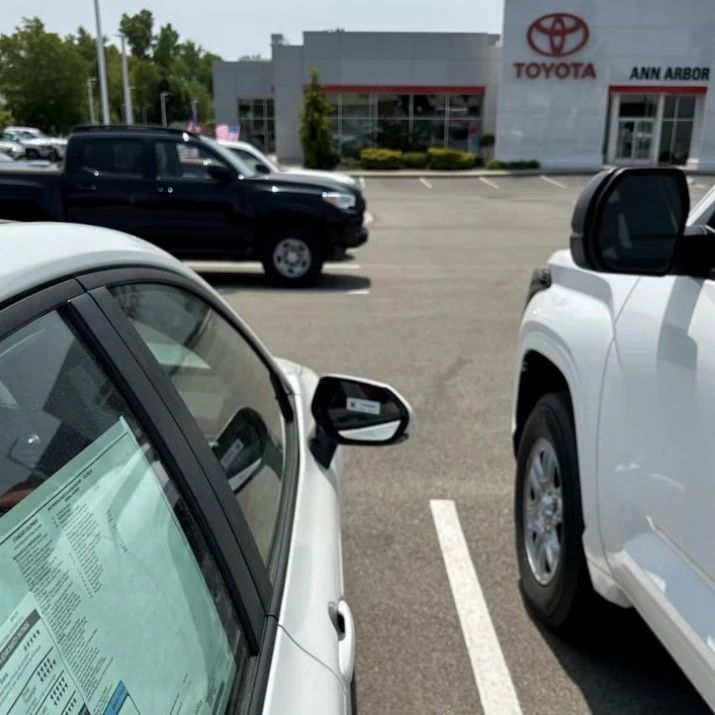
今日新闻丨丰田章男连任丰田汽车董事长!美国11州提起诉讼,阻止特朗普废除2035电动车新政!
电动车公社· 2025-06-21 18:09
和我们一起重新思考汽车 关注 「电动车公社」 听起来有点绕,翻译一下就是特朗普近日签署了三项国会通过的决议,不让加州执行电动汽车销售强制 令,不让加州限制发动机排放,也需要加州放弃"2035年前停止销售纯燃油车"的计划。特朗普想通过这 种办法,为燃油车尤其是原油开采业务争取一条活路,但加州州长却抨击他是在"破坏我们的清洁空气, 同时也在削弱美国在全球的竞争力。" 美国11州提起诉讼,阻止特朗普废除2035电动车新政; 丰田章男连任丰田汽车董事长 ; 5月份的时候,美国众议院还通过了取消新电动汽车7500美元税收抵免,并对电动车征收每年250美元的 道路维修费用的法案,本质上都是美国新能源与燃油支持者们的博弈。废除与再废除之间的斗争或许永远 没有尽头,但留给美国经济和新能源发展的窗口期却已经不多了。 2 、 丰田章男连任丰田汽车董事长 近日,丰田汽车年度股东大会上,丰田章男以近97%的得票率成功连任,再次当选为董事长。 《今日新闻》将会每天给大家带来几条当日重磅新闻,并附上社长的简单评论。关注「电动车公社」,新能源 圈大事小事 看我们就够啦~ 今日新闻要点: 1 、 美国11州提起诉讼 阻止特朗普废除2035电 ...

6月21日电,报道称,丰田汽车公司将从下个月起将在美国销售的某些车型的价格提高200多美元。
news flash· 2025-06-21 01:35
Core Insights - Toyota Motor Corporation will increase the prices of certain models sold in the United States by over $200 starting next month [1] Group 1 - The price increase is expected to impact specific models offered by Toyota in the U.S. market [1]
市场信心:丰田汽车公司将从下个月起将在美国销售的某些车型的价格提高200多美元。
news flash· 2025-06-21 01:34
Group 1 - The core point of the article is that Toyota will increase the prices of certain models sold in the U.S. by over $200 starting next month [1] Group 2 - This price increase reflects the company's strategy to adjust pricing in response to market conditions [1] - The decision may impact consumer purchasing behavior and overall market dynamics in the automotive industry [1] - The increase is part of a broader trend in the industry where manufacturers are adjusting prices due to inflationary pressures and supply chain challenges [1]
丰田章男24财年薪酬19.49亿日元,创新高
日经中文网· 2025-06-20 07:23
Group 1 - The core viewpoint of the article highlights Toyota's increase in executive compensation, with Chairman Akio Toyoda's salary for FY2024 set at 1.949 billion yen, marking a 20% increase from the previous fiscal year, which is the highest in Toyota's history for four consecutive years [1][2] - Toyota's consolidated operating profit for FY2024 is projected to decrease by 10% to 4.7955 trillion yen compared to FY2023 [2] - The adjustment in executive salaries is based on global corporate benchmarks, indicating that the increase is a result of overall market trends rather than individual performance [2] Group 2 - Toyota's President Koji Sato will receive a salary of 826 million yen for FY2024, which is an increase from 623 million yen for the first nine months of FY2023 [2] - A total of seven executives, including Akio Toyoda and Koji Sato, will have salaries exceeding 100 million yen in FY2024 [2]
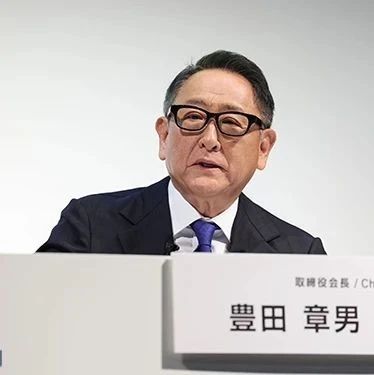
丰田董事长年薪曝光!中国车企掌门人薪酬普遍不足其零头;小米卢伟冰:未来与美的海尔一起做家电头部;MiniMax考虑赴港IPO
雷峰网· 2025-06-20 00:33
Key Points - Toyota's chairman Akio Toyoda's annual salary is revealed to be 1.949 billion yen (approximately 96.58 million RMB), marking a 20% increase year-on-year and a historical high for four consecutive years [4] - In contrast, the salaries of Chinese automotive executives are significantly lower, with Geely's Li Shufu earning only 376,000 RMB, which is equivalent to just 1.5 days of Toyoda's income [4][5] - The highest-paid individuals in Chinese car companies are often not the CEOs, as seen in Geely where CEO Gui Shengyue earns 32.01 million RMB, while Li Shufu's salary ranks much lower [5][6] Domestic News - Xiaomi's president Lu Weibing stated that Xiaomi does not engage in price wars and aims to collaborate with leading companies like Midea and Haier to advance the home appliance industry [8][9] - The domestic GPU company Moore Threads has completed its IPO counseling, potentially becoming the first GPU stock in China [9][10] - Bilibili reported that its monthly revenue from animated short dramas reached over 10 million RMB in Q1 2025, a 50-fold increase from the previous year [30] International News - OpenAI's CEO announced that GPT-5 is expected to be released this summer, promising significant advancements in AI capabilities [36][37] - Samsung is facing a crisis with reports of data falsification and employee turnover due to poor working conditions, leading to a decline in its semiconductor business [34][35] - Volvo plans to increase prices of its models in the US by up to 6% next year, which could result in price hikes of several thousand dollars for certain models [42][43]




丰田新款RAV4升级PHV发动机,总续航增至1350km
日经中文网· 2025-06-19 07:38
Core Viewpoint - Toyota's new RAV4 has upgraded its plug-in hybrid vehicle (PHV) engine, achieving a pure electric mode range of 150 kilometers, which is 1.5 times the previous range, while also increasing the total range to over 1350 kilometers, indicating a strong push to compete with leading Chinese companies like BYD in the PHV sector [1][3]. Group 1: Product Features and Innovations - The new RAV4 features the latest sixth-generation hybrid system, which includes a 30% increase in battery capacity, enhancing its overall efficiency [3]. - The total range of the vehicle, when fully charged and fueled, exceeds 1350 kilometers, comparable to the distance from Tokyo to Kagoshima [3]. - The new hybrid system utilizes high-efficiency silicon carbide (SiC) semiconductors, improving output power by over 12% by reducing electrical losses [3]. - The e-Axle's overall height has been reduced by 15% and weight by 18%, improving interior space and seat comfort [4]. Group 2: Market Position and Competition - Despite the advancements, Toyota's global sales of PHVs remain low, accounting for only 2% of total sales, with projected sales of 153,829 units in 2024 [6]. - In contrast, BYD sold 2.5 million vehicles in 2024, surpassing pure electric vehicle sales, highlighting the competitive landscape in the PHV market [6]. - Toyota's strategy includes focusing solely on the latest hybrid engine for the new RAV4, eliminating gasoline models, which aligns with stricter emissions regulations globally [6][5].

LG Energy Solution and Toyota Tsusho Establish a Battery Recycling Joint Venture in the U.S.
Prnewswire· 2025-06-19 04:01
Core Viewpoint - The establishment of Green Metals Battery Innovations, LLC, a joint venture between LG Energy Solution and Toyota Tsusho Corporation, aims to enhance battery recycling efforts and promote a circular economy in the battery supply chain [1][5][9]. Company Overview - LG Energy Solution is a leading global manufacturer of lithium-ion batteries, with over 69,600 patents and a commitment to achieving carbon neutrality by 2050 [7]. Joint Venture Details - The joint venture will construct a pre-processing plant in Winston-Salem, North Carolina, to extract black mass from battery production scrap [1][9]. - The facility is expected to commence operations in 2026, with a processing capacity of 13,500 tons of scrap annually, equivalent to over 40,000 automotive batteries [3][9]. Recycling Process - The pre-processing plant will dismantle and shred battery production scrap to extract valuable raw metals such as nickel, cobalt, and lithium [2][4]. - The extracted black mass will undergo a post-processing stage to recover raw materials for new battery production, aiming to establish a closed-loop system [4][9]. Environmental Impact - The collaboration seeks to drive down carbon emissions through circular economy initiatives, enhancing the recycling infrastructure in North America [5][6].

Toyota(TM) - 2025 Q4 - Annual Report
2025-06-18 10:11
Economic Environment - The global economy maintained a growth rate of around 3% for fiscal 2025, with the U.S. economy remaining resilient and China showing underlying support despite a real estate downturn[25]. - A downturn in financial markets may adversely affect Toyota's ability to raise capital, risking its financial condition and cash flows[50]. Market Demand and Competition - Demand for vehicles has moderated as pent-up demand from semiconductor supply constraints has been largely absorbed, leading to uncertainty in future demand changes[26]. - The automotive market is experiencing increased competition, particularly in the areas of Connected, Autonomous, Shared, and Electric (CASE) technologies, which may adversely affect Toyota's financial condition[23]. - Increased competition in automobile financing may lead to decreased margins and impact Toyota's financial services operations[36]. Product Development and Innovation - Toyota's future success relies on timely introduction of new, innovative, and competitively priced products to meet rapidly changing customer preferences[27]. - The company aims to enhance the value of cars through Software-Defined Vehicles (SDVs) focusing on safety and reliability, with initiatives to develop automated driving technology[106]. - The company plans to double the driving range of next-generation Battery Electric Vehicles (BEVs) compared to the current bZ4X, utilizing more efficient batteries[113]. - A new specialized unit was created in May 2023 to develop BEVs, with a focus on reducing per-unit development costs and investment in in-house production by half[115]. - The company aims to introduce ten new BEV models by 2026, targeting annual sales of 1.5 million Toyota and Lexus brand BEV units[217]. Financial Performance - In fiscal 2025, Toyota sold 9,362 thousand vehicles, generating sales revenues of ¥48,036.7 billion and a net income of ¥4,765.0 billion[69]. - Toyota's automotive segment sales increased from ¥33,776.9 billion in 2023 to ¥42,996.3 billion in 2025, representing a growth of approximately 27.3%[71]. - Toyota's financial services segment reported sales of ¥4,437.8 billion in fiscal 2025, up from ¥3,447.2 billion in 2024, marking a growth of approximately 28.8%[71]. - Toyota's automotive sales revenues reached ¥43,199.8 billion in fiscal 2025, up from ¥41,266.2 billion in fiscal 2024 and ¥33,820.0 billion in fiscal 2023, indicating a significant growth trend[172]. Environmental Commitment - Toyota aims to reduce average greenhouse gas emissions for vehicles sold worldwide by 33% or greater by 2030 and by 50% or greater by 2035 compared to 2019[101]. - The company is committed to achieving carbon neutrality by 2050 across the entire lifecycle of its vehicles[96]. - The company aims to achieve carbon neutrality at all global plants by 2035, while overhauling supply chains to procure superior quality parts at lower prices[114]. - The company is pursuing mass production of Fuel Cell Electric Vehicles (FCEVs) centered on commercial vehicles, leveraging the lightweight nature of hydrogen as an energy source[117]. Supply Chain and Production Risks - Toyota's operations are sensitive to fluctuations in foreign currency exchange rates, particularly the Japanese yen, U.S. dollar, and euro, which can impact operating results[46]. - The company relies on a limited number of suppliers for certain parts and components, which poses risks to production and delivery if supply issues arise[33]. - High prices of raw materials and strong pressure on suppliers could negatively impact Toyota's profitability, potentially leading to higher production costs for parts and components[48][49]. Regulatory and Compliance Issues - Regulatory and legal risks, including compliance with vehicle safety and environmental laws, may incur significant costs and adversely affect Toyota's financial condition[51][52]. - The company aims to lobby for the reform of the certification system by March 2025, involving collaboration with the MLIT and other automobile manufacturers[158]. - Toyota has implemented over 250 equipment investments to improve certification operations and reduce burdens on frontline staff[149]. Strategic Initiatives - Toyota Industries is planning to go private, with TMC investing 706 billion yen in non-voting preferred stock to fund the transaction[60][65]. - TMC intends to conduct a tender offer for its own shares, aiming to purchase up to 1,192,331,020 shares at a price not exceeding 2,691 yen[65]. - The retirement of 1,200,000,000 shares of treasury stock is scheduled to occur after the completion of the tender offer for its own shares[65][66]. Regional Market Performance - In fiscal 2025, 21.3% of Toyota's automobile unit sales were in Japan, 28.9% in North America, 12.5% in Europe, and 19.6% in Asia[75]. - Total vehicle unit sales in Japan for fiscal year 2025 are projected to be 1,991 thousand units, a slight decrease of 0.1% from 2024[180]. - In North America, total market sales are expected to reach 17,827 thousand units in 2025, with Toyota's sales projected at 2,572 thousand units, representing a market share of 14.4%[182]. - In Europe, Toyota's total market sales are projected to be 17,807 thousand units in 2025, with Toyota's sales at 1,217 thousand units, resulting in a market share of 6.8%[182]. - In Asia (excluding China), total market sales are expected to be 10,928 thousand units in 2025, with Toyota's sales projected at 1,434 thousand units, maintaining a market share of 13.1%[182]. Corporate Governance - The company is committed to improving governance and internal controls, conducting internal audits of 17 key subsidiaries with increased scrutiny[167]. - The TPS self-study activities led by Chairman Toyoda are aimed at improving corporate culture and operational efficiency across departments[156]. - The company has established a Governance Risk Compliance Meeting to address management issues, including certification and disaster preparedness[166].
Toyota(TM) - 2025 Q4 - Annual Report
2025-06-18 10:02
This document has been translated from the Japanese original for reference purposes only. In the event of any discrepancy between this translated document and the Japanese original, the Japanese original shall prevail. TMC has positioned the sustainable growth and the stable long-term growth of corporate value as priority management issues. Believing that in carrying this out, it is essential that it both builds positive relationships with all stakeholders, including shareholders and customers as well as bu ...