Unilever(UK)(UL)

Search documents
Unilever PLC (NYSE:UL) Faces Analyst Skepticism Amid Strategic Changes
Financial Modeling Prep· 2025-12-10 23:04
Core Viewpoint - Unilever PLC is undergoing significant changes, including the demerger of its ice cream arm, which has led to mixed reactions from analysts and investors [1][3][6] Financial Performance - UBS maintains a "Sell" rating for Unilever, adjusting its price target from 4,635 GBp to 4,440 GBp, indicating potential challenges ahead [2][6] - The current stock price of Unilever is $64.19, with a market capitalization of approximately $158.79 billion [5] Market Growth and Challenges - The demerger of Unilever's ice cream, tea, and coffee businesses raises concerns about market growth and earnings dilution, with UBS suggesting an 8.4% potential downside from the current share price [3][6] - Unilever aims for mid-single-digit underlying sales growth in the medium term, despite current market volume growth being closer to 1% [4][6] Operational Expectations - Unilever expects its operating margin, excluding ice cream, to be at least 19.5% for the second half of the year [4] - The company reaffirms its fourth-quarter volume growth guidance to match the third quarter's 1.7% [3]


Magnum CEO on Unilever spinoff: ‘We needed real focus on ice cream'
Youtube· 2025-12-10 16:51
Core Insights - The spin-off of the ice cream business from Unilever is driven by the need for focused management and investment in the ice cream category [1] - The ice cream industry is experiencing growth, with improved margins and market share gains reported [2] - The company is successfully increasing volume in a challenging consumer goods environment while maintaining profitability through disciplined productivity programs [3] Industry Overview - The ice cream market is characterized by a dualopoly in most countries, where typically only two major players dominate, leading to challenges for smaller startups [4] - Key cost drivers in the ice cream business include raw materials, packaging, and labor, particularly dairy and chocolate [5] - There is significant potential for market penetration in regions with low consumption rates, such as India, where per capita consumption is only 0.5 liters compared to 10 liters in developed markets [5] Product Strategy - The company emphasizes the use of natural ingredients and has committed to avoiding artificial flavors, aligning with consumer preferences for purity and quality [6]
两大美妆巨头同时出手,一边狂买一边狂卖
2 1 Shi Ji Jing Ji Bao Dao· 2025-12-10 12:25
Group 1 - L'Oréal Group announced the acquisition of an additional 10% stake in Galderma, increasing its ownership from 10% to 20%, indicating a strategic focus on the aesthetic and medical beauty market [1][2] - The acquisition is expected to be completed in the first quarter of 2026, with plans to nominate two non-independent directors from L'Oréal to Galderma's board [2] - L'Oréal's recent investments include a €4 billion acquisition of luxury beauty licenses from Kering Group, reflecting a strong recovery in its performance, particularly in the North Asia region [3] Group 2 - Unilever is undergoing a restructuring process, focusing on core businesses by divesting non-core brands, including the planned spin-off of its ice cream business [4][5] - Unilever's CEO emphasized that the spin-off aims to create a more streamlined company, concentrating on beauty and personal care sectors for higher profit margins [5] - The contrasting strategies of L'Oréal's acquisitions and Unilever's divestitures reflect a broader industry trend of resource concentration on core business areas [5][6] Group 3 - Estee Lauder is also considering divesting its Korean beauty brand Dr. Jart+ and has previously planned to sell Too Faced and Smashbox, indicating a trend of brand portfolio optimization among major beauty companies [6] - Domestic brands are also pursuing acquisitions to build their brand portfolios, as seen with Perfect Diary's parent company acquiring high-end skincare brands [6] - An ideal brand matrix in the beauty industry should exhibit strategic synergy, growth gradient, and profit orientation to withstand market fluctuations [7]

两大美妆巨头同时出手,一边狂买一边狂卖
21世纪经济报道· 2025-12-10 12:19
Core Views - The article discusses the contrasting strategies of two major beauty groups, L'Oréal and Unilever, highlighting L'Oréal's aggressive acquisition approach and Unilever's focus on divesting non-core assets [2][8]. Group 1: L'Oréal's Acquisition Strategy - L'Oréal announced the acquisition of an additional 10% stake in Galderma, increasing its ownership from 10% to 20%, with plans to explore further scientific research collaborations [1][6]. - The acquisition is part of L'Oréal's ambition to penetrate the rapidly growing medical aesthetics market, alongside its investments in high-end and clean beauty segments [6][8]. - In October, L'Oréal made a significant investment of €4 billion to acquire beauty licenses from Kering Group, indicating a strong recovery in its performance, particularly in the North Asia region [6][7]. Group 2: Unilever's Divestment Strategy - Unilever is undergoing a restructuring process, focusing on core businesses by divesting over 20 non-core beauty and personal care brands, including the planned spin-off of its ice cream business [1][7]. - The CEO of Unilever emphasized that the spin-off aims to create a more streamlined company focused on higher profit margins in beauty and personal care sectors [7][8]. - Unilever's recent quarterly results showed improvement in sales growth after excluding the ice cream business, indicating a positive trend in its core operations [7][8]. Group 3: Industry Trends and Brand Matrix - The contrasting strategies of L'Oréal and Unilever reflect a broader industry trend where companies are either expanding their brand portfolios or optimizing them by shedding non-core assets [8][9]. - The ideal brand matrix should exhibit strategic synergy, growth gradient, and profit orientation, allowing companies to withstand market fluctuations [10]. - Other beauty brands, including Estée Lauder, are also reviewing their brand portfolios, indicating a shift towards optimizing brand performance and profitability [9].
“买买买”vs“断舍离”:欧莱雅、联合利华再变阵?丨美妆变局
2 1 Shi Ji Jing Ji Bao Dao· 2025-12-10 09:25
Core Insights - The two major beauty groups, L'Oréal and Unilever, are pursuing different strategies, with L'Oréal focusing on acquisitions while Unilever is divesting non-core assets [2][4]. Group 1: L'Oréal's Acquisition Strategy - L'Oréal announced the acquisition of an additional 10% stake in Galderma, increasing its ownership from 10% to 20%, with plans to explore further scientific research projects together [1][2]. - The acquisition is part of L'Oréal's ambition to enter the rapidly growing medical aesthetics market, alongside its investments in high-end and clean beauty segments [2][3]. - In October, L'Oréal spent €4 billion to acquire beauty licenses from Kering Group, indicating a strong partnership and capability to enhance luxury brands [3]. - L'Oréal's investments in China include a stake in Naturgy and further investments in local skincare brands, reflecting its strategy to accelerate brand innovation and consumer attraction [3]. Group 2: Unilever's Divestment Strategy - Unilever is undergoing a restructuring process to focus on core businesses, highlighted by the planned spin-off of its ice cream division, expected to be completed by Q4 2025 [1][5]. - The CEO of Unilever emphasized that the spin-off will create a more streamlined company, concentrating on beauty, health, and personal care sectors for higher profit margins [5]. - Unilever's recent quarterly performance showed improvement after excluding the ice cream business, indicating a positive trend in its core operations [5]. Group 3: Industry Trends and Brand Matrix - The contrasting strategies of L'Oréal and Unilever reflect a broader industry trend where companies are either expanding their brand portfolios or optimizing them by shedding non-core assets [6][7]. - The ideal brand matrix should exhibit strategic synergy, growth gradient, and profit orientation, allowing companies to withstand market fluctuations [7].
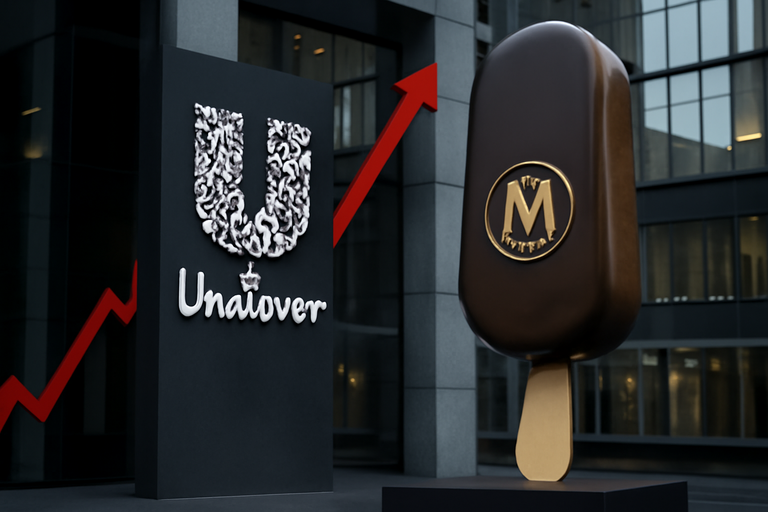
估值1400亿元!联合利华完成冰淇淋业务拆分,梦龙冰淇淋正式上市!
Xin Lang Cai Jing· 2025-12-10 06:18
Core Viewpoint - Unilever has officially completed the spin-off of its ice cream business, establishing The Magnum Ice Cream Company, which has been listed in Amsterdam, aiming to streamline operations and focus on core business areas to boost performance growth [2][18]. Group 1: Business Performance and Strategic Shift - The ice cream division of Unilever has seen an average annual sales growth of less than 3% over the past two years, significantly lagging behind the beauty and health division, which has grown by over 7% during the same period [4][20]. - The ice cream business, accounting for about 16% of Unilever's sales, has been a drag on overall performance, especially as the company has prioritized faster-growing categories like beauty and personal care [4][20]. - The operational model of the ice cream segment, characterized by cold chain logistics, seasonality, and capital intensity, has made it difficult to achieve synergies with Unilever's other core businesses [4][20]. Group 2: Political and Operational Challenges - The ice cream business has also been a source of political controversy, particularly with the Ben & Jerry's brand, which has had public disputes with Unilever's management over various social issues [5][21]. - The spin-off is seen as a way to shed these non-operational disputes and allow Unilever to focus on its core operations without the burden of the ice cream segment [5][21]. Group 3: Strategic Actions and Future Plans - Unilever's recent strategic shift has been influenced by shareholder demands for business simplification, particularly after a failed attempt to acquire GSK's consumer health business for £50 billion [5][21][22]. - The company has announced a "Growth Action Plan" (GAP) aimed at streamlining operations, which includes the elimination of approximately 7,500 jobs to save around €800 million [6][22]. - Following the spin-off, Unilever will reduce its business segments from five to four, focusing on beauty and health, personal care, home care, and nutrition [6][22]. Group 4: Spin-off Details and Market Position - The spin-off of the ice cream business has been a long-anticipated process, with the ice cream division restructured as an independent entity and officially listed on December 8, 2023 [7][23]. - The spin-off was executed through a demerger, allowing existing Unilever shareholders to receive shares in the new company without issuing new stock [7][23][25]. - The new company, The Magnum Ice Cream Company, is positioned as the world's largest pure ice cream enterprise, with operations in 80 countries and an estimated revenue of €7.9 billion for 2024 [10][26]. Group 5: Market Reception and Future Challenges - The initial valuation of The Magnum Ice Cream Company is estimated to be between €14 billion and €15 billion, reflecting a conservative market outlook due to its slow growth and single-category focus [10][26]. - The company has received strong interest in its bond issuance, indicating potential investor confidence, but faces challenges from the rising trend of health-conscious consumption and the impact of weight-loss drugs on high-calorie products [11][27][28]. - The new management plans to redefine ice cream in the health-conscious market, aiming to introduce lower-calorie options and expand into high-protein categories to adapt to changing consumer preferences [30][31].
估值1400亿元,联合利华完成冰淇淋业务拆分,梦龙冰淇淋正式上市
3 6 Ke· 2025-12-10 04:48
Core Viewpoint - Unilever has officially completed the spin-off of its ice cream business, establishing The Magnum Ice Cream Company, which has been listed in Amsterdam, aiming to streamline operations and focus on core business areas to boost performance growth [1][6]. Group 1: Business Performance and Strategy - The ice cream division of Unilever has seen an average annual sales growth of less than 3% over the past two years, significantly lagging behind the beauty and health division, which has grown by over 7% during the same period [3]. - The ice cream business accounts for approximately 16% of Unilever's total sales, which has been a drag on overall performance, especially as the company has prioritized faster-growing categories like beauty and personal care [3][4]. - The operational model of the ice cream segment, characterized by cold chain logistics, seasonality, and capital intensity, has made it difficult to achieve synergies with Unilever's other core businesses [3][4]. - The spin-off aligns with Unilever's strategic shift towards a "leaner" business model, responding to shareholder demands for simplification and efficiency following a failed acquisition attempt in 2022 [4][5]. Group 2: Spin-off Details and Market Position - The spin-off process has been in the works for some time, with the ice cream division restructured into an independent entity and officially completing the transaction on December 6, 2023, followed by its market debut on December 8, 2023 [6][8]. - The spin-off was executed through a demerger, allowing existing Unilever shareholders to receive shares in the new company without issuing new stock, indicating Unilever's intention not to invest further capital into the ice cream business [8]. - The Magnum Ice Cream Company is positioned as the world's largest pure ice cream enterprise, operating in 80 countries with a significant cold chain asset base, including nearly 3 million freezers [8][9]. - The initial valuation of the new company is estimated to be between €14 billion and €15 billion, with an expected EBITDA margin of around 16% for 2024, reflecting a conservative valuation compared to other leading snack companies [8][9]. Group 3: Market Challenges and Future Outlook - The launch of The Magnum Ice Cream Company coincides with a growing trend towards healthier eating, which poses challenges for the ice cream industry, particularly with the rise of weight-loss drugs that may impact demand for high-calorie snacks [11][13]. - Despite these challenges, there is cautious optimism among investors regarding the new stock, as the spin-off allows the company to focus on its core ice cream business, which is often seen as a value-releasing opportunity [13][14]. - The new company plans to implement cost-cutting measures and innovate product offerings to adapt to changing consumer preferences, including marketing ice cream as a lower-calorie option and expanding into high-protein categories [14].

今年超50个美妆品牌成“弃子”
3 6 Ke· 2025-12-10 00:24
Core Insights - The cosmetics industry is experiencing a significant downturn, with many brands being sold or shut down rather than achieving sales success during promotional events [1][22] - Over 50 beauty brands have been categorized as "abandoned" this year, with notable examples including L'Oréal, Estée Lauder, and Unilever [1][5] - The trend indicates a shift from large-scale brand coverage to a focus on optimizing brand portfolios among international beauty giants [8][13] Brand Sales and Closures - International beauty giants have sold over 30 brands this year, including Unilever's sale of the high-end skincare brand CeraVe and Kering's sale of its beauty division to L'Oréal for €4 billion (approximately ¥331.96 billion) [3][5] - The majority of these "abandoned" brands were acquired at high valuations between 2014 and 2020, with some, like Avon, being sold for $3.7 billion (approximately ¥263.45 billion) after struggling to perform [6][7] - In 2025 alone, 16 international brands have been shut down due to operational difficulties and strategic misalignment, with L'Oréal closing three brands [14][18] Reasons for Brand Abandonment - The primary reasons for brand sales include the need for international beauty companies to streamline operations and focus on profitable segments, as seen with Unilever's efforts to make CeraVe profitable [7][18] - Many brands are facing challenges such as declining performance, increased marketing costs, and the inability to adapt to market demands, leading to closures [21][27] - The trend of brand closures is not limited to international brands; domestic brands are also facing similar pressures, with eight brands shutting down in 2025 due to strategic adjustments and profit pressures [23][26] Market Trends and Future Outlook - The industry is witnessing a shift towards strategic restructuring and value rediscovery rather than mere expansion, indicating a potential ongoing consolidation phase [13][32] - The focus is now on leveraging technology and innovation to create competitive advantages, with companies encouraged to find niche markets and enhance product offerings [31][32] - The ongoing challenges suggest that the beauty industry will continue to experience a wave of brand eliminations, with survival dependent on strategic adaptability and resource management [22][32]

Unilever PLC (LSE:ULVR) Undergoes Reverse Stock Split and Sees Share Price Surge
Financial Modeling Prep· 2025-12-09 21:02
Core Viewpoint - Unilever PLC has implemented a reverse stock split as part of its strategy to streamline operations and enhance shareholder value, coinciding with a significant increase in its share price following the demerger of its ice cream division [1][5]. Group 1: Reverse Stock Split - The reverse stock split occurred on December 9, 2025, exchanging 9 shares for every 8 shares previously held [1][5]. - This move is aimed at improving operational efficiency and increasing shareholder value [1][5]. Group 2: Share Price Movement - Following the reverse stock split, Unilever's share price rose nearly 13% in early trading [2][5]. - The current stock price is $64.49, reflecting an increase of 16.62% with a change of $9.19 [4][5]. - Over the past year, the stock has fluctuated between a high of $65.66 and a low of $54.32 [4]. Group 3: Share Structure Post-Consolidation - Post-consolidation, Unilever has over 2.2 billion ordinary shares in issue, with approximately 2.18 billion carrying voting rights [3][5]. - Some investors' shareholdings did not convert neatly under the new ratio, and Unilever plans to pool these fractional shares and sell them in the market, returning the net cash proceeds to shareholders [3].
Unilever allocates $1.7 billion a year for M&A with US focus, says CEO
Reuters· 2025-12-09 15:11
Core Insights - Unilever is allocating approximately 1.5 billion euros ($1.74 billion) annually for mergers and acquisitions, with a strong emphasis on deals in the United States [1] Company Strategy - The focus on the U.S. market indicates Unilever's strategic intent to enhance its presence and competitiveness in a key region [1] Financial Commitment - The annual budget of 1.5 billion euros for M&A reflects Unilever's commitment to growth through strategic acquisitions [1]