Unilever(UK)(UL)

Search documents
X @Bloomberg
Bloomberg· 2025-11-04 19:18
Corporate Action - Unilever's ice cream spinoff's trading debut faces shutdown delay [1]

Unilever expects to complete Magnum ice cream spin-off by December 6
Reuters· 2025-11-04 18:46
Core Viewpoint - Unilever expects to complete the spin-off of its Magnum Ice Cream unit by December 6, following a delay due to the U.S. government shutdown [1] Company Summary - The spin-off of the Magnum Ice Cream unit is part of Unilever's strategic restructuring efforts [1] - The completion date of December 6 indicates a timeline for investors and stakeholders to anticipate the finalization of this corporate action [1]


关税影响微乎其微?欧洲企业反借美国市场高歌猛进,明年利润或实现两位数增长
Hua Er Jie Jian Wen· 2025-11-03 07:41
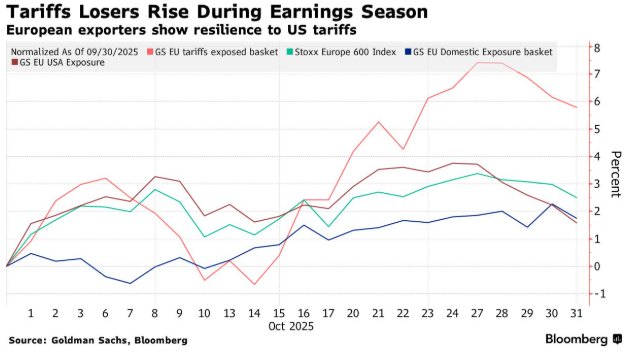
Group 1 - European companies are demonstrating remarkable adaptability to U.S. tariff barriers, with a Goldman Sachs portfolio of affected European stocks outperforming the market by approximately 6% in October, double the gain of the Stoxx Europe 600 index [1] - Major European firms like Hermès, Unilever, and Galderma Group AG attribute their better-than-expected performance and raised guidance to strong demand in the U.S. market [1][2] - The frequency of the term "tariff" in earnings calls is decreasing, indicating that corporate management's concerns about tariffs are diminishing [1] Group 2 - The U.S. market has become a key growth driver for many European companies, with Hermès reporting a 14.1% sales increase in its regional markets, and Unilever crediting strong North American demand for its sales performance [2] - Galderma raised its full-year guidance based on strong U.S. sales, while other companies like Haleon Plc and Stellantis also reported unexpected sales growth in North America [2] Group 3 - Companies are adapting to tariff challenges by cutting costs, adjusting production layouts, and increasing investments in the U.S. [3] - Pharmaceutical companies like Novartis and GSK are negotiating with the U.S. government for price reductions in exchange for future tariff exemptions, with AstraZeneca reaching an agreement in October [3] Group 4 - Despite overall optimism, the impact of tariffs is not uniform, with some companies like Rémy Cointreau and Pernod Ricard warning of weaker-than-expected recovery in specific markets [4] - Market sentiment is shifting towards the view that tariffs are manageable, although some analysts caution against premature conclusions regarding their impact [4][5]

展现韧性!欧洲公司对美关税“免疫”,明年有望实现两位数利润增长
智通财经网· 2025-11-03 07:05
Core Viewpoint - European companies have performed better than expected in response to U.S. tariffs, indicating a positive outlook for profit growth in the coming year, with market expectations of double-digit profit increases [1][3]. Group 1: Performance of European Companies - A basket of European stocks most affected by tariffs, compiled by Goldman Sachs, outperformed the market in October, rising approximately 6%, which is double the increase of the European Stoxx 600 index and three times that of domestic stocks [1]. - Companies like Hermès, Unilever, and Galderma have reported significant sales growth in the Americas, with Hermès seeing a 14.1% increase in sales in the region [3][6]. - The frequency of mentions of tariffs in European earnings calls has been declining, indicating a growing optimism among EU companies regarding their outlook [10]. Group 2: Strategic Adjustments and Cost Management - Companies are adapting to tariffs by cutting costs to avoid raising prices, which could push consumers towards cheaper brands, as seen with Unilever's strategy [6]. - Pharmaceutical companies in Europe are negotiating with the U.S. government to lower drug prices and are committing billions in investments to mitigate the impact of upcoming sector tariffs [6][11]. - Some companies, like Stellantis, reported a 13% increase in net income due to recovery in North American business, while also committing to significant investments in the U.S. [11]. Group 3: Market Sentiment and Future Outlook - Analysts suggest that the gap between profit growth in the U.S. and Europe is expected to narrow, with a general market expectation of a 12% increase in earnings per share for Stoxx 600 constituents next year [3][6]. - There is a growing belief that tariffs are manageable and will not cause significant damage, although some caution remains regarding the long-term effects and currency impacts on earnings [12].
联合利华:中国为跨国企业创新和可持续发展提供坚实基础
Sou Hu Cai Jing· 2025-10-29 15:36
Core Viewpoint - The article highlights the significance of foreign investment in China's manufacturing sector, emphasizing the role of companies like Unilever in driving innovation and efficiency through advanced technologies and management practices [1][14]. Group 1: Foreign Investment and Manufacturing Innovation - The "14th Five-Year Plan" suggests expanding high-level opening-up and creating a win-win cooperation environment, with foreign investment present in all 31 major categories and 548 subcategories of China's manufacturing industry [1]. - Unilever's Hefei factory is recognized as a "lighthouse factory," showcasing how foreign enterprises contribute to the modernization of China's industrial system [1][3]. Group 2: Automation and Production Efficiency - The Hefei factory operates 24/7 with automated production lines, utilizing technologies such as preventive maintenance and 3D printing, which minimizes the need for manual labor [5][12]. - The factory's innovative pull-based automatic replenishment system has reduced the material ordering and delivery process from 12 hours to just 3 hours, achieving 100% pull-based production [9][11]. Group 3: Flexibility and Responsiveness - Emergency orders that previously took 2-3 days to process can now be completed in just 2 hours, with production line switching taking as little as 10 minutes, demonstrating the factory's flexibility in adapting to market changes [11]. - The strong supply chain in China supports the development of flexible production lines, allowing companies like Unilever to respond quickly to consumer demands [11][14]. Group 4: Talent and Digital Transformation - The Hefei region has seen the emergence of numerous national-level excellent factories and digital-leading enterprises within five years, attracting a large pool of talent and serving as a model for the digital transformation of manufacturing [16].

Ben & Jerry's co-founder says Unilever 'stopped' ice cream company from creating a 'flavor for Palestine'
Fox Business· 2025-10-29 06:11
Core Viewpoint - Ben & Jerry's co-founder Ben Cohen claims that Unilever has prevented the ice cream maker from creating a "flavor for Palestine," highlighting tensions between the brand's social activism and its parent company's corporate policies [1][7]. Group 1: Company Actions and Responses - Ben Cohen is creating a watermelon-flavored ice cream to advocate for Palestinian rights after Unilever blocked Ben & Jerry's from launching a similar initiative [1][7]. - Cohen emphasizes the importance of addressing the suffering of the Palestinian people, particularly children, and aims to raise awareness through this new flavor [6][9]. - The company has faced internal conflicts, with Cohen and co-founder Jerry Greenfield expressing that Unilever has silenced their social activism efforts [3][13]. Group 2: Social and Political Context - Watermelons have become a symbol of Palestinian solidarity, reflecting the colors of the Palestinian flag, which Cohen intends to incorporate into his new flavor [5]. - Cohen's activism includes vocal opposition to U.S. military actions in Gaza, indicating a broader political stance that aligns with the brand's historical commitment to social justice [10][9]. - The recent ceasefire in Gaza is acknowledged by Cohen as a temporary relief, but he stresses the ongoing need for rebuilding and addressing the rights of Palestinians [6].
换帅、裁员、拆分业务等,联合利华“刮骨疗毒”谋破局
Mei Ri Jing Ji Xin Wen· 2025-10-27 14:06
Core Insights - Unilever is undergoing significant changes in its business and organizational structure, including plans to spin off its ice cream business and leadership changes [1][5][7] Financial Performance - In Q3 2025, Unilever reported sales of €14.7 billion, a year-on-year decline of 3.5%, while underlying sales grew by 3.9% [1][2] - For the first three quarters of 2025, total sales reached €44.8 billion, down 3.3% year-on-year [2] - All five business segments experienced a decline in sales, with the largest drop in home care at 5.3% and ice cream at 4.2% [2] - The Asia-Pacific and Africa regions saw a 6.8% increase in underlying sales, with China and Indonesia returning to growth [2][3] Ice Cream Business Spin-off - The ice cream business is set to be spun off into a separate entity, Dream Ice Cream Company, with a projected revenue of €7.9 billion for 2024 and a 21% market share in the global retail market [3][4] - The spin-off was initially planned for mid-November 2025 but has been delayed due to external factors [5][6] Leadership Changes - Fernando Fernandez became CEO on March 1, 2025, with Srinivas Patak appointed as CFO in September [7] - The company plans to rotate 25% of its top 200 leaders to align with market standards [7][8] - Unilever has initiated a global workforce reduction, aiming to cut approximately 7,500 positions over three years, with 6,000 already eliminated by Q1 2025 [7]
Unilever Stock Proves Consumer Staples Can Still Grow Volume (NYSE:UL)
Seeking Alpha· 2025-10-26 03:45
Core Insights - Unilever has reported its Q3 figures, indicating performance amidst market-wide turbulence earlier in the year [1] Financial Performance - The latest Q3 figures show Unilever's resilience and ability to outperform during challenging market conditions [1] Analyst Perspective - The analysis emphasizes a value-oriented approach to investment, suggesting that valuation is more indicative of long-term opportunities or risks rather than short- to mid-term timing [1]
Unilever Proves Consumer Staples Can Still Grow Volume
Seeking Alpha· 2025-10-26 03:45
Core Insights - Unilever has reported its Q3 figures, indicating performance amidst market-wide turbulence in the initial months of the year [1]. Financial Performance - The latest Q3 figures show Unilever's resilience and ability to outperform during challenging market conditions [1]. Analyst Perspective - The analysis emphasizes a value-oriented approach to investment, suggesting that valuation is more indicative of long-term opportunities or risks rather than short- to mid-term timing [1].
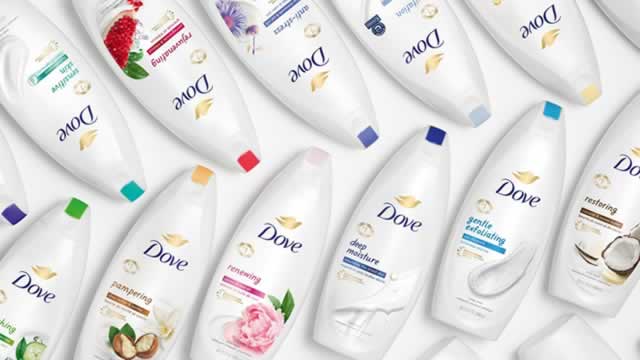
联合利华,营收全线下滑
2 1 Shi Ji Jing Ji Bao Dao· 2025-10-26 02:00
Core Insights - Unilever reported a 3.5% year-on-year decline in revenue for the first nine months of 2025, totaling €44.8 billion, with all five business segments experiencing a downturn [2] - The company is undergoing significant transformation efforts, including divesting over 20 non-core beauty and personal care brands, as it faces market challenges from changing consumer habits [2] - The ice cream business spin-off is expected to be completed in Q4 2025, with the CEO expressing confidence in improved operating profit margins for the second half of the year [2] Financial Performance - Revenue declines were noted across all business segments, with household care experiencing the largest drop at 5.3%, followed by ice cream at 4.2%, and beauty & health and food segments both around 3% [5] - Despite the overall revenue decline, underlying sales growth of approximately 3.9% was achieved, with beauty & health leading at 5.1% growth [5] - The Asia-Pacific and Africa regions showed a 6.8% increase in underlying sales, with China returning to growth, contrasting with earlier declines [5] Market Strategy - Unilever's growth in China is attributed to targeted marketing strategies and a premium product mix, although the market is still recovering [2][5] - The company is focusing on high-end markets and e-commerce, with significant reforms in its distribution system and adjustments to core brand operations [6] - Local innovation is becoming a key strategy, with R&D efforts being localized to better meet consumer demands in China [8][10] Consumer Trends - Chinese consumers are increasingly demanding more effective and clinically validated products, driving industry upgrades [9] - The skincare market in China is noted to have significant growth potential, with a penetration rate of only 66% [3]