
Vipshop(VIPS)

Search documents
商贸社服行业周报:阿里云发布并开源QWEN3.5,千问APP春节下单2亿次-20260224
CMS· 2026-02-24 05:51
Investment Rating - The report maintains a "Strong Buy" rating for Alibaba, Pinduoduo, JD Group, and Vipshop, indicating a positive outlook for these companies in the e-commerce sector [10][11]. Core Insights - The e-commerce sector is expected to see stable profit growth, with Alibaba Cloud's revenue accelerating and the potential for AI cloud business growth. The report highlights the low valuations of leading e-commerce companies [1][10]. - In the local lifestyle segment, Meituan's long-term competitiveness and investment value remain intact despite competitive disruptions [11]. - The travel sector is projected to maintain high growth, with recommendations to focus on OTA and scenic spots closely related to outbound tourism, as well as transportation and hotels driven by business travel demand [1][11]. Industry Scale - The industry comprises 131 listed companies, with a total market capitalization of 1,292.5 billion and a circulating market value of 1,199.0 billion [3]. Industry Index Performance - The absolute performance of the industry index shows increases of 3.7% over one month, 12.7% over six months, and 20.3% over twelve months [4]. Key Company Investment Recommendations and Valuations - **Alibaba**: Expected to benefit from the pricing power in the cloud market, with projected non-GAAP net profits of 924 billion, 1,344 billion, and 1,809 billion for FY2026-2028. Target price set at 194 HKD per share [10]. - **Pinduoduo**: Anticipated non-GAAP net profits of 1,158 billion, 1,323 billion, and 1,625 billion for 2025-2027, with a target price range of 139-174 USD per share [10]. - **JD Group**: Projected non-GAAP net profits of 264 billion, 327 billion, and 510 billion for 2025-2027, with a target price of 125-150 HKD per share [10]. - **Vipshop**: Expected non-GAAP net profits of 88 billion, 94 billion, and 96 billion for 2025-2027, with a target price of 24.74 USD per share [11]. Major Industry News - Alibaba released the Qwen 3.5 model, which has shown excellent performance in various benchmarks, enhancing productivity for developers and enterprises [19][20]. - During the Spring Festival, the Qianwen app facilitated nearly 200 million orders, indicating a significant increase in user engagement and transaction volume [21]. - ByteDance launched the Doubao 2.0 model, optimized for large-scale production environments, enhancing its capabilities in complex task execution [22].


中概股多数下跌,纳斯达克中国金龙指数跌0.95%
Mei Ri Jing Ji Xin Wen· 2026-02-23 21:18
Group 1 - The majority of Chinese concept stocks experienced a decline, with the Nasdaq Golden Dragon China Index falling by 0.95% [1] - Kingsoft Cloud dropped nearly 9%, BOSS Zhipin fell over 6%, Century Internet decreased by more than 5%, and Vipshop declined by over 4% [1] - NIO saw an increase of over 4%, and Yum China rose by nearly 3% [1]



唯品会2025年业绩展望及业务战略动态
Xin Lang Cai Jing· 2026-02-13 19:02
Financial Performance - The company is expected to release its financial results for the fourth quarter and the full year of 2025 in early 2026, with a revenue guidance for Q4 indicating a year-on-year growth of 0%-5% (approximately 33.2-34.9 billion yuan) [1] - Analysts suggest that due to factors like warm winter weather and the later timing of the 2026 Spring Festival, Q4 revenue may be at the lower end of the guidance range, but the Non-GAAP net profit margin is expected to remain above 8% [1] - In Q3 2025, the company reported revenue of 21.371 billion yuan, a year-on-year increase of 3.4%, and a Non-GAAP net profit of 1.5 billion yuan, up 14.6% [1] - The company has committed to returning no less than 75% of its 2024 Non-GAAP net profit (approximately 900 million USD) to shareholders through dividends and buybacks [1] Strategic Developments - The company has fully integrated with the China Inspection and Quarantine's genuine product management database to enhance its luxury goods authentication capabilities [2] - The company is accelerating the integration of AI into its operations, including the launch of an AI fitting feature and exploring AI applications in search recommendations and customer service to improve operational efficiency [2] - The Super VIP (SVIP) user base continues to grow in double digits, contributing 51% of online sales in Q3 2025, with the company strengthening user engagement through exclusive sales events [2] Industry Environment - The central economic work conference in 2025 emphasized expanding domestic demand as a key task for 2026, which could support apparel e-commerce platforms like the company [2] - There is a need to monitor the pace of consumer recovery and the intensifying competition within the industry [2]
唯品会2026年关注点:潜在港股上市、业绩展望与股东回报
Jing Ji Guan Cha Wang· 2026-02-13 13:12
Company Status - There are market rumors that the company is considering a potential listing in Hong Kong as early as 2026, with management closely monitoring capital market changes, but no specific plans have been confirmed yet. If the listing proceeds, it may impact the company's capital structure and liquidity [2] Performance Strategy - The company has provided guidance for Q4 2025 revenue growth of 0% to 5% year-on-year, estimating a range of 33.2 billion to 34.9 billion yuan. However, due to the impact of warm winter weather and the later timing of the Spring Festival, actual growth may be closer to the lower end of the guidance. The Q4 performance is expected to be released in early 2026, and its actual results may trigger market reactions [3] Financial Movements - The company has committed to returning no less than 75% of its 2024 Non-GAAP net profit (approximately 900 million USD) to shareholders through dividends and buybacks in 2025. As of Q3 2025, over 730 million USD has already been returned to shareholders, and a similar policy may continue in 2026 [4] Business and Technology Development - The company is accelerating the application of AI, such as launching the AI fitting feature "Try It On," and exploring the use of AI agents in search recommendations and customer service to enhance operational efficiency. These technological advancements may have a long-term impact on user experience and cost structure [5] Business Condition - In November 2025, the company fully integrated with the China Quality Inspection Management Database to conduct individual inspections of luxury goods, aiming to strengthen the perception of authenticity. This move is intended to enhance trust in high-end products, but its effect on user growth needs to be observed [6] Industry Policy and Environment - The domestic policy to expand domestic demand in 2026 may support apparel consumption, but the e-commerce industry is highly competitive. The company needs to maintain its brand positioning in special sales to address these challenges [7]
Vipshop to Announce Fourth Quarter and Full Year 2025 Financial Results on February 26, 2026
Prnewswire· 2026-02-13 10:00
Core Viewpoint - Vipshop Holdings Limited, a leading online discount retailer in China, is set to announce its fourth quarter and full year 2025 financial results on February 26, 2026, before the US market opens [1] Group 1: Financial Results Announcement - The financial results will be discussed in a conference call scheduled for February 26, 2026, at 7:00 am US Eastern Time and 8:00 pm Beijing Time [1] - Participants must pre-register online to join the conference call, receiving dial-in numbers and a unique access PIN via email [1] - A live webcast of the earnings conference call will be available, with an archived version accessible on the company's investor relations website [1] Group 2: Company Overview - Vipshop Holdings Limited specializes in offering high-quality branded products at significant discounts to retail prices [1] - The company has established a growing customer base and brand partnerships since its founding in August 2008 [1]


One Fund Sold $21 Million in Vipshop Stock as E-Commerce Giant Posts $3 Billion in Revenue
Yahoo Finance· 2026-02-12 21:46
Company Overview - Vipshop Holdings Limited is a leading online discount retailer in China, focusing on a diversified product portfolio and robust logistics infrastructure to serve millions of customers nationwide [6] - The company operates a direct-to-consumer e-commerce model, generating revenue from product sales, logistics, and value-added services [7] - Vipshop targets value-conscious consumers seeking branded merchandise at discounted prices, emphasizing customer loyalty and brand partnerships [8] Financial Performance - As of February 11, 2026, Vipshop's stock price was $17.56, with a market capitalization of $8.82 billion [4] - The company reported a total revenue of $15.46 billion and a net income of $1.03 billion for the trailing twelve months [4] - In the third quarter, Vipshop achieved revenue of RMB21.4 billion (approximately $3.0 billion), reflecting a year-over-year increase of 3.4%, while net income attributable to shareholders rose by 16.8% to RMB1.2 billion (approximately $171.5 million) [9] Recent Developments - North of South Capital sold 1,093,316 shares of Vipshop, valued at an estimated $21.04 million, during the fourth quarter, reducing its stake to 2,262,683 shares worth $40.03 million at quarter's end [2][3] - Following the sale, Vipshop now represents 3.6% of North of South Capital's reportable assets, down from 6.3% in the previous quarter [3] - Despite the sale, Vipshop's performance has been strong, with shares up 20.9% over the past year, outperforming the S&P 500 by 6.55 percentage points [3] Strategic Positioning - Vipshop's strategy includes deep supplier relationships and exclusive brand partnerships to secure attractive pricing [6] - The company is positioned as a mid-tier player in the China consumer market, with a focus on large emerging market and Asia tech names in its investment portfolio [10] - Long-term investors may view the recent stake reduction as tactical, as the business continues to generate profits and cash, with guidance for up to 5% revenue growth in the next quarter [11]
唯品会与顺丰携手提供“春节不打烊”服务,政府消费券助力新春购物
Sou Hu Cai Jing· 2026-02-12 05:11
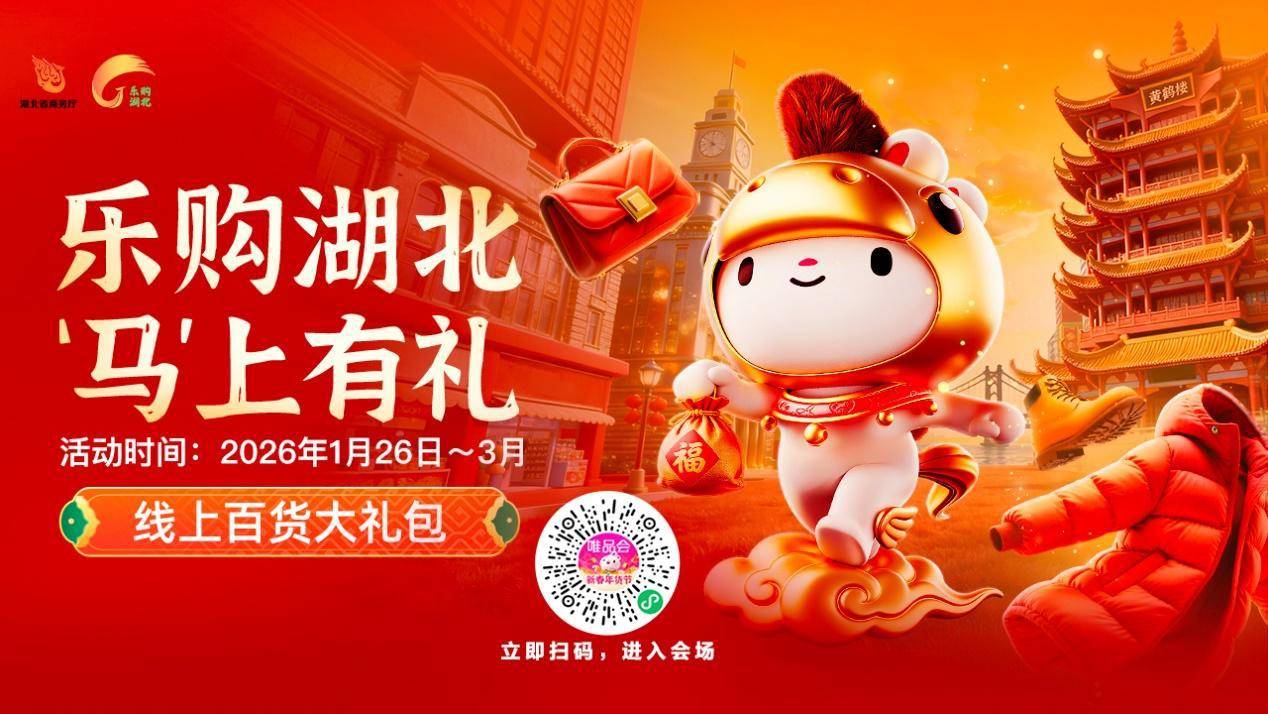
Core Viewpoint - Vipshop, a discount e-commerce platform, has announced a "Spring Festival Never Closes" service in collaboration with SF Express, allowing for normal delivery of certain products during the Spring Festival period [1] Group 1: Spring Festival Service - From February 12 to February 24, products marked with "Spring Festival Never Closes" will be delivered normally, while other products will have delayed shipping starting February 15 [1] - Orders signed for between February 11 and February 26 will have an upgraded return policy from 7 days to 15 days for no reason [1] - Vipshop's self-operated product return service will remain available year-round without interruption [1] Group 2: Government Consumption Coupons - The government consumption coupon program offers discounts of "60 yuan off 300 yuan," "80 yuan off 400 yuan," and "100 yuan off 500 yuan," applicable to various product categories [2] - Consumers can randomly draw one coupon per day during the event period, and there is a dedicated section for local Hubei products [2] Group 3: Sales Performance and Promotions - Since February, sales in categories such as outdoor sports, holiday gifts, and snacks have been increasing on the platform [2] - Vipshop has launched multiple promotional activities during the Spring Festival, combining deep discounts with government consumption coupons to enhance consumer shopping experiences [2]
唯品会新春年货节冲刺,股价近期波动显著
Jing Ji Guan Cha Wang· 2026-02-11 22:56
Group 1 - Vipshop is conducting a Spring Festival goods promotion until February 15, featuring a final wave of limited-time discounts, including a 15% reduction on selected items [1] - The promotion includes categories such as snacks, beverages, and clothing, with a special focus on the limited purchase of 53° Feitian Moutai [1] - The campaign aims to stimulate consumer demand during the Spring Festival by utilizing search codes for red envelopes and combining government subsidy coupons [1] Group 2 - Vipshop's stock price has shown significant volatility over the past week, with a 3.28% increase on February 5 and a 3.76% increase on February 6, driven by the overall rise of Chinese concept stocks [2] - Following this, the stock experienced a decline, with a 0.17% drop on February 9 and a 2.12% drop on February 10, attributed to cautious market sentiment amid MSCI index adjustments [2] - The latest closing price on February 11 showed a slight decrease of 0.23%, with an overall increase of 4.47% over the observed period and a trading range fluctuation of 8.95% [2]
美股科技股,集体上涨


Di Yi Cai Jing Zi Xun· 2026-02-11 20:51
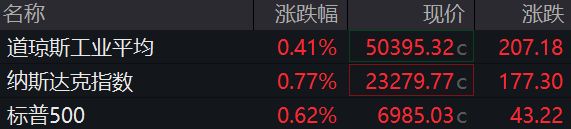
Group 1 - Major tech stocks experienced a broad increase, with SanDisk rising over 8%, Oracle up 2%, and NVIDIA increasing by more than 1% [1][2] - Other notable gainers included Tesla, Broadcom, Apple, and Amazon, all showing positive movement [1] - The three major U.S. stock indices opened higher, with the Nasdaq up 0.77%, the Dow Jones up 0.41%, and the S&P 500 up 0.62% [3] Group 2 - Chinese concept stocks mostly rose, with Kingsoft Cloud increasing by over 11%, Bilibili up more than 3%, and Century Internet and Beike both rising over 2% [2][4] - Storage-related stocks rebounded, with Micron Technology rising over 6% and Western Digital increasing by more than 4% [4]
过个好年:一份新年礼的实操指南
3 6 Ke· 2026-02-09 14:00
Core Insights - The article discusses the evolving consumer sentiment as the New Year approaches, highlighting a desire for meaningful changes in household items and gifts, contrasted with the complexity of current promotional offers [1][2] - Vipshop's "New Year Renewal, Enjoy Beautiful Benefits" campaign is presented as a long-term initiative aimed at gradually delivering tangible benefits to users, rather than a traditional short-term promotion [1][3] Group 1: Campaign Overview - The campaign runs from now until December 31, 2026, focusing on a mechanism where users can unlock gifts through continuous sign-ins, making it accessible without requiring additional spending [3][4] - The gifts offered range from essential household items to higher-value durable goods, aligning with real-life needs rather than luxury items [3][4] Group 2: Consumer Engagement - The long duration of the campaign allows users to participate and accumulate rewards over time, reducing the pressure often associated with traditional promotions [4][5] - This approach reflects a shift towards a more sustainable and user-friendly promotional strategy, emphasizing the importance of being a consistent presence in users' lives [5][6] Group 3: Market Positioning - Vipshop aims to reconnect with consumers by offering a steady stream of benefits that can be gradually realized, contrasting with the high-pressure tactics prevalent in the current e-commerce landscape [5][6] - The campaign is designed to resonate with consumers seeking certainty and comfort in their shopping experiences during uncertain times [4][6]