
Vipshop(VIPS)

Search documents
加强网售缺陷消费品召回监管 市场监管总局发布监测评估指南
Yang Shi Xin Wen· 2025-12-16 12:12
Core Viewpoint - The Market Supervision Administration has released guidelines for monitoring and evaluating the commitment to safety and recall governance for online consumer goods sales, focusing on the implementation of commitments by online trading platforms [1][2]. Group 1: Monitoring Indicators - Online trading platforms are required to leverage data and resource advantages to establish a monitoring and sharing mechanism for defective consumer goods information, continuously conducting information monitoring and risk assessment [1]. - Platforms must take action within 24 hours to stop the sale of defective consumer goods upon receiving recall information from market supervision authorities [1]. - Platforms should provide conditions for operators to prominently display recall information on their storefronts and inform consumers of their rights [1]. Group 2: Follow-up and Compliance - Platforms are expected to strengthen tracking of the handling of defective product recalls to prevent the re-listing of such products [2]. - Online trading platforms must take necessary management measures against operators who knowingly sell defective products or re-list products that have not had their defects resolved [2]. - Nine online trading platforms, including Taobao, Meituan, JD.com, Xiaohongshu, Tencent, Kuaishou, Douyin, Dewu, and Vipshop, have signed the commitment to safety and recall governance [2].





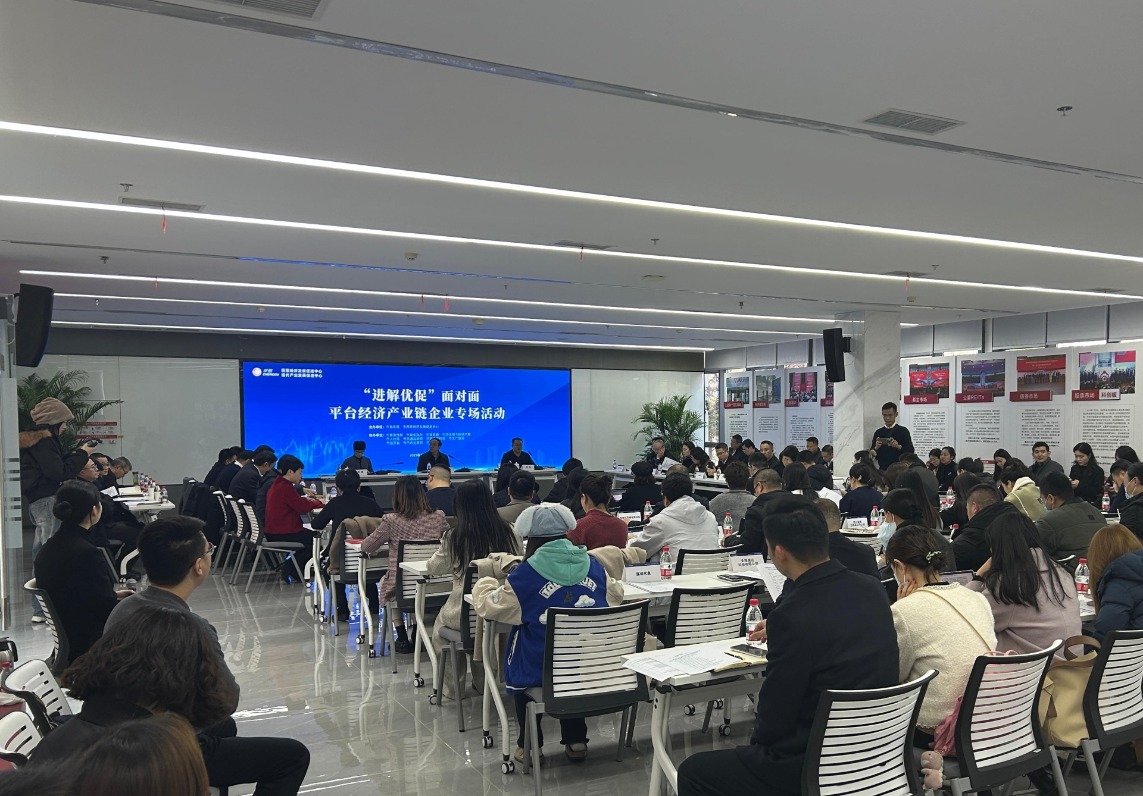
为何美团、抖音等在蓉业务主体 都在这场政企“面对面”中敞开聊?
Mei Ri Jing Ji Xin Wen· 2025-12-11 15:54
Core Points - The event "Face-to-Face: Promoting Platform Economy" in Chengdu aimed to facilitate direct communication between local businesses and government departments, addressing challenges faced by platform economy enterprises [1][2] - The initiative reflects Chengdu's commitment to improving the business environment by implementing a responsive mechanism for addressing enterprise needs [2][12] Group 1: Business Challenges and Requests - Companies raised specific issues such as the inclusion of new retail in government consumption voucher programs, with potential sales conversion estimated at 50 million yuan for 2024 [4] - There were calls for government collaboration in promoting consumption activities and support for specific enterprises in promotional events [4] - Requests also included the establishment of unified regulations for low-speed unmanned vehicle operations and addressing malicious complaint behaviors [4][9] Group 2: Government Responses and Initiatives - Government representatives actively responded to business concerns, promising to explore solutions and implement new policies to enhance consumer engagement and operational efficiency [8][9] - The city plans to implement a closed-loop mechanism for collecting, solving, and providing feedback on enterprise issues, demonstrating a proactive approach to governance [9][11] - Chengdu's government is focusing on creating a supportive ecosystem for businesses, with initiatives aimed at improving financing options and addressing workforce shortages [11][12] Group 3: Economic Performance and Growth - Chengdu's online retail sales reached 591.9 billion yuan from January to October 2025, accounting for 68.6% of the province's total, with a year-on-year growth of 10.8% [7] - The city has over 960,000 online businesses, contributing to the employment of over 2.5 million people, indicating a robust platform economy [7] - The local government has established several centers to foster a vibrant and resilient industrial ecosystem, with the private economy's value added reaching 920.97 billion yuan in the first three quarters of 2025, growing by 6.4% year-on-year [14]


第三届长三角电商交易会收官 汇集超10万潮品好物
Yang Zi Wan Bao Wang· 2025-12-10 14:58
Group 1 - The third Yangtze River Delta E-commerce Trade Fair successfully concluded in Suzhou, featuring an exhibition area of 15,000 square meters and over 500 standard booths, attracting nearly 1,000 merchants and showcasing over 100,000 trendy products [1] - The event highlighted traditional crafts and local delicacies, such as iron pots from Wuxi and unique foods from Nanjing and Suzhou, emphasizing the cultural richness of Jiangsu [1] - The Jiangsu Provincial Department of Commerce organized key industrial zones to participate, facilitating effective supply-demand matching through various meetings, enhancing collaboration among government, platforms, and enterprises [1] Group 2 - The trade fair served as a "policy highland" and "resource blue ocean," focusing on promoting Jiangsu's quality products through specialized sessions with major platforms like 1688 and Suning, providing professional guidance on platform rules and resource access [2] - The "Su Products, Su Goods" initiative aimed to streamline the transition from manufacturing to branding, achieving multiple outcomes such as brand exposure, channel expansion, and order conversion [2] Group 3 - The "Silk Road Cloud Products" e-commerce month event targeted enhancing Jiangsu enterprises' international operations, featuring insights from platforms like Shopee and SHEIN, and promoting deep connections between Jiangsu's industries and overseas e-commerce platforms [3] - The event opened new international market opportunities for Jiangsu products, addressing the demand for diverse channels and a more determined approach to "going global" [3] - The trade fair also emphasized a "show + live broadcast" immersive experience, with nearly 100 live streaming rooms, effectively converting online traffic into sales [3]


北京+30商业领袖峰会成功举办,政企学研共绘性别平等与可持续发展新蓝图
Xin Lang Cai Jing· 2025-12-10 03:53
Core Insights - The "Beijing +30" Business Leaders Summit, hosted by UN Women China, marked the 30th anniversary of the Beijing Declaration and Action Platform, focusing on women's empowerment and inclusive development [1][32] - The summit emphasized the importance of gender equality as a core driver for sustainable business development and called for more companies to join the Women's Empowerment Principles (WEPs) initiative [3][34] Group 1: Gender Equality and Economic Value - UN Women China highlighted that despite a 30% increase in women's labor participation and a decrease in poverty rates over the past 30 years, significant gender disparities remain, with women holding only 30% of management positions and facing a 20% wage gap [3][34] - Companies with gender-diverse boards show greater stock price stability and profitability potential compared to their peers, underscoring the economic value of gender equality [3][34] Group 2: Achievements and Challenges - China boasts a female labor participation rate of 62%, with women making up 53% of university graduates and 61.3% of business owners or leaders [5][36] - However, 314 million women are projected to face extreme poverty by 2030, indicating ongoing challenges in achieving gender equality [5][36] Group 3: Practical Approaches to Empower Women - The China Women's Development Foundation proposed three key integrations for supporting women's sustainable development: aligning national priorities with women's needs and corporate strategies, combining corporate strengths with execution systems, and investing in both material and human empowerment [7][38] - The private sector is encouraged to leverage innovation, financing, and employment to bridge gender gaps in the workplace [5][39] Group 4: Digital Empowerment and Future Trends - The upcoming UN Women flagship report will focus on gender equality practices in the digitalization process of Chinese enterprises, covering areas such as women's economic empowerment and health security [11][42] - The report will predict future trends related to AI and technology, aging populations, green transitions, and gender within the ESG framework, set to be released in 2026 [11][42] Group 5: Leadership and Collaboration - Discussions at the summit highlighted the need for modern leadership to combine strategic thinking with empathy, fostering team growth through interactive management [12][43] - Collaborative ecosystems involving government, businesses, NGOs, and women's groups are essential for advancing gender equality [8][39] Group 6: Commitment to Action - The summit concluded with a commitment ceremony for the Women's Empowerment Principles, where participants pledged to support workplace initiatives for women, including addressing menopause and advocating for equal retirement benefits [25][58] - The UN Women will continue to engage various sectors to integrate gender equality into corporate strategies and daily practices, aiming to turn the vision of the Beijing Declaration into lasting progress [29][60]




北京消协推动京东、美团、拼多多等8家电商平台签订全国首份AI技术规范应用承诺书
Xin Lang Cai Jing· 2025-12-04 07:01
Core Viewpoint - The Beijing Consumer Association has signed the first national "Commitment to Promote the Standardized Application of AI Technology" with eight e-commerce platforms, establishing self-regulatory norms to protect consumer rights and delineate compliance boundaries for AI technology applications [1][9]. Group 1: Legal Compliance and Consumer Protection - E-commerce platforms and merchants must adhere to laws such as the Consumer Rights Protection Law and the E-commerce Law, ensuring consumer rights are prioritized when using AI-generated content [3][11]. - The commitment includes six specific measures to create a compliance framework for AI technology applications [1][9]. Group 2: Transparency and Disclosure - Merchants and content creators are required to clearly label AI-generated content, such as digital avatars and virtual scenes, with terms like "AI-generated" or "simulated scene" [4][13]. - Platforms are encouraged to provide unified AI content labeling features to promote transparency [4][13]. Group 3: Monitoring and Enforcement - Content monitoring and manual review will be implemented to prevent the dissemination of unmarked AI-generated content, with measures to add prominent labels to non-compliant content [4][14]. - Platforms will take further actions, such as blocking links, against confirmed violations [4][14]. Group 4: Support and Training - E-commerce platforms will provide tools and clear guidelines to help merchants and content creators comply with AI labeling requirements [5][15]. - Training programs will be established to enhance compliance awareness among merchants and content creators [8][17]. Group 5: Integrity of AI Standards - Strict measures will be enforced against the malicious deletion, alteration, or concealment of AI content labels, ensuring the integrity of the AI regulatory framework [6][16]. - Violating accounts and content will be dealt with according to legal regulations to maintain the seriousness of AI standards [6][16]. Group 6: Consumer Education and Engagement - The Beijing Consumer Association will continue to monitor AI technology applications and engage in consumer education to enhance awareness of AI technology and its implications [8][17]. - Multi-channel educational activities will be conducted to improve consumers' ability to identify false content and enhance their protective awareness [8][17].

北京消协推动平台企业签订AI技术规范应用承诺书
Zhong Guo Xin Wen Wang· 2025-12-04 06:54
Core Viewpoint - Beijing Consumer Association (BCA) has initiated the first national "Commitment to Promote the Standardized Application of AI Technology" to address the misuse of AI synthesis technology and regulate the e-commerce live streaming industry [1] Group 1: Issues Identified - Three major issues regarding AI technology application harming consumer rights have been identified: insufficient protection of consumer's right to know, misuse of synthetic technology leading to consumer risks, and shortcomings in platform review mechanisms [2][3] - A survey of 3,162 valid responses revealed that nearly 90% of respondents demand clear labeling of AI-generated content, over 70% accept virtual backgrounds with significant prompts, and over 60% feel AI digital humans lack genuine emotion [2] - The investigation found that 5 out of 10 AI digital live streaming samples did not label their content as "AI-generated" or "simulated scenes," and 6 samples failed to inform about private transaction risks [3] Group 2: Measures Proposed - The "Commitment" outlines six specific measures focusing on transparency, strict review, and traceable responsibility to establish compliance boundaries for AI technology in e-commerce [4] - It emphasizes adherence to laws such as the Consumer Rights Protection Law and the E-commerce Law, requiring platforms and merchants to prioritize consumer rights when using AI technology [4] - The measures include clear labeling requirements for AI-generated content, monitoring and manual review to prevent the spread of violations, and providing tools and guidance for merchants to comply with AI labeling [5][6] Group 3: Future Actions - BCA plans to continuously monitor the application of AI technology, organize volunteer experiences in live shopping, and conduct consumer education activities to enhance awareness of AI technology [6] - The goal is to create a network consumption environment characterized by "compliant technology, responsible platforms, and consumer assurance" through multi-faceted collaboration and strategies [6]
京东等8家平台企业签订AI技术规范应用承诺书
Bei Jing Shang Bao· 2025-12-04 06:09
Core Viewpoint - The Beijing Consumer Association, along with eight major e-commerce platforms, has signed the first national "Commitment to Promote the Standardized Application of AI Technology" to address the risks of AI misuse and regulate the live-streaming e-commerce industry [1] Group 1: AI Application Issues - The rapid adoption of AI technologies in live-streaming and virtual scenarios has led to increased consumer rights risks, with a survey indicating that nearly 90% of respondents demand clear labeling for AI-generated content [2] - A significant portion of consumers (over 60%) feel that AI digital personas lack genuine emotion, and nearly 30% are concerned about potential misguidance in their purchasing decisions [2] - A study found that 50% of AI digital live-stream samples did not provide timely responses to consumer inquiries, and 60% failed to disclose risks associated with private transactions [3] Group 2: Commitment Measures - The "Commitment" outlines six specific measures to ensure compliance in AI technology applications, emphasizing legal adherence and consumer rights protection [4] - It mandates clear labeling of AI-generated content and prohibits the use of AI face-swapping technology to impersonate celebrities [5] - The measures include providing tools for compliance, strict penalties for label falsification, and enhanced training for merchants and content creators to improve understanding of AI compliance [5][6] Group 3: Future Actions - The Beijing Consumer Association plans to monitor AI technology applications continuously and engage in consumer education to enhance awareness and ability to identify false content [6]
规范AI技术应用!京东、美团等8家平台企业签订承诺书
Xin Jing Bao· 2025-12-04 05:41
Core Viewpoint - The Beijing Consumer Association has signed the first national commitment letter to promote the standardized application of AI technology with eight e-commerce platforms, aiming to establish self-regulatory norms and protect consumer rights in the context of rapidly evolving AI applications in e-commerce [1][2][3] Group 1: Issues Identified - Insufficient protection of consumer rights regarding information transparency, with nearly 90% of surveyed consumers calling for significant labeling of AI-generated content [1] - The misuse of synthetic technology has led to increased consumer risks, particularly concerning "false marketing" practices observed in AI-driven live streaming [2] - Shortcomings in platform review mechanisms have been identified, indicating a need for improved risk prevention capabilities and management rules for AI content [2] Group 2: Measures Proposed - The commitment letter outlines six specific measures centered on transparency, strict review, and traceable responsibility to delineate compliance boundaries for AI technology in e-commerce [3] - The Beijing Consumer Association plans to continue monitoring AI technology applications and will engage volunteers to provide feedback on live shopping experiences [3] - Consumer education initiatives will be launched to enhance awareness and ability to discern false content, contributing to a safer online shopping environment [3]
划定AI应用合规红线!京东、美团、拼多多、唯品会、抖音、快手、小红书、微信直播签订承诺书
Bei Jing Ri Bao Ke Hu Duan· 2025-12-04 04:24
Core Viewpoint - The article highlights the growing concerns regarding the misuse of AI-generated content in live streaming e-commerce, emphasizing the need for clear labeling and regulation to protect consumer rights [1][2][3] Group 1: AI Technology and Consumer Rights - A survey conducted by the Beijing Consumer Association revealed that nearly 90% of respondents believe AI-generated content should be clearly labeled, with over 70% accepting virtual backgrounds but insisting on significant prompts [1][2] - The investigation identified three major issues regarding AI technology's impact on consumer rights, including insufficient protection of the right to know, leading to confusion between real and AI-generated content [1][2] Group 2: Regulatory Measures and Industry Response - The Beijing Consumer Association, in collaboration with eight major e-commerce platforms, signed the first national "Commitment to Promote the Standardized Application of AI Technology," establishing compliance guidelines for AI usage [2][3] - The commitment mandates that merchants and content creators must clearly label AI-generated digital hosts and virtual scenes, and prohibits the use of AI face-swapping technology to impersonate celebrities [3] Group 3: Monitoring and Enforcement - E-commerce platforms are required to implement monitoring measures for live content and scenes, ensuring that any unmarked AI-generated content is promptly flagged and addressed [3] - The Beijing Consumer Association plans to continue monitoring AI technology applications and educate consumers on identifying false content, enhancing their ability to discern authenticity [3]
8家平台企业签订全国首份促进AI技术规范应用承诺书
Xin Jing Bao· 2025-12-04 03:07
Core Viewpoint - The misuse of AI synthesis technology in the e-commerce live streaming industry has raised concerns, prompting the signing of the first national commitment letter to promote the standardized application of AI technology among major e-commerce platforms [1][2]. Group 1: Issues Identified - Nearly 90% of respondents in a survey called for significant labeling of AI-generated content, highlighting a widespread concern over the lack of transparency in AI applications [2][3]. - The survey identified three major issues regarding consumer rights violations due to AI synthesis technology, including insufficient protection of consumer rights, difficulty in distinguishing between real and fake content, and concerns over AI digital humans lacking emotional authenticity [2][3]. - A practical investigation revealed that 50% of sampled AI digital live streams did not label their content as "AI-generated" or "simulated scenes," and 60% of samples failed to inform consumers about potential risks associated with private transactions [3]. Group 2: Commitment Measures - The commitment letter emphasizes "transparent labeling, strict auditing, and traceable responsibility," proposing six specific measures to delineate the compliance boundaries for AI technology in e-commerce [4][5]. - It mandates that platforms and merchants must comply with relevant laws, ensuring consumer rights are prioritized when using AI synthesis technology [4]. - Merchants and content creators are required to clearly label AI-generated content in prominent positions, and the use of AI face-swapping technology to impersonate celebrities is strictly prohibited [4][5]. Group 3: Future Actions - The Beijing Consumer Association plans to continuously monitor the application of AI technology and will organize volunteer experiences to provide feedback on live shopping experiences [6]. - Educational activities will be conducted to enhance consumer awareness of AI technology, helping them to better identify false content and protect their rights [6].