宝丽来

Search documents
科技革命与财富周期︱重阳来信2025年12月
重阳投资· 2025-12-01 07:32
Core Viewpoint - Warren Buffett's recent investment in Alphabet (Google's parent company) marks a significant shift in his investment strategy, indicating that technology is an unavoidable theme in today's investment landscape [2]. Group 1: Investment Trends - Berkshire Hathaway's third-quarter report revealed a new position in Alphabet valued at approximately $4.34 billion, making it the company's tenth-largest holding [2]. - Historically, Buffett has avoided technology stocks, with Apple being an exception due to its consumer-oriented nature. The decision to invest in a pure tech stock like Alphabet raises questions about the underlying investment logic [2]. Group 2: Technology and Economic Cycles - Peter Oppenheimer's book "Wealth and Cycles" discusses the intertwined relationship between technology revolutions and capital cycles, emphasizing that technology plays a decisive role in wealth creation and destruction [3]. - Oppenheimer predicts that the impact of technology on the economy and financial markets will continue to grow due to positive network effects and more efficient use of technology [4]. Group 3: Historical Context of Technology Dominance - The history of the technology sector illustrates a "winner-takes-all" phenomenon, where dominant companies capture significant market shares, as seen with Standard Oil, Bell Telephone, and Microsoft [5]. - Despite the dominance of certain companies, over 90% of Fortune 500 companies since 1955 have been replaced, highlighting the risks of complacency in innovation [7]. Group 4: Future of Technology Companies - Oppenheimer identifies three reasons why leading technology companies may maintain their dominance longer than past leaders: the deflationary nature of the tech industry, its importance to national security, and substantial R&D investments [7]. - The investment landscape is complex due to the interplay of technology cycles and capital cycles, which Oppenheimer categorizes into four stages: strong performance driven by new technology, excessive enthusiasm leading to high valuations, bubble bursts, and eventual consolidation around leading firms [8][9]. Group 5: Investment Strategies - Investors often overestimate the potential returns of all companies associated with a new technology, leading to inflated valuations and subsequent bubbles. Historical data shows that 73% of major innovations from 1825 to 2000 resulted in asset bubbles [9]. - The aftermath of a bubble often leads to a market correction where only the most valuable technologies survive, as seen in the internet bubble where companies like Amazon and Google emerged as winners [10].


为什么是海口?离岛免税购物更香了!
Sou Hu Cai Jing· 2025-11-26 15:12
Core Viewpoint - The Ministry of Commerce has announced the results of competitive evaluations for pilot cities in new consumption formats, with Haikou successfully selected among 50 cities nationwide, aiming to enhance service consumption and stimulate economic growth [1][4]. Group 1: Policy and Implementation - The pilot program supports around 50 cities, focusing on large population centers with strong development potential, with a two-year implementation period [4]. - The initiative aims to improve the service consumption system, innovate diverse consumption scenarios, and enhance consumption quality, thereby fostering new growth points in consumption [4]. Group 2: Economic Impact and Consumer Behavior - Haikou's selection is attributed to its rising consumption potential and the strong momentum from the new duty-free policy [5]. - The new duty-free policy, effective from November 1, has led to a surge in shopping, with duty-free shopping amounts reaching 506 million yuan and 72,900 shoppers in the first week [12]. Group 3: Innovations in Duty-Free Shopping - The new policy allows departing travelers to enjoy duty-free benefits, making it easier to purchase both international and domestic products [11]. - Various promotional activities, such as the "Good Goods Market," have been launched to attract consumers, enhancing the shopping experience [6][10]. Group 4: Logistics and Supply Chain Enhancements - Haikou has established a direct shipping channel for imported cosmetics, significantly reducing logistics costs and time [15]. - The new logistics model has cut the time from port arrival to entry into the comprehensive bonded zone to just six hours, a reduction of over 70% compared to traditional methods [15]. Group 5: Consumer Experience Transformation - The focus is shifting from quick shopping to immersive experiences, with major duty-free stores enhancing their service offerings and creating interactive spaces [19][22]. - Events and promotions are being organized to engage consumers, such as themed celebrations and exclusive discounts during major events [26][28]. Group 6: Future Outlook - Haikou plans to leverage its status as a pilot city to further integrate duty-free shopping with cultural tourism, expanding service offerings and optimizing consumer experiences [29].

霍华德·马克斯:在不确定的世界,把赔率握在自己手里︱重阳荐文
重阳投资· 2025-10-27 07:32
Core Viewpoint - The article emphasizes the importance of understanding current market conditions and the unpredictability of the future, advocating for a cautious yet opportunistic investment approach, as articulated by Howard Marks [4][92]. Group 1: Howard Marks' Background and Philosophy - Howard Marks grew up in a family shaped by the Great Depression, instilling in him a cautious mindset and the importance of risk management [12][17]. - He initially pursued accounting but shifted to finance at Wharton, where he developed a keen interest in market dynamics and the concept of impermanence [16][17]. - Marks' investment philosophy is heavily influenced by the idea of "probability thinking," focusing on understanding the current market position rather than making predictions about the future [43][91]. Group 2: The "Beautiful 50" Experience - Marks' early career at Citibank coincided with the "Beautiful 50" phenomenon, where investors believed in the infallibility of top companies, leading to significant losses when the bubble burst [25][26]. - This experience taught him two lifelong principles: the dangers of overconfidence and the importance of being prepared for market corrections [26][29]. Group 3: Transition to Distressed Investing - After being reassigned to the bond department, Marks began exploring high-yield bonds, which eventually led to the establishment of a distressed debt fund at TCW [32][35]. - The distressed investing strategy capitalizes on market overreactions, where bond prices plummet due to excessive pessimism, creating investment opportunities [49][50]. Group 4: Formation of Oaktree Capital - In 1995, Marks co-founded Oaktree Capital, focusing on distressed investing with a strong emphasis on risk control and consistency [59][61]. - The firm gained a reputation for its disciplined approach, often limiting fundraising to maintain high returns for investors [56][62]. Group 5: Market Cycles and Investment Strategy - Marks highlights the cyclical nature of markets, noting that understanding one's position in the cycle is crucial for making informed investment decisions [90][91]. - He advocates for a long-term investment strategy, discouraging frequent trading and market timing, emphasizing the importance of staying invested [92].

市场简报:即时成像的生态构建:拍立得如何打造用户粘性护城河?-20250905
Tou Bao Yan Jiu Yuan· 2025-09-05 13:24
Investment Rating - The report does not explicitly state an investment rating for the instant photography industry Core Insights - The instant photography market is segmented into traditional instant cameras, electronic instant cameras, and mobile photo printers, each with distinct characteristics and functionalities [2][4] - Traditional instant cameras, while popular for their nostalgic appeal, have lower image quality compared to professional digital cameras due to limitations in film sensitivity and lens design [3][4] - The instant photography industry has seen a resurgence due to the unique experience it offers, appealing to consumers' desire for tangible memories in a digital age [15][16] Market Overview - The Chinese instant photography market is projected to reach approximately 2 billion yuan in 2024, with Fujifilm holding a dominant market share of 70%-80% [22] - Fujifilm's instax series has sold over 100 million units globally, showcasing its strong market presence and consumer loyalty [22] Product Comparison - Traditional instant cameras utilize film and chemical development, while electronic instant cameras combine digital sensors with instant printing capabilities [4] - Mobile photo printers, although not classified as instant cameras, allow users to print photos from their smartphones, expanding the market's reach [2][4] Historical Development - Instant photography originated in the 1940s with Polaroid's introduction of the first commercial instant camera, leading to significant innovations over the decades [15][18] - Fujifilm entered the instant photography market in the late 1990s and has since revitalized the sector with diverse product offerings and collaborations with fashion brands [15][22] Consumer Behavior - Consumers are drawn to traditional instant cameras for their unique aesthetic and the physicality of printed photos, which contrasts with the digital experience [16] - The nostalgic and experiential aspects of instant photography contribute to its appeal, particularly among younger demographics [16]
胶卷之王,没能活成“电子茅台”
3 6 Ke· 2025-08-19 23:19
Core Viewpoint - Kodak, once a dominant player in the film industry, is facing potential bankruptcy again after struggling for years post-restructuring in 2013, with a significant debt of $500 million due within 12 months and declining revenues and profits [5][6][8]. Group 1: Financial Situation - Kodak's recent financial report revealed a $500 million debt maturing within a year, leading to a warning about its "going concern" status due to a lack of clear financing channels [5][6]. - Following the financial report, Kodak's stock price dropped over 20%, indicating investor concerns about the company's viability [6]. - Despite Kodak's claims that it can manage the debt and plans to use employee pension funds to cover it, investor confidence remains low [5][6]. Group 2: Business Transformation - After filing for bankruptcy in 2012, Kodak shifted its focus from consumer products to commercial printing and film supply, moving away from the consumer market [9][10]. - Kodak's commercial printing business now accounts for approximately 70% of its revenue, showcasing a significant shift from its original business model [10]. - The company attempted to innovate by entering the blockchain and cryptocurrency space in 2018, but these efforts were met with skepticism and ultimately failed [14][16]. Group 3: Historical Context - Kodak was founded in 1888 and became a household name with the introduction of the Kodak Box camera, revolutionizing photography for the masses [20][22]. - The company played a crucial role in American culture and history, being involved in significant events and providing equipment for Hollywood productions and NASA missions [32][33]. - Kodak's decline is often attributed to its failure to adapt to digital photography, missing opportunities to capitalize on emerging technologies [46][48]. Group 4: Market Position and Competition - Kodak's current annual revenue is around $1 billion, a stark contrast to its peak revenue of over $16 billion, indicating a significant decline in market position [19][20]. - Other companies, such as Fujifilm, have successfully diversified their business models and adapted to market changes, unlike Kodak, which clung to its traditional film business until it was too late [43][46]. - The nostalgia market has seen a resurgence, benefiting companies like Polaroid and Fujifilm, while Kodak struggles to find its place in this new landscape [38][43].

透过“怀旧”创造商业新潮流?
3 6 Ke· 2025-07-23 02:34
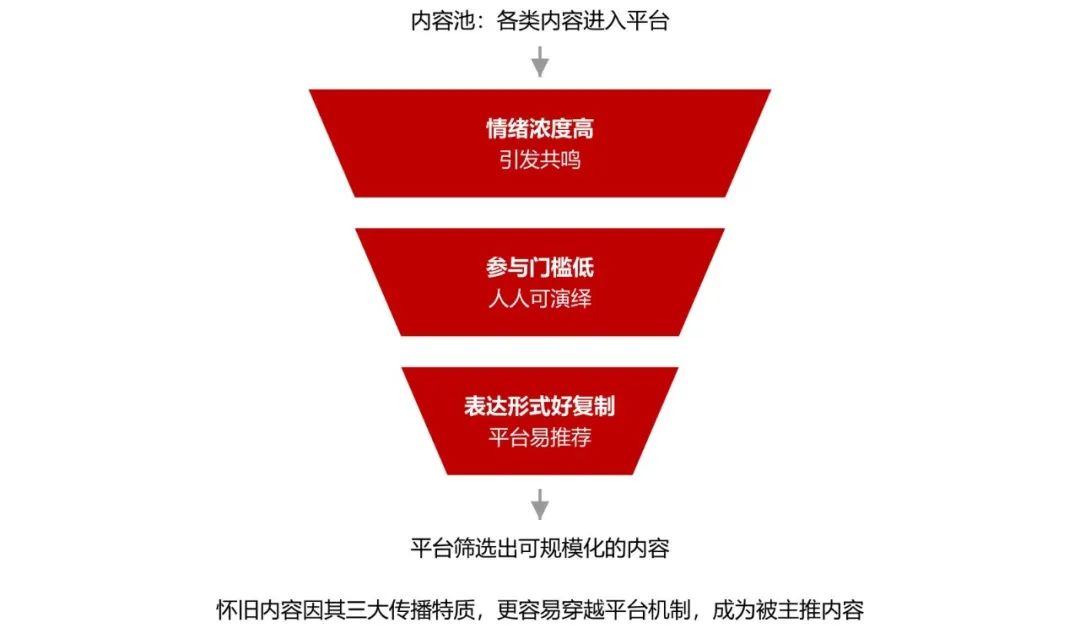
Core Insights - Nostalgia is evolving from a passive sentiment to an active behavior among young consumers, driven by the need for psychological defense against uncertainty, self-identity reconstruction, and resistance to the fast-paced societal changes [2][3][4] Group 1: Nostalgia as a Cultural Mechanism - Nostalgia has the ability to transcend time and is consistently activated across generations, serving as a long-tail preference for self-expression [3][4] - The appeal of nostalgic content is being transformed into a participatory expression mechanism, where products are not just functional but serve as emotional symbols [3][4][7] - Nostalgia is embedded in platform algorithms, becoming a stable content generation formula that is easily replicable and scalable [4][5] Group 2: Commercial Space and Nostalgia - Commercial spaces are shifting from merely replicating nostalgic aesthetics to becoming platforms for content generation, focusing on emotional responses rather than strict historical accuracy [8][9] - Successful nostalgic markets organize spaces based on emotional states rather than chronological timelines, enhancing user engagement and dwell time [9][10] - The role of commercial spaces is evolving to support collaborative expression, allowing consumers to become active participants in content creation rather than passive observers [10][12] Group 3: Misconceptions and Upgrades in Nostalgic Marketing - Common misconceptions in nostalgic marketing include relying on static themes, outsourcing content creation, and maintaining a rigid operational structure [14][16] - Upgrading these misconceptions involves creating dynamic, participatory environments that encourage user-generated content and emotional engagement [16][18] - The focus should be on fostering a collaborative ecosystem where diverse expressions can thrive, rather than enforcing a singular nostalgic narrative [12][13][18]
突然爆火!价格狂飙4000%!
新华网财经· 2025-07-12 06:10
Core Viewpoint - The rise in popularity of "tear-off film" has led to a significant increase in prices, with original prices of 70 yuan per box soaring to 1600-3000 yuan, driven by scarcity and demand from various consumer groups [1][4]. Group 1: Product Overview - "Tear-off film" is an instant film similar to Polaroid, used for immediate imaging, which requires a developing time before the image appears [2]. - The original manufacturer, Polaroid, declared bankruptcy in 2001, leading to the discontinuation of tear-off film production by major companies like Fuji in 2008 and 2016 [4]. Group 2: Price Trends - The price of tear-off film has dramatically increased from 70 yuan to 3000 yuan per box, representing a maximum increase of 40 times from its original price [4]. - In international markets, prices for tear-off film can reach as high as 519 USD per box, equivalent to approximately 3726 yuan [6]. Group 3: Consumer Demographics - The consumer base for tear-off film is divided into three main groups: hardcore photography enthusiasts who appreciate vintage aesthetics, social media users who value the film as a unique collectible, and speculators who aim to profit from price increases [8][9]. - Some collectors are selling expired film at high prices, which may lead to quality issues in imaging [9]. Group 4: Market Dynamics - There are two consumption models in the market: one where consumers pay regardless of whether an image is produced, and another where businesses guarantee an image but not its quality [9]. - The market for tear-off film is characterized by a speculative nature, with some merchants promoting it as a "limited edition" collectible [9].

有了YU7的雷军能避免“摩西陷阱”吗?
Sou Hu Cai Jing· 2025-07-01 16:29
Group 1 - The article discusses the impact of charismatic leaders in technology and innovation, comparing figures like Edwin Land, Steve Jobs, and Lei Jun, highlighting their ability to create groundbreaking products that transform industries [1][4][29] - Polaroid's sales grew from less than $1.5 million in 1948 to $1.4 billion in 1978, showcasing its dominance in instant photography for 30 years [3] - Lei Jun's Xiaomi YU7 achieved remarkable success, with 240,000 units sold within 18 hours, indicating a new era in the automotive industry in China [4][29] Group 2 - The concept of the "Moses Trap" is introduced, where leaders overly rely on visionary ideas without practical strategies, potentially leading to failure [8][14] - The article emphasizes the need for a balance between creativity and execution within organizations, suggesting that leaders should act as gardeners rather than authoritarian figures [12][22] - The principles of "phase separation," "dynamic balance," and "systemic thinking" are outlined as essential for fostering innovation while maintaining operational efficiency [19][24][27]



社会服务行业周报(6.2-6.6):复古魅力下的新潮流:撕拉片与“人生四格”-20250608
Shenwan Hongyuan Securities· 2025-06-08 15:01
Investment Rating - The report rates the social services industry as "Overweight" indicating a positive outlook for the sector [4]. Core Insights - The report highlights the resurgence of instant film photography, particularly the popularity of "Peel Apart" film and the new "Life Four Frames" photo booths, driven by nostalgia and unique consumer experiences [5][11]. - The scarcity of Peel Apart film, with global inventory dropping below 500,000 boxes, has led to a dramatic price increase, with prices soaring from around 65-70 RMB per pack to 2800-3300 RMB on second-hand platforms, earning it the nickname "Paper Moutai" [9][11]. - The "Life Four Frames" photo booths have modernized the traditional photo booth experience, offering various backgrounds and instant photo printing, appealing to younger consumers [11][12]. Summary by Sections 1. New Trends in Photography - Peel Apart film has gained immense popularity due to its unique aesthetic and the limited availability of products from major manufacturers like Polaroid and Fujifilm, which have ceased production [8][9]. - The "Life Four Frames" photo booths have evolved from traditional photo booths, providing a more interactive and customizable experience for users [11]. 2. Market Performance Review - The social services sector saw a 2.09% increase in its index from June 2 to June 6, outperforming the broader market [13]. - Key stocks in the social services sector, such as ST United and Jinling Hotel, experienced significant gains, with increases of 21.46% and 11.87% respectively [18]. 3. Company Announcements - Companies in the retail and social services sectors are actively engaging in stock buybacks and shareholder reduction plans, indicating a focus on enhancing shareholder value [26][27]. 4. Industry Developments - The report notes significant developments in the social services industry, including record passenger numbers during the Dragon Boat Festival, showcasing a recovery in travel and tourism [30]. - The introduction of new technologies and partnerships, such as the investment in Acai Travel by Amadeus, reflects ongoing innovation within the industry [30]. 5. Valuation of Key Companies - The report provides a detailed valuation of key companies in the human resources, tourism, and hotel sectors, indicating a favorable outlook for these industries as they recover from previous downturns [32][33].



撕拉片成复古新宠,一张400元,年轻人追捧的情怀消费能火多久?
Sou Hu Cai Jing· 2025-05-27 11:30
Core Insights - A retro photography trend centered around the once-popular and now scarce instant film, known as "peel-apart film," is gaining traction on social media, attracting both celebrities and ordinary consumers [1][2] - The unique development effects and manual process of peel-apart film create a nostalgic atmosphere, leading to widespread discussion and imitation on social platforms [1][2] Group 1: Market Dynamics - The scarcity of peel-apart film, due to the discontinuation of production by Polaroid in 2008 and Fujifilm in 2016, has turned it into a rare resource, causing prices to soar [2][4] - On platforms like Xianyu, the price for a box of 10 sheets of Fujifilm FP-100C peel-apart film has reached between 2800 to 3300 yuan, with price increases surpassing that of gold, earning it the nickname "paper Moutai" [2][4] Group 2: Consumer Behavior - The trend has led to a surge in social media topics related to peel-apart film, with young consumers willing to pay high prices for the experience, often visiting photo studios to capture these images [2][6] - Photography institutions are also offering services that mimic the peel-apart film effect using modern cameras, catering to the demand for this nostalgic aesthetic [6] Group 3: Cultural Significance - The rise of peel-apart film reflects a broader consumer desire for "warm memory carriers" in an increasingly digital world, as people seek images that evoke emotional connections [6][8] - Despite the potential for price increases to deter some consumers, peel-apart film has established itself as a unique cultural phenomenon, symbolizing a love for retro trends and tangible memories [8]