三峡能源

Search documents
三峡集团与华北电力大学座谈
Xin Lang Cai Jing· 2026-01-31 17:24
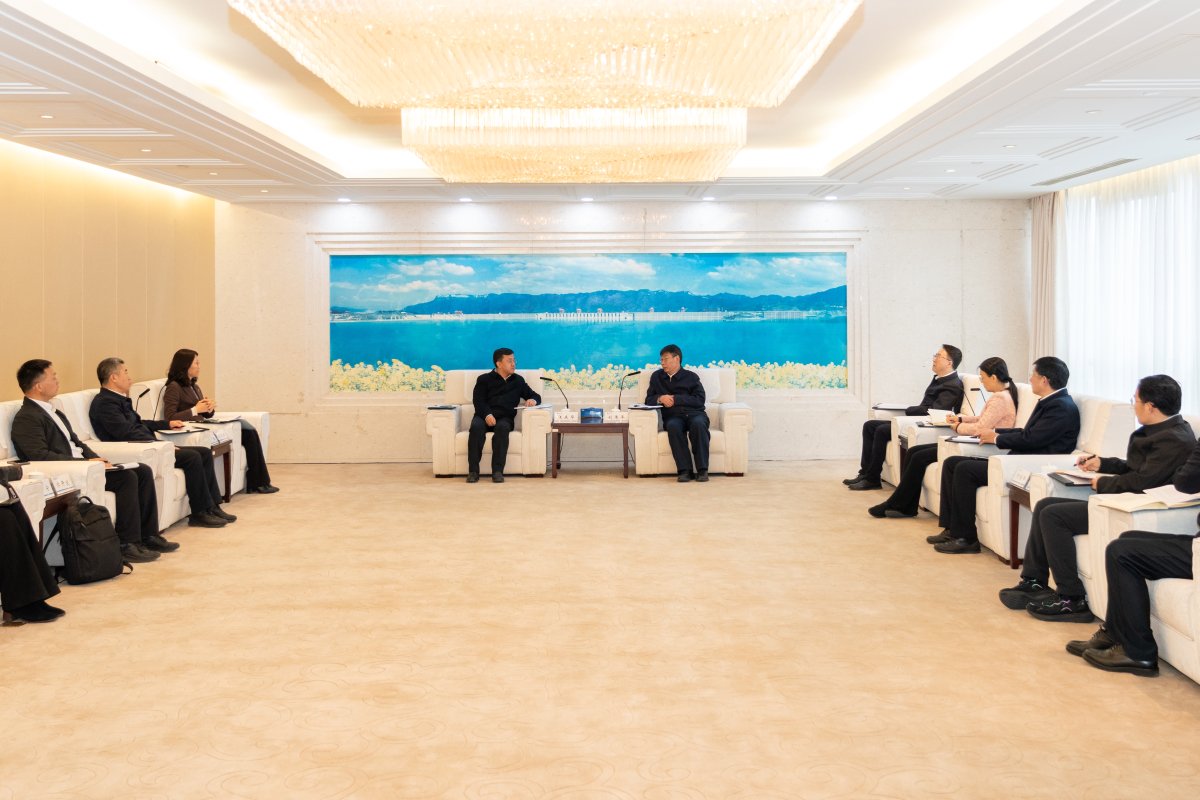
本网讯(雷海超)1月30日,三峡集团董事长、党组书记刘伟平在北京与华北电力大学党委书记汪庆华,校长、党委副书记毕天姝座谈。双方就贯彻落实党 的二十届四中全会精神,深化在科技创新、人才培养等方面合作进行深入交流。三峡集团副总经理、党组成员王昕伟,华北电力大学党委常委、副校长刘威 出席。 刘伟平对汪庆华、毕天姝一行来访表示欢迎,对华北电力大学长期以来给予三峡集团的支持和帮助表示衷心感谢。刘伟平表示,华北电力大学是能源电力领 域享有盛誉的全国知名高校,双方在科技攻关、平台建设、人才培养等方面开展长期务实合作,建立了紧密的校企合作关系。希望双方继续发挥各自优势, 聚焦水利水电、清洁能源,围绕"沙戈荒"大基地、海上风电、新型储能等领域持续深化合作,加快推进科技创新和科研平台共建,强化人才支撑、培养和交 流,更好服务能源强国、科技强国和人才强国建设。 汪庆华、毕天姝对三峡集团长期以来给予华北电力大学的大力支持表示感谢。汪庆华、毕天姝表示,双方合作紧密且富有成效,具有坚实合作基础和广阔合 作前景。华北电力大学将聚焦三峡集团高质量发展所需,依托能源电力科学与工程学科群特色优势,携手推进原始创新和关键核心技术攻关,加强科技创新 ...

心智观察所:当特朗普质疑中国风电时,我们在谈论什么
Guan Cha Zhe Wang· 2026-01-31 01:15
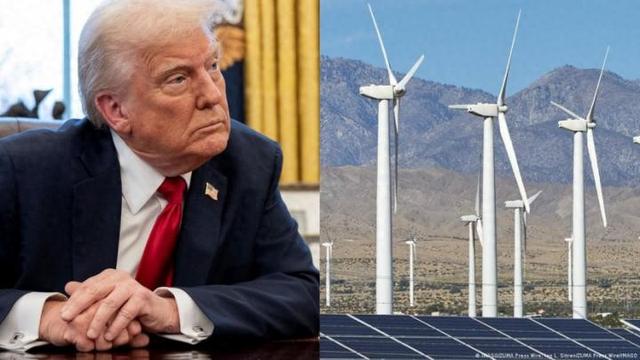
【文/观察者网专栏作者 心智观察所】 在瑞士达沃斯的世界经济论坛上,特朗普抛出了一个看似简单却颇具嘲讽意味的问题:中国制造了几乎 所有的风力发电机,可他在中国却找不到任何风力发电场。他还不忘补上一句,称"中国非常聪明,他 们生产风力发电机,然后以高价出售。他们把这些发电机卖给那些愚蠢的买家,但他们自己却不用"。 这番言论在社交媒体上引发了不小的波澜,但如果我们只把它当作又一次政治口水战的素材,那就真正 错失了这场争论背后更深层的故事——一个关于能源、基建、算力,以及大国竞争的故事。 事实上,特朗普的这番"找不到风电场"的说辞,要么是故意的误导,要么是对中国能源转型的严重信息 滞后。截至2025年11月底,中国的风电装机容量已经超过6亿千瓦,相当于600吉瓦。这个数字意味着什 么?它意味着中国的风电装机规模已经连续15年稳居世界第一,相当于大约600座核电机组的发电能 力。 从内蒙古苏尼特石旗那片一望无际的草原上竖立的千兆瓦级风储项目,到江苏盐城海域那些随波起伏的 850兆瓦海上风电阵列,再到广东阳江沙扒那座国内首个百万千瓦级海上风电场——这些巨型工程正在 改写着中国的能源版图。说中国没有风电场,就像说美国没有 ...
国家发展改革委 国家能源局关于完善发电侧容量电价机制的通知
国家能源局· 2026-01-30 09:29
Overall Thoughts - The notification aims to improve the capacity pricing mechanism on the generation side to ensure stable power supply, facilitate green development, and optimize resource allocation in the energy sector [4][5]. Classification of Capacity Pricing Mechanism - The capacity pricing mechanism for coal and natural gas power generation will be enhanced, with a recovery ratio of fixed costs for coal power plants increased to no less than 50% [5]. - The pricing mechanism for pumped storage power plants will continue to follow government pricing for plants that commenced construction before the issuance of the relevant guidelines, while new plants will have their capacity prices determined based on average costs [6]. - A new capacity pricing mechanism for independent new energy storage on the grid side will be established, with pricing based on local coal power capacity standards [7]. Establishing Reliable Capacity Compensation Mechanism - A reliable capacity compensation mechanism will be established to compensate power generation units based on their ability to provide stable power during peak demand periods [8]. - The compensation will cover coal, gas, and eligible independent new energy storage units, gradually expanding to include pumped storage [9]. Improving Supporting Policies - The adjustment of coal power long-term market trading prices will be allowed based on supply and demand, with flexibility in contract pricing mechanisms [10][11]. - The capacity fees and compensation will be included in local system operating costs, with specific pricing rules for energy storage facilities based on market conditions [12]. Implementation Organization - Provincial pricing authorities are tasked with coordinating the implementation of capacity pricing policies and establishing reliable capacity compensation mechanisms [13]. - An assessment system for users' economic capacity to bear electricity costs will be established to inform compensation standards [14].

新型储能的“保底工资”来了!容量电价水平参照煤电标准,结合放电时长和顶峰贡献
中关村储能产业技术联盟· 2026-01-30 09:11
Core Viewpoint - The article discusses the implementation of a new capacity pricing mechanism for power generation, aimed at enhancing the stability and efficiency of the electricity system while supporting the transition to a green and low-carbon energy structure [4][14][16]. Summary by Sections 1. Introduction of the Notification - The National Development and Reform Commission (NDRC) and the National Energy Administration (NEA) issued a notification to improve the capacity pricing mechanism for power generation, aligning with national energy reform and the construction of a new energy system [4][14]. 2. Reasons for Improvement - The rapid development of renewable energy in China necessitates the construction of flexible power sources to ensure stable electricity supply during periods of low renewable output. The existing capacity pricing mechanisms for coal, gas, and pumped storage power have been established to support this transition [5][6]. 3. Classification and Improvement of Capacity Pricing Mechanisms - The notification categorizes and improves the capacity pricing mechanisms for coal, gas, pumped storage, and independent new energy storage. For coal and gas, the fixed cost recovery ratio through capacity pricing will be raised to at least 50%, equating to 165 yuan per kilowatt annually [7][17]. - For pumped storage, existing projects will maintain current pricing, while new projects will adopt a unified capacity pricing based on average cost recovery principles [7][18]. - A new capacity pricing mechanism for independent new energy storage will be established based on local coal capacity pricing standards, considering peak contribution and discharge duration [8][19]. 4. Establishment of Reliable Capacity Compensation Mechanism - A reliable capacity compensation mechanism will be introduced to ensure that different types of power generation units are compensated fairly based on their peak capacity contributions, promoting healthy competition among technologies [9][20]. 5. Optimization of Market Trading and Pricing Mechanisms - The notification encourages fair participation of pumped storage and new energy storage in the electricity market, allowing for adjustments in coal power trading price limits based on local market conditions [10][22]. - It promotes flexible pricing mechanisms in long-term contracts to better reflect supply and demand dynamics [11][22]. 6. Impact on End Users - The policy will not affect electricity prices for residential and agricultural users, while commercial users may see a balanced impact due to the adjustments in capacity pricing and energy market costs [12][13]. 7. Positive Effects of the Improved Mechanism - The improvements are expected to enhance power supply security, support renewable energy utilization, and promote the healthy development of flexible power sources, ultimately facilitating the construction of a new energy system [13][16].
国家发改委、国家能源局重磅发布!
中国能源报· 2026-01-30 08:23
Core Viewpoint - The article discusses the implementation of a refined capacity pricing mechanism for power generation, aimed at enhancing the stability and efficiency of the electricity market while supporting the transition to a green energy system [1][2]. Group 1: Overall Strategy - The strategy aims to adapt to the needs of a new power system and market structure, balancing power supply security, green energy transition, and efficient resource allocation [3]. - It emphasizes the need to categorize and improve capacity pricing mechanisms for coal, natural gas, pumped storage, and new energy storage [3]. Group 2: Classification of Capacity Pricing Mechanisms - The capacity pricing mechanism for coal and natural gas power generation will be improved, with a target to recover at least 50% of fixed costs through capacity pricing [4]. - For pumped storage, existing projects will continue to use government pricing, while new projects will have their capacity pricing determined based on average cost recovery principles [5]. - A new capacity pricing mechanism for independent new energy storage on the grid side will be established, based on local coal power capacity pricing standards [6]. Group 3: Establishing Reliable Capacity Compensation Mechanism - A reliable capacity compensation mechanism will be established to compensate power generation units based on their ability to provide stable power during peak demand periods [7]. - The compensation will cover coal, gas, and qualifying new energy storage units, gradually expanding to include pumped storage [8]. Group 4: Supporting Policy Improvements - The article outlines the need to enhance electricity market trading and pricing mechanisms, allowing for flexible pricing in long-term contracts based on market conditions [9]. - It also discusses the need for improved electricity billing policies, ensuring that capacity fees and compensation are integrated into local system operating costs [10]. Group 5: Implementation and Coordination - The article emphasizes the importance of collaboration among provincial pricing authorities and energy departments to effectively implement the capacity pricing policies [11]. - It highlights the establishment of an economic capacity assessment system to guide the determination of reliable capacity compensation standards [12].
三峡能源:公司直接持有金风科技股票

Zheng Quan Ri Bao Wang· 2026-01-29 12:48
证券日报网讯1月29日,三峡能源(600905)在互动平台回答投资者提问时表示,公司直接持有金风科 技(002202)股票,金风科技所持有资产与公司不存在股权关系。 ...
三峡能源:控股股东计划自2025年4月9日起12个月内通过二级市场增持公司股份
Zheng Quan Ri Bao Wang· 2026-01-29 12:43
证券日报网讯1月29日,三峡能源(600905)在互动平台回答投资者提问时表示,公司控股股东基于对 公司未来发展的信心,计划自2025年4月9日起12个月内通过二级市场增持公司股份,本次增持不设置固 定价格区间,结合资本市场行情择机开展股票增持,公司依法履行披露义务,及时公告增持进展。股价 波动受宏观经济、市场环境、投资者情绪等多种因素影响。 ...
碳价与绿证市场预期升温
HTSC· 2026-01-29 02:30
Investment Rating - The industry investment rating is "Overweight" for both Utilities and Environmental sectors [8]. Core Insights - The carbon pricing market is undergoing a value reconstruction driven by both policy and market forces, with carbon prices expected to stabilize at 150-200 RMB/ton by 2030 [3][7]. - The green certificate market is currently underperforming, with prices at only 8% of the carbon price, indicating significant potential for value release [5][7]. - The upward pressure on electricity prices is anticipated from both carbon costs and green certificate revenues, with wholesale electricity prices projected to increase by 10% to 385 RMB/MWh [6]. Summary by Sections Carbon Price Trends - Carbon prices peaked at 98 RMB/ton by the end of 2024 but fell to a low of 38 RMB/ton in 2025 due to declining energy prices and increased renewable energy capacity [4]. - As of January 2026, carbon prices have stabilized at an average of 73 RMB/ton, supported by compliance demand from the power sector and the expansion of carbon markets in heavy industries [4]. Green Certificate Market - The average price of green certificates was 4.2 RMB per certificate in 2025 and increased to 5.5 RMB in 2026, still significantly lower than carbon prices [5]. - The low price of green certificates is attributed to the incomplete integration with the carbon market and insufficient market demand for green electricity [5]. Electricity Price Dynamics - Current carbon and green certificate prices are expected to push wholesale electricity prices from 350 RMB/MWh to 385 RMB/MWh, with further increases anticipated if carbon prices rise to 150-200 RMB/ton [6]. - If green certificate prices align with carbon prices, wholesale electricity prices could increase by 24-31% [6]. Future Outlook - The carbon market is expected to transition from "soft constraints" to "hard constraints" by 2027, with a gradual tightening of quotas and an increase in the proportion of paid allowances [7]. - Policies are being established to link the environmental value of green certificates with carbon reduction values, which may enhance the economic viability of green electricity [7].


【热点直击】马斯克:中国AI的优势在于电力!数据中心驱动,关注电力ETF华宝(159146)
Xin Lang Cai Jing· 2026-01-29 01:32
Core Insights - Elon Musk stated that China's decisive advantage in the AI race lies in its large-scale power supply capabilities, highlighting the critical role of electricity in AI development [2] - The rapid advancement of AI technology has led to explosive growth in data center construction, which significantly increases electricity demand and is a major driver of power consumption [2] Industry Overview - The electricity demand driven by data centers is becoming a core growth engine, contributing to the power supply gap [2] - The current valuation of the electricity sector is at a historical low, with the China Securities Index for public utilities showing a price-to-earnings ratio (PE-TTM) of approximately 17 times, below most of the past decade's valuation levels, indicating a certain margin of safety [10][16] ETF and Market Composition - The Huabao Electric ETF tracks the China Securities Index for public utilities, which includes various power generation methods: thermal power (40.81%), hydropower (24.81%), wind power (14.25%), nuclear power (11.83%), and solar power (6.87%) [6][14] - The top ten weighted stocks in the index include leading companies such as Changjiang Electric Power, China Nuclear Power, and Three Gorges Energy, collectively accounting for 52.07% of the index [7][14] Key Stocks and Market Data - Key stocks in the index include: - Changjiang Electric Power: Market Cap 665.29 billion, Weight 10.02% [8] - China Nuclear Power: Market Cap 177.91 billion, Weight 8.36% [8] - Three Gorges Energy: Market Cap 116.92 billion, Weight 6.87% [8] - Guodian Power: Market Cap 89.89 billion, Weight 5.28% [8] - The index is classified into four levels by the China Securities Index Company, with data as of December 31, 2025 [6][14]




逾山越海 逐风而行(新时代画卷)
Ren Min Ri Bao· 2026-01-28 22:12
Core Insights - China has achieved significant advancements in wind power technology, including the development of a 26 MW offshore wind turbine, the highest elevation wind project at 5,370 meters, and the furthest offshore wind project at a distance of 85.5 kilometers [1][2] Group 1: Technological Achievements - The 26 MW offshore wind turbine has a hub height equivalent to over 50 stories and a swept area larger than 10.5 standard football fields [1] - The highest elevation wind project, located in Tibet, utilizes a single blade hoisting technology for the first time above 5,000 meters [1] - The Jiangsu Dafeng 800 MW offshore wind project marks a breakthrough in deep-sea wind power development, with its farthest point located 85.5 kilometers offshore [1] Group 2: Industry Growth and Projections - By 2025, the wind power generation capacity in China is expected to exceed 1 trillion kilowatt-hours, accounting for 10.8% of the national industrial power generation [1] - The installed wind power capacity in China is projected to reach 640 million kilowatts by the end of 2025, representing over 16% of the total power generation capacity [1] - The wind power industry has transitioned from "catching up" to "leading" in global terms, with approximately half of the world's wind power capacity now located in China [1] Group 3: Economic Impact - China's wind power equipment exports account for 70% of the global market, with products reaching over 60 countries and regions [2] - The annual output value of China's wind power industry is approximately 1.2 trillion yuan, supporting over 2 million direct and indirect jobs [2] - The "14th Five-Year Plan" aims to accelerate the construction of integrated renewable energy bases, with an expected addition of over 200 million kilowatts of wind and solar power capacity by 2026 [2]