京东方A

Search documents
京东方A(000725) - 016-2025年7月16日投资者关系活动记录表
2025-07-16 10:50
Group 1: LCD Industry Performance - The average utilization rate of the LCD industry has been above 80% since November 2024, with a gradual increase in Q1 2025, followed by a decline in Q2 due to reduced demand [1] - In July, prices for certain sizes of LCD TV products experienced a slight decrease, while prices for MNT and NB panels remained stable [2] Group 2: Company Financials and Depreciation - The company's depreciation for 2024 is estimated at approximately 38 billion, with all 8.5 generation production lines having completed depreciation [3] - Depreciation is expected to peak this year as new projects are completed and mature production lines reach the end of their depreciation period [3] Group 3: Capital Expenditure and Strategic Focus - Future capital expenditures will focus on semiconductor display business and align with the company's "Screen IoT" strategy, emphasizing innovation in IoT, sensors, MLED, and smart medical engineering [4][5] - The company plans to selectively repurchase minority shareholder equity based on operational status and cash flow [5] Group 4: AMOLED Business Development - The company has established a competitive position in the flexible AMOLED market, covering major top brand clients and increasing the proportion of high-end products like LTPO and foldable displays [5] - The 8.6 generation AMOLED production line project in Chengdu began equipment installation four months ahead of schedule, transitioning from construction to operational phase [5]

惠科股份冲击深主板,聚焦半导体显示领域,面临一定偿债压力
Ge Long Hui· 2025-07-16 09:47
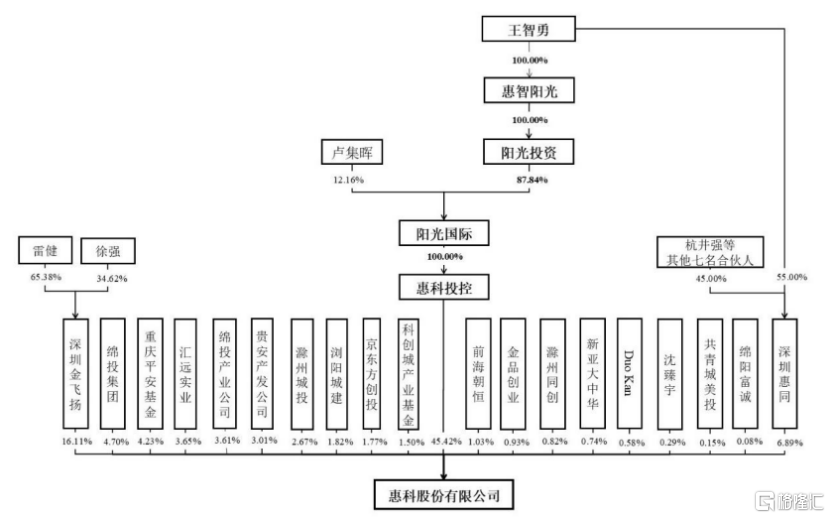
Core Viewpoint - Huike Co., Ltd. is seeking to go public on the A-share market, having previously attempted an IPO on the ChiNext board in 2022 but withdrew in 2023. The company is now aiming for a listing on the Shenzhen main board with a fundraising target of 8.5 billion yuan [1][2]. Company Overview - Huike Co., Ltd. was established in 2001 and focuses on the semiconductor display sector, with products used in consumer electronics, commercial displays, automotive electronics, industrial control, and smart IoT applications. As of the end of 2024, the company has approximately 17,000 employees [3]. - The company's major subsidiaries include Chongqing Jinyu, Chuzhou Huike, Changsha Huike, Mianyang Huike, Guangxi Zhixian, Hefei Jinyang, Chongqing Jinyang, and Shenzhen Optoelectronics [3]. Shareholding Structure - Prior to the IPO, Wang Zhiyong, through Huike Investment Holdings and Shenzhen Huitong, controls 52.31% of the voting rights, making him the actual controller of the company. Other shareholders include Lei Jian, Lu Jihui, Mian Investment Group, Chongqing Ping An Fund, and Huiyuan Industrial [3]. Financial Performance - The company's revenue for the years 2022, 2023, and 2024 is approximately 27.134 billion yuan, 35.797 billion yuan, and 40.31 billion yuan, respectively. The net profit attributable to the parent company for the same years is approximately -1.428 billion yuan, 2.566 billion yuan, and 3.339 billion yuan, indicating a loss in 2022 [11]. - The gross profit margins for the main business during the reporting period were -1.57%, 16.75%, and 17.74%, reflecting fluctuations due to changes in product mix and cost structures [12]. IPO Fund Utilization - The IPO aims to raise 8.5 billion yuan, which will be allocated to projects including the Changsha new OLED R&D upgrade project, Changsha Oxide R&D and industrialization project, Mianyang Mini-LED smart manufacturing project, and to supplement working capital and repay bank loans [6][7]. Industry Context - The global semiconductor display panel industry is projected to reach a value of 109.2 billion USD in 2024, with expectations to grow to 120.2 billion USD by 2027, driven by diversified downstream product demands [14]. - Huike Co., Ltd. ranks third globally in TV panel shipment area, fourth in monitor panel shipment area, and third in smartphone panel shipment area, with its 85-inch LCD TV panel shipment area ranking first globally [20]. Risks and Challenges - The company faces operational performance volatility risks due to fluctuations in demand for consumer electronics, pricing changes, and technological advancements. The high asset-liability ratio of 69.10%, 69.47%, and 68.78% over the reporting periods indicates significant debt pressure [21].

12家!京东方、TCL科技等扎堆成立新公司
WitsView睿智显示· 2025-07-16 09:39
Core Viewpoint - The establishment of Changshu Shihehua New Materials Co., Ltd. represents a strategic partnership between Shiming Technology and TCL Technology's subsidiary, focusing on the development and sales of display photoresist color paste, enhancing competitive advantages in the display panel industry [1][2]. Company Establishments - Changshu Shihehua New Materials Co., Ltd. has a registered capital of 20 million RMB, with Shiming Technology holding 66% and TCL's subsidiary holding 34% [2]. - TCL Technology also established Wuxi Hongchuan Intelligent Technology Co., Ltd. in January 2025, focusing on artificial intelligence application software development, with a registered capital of 2 million RMB [2]. Industry Trends - The formation of new companies in the display industry during the first half of 2025 indicates a trend of focusing on niche markets, risk diversification, and market expansion among major display manufacturers [3][5]. - Companies like JDI and TCL are restructuring their operations to enhance management autonomy and decision-making agility, which is crucial for their growth in specific sectors [4][5]. Strategic Intentions - The establishment of subsidiaries allows companies to better capture market demands and optimize product upgrades, as seen with Shiming Technology's collaboration with TCL [2][5]. - The trend of forming joint ventures and subsidiaries is a strategic move to mitigate operational risks and financial pressures, as demonstrated by JDI's transfer of patent assets to newly established companies [5][6]. Market Expansion - Companies like Deep Tianma are expanding internationally by establishing subsidiaries in Thailand to enhance their global competitiveness through localized production and services [5]. - The collaboration between AU Optronics and E Ink Holdings to create a large electronic paper module production line exemplifies efforts to tap into new market opportunities [5].

韩国宣布:25亿发力Micro LED、QD LED等显示技术
WitsView睿智显示· 2025-07-16 09:39
Core Viewpoint - The South Korean government plans to invest 484 billion KRW (approximately 350 million USD, 2.51 billion CNY) in developing iLED (Inorganic Light-Emitting Diode) display technology by 2032, aiming to establish a complete local industrial ecosystem and find new growth engines for the display industry [1][3][9]. Group 1: Current Market Position - South Korea currently leads the OLED market but lags in the iLED sector, heavily relying on imports for LED epitaxy, chips, and materials [3][4]. - Chinese companies, supported by their government, have rapidly risen in the display market, surpassing South Korea in LCD panels and closing the gap in OLED technology [5][6]. Group 2: iLED Technology Advantages - iLED technology is seen as the next-generation display technology that could potentially disrupt OLED, offering better lifespan, brightness, picture quality, and energy efficiency, while avoiding issues like "burn-in" [5][6]. - The manufacturing and transfer of micro-level LED chips in iLED technology align more closely with the semiconductor industry, which poses a competitive challenge for South Korean firms [6][7]. Group 3: Government Investment Goals - The investment aims to address three main issues: reversing the technological lag in the iLED field, reducing reliance on foreign-made key LED chips and materials, and finding new economic growth engines post-OLED [7][9]. - The initiative is part of a broader strategy to secure a competitive edge in the global display industry and ensure supply chain security [9]. Group 4: Future Implications - The investment is expected to influence the global evolution of display technology, with the competition in the iLED sector already underway [9].

中嘉微视获近亿元A轮融资,国产量/检测设备双赛道突围!
仪器信息网· 2025-07-16 07:48
Core Viewpoint - Zhongjia Weishi has successfully completed nearly 100 million yuan in Series A financing, focusing on machine vision and optical inspection, aiming to break foreign technology monopolies and achieve domestic substitution in the semiconductor and display fields [1][2]. Financing and Investment - The financing round was led by Guotai Junan Innovation Investment, Guojin Dingxing, and Tiantong Co., marking strong recognition from the capital market regarding the company's technological strength and development prospects [2]. - The funds will be primarily allocated to three strategic directions: consolidating advantages in display front-end inspection, expanding semiconductor front-end inspection layout, and continuously breaking through core technology boundaries [3]. Company Overview - Founded in July 2019, Zhongjia Weishi is an innovative AI company specializing in the design and development of machine vision algorithms, focusing on optical inspection machines (AOI) in the semiconductor and related fields [3][4]. - The company has obtained 32 core patents, breaking the technology monopolies of Japan, South Korea, Europe, and the United States, and its products cover various fields including semiconductors, displays, and lithium batteries [3]. Market Position and Achievements - Zhongjia Weishi focuses on dual tracks of "display front-end + wafer front-end," aiming to become a core player in high-end measurement/inspection equipment [4]. - The company has established long-term stable partnerships with major manufacturers such as BOE, Tianma, and Huaxing Optoelectronics, and is the only domestic company to receive bulk orders for OLED front-end inspection from six major panel manufacturers, achieving cumulative sales exceeding 500 million yuan [4]. - A semiconductor measurement/inspection base is set to officially commence production in June 2025, covering an area of 3,960 square meters, with an expected annual production capacity of several hundred units [4].

2025国话“CNT现场”高清展映季7月启程,展映8部经典
Xin Jing Bao· 2025-07-16 07:24
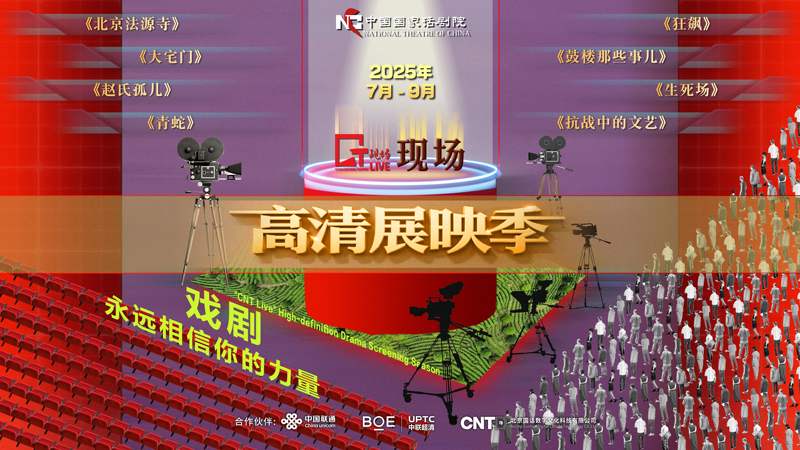
Core Viewpoint - The 2025 China National Theatre "CNT Live" HD Screening Season aims to leverage digital technology and AI to enhance the accessibility and quality of classic theatrical performances, promoting cultural digitalization and innovation in the performing arts industry [3][5][14]. Group 1: Event Overview - The "CNT Live" HD Screening Season was officially launched on July 15, 2025, with participation from key figures in the cultural and technological sectors [1][3]. - The event will feature eight classic works, showcasing a blend of traditional and digital performance art, and will run from July to September 2025 across 30 theaters in various cities [10][11]. Group 2: Technological Integration - The China National Theatre is transitioning from a traditional performance model to a fully digital strategy, utilizing AI and advanced technology to create high-quality visual representations of theatrical works [3][5]. - The collaboration with China Unicom and BOE Technology Group aims to enhance the viewing experience through optimized HD imaging processes and specialized broadcasting equipment, ensuring high resolution and smooth playback [8][10]. Group 3: Cultural Significance - The selected performances, including "Beijing Fayuan Temple" and "The Zhao Family's Orphans," reflect the essence of Chinese theatrical aesthetics and aim to break geographical barriers, allowing broader audience access to cultural heritage [5][11]. - The initiative is seen as a tribute to the past while also paving the way for future innovations in the performing arts, emphasizing the importance of integrating technology with traditional art forms [14].

LCD与OLED双轮驱动,中国面板行业持续深化
2025-07-16 06:13
Summary of Conference Call on Display Panel Industry Industry Overview - The conference focused on the global display panel industry, specifically the production of LCD and OLED panels, with a significant emphasis on China's market position and developments in the sector [1][2][3]. Key Points and Arguments - **Global LCD Panel Production**: - LCD panels account for over 90% of global display panel production, with an expected increase from 290 million square meters in 2023 to 300 million square meters by 2028 [1]. - The growth in global LCD panel production is primarily reliant on mainland China, as other countries are experiencing a decline in production capacity due to the phasing out of older lines [2]. - **Global OLED Panel Production**: - OLED panel production is projected to grow from 19.7 million square meters in 2023 to 30.7 million square meters by 2028 [2]. - In 2023, China's OLED production accounted for 22.8% of the global total, with expectations to increase to 65.9% by around 2026 [3]. - **China's LCD and OLED Production**: - China's LCD panel production is forecasted to rise from 208 million square meters in 2023 to 244 million square meters by 2028 [3]. - The production of OLED panels in China is expected to grow significantly, from 4.5 million square meters in 2023 to 22.3 million square meters by 2028 [3]. - **Market Dynamics**: - The LCD panel market in China faced a reduction in production due to a lack of demand, leading to a decrease in output by approximately 2% in 2022 compared to 2021 [4]. - Despite the challenges, companies like Huaxing Optoelectronics and BOE are expanding their production lines, with new 8.6-generation lines expected to add significant capacity [5]. - **Technological Advancements**: - The Taiwanese panel industry is facing challenges due to outdated production lines, while mainland China's modern factories are gaining a competitive edge [6]. - Companies are investing in new technologies and applications, such as microLED and advanced OLED technologies, to enhance their product offerings [7][8]. Additional Important Insights - **Market Competition**: - Japanese and Korean manufacturers are losing market share due to competitive pressures from Chinese firms, leading to the shutdown of several LCD production lines [8][9]. - The average size of LCD TV panels has seen a decline for the first time due to high inflation and changing consumer preferences, although the long-term trend remains upward [11]. - **Future Projections**: - The global market for OLED panels is expected to grow at a double-digit rate, with significant advancements in production technology anticipated [17]. - The penetration of OLED technology in smartphones has rapidly increased, reaching over 50% in 2023, while its adoption in larger devices like TVs remains limited due to high costs [18][21]. - **Consumer Trends**: - The demand for larger OLED panels is expected to grow, but the current high costs and production challenges hinder widespread adoption [23]. - The anticipated launch of Apple's OLED iPad Pro series marks a significant step in expanding OLED technology into new product categories [20]. Conclusion - The display panel industry is undergoing significant transformations, with China emerging as a dominant player in both LCD and OLED markets. The growth trajectory for OLED technology is promising, but challenges remain in terms of production costs and market acceptance, particularly in larger screen applications.
京东方A(000725):跟踪报告之六:拟收购彩虹光电30%股权,面板龙头地位进一步夯实
EBSCN· 2025-07-16 05:37
Investment Rating - The report maintains a "Buy" rating for the company, indicating an expected investment return exceeding the market benchmark by more than 15% over the next 6-12 months [6]. Core Views - The company plans to acquire a 30% stake in Rainbow Optoelectronics, which will further solidify its leading position in the panel industry and enhance its competitive advantages [1]. - The repurchase of minority shareholder rights in Wuhan B17 is expected to boost the parent company's performance, increasing its equity stake from 47.14% to 58.36% [2]. - The company's depreciation is projected to peak in 2025, with a subsequent decline expected to provide significant profit elasticity [3]. - The report adjusts the net profit forecasts for 2025 and 2026 to CNY 8.784 billion and CNY 12.471 billion, respectively, reflecting a decrease of 7% and 8% [3]. Summary by Sections Acquisition and Strategic Moves - The company intends to acquire a 30% stake in Rainbow Optoelectronics for approximately CNY 4.849 billion, which aligns with its strategic development goals and aims to enhance its industry influence [1]. Performance and Financial Projections - The repurchase of shares in Wuhan B17 is anticipated to positively impact the company's operational performance, with a focus on high-generation lines becoming a key growth driver [2]. - The company expects its depreciation to peak in 2025, with a gradual decline thereafter, which is expected to improve profitability [3]. - The adjusted net profit forecasts for 2025 and 2026 are CNY 8.784 billion and CNY 12.471 billion, respectively, with a new forecast for 2027 at CNY 14.486 billion [3]. Financial Metrics - The company’s revenue is projected to grow from CNY 174.543 billion in 2023 to CNY 273.063 billion in 2027, with a compound annual growth rate (CAGR) of approximately 9.22% [5]. - The net profit is expected to recover significantly from CNY 2.547 billion in 2023 to CNY 14.486 billion in 2027, reflecting a strong growth trajectory [5]. - The report indicates a PE ratio decreasing from 60 in 2023 to 10 in 2027, suggesting an improving valuation as profitability increases [12].
23股获杠杆资金净买入超亿元
Zheng Quan Shi Bao Wang· 2025-07-16 05:08
Summary of Key Points Core Viewpoint - As of July 15, the total market financing balance reached 1.88 trillion yuan, marking a continuous increase for seven consecutive trading days, indicating a growing interest from investors in the market [1]. Financing Balance and Individual Stocks - The financing balance in the Shanghai market was 945.53 billion yuan, increasing by 2.69 billion yuan, while the Shenzhen market's balance was 925.83 billion yuan, up by 2.25 billion yuan. The North Exchange saw a slight decrease of 488.44 thousand yuan [1]. - On July 15, a total of 1,848 stocks received net financing purchases, with 472 stocks having net purchases exceeding 10 million yuan. Notably, 23 stocks had net purchases over 100 million yuan [1]. - The top net purchase stock was Dongshan Precision, with a net buy of 666.5 million yuan, followed by Zhongji Xuchuang and Shenghong Technology with net buys of 400.4 million yuan and 235 million yuan, respectively [1]. Industry and Sector Analysis - In terms of industry concentration, the stocks with net purchases exceeding 100 million yuan were primarily in the electronics, computer, and non-bank financial sectors, with 7, 4, and 3 stocks respectively [1]. - Among the stocks with significant net purchases, the main board had 14 stocks, the ChiNext board had 8 stocks, and the Sci-Tech Innovation board had 1 stock [1]. Financing Balance as a Percentage of Market Value - The average financing balance as a percentage of the circulating market value for the stocks with large net purchases was 3.82%. Jianghuai Automobile had the highest ratio at 9.95%, followed by Hainan Huatie, Dongfang Caifu, and Hand Information with ratios of 7.47%, 7.40%, and 7.37% respectively [2]. - The detailed ranking of net purchases on July 15 included stocks like Dongshan Precision, Zhongji Xuchuang, and Shenghong Technology, with respective net buy amounts of 666.5 million yuan, 400.4 million yuan, and 235 million yuan [2][3].






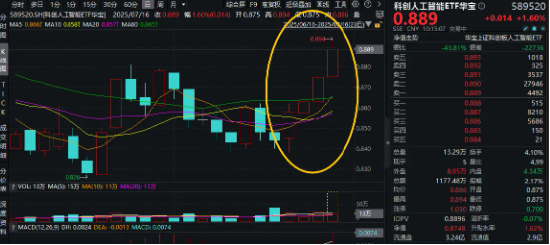
4连涨!重仓国产AI的589520盘中涨超2%,新一轮AI“军备竞赛”开启?寒武纪大涨6%
Xin Lang Ji Jin· 2025-07-16 02:27
Group 1 - The core viewpoint highlights the significant growth in the domestic AI industry, with the Huabao AI ETF (589520) experiencing a 2.17% intraday increase, marking its fourth consecutive day of gains [1] - Key stocks contributing to this growth include Cambricon, which rose over 6%, and Yuntian Lifei, which increased by more than 5% [1] - The fifth RISC-V China Summit is set to take place from July 16 to 19, focusing on AI, high-performance computing, and automotive electronics, with an expected attendance of nearly 2,000 professionals [3] Group 2 - The RISC-V China Summit is one of the largest annual events in China, featuring speakers from major companies like Qualcomm, NVIDIA, and Alibaba [3] - NVIDIA announced the resumption of H20 chip sales in China, with expectations for continued procurement by downstream customers to meet AI development needs [3] - The global AI "arms race" is underway, with new models like Grok4 and Kimi K2 expected to significantly boost domestic computing power demand and application ecosystems [3] Group 3 - CICC forecasts that the integration of edge AI across multiple terminals will drive growth in the consumer electronics sector, with a focus on AI hardware upgrades and innovations in wearable technology [4] - The Huabao AI ETF is characterized by its focus on domestic AI industry chains, emphasizing end-cloud integration, innovation-driven growth, and impressive long-term returns, having increased by 90.90% since September 24 [4] - The electronic ETF (515260) tracks the Electronic 50 Index, covering key sectors such as AI chips, automotive electronics, and cloud computing, with a focus on policy support and AI empowerment [5][6] Group 4 - The semiconductor industry is under pressure to achieve self-sufficiency, supported by national policies, with a focus on domestic alternatives [6] - AI models are enhancing electronic products' capabilities, leading to hardware innovation and a potential wave of upgrades in consumer electronics [6] - The Electronic 50 Index includes leading companies in the electronics sector, such as Luxshare Precision and BOE Technology Group, highlighting the strength of domestic players [6]