
复旦大学

Search documents
复旦研发二维—硅基混合架构闪存芯片
Zhong Guo Hua Gong Bao· 2025-10-10 03:17
Core Insights - Fudan University has achieved a milestone in the engineering of two-dimensional (2D) electronic devices by developing the world's first 2D-silicon hybrid architecture chip, integrating the "Dawn (PoX)" ultra-fast flash memory device with mature silicon-based CMOS technology [2][3] - The research results were published in "Nature" on October 8, highlighting the importance of integrating 2D ultra-fast memory devices into traditional semiconductor production lines to accelerate the incubation of new technologies [2] Group 1 - The CMOS (Complementary Metal-Oxide-Semiconductor) technology is the mainstream process for integrated circuit manufacturing, with most chips in the market being produced using this technology [2] - The challenge lies in integrating 2D materials with CMOS without compromising performance, as the surface of CMOS circuits is uneven while 2D materials are atomically thin [3] - The team innovated a core process that achieves tight integration of 2D materials and CMOS substrates at the atomic scale, resulting in a chip yield exceeding 94% [3] Group 2 - The newly developed chip has successfully completed the tape-out process, and the team plans to establish an experimental base and collaborate with relevant institutions to create self-led engineering projects [4] - Industry representatives believe that the 2D devices developed by the team possess inherent speed advantages, potentially breaking the balance of speed, power consumption, and integration in flash memory, which may lead to greater market opportunities in 3D applications in the future [4]
全球首颗!我国科学家成功研发出这一芯片
Huan Qiu Wang Zi Xun· 2025-10-10 01:03
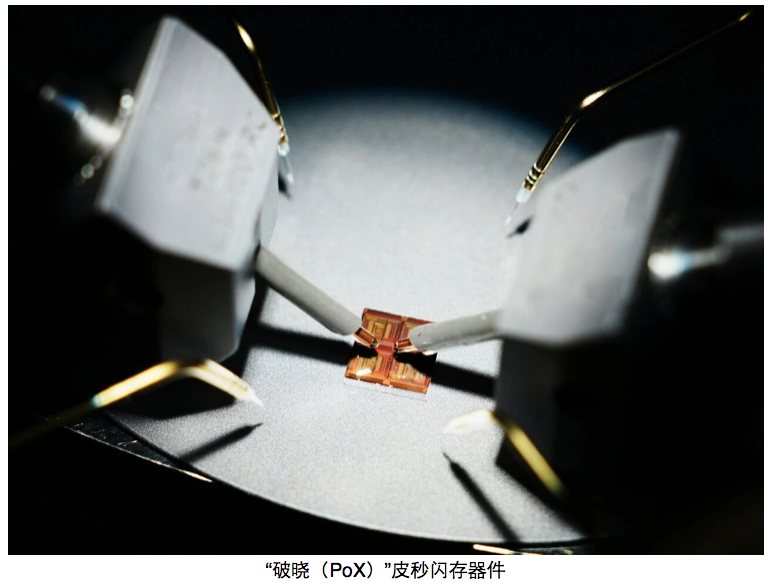
供图:复旦大学 来源:科技日报 海报制作:杨凯 刘义阳 记者9日从复旦大学获悉,该校集成芯片与系统全国重点实验室、集成电路与微纳电子创新学院周鹏— 刘春森团队研发出全球首颗二维—硅基混合架构闪存芯片,解决了存储速率的技术难题。相关研究成果 8日发表于国际学术期刊《自然》。 科技日报记者 王春 通讯员 沈涵 这是复旦大学继"破晓(PoX)"皮秒闪存器件问世后,在二维电子器件工程化道路上的又一次里程碑式 突破。 这一成果将二维超快闪存与成熟互补金属氧化物半导体工艺深度融合,攻克了二维信息器件工程化的关 键难题,率先实现全球首颗二维—硅基混合架构闪存芯片的研发。产业界相关人士认为,这种芯片可突 破闪存本身在速度、功耗、集成度上的平衡限制,未来或可在3D应用层面带来更大市场机会。 ...
华人学者一天发表了4篇Nature论文
生物世界· 2025-10-09 10:00
Core Insights - On October 8, 2025, 15 papers were published in the prestigious journal Nature, with 4 authored by Chinese scholars [2][4][6][8] Group 1: Research Contributions - Professor Zhao Huimin from the University of Illinois Urbana-Champaign published a paper titled "Enzyme specificity prediction using cross attention graph neural networks," introducing an innovative AI model called EZSpecificity that predicts enzyme substrate specificity with high accuracy, aiding in enzyme engineering and synthetic biology [2] - Professor Zhou Peng from Fudan University published a paper titled "A full-featured 2D flash chip enabled by system integration I," focusing on advancements in 2D flash memory technology through system integration [4] - MIT's Liu Qi co-authored a paper titled "Quantum-amplified global-phase spectroscopy on an optical clock transition," contributing to the field of quantum spectroscopy [6] - Professors Lou Zhenkun and Huang Jinzhu from Mayo Clinic published a paper titled "KCTD10 is a sensor for co-directional transcription–replication conflicts," revealing a ubiquitin ligase complex that detects transcription-replication conflicts and regulates replication body progression to prevent DNA damage [8]


全球首颗!我国成功研发全新架构闪存芯片
财联社· 2025-10-09 06:11
Core Viewpoint - Fudan University has achieved a significant breakthrough in the field of two-dimensional (2D) semiconductor technology by developing the world's first 2D-silicon-based hybrid architecture flash chip, addressing key engineering challenges in new 2D information devices [1] Group 1 - The research team at Fudan University published their findings in Nature, highlighting the successful creation of a full-featured 2D flash chip enabled by system integration [1] - This development comes in response to the global challenge posed by the approaching physical limits of Moore's Law, with 2D semiconductors recognized as a critical solution [1] - Current international research on 2D semiconductors is still in its early stages, with large-scale applications yet to be realized [1]

复旦团队官宣研发出全球首颗二维硅基混合架构闪存芯片
Xin Jing Bao· 2025-10-09 03:46
Core Insights - Fudan University has developed the world's first 2D-silicon hybrid architecture chip, named "Changying (CY-01)," which integrates 2D ultra-fast flash memory devices "Dawn (PoX)" with mature silicon-based CMOS technology [1] - The research results were published in the journal Nature, marking a significant step from basic research to engineering application, with plans to establish experimental bases and collaborative projects over the next 3-5 years [1] - The advancement is expected to address the storage and data bottlenecks in AI systems, facilitating the integration of this technology into personal computers and mobile devices [1] Industry Implications - The 2D devices developed by the team are believed to have inherent speed advantages, potentially breaking the speed, power consumption, and integration balance of traditional flash memory [2] - There is an expectation for transformative changes in the $60 billion storage market through collaborative efforts between academia and industry [2]
我国科学家实现全球首颗二维-硅基混合架构芯片,产业落地还有多久
Di Yi Cai Jing· 2025-10-09 03:19
Core Insights - Fudan University has achieved a breakthrough in two-dimensional (2D) semiconductor flash memory, presenting the world's first 2D-silicon-based hybrid architecture chip, addressing key engineering challenges in new 2D information devices [1][3][9] Research Progress - The research on 2D semiconductors is still in its early stages internationally, with significant advancements made since 2018, including the development of a prototype device capable of 400 picoseconds ultra-fast non-volatile storage, marking the fastest semiconductor charge storage technology to date [2][3] - The team has been working on integrating 2D ultra-fast flash memory into existing CMOS technology to accelerate the commercialization process, aiming to overcome the "LAB to FAB" challenge [5][6] Industrialization Strategy - The research team plans to establish an experimental base and collaborate with relevant institutions to lead engineering projects, targeting a chip capacity of one million (Mb) within the next 3 to 5 years [9][10] - The integration of 2D flash memory into the mature CMOS manufacturing process is expected to significantly shorten the time required for commercialization, potentially transforming the semiconductor industry [6][8] Technological Innovation - The team has developed an "Atomic Device to Chip" (ATOM2CHIP) system integration framework, allowing for the modular integration of 2D storage circuits with mature CMOS circuits, facilitating the transition from laboratory results to functional chips [8] - The innovative integration process is seen as a milestone for the engineering of 2D applications, paving the way for new high-speed information technology [8]
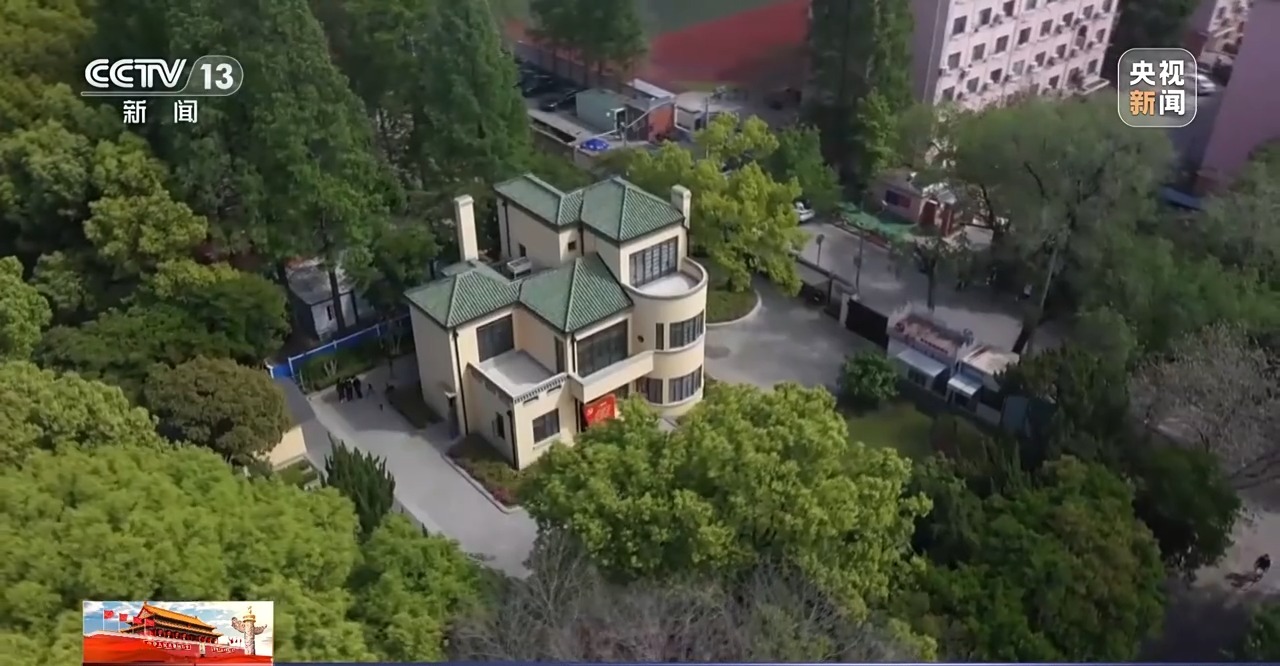
校馆弦歌丨走进复旦大学《共产党宣言》展示馆 传承信仰力量
Yang Shi Xin Wen· 2025-10-05 11:43
Core Viewpoint - The Fudan University "Communist Manifesto" Exhibition Hall serves as a spiritual beacon for students, fostering ideals, patriotism, and motivation for generations of youth [1]. Group 1: Historical Significance - The exhibition features the first Chinese edition of the "Communist Manifesto," published in 1920, and other valuable exhibits, highlighting the historical importance of Marxism in China [3]. - Chen Wangdao, the translator of the "Communist Manifesto," dedicated significant effort to complete the translation, which laid a theoretical foundation for the founding of the Chinese Communist Party [7][9]. Group 2: Educational Impact - Every year, new students at Fudan University visit the exhibition hall as part of their first class, emphasizing the importance of the "Communist Manifesto" in the university's educational framework [4]. - The exhibition hall has become a "classroom that never ends," with a volunteer service team named "Spark" engaging in educational activities to promote Marxist principles among students and the broader community [14]. Group 3: Legacy of Chen Wangdao - Chen Wangdao's life was dedicated to education and the dissemination of Marxist theory, serving as the first president of Fudan University after the founding of New China [11]. - His son, Chen Zhenxin, reflects on his father's commitment to Marxism and the importance of youth in national rejuvenation, encouraging students to take on responsibilities for the future [13]. Group 4: Youth Engagement - Current students and graduates express a strong commitment to their ideals and the pursuit of truth, aiming to contribute to China's modernization and serve the needs of the people [16][18].
让公众与前沿科技第一时间“零距离”接触——科普如何“快半拍”?
Huan Qiu Wang Zi Xun· 2025-09-30 08:11
Core Insights - The first National Science Popularization Month in September saw over 500 million participants in various online science activities, with the topic "Millions of IPs Creating Science Popularization" generating over 13.85 billion views, indicating a growing public enthusiasm for cutting-edge science [1][2] - There is a significant mismatch between the increasing public demand for high-quality science exhibits and the slow supply of such resources, highlighting a pressing need for improved science communication and exhibition strategies [1][2][3] Group 1: Public Engagement and Demand - The China Science and Technology Museum's new exhibition "Innovation Foundation: Science Popularization for the People" was extremely popular, with rapid booking slots indicating high public interest [1] - Visitors expressed excitement over interactive exhibits showcasing recent technological advancements, such as wearable electronic fabrics and quantum computing models, emphasizing the public's desire for timely and relevant science education [2][3] Group 2: Supply Challenges and Content Gaps - Many existing science exhibitions lag behind current scientific advancements, leading to public frustration and a perception that science communication is outdated [2][3] - The need for timely updates in science exhibits is critical, as many visitors noted that previous exhibitions often featured outdated content, particularly in fields like AI and biotechnology [2][3] Group 3: Institutional Responses and Innovations - In response to the supply-demand gap, the China Science and Technology Museum has partnered with universities and research institutions to create science laboratories aimed at bridging the gap between laboratory research and public exhibitions [3][4] - New exhibits, such as the "Moon Life Canister," have been developed to provide interactive experiences that educate the public about recent scientific achievements, demonstrating a shift towards more engaging and informative science communication [5][6] Group 4: Recommendations for Improvement - Experts suggest establishing mechanisms to enhance the collaboration between scientific research and public education, including integrating science communication into research planning and evaluation [6][7] - There is a call for better recognition of science communication efforts in academic evaluations, which could incentivize researchers to engage more actively in public science education [7][8] - Funding for scientific research should include provisions for science communication, ensuring that research outcomes are effectively translated into public knowledge [8][9]
争当教育科技人才一体发展先行者 陈吉宁为复旦大学师生代表作形势与政策报告
Jie Fang Ri Bao· 2025-09-29 01:32
Core Points - The report emphasizes the foundational and strategic role of universities in the national innovation system, highlighting the importance of youth as a driving force for technological innovation [1][3] - It outlines the need for universities, particularly Fudan University, to align with national strategies and contribute to the construction of Shanghai as an international technology innovation center [2][3] Group 1: National Strategy and Innovation - The central government has consistently prioritized technological innovation, with significant strategic deployments at each historical stage [1][2] - The report stresses the importance of enhancing basic research efficiency and establishing a robust academic exchange system [2] Group 2: University Responsibilities - Fudan University is encouraged to enhance its capabilities in supporting national strategies and regional economic development, particularly in the context of its 120th anniversary [3] - The focus is on cultivating talent that meets the demands of modern development, promoting interdisciplinary collaboration, and fostering a culture of rigorous academic pursuit [3][4] Group 3: Implementation and Reform - The report calls for reforms in the scientific research management system, emphasizing agile project management and comprehensive support for the entire innovation lifecycle [2] - It highlights the importance of deepening personnel system reforms to attract and nurture top talent, particularly in disruptive technology innovation [4]
2025年中国碳市场大会召开 复旦大学“探行”项目亮相
Zheng Quan Ri Bao Wang· 2025-09-25 07:48
Core Insights - The 2025 China Carbon Market Conference was successfully held in Shanghai, focusing on enhancing carbon pricing mechanisms to stimulate green and low-carbon development [1] - The conference gathered representatives from over 20 countries and regions, discussing key topics such as the operation of the national carbon market, the improvement of trading systems, and innovations in carbon finance [1] - The event aimed to elevate China's influence in the international carbon trading system and contribute to achieving the climate goals outlined in the Paris Agreement [1] Group 1: Carbon Credit Quality and International Cooperation - China's carbon credit quality has significantly improved, aligning with international standards in monitoring, accounting precision, environmental benefits, and compliance management [2] - The "Fudan Carbon Price Index" and other carbon pricing mechanism studies are enhancing the international recognition of Chinese carbon credits [2] - Recommendations for future development include advancing the internationalization of the "Fudan Carbon Price Index," innovating financial products related to carbon credits, and strengthening international cooperation on standards [2] Group 2: Talent Development and Market Mechanism - Fudan University is innovating in lifelong education, launching a project focused on the dual transformation of green and digital initiatives, aiming to cultivate high-end talent for global climate governance [3] - The successful hosting of the conference demonstrates China's progress in carbon market development and lays a solid foundation for deepening international carbon credit cooperation [3] - The ongoing improvement of China's market mechanisms will enable its carbon credits to play a more significant role in the global market [3]