
脑虎科技

Search documents
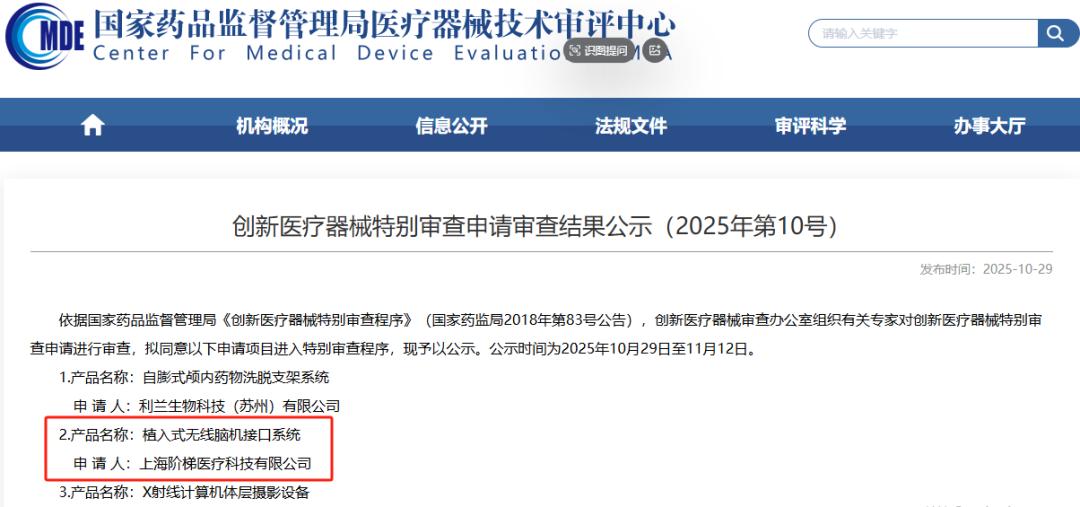
国内首次,侵入式脑机产品进审批“绿色通道”
3 6 Ke· 2025-11-13 02:10
Core Insights - The article highlights the significant potential of new materials and flexible electrodes in China, particularly in the field of brain-computer interfaces (BCIs) [1][7] - The approval of the first invasive brain-computer interface product by Shanghai Ladder Medical Technology Co., Ltd. marks a milestone in the domestic medical device industry [1][4] Industry Overview - The innovative medical device special review procedure established by the National Medical Products Administration (NMPA) aims to encourage innovation in medical devices, providing expedited review for products with core technology patents and significant clinical value [2][3] - The invasive brain-computer interface technology requires surgical implantation, which presents higher technical barriers and risks but offers higher quality and precision in neural signal acquisition compared to non-invasive methods [3][4] Company Developments - Shanghai Ladder Medical, founded in 2021, focuses on the development of implantable brain-computer interface technology and has recently completed a 350 million yuan Series B financing round [3][4] - The company's ultra-flexible electrode technology allows for minimally invasive implantation, significantly reducing the risk of tissue damage and immune response [4][6] Clinical Progress - Ladder Medical has initiated clinical trials, with a recent case demonstrating a participant controlling a computer cursor using thought after undergoing the brain-computer interface implantation [6][8] - The company is now the second globally, after Neuralink, to enter the clinical phase of invasive brain-computer interfaces [6][8] Market Potential - The global brain-computer interface market is projected to grow from approximately $2.62 billion in 2024 to $12.4 billion by 2034, with a compound annual growth rate of 17.35% [8] - The Chinese brain-computer interface market is expected to expand from 3.2 billion yuan in 2024 to 6.14 billion yuan by 2028, indicating strong growth potential in the sector [8] Regulatory Environment - Recent policy developments, including the establishment of industry standards for brain-computer interface medical devices, are expected to facilitate faster market entry for approved products [7][8] - The NMPA's new standards for brain-computer interface terminology will take effect on January 1, 2026, marking a significant step in regulatory clarity for the industry [7][8]

陈天桥砸百亿的赛道爆发,这家公司叫板马斯克
3 6 Ke· 2025-10-24 01:02
Core Insights - The year 2025 is anticipated to be a pivotal year for brain-computer interfaces (BCIs), with rapid advancements and significant capital influx into the sector [1][9] - The integration of AI and BCIs is seen as a potential game-changer, with both technologies expected to converge and enhance each other [9][32] Investment and Development - Brain Tiger Technology, founded by Tao Hu, received early angel investment of 30 million yuan from Chen Tianqiao, who has been a key supporter throughout its development [3][25] - The BCI industry has seen a compound annual growth rate of over 30% in financing events from 2018 to 2024, with 20 new financing events in Q3 2025 alone [9][29] Technological Advancements - Brain Tiger has developed a high-throughput, implantable flexible BCI that can decode both motor and language signals in real-time, making it the only company globally with this dual capability [4][6] - The company has conducted 53 short-term clinical trials and is set to initiate the world's first long-term clinical trial of a fully wireless, fully implanted, and fully functional flexible cortical BCI [9][14] Clinical Applications - BCIs are being utilized in clinical settings to assist disabled patients in controlling prosthetic limbs and enabling communication for those with speech impairments [4][6] - Recent trials have demonstrated the ability of BCIs to decode neural signals into coherent language, allowing patients to communicate thoughts without verbalizing [6][18] Market Landscape - The global BCI market was valued at $1.2 billion in 2019 and is projected to reach $2.48 billion by 2024, primarily driven by medical applications [23] - Major players in the industry, including OpenAI and Meta, are recognizing the potential of BCIs, leading to increased competition and investment [9][32] Future Vision - Tao Hu envisions BCIs evolving from merely restoring normal function to enhancing human capabilities beyond physical limits, aiming for a future where humans can possess AI-like abilities [9][32] - The long-term strategy for Brain Tiger includes three phases: commercializing research applications, obtaining medical device certifications, and building an ecosystem that connects BCIs with AI and other technologies [23][24]

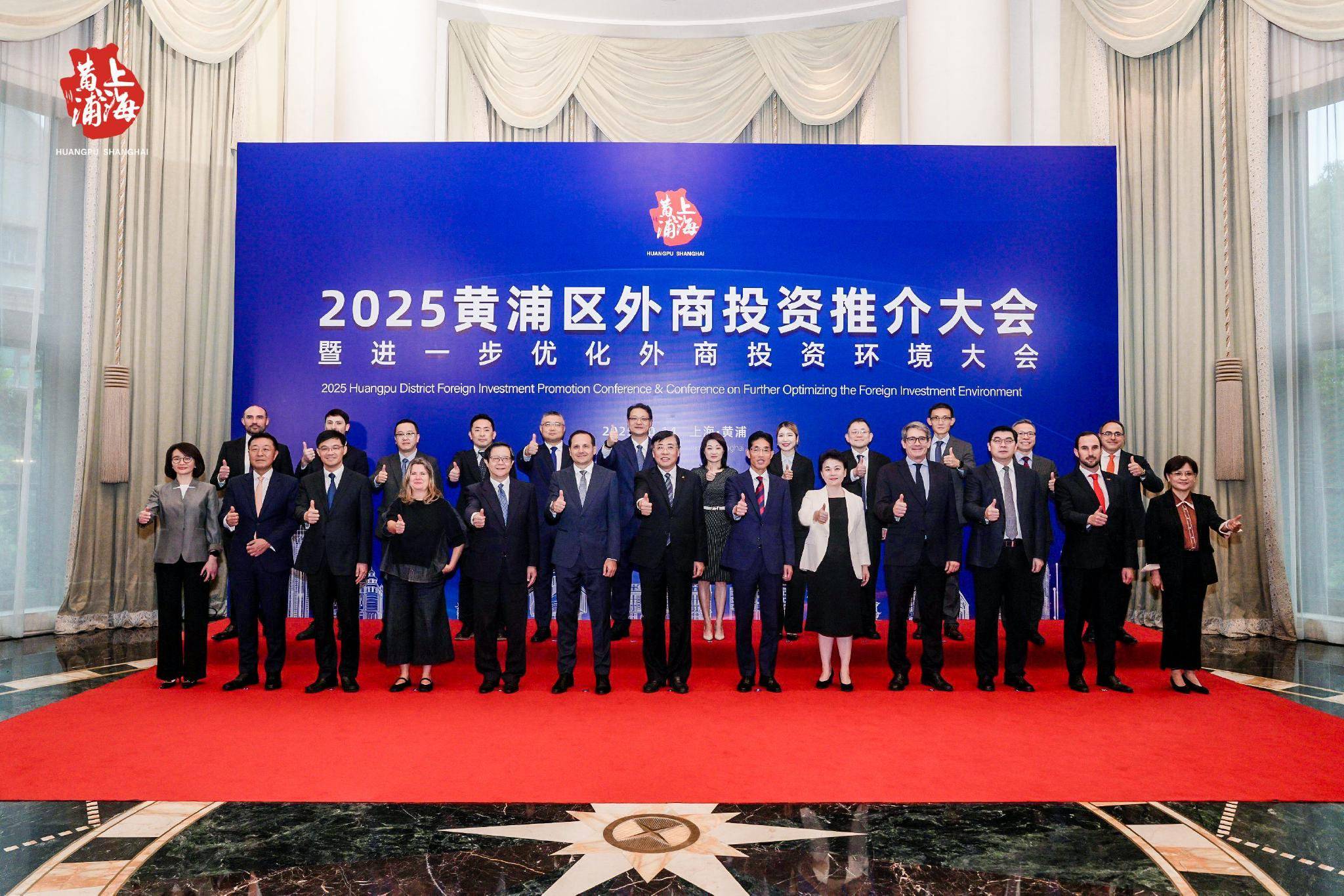
上海黄浦擘画外资新高地,“十四五”引资攀峰彰显强磁力
Sou Hu Cai Jing· 2025-10-14 13:55
Core Insights - During the "14th Five-Year Plan" period, Huangpu District in Shanghai has achieved significant foreign investment results, with a total contracted foreign capital of $8.657 billion and actual foreign capital of $6.86 billion, exceeding the target of $5 billion ahead of schedule [1][3] - The foreign investment environment in Huangpu is being continuously optimized, with a focus on attracting high-quality foreign projects and enhancing the overall investment ecosystem [5][7] Investment Performance - Huangpu District has introduced several representative foreign investment projects in sectors such as digital technology, pharmaceuticals, and real estate, with a 25% year-on-year increase in the number of newly established foreign enterprises this year [3][4] - The actual foreign capital for the year is expected to exceed $2 billion, maintaining a leading position in the city [3] Company Landscape - As of 2024, Huangpu District has 2,657 foreign-funded independent legal entities, accounting for 4% of the city's total foreign enterprises, with investment sources from 73 countries and regions [4] - The district ranks first in Shanghai for the proportion of profitable foreign enterprises from 2021 to 2024, with 24 companies listed among the city's top 100 foreign enterprises [4] Economic Contribution - Foreign enterprises in Huangpu contribute over 40% to the district's economy, with a significant increase in the number of regional headquarters of multinational companies from 53 in 2020 to 83 currently, marking a 57% increase [4] Investment Promotion Strategy - Huangpu District has established a diversified and professional foreign investment promotion service system, forming strategic partnerships with 21 entities, including foreign chambers of commerce and top consulting firms [5] - The district has successfully hosted online investment promotion events, attracting participation from various international enterprises [5] Future Development Plans - Huangpu District is focusing on urban renewal and technological innovation, with significant projects planned in key areas to provide ample development space for foreign investors [6][7] - The district aims to enhance its business environment by implementing targeted policies and improving communication mechanisms with foreign enterprises [7]
医保“绿色通道”打通,脑机接口加速从实验室狂飙至千亿级市场
Hua Xia Shi Bao· 2025-09-29 12:59
Core Insights - The brain-computer interface (BCI) technology is experiencing a critical breakthrough in China, with the National Healthcare Security Administration (NHSA) opening a "green channel" for BCI and surgical robots to enter the medical insurance coding system, facilitating faster clinical application and commercialization [2][3] Policy Developments - The NHSA's announcement allows BCI products with medical device registration to expedite their coding process, while products without registration can submit technical materials for preliminary review, significantly reducing the time from approval to clinical application [3][4] - This policy aims to accelerate the application of cutting-edge medical technologies in clinical settings and supports genuine innovation in high-level medical products [3][4] Market Growth - The global BCI market is projected to grow from $1.2 billion in 2019 to $2 billion in 2023, with an expected compound annual growth rate (CAGR) of 17.5%, reaching $7.63 billion by 2029 [4][5] - Investment in the BCI sector has exceeded $10 billion globally, with the U.S. accounting for over 50% and China over $2 billion [4][5] Clinical Applications - The medical rehabilitation sector is the primary area for BCI technology application, with a significant increase in clinical trials from 11 in 2023 to 31 in 2024, addressing various conditions such as stroke rehabilitation and depression [5][6] - The demand for BCI technology is driven by the high incidence of stroke and the large population of individuals with disabilities in China [5][6] Future Prospects - BCI technology is expected to expand beyond medical applications into industrial manufacturing, education, elderly care, and emergency safety, indicating a broad potential for growth [6][7] - The integration of BCI technology with home medical devices could lead to comprehensive health management solutions, enhancing the competitive landscape for home healthcare [7]

城记 | 探访司南孵化器:解码上海打造脑机接口产业“核爆点”的培育逻辑
Xin Hua Cai Jing· 2025-09-24 14:29
Core Insights - Brain-computer interfaces (BCIs) are emerging as a critical technology for information exchange between the brain and external devices, with significant applications in medical rehabilitation and human-machine collaboration, positioning them as a strategic focal point in global technological competition [1][2] - Shanghai has been intensively developing the BCI sector since 2025, with initiatives such as the "Shanghai Brain-Computer Interface Future Industry Cultivation Action Plan (2025-2030)" and the establishment of the "Brain Intelligence World" industrial cluster [1][3] - The Siniang Incubator, a key player in this cluster, aims to support innovation, clinical transformation, and acceleration in the BCI field, marking a shift from traditional incubation models to a more integrated approach involving investment and professional services [5][6] Industry Development - The BCI industry is still in its infancy globally, with most companies engaged in exploratory technology development and concept validation, creating opportunities for Chinese enterprises to leapfrog traditional development paths [3][4] - The Siniang Incubator is focusing on creating a concept validation platform to support early-stage research and development, targeting not only registered startups but also teams with technological potential that have not yet formed companies [4][6] Funding and Support - The Siniang Incubator collaborates with various funds to provide financial support, including the Siniang Fund, which has already invested in several BCI companies [6][8] - Policy incentives are also in place, offering substantial subsidies for research and development, which can significantly enhance the financial viability of startups in the BCI sector [6][8] Collaborative Ecosystem - The Siniang Incubator is building a comprehensive service model that addresses the unique challenges faced by cross-disciplinary companies in the BCI field, providing support from research to clinical trials [7][8] - The incubator's location within the "Brain Intelligence World" cluster allows for close collaboration with leading medical institutions, enhancing the clinical application of BCI technologies [8][9] Clinical Integration - Partnerships with top medical institutions like Huashan Hospital facilitate access to extensive clinical data and expertise, which are crucial for the development and validation of BCI technologies [9][10] - The integration of clinical, research, and production capabilities within the incubator's ecosystem is expected to accelerate the transition of BCI technologies from laboratory settings to clinical applications [10][11]
瑞迈特:公司暂未与脑虎科技进行相关合作
Mei Ri Jing Ji Xin Wen· 2025-09-24 00:47
Core Viewpoint - The company has not yet engaged in any collaboration with Brain Tiger Technology despite signing a confidentiality agreement nearly six months ago [1] Summary by Categories - **Company Progress** - The company stated that there has been no relevant cooperation with Brain Tiger Technology as of September 24 [1] - **Future Disclosure** - The company will strictly adhere to relevant laws and regulations for any future disclosures regarding potential collaborations [1]
脑机接口发展进入加速期 人才建设能否跟上?
Di Yi Cai Jing· 2025-09-23 15:22
Core Viewpoint - The brain-computer interface (BCI) technology is entering a rapid development phase as it begins clinical trials, but there are concerns about the shortage of high-end research talent in China, which may hinder progress in the field [1][2]. Group 1: Talent Shortage and Development - The shortage of high-end research talent and insufficient support for young researchers are significant issues that may restrict breakthroughs in brain science [2][4]. - Companies like Brain Tiger Technology are actively contributing to talent cultivation by donating to educational institutions, emphasizing the importance of academic foundations for industry innovation [2][3]. - The Chinese government has issued opinions to strengthen talent training in relevant disciplines and encourage collaboration between enterprises and educational institutions to cultivate interdisciplinary talents [2][4]. Group 2: Interdisciplinary Approach - The BCI field requires a diverse skill set, including knowledge of neuroscience, engineering, and algorithms, which presents a high knowledge barrier for talent development [4][5]. - Experts suggest that companies should invest resources in establishing joint laboratories and talent training programs with universities to secure BCI talent [4][5]. - The development of BCI technology is seen as crucial for technological advancement, industrial upgrading, and improving human life quality, highlighting the need for interdisciplinary composite talents [4][5]. Group 3: Educational Initiatives - Hainan University is implementing a cross-disciplinary talent training program that aligns with the needs of the BCI industry, focusing on interdisciplinary integration [5]. - The university promotes innovative talent cultivation models, such as academic mentorship and personalized training plans, to enhance students' practical and innovative capabilities [5].
脑机接口发展进入加速期,人才建设能否跟上?
Di Yi Cai Jing· 2025-09-23 09:01
Core Insights - China's brain science research is transitioning from "catching up" to "keeping pace" and "leading," but faces challenges such as a shortage of high-end research talent and insufficient support for young researchers [1][2] Group 1: Talent Shortage - There is a significant shortage of high-end research talent in the brain-machine interface (BMI) field, which is hindering breakthroughs in the discipline [2] - The founder of Brain Tiger Technology emphasizes that the growth of talent is crucial for the future of the industry, advocating for a synergy between basic research and industrial application [2] Group 2: Educational Initiatives - The Chinese government has issued opinions to promote innovation in the BMI industry, focusing on strengthening talent cultivation in relevant disciplines and encouraging collaboration between enterprises and educational institutions [2] - Fudan University's Brain Science Research Institute is actively involved in developing new technologies, such as nano-wire artificial photoreceptors, to restore vision for blind patients [3] Group 3: Interdisciplinary Talent Requirements - The talent gap in the BMI field is primarily in core research and development areas, including algorithms, hardware engineering, software systems, clinical applications, and data security [4] - Experts highlight the need for interdisciplinary talent who understand neuroscience, engineering, and algorithms, as the knowledge requirements are extensive [4][5] Group 4: Educational Models - Hainan University is implementing a cross-disciplinary talent cultivation plan that aligns with the needs of the BMI industry, focusing on integrating various fields such as biomedical engineering [5] - Innovative training models, such as academic mentorship and personalized development plans, are being adopted to enhance students' practical and innovative capabilities [5]
DeepSeek更新;OpenAI与英伟达合作丨新鲜早科技
2 1 Shi Ji Jing Ji Bao Dao· 2025-09-23 01:58
Group 1: Partnerships and Collaborations - OpenAI and Nvidia announced a partnership agreement, with Nvidia planning to invest up to $100 billion to support OpenAI's data center and infrastructure development, deploying at least 10 gigawatts of Nvidia systems by the second half of 2026 [2] - OpenAI is reportedly collaborating with companies like Luxshare Precision to develop consumer hardware, potentially utilizing GoerTek's MEMS silicon microphone technology [4] - WeRide announced a partnership with Grab to launch the Ai.R autonomous driving service in Singapore, initially deploying 11 autonomous vehicles [9] Group 2: Company Leadership Changes - Oracle appointed Clay Magouyrk and Mike Sicilia as co-CEOs, while the current CEO Safra Catz will serve as the executive vice chair of the board [5] Group 3: Product Launches and Innovations - Baidu's Qianfan launched a new open-source visual understanding model, optimized for enterprise-level multimodal applications, with versions of 3B, 8B, and 70B [6] - Meituan released its first self-developed inference model, LongCat-Flash-Thinking, which improves training speed by over 200% and reduces average token consumption by 64.5% in specific benchmarks [8] - Huawei announced its self-developed HBM memory with a maximum capacity of 144GB and a bandwidth of 4TB/s, set to launch in 2026 [12] - Chipmaker MediaTek unveiled the Dimensity 9500, featuring the latest N3P process and advanced CPU and GPU capabilities, aimed at enhancing mobile performance [15] - Chipmaker Xindong Technology launched the Fenghua 3 GPU, integrating open-source RISC-V CPU with CUDA-compatible GPU for diverse applications [16] Group 4: Financial Activities and Market Movements - Baiwei Storage announced plans to issue H-shares and list on the Hong Kong Stock Exchange to enhance its global strategy and brand image [17] - Daotong Technology plans to transfer 46% of its stake in Shenzhen Saifang Technology for a total of 109 million yuan, focusing on core business development [18] - Zero Gravity Aircraft Industry completed nearly 100 million yuan in A++ round financing to support the development of new energy aircraft [19] Group 5: Industry Trends and Insights - Brain Tiger Technology's founder highlighted that China's brain science research is transitioning from a "follower" to a "leader" stage, emphasizing the need for high-end talent and support for young researchers [11] - The domestic high-end flagship smartphone market is set for a series of new product launches, with OPPO and vivo announcing upcoming flagship models [20]

首项脑机接口医疗器械行业标准落地,建议关注脑机接口相关标的:医药生物行业跨市场周报(20250921)-20250922
EBSCN· 2025-09-22 08:25
Investment Rating - The report maintains an "Accumulate" rating for the pharmaceutical and biotechnology sector [5]. Core Insights - The first industry standard for brain-computer interface (BCI) medical devices has been established, suggesting a focus on BCI-related stocks [22][24]. - The global BCI market size grew from USD 1.2 billion in 2019 to nearly USD 2 billion in 2023, with a compound annual growth rate (CAGR) exceeding 13% from 2019 to 2023 [22]. - The report emphasizes a dual focus on "technical barriers + clinical implementation," recommending attention to medical scene integrators such as Xiangyu Medical, Weisi Medical, and Chengyitong, which are expected to benefit from the implementation of medical insurance payments and growing rehabilitation demand [24]. Summary by Sections Market Review - Last week, the A-share pharmaceutical and biotechnology index fell by 0.67%, underperforming the CSI 300 index by 0.23 percentage points and the ChiNext index by 1.97 percentage points, ranking 18th among 31 sub-industries [1][16]. - The H-share Hang Seng Medical Health Index dropped by 1.95%, underperforming the Hang Seng Index by 3.1 percentage points [1][16]. Industry Developments - On September 15, the National Medical Products Administration (NMPA) officially released the YY/T 1987-2025 standard for medical devices using BCI technology, which establishes a unified technical language for the industry [22]. - The multi-departmental collaboration in China, involving the Ministry of Industry and Information Technology, National Development and Reform Commission, and others, aims to provide comprehensive support for the BCI industry [24]. Investment Recommendations - Focus on companies with strong technical barriers and clinical application potential, such as Brain Tiger Technology, Ladder Medical, and Borui Kang, which are expected to have strong commercialization certainty for invasive BCI technologies [24]. - The report suggests that the integration of medical scenes will be beneficial for companies like Xiangyu Medical and Weisi Medical due to the anticipated growth in rehabilitation needs and medical insurance payment implementations [24]. Financial Projections - Key companies' earnings per share (EPS) projections for 2024, 2025, and 2026 are provided, with Weisi Medical projected at CNY 1.06, 1.37, and 1.58 respectively, and Xiangyu Medical at CNY 0.64, 0.86, and 1.07 respectively [4].