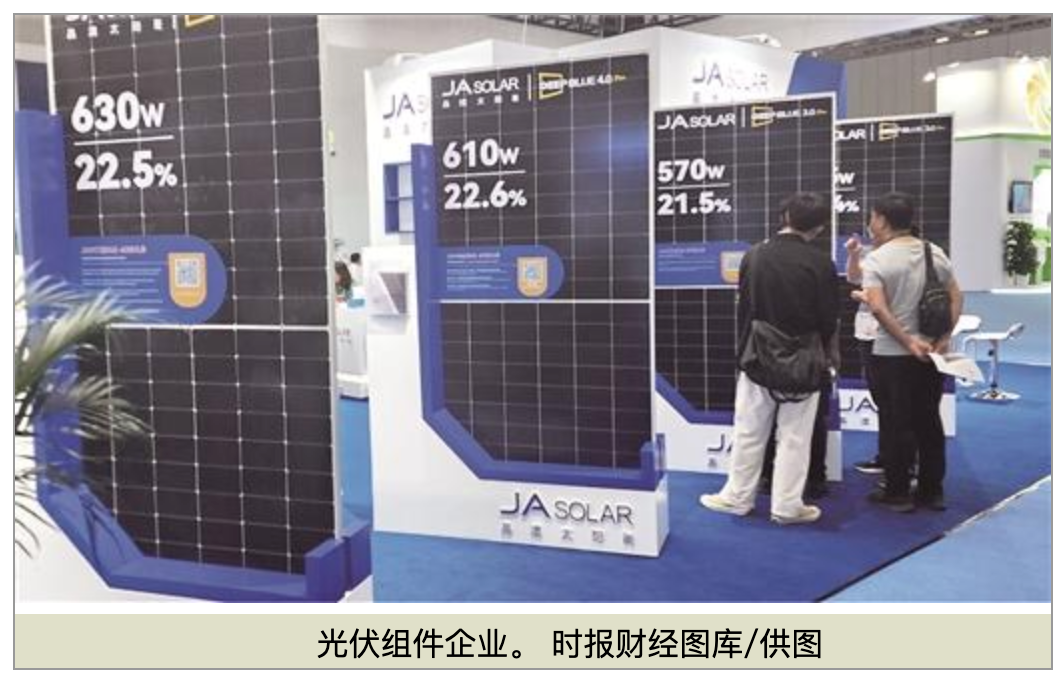
晶澳科技

Search documents
永臻股份(603381):边框龙头迅速扩张,收购捷诺威切入液冷赛道
NORTHEAST SECURITIES· 2025-09-01 08:17
Investment Rating - The report assigns a "Buy" rating for the company, indicating an expectation that the stock price will exceed the market benchmark by more than 15% within the next six months [3]. Core Insights - The company is a leading manufacturer of aluminum photovoltaic structural components, with a diversified product matrix that strengthens its market position. It has successfully entered the supply chains of major global component manufacturers [8]. - The implementation of anti-involution policies is expected to optimize the industry landscape, benefiting the company's main business and improving profitability as it capitalizes on enhanced bargaining power and margin recovery [8]. - The company is rapidly expanding its production capacity both domestically and in Vietnam, aiming to capture high-end overseas markets. The new production bases are projected to significantly increase market share [8]. - The acquisition of Jienowei allows the company to enter the liquid cooling market, leveraging advanced technology to meet the cooling needs of high-power density battery cells, thus opening new growth avenues [8]. - Revenue projections for 2025-2027 are estimated at 137.82 billion, 174.99 billion, and 235.86 billion yuan, with corresponding net profits of 1.34 billion, 4.09 billion, and 5.56 billion yuan, reflecting strong growth potential [8]. Financial Summary - The company anticipates a revenue increase of 51.80% in 2024, followed by 68.42% in 2025, and a steady growth rate of 26.97% and 34.78% in 2026 and 2027 respectively [2]. - The projected net profit for 2024 is 268 million yuan, with a significant recovery expected in 2025 and 2026, reaching 409 million and 556 million yuan respectively [2]. - Earnings per share are forecasted to be 1.29 yuan in 2024, decreasing to 0.56 yuan in 2025, and then recovering to 1.72 yuan and 2.34 yuan in 2026 and 2027 respectively [2].
高喊“反内卷”的光伏企业,决定偷偷扩产了
投中网· 2025-09-01 08:08
Core Viewpoint - The Chinese photovoltaic industry is facing a complex dilemma due to both domestic capacity expansion and the rise of overseas competitors, necessitating a reevaluation of strategies to avoid being outpaced by foreign firms [5][6][22]. Domestic Situation - From the beginning of the year to August 20, 2025, there were 46 new photovoltaic projects planned or under construction in China, with a total capacity exceeding 237 GW and an investment of over 80 billion yuan [6][10]. - Among these, 32 projects are focused on capacity expansion, with a total capacity of over 142 GW and an investment of approximately 54.1 billion yuan, primarily in the mid and downstream sectors of the photovoltaic industry [10][12]. - The expansion is largely driven by emerging companies, with perovskite technology being particularly favored, despite the technology not yet being commercially viable on a large scale [9][15]. - The majority of expansion projects (35 out of 39) target the mid and downstream segments, indicating a strong focus on battery and module production [12][13]. Overseas Expansion - In 2025, overseas photovoltaic capacity expansion reached a total of 289 GW, with Chinese companies accounting for approximately 20% of this expansion [17][19]. - The Asia-Pacific region, particularly India, is leading the charge with planned capacity expansions totaling 153.28 GW, while Europe and the Americas are also seeing significant growth [18][19]. - The rise of local production in countries like the US and India poses a threat to Chinese photovoltaic companies, as these markets are increasingly competitive [20][23]. Strategic Recommendations - The Chinese photovoltaic industry must firmly commit to "anti-involution" strategies to combat overcapacity and price wars, which have led to widespread losses [22][24]. - Companies should shift their focus from merely increasing capacity to enhancing quality, technology, and brand reputation, as the market has transitioned from scarcity to oversupply [25]. - Maintaining a technological edge and controlling key segments of the supply chain will be crucial for competing effectively in the global market [25].

明阳智能德国海风订单取消,组件企业海外毛利率下降
Ping An Securities· 2025-09-01 07:38
Investment Rating - The report maintains an "Outperform" rating for the industry [1] Core Insights - The report highlights the cancellation of Mingyang Smart's offshore wind order in Germany, indicating challenges for Chinese wind turbine manufacturers in entering the German market, while still suggesting potential opportunities in other European countries like the UK [5][10][35] - The profitability of leading solar module companies in overseas markets has significantly declined, with JinkoSolar's overseas gross margin dropping from 13.46% to -2.42%, Trina Solar from 17.65% to 3.32%, and LONGi Green Energy from 14.43% to 4.77% [5][38] - The report discusses the competitive landscape in the energy storage sector, noting a recent tender for a large-scale storage system in Inner Mongolia with a bid price range of 0.393 to 0.399 RMB/Wh, indicating a downward trend in pricing [6] Summary by Sections Wind Power - Mingyang Smart has canceled its participation in the Waterkant offshore wind project in Germany, which reflects the difficulties faced by Chinese companies in the German offshore wind market [5][10] - The wind power index increased by 2.06% during the week, underperforming the CSI 300 index by 0.65 percentage points, with a current overall PE ratio of 22.28 [12][18] - The report notes that domestic demand for wind power remains strong, which is expected to improve the overall supply-demand situation and restore profitability for companies in the sector [5][6] Solar Power - Leading solar module companies have reported a significant decline in overseas business profitability, primarily due to trade barriers imposed by the U.S. on Southeast Asian countries [5][38] - The report suggests that the profitability of these companies may have reached a bottom, with potential for recovery as excess capacity is gradually eliminated [5] Energy Storage & Hydrogen - A recent tender for a 5.2GWh energy storage system in Inner Mongolia saw competitive bidding, with prices further declining, indicating a shift towards market-driven pricing in the energy storage sector [6] - The report emphasizes the importance of integrated system solutions for energy storage projects, highlighting the need for a focus on lifecycle costs rather than just initial purchase prices [6] Investment Recommendations - For wind power, the report recommends focusing on domestic demand growth, profitability recovery, and opportunities in offshore wind exports, suggesting companies like Mingyang Smart and Goldwind [5][6] - In solar power, it advises monitoring structural opportunities within the industry, with recommended stocks including Dier Laser and LONGi Green Energy [5] - In energy storage, it highlights opportunities in non-U.S. markets and suggests companies like Sungrow Power and Deye Technology [6]
中证光伏产业指数上涨0.53%,光伏ETF基金(516180)强势翻红冲击3连涨
Xin Lang Cai Jing· 2025-09-01 07:12
Group 1 - The Zhongzheng Photovoltaic Industry Index (931151) increased by 0.53% as of September 1, 2025, with notable gains from companies such as Maiwei Co., Ltd. (300751) up 13.09%, Jiejia Weichuang (300724) up 9.79%, and JinkoSolar (601778) up 6.92% [1] - The Photovoltaic ETF Fund (516180) rose by 0.29%, marking its third consecutive increase, with the latest price reported at 0.69 yuan [1] - Over the week leading up to August 29, 2025, the Photovoltaic ETF Fund accumulated a rise of 2.86%, ranking 2nd out of 10 comparable funds [1] Group 2 - As of August 29, 2025, the top ten weighted stocks in the Zhongzheng Photovoltaic Industry Index accounted for 56.14% of the index, including companies like Sunshine Power (300274) and Longi Green Energy (601012) [2] - The top ten stocks are selected from listed companies involved in the photovoltaic industry chain, reflecting the overall performance of these securities [2]
隆基绿能、晶澳科技、天合光能、迈为股份 2025 年上半年业绩_盈利回顾
2025-08-31 16:21
Summary of Conference Call Notes on Solar Industry in China Industry Overview - The solar industry in China is experiencing mixed results in 1H25, with major companies like LONGi, JA Solar, and Trina Solar reporting varying performance metrics. [1][2][3][4] - There is optimism regarding anti-involution policies, which are expected to support price increases above total costs in the second half of 2025. [1][4] Company-Specific Insights LONGi Green Energy - Reported a net loss of -RMB2.6 billion in 1H25, consistent with prior profit warnings. [2] - Gross margin improved to 1.6% in 2Q25 from -4.2% in 1Q25. [2] - Module shipment volume increased to 22.6GW in 2Q25, a 23% YoY increase, compared to 16.9GW in 1Q25. [2] - Capital expenditures rose to RMB4.4 billion in 1H25, up from RMB3.4 billion in 1H24, as the company expands its Back-Contact (BC) capacity. [2] - Asset impairments totaled RMB1.2 billion, significantly lower than RMB5.8 billion in 1H24. [2] - Maintains a strong balance sheet with RMB49.3 billion in cash and a net debt to equity ratio of -18.6%. [2] JA Solar - Reported a net loss of -RMB2.6 billion in 1H25, at the lower end of its profit warning range. [3] - Cell and module shipments totaled 33.79GW in 1H25, a 17% YoY decline. [3] - Unit revenue improved by 6% QoQ, likely due to increased installations. [3] - Announced a share repurchase plan of RMB200-400 million, representing approximately 0.5-1% of its current market cap. [3] Trina Solar - Experienced a wider net loss of -RMB1.6 billion in 2Q25, compared to -RMB1.3 billion in 1Q25. [4] - Solar module segment reported a net loss of -RMB3.3 billion on 32GW module shipments, equating to a net loss of -RMB10c/W. [4] - Management is optimistic about US module demand, particularly in the <1.5MW distributed segment, and anticipates price hikes in 2H25. [4] Maxwell Technologies - Reported a 15% YoY decline in net profit to RMB394 million in 1H25, with 2Q earnings rising by 15% YoY due to reduced operating costs. [8] - Revenue fell 14% YoY, primarily due to a 31% decline in solar equipment sales. [8] - R&D expenses increased by 10% YoY to RMB463 million in 1H25. [8] Key Market Trends - Companies are adjusting their production targets in response to market conditions, with CSI Solar reducing its 3Q25 module shipment target to 5-5.3GW from 8GW. [1] - There is an expectation of further consolidation in the industry, with smaller companies likely to exit the market by 2026. [1] - The overall sentiment remains cautiously optimistic regarding US demand and potential price increases due to tariffs. [1][4] Financial Metrics Overview - LONGi's gross profit margin improved to 1.6% in 2Q25, while JA Solar's gross profit margin was -1.0%. [10] - Trina Solar's gross profit margin was reported at 4.5% in 2Q25. [10] - The net income margins for LONGi, JA Solar, and Trina Solar were -5.9%, -7.1%, and -9.6% respectively in 2Q25. [11] Conclusion - The solar industry in China is navigating through a challenging landscape with mixed financial results among major players. [1][2][3][4] - The focus on anti-involution policies and potential price increases in the latter half of 2025 may provide a pathway for recovery and growth in the sector. [1][4]



晶科能源半年巨亏29亿,152亿江西首富李仙德“压力山大”
凤凰网财经· 2025-08-31 10:49
Core Viewpoint - JinkoSolar's performance has significantly declined in the first half of 2025, with a revenue drop of 32.63% and a net loss of 29.09 billion yuan, attributed to intensified competition and falling prices in the photovoltaic market [3][4][7][8]. Financial Performance - JinkoSolar reported a revenue of 31.831 billion yuan in the first half of 2025, a decrease of 32.63% year-on-year [3][7]. - The company experienced a net loss of 29.09 billion yuan, a decline of 342.38% compared to a profit of 12 billion yuan in the same period last year [3][7]. - The non-recurring net profit was -31.75 billion yuan, a staggering drop of 1560.33% year-on-year [7]. - The net cash flow from operating activities was -3.812 billion yuan, primarily due to reduced sales receipts [9]. Industry Context - The photovoltaic industry is facing severe challenges, with many companies reporting significant losses. In the first quarter of 2025, 31 A-share listed photovoltaic companies collectively lost 12.58 billion yuan, a year-on-year increase of 274.3% in losses [10][11]. - Over 40 companies have announced delistings, bankruptcies, or mergers since the beginning of 2024 [11]. - The industry is experiencing overcapacity, with domestic manufacturers' production capacity exceeding 1100 GW, while the optimistic demand for 2025 is only 600 GW globally [11][12]. Company Strategy - JinkoSolar aims to navigate the industry's downturn by focusing on technological innovation, global market expansion, and efficient management to build a competitive edge [13]. - The company has reduced its R&D expenses to 1.175 billion yuan, a decrease of 56.95% year-on-year, with R&D expenditure accounting for 3.69% of revenue, down from 5.78% [10]. Wealth Impact - The wealth of JinkoSolar's founder, Li Xian De, has significantly decreased, with his family's net worth dropping from 215.1 billion yuan last year to 152 billion yuan this year, a loss of 63.1 billion yuan [5][12].


半年巨亏29亿,152亿江西首富李仙德“压力山大”
Sou Hu Cai Jing· 2025-08-30 12:56
Core Viewpoint - JinkoSolar reported a significant decline in performance for the first half of 2025, with revenue dropping by 32.63% year-on-year to 31.831 billion yuan and a net loss of 2.909 billion yuan compared to a profit of 1.2 billion yuan in the same period last year, primarily due to intensified competition and falling prices in the photovoltaic market [2][5][6]. Financial Performance - The company achieved revenue of 31.831 billion yuan in the first half of 2025, a decrease of 32.63% year-on-year [5]. - The net profit attributable to shareholders was -2.909 billion yuan, a decline of 342.38% compared to a profit of 1.2 billion yuan in the previous year [5][6]. - The non-recurring net profit was -3.175 billion yuan, a staggering drop of 1560.33% year-on-year [5]. - The net cash flow from operating activities was -3.812 billion yuan, attributed to a decrease in received sales payments [7]. Market Context - The photovoltaic industry is experiencing severe challenges, with many players facing similar performance declines. In the first quarter of 2025, 31 A-share listed photovoltaic companies reported a combined net loss of 12.58 billion yuan, a year-on-year increase of 274.3% [7]. - Over 40 companies have announced delistings, bankruptcies, or mergers since 2024 [7]. - The industry is facing overcapacity, with domestic manufacturers' production capacity exceeding 1100 GW, while optimistic demand for 2025 is projected at 600 GW globally and 250 GW in China [8]. Strategic Response - JinkoSolar is focusing on technological innovation, global market expansion, and efficient operations to address the challenges posed by supply-demand imbalances and price declines [9]. - The company has reduced its R&D expenses to 1.175 billion yuan, a decrease of 56.95% year-on-year, with R&D expenditure accounting for 3.69% of revenue, down from 5.78% [7]. Leadership and Wealth Impact - The wealth of the founder, Li Xian De, has significantly decreased, with the family's net worth dropping by 6.31 billion yuan to 15.2 billion yuan compared to the previous year, and by 20.1 billion yuan from its peak in 2023 [3][10].

1GWh!这家储能企业埃及扩产
行家说储能· 2025-08-29 11:44
Core Viewpoint - The article discusses Egypt's initiative to establish a manufacturing facility for solar batteries and components, highlighting the collaboration between the Egyptian government and Chinese companies, particularly focusing on the solar energy and energy storage sectors [2][3][4]. Group 1: Project Overview - The Egyptian government plans to build a manufacturing plant with a capacity of 2GW for solar batteries, 2GW for solar modules, and a 1GWh energy storage system, with a total investment of approximately $220 million [2]. - The project will be constructed in the new Alamein City in the Sohag industrial zone and is expected to create over 800 jobs [3]. Group 2: Company Strategy - JA Solar is actively engaging with the Egyptian market by strengthening its cooperation with the government and local enterprises, aiming to deepen economic ties and create job opportunities [4]. - The strategy of "shared benefits" is expected to reduce operational risks, garner long-term policy support, and enhance brand value, while also improving supply chain responsiveness and market penetration efficiency [5]. Group 3: Market Potential - Egypt is positioned as a significant node for Chinese companies to expand into the overseas energy storage market, especially with the government's push for renewable energy [8]. - The Egyptian government aims to increase the share of renewable energy in its power generation to 58% by 2040, up from 13% in 2023 [8]. - Africa's solar industry is developing 18GWh of energy storage projects, with Egypt planning 1.5GWh, making it the second-largest in the region after South Africa [9]. Group 4: Future Outlook - The World Bank and African Development Bank have projected that Africa's cumulative energy storage capacity could exceed 50GWh by 2030, indicating a growing market [9]. - Egypt is working towards localizing the production of key renewable energy equipment and aims to increase the local content ratio of renewable projects to 60% [9].

“反内卷”纠偏初显成效!光伏行业扭困现曙光
证券时报· 2025-08-29 08:14
Core Viewpoint - The photovoltaic industry is facing significant losses across the supply chain, with major manufacturers reporting substantial deficits in their financial results for the first half of the year [1][4][6]. Financial Performance - The top five manufacturers in terms of module shipments reported a combined loss of approximately 160 billion yuan in the first half of the year [1][6]. - JinkoSolar reported a revenue of 31.83 billion yuan, a year-on-year decrease of 32.63%, with a net loss of 2.91 billion yuan, a year-on-year increase in losses of 342.4% [4]. - Longi Green Energy's revenue was 32.81 billion yuan, down 14.83% year-on-year, with a net loss of 2.57 billion yuan, a reduction in losses of 26.61% compared to the previous year [4]. - Trina Solar and JA Solar both reported significant revenue declines and net losses, with Trina Solar's revenue at 31.06 billion yuan (down 27.72%) and a net loss of 2.92 billion yuan (up 654.47%) [4]. - Tongwei Co. achieved a revenue of 40.51 billion yuan, down 7.51%, with a net loss of 4.96 billion yuan, an increase in losses of 58.35% [5]. Cash Flow Health - Cash flow has emerged as a critical indicator of survival for photovoltaic companies, with several firms reporting improvements in cash flow despite overall losses [8][9]. - TCL Zhonghuan reported a net cash flow from operating activities of 523 million yuan, a year-on-year increase of 308.4% [9]. - Trina Solar's net cash flow was 1.843 billion yuan, with a second-quarter figure of 2.679 billion yuan [9]. - However, companies like Daqo New Energy reported negative cash flow, with a net cash flow of -1.608 billion yuan [9]. Industry Pricing and Competition - The photovoltaic industry is undergoing a "reverse involution" movement, with a reduction in low-price sales and fierce competition [1][10]. - Regulatory bodies have initiated measures to combat low-price, disorderly competition, emphasizing the need for quality improvement and the orderly exit of outdated production capacity [11]. - Recent trends indicate a recovery in prices across various segments of the supply chain, with manufacturers expressing hope for prices to stabilize above cost levels [11][12].


“反内卷”纠偏初显成效!光伏行业扭困现曙光!
Zheng Quan Shi Bao Wang· 2025-08-29 07:26
Core Viewpoint - The photovoltaic industry is facing significant losses across the supply chain, with major manufacturers reporting substantial deficits in their financial results for the first half of the year [1][3][4]. Financial Performance - The top five manufacturers in terms of module shipments reported a combined loss of approximately 160 billion yuan in the first half of the year [1][4]. - JinkoSolar reported a revenue of 31.83 billion yuan, a year-on-year decrease of 32.63%, with a net loss of 2.91 billion yuan, a year-on-year increase in losses of 342.4% [3]. - Longi Green Energy's revenue was 32.81 billion yuan, down 14.83%, with a net loss of 2.57 billion yuan, a reduction in losses of 26.61% compared to the previous year [3]. - Trina Solar's revenue was 31.06 billion yuan, down 27.72%, with a net loss of 2.92 billion yuan, a year-on-year increase in losses of 654.47% [3]. - JA Solar reported revenue of 23.90 billion yuan, down 36.01%, with a net loss of 2.58 billion yuan, an increase in losses of 195.13% [3][4]. - Tongwei Co. achieved revenue of 40.51 billion yuan, down 7.51%, with a net loss of 4.96 billion yuan, an increase in losses of 58.35% [4]. Cash Flow Health - Cash flow has become a critical indicator of survival for photovoltaic companies, with some firms reporting improved cash flow despite overall losses [5][6]. - TCL Zhonghuan reported a net cash flow from operating activities of 0.523 billion yuan, a year-on-year increase of 308.40% [5]. - Trina Solar's net cash flow from operating activities was 1.843 billion yuan, with a second-quarter figure of 2.679 billion yuan [5]. - Canadian Solar reported a net cash flow from operating activities of 3.78 billion yuan, a year-on-year increase of over 150% [5]. - However, companies like Daqo New Energy reported a negative cash flow of -1.608 billion yuan [6]. Industry Pricing and Policy - The photovoltaic industry is undergoing a "reverse involution" movement, with a reduction in low-price sales and fierce competition [1][7][8]. - The Chinese government has initiated measures to combat low-price, disorderly competition, emphasizing the need for quality improvement and the orderly exit of outdated production capacity [7]. - Recent meetings and legislative changes have aimed to regulate below-cost sales practices, indicating a shift towards maintaining stable pricing in the industry [7][8].