沪农商行

Search documents
本周聚焦:短暂回调后,银行股怎么看?
GOLDEN SUN SECURITIES· 2025-06-29 07:31
Investment Rating - The report maintains an "Overweight" rating for the banking sector, indicating a positive outlook for bank stocks despite recent short-term corrections [4]. Core Insights - The banking sector is expected to maintain its performance due to the relative advantage of dividend yields, stable earnings, and predictable dividends. The average dividend yield for major state-owned banks is 4.07%, with a significant spread of 2.42% over the 10-year government bond yield, placing it in the 49.10th percentile over the past decade [1][17]. - The report highlights that the insurance sector is likely to increase its allocation to high-dividend bank stocks, especially with anticipated reductions in preset interest rates for insurance products [1]. - The report anticipates a stable profit growth for banks, with a projected profit growth rate of 2.35% for listed banks in 2024, supported by substantial unrealized gains from self-owned bonds and a robust provisioning coverage ratio of 238% as of Q1 2025 [3][7]. Summary by Sections Section 1: Market Performance - The banking index experienced a nearly 3% decline on June 27, 2025, but the overall market sentiment remains positive due to the sector's dividend yield advantages and stable earnings [1]. Section 2: Fund Flows - Since the beginning of 2025, southbound funds have significantly increased their allocation to Hong Kong bank stocks, with a net inflow of approximately 680 billion yuan, of which 146.2 billion yuan is directed towards bank stocks [2]. Section 3: Earnings Stability - Historical data indicates that the banking sector has low earnings volatility, with profits showing stable positive growth. The report emphasizes the importance of unrealized gains from bond investments and strong provisioning as key factors supporting profit stability [3][7][8]. Section 4: Sector Outlook - The report suggests that while short-term export impacts may arise from tariff policies, long-term domestic policies aimed at stabilizing the real estate market and boosting consumption will benefit the banking sector. Specific banks such as Ningbo Bank, Postal Savings Bank, and China Merchants Bank are highlighted as potential investment opportunities [9]. Section 5: Key Data Tracking - The report includes various financial metrics, such as the average daily trading volume of stocks at 14,868.42 billion yuan and a margin balance of 1.83 trillion yuan, indicating active market engagement [10].




每周股票复盘:XD沪农商(601825)沪农商行2024年累计派发现金红利41 66亿元
Sou Hu Cai Jing· 2025-06-28 19:23
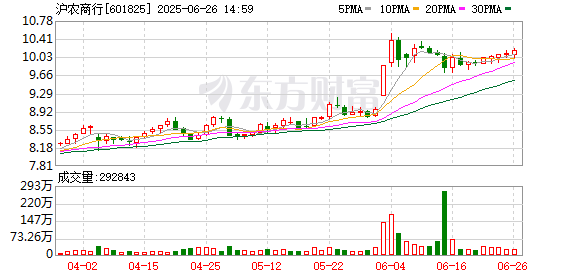
Core Points - XD Hu Nong Commercial Bank (601825) closed at 9.73 yuan on June 27, 2025, down 2.99% from the previous week's 10.03 yuan [1] - The bank's total market capitalization is currently 93.84 billion yuan, ranking 1st among 10 in the rural commercial bank sector and 145th among 5,151 A-shares [1] Company Announcements - The bank announced a total cash dividend distribution of 4.166 billion yuan for 2024, accounting for 33.91% of the net profit attributable to the parent company's shareholders [1] - Each share will receive a cash dividend of 0.193 yuan (before tax), with the record date on June 26, 2025, and the payment date on June 27, 2025 [1] - The total cash dividend distribution is based on the total share capital of 9,644,444,445 shares, amounting to a total cash dividend of approximately 1.861 billion yuan [1] - The bank has already distributed a mid-year cash dividend of 2.305 billion yuan (before tax) for 2024, bringing the total cash dividends for the year to 4.166 billion yuan [1] - For individual shareholders of A-shares, no personal income tax will be withheld at the time of dividend distribution, with tax calculated based on the holding period upon stock transfer [1] - For holders of restricted A-shares, the effective tax burden is 10%, resulting in a post-tax cash dividend of 0.1737 yuan per share [1] - Qualified Foreign Institutional Investors (QFII) will have a 10% corporate income tax withheld, resulting in a post-tax cash dividend of 0.1737 yuan per share [1] - For investors in Hong Kong Stock Exchange investing in Shanghai Stock Exchange A-shares, a 10% tax will also be withheld, leading to a post-tax cash dividend of 0.1737 yuan per share [1] - Other resident enterprises under the Corporate Income Tax Law will receive a cash dividend of 0.193 yuan per share without tax withholding [1]
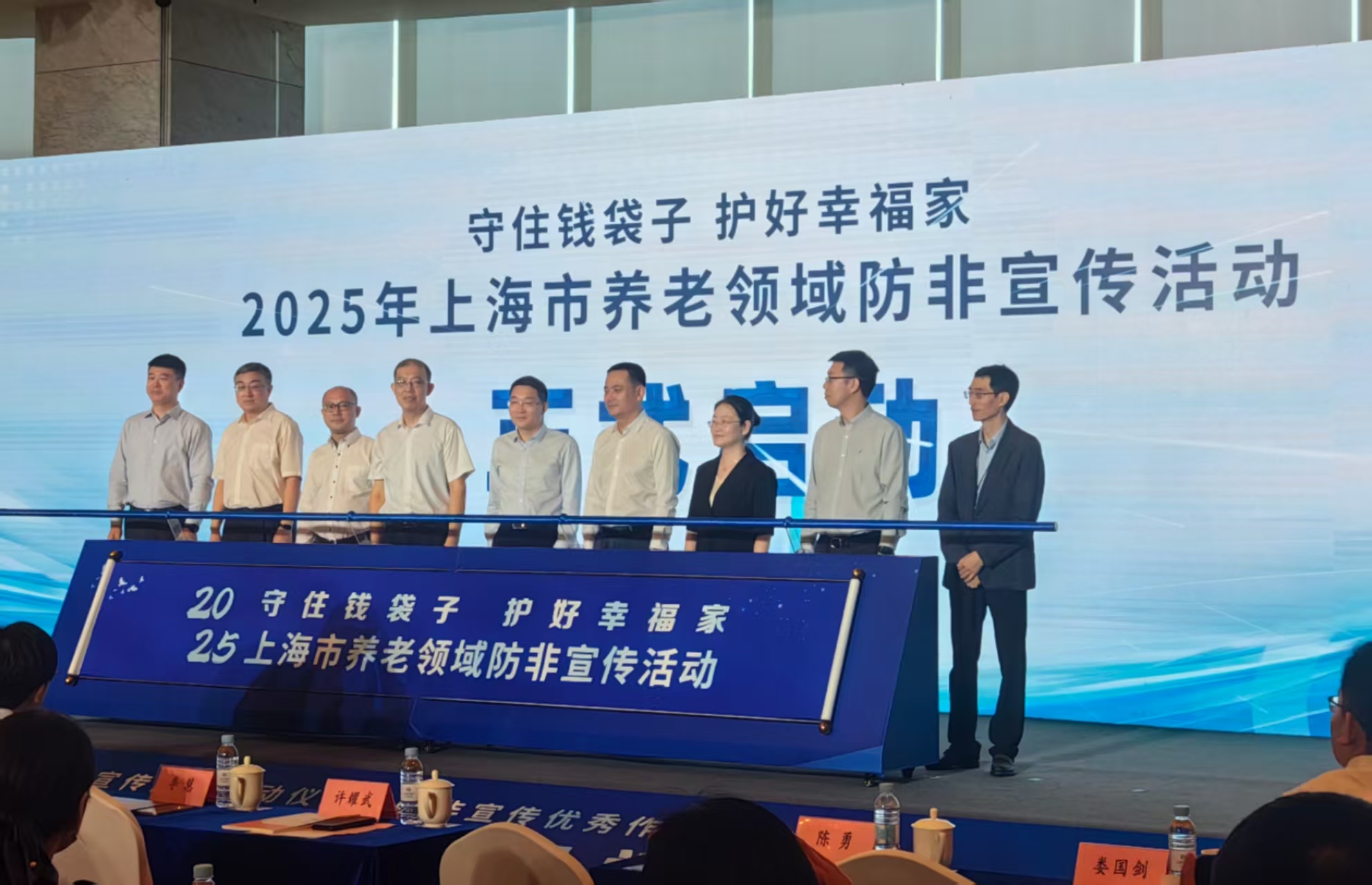
守护“养老钱袋子”!2025上海养老领域防非宣传活动启动
Guo Ji Jin Rong Bao· 2025-06-27 13:39
Core Viewpoint - The initiative aims to enhance financial risk awareness and capabilities among the elderly population in Shanghai, ensuring the protection of their retirement funds through a comprehensive anti-fraud campaign [1][2][4]. Group 1: Event Overview - The event titled "Guarding the Money Bag · Protecting the Happy Home" was launched on June 27, 2023, focusing on preventing illegal financial activities and safeguarding the financial interests of the public, particularly the elderly [1][2]. - The event was organized by multiple Shanghai financial regulatory bodies and attended by over 200 representatives from various sectors, including government, financial institutions, and community members [2]. Group 2: Campaign Details - The campaign is part of a broader effort to implement the financial work directives from the central government and aims to create a new educational framework for financial risk prevention that is extensive, continuous, precise, and deeply penetrating [4]. - June is designated as the month for concentrated publicity against illegal fundraising, with the event showcasing over 100 award-winning promotional works that address risks in the fields of retirement and investment [5]. Group 3: Educational Initiatives - The campaign features diverse educational materials, including comics, short films, and illustrated books, which highlight common scams such as "health investment fraud," "emotional manipulation traps," and "AI technology scams," providing rich resources for building a financial safety net [5]. - Future initiatives will focus on a comprehensive risk prevention system that integrates public education, intelligent regulation, and community cooperation, with plans for a series of outreach activities targeting various sectors of society [6].

中证东方红红利低波动指数下跌1.56%,前十大权重包含唐山港等
Jin Rong Jie· 2025-06-27 13:29
Group 1 - The core index, the CSI Oriental Red Dividend Low Volatility Index, experienced a decline of 1.56%, closing at 3509.21 points with a trading volume of 74.816 billion [1] - Over the past month, the index has increased by 3.18%, 5.96% over the last three months, and 2.62% year-to-date [1] - The index comprises 100 listed companies selected for stable earnings, high expected dividend yields, and low volatility characteristics [1] Group 2 - The top ten holdings of the index include Gree Electric Appliances (1.83%), China Ping An (1.66%), and others, with the total weight of these holdings reflecting the index's focus on stable companies [1] - The index's holdings are primarily from the Shanghai Stock Exchange (81.07%) and the Shenzhen Stock Exchange (18.93%) [1] - The industry distribution of the index shows that finance accounts for 44.50%, followed by industrials (21.87%) and utilities (13.15%) [2] Group 3 - The index samples are adjusted biannually, with adjustments occurring on the next trading day after the second Friday of June and December [2] - In special circumstances, the index may undergo temporary adjustments, such as when a sample company is delisted or undergoes mergers and acquisitions [2] - Public funds tracking the index include the Oriental Red CSI Oriental Red Dividend Low Volatility A and C funds [2]

银行股大跌,重磅信号!
格隆汇APP· 2025-06-27 10:25
Core Viewpoint - The recent decline in bank stocks, which had previously seen significant gains, signals a potential style shift in the market, moving away from high-dividend, low-volatility assets towards sectors with greater elasticity [1][5][19]. Market Overview - As of the market close, the Shanghai Composite Index fell by 0.7%, influenced by a drop in heavyweight stocks, while the Shenzhen Component and ChiNext Index saw slight increases. A total of 3,379 stocks rose, with over 60% of stocks experiencing gains, and trading volume reached 1.58 trillion yuan, a slight decrease of 47.5 billion yuan from the previous day [2][3]. Sector Performance - High-dividend sectors such as banking, utilities, and telecommunications experienced notable declines, while growth-oriented sectors like metals, military, semiconductors, and biotechnology showed strong upward momentum. The metals sector led the gains with an increase of over 2% [4][6]. Style Shift - The market is undergoing a style shift, moving from risk-averse, high-dividend assets to sectors with greater growth potential. This shift is partly due to the substantial gains accumulated in bank stocks, which have seen significant price increases since early 2023 [5][19]. Institutional Behavior - The recent collective drop in bank stocks is attributed to large institutional investors reallocating their portfolios, as evidenced by significant net outflows from bank stocks into broader market indices [17][18]. This behavior suggests that institutions are taking profits from bank stocks to invest in other sectors [19]. Economic Context - The decline in bank stocks coincides with a broader market recovery, as concerns over external market conditions, particularly regarding energy prices and geopolitical tensions, have eased. The recent ceasefire between Iran and Israel has contributed to a decrease in oil prices by approximately 12% [8][9]. Future Outlook - Despite the recent downturn, the long-term outlook for bank stocks remains positive due to their stable earnings and attractive dividend yields, especially in a low-interest-rate environment. The potential for increased dividend payouts further enhances their appeal to institutional investors [21][23][25]. Investment Strategy - Investors are advised to monitor for suitable entry points into bank stocks, as the current price adjustments may present opportunities for better value in the long run [26].





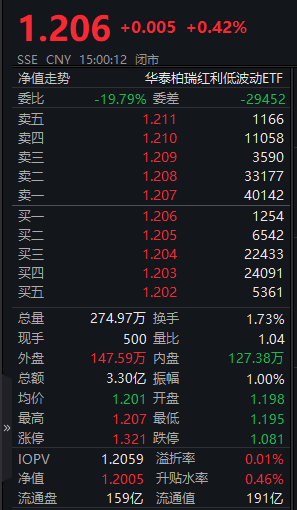
红利风格防御性凸显!红利低波ETF(512890)逆势上涨规模突破190亿
Xin Lang Ji Jin· 2025-06-26 08:41
Group 1 - The core point of the news is the performance and growth of the Hongli Low Volatility ETF (512890), which has seen significant increases in both its shares and scale in 2024 [1][4] - As of June 25, 2024, the Hongli Low Volatility ETF has a total of 158.73 billion shares and a scale of 190.56 billion yuan, reflecting a year-to-date increase of 29.45% in shares and 38.59% in scale [1][4] - The ETF's recent closing price was 1.206 yuan, with a trading volume of 3.30 billion yuan on June 26, 2024 [1] Group 2 - The ETF's performance is attributed to the strong performance of its top ten components, including Chengdu Bank, Shanghai Rural Commercial Bank, and Jiangsu Bank [3] - The fund was established on December 19, 2018, with a management fee of 0.50% and a custody fee of 0.10%, and has achieved a return of 140.10% under the management of Liu Jun [4] - The investment strategy for bank stocks emphasizes the importance of liquidity and the revaluation of net assets, which is expected to drive industry valuation upward by 2025 [2]
上海农商银行:一江金融水 生态共潮生
Xin Hua Cai Jing· 2025-06-26 06:58
Group 1 - Shanghai Rural Commercial Bank has demonstrated keen insight and commitment to long-termism in the wave of green development, winning the "12th Five-Year" Shanghai Energy Service Green Finance Support Award in 2016 [1] - The bank's green financing scale surpassed 120 billion yuan by the end of Q1 2025, with an annual compound growth rate of over 60% in green credit over the past three years, leading rural financial institutions nationwide [2] - The bank has launched innovative green financial tools, including the first chemical industry transformation financial loan and the first CCER future income rights pledge loan in the country, promoting industrial green transformation [1][2] Group 2 - The bank has integrated local rich experience with green finance and ESG concepts, actively exploring various sub-fields of green finance to create social and ecological value beyond finance itself [1] - The "Green Xin Tong Zhou" green finance brand was recently launched, outlining the "GREEN SHRCB" concept, which emphasizes globalization, regionality, evolution, economic value, and net-zero emissions [2] - The bank has provided loan services to nearly 4,500 technology enterprises, with a scale exceeding 120 billion yuan, serving a significant portion of specialized and innovative small and medium-sized enterprises in Shanghai [5][6] Group 3 - The bank has established a comprehensive ecosystem for technology finance, evolving from a single credit model to a more integrated empowerment approach, exemplified by the "Xin Dong Neng" strategic plan [6] - The bank's subsidiary, Changjiang United Financial Leasing Co., has focused on modern manufacturing, logistics, and energy, promoting inclusive, green, and equipment leasing strategies [7][8] - By the end of Q1 2025, over 35% of new green leasing investments from Changjiang United Financial Leasing were recorded, with nearly 40% of green leasing assets [8]
沪农商行:一江金融水 “三重”生态共潮生
21世纪经济报道· 2025-06-26 05:52
Core Viewpoint - The article emphasizes the transformation of Shanghai Rural Commercial Bank into a key player in green finance, aligning with national strategies for carbon neutrality and regional integration in the Yangtze River Delta, while fostering innovation and collaboration across various sectors [1][2][4]. Green Finance Development - Shanghai Rural Commercial Bank has established a comprehensive green finance system, integrating top-level design and organizational structure into its strategic development plan, aiming to become the most environmentally friendly bank in the Yangtze River Delta [2]. - The bank has initiated a green finance business management system, utilizing big data for intelligent identification of green projects and precise assessment of environmental benefits [2]. - By the end of Q1 2025, the bank's green financing scale is expected to exceed 1.2 trillion yuan, with an annual compound growth rate of over 60% in green credit over the past three years, leading the national rural financial institutions [3]. Value Co-Creation - The bank actively integrates local experience with green finance and ESG principles, supporting rural green revitalization projects that significantly reduce carbon emissions and promote sustainable agriculture [3]. - Innovative green financial products have been launched, including the first chemical industry transformation loan and various ESG-focused loans, addressing comprehensive financial needs for ecological restoration and green carbon reduction [3]. Collaborative Ecosystem - Shanghai Rural Commercial Bank has signed the UNEP FI's Responsible Banking Principles, launching the "Green Xin Tong Zhou" brand to promote a collaborative approach to sustainable development [4]. - The bank's "Xin Ecosystem" initiative aims to create a collaborative financial ecosystem by integrating various stakeholders, enhancing resource allocation, and addressing climate and ecological challenges [4][10]. Innovation in Technology Finance - The bank has developed a comprehensive support system for technology enterprises, providing loans to nearly 4,500 tech firms, with a total loan amount exceeding 1.2 trillion yuan, significantly supporting small and medium-sized enterprises [8][9]. - The "Xin Dong Neng" strategy has evolved to offer a full-cycle, multi-dimensional service model, enhancing collaboration with government and financial institutions to foster innovation [9][10]. Regional Integration - Shanghai Rural Commercial Bank has taken significant steps in regional integration by establishing branches in the Yangtze River Delta and investing in local banks, aligning with national development strategies [11][12]. - The bank's subsidiary, Changjiang United Financial Leasing, focuses on modern manufacturing and green leasing, contributing to the development of a modern industrial system [12].
银行板块,领跑市场
第一财经· 2025-06-26 03:46
Core Viewpoint - The A-share banking sector has shown strong performance since the beginning of the year, with the Shenwan Banking Index rising by 15.77% as of June 25, significantly outperforming the Shanghai and Shenzhen 300 Index, which only increased by 0.64% [2][3] Group 1: Market Performance - On June 25, the Shenwan Banking Index rose by 1.05%, with 28 out of 42 constituent stocks increasing in value, including notable performances from Ningbo Bank, Jiangsu Bank, and Chengdu Bank [1][2] - Major state-owned banks like Industrial and Commercial Bank of China and Agricultural Bank of China reached historical highs in stock prices, contributing to a daily trading volume exceeding 36 billion yuan [1][2] Group 2: Investment Drivers - The banking sector's strong performance is driven by three main factors: the scarcity of high dividend yields, the stable income characteristics of bank stocks, and the shift in public fund assessment rules favoring long-term investments [2][4][11] - The average dividend yield for the banking sector is 3.86%, significantly higher than the 10-year government bond yield of 1.65%, making bank stocks attractive for investors seeking stable returns in a low-interest-rate environment [2][4] Group 3: Institutional Investment - Insurance funds are the primary buyers of bank stocks, with their holdings in A-share bank stocks reaching 265.78 billion yuan, accounting for 45.05% of their total industry allocation [6] - Public funds have also increased their allocation to bank stocks, with the proportion of active funds holding bank stocks rising from 3.72% at the end of 2024 to 4.0% [6] Group 4: Future Outlook - The banking sector is expected to face a more complex market environment in the second half of 2025, with structural differentiation likely to become the main theme [9][11] - High-dividend, stable-performing state-owned banks and quality regional banks are anticipated to remain favored by defensive capital seeking stable returns [10][11] - The ability of the banking sector to maintain significant excess returns will depend on the strength of economic recovery and the stabilization of net interest margins [11]

四大行再创新高!银行股大爆发,原因曝光
21世纪经济报道· 2025-06-25 23:44
Core Viewpoint - The banking sector has emerged as one of the best-performing industries in the first half of the year, with significant stock price increases and a total market capitalization exceeding 15 trillion yuan [1][3]. Group 1: Performance of Major Banks - On June 25, several banks, including Agricultural Bank of China, Bank of Communications, and others, reached new historical highs, contributing to a 1.03% increase in the banking index on that day [3]. - A total of 18 bank stocks have hit historical highs this year, with no bank stock showing a decline since the beginning of the year. All bank stocks are in the green, with 16 stocks rising over 20% and 32 stocks over 10% [3]. - The top-performing banks include Qingdao Bank, Industrial Bank, and Shanghai Pudong Development Bank, with increases of 33.76%, 32.93%, and 30.81% respectively [3]. Group 2: Reasons for Strong Performance - Analysts attribute the strong performance of the banking sector to macroeconomic conditions and market trends over the past few years. The banking index has outperformed the CSI 300 index by 13.6 percentage points this year [4]. - The current price-to-book (PB) ratio for the banking index is 0.68, indicating potential for future growth. The overall upward trend in the banking sector is expected to continue, particularly for regional banks [4]. - The anticipated recovery in revenue and profit growth is supported by the positive contribution of deposit repricing to net interest margins and a potential decline in bond market volatility [4]. Group 3: Institutional Investment Trends - The global economic environment has led to a decrease in investor risk appetite, making the undervalued banking sector an attractive defensive asset for risk-averse investors [5]. - The recent regulatory changes in public fund management are expected to increase bank holdings among active funds, which currently have a bank holding ratio of only 3.81%, compared to a 13.67% weight in the CSI 300 index [5]. - The new public fund assessment mechanism is likely to encourage active funds to increase their bank holdings, thereby narrowing the performance gap with benchmarks [5]. Group 4: Dividend Policies and Impact - The continuous dividend payouts from banks have significantly contributed to the sector's growth, with several banks announcing mid-year dividend plans for 2025 [8][9]. - Nanjing Bank and Shanghai Rural Commercial Bank have both committed to increasing dividend frequencies in response to policy calls, enhancing shareholder returns [8][9]. - The trend of banks announcing mid-year dividends is expected to bolster their performance and attract more investment [10]. Group 5: Future Outlook - Analysts predict that the core investment logic for the banking sector will persist, driven by high dividend yields, institutional fund inflows, and supportive policies for net interest margins [6]. - The overall funding environment for banks is improving, with increased allocations from passive funds and stable foreign capital holdings [11]. - The combination of macroeconomic policies and microeconomic data is expected to lead to a reassessment of bank net assets, providing intrinsic motivation for industry valuation increases in 2025 [11].