诺诚健华

Search documents
汇添富达欣混合A:2025年第二季度利润4.11亿元 净值增长率20.36%
Sou Hu Cai Jing· 2025-07-21 10:22
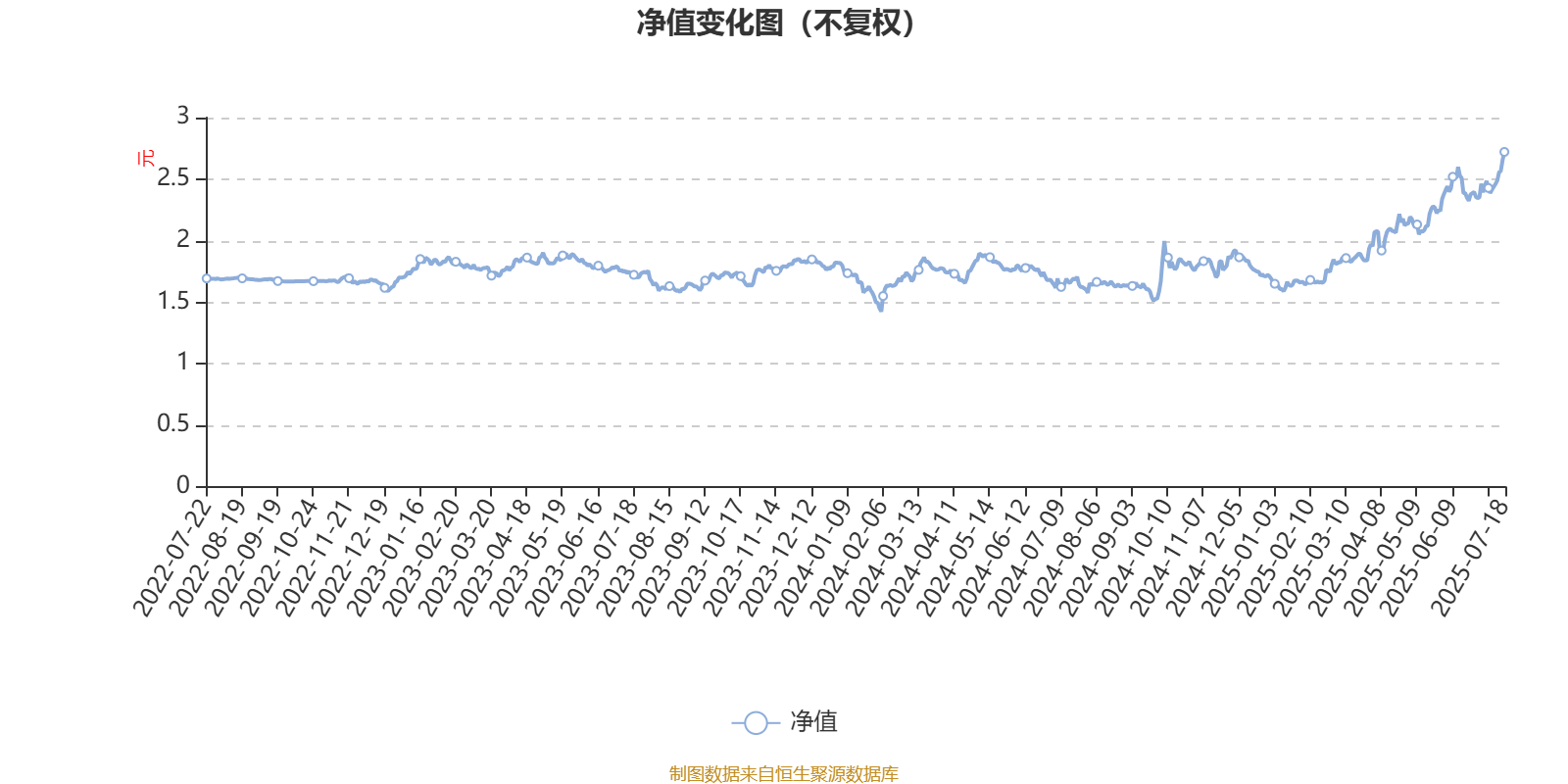
Core Viewpoint - The AI Fund Huatai Fuhua Daxin Mixed A (001801) reported a profit of 411 million yuan in Q2 2025, with a net value growth rate of 20.36% and a fund size of 953 million yuan as of the end of Q2 2025 [2][14]. Fund Performance - The fund's weighted average profit per share for the reporting period was 0.4776 yuan [2]. - As of July 18, the fund's unit net value was 2.721 yuan [2]. - The fund's performance over various time frames includes a 31.83% growth rate over the last three months, 65.82% over the last six months, 60.82% over the last year, and 60.63% over the last three years, ranking it favorably among comparable funds [3]. Investment Strategy - The fund focuses on flexible allocation, primarily investing in pharmaceutical and medical stocks [2]. - The fund manager, Zhang Wei, has successfully managed six funds, all yielding positive returns over the past year [2]. - The report indicates minimal adjustments to the portfolio's heavy positions and structure during the reporting period, with a strong performance in innovative drugs since Q2 [2]. Market Outlook - The domestic medical demand and behavior are gradually recovering, with expectations for product-based companies to experience restorative growth in 2025 [3]. - Continuous policy support for the innovative drug industry is anticipated, leading to significant improvements across payment, access, and investment sectors [3]. Fund Characteristics - The fund's three-year Sharpe ratio stands at 0.6385, ranking 2nd among comparable funds [8]. - The maximum drawdown over the last three years was 25.14%, with the largest single-quarter drawdown occurring in Q1 2024 at 21.86% [10]. - The fund's average stock position over the last three years was 76.98%, with a peak of 93.37% at the end of H1 2025 [13]. Holdings - As of the end of Q2 2025, the fund's top ten holdings include major pharmaceutical companies such as Heng Rui Medicine, Ke Lun Pharmaceutical, and Hai Si Ke [18].

汇添富医疗服务灵活配置混合A:2025年第二季度利润7.79亿元 净值增长率21.05%
Sou Hu Cai Jing· 2025-07-21 10:19
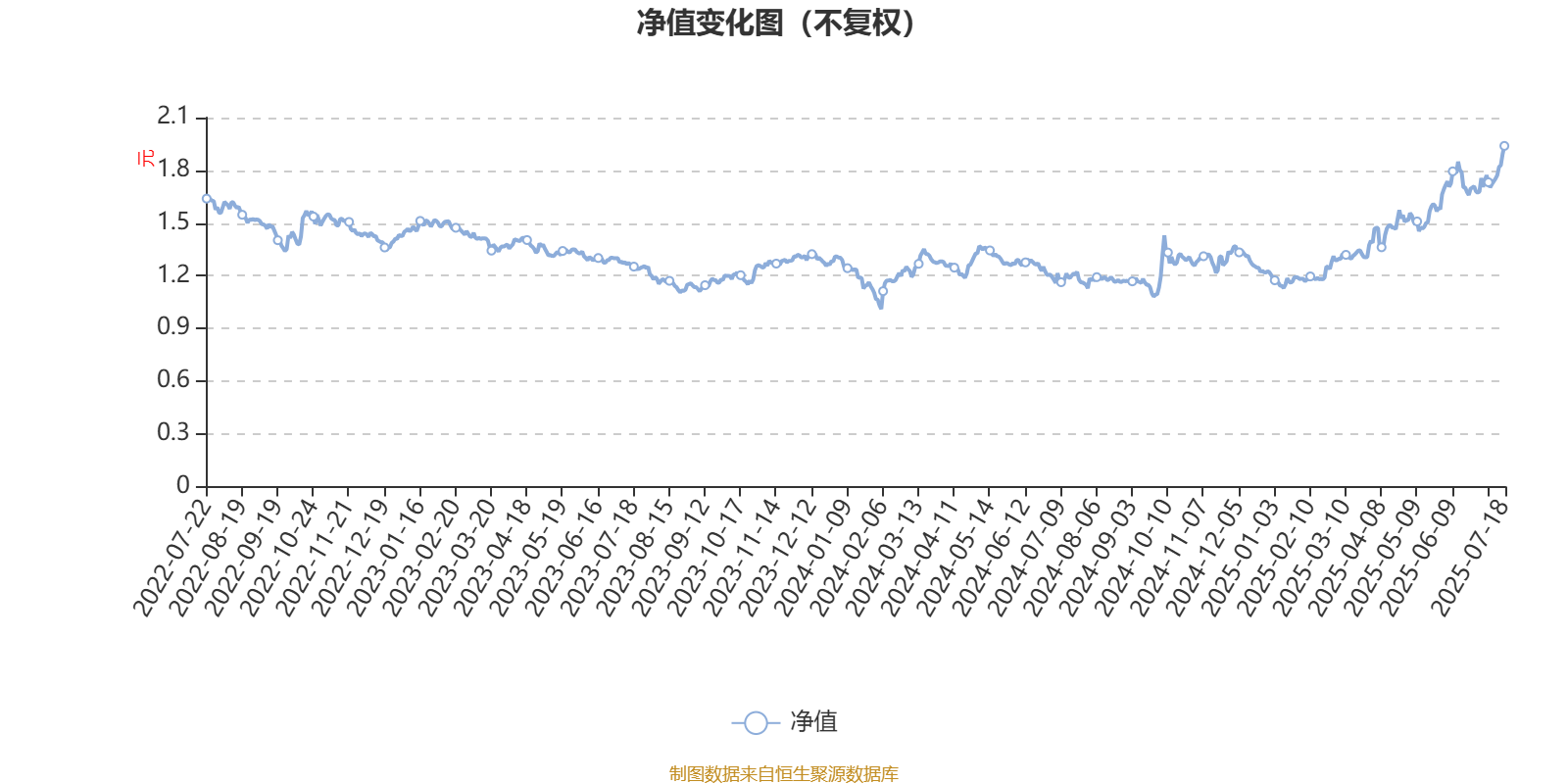
Core Viewpoint - The AI Fund Huatai Medical Service Flexible Allocation Mixed A (001417) reported a profit of 779 million yuan in Q2 2025, with a weighted average profit per fund share of 0.317 yuan, and a net asset value growth rate of 21.05% during the reporting period [2] Fund Performance - As of July 18, the fund's net asset value growth rate over the past three months was 32.35%, ranking 51 out of 138 comparable funds; over the past six months, it was 66.01%, ranking 24 out of 138; over the past year, it was 59.85%, ranking 29 out of 133; and over the past three years, it was 15.90%, ranking 32 out of 107 [3] - The fund's Sharpe ratio over the past three years was 0.1999, ranking 29 out of 105 comparable funds [8] - The maximum drawdown over the past three years was 39.57%, ranking 54 out of 106 comparable funds, with the largest single-quarter drawdown occurring in Q3 2022 at 25.67% [10] Fund Holdings and Strategy - As of June 30, the fund maintained an average stock position of 88.04% over the past three years, compared to the industry average of 86.95% [13] - The fund had a high concentration of holdings, with the top ten positions including Heng Rui Medicine, Ke Lun Pharmaceutical, Hai Si Ke, Bai Li Tian Heng, Xin Nuo Wei, Ze Jing Pharmaceutical, Xin Li Tai, Re Jing Biological, Yi Fang Biological, and Nuo Cheng Jian Hua as of Q2 2025 [19] - The fund manager indicated a focus on innovative pharmaceutical companies with global competitiveness and growth potential, as well as leading medical device companies with low import substitution rates and high barriers to entry, anticipating continued resilience and technological attributes in the pharmaceutical industry over the next 2-3 years [2]
张坤基金规模跌破600亿元,增持白酒股,卖出腾讯、招行;谢治宇重仓港股创新药
Sou Hu Cai Jing· 2025-07-21 10:12
Group 1 - The core viewpoint of the article highlights the decline in fund sizes managed by prominent fund managers Zhang Kun and Xie Zhiyu during the second quarter, with Zhang's total fund size dropping to 55.047 billion yuan, a decrease of 5.775 billion yuan, and Xie's fund size at 39.266 billion yuan, down by approximately 446 million yuan [2] - Zhang Kun remains heavily invested in the consumer and technology sectors, increasing holdings in liquor stocks such as Wuliangye and Luzhou Laojiao, while reducing positions in Tencent Holdings and China Merchants Bank [2][3] - Xie Zhiyu has made new investments in Hong Kong innovative drug companies, including Innovent Biologics and Nuo Cheng Jianhua, while also increasing positions in his funds [2][12] Group 2 - Zhang Kun expressed that the pessimistic expectations in the market will eventually be broken, indicating that a sign of this would be when long-term government bond yields no longer remain at low levels that do not match economic development prospects [12] - Xie Zhiyu noted that the consumer sector is benefiting from an acceleration in policy subsidies, particularly in new consumption areas represented by tea drinks and trendy toys, although he cautioned that demand growth may face challenges in the second half of the year due to base effect declines [18] - The report indicates that Zhang Kun's flagship fund, E Fund Blue Chip, saw a decrease in size from 38.908 billion yuan to 34.943 billion yuan, with a stable stock position of 93.06% [3][5]



鑫闻界|年内已有4只基金净值翻倍,都重仓了哪些股票?
Qi Lu Wan Bao· 2025-07-21 09:40
Group 1 - The core theme of the news is the significant performance of innovative drug funds, with many funds achieving substantial growth due to the booming innovative drug market, particularly in Hong Kong [2][5][6] - As of July 21, four funds have doubled in value this year, with growth rates of 133.72%, 119.66%, 106.37%, and 105.43% respectively, all benefiting from the innovative drug trend [3][6] - The Hang Seng Healthcare Index has increased by over 70% this year, highlighting the strong performance of the innovative drug sector [2][6] Group 2 - The performance of innovative drug funds has led to significant growth in fund sizes, with some funds experiencing increases of over 30 times in net value [4] - The innovative drug theme is characterized by strong policy support, accelerated business development (BD) overseas, and rapid progress in research and commercialization [8][9] - Institutions are optimistic about the continuation of the innovative drug market's growth, with projections indicating a substantial increase in China's share of global innovative drug BD transactions [9][10] Group 3 - The innovative drug sector is expected to continue thriving, driven by overseas licensing and domestic sales expansion, with a focus on companies with strong clinical data and product commercialization [10] - The current landscape of innovative drugs is seen as a necessary evolution, with companies that possess technological strength and can consistently create clinical value likely to succeed [10]

医药生物行业双周报:《2024年全国医疗保障事业发展统计公报》发布第十一批集采规则优化-20250721
Great Wall Glory Securities· 2025-07-21 09:24
Investment Rating - The investment rating for the industry is "Positive" and the rating has been maintained [2] Core Insights - The pharmaceutical and biotechnology industry index increased by 5.89%, ranking third among 31 primary industries, outperforming the CSI 300 index which rose by 1.92% [5][17] - The sub-industries of medical research outsourcing and chemical preparations saw significant gains of 13.94% and 8.43% respectively, while offline pharmacies experienced a decline of 3.91% [5][17] - As of July 18, 2025, the overall PE (TTM) for the pharmaceutical and biotechnology industry is 30.09x, up from 28.52x in the previous period, indicating an upward trend in valuation but still below the average [6][22] - The top three sub-industries by PE (TTM) are vaccines (57.37x), hospitals (37.75x), and other biological products (36.95x), while pharmaceutical circulation has the lowest valuation at 15.84x [6][22] Industry Review - The report highlights that 37 listed companies in the pharmaceutical and biotechnology sector experienced a net reduction in shareholder holdings amounting to 2.182 billion yuan, with 4 companies increasing their holdings by 145 million yuan and 33 companies reducing theirs by 2.328 billion yuan [6] Important Industry News - The National Medical Products Administration (NMPA) approved the BCL-2 inhibitor "Lisatinib" for market entry, marking it as the first domestic product of its kind [8] - The NMPA also approved "Recombinant Human Albumin Injection (Rice)" as the first of its kind in China [8] - The eleventh batch of national procurement rules has been optimized, significantly reducing policy uncertainty for innovative drugs [9] Investment Recommendations - The report suggests continued attention to pharmaceutical companies with innovative capabilities and those with high-end and cost advantages in generic drugs, especially in light of the optimized procurement rules that favor high-quality production and cost-effective generics [9]

刚刚,大曝光!“牛基”狂买
中国基金报· 2025-07-21 04:44
Core Viewpoint - The article highlights the strong performance of several funds focusing on innovative pharmaceuticals in Hong Kong, indicating the beginning of a golden era for Chinese pharmaceuticals, with a focus on high-barrier, high-certainty market opportunities in innovative drug companies [2][11]. Fund Performance - The Huatai-PineBridge Hong Kong Advantage Select Fund, managed by Zhang Wei, reported a year-to-date net value growth rate of 133.73%, leading the public fund performance rankings [4]. - The fund's top holdings include Innovent Biologics -B, with a stock price increase of over 250%, and other significant gains from companies like 3SBio and CSPC Pharmaceutical Group, which saw increases of 390% and 90%, respectively [4][11]. - Another fund, the Bank of China Hong Kong Stock Connect Pharmaceutical Fund, managed by Zheng Ning, achieved a year-to-date net value growth rate of 105.43%, ranking among the top three in equity fund performance [4]. Investment Strategies - Fund managers are focusing on core single-product tracks, technology breakthrough segments, and AI-enabled drug development as key investment areas [10][12]. - The article notes a shift in the Chinese innovative drug sector from narrative-driven growth to industry logic-driven growth, with expectations for accelerated globalization and innovation in the next 3 to 5 years [11][12]. Market Outlook - The pharmaceutical industry is expected to see a recovery in domestic medical demand and behavior, with significant policy support for innovative drugs anticipated to improve the payment, access, and investment landscape [11]. - The article emphasizes the importance of cash flow generation from leading innovative drug companies as a key factor for long-term growth [12].

378只科创板股现身基金重仓股名单
Zheng Quan Shi Bao Wang· 2025-07-21 02:07
基金二季报显示,378只科创板股现身基金重仓股名单,与上一季度相比,新进40只,增持92只,减持 245只。 基金二季度持有比例居前的科创板股票 | 证券代码 | 证券简称 | 基金家数 | 合计持股数量(万股) | 环比(%) | 占流通股比例(%) | 行业 | | --- | --- | --- | --- | --- | --- | --- | | 688235 | 百济神州 | 107 | 2590.39 | -31.74 | 22.51 | 医药生物 | | 688428 | 诺诚健华 | 28 | 4689.44 | -51.09 | 17.61 | 医药生物 | | 688041 | 海光信息 | 178 | 12039.60 | -52.39 | 13.58 | 电子 | | 688536 | 思瑞浦 | 32 | 1772.12 | 22.70 | 13.36 | 电子 | | 688506 | 百利天恒 | 46 | 1306.99 | -28.39 | 12.70 | 医药生物 | | 688008 | 澜起科技 | 133 | 14229.70 | -47.90 | 12.43 | ...
基金二季度控盘比例超10%个股(附名单)
Zheng Quan Shi Bao Wang· 2025-07-21 02:07
按所属板块统计,基金高比例持有个股中,创业板有13只、科创板有15只、沪深主板有8只。行业分布 上,主要集中在电子、医药生物、汽车行业,分别有9只、9只、6只个股上榜。(数据宝) 基金二季度持股比例排名 | 证券代码 | 证券简称 | 基金家数 | 合计持股数量(万股) | 环比(%) | 占流通股比例(%) | 行业 | | --- | --- | --- | --- | --- | --- | --- | | 688235 | 百济神州 | 107 | 2590.39 | -31.74 | 22.51 | 医药生物 | | 000880 | 潍柴重机 | 36 | 3476.58 | 75.56 | 21.44 | 汽车 | | 688428 | 诺诚健华 | 28 | 4689.44 | -51.09 | 17.61 | 医药生物 | | 002541 | 鸿路钢构 | 23 | 8483.13 | -41.33 | 17.10 | 建筑装饰 | | 300502 | 新易盛 | 318 | 15023.00 | -12.52 | 17.00 | 通信 | | 603119 | 浙江荣泰 | 27 | ...



港股创新药概念股盘初调整,百济神州跌超5%
news flash· 2025-07-21 01:48
港股创新药概念股盘初调整,百济神州跌超5%,歌礼制药、山东新华制药(000756)股份、昭衍新药 (603127)跌超4%,君实生物、诺诚健华等股跌超3%。 ...


易方达医疗保健行业混合A:2025年第二季度利润5.35亿元 净值增长率12.16%
Sou Hu Cai Jing· 2025-07-21 01:45
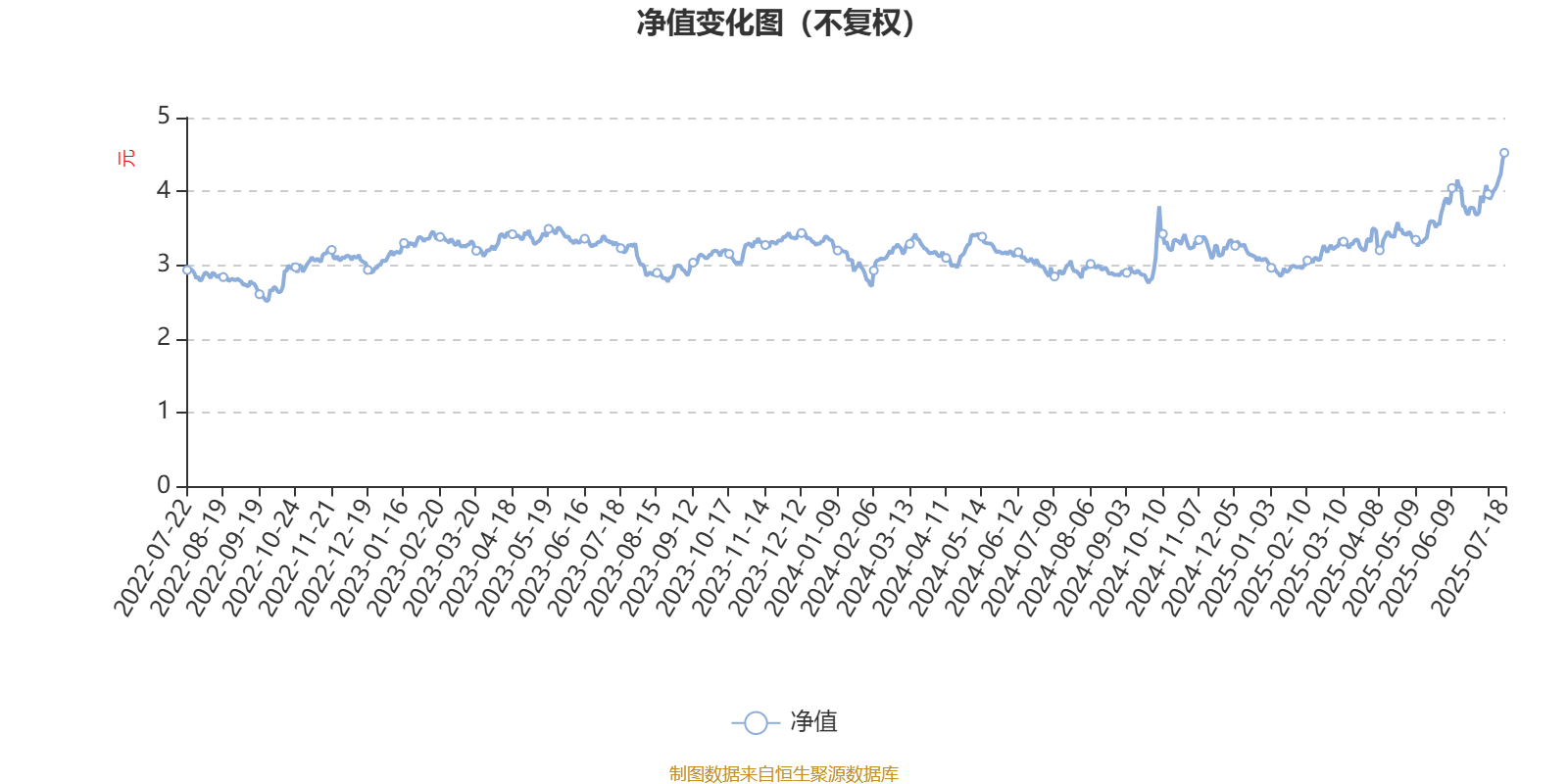
Core Viewpoint - The E Fund Healthcare Industry Mixed A Fund (110023) reported a profit of 535 million yuan in Q2 2025, with a weighted average profit per fund share of 0.4323 yuan, and a net value growth rate of 12.16% during the reporting period [3] Fund Performance - As of July 18, the fund's unit net value was 4.524 yuan, with a recent three-month net value growth rate of 34.04%, ranking 47 out of 138 comparable funds [4] - The fund's six-month net value growth rate was 54.03%, ranking 48 out of 138, and the one-year growth rate was 51.05%, ranking 46 out of 133 [4] - Over the past three years, the fund achieved a net value growth rate of 52.38%, ranking 7 out of 107 [4] Risk and Return Metrics - The fund's Sharpe ratio over the past three years was 0.4532, ranking 17 out of 105 comparable funds [9] - The maximum drawdown over the past three years was 24.99%, with the worst quarterly drawdown occurring in Q1 2021 at 24.73% [11] Investment Strategy - The fund underwent significant portfolio adjustments during the reporting period, reducing holdings in sectors like CXO and IVD, while concentrating investments in the innovative drug sector, based on a thorough analysis of the prospects for China's innovative drug industry [3] Fund Holdings - The fund's average stock position over the past three years was 92.35%, compared to an average of 86.91% for comparable funds, reaching a peak of 94.24% at the end of H1 2023 [14] - As of Q2 2025, the fund's top ten holdings included companies such as Heng Rui Medicine, Recbio Technology, and BeiGene, with a concentration exceeding 60% for the top ten holdings over the past two years [18] Fund Size - As of the end of Q2 2025, the fund's total size was 3.944 billion yuan [15]