
翰森制药

Search documents
港股创新药ETF(513120)早盘冲高涨近2%,近5日累计“吸金”3.54亿元
Xin Lang Cai Jing· 2025-08-05 02:21
Group 1 - The Hong Kong Innovation Drug ETF (513120) has shown strong performance, with a recent increase of 1.90% and a total scale reaching 15.257 billion [1] - The ETF has attracted significant capital inflow, accumulating 354 million over the last five trading days, and has a one-year net value increase of 127.14% [1][2] - The index tracks up to 50 listed companies involved in innovative drug research, with a high concentration in biopharmaceuticals and chemical pharmaceuticals, accounting for 92.5% of the index [2] Group 2 - The top ten weighted stocks in the index account for 70.59%, including companies like 康方生物 (09926) and 信达生物 (01801) [2] - The innovation drug sector is entering a phase of "clinical value reassessment," shifting from a narrative-driven valuation to a profit-driven approach, indicating long-term investment potential [2] - The sector is expected to maintain its growth due to policy support, enhanced global competitiveness, and successful commercialization [3] Group 3 - The ETF allows T+0 trading, enhancing liquidity and efficiency for investors [3]
账面资金不足1亿, 旺山旺水能“旺”起来吗?
阿尔法工场研究院· 2025-08-05 00:06
Core Viewpoint - The article discusses the potential IPO of Wangshan Wangshui, focusing on its flagship product "domestic Viagra" Angweida, while highlighting the company's broader portfolio of nine innovative assets in three key areas: antiviral, neuropsychiatric, and reproductive health [2][3]. Group 1: Company Overview - Wangshan Wangshui has a valuation of 4.45 billion yuan and is preparing for an accelerated IPO process after submitting its prospectus to the Hong Kong Stock Exchange [2][3]. - The company faces significant challenges, including tight cash flow, idle production capacity, high debt levels, and a concentrated customer base [3][11]. Group 2: Market Trends - The core trends in the industry include innovative drug development targeting RNA viruses and new antidepressant mechanisms, international expansion leveraging the Belt and Road Initiative, and increasing price pressures due to dynamic adjustments in the national medical insurance catalog [5][6]. Group 3: Competitive Landscape - The antiviral drug market is projected to grow from 203 billion yuan in 2024 to 403 billion yuan in 2035, with a compound annual growth rate (CAGR) of 6.3%, while the neuropsychiatric and reproductive health sectors face intense competition with lower growth rates [7]. - Wangshan Wangshui's reliance on a single major customer, which accounted for over 70% of its revenue, poses a significant risk [11][12]. Group 4: Financial Performance - The company reported a net profit of 6.4 million yuan in 2023, primarily from licensing income, but is projected to incur a net loss of 218 million yuan in 2024 due to increased R&D expenses and the termination of licensing income [16]. - Cash flow has deteriorated, with operating cash flow turning negative in 2024, and total liabilities increasing from 488 million yuan in 2023 to 641 million yuan in 2025 [17][16]. Group 5: R&D and Commercialization - Wangshan Wangshui's R&D spending is only 10% of the industry average, and it has significantly fewer patents compared to leading competitors [13]. - The company plans to use IPO proceeds primarily for product development and capacity expansion, including clinical trials for its core products [19][20]. Group 6: Risks and Challenges - The company faces potential issues such as underutilization of existing production capacity, long R&D cycles without core product approvals, and a heavy reliance on self-research and production strategies [22][23]. - Historical examples from peers indicate that unprofitable biotech companies face stringent valuation scrutiny, raising concerns about Wangshan Wangshui's ability to navigate similar challenges [24].


8月4日中银创新医疗混合C净值下跌0.72%,近1个月累计上涨10.05%
Sou Hu Cai Jing· 2025-08-04 13:41
Group 1 - The core point of the news is the performance of the Zhongyin Innovation Medical Mixed C Fund, which has shown significant returns over various time frames, with a year-to-date return of 80.47% and a recent one-month return of 10.05% [1] - As of June 30, 2025, the fund's total assets amounted to 2.686 billion yuan, indicating a substantial scale for a fund established in October 2020 [1] - The top ten stock holdings of the fund account for a combined 62.83%, with notable investments in companies such as Innovent Biologics (8.33%) and Hengrui Medicine (8.08%) [1] Group 2 - The fund manager, Zheng Ning, has a strong background in the investment industry, having previously held senior positions at Taikang Asset Management and Zhonggeng Fund Management [2] - Zheng Ning has been managing the Zhongyin Innovation Medical Mixed Fund since July 1, 2022, and has also taken on managerial roles for other funds within the Zhongyin family [2]

中证香港内地股等权重指数报2226.67点,前十大权重包含快手-W等
Jin Rong Jie· 2025-08-04 10:04
金融界8月4日消息,上证指数低开高走,中证香港内地股等权重指数 (HKCN50EW,H30239)报2226.67 点。 数据统计显示,中证香港内地股等权重指数近一个月上涨3.50%,近三个月上涨10.41%,年至今上涨 21.10%。 据了解,中证香港策略指数系列从多种策略投资的角度反映了在香港交易所上市证券的整体表现。该指 数以2005年12月30日为基日,以1000.0点为基点。 从指数持仓来看,中证香港内地股等权重指数十大权重分别为:中国宏桥(2.7%)、中国人寿 (2.51%)、翰森制药(2.41%)、药明生物(2.32%)、快手-W(2.3%)、中芯国际(2.28%)、京东 健康(2.28%)、紫金矿业(2.26%)、中通快递-W(2.25%)、农夫山泉(2.18%)。 从中证香港内地股等权重指数持仓的市场板块来看,香港证券交易所占比100.00%。 从中证香港内地股等权重指数持仓样本的行业来看,可选消费占比25.37%、金融占比16.30%、通信服 务占比11.93%、医药卫生占比9.11%、信息技术占比8.24%、能源占比8.02%、房地产占比7.89%、原材 料占比4.96%、主要消费占比4 ...

重金入局减肥药市场,华润三九如何突围?
Bei Ke Cai Jing· 2025-08-04 10:00
Core Viewpoint - China Resources Sanjiu Medical & Pharmaceutical Co., Ltd. has entered into a collaborative research and development agreement with Borui Biopharmaceutical (Suzhou) Co., Ltd. for the BGM0504 injection project, which is a dual agonist of GLP-1 and GIP receptors aimed at treating Type 2 Diabetes Mellitus (T2DM) and obesity [1][2] Group 1: Collaboration Details - The BGM0504 injection is positioned as an innovative polypeptide drug that aims to provide more effective, safer, and convenient treatment options for patients [1] - The collaboration grants China Resources Sanjiu exclusive development and commercialization rights, indicating a deep complementarity in innovative drug development and commercialization capabilities between the two companies [1][2] - China Resources Sanjiu's investment covers the entire R&D and commercialization chain, with a maximum milestone payment of 282 million yuan contingent on clinical progress and regulatory approval [2][3] Group 2: Clinical Trial Progress - BGM0504 has reached the critical phase of Phase III clinical trials, with Phase II trials showing promising results in both T2DM patients and overweight/obese adults, indicating potential advantages over existing treatments like semaglutide [2][4] - The Phase II trials demonstrated significant weight management potential and metabolic risk benefits in the overweight/obese population [2] Group 3: Market Competition - The GLP-1 market is highly competitive, with major players like Novo Nordisk and Eli Lilly dominating the space, collectively generating approximately $29.3 billion in sales from various formulations of semaglutide and other GLP-1 products [5] - The competitive landscape includes over 179 GLP-1 pipelines from 45 companies globally, indicating intense competition and the challenge for BGM0504 to establish a foothold in the market [7] - Recent approvals and developments in the GLP-1 space, such as Innovent's dual receptor agonist and Eli Lilly's oral GLP-1 drug, further intensify the competition [6][7]


翰森制药(03692) - 截至二零二五年七月三十一日止月份之股份发行人的证券变动月报表
2025-08-04 08:01
致:香港交易及結算所有限公司 股份發行人及根據《上市規則》第十九B章上市的香港預託證券發行人的證券變動月報表 截至月份: 2025年7月31日 狀態: 新提交 公司名稱: 翰森製藥集團有限公司 呈交日期: 2025年8月4日 I. 法定/註冊股本變動 | 1. 股份分類 | 普通股 | 股份類別 | 不適用 | | | 於香港聯交所上市 (註1) | | 是 | | | --- | --- | --- | --- | --- | --- | --- | --- | --- | --- | | 證券代號 (如上市) | 03692 | 說明 | - | | | | | | | | | | 法定/註冊股份數目 | | | 面值 | | | 法定/註冊股本 | | | 上月底結存 | | | 20,000,000,000 | HKD | | 0.00001 | HKD | | 200,000 | | 增加 / 減少 (-) | | | | | | | HKD | | | | 本月底結存 | | | 20,000,000,000 | HKD | | 0.00001 | HKD | | 200,000 | 本月底法定/ ...

艾力斯的大单品依赖症
3 6 Ke· 2025-08-04 01:13
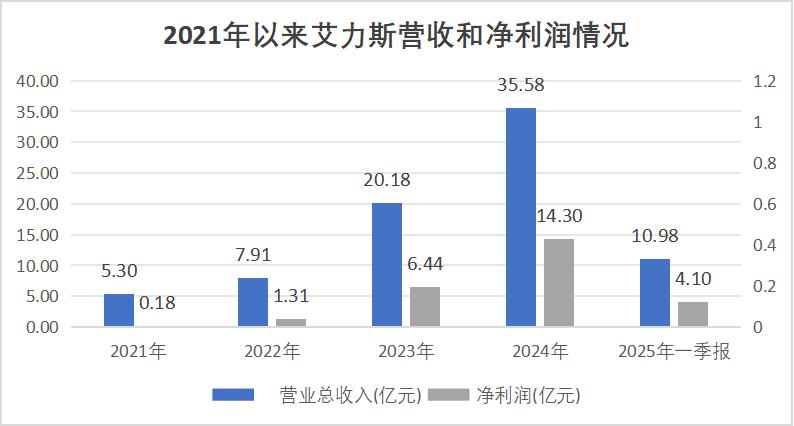
Core Insights - The article highlights the significant achievement of Ailis in the Chinese pharmaceutical industry, particularly with its drug Fumetinib, which has won the highest honor in intellectual property in China [1][2] - Ailis has successfully commercialized Fumetinib, establishing itself as a representative of innovation in the pharmaceutical sector, achieving a remarkable revenue growth and market capitalization increase [1][6] - Despite its success, Ailis faces challenges due to its heavy reliance on a single product, prompting the company to seek new growth opportunities [1][4][11] Group 1: Company Achievements - Ailis was founded in 2004 and has become a significant player in the pharmaceutical industry, particularly with the success of Fumetinib [3][4] - Fumetinib's sales revenue skyrocketed from 5.3 billion yuan in 2021 to 35.58 billion yuan in 2024, with a compound annual growth rate of 88.6% [4][6] - The company's stock price increased from 14.16 yuan to nearly 100 yuan, representing a growth of over 586%, leading to a market capitalization exceeding 40 billion yuan [6][7] Group 2: Market Dynamics - The EGFR inhibitor market in China reached a sales scale of 204.4 billion yuan in 2024, with a year-on-year growth of 19.5% [7][8] - Fumetinib's market share increased to 14.3% in 2024, while competitors like Osimertinib and Amivantamab faced challenges, allowing Ailis to capture market share [7][8] - The competitive landscape is intensifying with the entry of multiple new third-generation EGFR inhibitors and the development of fourth-generation drugs, posing a threat to Fumetinib's market position [8][9] Group 3: Strategic Responses - Ailis is focusing on deepening the development of Fumetinib through various clinical studies to expand its indications and market potential [11][12] - The company is pursuing a dual strategy of "independent research and development + collaborative partnerships" to build a diverse product portfolio [12][14] - Despite the ongoing growth, Ailis's revenue growth rate is showing signs of slowing down, indicating the need for new growth drivers beyond Fumetinib [12][14]

特朗普逼跨国药企砍价:哪些中国企业获益?
Hu Xiu· 2025-08-03 05:34
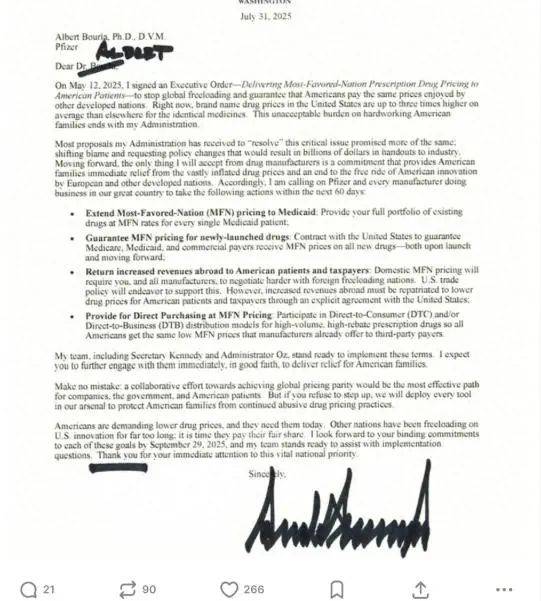
Core Viewpoint - The article discusses the significant price disparity of prescription drugs in the U.S. compared to other developed countries, leading to new policies aimed at price control and the potential impact on multinational pharmaceutical companies and emerging markets [1][2]. Group 1: U.S. Drug Pricing Policies - U.S. prescription drug prices are 2-3 times higher than those in other developed countries, with some innovative drugs priced at 10 times higher than in China [1] - New policies require pharmaceutical companies to provide "most favored nation pricing" to U.S. Medicare, sign contracts for price locking, renegotiate overseas prices to "repatriate profits," and promote direct sales for price transparency [1][2] - The Pharmaceutical Research and Manufacturers of America (PhRMA) criticized these policies, claiming they would undermine U.S. innovation [1][2] Group 2: Multinational Pharmaceutical Companies' Strategies - Companies like Johnson & Johnson, Pfizer, and Merck are adopting multi-faceted strategies to balance profits and compliance, including adjusting global pricing strategies [3] - Some companies are lowering prices in the U.S. while increasing prices in other markets to maintain profit margins, with AstraZeneca already announcing price reductions for certain drugs in the U.S. [3][4] - To offset profit losses, companies may raise prices in emerging markets like China, where the annual treatment cost for PD-1 drugs is approximately 1.16 million yuan, ten times higher than in China [4] Group 3: Cost Optimization Strategies - Cost reduction is a core objective, leveraging China's low-cost advantages, where biopharmaceutical R&D costs are 1/5 to 1/10 of those in the U.S. [5] - Pfizer has signed over $1 billion in CDMO orders with Chinese companies to transfer some biopharmaceutical production to China, reducing production costs by 30% [5][6] - Companies are also transferring non-core technologies to China to avoid tariffs and lower costs, such as Pfizer's collaboration with Chinese firms to establish PD-1 production bases [6][7] Group 4: Legal and Policy Maneuvering - Industry associations and pharmaceutical companies are using legal and political avenues to resist new policies, with PhRMA planning to appeal to the WTO regarding the "most favored nation pricing" requirement [10] - They are lobbying Congress, arguing that foreign price controls could reduce U.S. R&D investment by $10 billion annually [10] Group 5: Opportunities and Challenges for Chinese Companies - Chinese companies are positioned to benefit from accelerated domestic substitution, with local biosimilars gaining price advantages [11] - CDMO businesses are expanding, with WuXi Biologics reporting a 144% year-on-year increase in CDMO revenue in the first half of 2025 [12] - Chinese pharmaceutical companies are also achieving breakthroughs in international markets through licensing agreements, with total upfront payments reaching $2.329 billion in the first half of 2025 [13] Group 6: Beneficiary Companies - Companies in the biosimilar sector, such as Innovent Biologics and Antengene, are expected to gain market share as multinational firms raise prices in China [16] - WuXi Biologics is recognized as a leading global CDMO, while other companies like Eastone and Hengrui are also expanding their CDMO projects [17] - Chinese firms that have established production facilities in India and Southeast Asia, like Huahai Pharmaceutical, are likely to benefit from reduced reliance on the U.S. market [19]



海通国际2025年8月金股



Haitong Securities International· 2025-08-01 14:34
Investment Focus - The report highlights Amazon (AMZN US) as a top pick due to its leading position in the cloud industry with a 30% global market share, stable margin improvements, and strong demand for its T3 inference capabilities [1] - Alphabet (GOOGL US) is favored for its AI and advertising synergy, expected margin improvements in IaaS cloud services, and strong self-developed capabilities, although its stock price upside is currently limited [1] - Arista (ANET US) is recognized for its leadership in high-speed data center switches and expected revenue contributions from AI backend switch business, with a significant growth visibility [1] - Meituan (3690 HK) is noted for its strong cash flow generation ability and competitive cost structure, positioning it well in the face of industry competition [1] - Lenovo (992 HK) is highlighted for its record revenue in AI server business and significant growth potential compared to peers like Dell [2] - NVIDIA (NVDA US) is recognized for its strong financial performance and technological leadership in data center business, with a focus on emerging applications driving growth [2] - Tencent (700 HK) is expected to benefit significantly from AI advancements, with an upward revision in revenue and profit expectations for 2025 [2] - New Oriental (EDU US) is noted for its diverse revenue sources and strong brand recognition, supporting its high profit margins [3] - AIA (1299 HK) is favored for its steady growth in new business value and strong operational metrics, particularly in the ASEAN market [3] - Futu (FUTU US) is expected to see significant growth in paid user numbers and total AUM, supported by its low commission model and quality customer service [3] - The report emphasizes the potential of Chinese pharmaceutical companies like China Biologic Products (1177 HK) and Innovent Biologics (1801 HK) in their innovative drug pipelines and market leadership [4]
中证港股通医药卫生综合指数下跌2.51%,前十大权重包含药明生物等
Jin Rong Jie· 2025-08-01 12:10
Core Viewpoint - The China Securities Index for Hong Kong Stock Connect Medical and Health Comprehensive Index has shown significant growth, with a year-to-date increase of 85.26% [1]. Group 1: Index Performance - The Shanghai Composite Index decreased by 0.37%, while the Hong Kong Stock Connect Medical and Health Comprehensive Index fell by 2.51%, closing at 3658.84 points with a trading volume of 24.507 billion yuan [1]. - Over the past month, the Hong Kong Stock Connect Medical and Health Comprehensive Index has risen by 24.02%, and over the last three months, it has increased by 47.29% [1]. Group 2: Index Composition - The index comprises 50 liquid and large-cap medical and health industry companies listed within the Hong Kong Stock Connect, reflecting the overall performance of these securities [1]. - The index was established on November 14, 2014, with a base point of 3000.0 [1]. Group 3: Top Holdings - The top ten holdings in the index are as follows: - Innovent Biologics (10.25%) - WuXi Biologics (9.23%) - BeiGene (8.95%) - CanSino Biologics (8.12%) - China Biologic Products (5.97%) - CSPC Pharmaceutical Group (5.77%) - JD Health (4.52%) - 3SBio (4.19%) - Hansoh Pharmaceutical (3.0%) - WuXi AppTec (2.85%) [1]. Group 4: Market and Sector Allocation - The index's holdings are entirely composed of securities listed on the Hong Kong Stock Exchange, with a 100% allocation to the medical and health sector [1].