万润新能

Search documents
1200亿!宁德时代“疯抢”,特朗普在“焦虑”!
DT新材料· 2026-01-13 16:05
Core Viewpoint - The article highlights the significant partnership between Rongbai Technology and CATL, focusing on the supply of lithium iron phosphate cathode materials, which is expected to generate over 120 billion yuan in sales from 2026 to 2031 [2][3]. Group 1: Partnership and Agreements - Rongbai Technology has signed a procurement cooperation agreement with CATL to supply approximately 3.05 million tons of lithium iron phosphate cathode materials from Q1 2026 to 2031, with a total sales amount exceeding 120 billion yuan [2]. - This agreement follows Rongbai Technology's previous announcement in November 2025, where it became the primary supplier of sodium-ion battery cathode powder for CATL [3]. - The partnership includes opportunities for Rongbai Technology to participate in CATL's new projects and product developments, emphasizing collaboration on quality improvement and rapid delivery [2]. Group 2: Market Trends and Opportunities - The demand for lithium iron phosphate is surging, particularly in overseas markets, driven by advancements in solar and energy storage technologies, which are lowering costs and enabling the growth of distributed power systems [3]. - The article notes that the global energy storage market is poised for explosive growth, with lithium iron phosphate batteries holding a 92.5% share in the energy storage sector due to their safety, long cycle life, and cost-effectiveness [6]. - The increasing energy consumption of AI data centers is creating a significant demand for reliable energy storage solutions, further enhancing the market potential for lithium iron phosphate batteries [4][6]. Group 3: Industry Dynamics - The article discusses the structural differentiation in the domestic lithium iron phosphate industry, highlighting a surplus in low-end products while high-end products remain in short supply [6]. - The fourth-generation lithium iron phosphate products, characterized by high pressure and density, are crucial for meeting fast charging and high energy density demands, indicating a high technical barrier in this segment [6]. - CATL's orders often include technical cooperation clauses, aiming to secure high-quality production capacity in response to the growing demand for advanced lithium iron phosphate products [6].



1200亿!容百科技与宁德时代签署磷酸铁锂巨单
Xin Lang Cai Jing· 2026-01-13 15:37
面对每天上千份上市公司公告该看哪些?重大事项公告动辄几十页几百页重点是啥?公告里一堆专业术语 不知道算利好还是利空?请看智通财经公司新闻部《速读公告》栏目,我们派驻全国的记者们将于公告当 晚为您带来准确、快速、专业的解读。 《科创板日报》1月13日讯(记者 王楚凡) 容百科技今日(1月13日)晚间发布公告,宣布公司与宁德时代正式签署 《磷酸铁锂正极材料采购合作协议》(下称:"协议")。 根据协议,自2026年第一季度至2031年,容百科技预计将合计向宁德时代供应约305万吨磷酸铁锂正极材料,协议总销 售金额预计将超过1200亿元。 根据协议主要条款,自2026年1月1日起至2030年12月31日止的合作期间内,容百科技作为宁德时代的重要供应商,将 为其提供磷酸铁锂正极材料。具体采购数量、价格及质量要求将以双方后续签订的框架性、年度性或单笔采购订单及 技术规格书为准。 协议约定了双方将每三个月同步需求及供应变化情况,容百科技将在全球范围内制定匹配性的产能、产品开发及生产 经营计划,以响应宁德时代的快速交付及质量改善等诉求。宁德时代则在同等商业条件下给予容百科技项目开发的优 先权及产品导入的优先支持。 容百科技表 ...

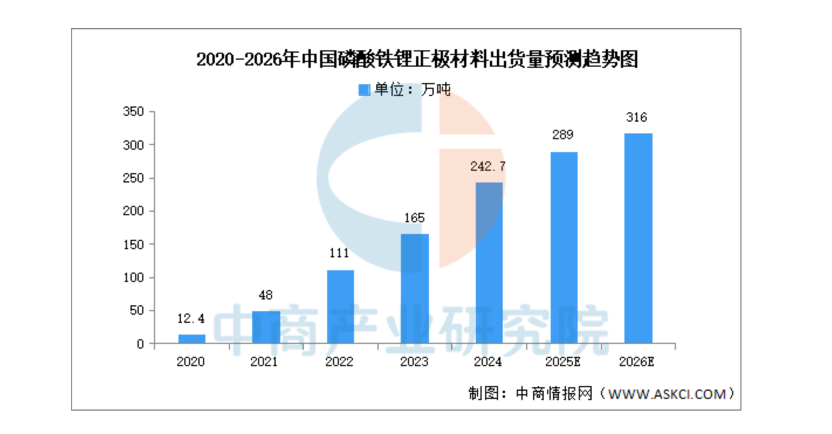
突破15万元大关!碳酸锂价格迎来“开门红”
Zhong Guo Hua Gong Bao· 2026-01-13 09:02
Core Viewpoint - The price of lithium carbonate has surged at the beginning of 2026, driven by international expectations, policy disruptions, and industry behaviors, with battery-grade lithium carbonate reaching 154,100 yuan/ton, a nearly 29.17% increase from December 31, 2025 [2] Group 1: Price Trends - As of January 12, 2026, both battery-grade and industrial-grade lithium carbonate prices have surpassed 150,000 yuan per ton, with industrial-grade at 151,250 yuan/ton, reflecting a 29.94% increase from the end of 2025 [2] - The rebound in lithium carbonate prices is attributed to geopolitical tensions and resource policy adjustments that heighten supply concerns [2] Group 2: Supply Factors - The Brazilian government's decision to freeze new mining rights auctions has intensified market fears regarding lithium resource supply tightening [2] - Domestic supply is constrained due to increased environmental requirements for lithium mining, which may raise operational costs and affect future production capacity [3] - A significant supply gap of 5,000 to 8,000 tons per month has emerged due to the delayed resumption of production at the Jiangxi lithium mine and seasonal maintenance of older production lines [3] Group 3: Demand Dynamics - The demand for lithium carbonate remains strong, particularly from the booming electric vehicle market, with battery manufacturers actively procuring lithium to meet production needs [4] - Some downstream companies have announced production line maintenance, which may impact the overall demand for lithium carbonate [4] Group 4: Market Outlook - Industry experts suggest that the fundamentals supporting lithium carbonate prices remain robust, indicating a sustained strong price environment with increased volatility expected [5]

两家磷酸铁锂企业宣布提价 一家提价1500—2000元/吨 产线检修或加剧涨势
Xi Niu Cai Jing· 2026-01-13 08:45
Group 1 - The core point of the article is that lithium iron phosphate (LFP) companies have raised prices for downstream customers due to tight supply, driven by strong demand in energy storage and better-than-expected sales forecasts for electric vehicles [2] - One company has increased prices for major customers by 1500 to 2000 yuan per ton, indicating a significant price adjustment in the market [2] - Despite January typically being a slow season for the industry, recent positive developments in the lithium battery sector, including rising raw material prices and news of production halts, have stimulated market sentiment [2] Group 2 - Multiple LFP production companies, including Hunan Youneng, Deyang Nano, Wanrun New Energy, and Anda Technology, have announced production halts for maintenance, which is expected to have a short-term impact on supply and is interpreted as a contraction signal by the market [4] - Wanrun New Energy has stated that its LFP production lines have been operating beyond capacity since Q4 2025, and it will conduct maintenance starting December 28, 2025, which is expected to reduce LFP output by 5,000 to 20,000 tons [4] - Hunan Youneng's production capacity utilization exceeded 100% in 2025, and it will also conduct maintenance on some production lines starting January 1, 2026, with an expected reduction in output of 15,000 to 35,000 tons of phosphate cathode materials [4] - The first price increase for LFP has been accepted by most customers, with processing fees rising by 1,000 yuan per ton, although some major customers are still in negotiations [4]


碳酸锂价格迎来“开门红”
Zhong Guo Hua Gong Bao· 2026-01-13 03:30
Group 1 - Lithium carbonate prices have surged to over 140,000 yuan per ton in early 2026, marking a 19% increase from the end of 2025 and an 83% rise compared to the same date in 2025 [1] - The rapid price increase is attributed to a combination of international expectations, policy disruptions, and industry behaviors, with geopolitical tensions raising concerns about supply chain stability [1] - Brazil's recent decision to freeze new mining rights auctions has heightened market fears regarding lithium resource supply tightening, further influencing price expectations [1] Group 2 - Domestic policies and capacity factors are tightening supply, with the State Council's action plan aimed at promoting sustainable development potentially increasing environmental costs for lithium mining [2] - Short-term supply of lithium is significantly constrained, with production delays from key mines leading to a monthly supply gap of 5,000 to 8,000 tons [2] - The overall inventory of lithium ore in domestic main ports has slightly decreased to 142,000 tons, supporting upward price movement despite some production increases in lithium spodumene and recycling [2] Group 3 - The demand for lithium carbonate remains strong due to the booming electric vehicle market, with battery manufacturers actively procuring lithium to meet production needs [3] - Some downstream companies have announced production line maintenance, which may impact lithium carbonate prices to varying degrees [3] - The short-term fundamentals for lithium carbonate are expected to support prices, with a strong upward trend likely to continue [3]
兴业证券:需求双轮驱动+供给刚性约束 锂电材料行业景气上行
智通财经网· 2026-01-13 02:53
Group 1 - The core viewpoint of the report is that global lithium battery demand is expected to grow at a rate of 26% year-on-year by 2026, driven by both power storage and electric vehicle sectors [1][4] - In the electric vehicle sector, the registration of global electric vehicles reached 17.1 million units from January to October 2025, representing a year-on-year increase of 25.5%, primarily due to the resumption of subsidies in Europe and vehicle replacement policies in China [1][4] - The global energy storage battery shipments reached 428 GWh from January to September 2025, showing a significant year-on-year increase of 90.7%, supported by the scaling of independent storage projects in China and market demand in the U.S. [1][4] Group 2 - The lithium battery materials supply side is undergoing optimization due to previous overcapacity leading to low-price competition, resulting in many companies facing continuous losses and high debt levels [2][3] - Companies are focusing on improving existing production efficiency and cost optimization rather than blind expansion, leading to a significant weakening of expansion capabilities and intentions among lithium battery material companies [2][3] - The tightening of environmental policies and energy consumption controls is raising industry entry barriers, causing smaller companies to exit the market, thus enhancing the rigidity of supply constraints [2][3] Group 3 - Technological upgrades are driving supply-side optimization, with advancements in high-pressure lithium iron phosphate and high-strength separators, which require higher production precision and R&D investment [3][4] - Leading companies are leveraging continuous R&D investment to scale up high-end product capacity, while smaller firms struggle to upgrade their products and processes, leading to market elimination [3][4] - The supply structure is evolving towards a "few but excellent" model, with resources concentrating on leading enterprises, which is expected to restore market share and profitability for these companies [3][4] Group 4 - The report indicates a strong certainty of profit recovery in lithium battery materials, driven by supply-side constraints, high demand growth, and industry restructuring [4] - The consensus among companies to scientifically release capacity has led to a continued limitation of supply over the next 1-2 years, while demand is experiencing rapid growth from both power storage and electric vehicle sectors [4] - Core material prices, such as lithium hexafluorophosphate, have started to rebound, and the overall capacity utilization rate in the industry is expected to continue its upward trend in 2026 [4] Group 5 - Investment recommendations suggest prioritizing attention on lithium hexafluorophosphate and lithium iron phosphate sectors, with specific companies like Tianqi Materials and Hunan Youneng being highlighted [5] - Other companies to watch include Duofu Technology, Fulian Precision, Longpan Technology, Defang Nano, Tianji Co., Shida Shenghua, and Wanrun New Energy, particularly in the context of price recovery [5] - For long-cycle, heavy-asset sectors like copper foil and separators, companies such as Enjie, Xingyuan Materials, Fusheng Technology, Defu Technology, Jiayuan Technology, and Nord are recommended for attention [5]


碳酸锂周报:宏观情绪仍旧提振盘面-20260111
Hua Lian Qi Huo· 2026-01-11 15:17
1. Report's Investment Rating for the Industry - There is no information about the industry investment rating in the report. 2. Core Viewpoints of the Report - The current lithium carbonate market is strongly influenced by capital sentiment. On the supply side, rumors from overseas and Jiangxi mining areas continue to disrupt the supply outlook. On the demand side, while there are optimistic expectations for energy storage demand, there is short - term pressure from the decline in material factory production schedules. The industry's inventory shows an early signal of turning from destocking to restocking, introducing new variables to the market sentiment. The price is expected to move upward, and the recommended strategy is to consider range - bound trading for the LC2605 contract, with a reference range of (130,000, 150,000), or to buy call options [10][12]. 3. Summary of Each Section According to the Table of Contents 3.1 Week - ly Views and Hot News 3.1.1 Hot News - On January 4, 2026, the State Council issued the "Solid Waste Comprehensive Management Action Plan", indicating that lithium resource development will become more "green and intensive" and future lithium salt supply growth may be limited by environmental protection and solid waste treatment capabilities. The resumption process of Jiangxi Jianxiawo Mining Area has raised market concerns again. - On December 26, 2025, the National Development and Reform Commission stated that for the "new three" industries such as new - energy vehicles, lithium batteries, and photovoltaics, the key is to standardize the order and lead innovation, and comprehensively rectify the "involution - style" competition during the "15th Five - Year Plan" period. - On December 25, 2025, Wanrun New Energy announced that it would conduct production - reduction maintenance on some production lines from December 28, 2025, for about one month, which is expected to reduce the production of lithium iron phosphate by 5,000 to 20,000 tons. - On December 24, 2025, it was reported that the lithium mining project of Yichun Times New Energy Mining Co., Ltd. in Zhenkouli, Yifeng County - Jianxiawo, Fengxin County is expected to resume production around the Spring Festival. - The Yichun Tendering Network in Jiangxi Province released the first environmental impact assessment information for the project. - On December 16, 2025, the Yichun Natural Resources Bureau planned to cancel 27 mining licenses [8]. 3.1.2 Weekly Views - **Market Review**: From January 2 to January 9, 2026, the spot price of lithium carbonate rose significantly, with the benchmark spot price reaching 139,100 yuan/ton on January 9, a 18.64% increase from January 2. The main contract of lithium carbonate in the futures market fluctuated downward, with the latest transaction price at 143,420 yuan/ton and a weekly increase of 17.96%. The open interest of the main - month contract is about 510,900 lots. - **Supply**: This week, the production of lithium carbonate increased slightly. Before the Spring Festival, a small number of lithium salt factories plan to conduct maintenance, but the actual impact on production is limited, and most enterprises maintain stable production. The overall operating rate of domestic lithium salt factories remains high, and new projects in production continue to increase output. Geopolitical factors continue to disrupt the stability of overseas lithium resource supply. The "Solid Waste Comprehensive Management Action Plan" has tightened the mine approval standards, affecting the domestic mining supply outlook. - **Demand**: The downstream production schedule declined. The demand outlook for the energy - storage sector remains strong. Some lithium iron phosphate and lithium hexafluorophosphate producers plan to conduct maintenance, and the power - battery industry is in a seasonal off - peak, suppressing short - term raw material procurement demand. Some downstream lithium iron phosphate enterprises have confirmed price increases and propose that the settlement price of lithium carbonate follow the futures trend. Downstream material factories are cautious about the current high - price spot lithium carbonate and mainly purchase for rigid demand. - **Cost, Profit, and Inventory**: The price of lithium concentrate has risen following the futures price of lithium carbonate. Although the import volume of lithium concentrate is sufficient, miners are strongly inclined to hold prices, and the price of spodumene remains firm. The cost side provides rigid support for the spot price. Integrated enterprises with their own mines and salt lakes still have considerable profits at the current high - price level, while processing enterprises relying on purchased raw materials have relatively thin profits. The industry's overall inventory level is low, and this week it turned from continuous destocking to restocking. Lithium salt factories are more willing to sell spot goods, and their inventory has slightly decreased. Downstream enterprises replenish inventory for rigid demand, and the trading sector is more willing to sell. The futures warehouse receipts increased significantly this week, reaching 20,000 tons. - **Outlook**: As mentioned above. - **Strategy**: As mentioned above [10]. 3.2 Industry Structure - The lithium industry chain includes upstream raw materials (such as spodumene, lithium mica, salt - lake brine, and recycled lithium), lithium salt products (carbonate lithium, lithium hydroxide, etc.), materials (ternary materials, lithium iron phosphate, etc.), lithium batteries, and terminal consumption (new - energy vehicles, energy storage, etc.) [16]. 3.3 Futures and Spot Markets 3.3.1 Futures Market - The closing price of the active lithium carbonate contract was 143,420 yuan/ton, a 17.96% increase from the previous period; the trading volume was 469,479 lots, a 19.63% increase; the open interest was 510,874 lots, a 4.22% increase; and the total number of warehouse receipts was 25,360 lots, a 25.04% increase [22]. 3.3.2 Spot Market - There is a seasonal chart and a historical price chart of the lithium carbonate spot price, but no specific data analysis is provided in the summary part [25]. 3.4 Inventory - The total lithium carbonate inventory was 109,405 tons, a 0.0045% increase from the previous period; the market inventory was 65,949 tons, a 5.4% decrease; the factory inventory was 18,096 tons, a 4.5% decrease; and the registered warehouse receipt volume was 25,360 tons, a 25.04% increase [33]. 3.5 Cost and Profit - There are charts of the comprehensive cost and comprehensive profit of lithium carbonate, but no specific data analysis is provided in the summary part [38]. 3.6 Supply 3.6.1 Supply - Side: Production, Capacity, and Import - Export of Lithium Carbonate - There are charts of the monthly production, capacity, and capacity utilization rate of lithium carbonate, as well as its net import volume, but no specific data analysis is provided in the summary part [42]. 3.6.2 Supply - Side: Major Project Tracking (Potential Capacity) - From 2025 - 12 to 2026 - 12, multiple companies in different regions such as Jiangxi, Xinjiang, Inner Mongolia, etc. have planned new lithium - carbonate production - capacity projects, with a total planned new capacity of 211,000 tons [46]. 3.6.3 Supply - Side: Lithium Carbonate Import Situation - There are seasonal charts of monthly lithium carbonate imports, including those from Argentina and Chile, as well as annual cumulative import charts, but no specific data analysis is provided in the summary part [48]. 3.6.4 Supply - Side: Lithium Carbonate Production from Different Raw Materials - There are seasonal charts of monthly lithium carbonate production from different raw materials (spodumene, lithium mica, salt - lake, and recycled materials), but no specific data analysis is provided in the summary part [58]. 3.6.5 Supply - Side: Spodumene Import Situation - There are seasonal charts of monthly spodumene imports from Zimbabwe and Australia, as well as charts of monthly import volume and cumulative import volume, but no specific data analysis is provided in the summary part [69]. 3.7 Demand 3.7.1 Demand - Side: Overall Demand Situation - There are charts of the monthly consumption of lithium carbonate, monthly production of new - energy vehicles, penetration rate of new - energy vehicles, and seasonal chart of monthly power - battery production, but no specific data analysis is provided in the summary part [82]. 3.7.2 Demand - Side: Power Batteries - There are charts of monthly production, installation volume, export, and energy - storage situation of power batteries, as well as the proportion of power - battery installation volume of each vehicle type and the monthly production and demand proportion of cathode materials, but no specific data analysis is provided in the summary part [88]. 3.7.3 Demand - Side: Output of Each Material - There are charts of the output of lithium iron phosphate, ternary materials, cobalt - acid lithium, and manganese - acid lithium, but no specific data analysis is provided in the summary part [98]. 3.8 Supply - Demand Balance Sheet - The report provides a long - term supply - demand balance sheet of lithium carbonate from 1995, including data on total supply, total demand, supply - demand gap, import and export volume, production from different raw materials, output of downstream products, and inventory, but no specific data analysis is provided in the summary part [107].
年度榜单丨2025全球钠电池正极材料出货量TOP20排行榜!
起点锂电· 2026-01-10 10:43
Core Insights - The core viewpoint of the article is the significant growth forecast for the global sodium-ion battery industry, particularly in the production and shipment of cathode materials by 2025, as detailed in the "2026 Global Sodium Battery Industry White Paper" published by Qidian Research Institute SPIR [2]. Group 1: Industry Overview - By 2025, the global shipment of sodium-ion battery cathode materials is expected to reach approximately 20,000 tons, representing a year-on-year growth of 122.2% [2]. - Among the cathode materials, the shipment of polyanionic cathode materials is projected to exceed that of layered oxides, with an estimated shipment of 14,000 tons, marking a staggering year-on-year increase of 366.6%. In contrast, the shipment of layered oxide cathode materials is expected to be 5,000 tons, reflecting a year-on-year decline of 16.6% [2]. Group 2: Price Trends - The average price of layered oxide cathode materials in 2025 is forecasted to be 38,000 yuan per ton, which is a decrease of 26.3% compared to the previous year [3]. - The average price for polyanionic cathode materials is expected to be 28,000 yuan per ton, showing a decline of 22.2% year-on-year [3]. Group 3: Leading Companies - The top 10 companies in the global sodium-ion battery cathode materials shipment for 2025 include: 1. Qiana Energy 2. Rongbai Technology 3. Sodium Innovation Energy 4. Yingna New Energy 5. Wanrun New Energy 6. Sodium Science Energy 7. Dangseng Technology 8. Jiangsu Xiangying 9. Sodium Far New Materials 10. Jinguang Energy [7]. - The next tier, companies ranked 11-20, includes: 11. Ruiyang New Energy 12. Green Beauty 13. Zhenhua New Materials 14. Yangguang Technology 15. Tongxing Haosheng 16. Taihe Technology 17. Better Energy 18. Shengna Energy 19. Chaona New Energy 20. Xinna New Materials [7]. Group 4: Market Segmentation - The top 10 companies in the shipment of polyanionic cathode materials include: 1. Qiana Energy 2. Rongbai Technology 3. Yingna New Energy 4. Wanrun New Energy 5. Jinguang Energy 6. Sodium Science Energy 7. Sodium Far New Materials 8. Ruiyang New Energy 9. Tongxing Haosheng 10. Taihe Technology [9]. - The top 10 companies in the shipment of layered oxide cathode materials include: 1. Sodium Innovation Energy 2. Rongbai Technology 3. Dangseng Technology 4. Jiangsu Xiangying 5. Zhenhua New Materials 6. Sodium Science Energy 7. Green Beauty 8. Better Energy 9. Yangguang Technology 10. Changyuan Lithium Technology [9].


富临精工60亿豪赌储能赛道 负债率新高12.5亿可转债融资超一年无进展
Xin Lang Cai Jing· 2026-01-09 10:57
Core Viewpoint - The company Fulin Precision announced a significant investment of 6 billion yuan for a new lithium iron phosphate project, aiming to meet the growing demand in the energy storage market, while the industry faces a collective production cut from leading firms [1][2]. Group 1: Company Expansion Plans - Fulin Precision's subsidiary, Jiangxi Shenghua, is set to construct a 500,000-ton high-end lithium iron phosphate project with a total investment of 6 billion yuan, divided into two phases of 250,000 tons each, expected to be completed within 12 months [2]. - The company has previously announced another project in Deyang-Aba with an annual capacity of 350,000 tons of high-pressure dense lithium iron phosphate [1]. Group 2: Industry Context - Major players in the lithium iron phosphate sector, including Wanrun New Energy and Hunan Youneng, are implementing maintenance plans that could reduce production by up to 50% by early 2026, despite holding a significant market share [1]. - The average market price for lithium iron phosphate is reported at 14,704.8 yuan per ton, while production costs range from 16,798.2 yuan to 17,216.3 yuan per ton, indicating a price-cost mismatch [3]. Group 3: Financial Performance - For the first three quarters of 2025, Fulin Precision reported total revenue of 9.085 billion yuan, a year-on-year increase of 54.43%, but net profit attributable to shareholders was only 325 million yuan, with a modest growth of 4.63% [2]. - The company's net profit in the third quarter saw a decline of 15.83%, and its gross margin decreased from 12.91% to 11.23% compared to the previous year [2]. Group 4: Financing Challenges - Fulin Precision's financing channels appear constrained, with a planned convertible bond issuance of 1.25 billion yuan still pending approval after more than a year [3]. - The company plans to fund the 6 billion yuan lithium iron phosphate project through self-owned and self-raised funds, which may increase its financial leverage given its current debt ratio of 63.65% [3]. Group 5: Strategic Partnerships - Fulin Precision has a deep partnership with CATL, extending their supply agreement until 2029, with a commitment to supply at least 80% of the promised capacity [5]. - While this partnership provides stable orders, it also poses risks related to high customer concentration and potential delays in price adjustments [5].


2025年磷酸铁市场盘点:产量333.4万吨,铵法占比下滑
鑫椤锂电· 2026-01-09 02:04
Core Viewpoint - The article highlights the significant growth in the production of iron phosphate, projecting a production volume of 3.334 million tons by 2025, which represents a year-on-year increase of 64.1% [1] Group 1: Production and Capacity - By the end of 2025, the nominal capacity of iron phosphate is expected to reach 5.99 million tons per year, an increase of 1.23 million tons compared to the end of 2024 [5] - The industry is projected to further increase its capacity to 7.37 million tons per year by 2026 [5] - The production capacity utilization rate for the iron phosphate industry in 2025 is expected to be significantly higher than the same period last year, with mainstream shipping enterprises maintaining a capacity utilization rate above 60% throughout the year, peaking at 84% in November [7] Group 2: Market Share and Competition - The market concentration for iron phosphate is lower compared to lithium iron phosphate, with the top three companies primarily focusing on self-supply: Hunan Youneng holds over 30%, Wanrun New Energy exceeds 10%, and Bangpu Recycling surpasses 5%, while other mainstream external sales companies remain below 5% [9] - In the export market, the top three companies are Zhongwei, Bangpu, and Tianci, each with export volumes exceeding 100,000 tons, placing them in the first tier; companies like Henan Baili, Xingfa Xingyou, Yuntianhua, and others have export volumes exceeding 50,000 tons, categorizing them in the second tier [11] Group 3: Future Outlook - The overall industry production of iron phosphate is expected to exceed 4.5 million tons in 2026 [13]