晶澳科技

Search documents
先导智能通过港交所聆讯 为全球第二大新能源智能装备供货商 市场份额为2.9%
Zhi Tong Cai Jing· 2026-01-26 00:35
Core Viewpoint - XianDao Intelligent is a leading smart equipment company providing solutions across various emerging industries, including lithium batteries, photovoltaic cells, and smart logistics, aiming to facilitate the transition to highly automated factories and enhance production efficiency [4][5]. Company Overview - XianDao Intelligent delivers manufacturing equipment and solutions across multiple sectors, including lithium batteries, photovoltaic cells, consumer electronics, smart logistics, hydrogen production, fuel cell production, automotive manufacturing, and laser precision processing [4]. - The company has developed intelligent production solutions that integrate data-driven algorithms and digital twin simulations to support clients in establishing "unmanned factories" and "smart factories" [4]. Market Position - According to Frost & Sullivan, XianDao Intelligent is the second-largest supplier of new energy smart equipment globally, with a market share of 2.9% in 2024 [5]. - In the lithium battery smart equipment sector, XianDao Intelligent holds the largest market share globally at 15.5% and is the largest supplier in China with a market share of 19.0% [5]. Product Offerings - The company provides a comprehensive range of products for lithium battery production, covering various applications such as electric vehicles, energy storage, and consumer electronics, with equipment for all production stages [7]. - In the photovoltaic sector, XianDao Intelligent offers complete line solutions and individual equipment for solar module and cell manufacturing, serving leading companies in the solar industry [8]. Competitive Landscape - The global lithium battery smart equipment market is projected to grow from RMB 49.8 billion in 2024 to RMB 137.2 billion by 2029, with a compound annual growth rate (CAGR) of 22.5% [9]. - The global photovoltaic smart equipment market is expected to decline from RMB 176.9 billion in 2024 to RMB 131.3 billion by 2029, with a CAGR of -5.8% [9]. - The global smart logistics equipment market is anticipated to grow from RMB 133.9 billion in 2024 to RMB 338.1 billion by 2029, with a CAGR of 20.3% [9]. Financial Performance - XianDao Intelligent's revenue for the fiscal years 2022, 2023, and the first nine months of 2024 were approximately RMB 13.84 billion, RMB 16.48 billion, and RMB 11.71 billion, respectively [10]. - The net profit for the same periods was approximately RMB 2.32 billion, RMB 1.77 billion, and RMB 0.27 billion [10].


解读2025年全球裁员潮:AI还不是关键因素
Jing Ji Guan Cha Wang· 2026-01-25 17:56
Group 1 - The core point of the article is that the global wave of layoffs in 2025 is driven by multiple factors, including economic slowdown, cost pressures, strategic restructuring, and the impact of AI, rather than solely by AI replacing jobs [2][6][8] - In the United States, 2025 saw a significant increase in layoffs, with approximately 1.17 million layoffs reported by the end of November, marking the highest level since the COVID-19 pandemic [2][3] - AI has been cited as a factor in about 54,000 to 55,000 layoffs, accounting for only 4% to 5% of total layoffs, indicating that while AI is changing workforce structures, it is not the primary driver of the layoffs [3][8] Group 2 - In Europe, companies are announcing layoffs primarily for cost control, profit pressure, and business restructuring, with the automotive and manufacturing sectors being particularly affected [3][6] - In China, layoffs are largely attributed to macroeconomic and structural adjustments, with youth unemployment rates remaining high, particularly among those aged 16-24 [4][6] - Major Chinese companies like Alibaba and Baidu are undergoing workforce reductions not solely due to layoffs but also due to strategic focus and asset divestitures [5][6] Group 3 - AI is reshaping job structures, particularly in roles such as customer service and administrative support, but the overall impact on employment is more complex, with economic conditions being a more significant factor [7][8] - The introduction of AI and automation often leads to job restructuring rather than outright layoffs, with a focus on efficiency and productivity improvements [11][12] - The long-term effects of AI on employment will depend on the adaptability of the workforce and the diversity of local industry structures [9][10] Group 4 - Companies are increasingly recognizing the need for reskilling and upskilling their workforce rather than relying solely on layoffs, as this approach can enhance long-term productivity and employee trust [22][24] - Leading firms are investing in employee training programs to adapt to technological changes, with examples including Amazon's "2025 Skills Enhancement Program" [24][25] - The future workforce will require a combination of technical skills and soft skills, with a growing emphasis on the ability to integrate AI into business processes [18][19]



福达合金业绩翻倍增长:数据中心+储能全速前进,“太空光伏”注入预期值得期待
Quan Jing Wang· 2026-01-25 13:42
Core Viewpoint - Fuda Alloy Materials Co., Ltd. is experiencing significant growth driven by the expansion of global power infrastructure investments and the booming demand in emerging sectors such as data centers and energy storage, leading to a projected net profit increase of 119.14% to 219.95% in 2025 compared to the previous year [1] Group 1: Business Transformation - The company is transitioning from traditional low-voltage electrical applications to new scenarios involving data centers and energy storage, capturing the growth opportunities presented by the AI-driven surge in power demand [2] - Fuda Alloy has expanded its business with North American data centers, achieving a revenue increase of 507% in the first half of 2025, driven by its robust technology and supply chain resilience [2] - The company’s high-performance electrical contact materials have successfully penetrated the supply chains of major tech giants like Microsoft and Meta, enhancing its market position [2] Group 2: Energy Storage Developments - Fuda Alloy's products, such as silver-tin oxide and silver-copper contact materials, are being supplied to major clients like Sungrow and Huawei for energy storage inverters, showcasing their high performance and reliability [3] - The company is actively engaged in R&D projects aimed at developing new materials for energy storage applications, which are critical for enhancing product value and profitability [3] Group 3: Anticipated Asset Injection - There is market anticipation regarding the potential asset injection from Zhejiang Guangda Electronics, which is under the same controlling shareholder as Fuda Alloy, following a previous attempt to acquire a 51% stake [4] - Guangda Electronics is a leading player in the photovoltaic silver paste sector, with a strong technical position and a diverse product portfolio, which could significantly enhance Fuda Alloy's performance upon integration [5] Group 4: Space Photovoltaics Opportunity - The photovoltaic industry is poised for growth in the space sector, with significant developments anticipated in space solar power, driven by increasing energy demands from satellite deployments [7] - Fuda Alloy and Guangda Electronics are well-positioned to capitalize on this emerging market, leveraging Guangda's advanced technology in low-temperature silver paste and conductive materials [7] - The synergy between Fuda Alloy's electrical contact materials for data centers and Guangda's future space photovoltaic silver paste business aligns with the broader AI-driven demand for computational power [8] Group 5: Future Outlook - Fuda Alloy is at a pivotal moment, balancing steady growth in traditional business with the potential for explosive growth in new sectors, particularly in data centers and energy storage [9] - The anticipated asset injection from Guangda Electronics could further enhance Fuda Alloy's capabilities in the burgeoning space photovoltaic market, marking a transformation into a key player in the AI era [9]

“太空光伏”引爆涨停潮
Di Yi Cai Jing Zi Xun· 2026-01-25 12:13
2026.01.25 本文字数:2377,阅读时长大约4分钟 资本市场炒作太空光伏概念一片欢腾,与光伏企业2025年业绩预告大面积且深度亏损的情形形成鲜明对 比。根据统计,在已发布预告的32家光伏上市公司中,23家预计出现亏损(包括续亏、首亏),占比逾 七成。 光伏主产业链(硅料、组件、电池、硅片)的亏损明显加剧,主要由于各环节低迷的终端需求、产能阶 段性过剩、产品价格上行受阻等多重因素。 在净利润预亏金额同比扩大的名单中,一体化龙头通威股份预计2025年净利润亏损区间达90亿元至100 亿元,上年同期亏损70.39亿元,它也是目前唯一一家预亏金额上限达到百亿规模的光伏企业。 亏损规模激增的光伏制造商还有天合光能、钧达股份,预亏上限均较上年同期扩大100%及以上。天合 光能预计亏损65亿元至75亿元,上年同期亏损34.43亿元,该公司表示组件价格承压,叠加硅料、银浆 等关键原材料涨价,使得组件业务盈利能力下滑,同时计提资产减值准备也对业绩有一定影响。 同为组件环节的晶科能源预计业绩首亏,亏损约59亿元至69亿元。对于业绩亏损的原因,晶科能源也提 到了2025年光伏组件价格整体处于低位,以及计提资产减值准备对业 ...
“太空光伏”引爆涨停潮
第一财经· 2026-01-25 12:07
Core Viewpoint - The photovoltaic (PV) sector in A-shares has seen a significant surge, with multiple stocks experiencing a 20% increase, driven by Elon Musk's endorsement of space photovoltaics at the Davos Forum. However, the industry faces a harsh reality of prolonged losses, overcapacity, and persistent price pressures, with major companies expected to report substantial losses in 2025 [3][4][5]. Group 1: Industry Performance and Financial Outlook - A total of 32 listed PV companies have issued profit warnings, with 23 companies, over 70%, expected to incur losses in 2025 [5]. - Major players like Tongwei Co. are projected to face losses between 9 billion to 10 billion yuan, a significant increase from the previous year's loss of 7.04 billion yuan, marking it as the only company with a projected loss exceeding 10 billion yuan [5][6]. - Trina Solar and JinkoSolar are also expected to report substantial losses, with Trina Solar's losses estimated at 6.5 billion to 7.5 billion yuan, up from 3.44 billion yuan the previous year [5][6]. Group 2: Market Dynamics and Challenges - The PV industry is grappling with a dual weakness in supply and demand, leading to significant price declines across the supply chain, including silicon materials, cells, and modules [8][9]. - The rapid expansion of manufacturing capacity in recent years has coincided with a slowdown in global demand, resulting in severe supply-demand imbalances [9]. - The cost of key raw materials, particularly silver, has surged, further straining the profitability of PV companies. Silver prices have increased by over 118% since October of the previous year, significantly impacting production costs [9][10]. Group 3: Future Industry Prospects - The path to recovery for the PV industry hinges on supply-side reforms, including capacity utilization improvements and the elimination of outdated production capabilities [10]. - The industry must address the current overcapacity and restore a healthy balance between supply and demand to improve product pricing and overall profitability [10].




连年巨亏 光伏业如何逃出“血海”
经济观察报· 2026-01-25 10:54
Core Viewpoint - The photovoltaic industry is undergoing a brutal survival elimination race and a deep restructuring of the industrial pattern, with the next phase expected to be redefined after this intense reshuffle [2][4]. Group 1: Industry Performance and Losses - In 2025, major companies in the photovoltaic sector are expected to report significant losses, with JinkoSolar forecasting a net loss of 5.9 billion to 6.9 billion yuan, Trina Solar predicting a loss of 6.5 billion to 7.5 billion yuan, and Tongwei expecting a loss of 9 billion to 10 billion yuan [2][6]. - The total expected losses from leading companies amount to hundreds of billions, indicating that the photovoltaic industry is still mired in a loss-making situation [2][5]. - The industry has shifted from a phase of rapid expansion to a deep adjustment period, with companies generally operating at a loss to maintain operations, severely squeezing overall profitability [7][12]. Group 2: Causes of the Crisis - The root cause of the current industry crisis is attributed to aggressive expansion in the past, leading to severe structural oversupply and intense price competition [3][6]. - The prices of key materials such as silicon have plummeted from 300,000 yuan per ton in 2022 to around 55,000 yuan per ton, while silver prices have nearly doubled in recent months, further exacerbating the challenges faced by companies [4][10]. Group 3: Strategic Responses and Industry Restructuring - In response to the crisis, leading companies are turning to mergers and acquisitions to strengthen competitiveness or are extending into related fields such as energy storage and hydrogen energy to seek strategic breakthroughs [4][12]. - TCL Zhonghuan announced plans to invest in a new energy technology company to enhance its integrated strategy and expand battery and module production capacity [12]. - The industry is experiencing a "淘汰赛" (elimination race), with smaller companies likely to exit the market or seek mergers as the competitive landscape narrows [13][14]. Group 4: Future Outlook and Recovery Potential - Companies like Tongwei have seen some operational profitability in the latter half of 2025, but overall losses are expected to continue due to declining sales prices and rising raw material costs [9][10]. - The recovery of profitability is contingent on the overall price recovery across the supply chain and the expansion of photovoltaic application scenarios, which could provide significant growth opportunities [9][10]. - The photovoltaic industry is witnessing a recent increase in component prices, with some manufacturers raising prices by 0.04 to 0.15 yuan per watt, indicating a potential shift in market dynamics [18][19].

“太空光伏”引爆涨停潮,概念炒作难掩行业供需双弱
Di Yi Cai Jing· 2026-01-25 09:44
Core Viewpoint - The A-share photovoltaic sector has experienced a significant surge, with multiple stocks hitting a 20% limit-up, driven by Elon Musk's endorsement of space photovoltaics at the Davos Forum. However, the industry faces a harsh reality of prolonged losses, overcapacity, and persistent price pressure, with major companies expected to report substantial losses in 2025 [1][2]. Group 1: Industry Performance - The photovoltaic industry has seen widespread losses, with 23 out of 32 listed companies expected to report losses in 2025, accounting for over 70% of the sample [2]. - Major players like Tongwei Co. anticipate a net loss of 90 to 100 billion yuan in 2025, up from a loss of 70.39 billion yuan the previous year, marking it as the only company with a projected loss exceeding 100 billion yuan [2]. - Trina Solar and JinkoSolar are also expected to report significant losses, with Trina Solar projecting a loss of 65 to 75 billion yuan, and JinkoSolar estimating a loss of 59 to 69 billion yuan [2][3]. Group 2: Market Dynamics - The photovoltaic supply chain is experiencing intensified losses due to weak terminal demand, overcapacity, and stagnant product prices, which are the main contributors to the industry's financial struggles [2][3]. - Despite some companies like Daqo Energy and Longi Green Energy reducing their losses, the overall trend remains negative, with Daqo Energy expecting a loss of 14.18 to 17.18 billion yuan, a reduction of 52.17% to 63.21% year-on-year [3]. - The industry is facing a dual challenge of weak supply and demand, with overcapacity leading to low prices, which is the primary cause of losses [4][5]. Group 3: Cost Pressures - The rapid increase in raw material prices, particularly silver, has significantly impacted production costs, with silver prices rising over 118% since October of the previous year [6][7]. - The cost of silver paste, a critical material in photovoltaic technology, has surged, further straining the profitability of companies in the sector [6][7]. - Companies are exploring cost-reduction strategies, including substituting silver with copper and aluminum, but the impact of these innovations on profitability remains limited [7]. Group 4: Future Outlook - The industry is expected to undergo structural reforms characterized by capacity utilization improvements, elimination of outdated capacity, and potential mergers and acquisitions, which are essential for recovery [7]. - A return to a healthy supply-demand balance and a restoration of product prices to reasonable levels are crucial for the fundamental improvement of companies' profitability [7].

太空光伏为产业链带来新机遇,宁德时代推出天行II方案
GOLDEN SUN SECURITIES· 2026-01-25 08:33
Investment Rating - The report maintains an "Overweight" rating for the power equipment sector [6] Core Insights - The report highlights new opportunities in the photovoltaic industry driven by space solar power initiatives and rising prices of battery components [1][17] - It emphasizes the importance of supply-side reforms and technological advancements in creating long-term growth opportunities within the industry [1][19] - The report identifies key companies to watch in various segments, including supply chain price increases, new technology growth, and perovskite solar cell developments [1][19][21] Summary by Sections Photovoltaics - The price of multi-crystalline silicon n-type raw materials remains stable, with an average transaction price of 59,200 RMB per ton [17] - N-type battery cell prices have increased to 0.42 RMB per watt, with a price range of 0.40-0.43 RMB per watt [17] - The report notes that rising silver prices have led to increased component costs, with distributed component prices now ranging from 0.70 to 0.80 RMB per watt [17] - SpaceX and Tesla plan to achieve a combined solar manufacturing capacity of 200GW annually in the U.S. within three years, with 40GW dedicated to space solar power [1][18] - Key companies to focus on include Tongwei Co., GCL-Poly, LONGi Green Energy, JA Solar, and Trina Solar for supply-side reform opportunities [1][19] Wind Power & Grid - The Netherlands will launch a 1GW offshore wind project tender in September 2026, with a subsidy budget of approximately 32.45 billion RMB [19][20] - Turkey plans to initiate its first offshore wind tender by the end of 2026, aiming for 5GW of installed capacity by 2035 [19][20] - Southern Power Grid has set a fixed asset investment of 180 billion RMB for 2026, focusing on new power system construction and strategic emerging industries [20] - Companies to watch include Goldwind, Yunda, Mingyang Smart Energy, and Sany Heavy Energy in the wind turbine sector [20] Hydrogen Energy - A ceremony for the operation of 300 hydrogen fuel heavy trucks was recently held, showcasing advancements in hydrogen energy technology [3][21] - The trucks are equipped with a 130kW fuel cell system and can achieve a range of over 600 kilometers [3][21] - Key companies in this sector include Shuangliang Energy, Huadian Heavy Industry, and Shenghui Technology [3][21] Energy Storage - The report forecasts that new energy storage installations in China will reach 58.6GW/175.3GWh in 2025, a year-on-year increase of 38%/60% [4][22] - The average bid price for 2-hour energy storage systems is projected to be 0.55 RMB/Wh in 2025, down 16.9% from 2024 [4][22] - Companies to focus on include Sungrow Power, Canadian Solar, and Kehua Data for large-scale energy storage opportunities [4][22] New Energy Vehicles - CATL launched the "Tianxing II" series solutions for light commercial vehicles, including the industry's first intelligent battery management application [5][27] - The solutions cater to various scenarios, including high-frequency urban distribution and extreme temperature conditions [5][27] - Key companies in the battery sector include CATL, Penghui Energy, and Guoxuan High-Tech [5][29]




预计未来三年累计盈利近百亿元!行业龙头2025年预亏超65亿元,锚定今年业绩反转
Mei Ri Jing Ji Xin Wen· 2026-01-25 06:39
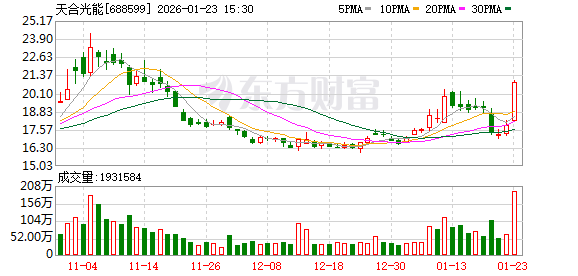
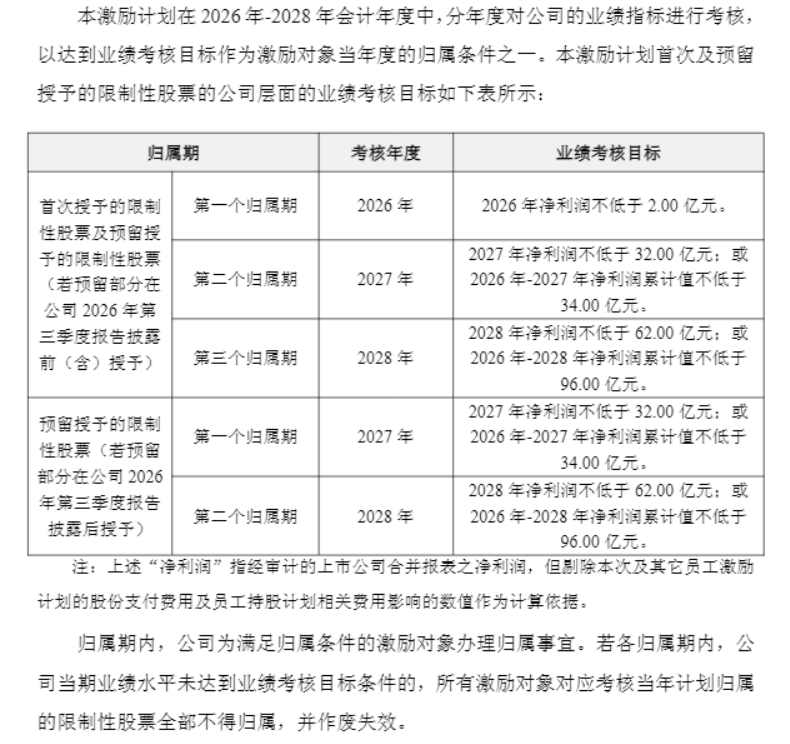
每经编辑|金冥羽 向江林 1月23日晚,天合光能(688599.SH)发布2026年限制性股票激励计划和2026年员工持股计划。 值得注意的是,两份计划中的公司层面业绩考核目标相同,均为2026年净利润不低于2亿元;2027年净利润不低于32亿元,或2026年至2027年净利润累计 值不低于34亿元;2028年净利润不低于62亿元,或2026年至2028年净利润累计值不低于96亿元。 目前光伏企业仍普遍陷于亏损中。尤其是下游电池及组件环节,面临"价格低迷、成本抬升"的"剪刀差",出现较大盈利压力。 | 归属期 | | 考核年度 | 业绩考核目标 | | --- | --- | --- | --- | | 首次授予的限制 | 第一个归属期 | 2026年 | 2026年净利润不低于 2.00 亿元。 | | 性股票及预留授 | | | | | 予的恩制性股票 | | | 2027 年净利润不低于 32.00 亿元:或 | | (若预留部分在 | 第二个归属期 | 2027 年 | 2026年-2027年净利润累计值不低于 | | 公司 2026 年第 | | | 34.00 亿元。 | | 三季度报告披露 | ...
688599预计未来三年累计盈利近百亿
Shang Hai Zheng Quan Bao· 2026-01-25 02:24
Core Viewpoint - Trina Solar has ambitious profit targets, aiming for a cumulative net profit of no less than 9.6 billion yuan over the next three years, despite forecasting a significant loss for 2025 [2][4][10]. Group 1: Performance Targets - The stock incentive plan includes performance targets of a net profit of at least 200 million yuan in 2026, 3.2 billion yuan in 2027, and 6.2 billion yuan in 2028, with a cumulative target of 9.6 billion yuan from 2026 to 2028 [4][6][8]. - The plan involves granting approximately 28.01 million restricted stocks, accounting for about 1.20% of the total share capital as of January 21, 2026, with a grant price of 10.05 yuan per share [6][7]. Group 2: Business Strategy and Market Outlook - The company plans to enhance its business structure by focusing on photovoltaic products, energy storage, system solutions, and digital energy services, aiming to transform from a photovoltaic manufacturer to a comprehensive energy solution provider [7][8]. - Trina Solar's optimism about the photovoltaic industry's recovery is based on industry self-discipline actions and the deepening of "anti-involution" measures, which aim for profitability across the entire industry chain [10][11]. Group 3: Industry Context - The photovoltaic industry is currently facing widespread losses, with many companies, including Trina Solar, forecasting significant losses for 2025 due to price declines and rising costs [11][12]. - The company is actively pursuing opportunities in the energy storage market and exploring applications in space photovoltaics, indicating a strategic shift to capture new growth areas [13][14].