自变量机器人

Search documents
年度盘点|2025年,八大头部VC买了什么?
FOFWEEKLY· 2025-12-31 10:00
导读: 创投行业全链条回暖。 作者|李蕾 来源 |每日经济新闻 寒冬退去,暖意渐浓。 2025年,中国创投行业终于走出持续两年的低谷,以"募投管退"全链条回暖的姿态向上回升,行业活力显著修复。政策红利持续释放与退出渠道优化 扩容,为市场注入信心,头部机构的情绪与动作率先回暖。 2025年,顶级市场化VC的投资节奏明显加快,出手频率和金额较上年均有显著提升, 头部机构参投主体数量同比增加16.69% ,资金向优质项目集 中的趋势愈发清晰。从人工智能、半导体到商业航天、生物医药,硬科技赛道成为资本布局的核心主线,创新资产的价值重估正在上演。 资金流向何处,未来就在何方。《每日经济新闻》将 聚焦8家头部市场化VC ,拆解它们在行业回暖周期中的布局逻辑与核心押注的重要项目,从而解 码中国创投行业新一轮发展周期的核心动能。 红杉中国:持续布局硬科技+生物医药,AI成绝对核心 首先来看市场化VC的"老大哥"红杉中国。 今年其实是红杉中国出手持续回暖的第二年。根据记者不完全统计,今年该机构的投资事件数量达到近30次,虽然和前几年的高峰时期不可同日而 语,但与去年、前年同期相比有明显增长。 而从投资金额上来看, 涉及的投资事 ...


深圳举办国内首个灵巧手大赛,格松机器人夺得冠军
Nan Fang Du Shi Bao· 2025-12-30 13:58
12月30日,2025年深圳智能机器人灵巧手大赛竞技赛颁奖仪式在深圳市南山区举行。本届大赛以"灵动 创新,巧绘未来"为主题,聚焦机器人末端执行技术的关键突破,由深圳市科技创新局指导,联合深圳 市人工智能与机器人研究院、国际先进技术应用推进中心(深圳)、深圳市人才集团有限公司共同主 办,标志着深圳在具身智能赛道上迈出坚实一步。 作为国内首个专注灵巧手技术研发与场景落地的专业赛事,本届大赛恰逢"机器人量产元年"的关键节 点,自启动以来共吸引来自深圳、香港、杭州等地高校、科研院所及重点企业的53支高水平团队踊跃参 与,掀起一场关于"最后一厘米"操作能力的技术比拼热潮。 比赛中,人流穿行、电梯共用、光照变化等复杂变量全面考验机器人的稳定性、环境适应性与泛化能 力。尤其"将折叠后的外卖箱投入上下高度仅3厘米的回收口"成为全场公认的技术难点,被选手称为"对 类人手操作极限的挑战"。 自变量机器人在抗干扰能力、长期运行稳定性及跨场景迁移方面表现远超预期,评审团一致决定授予 其"评审团特别荣誉",以嘉奖其在通用具身智能方向上的前瞻性探索。 深圳市科技创新局党组书记、局长张林为冠军颁授奖牌。 格松机器人凭借其成熟的高自由度灵巧 ...

年度盘点:2025年创投业全链条回暖,八大头部VC买了什么?
Mei Ri Jing Ji Xin Wen· 2025-12-26 02:53
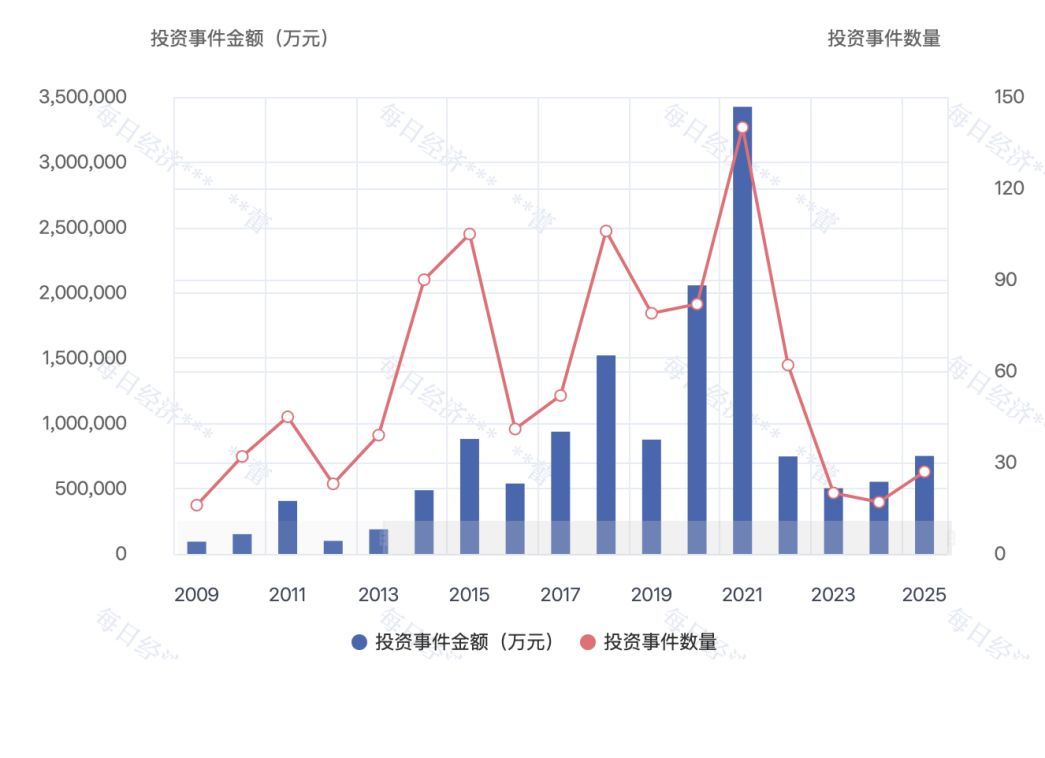
寒冬退去,暖意渐浓。 2025年,中国创投行业终于走出持续两年的低谷,以"募投管退"全链条回暖的姿态向上回升。数据是最直观的印证:来自投中嘉川的数据显示,1~11月 VC/PE市场新成立基金数量同比增加16.73%,投资案例数量同比上涨30.33%,投资规模同比增幅达31.54%,行业活力显著修复。政策红利持续释放与退出 渠道优化扩容,为市场注入信心,头部机构的情绪与动作率先回暖。 红杉中国:持续布局硬科技+生物医药,AI成绝对核心 再来看看具体的投资案例。根据投中嘉川和公开信息的数据,我们整理了红杉中国出手总金额排名靠前的部分代表案例,从中可以一窥这家机构今年的重点 投资方向与布局思路。 首先来看市场化VC的"老大哥"红杉中国。 今年其实是红杉中国出手持续回暖的第二年。根据记者不完全统计,今年该机构的投资事件数量达到近30次,虽然和前几年的高峰时期不可同日而语,但与 去年、前年同期相比有明显增长。 2025年,顶级市场化VC的投资节奏明显加快,出手频率和金额较上年均有显著提升,头部机构参投主体数量同比增加16.69%,资金向优质项目集中的趋势 愈发清晰。从人工智能、半导体到商业航天、生物医药,硬科技赛道成为 ...
年初只会丢手绢 年末暴打创始人 具身智能企业今年融资370亿元
Shen Zhen Shang Bao· 2025-12-25 23:24
Core Insights - The industry of embodied intelligence is transitioning from the "proof of concept" phase to a new stage characterized by large-scale investments, concentration of leading companies, and expectations for industrialization [2][8] Investment Trends - In 2025, at least 165 embodied intelligence companies completed 303 financing rounds, accumulating nearly 37 billion yuan, a nearly 260% increase compared to the entire year of 2024 [2] - The number of companies receiving investment in 2025 reached 168, with a financing scale of 32.9 billion yuan, a year-on-year increase of 291% [3] - The total investment in the embodied intelligence sector from 2022 to 2025 amounted to 512 cases, with disclosed financing exceeding 48 billion yuan [4] Company Performance - Notable companies like ZhiYuan Robotics and Galaxy General have achieved significant financing milestones, with Galaxy General raising over 300 million USD (approximately 2.1 billion yuan) in December 2025, setting new records for single and cumulative financing [6] - ZhiYuan Robotics completed 11 financing rounds by August 2025, with a valuation reaching 15 billion yuan, and plans for an IPO in Hong Kong [6] Market Dynamics - The concentration of investment is evident, with the top 10 companies accounting for about 40% of the total financing in 2025, indicating a narrowing window for mid-tier projects [8] - The industry is experiencing a surge in entrepreneurial activity, with 53 new companies established in 2025, and 31 of them securing funding shortly after their inception [3] Future Outlook - 2025 is seen as a watershed year for financing in the embodied intelligence sector, marking a systematic increase in capital scale and a shift from "technology validation" to "pre-industrialization" [8] - The financing rhythm is expected to differentiate in 2026, with leading companies likely to secure large, low-frequency but high-certainty funding, while mid-tier companies may face a more challenging environment [8]
耐心资本观察 | 出手频率“一日两投”以上!2025年资本上演“机器人总动员”
Xin Hua Cai Jing· 2025-12-22 09:44
新华财经上海12月22日电(记者郭慕清)临近岁末,2025年春晚舞台上,16台身着花袄的机器人扭起秧 歌的画面仍令人记忆犹新。或许很多人都不会想到,这一幕会成为当下中国机器人产业爆发式发展的生 动预演。 企业超百万家,资本投资密度空前, "一日两投"成常态 数据显示,我国机器人相关企业每年注册量已连续十年增加。 从企业增量来看,截至10月底,2025年我国已注册21.6万家机器人相关企业,超过2024年全年,创下历 史新高。 从企业存量来看,截至10月底,我国机器人相关企业存量已达100.8万家,覆盖从研发、制造到销售服 务的全产业链。若以中国总人口约14.1亿为基数来参照,相当于平均每约1400人就对应着一家机器人相 关企业,这一极高的"企业密度"直观反映了各方对该赛道的空前热情,以及产业生态的高度活跃和广泛 参与。 更值得关注的是,资本正加速加码涌入这一赛道——2025年前三季度,机器人产业链相关各类公司累计 获得超600起投资事件(统计口径为已公开披露的融资事件),投资节奏密集至平均"一日两投"以上。 这一数字不仅远超市场预期,也显著高于前两年的投资情况,同时还标志着机器人产业成为年度最受资 本瞩目的赛 ...
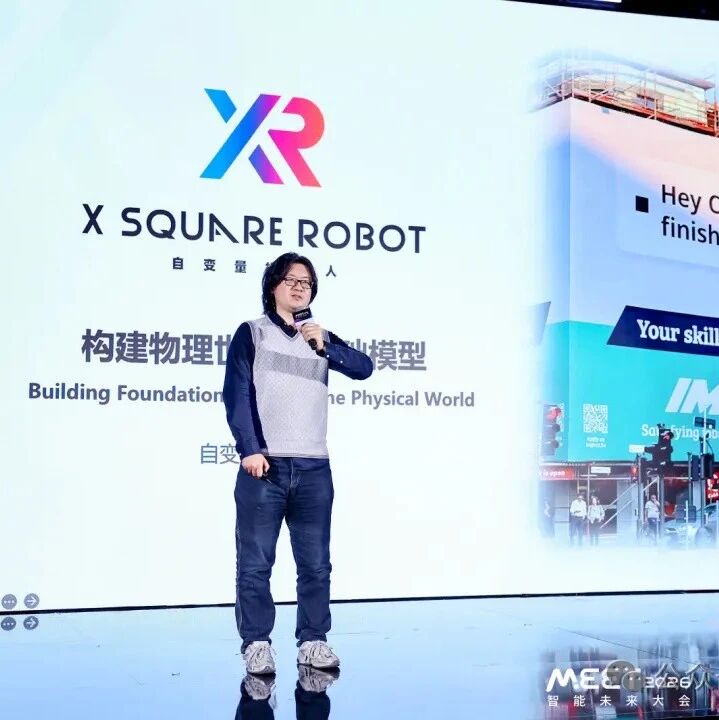
自变量王潜:具身智能是物理世界的独立基础模型|MEET2026
具身智能之心· 2025-12-22 01:22
Core Viewpoint - The article discusses the debate on whether embodied intelligence should be viewed as an application or as an independent foundational model, asserting that it is a foundational model specifically designed for the physical world, parallel to language and multimodal models [6][12][60]. Group 1: Differences Between Physical and Virtual Worlds - There is a fundamental difference between the physical world, characterized by randomness and continuous processes, and the virtual world, which is highly reproducible and low in randomness [2][10]. - Existing models based on language and visual modalities are inadequate for accurately representing the complexities and randomness of physical interactions [16][22]. Group 2: Need for a Separate Foundational Model - A separate foundational model for embodied intelligence is necessary due to the unique characteristics of the physical world, which often leads to unpredictable outcomes even under identical conditions [10][11]. - The current architectures and training methods struggle to capture the high randomness present in physical events, necessitating a new approach to model design [12][20]. Group 3: Future of Multimodal Models - Shifting the perspective to view embodied intelligence as an independent foundational model can lead to significant changes in model architecture and data utilization [9][23]. - The learning and perception processes in the physical world differ fundamentally from those in the virtual world, suggesting that future multimodal models should incorporate these differences [24][29]. Group 4: Scaling Laws and Data Utilization - The article emphasizes the importance of scaling laws in the development of large models, particularly in the context of robotics, where data acquisition and utilization are critical [46][51]. - A phased approach to training, utilizing both pre-training and post-training data, is recommended to enhance model performance [48][52]. Group 5: Hardware and AI Integration - The integration of AI in defining hardware is crucial for the development of embodied intelligence, advocating for a simultaneous evolution of both software and hardware [53][54]. - The potential for embodied intelligence to drive exponential growth in resources and capabilities is highlighted, suggesting a transformative impact on the future of artificial general intelligence (AGI) [59][60].
自变量王潜:具身智能是物理世界的独立基础模型|MEET2026
量子位· 2025-12-21 05:45
Core Viewpoint - The embodiment intelligence model is considered an independent foundational model parallel to language and multimodal models, specifically designed for the physical world [6][12][61] Group 1: Differences Between Physical and Virtual Worlds - The fundamental differences between the physical and virtual worlds are recognized, with the physical world characterized by continuity, randomness, and processes related to force, contact, and timing [2][10] - Existing models based on language and visual paradigms are structurally misaligned with the complexities of the physical world [3][21] Group 2: Need for a Separate Foundational Model - A separate foundational model is necessary due to the significant randomness in the physical world, which existing models struggle to accurately represent [10][17] - The current reliance on multimodal models for embodiment intelligence is seen as inadequate, necessitating a complete rethinking of model architecture and training methods [9][21] Group 3: Future of Multimodal Models - Shifting perspectives on embodiment intelligence will lead to new insights in model architecture and data utilization [24][30] - The learning processes in the physical world differ fundamentally from those in the virtual world, suggesting that future multimodal models must adapt to these differences [25][28] Group 4: Scaling Laws and Data Utilization - The concept of Scaling Law is crucial in the development of large models, particularly in robotics, where data sourcing remains a significant challenge [47][49] - A phased approach to training and data collection is recommended, emphasizing the importance of real-world data for effective learning [52][53] Group 5: Hardware and AI Integration - A new learning paradigm necessitates the redesign of hardware in the physical world, advocating for AI to define hardware rather than the other way around [54][55] - The potential for embodiment intelligence to drive exponential growth in resources and capabilities is highlighted, drawing parallels to historical industrial advancements [60][61]
具身智能的2025:前10家公司,拿下40%的融资丨投中嘉川
投中网· 2025-12-19 04:36
以下文章来源于超越 J Curve ,作者杨博宇 超越 J Curve . 用数据延伸你的阅读 将投中网设为"星标⭐",第一时间收获最新推送 其中,广东以71家公司位居全国第一,成为当前最活跃的产业高地。 再看投融资,286家企业中,在今年获得投资的有168家,被投企业数量同比大增87%,融资规模共计329亿,同比大涨291%。 而且今年创业活跃度不减。这286家企业中,新成立的有 53 家,成立后获得投资的有31家。其中,高校系创业者成为重要力量,清华、北大、浙大等科 研体系持续向产业端"输血",加速技术向产品转化。 与此同时,资金集中化趋势愈发明显—— 前10家公司拿走了全年融资额的约四成。行业格局或将在2026年加速分层。 01 广东公司数量冠绝全国 新锐公司不断涌现 在今年获得投资的有168家,被投企业数量同比大增87%,融资规模共计329亿,同比大涨291%。 作者丨杨博宇 来源丨超越J Curve 如果说过去几年,人形机器人还是停留在实验室里的技术理想。那么今年,它已经加速走向真实世界。 谁还记得,年初Unitree H1只会在春晚舞台上丢手绢;但到了年末,众擎T800 已经能"暴打"创始人了。也 ...

2025年Q4融资过亿元的具身公司盘点
机器人圈· 2025-12-17 09:19
Core Insights - The article discusses the financing situation of embodied robots in 2025, focusing on companies involved in the development of embodied robots, components, and algorithms, with a particular emphasis on funding amounts exceeding 100 million yuan [1]. Company Summaries - **AI² Robotics**: Secured hundreds of millions in funding, focusing on AGI-native general intelligent robots, with applications in semiconductor, automotive, electronics, biotechnology, and public services [3]. - **Self-Variable Robotics**: Raised 1 billion, specializing in AI and robotics technology innovation, building general intelligent agents based on large robot models [4]. - **Xingyuan Intelligent Robotics**: Received 300 million, developing a general embodied brain technology, aiming for multimodal spatial intelligence [5]. - **Differential Intelligence**: Funded 100 million, creating a leading global aerial robot intelligent brain and cluster system for industrial and urban applications [6]. - **Dyna Robotics**: Raised 120 million, focusing on AI-driven robots for various tasks, emphasizing cost-effective learning in real production scenarios [7]. - **Motorevo**: Secured 100 million, specializing in robot joints and power units, including desktop robotic arms and quadruped robots [9]. - **Lexiang Technology**: Funded 200 million, dedicated to developing general small embodied robots for family use [10]. - **Qianjue Robotics**: Raised 100 million, focusing on high-dimensional multimodal tactile perception technology for robots [11]. - **Leju Robotics**: Secured 1.5 billion, involved in humanoid robot development, with a dual strategy for commercializing small humanoid robots [12]. - **Lingxin Qiaoshou**: Received hundreds of millions, focusing on a platform for embodied intelligence with a series of dexterous hands [13]. - **Songyan Power**: Funded 300 million, specializing in humanoid robot development and manufacturing [14]. - **Wubai Intelligent**: Raised 500 million, focusing on bionic intelligence and robotics, with a focus on general humanoid robots [15]. - **Shengshi Weisheng**: Secured 100 million, developing intelligent robots for manufacturing automation [16][17]. - **Zhongke Optoelectronics**: Funded 215 million, focusing on high-end intelligent robot products for military and manufacturing sectors [18]. - **Deep Intelligent**: Raised 200 million, specializing in general embodied intelligent robots [20]. - **Wujie Power**: Secured 300 million, focusing on building a "general brain" for robots [21]. - **Yuanli Lingji**: Funded hundreds of millions, specializing in embodied intelligence solutions for industrial and logistics automation [22]. - **Accelerated Evolution**: Raised 100 million, focusing on humanoid robot development [23]. - **Stardust Intelligent**: Secured hundreds of millions, developing commercial humanoid robots with strong operational performance [25]. - **Light Wheel Intelligent**: Focused on high-quality simulation and physical AI technology for robots [26]. - **New Era Intelligent**: Raised 100 million, specializing in commercial cleaning robots [27]. - **Star Motion Era**: Funded over 1 billion, focusing on general artificial intelligence and humanoid robot technology [28]. - **Aoyi Technology**: Secured 160 million, specializing in non-invasive brain-machine interfaces and rehabilitation robots [29]. - **Daimeng Robotics**: Raised 100 million, focusing on tactile perception technology and wearable remote operation systems [30]. - **Luming Robotics**: Funded hundreds of millions, focusing on family-oriented intelligent robots [32]. - **UniX AI**: Secured 300 million, specializing in AI and humanoid robotics [33]. - **Ling Sheng Technology**: Raised 100 million, focusing on multi-modal perception and decision-making systems for robots [34]. - **Cloud Deep Technology**: Funded 500 million, specializing in quadruped robot development [35].

三个人,聊了很多AI真相
投资界· 2025-12-15 07:34
Core Insights - The article discusses the transition of AI from model capability competition to execution capability in the physical world, highlighting the challenges and opportunities in this domain [2][3]. Company Summaries - Zhi Bian Liang is focused on developing embodied intelligence foundational models and general-purpose robots, emphasizing the need for a physical model that operates in the real world, distinct from virtual models [4]. - Yuan Rong Qi Xing has been involved in autonomous driving, witnessing the industry's evolution from high-precision mapping to end-to-end models, and has successfully deployed 200,000 vehicles with their driving assistance systems, with a projection of reaching one million vehicles next year [5]. Challenges in AI Implementation - The transition from simulation to real-world application presents significant challenges, including the need for extensive pre-training based on real-world data, which is not easily replicated in simulated environments [6][7]. - The physical world introduces complexities that are not present in simulations, such as the need for precise manipulation and the impact of minor errors on outcomes [9][10]. Importance of Data and Training - The collection of vast amounts of real-world data is crucial for effective pre-training, and the integration of language models can enhance learning efficiency [7][18]. - The current data generation from 200,000 vehicles is substantial, necessitating careful selection and quality control to optimize model performance [18]. Future of Commercialization - The commercialization of embodied intelligence is expected to gain momentum by 2026, with predictions of significant advancements in practical applications and return on investment [21][22]. - The industry is currently in a phase similar to early autonomous driving, with many companies still in the demo stage, but there is optimism about achieving scalable commercial applications soon [19][20]. Role of Language Models - Language models are seen as essential for providing supervisory information during training, aiding in the rapid learning of complex tasks [12][13]. - However, there is debate about the necessity of language in physical AI, with some arguing that while it enhances understanding, it may not be critical for all applications [15][26]. Technical Considerations - The development of physical AI models requires overcoming significant engineering challenges, including the need for real-time feedback and the limitations of current computational resources [25][26]. - The scaling laws in AI suggest that with sufficient data and resources, it is feasible to train models that can operate effectively in the physical world within a reasonable timeframe [24][26].