Databricks

Search documents
甲骨文单季度暴跌30%,分析师:“如果不调整与OpenAI的协议,甲骨文可能无法履约”
Hua Er Jie Jian Wen· 2025-12-27 02:00
数据库软件巨头甲骨文正经历二十多年来最严重的季度下跌。 第四季度甲骨文股价已重挫30%,若未来四个交易日无重大反转,或将创下自2001年互联网泡沫破裂以来的最大季度跌幅,彼时股价下跌近 34%。 今年9月,OpenAI承诺向甲骨文支付超过3000亿美元,这笔交易曾被视为对甲骨文云业务的重大背书。但本月早些时候,甲骨文公布的季度收入 和自由现金流均低于预期,加剧了市场担忧。 华尔街见闻提及,甲骨文2026财年第二财季业绩不及预期,资本开支比预期多约150亿美元。此外,甲骨文还计划签订2480亿美元的租赁协议以提 升云计算能力。 激进扩张引发了信用风险担忧。D.A. Davidson分析师12月12日在客户报告中写道: 考虑到甲骨文目前勉强维持投资级评级,如果不调整与OpenAI的协议,我们担心甲骨文可能无法履行这些义务。 OpenAI协议带来的狂热与回落 新任首席执行官Clay Magouyrk和Mike Sicilia三个月前刚刚接任,上任时正值市场对甲骨文空前乐观。 就在他们从Safra Catz手中接过权杖前约两周,甲骨文公布了359%的收入储备增长,主要来自OpenAI的承诺。 这种扩张速度远超行业常规 ...


Oracle shares on pace for worst quarter since 2001 as new CEOs face concerns about AI buildout
CNBC· 2025-12-26 12:00
Core Viewpoint - Oracle's new CEOs, Clay Magouyrk and Mike Sicilia, are facing significant challenges as the company's stock has dropped 30% this quarter, marking its steepest decline since 2001 and the dot-com bust [1][2]. Financial Performance - Oracle reported weaker-than-expected quarterly revenue and free cash flow, prompting the new finance leader to announce a $50 billion capital expenditure plan for fiscal 2026, which is 43% higher than previously planned and double the amount from the previous year [3]. - The company is also planning $248 billion in leases to enhance cloud capacity alongside building new data centers [3]. Debt and Investment Concerns - To support its growth plans, Oracle raised $18 billion in a significant bond sale, one of the largest in the tech industry, raising concerns about its ability to maintain an investment-grade debt rating [4]. - Analysts express skepticism about Oracle's capacity to meet its financial obligations without restructuring its contract with OpenAI, which has committed over $300 billion to Oracle [5]. Market Position and Growth Strategy - Oracle's revenue backlog surged by 359% due to its agreement with OpenAI, which initially boosted its stock by nearly 36% [8]. - The company aims to increase revenue to $225 billion by fiscal 2030, primarily driven by AI infrastructure, although this growth may come at the expense of profitability, with gross margins expected to decline from 77% in fiscal 2021 to about 49% by 2030 [15][16]. Investor Sentiment - Some investors remain cautious about Oracle's long-term plans, particularly its heavy reliance on OpenAI, which is facing its own financial challenges [17]. - Analysts have mixed views, with some issuing buy ratings based on potential revenue growth from OpenAI, while others highlight the need for Oracle to improve its market share in cloud infrastructure, where it lags behind competitors like Amazon and Microsoft [18][19].

2026趋势报告:数据与人工智能
DataArt· 2025-12-26 09:18
Investment Rating - The report emphasizes that the highest return on investment in 2026 will come from modern data infrastructure rather than the latest AI models [11][14]. Core Insights - The gap between AI ambitions and actual operations is widening across industries, with organizations needing to focus on foundational work to achieve transformative wins [6][5]. - Companies are shifting from broad experimentation to specific, high-value use cases, moving AI from proof-of-concept to enterprise-level deployment [19][15]. - Successful organizations are prioritizing data lifecycle management, modernization, and human capabilities to shape their AI-driven transformation strategies [48][59]. Summary by Sections Overview - The report highlights a significant disconnect between organizational expectations of AI and the foundational work required for successful implementation [6][5]. - Many companies are still relying on outdated systems and manual processes, which hinders their ability to leverage AI effectively [6][9]. 2026 AI Trends - AI success in 2026 will be driven by data infrastructure rather than new models, with a focus on creating accessible and real-time data management systems [11][12]. - Organizations are expected to transition from broad AI experiments to targeted applications that deliver measurable business value [15][17]. Industry-Specific Trends - The report outlines predictions for various sectors, including: - Airlines will require rapid experimentation due to competitive pressures [65]. - Retail will see AI operating behind the scenes, influencing pricing and supply chain decisions [66]. - Healthcare will experience regulatory advancements that promote AI-driven innovations [69]. Preparing for 2026 - Companies need to invest in data management and governance to support AI initiatives effectively [48][51]. - A cultural shift is necessary for organizations to embrace AI as a core component of their business strategy rather than a standalone project [30][60]. Conclusion - The foundation laid in data infrastructure and governance will determine the success of AI initiatives in 2026, with companies that prioritize these areas likely to thrive [87][89].
2026全球IPO展望:资本流向、市场选择与估值范式
Sou Hu Cai Jing· 2025-12-25 10:19
Group 1 - The global IPO market is showing signs of recovery in 2026, with an increase in listing projects across multiple exchanges, particularly in AI, hard technology, energy, and advanced manufacturing [1][2] - The types of companies successfully advancing to IPOs are concentrated in a few industries characterized by high capital density, long investment cycles, and strong policy connections, while many light-asset and narrative-driven companies remain outside the listing doors [2][4] - The pricing logic for IPOs is shifting from a focus on growth potential to an emphasis on strategic necessity, cash flow verifiability, and long-term capital sustainability due to high interest rates and geopolitical factors [3][12] Group 2 - IPOs are transitioning from a "market reward mechanism" to a strategic asset selection and pricing mechanism, with significant premiums for companies in AI infrastructure, aerospace, and defense in the U.S. market, reflecting early pricing for "future critical infrastructure" [4][23] - In China, IPOs are increasingly associated with industrial upgrades and technological self-sufficiency, indicating a shift in the role of IPOs from mere market sentiment to fulfilling institutional functions [4][24] - The 2026 IPO landscape is characterized by a highly differentiated and selective return, where capital is not becoming more lenient but rather more concentrated and cautious [4][17] Group 3 - The evolution of IPO functions indicates a systemic shift, where the core function of IPOs is changing from being a primary channel for financing and investment exit to a mechanism for public pricing and confirmation of strategic assets [6][7] - The emergence of "strategic IPOs" is defined by companies that occupy critical nodes in the industrial chain, have capital-intensive operations, and are closely tied to national long-term development goals [13][15] - The current IPO logic excludes "story-driven IPOs," raising the threshold for entry into the public market, as companies relying on user scale or single application scenarios struggle to gain market recognition [15][41] Group 4 - The 2026 IPO market is not a uniform recovery but rather a simultaneous pricing of three distinct capital narratives across different markets: the U.S. focuses on "future infrastructure," China on "industrial upgrades and security," and emerging markets on "population dividends and digital penetration" [26][31] - The U.S. market is prioritizing companies that do not depend on short-term demand fluctuations but are embedded in national or global systems, with a focus on long-term cash flow predictability [22][23] - In contrast, the Chinese market emphasizes the strategic position of companies within the industrial chain, where IPOs serve as a mechanism for capitalizing on industrial capabilities rather than merely reflecting market sentiment [24][54] Group 5 - The 2026 IPO landscape indicates a preference for infrastructure and system node-type companies, with capital prioritizing "position" and "irreplaceability" over growth speed [48][49] - The IPO process is becoming a tool for risk transfer and asset confirmation, where companies with unclear business models are increasingly left in the private market [48][72] - The changes in the IPO market are expected to enhance the "signal-to-noise ratio" in capital markets, indicating that the cost of failure in IPOs is rising, and listing no longer guarantees a "safe zone" [72][73]

展望2026:AI从狂热走向现实的N个关键预判
Jin Shi Shu Ju· 2025-12-25 06:52
Core Insights - The article discusses the evolving landscape of AI technology and its implications for various sectors, predicting significant changes by 2026 [2] Group 1: AI and Robotics - Major tech conferences are expected to showcase AI-driven robots capable of performing household tasks with improved accuracy and less training [3] - Google has demonstrated robots that can classify waste based on voice commands, indicating advancements in AI integration into robotics [3] - The next frontier for large language models is expected to be the physical world, enhancing robots' capabilities [3] Group 2: Market Adjustments - After a period of rapid growth, leading AI companies may need to recalibrate their strategies, potentially leading to layoffs and restructuring [4] - OpenAI's workforce has grown fivefold to approximately 4,500 employees, but there are concerns about whether the right people are in the right positions [4] - The IPO landscape for 2026 is anticipated to be robust, with companies like Discord and Stripe expected to go public [5] Group 3: Employee Monitoring and AI - Companies are increasingly using monitoring software to train AI agents for automating tasks, raising concerns about employee privacy and job security [6] - The emergence of AI tools that can automate complex tasks may lead to heightened fears of job loss among employees [6] Group 4: Privacy and Legal Concerns - AI software that records meetings without participants' knowledge is gaining traction, raising ethical and legal questions about privacy [7] - The potential for significant data breaches or privacy lawsuits related to AI usage is expected to increase by 2026 [7] Group 5: Autonomous Vehicles - The expansion of autonomous taxi services is projected for 2026, with Waymo planning to increase its weekly rides to over 1 million [9] - Despite concerns about accidents, data suggests that autonomous taxis are rarely the direct cause of incidents, indicating a safer operational environment compared to human drivers [9]

CEO of a $134 billion software giant blasts companies with billions in funding but zero revenue: ‘That’s clearly a bubble, right… it’s, like, insane’
Yahoo Finance· 2025-12-24 14:05
Group 1: Market Valuation Concerns - The CEO of Databricks, Ali Ghodsi, warns about the inflated valuations of AI startups lacking fundamental business metrics, describing it as a bubble [1] - Ghodsi notes that even investors recognize the unsustainable nature of the current market, with venture capitalists expressing fatigue over the hype cycle [1] - He predicts that the situation will worsen over the next 12 months before any correction occurs, suggesting that current market fluctuations are a healthy signal for CEOs to reassess their strategies [1] Group 2: IPO Strategy - Databricks is hesitant to pursue an initial public offering (IPO) due to the current market volatility, which provides a strategic advantage by remaining private [2] - Ghodsi contrasts Databricks' approach with competitors who rushed to go public during the 2021 boom and subsequently faced significant corrections [2] Group 3: Long-term Investment Focus - While peers in the industry shifted to cost-cutting measures in 2022, Databricks continued to hire thousands, positioning itself for long-term growth in AI utility [3] - Remaining private allows Databricks to focus on long-term investments rather than being influenced by short-term stock market fluctuations [3] Group 4: Adoption Challenges in Enterprise AI - Ghodsi argues that the slow adoption of enterprise AI is primarily due to corporate inertia rather than technological limitations [4] - Key bottlenecks identified include security concerns and data governance issues faced by large organizations [4]
Snowflake In Talks To Buy Observe Amid AI Acquisition Spree
Investors· 2025-12-24 12:37
Company Developments - Snowflake is in talks to acquire startup Observe for approximately $1 billion, which would enhance its position in the artificial intelligence market [5] - Snowflake's stock has increased by 46% in 2025, despite experiencing a significant pullback since early November [5] - The acquisition of Observe would place Snowflake in competition with companies like Datadog, Dynatrace, and Cisco Systems [5] Market Trends - Rival Databricks has raised new funds, achieving a valuation of $134 billion, which positively impacted Snowflake's stock performance [6] - Snowflake's stock faced challenges due to an underwhelming outlook, despite receiving a composite rating upgrade [8] - The stock market is showing signs of recovery, with Snowflake, Acuity Brands, and TSMC being focal points for investors [10]

谷歌母公司47.5亿收购 Intersect 买电:AI 时代最贵的资源不是算力,是能源确定性
Xin Lang Cai Jing· 2025-12-24 09:40
(来源:Benchmark Studio) 当外界仍在讨论大模型参数规模和推理能力时,AI 竞赛的真正战场,正在悄然下沉到一个更底层的问题 ——电从哪里来。 本周,Alphabet 宣布以 47.5 亿美元(现金 + 债务)收购数据中心能源公司 Intersect Power。这不是一次常 规并购,而是一次极具信号意义的战略下注:AI 的下一阶段增长,已经不再取决于模型,而取决于能源与 基础设施的掌控能力。 为什么是Intersect? AI巨头正在集体"抢电" Alphabet 并非个例。 所有头部玩家,都在同时推进一个共识:未来 AI 公司的核心资产之一,是稳定、可扩展、可控的能源供 给。Alphabet 的资本开支数字已经给出答案——其 2025 年资本支出预期已上调至 910–930 亿美元,其中 很大一部分,正流向数据中心与能源相关项目。 从云计算公司,到电力协调者 这笔收购,也暴露了一个更深层的变化:科技巨头正在从算力提供者,转型为基础设施协调者。过去,云 厂商的角色是"买服务器、卖算力";现在,他们需要同时解决:电从哪里来、什么时候来、够不够稳定、 成本能否长期可控等等问题。 Intersect ...

下一个“AI卖铲人”:算力调度是推理盈利关键,向量数据库成刚需
Hua Er Jie Jian Wen· 2025-12-24 04:17
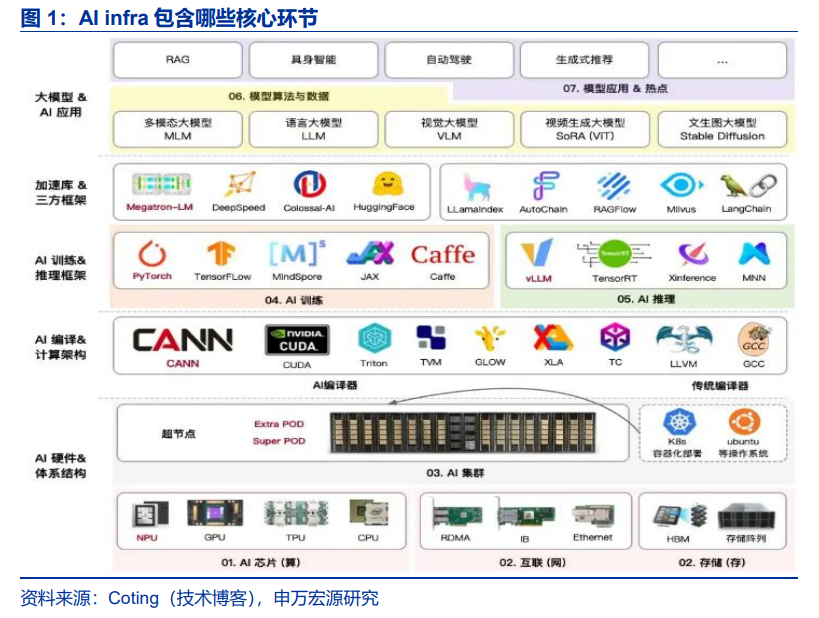
Core Insights - The report highlights the emergence of AI infrastructure software (AI Infra) as a critical enabler for the deployment of generative AI applications, marking a golden development period for infrastructure software [1] - Unlike the model training phase dominated by tech giants, the inference and application deployment stages present new commercial opportunities for independent software vendors [1] - Key products in this space include computing scheduling software and data-related software, with computing scheduling capabilities directly impacting the profitability of model inference services [1][2] Computing Scheduling - AI Infra is designed to efficiently manage and optimize AI workloads, focusing on large-scale training and inference tasks [2] - Cost control is crucial in the context of a price war among domestic models, with Deepseek V3 pricing significantly lower than overseas counterparts [5] - Major companies like Huawei and Alibaba have developed advanced computing scheduling platforms that enhance resource utilization and reduce GPU requirements significantly [5][6] - For instance, Huawei's Flex:ai improves utilization by 30%, while Alibaba's Aegaeon reduces GPU usage by 82% through token-level dynamic scheduling [5][6] Profitability Analysis - The report indicates that optimizing computing scheduling can serve as a hidden lever for improving gross margins, with a potential increase from 52% to 80% in gross margin by enhancing single-card throughput [6] - The sensitivity analysis shows that a 10% improvement in throughput can lead to a gross margin increase of 2-7 percentage points [6] Vector Databases - The rise of RAG (Retrieval-Augmented Generation) technology has made vector databases a necessity for enterprises, with Gartner predicting a 68% adoption rate by 2025 [10] - Vector databases are essential for supporting high-speed retrieval of massive datasets, which is critical for RAG applications [10] - The demand for vector databases is expected to surge, driven by a tenfold increase in token consumption from API integrations with large models [11] Database Landscape - The data architecture is shifting from "analysis-first" to "real-time operations + analysis collaboration," emphasizing the need for low-latency processing [12][15] - MongoDB is positioned well in the market due to its low entry barriers and adaptability to unstructured data, with significant revenue growth projected [16] - Snowflake and Databricks are expanding their offerings to include full-stack tools, with both companies reporting substantial revenue growth and customer retention rates [17] Storage Architecture - The transition to real-time AI inference is reshaping storage architecture, with a focus on reducing IO latency [18] - NVIDIA's SCADA solution demonstrates significant improvements in IO scheduling efficiency, highlighting the importance of storage performance in AI applications [18][19]


摩根大通资管、贝莱德加码 40 亿美元 L轮,Databricks 估值冲到 1340 亿
深思SenseAI· 2025-12-24 01:03
Core Insights - Databricks has completed over $4 billion in financing, with a post-money valuation of $134 billion, indicating strong investor confidence and growth potential [1] - The company reported an annualized revenue of over $4.8 billion for Q3, reflecting a year-on-year growth of over 55% [1][6] - Databricks aims to unify data processing and analysis workflows for enterprises, addressing challenges posed by data volume and complexity [2][4] Group 1: Company Overview - Databricks serves approximately 17,909 customers and holds an estimated market share of 16.49%, ranking first in the enterprise data platform sector [2] - Major competitors include Azure Databricks (15.82% market share), Talend (9.41%), and Apache Hadoop (9.34%) [2][3] Group 2: Market Trends and Challenges - The increasing volume of unstructured data and the need for AI integration in products are driving the demand for unified data platforms [4][5] - Companies face challenges with data governance and quality, leading to inefficiencies and hidden costs due to repeated data handling and misalignment [8] Group 3: Databricks' Strategic Positioning - Databricks focuses on consolidating data storage, reporting, and AI/ML processes within a single platform to reduce complexity and costs [5] - The company employs a pay-as-you-go model, allowing for better cost control and flexibility in scaling operations [5] Group 4: Competitive Landscape - Databricks competes with cloud data warehouses like Snowflake, Amazon Redshift, and Google BigQuery, each with distinct strengths [10][11][12][13] - Snowflake excels in data warehousing with a focus on SQL analysis, while Databricks is more suited for complex data processing and machine learning [11] - Amazon Redshift is integrated within the AWS ecosystem, making it ideal for organizations deeply embedded in AWS, contrasting with Databricks' broader data engineering capabilities [12]