Momenta

Search documents
被资本“疯抢”的芯片公司
是说芯语· 2026-01-08 23:51
Core Viewpoint - The article discusses the rising prominence of the autonomous driving chip industry, particularly focusing on the company New Chip Navigation, which is gaining traction among investors due to its competitive positioning against Nvidia's Orin-X chip [6][7]. Group 1: Company Overview - New Chip Navigation has seen its valuation nearly double in the second half of 2025 compared to the beginning of the year, indicating strong investor interest [7]. - The company's first chip is strategically positioned to compete with Nvidia's Orin-X, boasting a processing power of 272 TOPS, which is higher than Orin-X's 254 TOPS [7]. Group 2: Market Positioning - The current mainstream processing powers for urban autonomous driving are around 200 TOPS and 500 TOPS, with Orin-X and Thor being the preferred choices for automakers [8]. - New Chip Navigation aims to provide a lower-cost alternative to Orin-X, making it easier for automakers to adopt its technology [9]. Group 3: Cost and Efficiency - The cost of New Chip Navigation's hardware is comparable to mid-range high-speed NOA systems, making it suitable for vehicles priced in the tens of thousands [9]. - The chip's lower power consumption and heat generation compared to Orin-X make it more suitable for traditional gasoline vehicles, avoiding additional cooling costs [9]. Group 4: Strategic Insights - The article highlights the strategic foresight of the company's leadership, particularly in identifying market opportunities and making timely decisions [10]. - Momenta, the parent company, has successfully navigated the market by focusing on high-end projects and adapting to the evolving needs of automakers [11].

《2025城市NOA产研报告》:Momenta市占率超60%
Jing Ji Wang· 2026-01-06 08:39
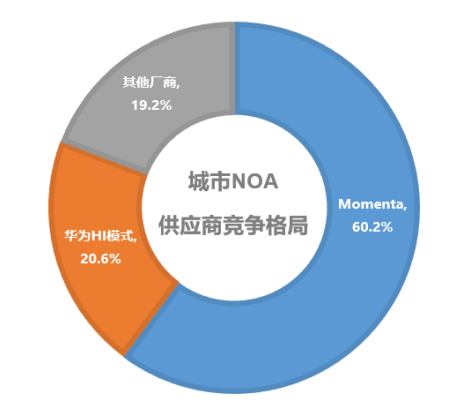
Core Insights - The domestic urban NOA market has officially transitioned from "production accumulation" to "scale explosion" as of January 2026, marking a critical phase in its development [1] - The market concentration among third-party intelligent driving suppliers is increasing, characterized by a "high concentration competitive pattern" dominated by a few suppliers [1] Market Data - From January to October 2025, the total installation of urban NOA hardware in domestic passenger vehicles reached 2.392 million units, representing a year-on-year growth of 62.8% compared to the same period in 2024 [1] - The penetration rate of third-party intelligent driving solutions surged from 5.3% to 24.2% between 2023 and October 2025, indicating rapid market evolution [1][3] Competitive Landscape - Momenta holds approximately 60.2% market share, maintaining its position as the market leader for three consecutive years, while Huawei's HI model follows with about 20.6% [1][3] - Together, Momenta and Huawei account for over 80% of the market share, solidifying a "dual-strong" competitive landscape [3] Strategic Trends - Automakers are increasingly opting for strategic partnerships with third-party suppliers as the mainstream approach for rapid urban NOA mass production, reflecting a trend of resource integration [1] - The focus of competition is shifting from "whether functions are implemented" to "experience as king," emphasizing the importance of user experience in the development of third-party urban NOA solutions [3][4] Future Directions - The year 2025 is identified as a pivotal point for urban NOA, transitioning from "usable" to "user-friendly," with a core goal of creating safer and more reassuring high-level intelligent driving experiences [4] - The competitive focus is moving from the number of cities opened to the depth of experience, with the ability to create a seamless experience that surpasses human decision-making becoming a key differentiator for success in the intelligent driving sector [4]
城市NOA第三方智驾供应商Momenta市占率超60% 中国智驾全球竞争力跃升
Jing Ji Guan Cha Bao· 2026-01-05 23:57
Core Insights - The popularization of intelligent driving in China is entering a critical phase in 2025, transitioning from "production accumulation" to a "scale explosion" cycle [1] - The penetration rate of urban NOA (Navigation on Autopilot) hardware in domestic passenger cars has reached 2.392 million units in the first ten months of 2025, marking a year-on-year increase of 62.8% [1] - Third-party intelligent driving suppliers like Momenta and Huawei are gaining market leadership and global recognition, enhancing the competitiveness of China's intelligent driving supply chain [1] Market Share Analysis - From January to October 2025, Momenta and Huawei's HI model together captured over 80% of the urban NOA third-party intelligent driving supplier market, with Momenta holding a market share of 60.2% and Huawei at 20.6% [3] - Leading suppliers have achieved rapid technological iteration and efficient replication across models and brands due to early production layouts and scalable engineering capabilities [3] Trends in Adoption - The acceleration of urban NOA penetration in 2025 is driven by three factors: technological maturity, increased supply, and awakened demand [5] - Domestic brands like BYD, Geely, and Chery are key drivers of this penetration, implementing a "main model standard configuration" strategy to bring advanced driving features to lower-priced vehicles [5] - Global brands such as Toyota, Nissan, and Mercedes-Benz are collaborating with top Chinese intelligent driving suppliers to enhance their smart transformation, indicating the global recognition of China's intelligent driving solutions [5] Competitive Focus - The competition in urban NOA has shifted from "whether features are available" to "experience is king," with a focus on providing a safe and reassuring high-level driving experience [5] - Momenta is leveraging "reinforcement learning + end-to-end architecture" combined with production data to enhance the driving experience, with its R6 model being the first to achieve mass production based on reinforcement learning [5][6] Strategic Positioning - 2025 is a pivotal year for urban NOA in China, marking the transition from "usable" to "user-friendly" and from niche markets to widespread adoption [6] - Leading suppliers like Momenta and Huawei are not only enhancing domestic market experiences but also actively participating in the global restructuring of the intelligent driving supply chain, providing a "Chinese solution" for the global automotive industry's smart transformation [6]
烧钱、互搏与淘汰赛:地平线和Momenta走到决赛圈了吗?
Tai Mei Ti A P P· 2026-01-05 10:19
Core Insights - The smart driving industry is at a pivotal point, shifting focus from high-end models to mainstream adoption, with affordability and usability becoming key competitive factors [1][2] - Companies like Horizon and Momenta are leading the charge in making advanced driving assistance systems (ADAS) accessible to the mass market, targeting vehicles priced around 100,000 RMB [1][20] Group 1: Industry Dynamics - The transition from high-end to mass-market smart driving solutions is driven by technological advancements and cost reductions, aiming for broader market penetration [2][4] - The competitive landscape is evolving from a focus on capabilities to one centered on cost, reliability, and delivery capabilities, with supply chain stability becoming crucial for widespread adoption [4][11] Group 2: Supply Chain Evolution - The supply chain for smart driving technology is complex, involving multiple players including OEMs, Tier 1 suppliers, algorithm companies, and chip manufacturers, with a shift towards more collaborative models [5][7] - As competition intensifies, the relationship between suppliers and OEMs is changing, with suppliers becoming co-developers rather than just vendors, emphasizing the need for integrated solutions [9][17] Group 3: Competitive Landscape - Horizon and Momenta are positioned as key players in the smart driving ecosystem, with Horizon focusing on hardware-software integration and Momenta emphasizing data-driven algorithm improvements [15][16] - Both companies are targeting the same market segment, aiming to provide cost-effective solutions for urban navigation assistance (NOA) in vehicles priced around 100,000 RMB [20][21] Group 4: Financial Pressures - The financial realities of the smart driving industry are challenging, with high R&D and operational costs leading to significant losses for companies like Horizon [27][29] - The need for sustained investment in technology and infrastructure is critical, as both Horizon and Momenta face pressures to scale their operations while managing costs effectively [30][31] Group 5: Future Outlook - The industry is expected to undergo a consolidation phase, with a few key players emerging as leaders while others may struggle to survive due to increasing competition and market pressures [25][30] - The competition is shifting from technological capabilities to scale and ecosystem stability, indicating a potential future where only a few companies dominate the market [30][31]
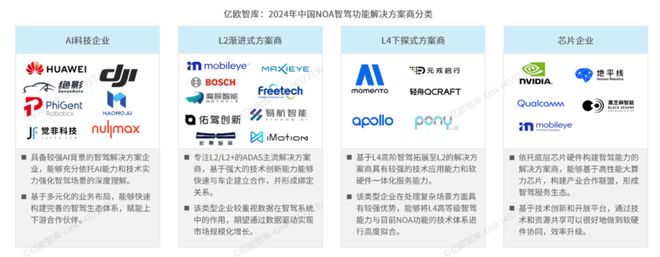
卓驭科技CEO沈劭劼:智驾行业进入“端到端”竞速期
Zhong Guo Zheng Quan Bao· 2026-01-04 20:07
"如果到现在哪一个做智能辅助驾驶的公司,还没有完成数据驱动开发范式的改造,那它被斩下去是迟 早的事情。"2025年12月31日,卓驭科技CEO沈劭劼在接受中国证券报记者专访时表示,唯有完成向"端 到端"数据驱动的转型,且能将技术与传统制造业落地衔接,才能抵御行业淘汰赛的冲击。 作为从大疆体系拆分独立仅一年多的智驾玩家,卓驭科技已凭借端到端技术突破,覆盖9大乘用车客户 15个品牌、50余款量产车型,从10万元级燃油车到百万元级高端车型全面渗透,还将触角延伸至重卡 NOA与无人物流车领域。在沈劭劼看来,当前智驾行业已进入"端到端扎堆"的竞速期,头部企业的技 术差距以"月"为单位波动,2026年的竞争激烈程度将远超往年。 数据驱动至关重要 "智能辅助驾驶的核心矛盾,早已不是'要不要做端到端',而是'能不能转得彻底'。"沈劭劼的判断,源 于卓驭自身的"断臂式"转型。2024年10月,他带领团队删掉了三年积累的所有规则代码,彻底告别规则 驱动路线——彼时,行业内多数企业仍选择"规则兜底+数据优化"的渐进式转型,而卓驭因规则驱动在 城区领航开发中陷入"解决1个问题冒出10个新问题"的困境,最终下定决心"删库重练"。 "我 ...
上汽集团2025年销售450.7万辆 同比增长12.3% 自主品牌占比提升至65%
Zheng Quan Shi Bao Wang· 2026-01-04 11:09
Core Viewpoint - SAIC Motor Corporation aims to deepen reforms and focus on independent brand development and smart electric technology breakthroughs, achieving a total vehicle sales of 4.507 million units in 2025, a year-on-year increase of 12.3% [1] Group 1: Sales Performance - In 2025, SAIC's total vehicle sales reached 4.507 million units, with retail sales hitting 4.67 million units, maintaining industry leadership in China [1] - Sales of SAIC's independent brands (including Roewe, MG, Zhiji, Maxus, Wuling, and Baojun) reached 2.928 million units, a year-on-year increase of 21.6%, accounting for 65% of total sales, up 5 percentage points from 2024 [1] Group 2: Innovation and Technology - SAIC is accelerating the mass production of leading smart electric technologies, including solid-state batteries, digital chassis, DMH super hybrid, and "end-to-end" intelligent driving models [1] - In 2025, SAIC's new energy vehicle sales reached 1.643 million units, a record high with a year-on-year growth of 33.1% [1] Group 3: Product Development - The MG4 semi-solid battery model has started delivery, with safety performance improved by over 20% compared to industry standards [2] - The Roewe M7 DMH, equipped with the DMH 6.0 super hybrid system, achieves a pure electric range of 160 km and a comprehensive range of 2050 km with energy consumption as low as 2L [2] - The Zhiji LS9, featuring the Star Super Range Extender, offers a class-leading comprehensive range of 1508 km, addressing key user concerns [2] Group 4: Strategic Partnerships - SAIC is enhancing collaboration with partners like Huawei, Momenta, Horizon, OPPO, and Doubao to create a new ecosystem for smart mobility [2] Group 5: International Expansion - In 2025, SAIC launched its overseas strategy 3.0, focusing on a "Glocal" approach, achieving overseas sales of 1.071 million units, a year-on-year increase of 3.1% [3] - In Europe, SAIC MG sales exceeded 300,000 units, a nearly 30% increase, while in India, sales reached 70,000 units, up 17.8% [3] - SAIC's overseas market presence includes one region with sales of 300,000 units (Europe) and five regions with sales of 50,000 units each (Americas, Middle East, Oceania, ASEAN, South Asia) [3] Group 6: Future Outlook - In 2026, SAIC plans to further deepen reforms, focusing on smart and electric vehicle development, and aims to establish a new high-quality development pattern [4]

智驾的2025:辞旧迎新的一年
自动驾驶之心· 2026-01-04 01:04
Core Viewpoint - The article discusses the evolution of the autonomous driving industry in 2025, highlighting the dual focus on technology proliferation and technical challenges, with traditional automakers pushing for accessibility and new players striving for technological advancements [4][5]. Group 1: Industry Trends - In 2025, traditional automakers like BYD, Geely, and Chery are leading the charge in making autonomous driving technology more accessible by integrating mid-level highway NOA features into vehicles priced over 100,000 yuan [4]. - New entrants and leading autonomous driving suppliers are focused on pushing the limits of technology, adhering to a model of annual technological iteration [4][5]. - The industry is witnessing a bifurcation, with one camp focused on accessibility and the other on technological challenges, particularly in the realm of algorithm development [4]. Group 2: Technological Advancements - The transition from "passive perception" to "active cognition" is marked by the introduction of world models, which represent a significant paradigm shift in autonomous driving technology [5][6]. - 2025 is characterized as a year of significant technological transition, with the widespread adoption of end-to-end systems and the emergence of world models and VLA (Vision-Language-Action) technologies [6][9]. - NIO is highlighted as a pioneer in the world model space, having launched its world model in 2024, transitioning from "perception-driven" to "cognition-driven" systems [5][6]. Group 3: Data Infrastructure and Chip Development - The importance of data infrastructure is emphasized, with companies like NIO benefiting from early investments in data collection and model training capabilities [7][8]. - The year 2025 is noted as a pivotal year for integrated hardware and software solutions, with companies like NIO and XPeng achieving self-developed chip integration [7][8]. - The article warns of the risks associated with outsourced chip development, contrasting it with NIO's genuine self-development efforts, which involve significant technical team investments [8]. Group 4: Regulatory and Market Dynamics - The issuance of L3 licenses is seen as a significant step towards the next phase of autonomous driving, indicating a shift from L2+ mass production to L3 and L4 capabilities [8][9]. - While traditional automakers have secured initial L3 licenses, their capabilities are questioned, suggesting that true advancements will come from new players and those with strong model capabilities [9][10]. - The ultimate value of autonomous driving technology is framed around enhancing driver convenience and significantly reducing traffic accidents, with a focus on safety as a primary goal [9].


Momenta和华为智驾谁能胜出?
自动驾驶之心· 2026-01-02 08:08
作者 | 历不白@知乎 编辑 | 自动驾驶之心 原文链接: https://www.zhihu.com/question/1899822735284244767/answer/1989321465271706827 点击下方 卡片 ,关注" 自动驾驶之心 "公众号 戳我-> 领取 自动驾驶近30个 方向 学习 路线 >>自动驾驶前沿信息获取 → 自动驾驶之心知识星球 本文只做学术分享,如有侵权,联系删文 中国市场太卷了, 智驾没有芯片根本没有议价权。 我们回顾历史来说明一下。历史虽然不能说明一切,但是历史却是现实的一面镜子。 在 2004 年至 2010 年间。全球视频监控市场正经历从模拟信号向数字和网络监控。 当时的行业话语权掌握在德州仪器(Texas Instruments, TI)和安霸(Ambarella)等老牌半导体巨头手中 。 TI 作为通用 DSP(数字信号处理)领域的霸主,其方案如经典的 DM365、DM368 系列芯片,本质上是通用的计算引擎。 这意味着下游的安防器材厂商不仅要购买昂贵的芯片,还需要配备庞大的软件团队,在底层的 DSP 上进行极具挑战性的视 频编解码开发和图像算法调优。 对于 ...
均胜电子20251231
2025-12-31 16:02
Summary of Junsheng Electronics Conference Call Company Overview - **Company**: Junsheng Electronics - **Industry**: Automotive Electronics and Robotics Key Points Product Development and Customer Feedback - Junsheng Electronics is modifying materials, electronic architecture, and thermal products for head assembly to enhance interactivity, with customer feedback expected after the Christmas and New Year holidays [2][4] - Updates to the body structure are being made to meet requirements for drop resistance and weatherproofing, which will enhance product value [2][4] Production Capacity - The current production capacity supports over 30,000 humanoid robots per month without additional reserves [2][6] - Plans to increase capacity will be based on assembly line automation and material scheduling to ensure smooth production [2][6] Smart Driving Sector - The company has entered a scale effect phase in advanced smart driving, with orders totaling at least 20 billion RMB announced in September and October [2][7] - Collaborations with Qualcomm and Momenta are aimed at providing integrated smart driving solutions for domestic and international brands, with significant revenue and profit expected in 2026 and 2027 [2][8] Chip Solutions and Market Expansion - Junsheng has secured chip solutions for multiple sub-brands of SAIC, with overseas models expected to begin production in 2025 [2][9] - The overseas market is primarily focused on collaboration with Qualcomm, emphasizing competitive pricing and cost efficiency [2][10] Financial Performance and Projections - The company anticipates a net profit exceeding 1.5 billion RMB in 2025, with expectations for over 10% revenue growth and over 20% net profit recovery in automotive electronics and safety sectors by 2026 [2][3][11] - The company has improved from a loss to a projected profit, with a goal of doubling overall profit margins in the next three years [2][11] Market Dynamics and Pricing Strategy - Annual price reduction pressures from automakers are manageable, with the Chinese market contributing approximately 25% to global revenue [2][12] - The company has implemented a pricing reassessment and cost transfer mechanism in overseas markets since 2022, leading to improved cost structures [2][12] Collaborations and Future Directions - Successful collaboration with Zhiyuan Robotics includes products like AI head assemblies and energy management systems [2][13] - Junsheng's subsidiary, Xiangshan, is focused on humanoid robot R&D, maintaining close cooperation and resource sharing with Junsheng [2][14] - Future product expansions with Tesla include battery management and joints, with plans for further diversification [2][15] Regulatory Impact - The L3 regulations are seen as a pivotal point for smart driving commercialization, with plans to expand cooperation with domestic automakers [2][16] Additional Insights - The company’s accounts receivable period is approximately 55 days, providing a significant advantage over competitors [2][12]

独家丨元戎启行月交付跨过4万辆,智驾竞争加速向头部集中
雷峰网· 2025-12-31 11:41
Core Viewpoint - Yuanrong Qixing aims to achieve a delivery target of 1 million units by 2026, driven by the rapid increase in monthly deliveries of its advanced driver-assistance systems (ADAS) [1][5]. Group 1: Delivery Performance - In November, Yuanrong Qixing's city NOA (Navigation on Autopilot) system exceeded 40,000 units in monthly deliveries, with previous months seeing over 10,000 and 30,000 units delivered in June and September, respectively [2]. - The total delivery volume for Yuanrong Qixing is expected to surpass 200,000 units this year, while competitor Momenta is projected to deliver approximately 350,000 to 400,000 units, with a cumulative total exceeding 600,000 units by the end of the year [2]. Group 2: Product Line and Sales - More than 10 vehicle models are currently in mass production with Yuanrong Qixing's ADAS, with three models showing particularly strong sales performance [4]. - The Weipai Lanshan, which debuted in November 2024, has sold over 50,000 units in the past year, while the Weipai Gaoshan has approached 50,000 units in sales within six months. The Geely Galaxy M9 has also seen monthly sales exceeding 10,000 units for the past two months [5]. - Additional models from Great Wall Motors, including the Tank 500 and Tank 400, are also equipped with Yuanrong Qixing's systems, contributing to the rapid increase in delivery scale [5]. Group 3: Future Outlook - The emergence of popular models has instilled confidence in Yuanrong Qixing's delivery prospects for the upcoming year, with expectations of doubling supply to Great Wall Motors as more models adopt its systems [5]. - The competitive landscape in the smart driving industry is anticipated to intensify by 2026, with a more pronounced clustering effect among leading companies [6].