
龙湖集团

Search documents
房地产行业第34周周报:本周新房成交同比降幅扩大,国务院再提房地产,释放积极信号-20250826
Bank of China Securities· 2025-08-26 05:18
Investment Rating - The report rates the real estate industry as "Outperform" [1] Core Views - The report emphasizes that the current goal of the real estate industry is to stabilize the market and prevent further declines, with a focus on urban renewal as a key task [5][6] - The report highlights that the sales and investment data in the real estate sector have weakened significantly since Q2 2025, indicating a need for policies to support market recovery [6] Summary by Sections 1. Key City New Housing Market, Second-hand Housing Market, and Inventory Tracking - New housing transaction area increased by 14.0% month-on-month but decreased by 11.3% year-on-year, with a notable decline in first-tier cities [18][19] - Second-hand housing transaction area increased by 7.6% month-on-month and rose by 5.1% year-on-year, indicating a positive shift [48] - New housing inventory area increased by 0.3% month-on-month but decreased by 14.7% year-on-year, with an average de-stocking period of 19.0 months [43][49] 2. Land Market Tracking - The total area of land transactions across 100 cities was 760.7 million square meters, down 51.6% month-on-month and 40.5% year-on-year, while the total land price was 199.4 billion, down 20.4% month-on-month and 7.4% year-on-year [62][68] - The average floor price of land was 2,621.8 yuan per square meter, up 64.5% month-on-month and 55.7% year-on-year [64][68] 3. Policy Overview - The report outlines various local government policies aimed at stabilizing the housing market, including measures to support housing loans and improve public fund efficiency [93][94] 4. Investment Recommendations - The report suggests focusing on four main lines of investment: companies with stable fundamentals in core cities, smaller firms with significant breakthroughs, companies with strategic changes, and real estate brokerage firms benefiting from the recovery in the second-hand housing market [6]
上海新政跟进,强化对行业进入中长期修复通道的信心
Orient Securities· 2025-08-26 05:14
Investment Rating - The report maintains a "Positive" outlook for the real estate industry [6] Core Insights - The recent policy adjustments in Beijing and Shanghai align with expectations and are moderate in intensity, which will aid in regional inventory digestion. This series of "city-specific policies" strengthens confidence in the industry's long-term recovery path [1][4] - The recovery of real estate stocks does not solely depend on the timing of policy implementations; rather, the decline in risk-free interest rates and the reduction in industry risk assessments are the primary drivers of this recovery. The market has entered a new bottoming phase, where the impact of the denominator (risk-free rates) outweighs that of the numerator (real estate prices) [2] - The new policies in Shanghai, including the relaxation of purchase restrictions and adjustments to mortgage rates, are expected to stimulate demand in suburban areas, which will help reduce inventory [3] Summary by Sections Policy Developments - On August 25, Shanghai announced new housing policies, including easing purchase restrictions outside the outer ring and enhancing public housing fund support. The adjustments are expected to significantly impact the new housing market, particularly in suburban areas [3] - The report notes that the new policies are similar to those in Beijing, focusing on optimizing public housing fund policies and adjusting commercial loan rates to lower housing costs [3] Market Trends - Since Q2 of this year, the new housing market has shown signs of weakening in both volume and price, increasing the pressure for stabilization. The recent policies from Beijing and Shanghai have reinforced confidence in the industry's long-term recovery, with further policy space anticipated [4] Investment Recommendations - The report suggests focusing on specific stocks: China Merchants Shekou (001979, Buy), Poly Developments (600048, Buy), Beike-W (02423, Buy), Longfor Group (00960, Buy), and Gemdale Corporation (600383, Hold) [5]





一线城市开闸“放房票”
第一财经· 2025-08-26 05:03
Core Viewpoint - The article discusses the recent relaxation of housing market regulations in major cities like Beijing and Shanghai, aimed at stimulating demand and stabilizing the real estate market as the traditional peak season approaches [3][4][5]. Group 1: Policy Changes - On August 25, Shanghai introduced new housing policies similar to those in Beijing, focusing on loosening restrictions in suburban areas while maintaining strict controls in core districts [3][7]. - Beijing's new policy allows families with Beijing residency and non-residents who have paid social security or income tax for over two years to purchase homes without a limit on the number of units outside the Fifth Ring Road [5][6]. - The new policies are designed to target high inventory areas, with over 80% of new home sales in Beijing occurring outside the Fifth Ring Road [6][8]. Group 2: Market Conditions - The real estate market has shown signs of stabilization, with over 370 policies related to real estate introduced nationwide in the first seven months of the year [8]. - However, the market recovery has slowed in the second half of the year, with a 12% year-on-year decline in real estate development investment totaling 53,580 billion [9]. - New home sales in the first seven months of the year reached 4.96 trillion, down 6.5% year-on-year, indicating a significant drop from the peak of 18 trillion in 2021 [9]. Group 3: Regional Differences - There is a noticeable divergence in the real estate market within major cities, with some areas experiencing price declines while others remain stable [10]. - In Beijing, the average price of second-hand homes has seen fluctuations, with a slight decline after a brief recovery following policy adjustments [10]. - In Shanghai, while the core areas are in demand, the outer regions face significant inventory pressure, with 76.6% of new residential inventory located outside the outer ring [10]. Group 4: Market Response - Following the new policies, there has been an increase in market activity, with a 41% week-on-week rise in new home transactions in Beijing [13]. - The first weekend after the policy announcement saw a surge in property viewings and sales, indicating a positive market sentiment [14]. - Other cities like Tianjin, Xi'an, and Suzhou have also begun implementing their own policies to stabilize the housing market, focusing on optimizing housing funds and promoting property exchanges [15].


一线城市开闸“放房票”,新一轮政策为“金九银十”护航
Di Yi Cai Jing· 2025-08-26 04:30
Core Viewpoint - Since August, multiple regions have introduced new rounds of real estate optimization policies to stimulate the housing market, particularly in major cities like Beijing and Shanghai, aiming to lower purchasing barriers and boost housing demand [2][6][12]. Group 1: Policy Changes - On August 25, Shanghai followed Beijing's lead by implementing new policies that include adjustments to purchase limits, public housing funds, credit, and tax regulations, with a focus on easing restrictions in suburban areas while maintaining stricter controls in core urban zones [2][5]. - Beijing's recent policy changes represent the most significant relaxation of housing regulations in recent years, allowing families with certain qualifications to purchase homes without limits in areas beyond the Fifth Ring Road [3][4]. - The new policies in both cities are designed to address high inventory levels in suburban areas, with experts noting that the measures aim to activate demand for multiple property purchases and alleviate market inventory [5][6]. Group 2: Market Impact - The introduction of these policies is expected to stabilize the housing market, particularly as the traditional peak season for real estate, "Golden September and Silver October," approaches [12]. - Data indicates that after the implementation of similar policies in the past, such as the "930 policy" in Beijing, there was a notable increase in transaction volumes, suggesting that the current measures may also enhance market activity [10][11]. - Recent statistics show a rise in new housing transactions in Beijing following the policy changes, with a 41% increase in new residential sales and an 11% increase in second-hand home transactions during a specific period [10][11]. Group 3: Broader Context - Throughout 2023, over 370 real estate-related policies have been introduced nationwide, reflecting a concerted effort to stabilize the market amid ongoing adjustments and challenges [7][12]. - Despite the positive signs from policy implementations, the overall real estate market remains under pressure, with significant declines in investment and construction activity reported in the first seven months of the year [8][9]. - Analysts suggest that while the current policies may provide short-term relief, a more comprehensive recovery will require improvements in the macroeconomic environment and a reduction in the high inventory of second-hand homes [13].
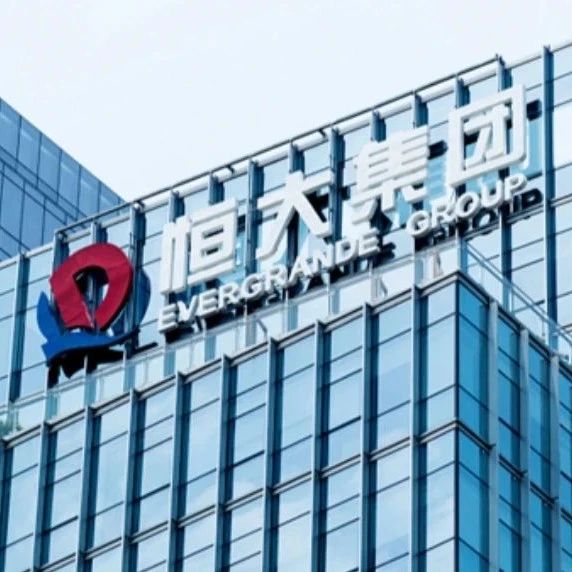
地产股久违普涨,中国恒大落寞退场
第一财经· 2025-08-26 02:41
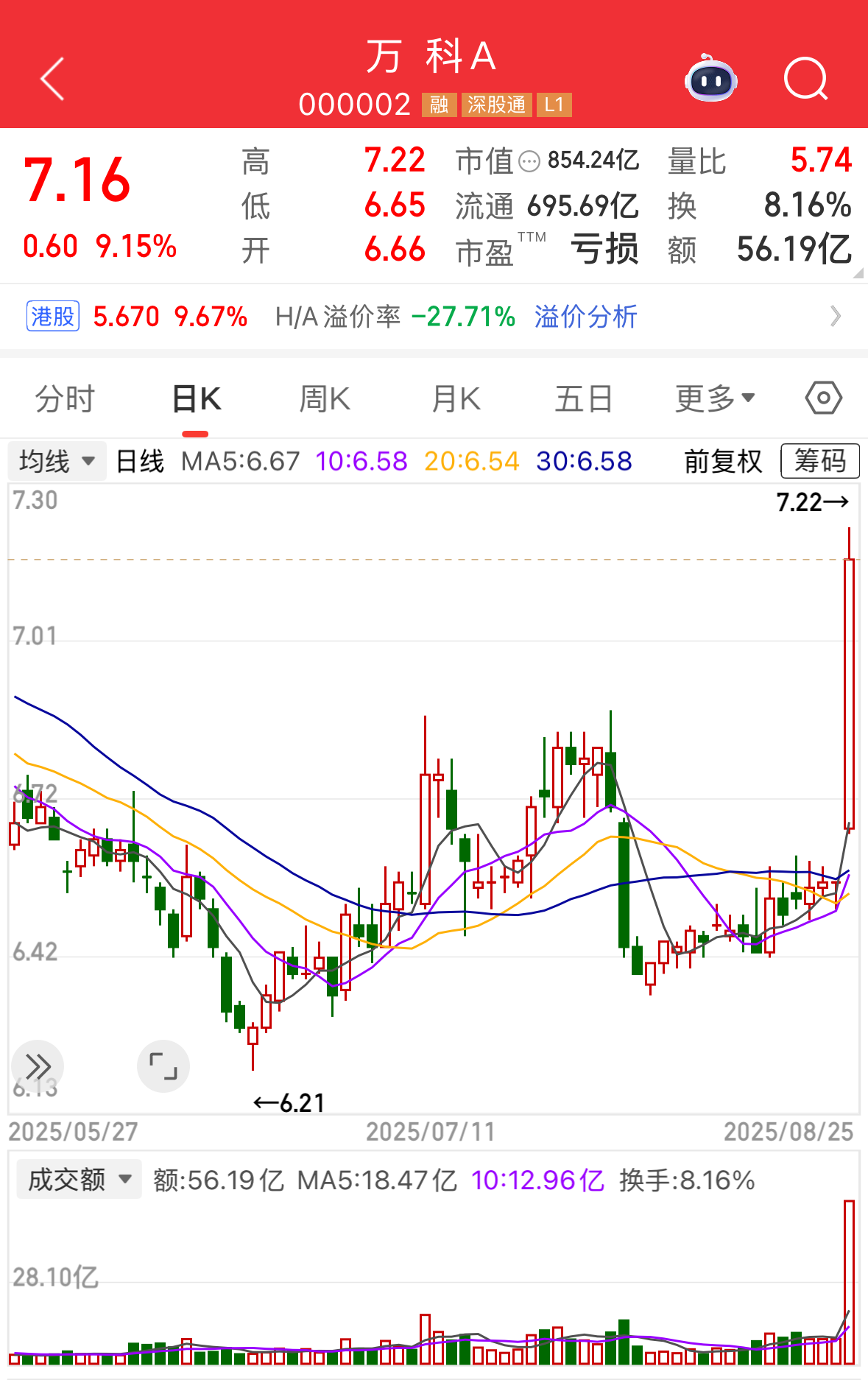
Core Viewpoint - The real estate sector is experiencing a significant rally, with major stocks seeing substantial gains due to favorable market policies, while China Evergrande, once a leading player, has been delisted following a prolonged suspension of trading [3][4]. Group 1: Real Estate Market Performance - On August 25, 2025, major real estate stocks in both A-shares and H-shares saw significant increases, with companies like Vanke A and China Vanke rising over 9% [3]. - Other notable performers included Shum Yip Group and Longfor Group, which also experienced gains exceeding 5% [3]. Group 2: China Evergrande's Delisting - China Evergrande's listing status was officially canceled on August 25, 2025, after being suspended from trading for over 18 months [4][5]. - The company had been a major player in the market, achieving a market capitalization of over 70 billion HKD at its peak [5]. - The delisting was a result of the company failing to resume trading by the deadline set by the Hong Kong Stock Exchange [5][6]. Group 3: Financial Troubles and Liquidation - Evergrande reported staggering losses exceeding 800 billion CNY for the years 2021 and 2022, marking the highest recorded losses for a Chinese company [8]. - The company has been under investigation for financial misconduct, including premature revenue recognition, leading to a prolonged debt restructuring process [9]. - As of July 31, 2025, the liquidators had received claims totaling approximately 350 billion HKD (about 45 billion USD) from creditors [10].
险资抄底国内商业地产!
Sou Hu Cai Jing· 2025-08-26 01:39
Core Viewpoint - The news highlights the increasing activity of insurance capital in acquiring real estate assets, particularly in the context of low property prices and the search for stable cash flow returns [3][8]. Group 1: Major Transactions - Ingka, the parent company of IKEA, plans to sell 10 shopping centers in China, with the first three located in Wuxi, Beijing, and Wuhan, involving a total of 16 billion yuan [3]. - The acquisition of these shopping centers will be led by a Pre-REITs fund backed by Taikang Life, with a total fund size of 8 billion yuan, where Taikang Life will invest 3 billion yuan [3]. - Other notable transactions include AIA Life's acquisition of a rental community in Shanghai for 980 million yuan and various insurance companies acquiring multiple Wanda Plaza properties across different cities [4][5]. Group 2: Investment Trends - Since the beginning of 2024, over ten insurance companies have invested in numerous real estate projects, with total investments expected to exceed several hundred billion yuan [3]. - Major insurance firms, including Xinhua Insurance and Sunshine Life, have been actively acquiring various commercial properties, indicating a trend of insurance capital "bottom-fishing" in the real estate market [4][5]. - The insurance sector is increasingly focusing on real estate investments as a means to support market financing needs while also seeking to benefit from potential asset appreciation as the market recovers [8].

万科A盘中罕见涨停 地产板块投资机会怎么看?
Feng Huang Wang· 2025-08-26 00:25
Group 1 - Vanke reported a revenue of 105.32 billion yuan and a net loss of 11.95 billion yuan for the first half of the year, with sales area and amount down 42.6% and 45.7% respectively [2] - The management attributed the losses to a decline in development business settlement scale and low gross margins, alongside impairment provisions for certain assets [2] - Vanke has made progress in debt resolution, repaying 24.39 billion yuan in public market debt and having no due overseas public debt before 2027 [2] Group 2 - Other real estate stocks in A-shares performed well, with multiple stocks rising over 5%, and Hong Kong real estate stocks also saw gains [3] - Shanghai introduced new housing policies aimed at optimizing real estate measures, including reducing housing purchase restrictions and improving housing credit policies [3] - Institutions are optimistic about the investment potential of leading real estate companies with solid fundamentals [3] Group 3 - The real estate industry is expected to stabilize as sales data remains low but shows signs of recovery, with core cities continuing to optimize purchasing policies [4] - Analysts suggest that the real estate sector may present mid-to-long-term investment opportunities, particularly in first and second-tier cities [4] - The market is anticipated to gradually recover, with leading companies benefiting from lower financing costs and high market share in core areas [4]

“沪六条”,引爆地产板块
Di Yi Cai Jing· 2025-08-25 15:36
Core Viewpoint - The recent policy adjustments in Shanghai, known as "沪六条," aim to optimize the real estate market by relaxing purchase restrictions and enhancing financing options, which is expected to boost market activity and stabilize prices [2][6]. Group 1: Policy Adjustments - The "沪六条" policy allows Shanghai residents and non-residents with at least one year of social insurance or income tax payments to purchase homes without limit in the outer ring, while limiting purchases to two homes in the inner ring [3][4]. - The policy increases the maximum loan amount for first-time homebuyers from 1.6 million yuan to 1.84 million yuan, with additional increases for families with multiple children [3]. - The commercial housing loan interest rate mechanism has been optimized, removing the distinction between first and second homes, which is expected to reduce the interest burden on homebuyers [4]. Group 2: Market Reactions - Following the announcement of "沪六条," real estate stocks surged, with Vanke A (万科A) and other major players seeing significant gains, indicating positive market sentiment [9]. - Analysts believe that the new policies will enhance market expectations and improve transaction activity, particularly in the context of recent declines in the Beijing housing market [9][10]. Group 3: Broader Implications - The adjustments in Shanghai are seen as a response to similar policies in Beijing, with expectations that other cities, particularly Shenzhen, may follow suit in relaxing restrictions [5][6]. - The historical context of the "限购令" indicates a gradual shift away from stringent purchase restrictions that have been in place since 2010, reflecting a broader trend towards market liberalization [7][8].

“沪六条”,引爆地产板块
第一财经· 2025-08-25 15:34
Core Viewpoint - The recent policy adjustments in Shanghai's real estate market, known as "沪六条," aim to stimulate housing demand and support the recovery of the real estate sector, reflecting a broader trend of easing restrictions in major cities like Beijing and Guangzhou [3][10]. Policy Adjustments - The "沪六条" policy allows Shanghai residents and non-residents who have paid social insurance or income tax for at least one year to purchase homes without limit in the outer ring, while single adults are treated as families for purchasing limits [5][6]. - The policy increases the maximum loan amount for housing provident funds, with first-time homebuyers now eligible for up to 184 million yuan, and families with multiple children can receive up to 216 million yuan [5][6]. Market Reactions - Following the announcement of "沪六条," real estate stocks surged, with Vanke A (万科A) and other major developers seeing significant gains, indicating positive market sentiment and expectations for improved transaction activity [13][14]. - Analysts believe that the new policies will enhance market activity and help stabilize the real estate market, particularly in the context of recent signs of weakness in Beijing's housing market [13][14]. Broader Context - The easing of restrictions in Shanghai aligns with similar moves in other major cities, such as Guangzhou, which has fully lifted purchase limits, and Beijing, which has also relaxed its policies [8][10]. - The historical context of housing purchase restrictions dates back to 2010, with ongoing adjustments reflecting changing market conditions and government strategies to support housing demand [11][12]. Company Insights - Vanke reported a revenue of 105.32 billion yuan in the first half of the year, with a net loss of 11.95 billion yuan, but has successfully managed debt repayments and secured additional financing, indicating a focus on risk management and stability [15]. - The company has no foreign public debt maturing before 2027, and its domestic debt is manageable, suggesting a favorable outlook for navigating current market challenges [15].

止跌回稳压力加大,后续政策具备较大发力空间
Orient Securities· 2025-08-25 14:46
Investment Rating - The report maintains a "Positive" outlook for the real estate industry [7] Core Viewpoints - Since Q2 of this year, real estate data has shown a continuous downward trend, yet there has been a notable hot sales performance for quality new properties in multiple regions. This contradiction is understood as a release of improvement-driven demand due to the introduction of high-efficiency residential projects, although the overall new housing market stabilization will require more time [2][4] - The recovery of the real estate industry and stock prices does not solely depend on the timing of policy implementations. The main drivers for the recovery are the decline in risk-free interest rates and the reduction in industry risk assessments. The real estate sector is currently in a bottoming phase, with the influence of the denominator (risk-free rates) surpassing that of the numerator (fundamentals), leading to a potential rebound in stock prices [3][4] Summary by Sections Market Performance - From January to July, the cumulative sales of commercial housing in China decreased by 6.5% in value and 4.0% in area year-on-year. In July alone, sales amounted to 532.5 billion, down 14.1% year-on-year, with a sales area of 57.09 million square meters, down 8.4% year-on-year [4] - The price of newly built commercial residential properties in first, second, and third-tier cities fell by 1.1%, 2.8%, and 4.2% year-on-year, respectively, with the decline narrowing compared to the previous month. Notably, Shanghai saw a price increase of 6.1% due to concentrated demand for high-end and improved housing [4] Policy Outlook - Given the weakening trend in the new housing market, there is significant room for future policy adjustments. Recent policy changes in Beijing and Shanghai include optimizing purchase restrictions and increasing support for housing funds, with expectations for Shenzhen to follow suit [5] - The year-on-year decline in new construction has been narrowing, attributed to improved cost-effectiveness of new land parcels, enhancing developers' profit outlook. From January to July, new construction area decreased by 19.4% year-on-year, but the decline has been narrowing for two consecutive months [5] Investment Recommendations - Recommended stocks to watch include China Merchants Shekou (001979, Buy), Poly Developments (600048, Buy), Beike-W (02423, Buy), Longfor Group (00960, Buy), and Gemdale Corporation (600383, Hold) [6]