
智谱

Search documents
38岁姚班天才,又有了新身份
3 6 Ke· 2026-01-26 02:22
Core Insights - The AI industry in China is witnessing a clear division among leading companies, particularly with the recent appointment of Yin Qi as chairman of the AI startup Jumpspace, while also leading Qianli Technology [1][6]. Group 1: Leadership and Strategic Moves - Yin Qi, co-founder of Megvii and now chairman of Qianli Technology, has taken on the role of chairman at Jumpspace, indicating a strategic focus on integrating AI with physical products [1][3]. - Jumpspace, founded in 2023, is recognized as a significant player in the AGI sector, attracting top talent and achieving notable success in international model evaluations [3][5]. Group 2: Company Developments and Collaborations - Qianli Technology has been actively collaborating with Geely and has launched the "Qianli Haohan" intelligent driving system, marking its entry into commercial solutions [5][6]. - The recent launch of the G-ASD brand at CES 2026 signifies Qianli's commitment to bringing its intelligent driving solutions to market [5]. Group 3: Industry Trends and Challenges - The AI model industry is facing challenges, including a lack of real-world applications and data, while terminal companies require advanced AI capabilities [7]. - The combination of Jumpspace's AI expertise and Qianli's engineering capabilities is expected to enhance the practical application of AI technologies in vehicles and robotics [7][6]. Group 4: Personal Background and Vision - Yin Qi's background in software and sensor research reflects a strong interest in the intersection of AI and the physical world, emphasizing a long-term vision for practical applications [7][8]. - Despite past commercial challenges, Yin Qi maintains a consistent judgment approach, focusing on delivering clear customer and business value [8].
AI迈入“技术+资本”驱动成长期
Ke Ji Ri Bao· 2026-01-26 00:57
Core Viewpoint - The recent wave of IPOs by domestic AI companies in China signifies a transition from a technology-driven exploration phase to a capital-driven industrialization phase, characterized by rapid revenue growth, significant R&D investment, and ongoing losses [1][2]. Group 1: Transition from Exploration to Growth Phase - The current IPO wave indicates that China's AI industry has surpassed the foundational development phase and is entering a growth phase marked by large-scale investment, industry chain collaboration, and accelerated application penetration [1][2]. - AI development inherently features high fixed costs and low marginal costs, with substantial initial investments in computing power, data management, and talent, but decreasing unit costs as scale increases [1]. Group 2: Role of Capital Markets - The IPOs suggest that capital markets are increasingly taking over the role of major internet companies in allocating computing power and R&D resources, shifting from short-term funding to long-term financing [2]. - The listed companies cover critical areas of AI development, including computing power, foundational models, and vertical applications, indicating a shift from isolated innovations to a collaborative ecosystem [2]. Group 3: Market Challenges Post-IPO - Post-IPO, AI companies face stricter public scrutiny and immediate profitability pressures, necessitating a balance between long-term R&D investments and short-term market expectations [3]. - Companies are advised to establish verifiable R&D milestones and present measurable indicators of success to align with market expectations and reduce the impact of short-term fluctuations on R&D [3]. Group 4: Commercialization Strategies - Companies should develop a layered cash flow strategy to secure funding for long-term R&D, diversifying revenue streams through subscriptions, API calls, and service deployments [4]. - The goal is to use more stable revenue sources to buffer against the uncertainties of cutting-edge R&D, ensuring that innovation does not compromise profitability [4]. Group 5: New Competitive Landscape - Continuous R&D investment and capital expenditure are essential for both model and chip layers, with many companies planning to allocate IPO proceeds towards foundational model development and platform capabilities [5]. - The financing boom is expected to accelerate innovation cycles and shift the focus from isolated breakthroughs to project-based and product-oriented developments, raising industry entry barriers [5]. Group 6: Macro Trends in AI - The global AI market is projected to reach $900 billion by 2026, with China expected to see a growth rate exceeding 30% during the same period, highlighting its position as a rapidly growing market [6]. - The effectiveness of this financing wave in fostering sustainable innovation will depend on directing capital towards long-term research and maintaining a balance between efficiency, ecosystem boundaries, and compliance [6].
中信建投:AI多模态和世界模型或重塑多个行业的业务逻辑
智通财经网· 2026-01-26 00:07
Core Insights - The report from CITIC Securities highlights the advancements in multimodal technology by leading companies like Google and Kuaishou, addressing challenges in character consistency and physical logic, marking a shift from entertainment to productivity [1][2] - AI-generated content, particularly AI comic dramas, is emerging as a new growth area, with platforms like ByteDance incentivizing high-quality content creation, potentially reshaping advertising and gaming asset production [1][7] Group 1: Company Developments - Google has established strong barriers in long-context understanding and native audio-video integration with models like Veo, Gemini, and Nanobanana [2] - Kuaishou's Keling model integrates multiple creative tasks into a unified engine, achieving a victory ratio of 247% in image reference tasks and 230% in instruction transformation tasks [3] - Alibaba's Tongyi Wanshang 2.6 model introduces commercial role-playing capabilities, ensuring character consistency across different shots and supporting high-definition video generation [4] - Zhizhu's GLM-Image model, developed in collaboration with Huawei, is the first to complete full-process training on a domestic computing platform, addressing industry challenges like Chinese character rendering [5] Group 2: Market Trends and Opportunities - Kuaishou's Keling AI has seen a significant increase in active users, surpassing 12 million, with a 350% growth in paid users, indicating a shift of multimodal AI tools from entertainment to essential productivity tools in industries like film and advertising [6] - The AI comic drama sector is rapidly expanding, with ByteDance implementing aggressive incentive policies to promote high-quality content, reflecting a potential market size growth for short dramas and comic dramas [7][8] - The evolution of multimodal technology is expected to reshape business logic across various industries, including search and marketing, entertainment, and gaming, with advancements in generative AI leading to new commercial opportunities [8]


港交所余学勤:港股IPO强劲势头将延续,多元与国际化驱动增长
Xin Lang Cai Jing· 2026-01-25 14:27
Core Insights - The Hong Kong IPO market is expected to maintain its strong momentum from 2025 into 2026, driven by market diversification, internationalization, and an active secondary market [1][13]. Group 1: IPO Market Recovery - In 2025, Hong Kong's capital market saw a full recovery with 119 companies listed, a 68% increase from 2024, and IPO fundraising exceeding 285.8 billion HKD, marking a 225% surge [3][15]. - The biotechnology sector was particularly notable, with a growth rate exceeding 60% in 2025, attracting significant international investor interest in Chinese tech companies [6][18]. Group 2: Internationalization and Market Activity - The active secondary market supported IPOs, with the average daily trading volume in 2025 increasing by over 90% compared to 2024, maintaining around 250 billion HKD [9][21]. - International companies from regions such as Thailand, Singapore, Kazakhstan, and the Middle East have begun listing in Hong Kong, with 12 companies raising approximately 400 million USD in early 2026 [10][22]. Group 3: Product Innovation and Connectivity - The Hong Kong Stock Exchange (HKEX) is focusing on product innovation to enhance market vitality, including the introduction of the Tech 100 Index and biotechnology index futures [11][23]. - Future expansions of the "connectivity" mechanism may include integrating Real Estate Investment Trusts (REITs) and promoting "Renminbi counter" inclusion in the Hong Kong Stock Connect [11][23]. Group 4: Future Outlook - The HKEX anticipates that diversification and internationalization will be key themes for the Hong Kong stock market in 2026, with growth expected across various sectors including technology, biotechnology, and international companies [12][24].


北京市发改委副主任林剑华:发展AI要以应用为牵引实现双向闭环
Bei Ke Cai Jing· 2026-01-25 13:58
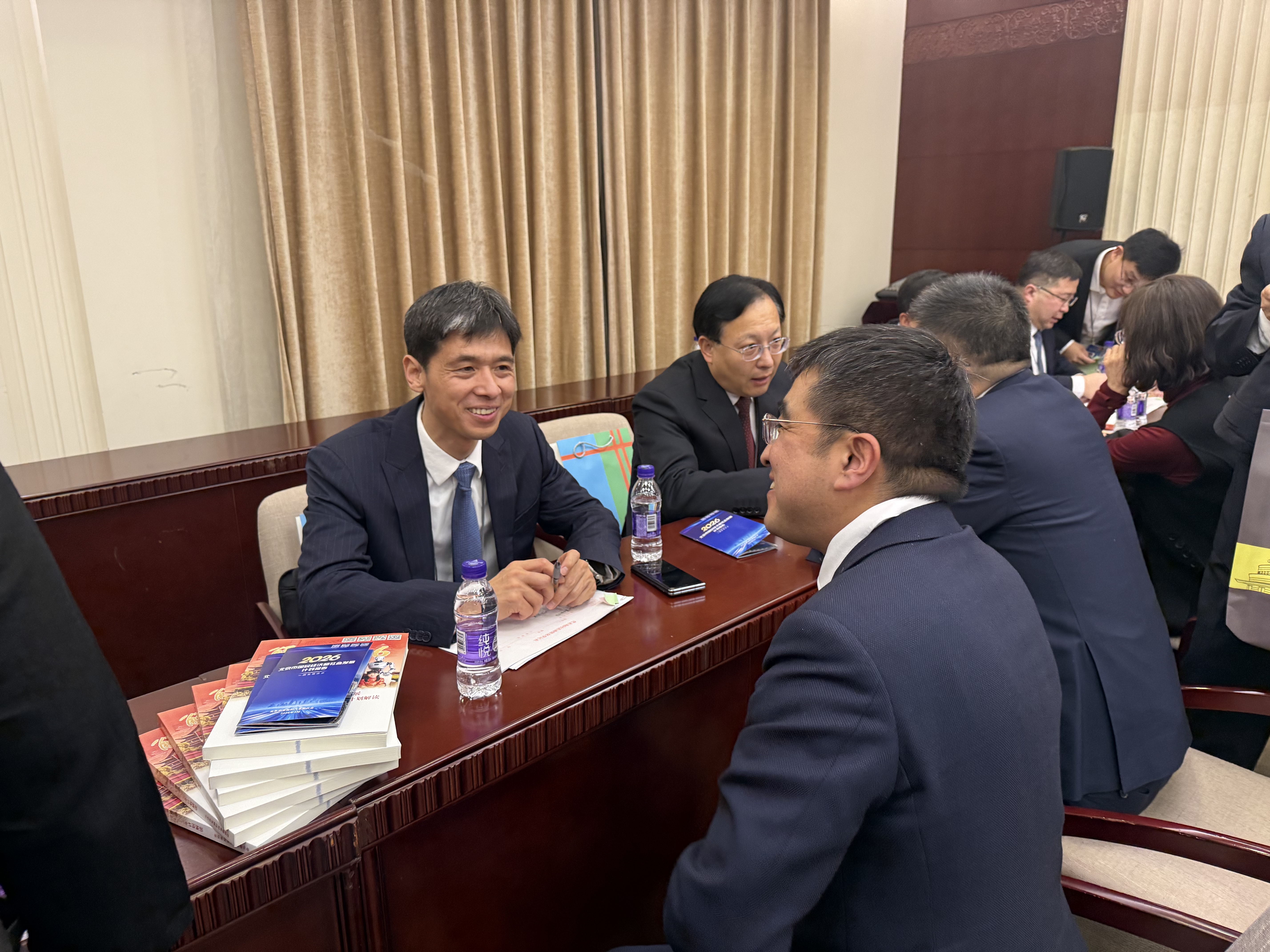
Core Insights - Beijing aims to accelerate the construction of a global benchmark city for the digital economy and fully implement the "Artificial Intelligence +" initiative [1] Group 1: AI Industry Development - Beijing possesses the most complete talent chain, industry chain, and platform foundation in the country, with a focus on enhancing computing power infrastructure, software ecosystem autonomy, and the evolution and application of large model technology [3][8] - The city has launched nine major action plans for AI development, emphasizing a comprehensive approach to solidify its competitive advantage both nationally and globally [8] - Key competitive advantages of Beijing include unparalleled talent aggregation, a full-stack technology capability, and a robust industrial foundation, with the AI core industry scale and number of enterprises accounting for about half of the national total [8] Group 2: Major Companies and Applications - Beijing is home to the largest number of leading internet platform companies in China, such as ByteDance, Baidu, Meituan, Kuaishou, JD.com, and Didi, which actively integrate AI into their core businesses, providing substantial application scenarios for AI technology [8] - Emerging companies like Zhiyuan, Kimi, and Baichuan are also contributing to the vibrant AI ecosystem in Beijing [8] Group 3: Future Directions and Technological Evolution - The next important technological evolution directions for AI include embodied intelligence and scientific intelligence, which will receive strong support from the government [9] - The development of AI is heavily application-driven, with a focus on deep integration in sectors such as healthcare, transportation, government affairs, and manufacturing [9]
马斯克:将推动特斯拉转型为估值25万亿美元的机器人公司;安克创新与飞书发布AI录音豆;黄仁勋称AI时代蓝领更吃香丨AI周报
创业邦· 2026-01-25 03:07
Core Insights - The article highlights significant developments in the AI industry, including new product launches, funding rounds, and strategic partnerships, reflecting the rapid evolution and investment in AI technologies globally. Group 1: AI Product Developments - Baidu's Wenxin App is introducing a social feature with "multi-agent group chat" capabilities, aiming to enhance user interaction without directly competing with WeChat [8] - Anker Innovation and Feishu launched the AI hardware product "Anker AI Recording Bean," which features advanced audio recording capabilities and integrates with Feishu's AI functionalities [9] - Baidu released the official version of Wenxin Model 5.0, which supports multi-modal understanding and has 2.4 trillion parameters [17] - Baichuan Intelligence launched the M3 Plus model, which significantly reduces factual hallucinations to 2.6% [19] - Alibaba Health introduced the AI product "Hydrogen Ion," aimed at clinical and research applications with a focus on low hallucination rates [27] Group 2: AI Company Funding and Valuation - OpenEvidence, a medical AI startup, completed a $250 million Series D funding round, valuing the company at $12 billion [22] - OpenAI's CFO announced that the company's annual revenue for 2025 is projected to exceed $20 billion, a significant increase from $6 billion in 2024 [38] - ElevenLabs is negotiating new funding that could raise its valuation to $11 billion [29] - The AI startup Anthropic is seeking to raise at least $25 billion, with Sequoia Capital expected to participate [28] Group 3: AI Industry Trends and Insights - Nvidia's CEO highlighted the increasing demand for skilled tradespeople, suggesting that roles like plumbers and electricians could see six-figure salaries due to the AI-driven infrastructure boom [11] - The global AI financing events decreased by 13 compared to the previous period, with a total disclosed financing amount of 9.57 billion RMB [42] - The distribution of AI funding in China is concentrated in Guangdong and Jiangsu provinces, indicating regional investment trends [47] Group 4: AI Market Competition and Strategic Moves - Google DeepMind's CEO praised ByteDance as a leading AI company in China, suggesting they are only six months behind the cutting edge [11] - Apple plans to significantly revamp Siri into an AI chatbot, aiming to enhance its competitive position in the AI market [36] - Tesla's CEO Elon Musk is pushing for a transformation into a robotics company, with the Optimus robot as a key focus, despite production challenges [8]





36氪精选:中国大模型第一股「智谱」,到底是谁?
日经中文网· 2026-01-24 00:32
Core Viewpoint - The listing of Zhipu marks a significant milestone for China's AI industry, being recognized as the first stock of a large model in the country, reflecting the culmination of three years of anticipation within the sector [2][15]. Company Background - Zhipu was founded in June 2019 by a team from Tsinghua University, focusing on natural language processing (NLP) and knowledge graphs, with initial funding of 40 million RMB [3]. - The company made a strategic decision to develop its own architecture, creating the General Language Model (GLM) instead of following the prevalent GPT and BERT paths [3][5]. Product Development - In August 2022, Zhipu open-sourced the GLM-130B model, which was recognized as the only Asian model in a major evaluation by Stanford University [5]. - Following the global success of ChatGPT, Zhipu released ChatGLM on March 14, 2023, alongside the open-sourcing of ChatGLM-6B, which became a popular tool for developers in China [6]. Market Position and Growth - By August 2023, Zhipu had entered a rapid growth phase, with model iterations occurring every three months and securing over 2.5 billion RMB in funding within the year [6][13]. - The GLM model was already operational in 12,000 enterprises globally, including nine of the top ten internet companies in China, as well as sectors like government, healthcare, and education [10]. Financial Performance - Despite rising revenues, Zhipu faces increasing R&D expenditures and significant losses, a common scenario among independent large model companies in Silicon Valley [13]. - The company’s financing before its IPO was substantial, with existing investors increasing their stakes and new strategic investors joining, indicating strong market confidence [13]. Future Outlook - The listing of Zhipu and its subsequent market performance will be closely scrutinized, as the company must navigate the challenges of maintaining growth and profitability in a competitive landscape [15][17].

三七互娱接待111家机构调研,包括淡水泉投资、安信基金、博时基金、创金合信基金等
Jin Rong Jie· 2026-01-23 11:03
2026年1月23日,三七互娱披露接待调研公告,公司于1月22日接待淡水泉投资、安信基金、博时基金、 创金合信基金、财通基金、大成基金等111家机构调研。 调研情况显示,当前游戏市场有三大核心变化和潜力机会:国内小游戏市场高速增长,公司已确立绝对 领先地位,在研多款含IP产品(如《斗破苍穹》IP)并将持续投入以保持领先;SLG赛道战略价值与天 花板突破,公司围绕"轻量化""大题材"布局,多款新产品计划今明年测试,MMO产品《RO 仙境传说: 世界之旅》首发登顶中国港澳台地区榜单并将拓展东南亚、日韩和欧美市场;休闲赛道因碎片化需求增 长,公司海外布局三年处于"种树"阶段,"三消""二合"领域储备产品有望下半年及明年推出。 公司已构建差异化题材立项、工业化管线、研发流程AI应用及人才孵化四大核心研发能力,自研储备 超10款聚焦小游戏和SLG赛道。AI应用深刻改变行业模式,内部AI渗透率超90%,广告投放AI自动比 例超70%,研发美术AI渗透率65%并降低成本,未来AI将深度融合玩法实现"千人千面"。投资重点布局 游戏研发核心资产及AI相关公司(如智谱、月之暗面等)以保障产品供给和业务协同;人才梯队正向 年轻化迈 ...

中国大模型第一股「智谱」,到底是谁?
36氪· 2026-01-23 10:19
Core Viewpoint - The listing of Zhipu marks a significant milestone in the Chinese AI industry, being recognized as the first stock of a large model company in China, with its market value exceeding 110 billion HKD shortly after its debut [5][16]. Company Background - Zhipu was founded in June 2019 by a team from Tsinghua University, focusing on natural language processing (NLP) and knowledge graphs, with initial funding of 40 million RMB [5][6]. - The company made a pivotal decision to develop its own architecture, the General Language Model (GLM), rather than following the popular GPT and BERT paths [6][8]. Technological Development - In August 2022, Zhipu open-sourced the GLM-130B model, which was a significant development just before the global popularity of ChatGPT [9]. - Following the release of ChatGPT, Zhipu launched ChatGLM and the smaller ChatGLM-6B model, which became popular among developers in China [9][10]. - By 2025, Zhipu's GLM model had advanced significantly, outperforming competitors in various benchmarks and gaining traction in the AI community [10][12]. Market Position and Adoption - Zhipu's products are integrated into over 12,000 enterprises globally, including major internet companies, government, healthcare, and education sectors, positioning it as a key AI supplier [12][14]. - The company is likened to a utility provider in the AI era, essential for businesses looking to adopt AI technologies [12]. Financial Performance and Future Outlook - Despite rising revenues, Zhipu faces increasing R&D expenditures and significant losses, a common trend among independent large model companies [14][17]. - The company has secured over 2.5 billion RMB in financing in 2023, indicating strong investor interest and support for its growth trajectory [14][16]. - The listing is seen as a rite of passage for the Chinese AI industry, but it also brings scrutiny regarding financial performance and market expectations moving forward [16][18].
外媒称智谱正在美国实现Deepseek式突破
Ge Long Hui· 2026-01-23 03:51
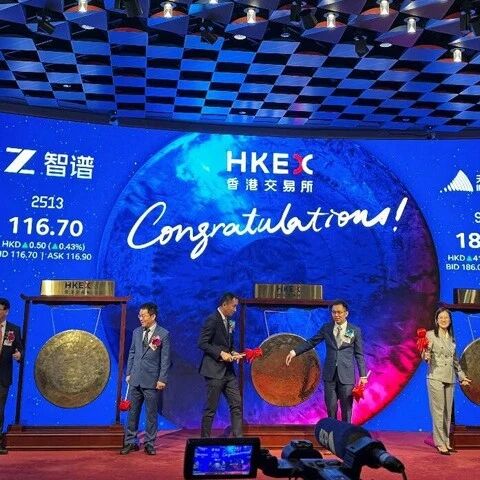
Core Viewpoint - The release of the GLM-4.7 model by the company has led to a surge in users for its programming subscription service, prompting the company to limit sales to prioritize existing users' experience [1] Group 1: User Growth and Market Impact - The company has reduced the daily sales volume of its "GLM Coding Plan" service to 20% starting January 23 to ensure a better experience for current users [1] - The core user base for this service is primarily in the United States, indicating that Chinese AI models are not only catching up in technical quality but also gaining market share from American developers [1] Group 2: Global Influence and Product Development - The company is enhancing its global influence through an open-source strategy, with its GLM-4.7 model ranking first in global programming capabilities [1] - The recent launch of the GLM-Image model, trained entirely on Huawei chips, further demonstrates the company's commitment to integrating with domestic hardware [1] - Currently, seven out of the top ten positions in the global open-source model rankings are held by Chinese companies, showcasing the rapid construction of China's influence on the international stage through open-source ecosystems [1]