华熙生物

Search documents
行业周报:闪购业务订单数创新高,即时零售行业竞争持续升级-20250713
KAIYUAN SECURITIES· 2025-07-13 15:09
Investment Rating - The industry investment rating is "Positive" (maintained) [1] Core Views - The report highlights the rapid growth of instant retail, with daily order volumes for Taobao Flash Sale and Meituan Flash Sale reaching new highs, indicating a competitive landscape among major platforms [5][25] - The report emphasizes the shift in the instant retail industry from speed competition to comprehensive strength competition, driven by significant investments from major e-commerce platforms [26] - The report suggests focusing on high-quality companies in high-growth sectors driven by emotional consumption themes [8][29] Summary by Sections Retail Market Review - The retail industry index rose by 2.20% during the week of July 7 to July 11, outperforming the Shanghai Composite Index by 1.11 percentage points [7][14] - The internet e-commerce sector showed the largest increase among retail sub-sectors, with a weekly rise of 4.37% [17][20] Retail Insights: Instant Retail Competition - Taobao Flash Sale and Meituan Flash Sale reported daily order volumes exceeding 80 million and 150 million, respectively, contributing significantly to market growth [5][25] - Major platforms are implementing substantial subsidy programs to support merchant transformations, indicating a trend towards a three-way competitive landscape [26] Focus on High-Growth Quality Companies - Investment themes include: - **Gold and Jewelry**: Focus on brands with differentiated product offerings, recommending companies like Laopuhuangjin and Chaohongji [8][29] - **Offline Retail**: Emphasizing companies that adapt to trends, with recommendations for Yonghui Supermarket and Aiyingshi [8][29] - **Cosmetics**: Highlighting domestic brands with strong differentiation, recommending brands like Maogeping and Pola [8][29] - **Medical Aesthetics**: Focusing on companies with differentiated product lines, recommending Aimeike and Kedi-B [8][29] Company-Specific Insights - **Zhou Dafu**: FY2025 revenue of 89.66 billion HKD (-17.5%), net profit of 5.916 billion HKD (-9.0%), focusing on product structure optimization [31][36] - **Laopuhuangjin**: FY2024 revenue of 8.506 billion CNY (+167.5%), net profit of 1.473 billion CNY (+253.9%), benefiting from brand expansion [31][36] - **Chaohongji**: 2025Q1 revenue of 2.252 billion CNY (+25.4%), net profit of 189 million CNY (+44.4%), driven by differentiated product offerings [31][39] - **Mao Ge Ping**: FY2024 revenue of 3.885 billion CNY (+34.6%), net profit of 881 million CNY (+33.0%), focusing on high-end cosmetics [31][39] - **Polaya**: FY2024 revenue of 10.778 billion CNY (+21.0%), net profit of 1.552 billion CNY (+30.0%), maintaining a strong position in the domestic market [31][39]
化妆品医美行业周报:再生药械再添两员,轻医美概念方兴未艾-20250713
Shenwan Hongyuan Securities· 2025-07-13 07:12
Investment Rating - The report maintains a positive outlook on the cosmetics and medical beauty industry, indicating a "Buy" recommendation for several companies within the sector [2][14]. Core Insights - The cosmetics and medical beauty sector has shown weaker performance compared to the market, with the Shenwan Beauty Care Index rising by 1.5% from July 4 to July 11, 2025, which is below the market average [3][5]. - The introduction of new products in the regenerative medicine sector, particularly in the "童颜针" (youthful needle) category, is expected to enhance consumer interest and expand the market [2][8]. - The report highlights strong anticipated earnings growth for several key companies in the cosmetics sector for the second quarter of 2025, with notable increases in revenue and net profit for brands like 上美股份 (Shangmei), 丸美股份 (Marubi), and 珀莱雅 (Proya) [9][10][11]. Summary by Sections Industry Performance - The cosmetics and medical beauty sector has underperformed the market, with specific indices showing varied performance, such as the Shenwan Cosmetics Index increasing by 2.6% [3][5]. - The report notes that the demand for cosmetics is recovering, with a 4.1% year-on-year increase in retail sales for the first five months of 2025 [19][20]. Company Performance - 上美股份 (Shangmei) is expected to see a revenue increase of 16% and a net profit increase of 25% in the first half of 2025 [10]. - 丸美股份 (Marubi) anticipates a 22% revenue growth and a 28% increase in net profit for the second quarter of 2025 [10]. - 珀莱雅 (Proya) is projected to achieve a 10% revenue growth and a 15% increase in net profit for the second quarter of 2025 [10]. - 毛戈平 (Mao Geping) expects a significant revenue increase of 38% and a net profit increase of 35% in the first half of 2025 [10]. - 若羽臣 (Ruoyuchen) forecasts a remarkable 70% revenue growth and a 75% increase in net profit for the second quarter of 2025 [10]. Market Trends - The report emphasizes the ongoing trend of domestic brands gaining market share, with national brands occupying five of the top ten positions in the skincare market [32]. - The regenerative medicine sector is expanding, with new products enhancing consumer engagement and market growth potential [2][8]. Investment Recommendations - The report recommends focusing on companies with strong brand matrices and high growth potential, such as 上美股份 (Shangmei), 珀莱雅 (Proya), and 丸美股份 (Marubi) [14]. - It suggests monitoring companies that leverage e-commerce and social media platforms effectively, such as 若羽臣 (Ruoyuchen) and 毛戈平 (Mao Geping) [14].



618销冠逐本“翻车”背后,国货美妆新锐难逃“红不过三年”魔咒?
3 6 Ke· 2025-07-12 03:03
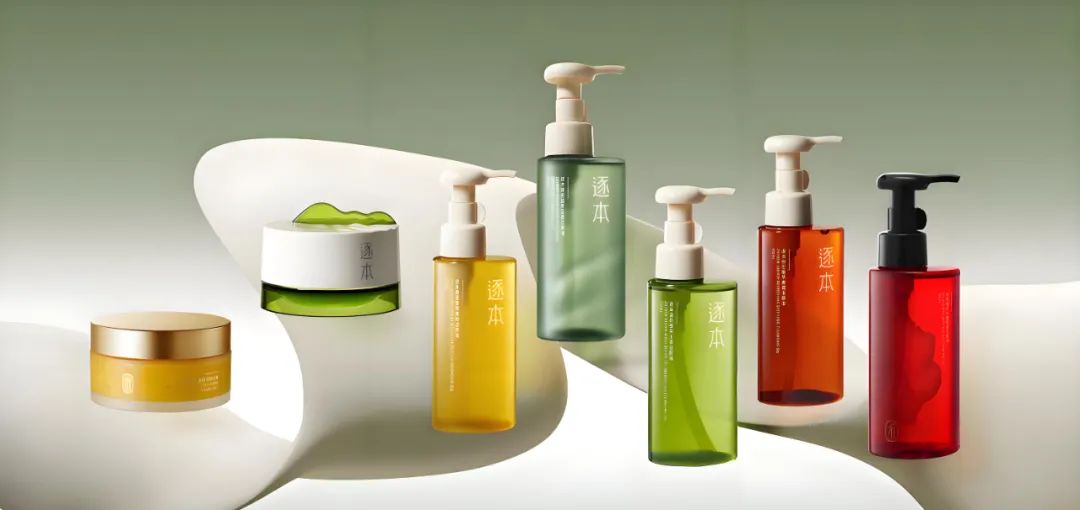
Core Viewpoint - The emerging skincare brand "Zhuben" has faced significant backlash due to discrepancies between product ingredient filings and actual contents, as well as allegations of false advertising by its founder during a live stream. The Zhejiang Provincial Drug Administration has intervened, leading to the urgent withdrawal of the involved products, while the brand denies any quality safety issues [1][3]. Industry Trends - The performance of new domestic beauty brands is declining, with only two brands, Meishi and Tiluowei, making it to the top 20 on Douyin this year, while previously popular brands like Jia Run Quan and Di Shi Ai Pu have disappeared from the rankings. In contrast, established brands such as Kose, Proya, L'Oreal, and Estée Lauder continue to dominate the market, indicating a trend where "the strong get stronger" and new brands struggle to last beyond three years [3][4]. Brand Strategies - New domestic beauty brands are increasingly focusing on creating unique aesthetic positions and establishing differentiated branding. For instance, Lin Qingxuan emphasizes the story of its rare ingredient, red camellia, combined with advanced technology to enhance brand value and justify higher pricing [4][6]. Marketing and Promotion - Many new beauty brands utilize a "template" approach to rapidly create and market products, often focusing on popular concerns like skin whitening and anti-aging. They employ low or high pricing strategies to attract consumers, and leverage celebrity endorsements to enhance brand visibility and credibility [8][10]. Challenges Faced - The beauty industry is witnessing a high rate of penalties for false advertising and ongoing disputes regarding product efficacy. Many new brands are struggling with high customer acquisition costs and declining effectiveness of traffic-driven growth strategies, leading to a "flash in the pan" phenomenon [11][12]. R&D Investments - Established beauty giants like L'Oreal and Unilever invest heavily in research and development, with L'Oreal operating 20 research centers globally and employing over 4,000 scientists. In contrast, newer brands like Lin Qingxuan show significantly lower R&D expenditures, which may hinder their long-term sustainability [14][15]. Conclusion - The current landscape of the beauty industry reflects a scenario where established brands maintain their dominance through substantial R&D investments and effective marketing strategies, while new entrants struggle to establish themselves and often face rapid declines in market presence [16].

寻找自然资源可持续的答案,新京报小记者们走进合成生物科学馆
Xin Jing Bao· 2025-07-11 17:26
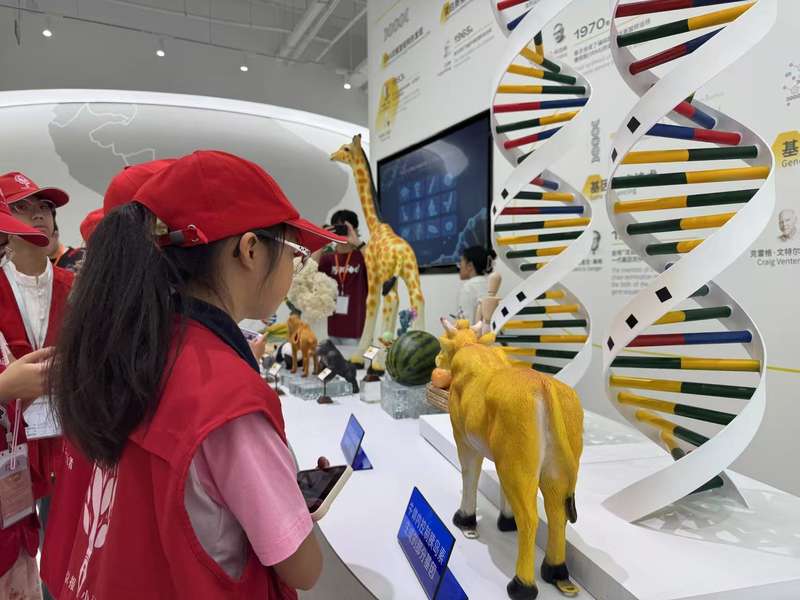
Core Insights - The article discusses the potential of synthetic biology to address various global challenges, including energy security, food safety, and mental health issues [1][3][4]. Group 1: Synthetic Biology Overview - Synthetic biology is presented as a solution to resource scarcity and environmental pollution, with a focus on sustainable utilization of natural resources [3][4]. - The evolution of biotechnology is outlined, from natural fermentation (first generation) to directed fermentation (second generation) and finally to synthetic biology (third generation), which involves designing and modifying microorganisms for specific human needs [3][4]. Group 2: Future Applications and Innovations - The concept of "cell factories" is introduced, where high-yield crops like corn and wheat serve as fermentation raw materials, and genetically modified strains are used to produce desired substances [4]. - Future advancements may allow for the synthesis of materials directly from atmospheric nitrogen and carbon dioxide, eliminating the need for traditional agricultural inputs [4]. Group 3: Ethical Considerations and Public Engagement - Ethical concerns regarding the misuse of synthetic biology, such as cloning and the revival of extinct species, are highlighted, emphasizing the need for cautious research and public consensus on boundaries [9]. - The engagement of young students in discussions about synthetic biology reflects a growing interest in the field, with imaginative ideas about potential applications, such as creating hybrid fruits or reviving extinct animals [5][7][9].

中国注射类医美行业研究报告
艾瑞咨询· 2025-07-11 09:09
Core Insights - The aesthetic medicine industry is undergoing transformation driven by technological advancements and evolving aesthetic perceptions, with a focus on non-surgical procedures and anti-aging demands [1] - Injection-based aesthetic procedures are gaining popularity due to their effectiveness, short recovery times, and high repeat purchase rates, positioning them as a new growth area in the aesthetic market [1] Group 1: Injection Aesthetic Medicine Overview - Injection aesthetic procedures are primarily categorized into hyaluronic acid, botulinum toxin, collagen, regenerative injectables, lipolytic injections, and thread lifting, with hyaluronic acid and botulinum toxin dominating the market [2] - In 2023, botulinum toxin treatments ranked first globally with 8.878 million procedures, while hyaluronic acid ranked second with 5.565 million procedures [2] Group 2: Market Trends and Investment Opportunities - The synthetic regeneration field is becoming a hot investment area, with new materials and combinations expanding market boundaries, accounting for approximately 60% of total investment in injection materials [6] - The approval of 15 injectable products by regulatory authorities by November 2024 indicates a growing market, with hyaluronic acid remaining a staple despite recent investment trends [6] Group 3: Hyaluronic Acid Market Dynamics - Hyaluronic acid maintains a strong market position, with a growth rate of 29.1% from 2022 to 2023, indicating a "second growth curve" driven by diverse applications and combination therapies [12] - The industry faces challenges such as product homogenization and safety concerns, but innovation and differentiation strategies can provide entry opportunities [14][15] Group 4: Botulinum Toxin Market Insights - The botulinum toxin market is evolving towards a coexistence of natural and recombinant products, with recombinant botulinum toxin expected to penetrate the market due to its safety and customization potential [17] - Companies must carefully evaluate the cost-benefit ratio when entering the botulinum toxin market, as competition intensifies and regulatory environments remain challenging [19] Group 5: Regenerative Materials Market Trends - Regenerative materials like PLA and PCL are gaining traction, with a focus on products that stimulate collagen regeneration, leading to a rich variety of offerings in the aesthetic market [23] - New entrants should target potential markets like hydroxyapatite, which is rapidly gaining consumer awareness and market share [27] Group 6: Collagen Market Developments - The collagen market is expanding with various types being explored for aesthetic applications, particularly types I and III, which are popular for their skin-supporting properties [31] - The market for collagen injectables is expected to grow as regulatory approvals increase, although competition will intensify [33] Group 7: Consumer Preferences and Trends - Aesthetic medicine users prioritize skin quality and overall facial harmony, with a shift towards personalized beauty solutions and a growing interest in non-surgical procedures [39][42] - Safety and effectiveness remain the top concerns for consumers, with a notable decline in the importance of cost, reflecting a more discerning consumer base [45] Group 8: Market Entry and Competitive Strategies - Companies are encouraged to focus on material innovation, service customization, and strategic international expansion to capture market share in the evolving aesthetic landscape [70] - The global expansion of Chinese aesthetic medicine products is underway, with a focus on compliance and local market strategies to overcome regulatory challenges [70]

高考结束,扎堆整容
投资界· 2025-07-11 07:32
Core Viewpoint - The article discusses the rising trend of cosmetic surgery among young people in China, particularly focusing on the motivations and societal influences driving this phenomenon, as well as the implications for the medical aesthetics industry [3][10]. Industry Overview - The Chinese medical aesthetics market is projected to reach a scale of 350 to 400 billion yuan by 2025, with Generation Z (born after 1995) contributing 62% of the consumer share, averaging an annual expenditure of 28,000 yuan, significantly higher than the "post-80s" generation [8][9]. - The demand for medical aesthetics is rapidly increasing, leading to the emergence of companies like Huaxi Biological, Aimeike, and Haohai Biological, which are referred to as the "three swordsmen of medical aesthetics" due to their high profit margins and market presence [9]. Consumer Behavior - Young consumers are increasingly seeking cosmetic procedures as a means of self-improvement, often motivated by social media influences and personal insecurities regarding their appearance [16][36]. - The trend has shifted from traditional surgical procedures to "light medical aesthetics," where non-invasive treatments are preferred, reflecting a desire for natural-looking results [24][25]. Psychological Aspects - Many young individuals view cosmetic surgery as a way to alleviate personal insecurities and enhance their self-image, often influenced by societal standards of beauty propagated through social media [36][39]. - The article highlights that the perception of beauty has become homogenized, leading to a collective anxiety about meeting these standards, which can result in a cycle of dissatisfaction and further cosmetic interventions [38][39]. Risks and Considerations - Despite the popularity of non-invasive procedures, there are significant risks involved, particularly for younger individuals who may not fully understand the medical implications of cosmetic treatments [25][26]. - The article emphasizes the importance of thorough research and awareness regarding the qualifications of practitioners and the safety of procedures, as many young consumers may underestimate the risks associated with cosmetic enhancements [26].

华熙生物以零缺陷通过美国FDA现场检查,24年研发投入逆势增长达4.66亿元
Xin Lang Zheng Quan· 2025-07-11 05:55
Core Viewpoint - Huaxi Biological has reported a seemingly contradictory financial performance for 2024, with total revenue of 5.371 billion yuan, a year-on-year decline of 11.61%, and a net profit of 174 million yuan, down 70.59%. However, the company increased its R&D investment by 4.46% to a record high of 466 million yuan, representing 8.68% of its revenue, positioning it among the leaders in A-shares [2][10]. Financial Performance - Total revenue for Huaxi Biological in 2024 was 5.371 billion yuan, a decrease of 11.61% year-on-year [2]. - Net profit fell to 174 million yuan, a significant drop of 70.59% [2]. - R&D investment reached 466 million yuan, marking a 4.46% increase and a historical high [2]. - The R&D expense ratio was 8.68%, placing the company at the forefront of the A-share market [2][10]. Business Strategy - The company aims to return to an entrepreneurial organization to awaken its innovative capabilities, as stated by Chairman Zhao Yan [2]. - Huaxi Biological's international revenue from raw materials reached 608 million yuan, a year-on-year increase of 17.65%, supported by FDA certification [5]. - The medical terminal business generated 1.44 billion yuan, a remarkable increase of 32.03%, becoming the largest revenue contributor [6]. - The functional skincare segment saw revenue decline by 31.62% to 2.569 billion yuan due to intensified market competition and channel adjustments [6]. R&D and Innovation - Huaxi Biological has established eight R&D platforms and holds 580 valid patents, with 392 applicable to its main business [7]. - The company is transitioning from a focus on hyaluronic acid to two foundational sciences: glycoscience and cell biology [9]. - The R&D team consists of 920 members, reflecting the company's commitment to long-term investment in innovation [10]. Market Position and Future Outlook - The FDA certification is expected to facilitate Huaxi Biological's expansion into high-end markets in Europe and the United States [4]. - The company is diversifying its business across four major fields: raw materials, medical devices, functional foods, and tissue engineering, creating a "cell-level anti-aging" ecosystem [9]. - Despite short-term profit pressures, Huaxi Biological announced a cash dividend of 52.62 million yuan, accounting for 30.19% of its net profit [9].

天价“童颜针”引争议:医美只为有钱人服务,还是“青春面前人人平等”?
阿尔法工场研究院· 2025-07-11 03:30
Core Viewpoint - The upstream brand manufacturers capture most of the industry's profits but fail to assume the "chain master" responsibility, leading to safety risks that ultimately burden consumers [1][39]. Group 1: Industry Issues - The medical beauty industry is facing severe issues, with the police announcing strong measures to combat serious crimes in the sector [4]. - Recent investigations have exposed the chaotic practices behind "medical beauty crash courses," raising widespread concern [5]. - "Black medical beauty" institutions are rapidly training unqualified individuals as "professional beauty practitioners" and providing illegal channels for purchasing medical beauty products [6][7]. Group 2: Profit Distribution and Pricing Power - The industry is characterized by "excessive profits," primarily captured by upstream brand manufacturers [8]. - A public dispute between SoYoung (NASDAQ: SY) and Saint Bo Ma highlights the pricing power dynamics in the medical beauty industry [10]. - SoYoung's pricing for a product was significantly lower than the official price set by Saint Bo Ma, leading to accusations of product legitimacy and safety concerns [12][14]. Group 3: Financial Performance and Market Dynamics - SoYoung's revenue is projected to decline from 1.151 billion yuan in 2023 to 929 million yuan in 2024, with a net loss of nearly 590 million yuan [31]. - The average customer acquisition cost for medical beauty institutions has risen significantly, with some reporting costs as high as 3,000 to 5,000 yuan per person [33]. - The profit distribution in the medical beauty industry resembles a "reverse pyramid," with upstream manufacturers holding most of the profits while downstream institutions struggle [35]. Group 4: Regulatory and Ethical Concerns - Upstream manufacturers have neglected their supervisory responsibilities, leading to industry chaos and unsustainable development [40]. - Many manufacturers only provide basic operational training without ensuring compliance and safety standards, contributing to a lack of oversight [41]. - The prevalence of "off-label use" in medical beauty procedures raises ethical concerns, with a significant portion of disputes arising from such practices [53][56]. Group 5: Future Outlook - The recent release of guidelines by the Medical Insurance Bureau aims to improve the pricing structure in the medical beauty sector, promoting transparency and clarity [60][61]. - The industry is expected to shift towards a model that emphasizes technology at the upstream level and service quality at the downstream level [62].

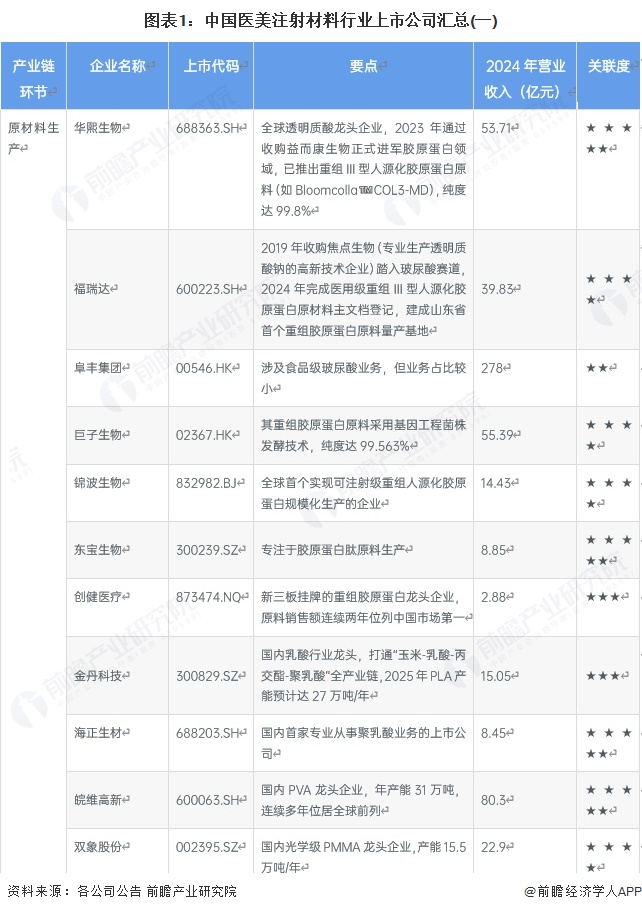
【最全】2025年医美注射材料行业上市公司全方位对比(附业务布局汇总、业绩对比、业务规划等)
Qian Zhan Wang· 2025-07-11 02:56
Industry Overview - The medical beauty injection materials industry in China has a limited number of publicly listed companies, primarily including Huaxi Biological, Haohai Biological, Aimeike, and Juzhi Biological, with most companies involved in the supply of upstream raw materials [1][7]. Company Summaries - Huaxi Biological is a global leader in hyaluronic acid, with a projected revenue of 53.71 billion yuan in 2024, and has expanded into collagen products through acquisitions [2][9]. - Haohai Biological has secured exclusive rights for domestic and international botulinum toxin products and is focusing on a dual product line of hyaluronic acid and botulinum toxin [6][15]. - Aimeike is expected to generate approximately 29.60 billion yuan in sales for its medical beauty injection materials in 2024, emphasizing high-end products [9][15]. - Juzhi Biological is projected to achieve sales of around 55.20 billion yuan in 2024, focusing on collagen products and leading the industry in standard-setting [9][15]. Sales and Production Data - Huaxi Biological has sold over 10 million units of its products, while Haohai Biological and Aimeike have sales around 7 million units each [13]. - Juzhi Biological's collagen products have a sales volume of approximately 55.20 billion yuan, indicating a strong market presence [11][13]. Business Strategies - Huaxi Biological is focusing on core technologies in glyco-biology and cell biology, aiming to enhance its position in the extracellular matrix and anti-aging sectors [15]. - Haohai Biological is pursuing international collaborations and technology imports to strengthen its product offerings and market competitiveness [15]. - Aimeike is developing a high-end product matrix centered on regenerative materials, with significant investments in training and technology [15]. - Juzhi Biological is leading the development of industry standards and expanding its product offerings in the collagen segment [15]. Regional Distribution - The majority of medical beauty injection material companies are concentrated in Shandong Province, with key players in raw material production and equipment manufacturing [7].

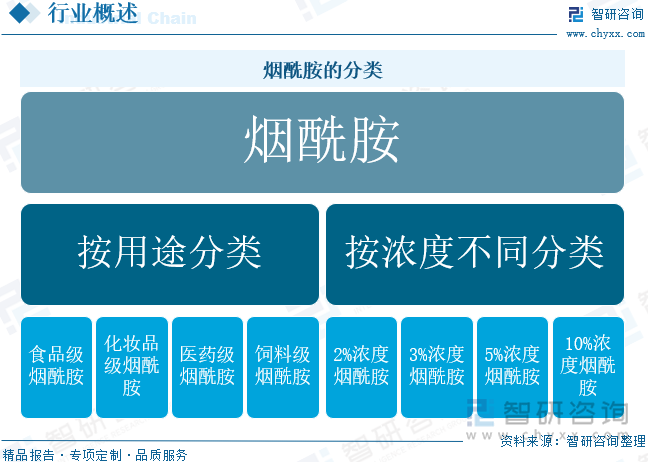
2025年中国烟酰胺行业生产方法、产业链、市场规模、竞争格局及未来前景:随着食品、医药和化妆品等下游需求持续增长,行业将迎来更广阔的发展空间[图]
Chan Ye Xin Xi Wang· 2025-07-11 01:26
Core Insights - Nicotinamide, an important member of the B-vitamin family, has diversified applications in the food, pharmaceutical, and cosmetic industries, driven by its nutritional enhancement and functional characteristics [1][15] - The market size of the nicotinamide industry in China is projected to reach approximately 2.535 billion yuan in 2024, with a year-on-year growth of 17.26% [1][15] - The industry is expected to benefit from the ongoing "Healthy China" strategy and the increasing consumer demand for functional products, indicating a broader development space in the future [1][15] Industry Overview - Nicotinamide, also known as niacinamide, is a white crystalline powder with a molecular weight of 122.125, primarily used in clinical settings for the prevention and treatment of various health issues [3] - The industry can be segmented into food-grade, cosmetic-grade, pharmaceutical-grade, and feed-grade nicotinamide, with varying concentrations available [3] Production Methods - Three main production methods for nicotinamide include oxidation of β-methylpyridine to niacin, dehydration of niacin with ammonium hydroxide, and a reaction involving niacin, boric acid, and ammonia [5][11] Applications and Benefits - Nicotinamide is recognized for its anti-acne, anti-inflammatory, whitening, and anti-aging properties, making it a popular ingredient in skincare products [7][8] - In the pharmaceutical sector, it is crucial for treating conditions related to niacin deficiency, while in cosmetics, it enhances skin barrier function and moisture retention [9][12] Industry Chain - The nicotinamide industry chain includes upstream raw material supply, midstream production and processing, and downstream applications in pharmaceuticals, cosmetics, and food [9] - Key raw materials include 3-cyanopyridine, niacin, ammonia, and solvents, with production methods involving chemical synthesis or fermentation [9] Market Dynamics - The global nicotinamide industry exhibits a tiered competitive landscape, with leading companies like Lonza, Vantiv, and Brother Technology dominating the market [17][19] - Brother Technology is identified as a leading domestic player, focusing on the production and sales of nicotinamide and niacin products across various sectors [19][21] Future Trends - The industry is shifting towards high-value products, with a focus on technological innovation and product upgrades to enhance purity and bioavailability [26][28] - The application of nicotinamide is expanding into new areas such as oral beauty products and functional foods, driven by consumer trends and interdisciplinary research [27][28]