
荣耀

Search documents
IDC:2025年Q3中国折叠屏手机出货量同比增17.8%,华为、荣耀、vivo前三
Feng Huang Wang· 2025-11-11 05:43
Core Insights - The Chinese foldable smartphone market is experiencing a significant recovery, with a projected shipment volume of 2.63 million units in Q3 2025, representing a year-on-year growth of 17.8% [1] - Cumulatively, the shipment volume for the first three quarters of 2023 reached 7.62 million units, showing a year-on-year increase of 14.3% [1] - IDC forecasts that the total shipment volume for the Chinese foldable smartphone market will approach 10 million units in 2025, continuing its growth trend [1] Market Competition Landscape - Huawei maintains a leading position with nearly 70% market share, having shipped over 15 million foldable devices [1] - Honor ranks second with an 11.2% market share, driven by the performance of its Magic V5 and Magic V Flip series [1] - Vivo holds the third position with a 5.0% market share, focusing on price competitiveness and expanding interoperability with the iOS ecosystem through its X Fold5 series [1] - OPPO, with its Find N5 series leveraging flagship chip advantages, ranks fourth by a narrow margin [1] - Samsung re-enters the top five with its Galaxy Z Fold7 series, emphasizing advancements in lightweight design [1]
iPhone Air卖不动,库克挥泪砍产线…这也就刚卖了一个月
Sou Hu Cai Jing· 2025-11-11 04:45
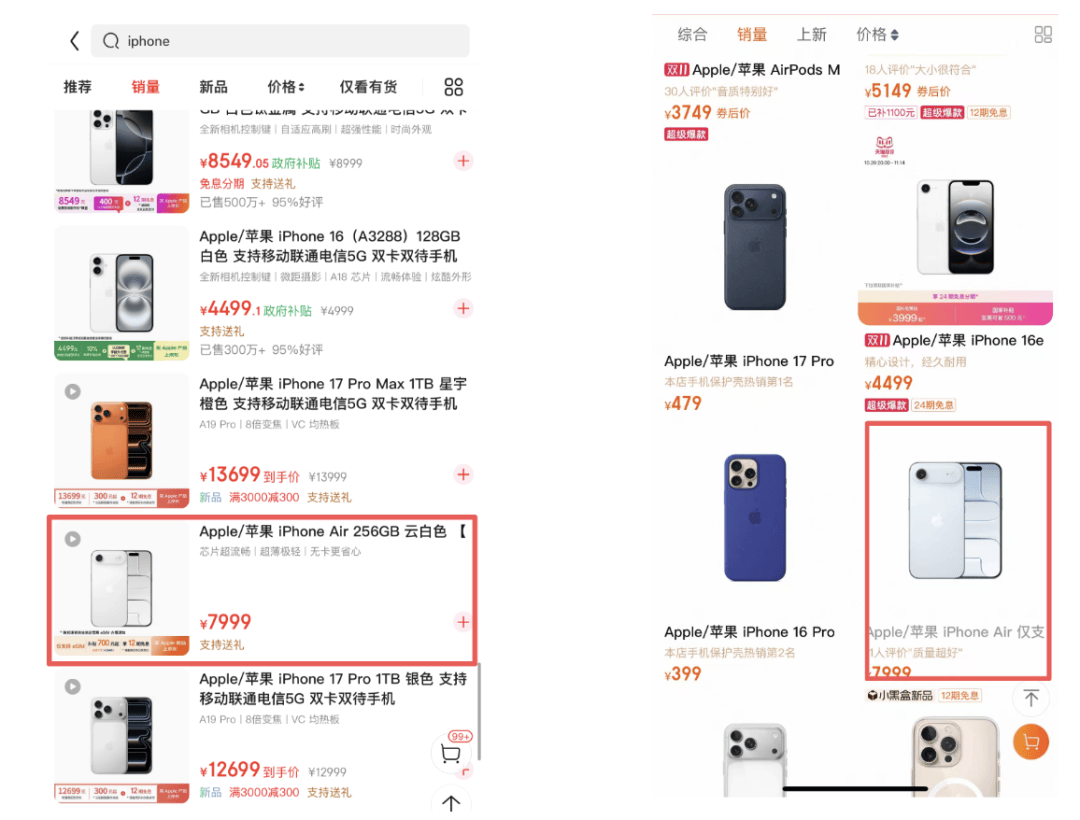
Core Insights - The iPhone Air has faced significant challenges since its launch, leading to the decision by Apple to halt production due to poor sales performance and market reception [1][2][4] Sales Performance - iPhone Air's initial sales were disappointing, with activation numbers in the first week exceeding only 50,000 units, which is less than one-tenth of the iPhone 17 Pro Max's performance [1] - In major online sales channels like JD.com and Tmall, iPhone Air's sales lagged behind both the iPhone 17 series and the older iPhone 16 models, failing to make it into the top ten small-screen sales rankings [2] Product Features and Consumer Reception - The iPhone Air was designed as a "non-Pro flagship," aiming to reduce features while maintaining essential components like the A-series chip and main camera, but this strategy did not resonate with consumers [6] - Key features were stripped down, including the removal of high-refresh screens, titanium alloy, and multiple camera options, leading to a perception of the device as outdated [6][11] - User feedback highlighted significant issues with battery life and performance, with many reviews criticizing the device's value proposition compared to the Pro Max [5][8] Market Dynamics - The iPhone Air's inability to leverage Apple's ecosystem effectively contributed to its lack of traction, as it did not stimulate accessory sales or developer interest [11][12] - The exit of the iPhone Air from the market has created an opportunity for domestic brands to fill the gap in the lightweight flagship segment, which they have already capitalized on with competitive offerings [13][14] Future Prospects - Although the iPhone Air 2 project has been removed from the main production schedule, internal development of prototypes is ongoing, indicating that Apple may revisit this product line in the future [17]


iPhone Air卖不动,库克挥泪砍产线…这也就刚卖了一个月
量子位· 2025-11-11 04:24
Core Viewpoint - The iPhone Air has faced significant challenges since its launch, leading to production cuts and a lack of consumer interest, ultimately resulting in its withdrawal from the market [5][25][31] Market Response - The iPhone Air's initial sales were disappointing, with only over 50,000 activations in its first week, which is less than one-tenth of the iPhone 17 Pro Max's performance [5] - In major online sales channels like JD and Tmall, the iPhone Air's sales lagged behind both the iPhone 17 series and the older iPhone 16 models, failing to make it into the top ten of small-screen bestsellers [6] - On Amazon, the iPhone Air received a rating of only 4.4, with many users citing serious battery and performance issues compared to the Pro Max [8] Product Positioning - Apple aimed to create a "non-Pro flagship" by simplifying features, removing high-refresh screens and advanced camera capabilities, while retaining the A-series chip and main camera [12] - However, the iPhone Air's stripped-down features did not meet consumer expectations, leading to a perception of it being underwhelming and overpriced compared to the iPhone 17 Pro, which is only $100 more but offers significantly better specifications [15][16] User Experience Issues - The removal of the physical SIM card slot in favor of eSIM led to complications for users in regions where eSIM is not widely supported, causing frustration and connectivity issues [19][20] - The iPhone Air lacked unique features or configurations that could stimulate accessory development or software adaptation, making it less appealing to consumers [22][23] Competitive Landscape - The withdrawal of the iPhone Air has created a gap in the "light flagship" market, which domestic brands like Xiaomi, OPPO, and Honor have already capitalized on, offering competitive products with strong ecosystems [26][27] - Huawei has quickly responded by launching the Mate 70 Air, which is thinner and lighter at a lower price point, indicating a swift shift in market dynamics following Apple's retreat [28][29] Future Prospects - Although the iPhone Air 2 project has been removed from the main production schedule, internal development continues, with plans for improvements in weight, battery capacity, and camera performance [31][32] - The potential for a future return of the iPhone Air remains, though it may not happen soon [33]

荣耀高管:荣耀400系列全球发货量突破600万台
Zheng Quan Shi Bao Wang· 2025-11-11 02:23
Core Insights - Honor's global shipment of the 400 series has exceeded 6 million units [1] Company Summary - Honor's Sales and Service President, Wang Ban, announced the significant milestone of over 6 million units shipped for the 400 series [1]
财信证券晨会纪要-20251111
Caixin Securities· 2025-11-10 23:30
Market Overview - The Shanghai Composite Index closed at 4018.60, up 0.53%, while the Shenzhen Component Index rose 0.18% to 13427.61. The ChiNext Index fell 0.92% to 3178.83, and the STAR 50 Index decreased by 0.57% to 1407.56 [1][7] - The overall market saw 3373 companies rise and 1952 decline, with a total trading volume of 21943.71 billion, an increase of 1741.66 billion from the previous trading day [7][10] Economic Policies - The State Council issued measures to promote private investment, including 13 targeted policy initiatives aimed at enhancing private sector participation in key projects and reducing entry barriers [19][20] - The People's Bank of China conducted a 1199 billion reverse repurchase operation, indicating a net injection of 416 billion into the market [22] Industry Dynamics - The National Development and Reform Commission and the National Energy Administration released guidelines to promote the consumption and regulation of renewable energy, aiming for a robust multi-level system by 2030 [24][27] - The IDC reported that China's tablet market shipped 8.49 million units in Q3 2025, a year-on-year increase of 10.9%, with Huawei leading the market share at 32.1% [32][33] - In October 2025, domestic sales of excavators increased by 2.44% year-on-year, while loader sales rose by 33.2% [38][40] Company Updates - Yunda Energy Technology Group signed a wind power project cooperation agreement in Central America, marking its first project in the region and expanding its global footprint [41] - Yuandong Bio announced the initiation of Phase I/II clinical trials for its new drug YLSH003, targeting advanced solid tumors, with the first patient successfully enrolled [43]
手机快充重回“百瓦级”,但它们真的更快了吗
3 6 Ke· 2025-11-10 23:24
Core Viewpoint - The article discusses the evolution of high-energy density batteries in smartphones, highlighting the trade-offs between charging speed and battery capacity, particularly in gaming-oriented devices. Group 1: Battery Technology and Market Trends - Two years ago, the introduction of high-energy density batteries in smartphones led to longer battery life but reduced charging speeds compared to previous models [1] - High-performance smartphones, which focus on gaming and performance metrics, have become the main players in the market, making slow charging speeds a potential drawback for users [3] Group 2: Charging Performance Analysis - By the fall of 2025, major brands are expected to achieve a balance between high-watt fast charging and large-capacity batteries, with some devices claiming output power of 100W to 120W [5] - A table summarizing charging performance shows that devices with higher nominal charging power generally achieve faster short-term charging speeds under low battery conditions [6][7] Group 3: Charging Strategies - Brands like Red Magic, OnePlus, and Redmi employ a "fast then slow" charging strategy, allowing for rapid charging to 80% in the first 20-30 minutes, but this results in noticeable heat generation during the process [12] - In contrast, iQOO and Honor adopt a "steady" charging approach, which minimizes heat during charging but may not be suitable for quick top-ups during gaming sessions [13]
大疆、影石还没争出第一,大批友商已经赶在路上
36氪· 2025-11-10 10:23
Core Viewpoint - The global panoramic camera market is experiencing significant shifts in market share, with companies like影石 (Insta360) and 大疆 (DJI) competing fiercely, leading to a dynamic and competitive landscape in the smart imaging sector [5][6][7]. Market Dynamics - A report from 久谦咨询 indicates that 影石's market share dropped from 92% in Q2 to 49% in Q3, while 大疆 captured 43% of the market [5]. - Another report by 弗若斯特沙利文 shows 影石 and 大疆's market shares at 75% and 17.1% respectively, highlighting discrepancies in market data [6]. - The entry of 大疆 into the panoramic camera market with its Osmo 360 has significantly impacted 影石's dominance, showcasing the competitive nature of the industry [8]. Industry Trends - The rise of short video content globally has increased the demand for smart imaging devices, with 大疆's Osmo Pocket 3 achieving over 10 million units sold, generating revenue exceeding 300 billion [13]. - The current global user base for vlogs is estimated at 520 million, with outdoor sports consumers at 220 million, indicating a growing market for smart imaging devices [16]. Competitive Landscape - New entrants in the smart imaging sector are advised to avoid direct competition with established players like 大疆 and 影石, focusing instead on niche markets and differentiated product offerings [20]. - Companies like Looki and XbotGo are exploring unique use cases, such as AI-driven wearable cameras and solutions for sports event recording, respectively [23][24]. Technological Innovations - The integration of AI and advanced algorithms is becoming crucial for product differentiation in the smart imaging market, as seen with 光子跃迁's AI-enabled camera that responds to natural language commands [25]. - The industry is characterized by a low barrier to entry for basic imaging products, but achieving brand recognition and competitive pricing remains challenging [40][42]. Market Entry by Smartphone Manufacturers - Major smartphone manufacturers like OPPO and vivo are entering the smart imaging space, indicating a shift in focus towards handheld imaging devices [28][30]. - The competitive pressure from smartphone companies is seen as a defensive strategy to maintain market relevance in the face of declining smartphone sales [37]. Conclusion - The smart imaging market is poised for growth, with a penetration rate of only 6%, suggesting ample opportunities for innovation and competition [16][38]. - Companies entering this space must be prepared with sufficient resources and talent to navigate the competitive landscape effectively [45].

半导体行业月报:海外云厂商25Q3继续加大资本支出,国内存储器厂商业绩表现亮眼-20251110
Zhongyuan Securities· 2025-11-10 09:00
Investment Rating - The report maintains an "Outperform" rating for the semiconductor industry [1]. Core Insights - The semiconductor industry continues to experience steady growth, with domestic memory manufacturers showing impressive performance in Q3 2025. The industry's revenue reached 174.18 billion yuan, a year-on-year increase of 6.07%, while net profit attributable to shareholders grew by 48.93% [3][6]. - Global semiconductor sales increased by 25.1% year-on-year in September 2025, marking the 23rd consecutive month of growth, with a month-on-month increase of 7.0%. The forecast for 2025 indicates an 11.2% year-on-year growth in global semiconductor sales [3][6]. - Major cloud service providers in North America, including Google, Microsoft, Meta, and Amazon, significantly increased their capital expenditures, totaling $96.4 billion in Q3 2025, a 67% year-on-year increase [7][3]. Summary by Sections 1. Market Performance in October 2025 - The semiconductor industry underperformed relative to the CSI 300 index, with a decline of 6.18% in October 2025, while the CSI 300 remained flat. Year-to-date, the semiconductor industry has risen by 45.44% [12][3]. - The Philadelphia Semiconductor Index rose by 13.48% in October 2025, outperforming the Nasdaq 100, which increased by 4.77% [12][18]. 2. Q3 2025 Industry Summary - The semiconductor industry showed robust growth in Q3 2025, with a revenue of 1741.84 billion yuan and a net profit of 394.68 billion yuan, reflecting a year-on-year increase of 6.07% and 48.93%, respectively [3][6]. - Domestic memory manufacturers, including Jiangbolong and Demingli, turned profitable in Q3 2025, with significant revenue and profit growth expected in Q4 due to rising memory prices [3][6]. 3. Capital Expenditure and Price Trends - North American cloud service providers are increasing their capital expenditures, with a combined total of $96.4 billion in Q3 2025, indicating strong demand for AI computing hardware infrastructure [7][3]. - The prices of DRAM and NAND Flash memory saw significant increases in October 2025, with DRAM prices expected to rise by 18-23% in Q4 2025 [3][6].
标准版的存在感之战,「荣米OV」四大金刚标准版横评
3 6 Ke· 2025-11-10 07:56
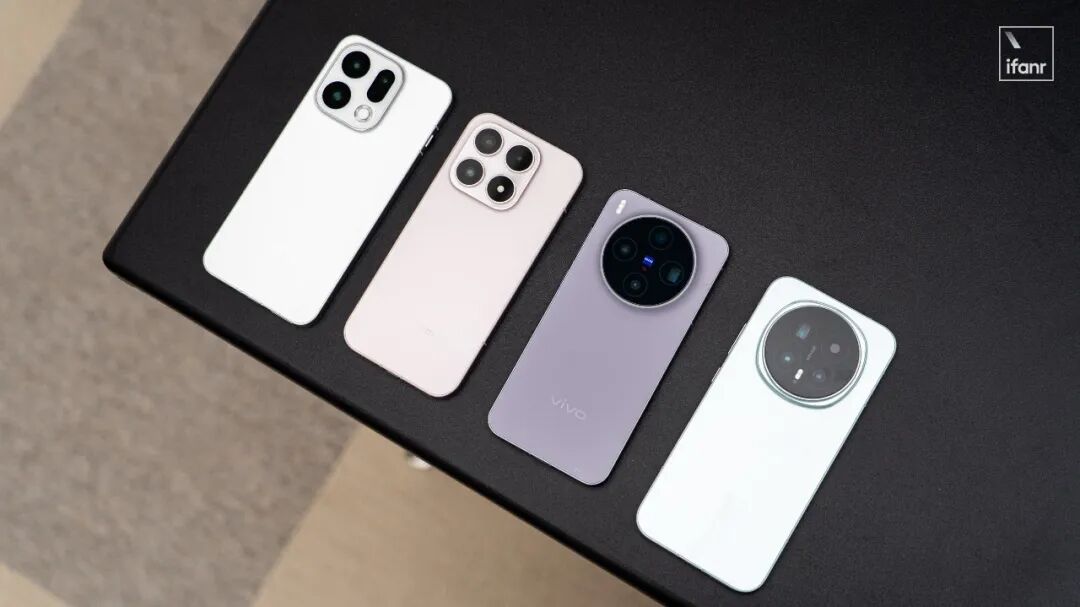
Core Insights - The article discusses the performance and features of the latest standard version smartphones from various brands, highlighting a collective lack of excitement compared to previous years [1] - The standard versions are priced around 4500 yuan, making careful selection essential for consumers [1] Group 1: Smartphone Comparisons - The four main standard models compared are Xiaomi 17, vivo X300, OPPO Find X9, and Honor Magic 8, each showcasing unique features and specifications [1][4] - Xiaomi 17 and Honor Magic 8 utilize the Qualcomm Snapdragon 8 Elite Gen 5 processor, while OPPO Find X9 and vivo X300 use MediaTek's Dimensity 9500 [4] - Performance benchmarks show that the Dimensity 9500 lags behind Snapdragon 8 Elite Gen 5 in CPU single-core and multi-core scores, but GPU capabilities are comparable [5] Group 2: Design and Usability - The smartphones are categorized into two size groups: 6.3-inch models (Xiaomi 17 and vivo X300) and 6.6-inch models (OPPO Find X9 and Honor Magic 8), with the smaller models offering better handling but compromising on battery life [4][11] - The design of vivo X300 has evolved positively, featuring a clever slope design that minimizes the camera module's visual impact [8][10] - Xiaomi 17 is noted for its excellent hand feel, weighing 191 grams and featuring a smooth transition in its design [11] Group 3: Battery and Performance - The battery capacity of vivo X300 is 6040mAh, the smallest among the four, while Xiaomi 17 boasts a 7000mAh battery, providing longer daily usage [11] - Both Xiaomi 17 and vivo X300 face challenges with screen brightness in outdoor conditions, affecting usability [12] Group 4: Software and AI Features - The software experience varies, with Xiaomi's 澎湃 OS 3 showing significant improvements in fluidity and animation compared to previous versions [24][26] - OPPO's ColorOS 16 is praised for its usability and fluidity, while Honor's MagicOS 10 has some usability issues that detract from the overall experience [30][31] Group 5: Camera and Imaging Capabilities - vivo X300 features a 200MP main camera, providing superior detail and image quality compared to its competitors [50] - OPPO Find X9 excels in low-light photography, balancing brightness and detail effectively [52] - Xiaomi 17's camera performance is described as decent but struggles with high dynamic range situations [73] Group 6: Market Positioning and Consumer Insights - The article suggests that the standard versions of smartphones should provide a flagship experience without being perceived as "cut-down" versions [87] - The target demographic for standard versions includes new university students and young professionals seeking value without excessive costs [87]

广东省终端快充行业协会赋能产业实现国际突破
Zhong Guo Jing Ji Wang· 2025-11-10 07:39
Core Points - The International Telecommunication Union's Telecommunication Standardization Sector (ITU-T) has officially released a global fast charging standard, with China's Unified Fast Charging Standard (UFCS) being the only case included as a best practice [1][5][6] - The UFCS protocol addresses the long-standing issue of incompatible fast charging protocols across different brands, promoting sustainability by reducing electronic waste from unused chargers [2][5] - The Guangdong Terminal Fast Charging Industry Association (FCA) has played a crucial role in the development and international recognition of the UFCS protocol, collaborating with major companies and national organizations [3][4] Group 1 - The UFCS protocol has been recognized in the ITU-T L.1004 international standard, marking a significant achievement for China's fast charging industry [1][3] - The standard aims to provide a unified charging solution that enhances compatibility across various devices, thereby reducing consumer costs and environmental impact [2][4] - As of October 31, 2025, 245 products have passed compliance certification, indicating a robust ecosystem involving 45 companies and a wide range of devices [4] Group 2 - The establishment of the UFCS standard reflects China's commitment to innovation and its active participation in global technology governance [5][6] - The standard is expected to guide global enterprises towards a more standardized and efficient charging industry, addressing the fragmentation of charging protocols [6] - The initiative aligns with ITU-T SG5's focus on environmental sustainability and circular economy, emphasizing the importance of integrating charging technology with green practices [5][6]