复旦大学

Search documents
国自然中选率再降,“青椒”如何跨过非升即走这道坎
Di Yi Cai Jing· 2025-09-04 12:35
Group 1 - The core issue highlighted is the declining success rate of the National Natural Science Foundation (NSFC) grants, which has dropped to 12.29% this year from 13% last year, marking a continuous decline for five years [2][4] - The "non-promotion, non-resignation" policy in universities has intensified competition among young researchers, making it crucial for them to secure funding before the age of 35 to ensure career progression [2][4] - The number of applicants for the Youth Science Fund (YSF) has surged, leading to increased difficulty in securing grants, with the success rate for YSF dropping from 25.20% in 2013 to 17.23% in 2022 [4][5] Group 2 - The NSFC has various funding categories, with the YSF being particularly important for young researchers as it serves as their "first pot of gold," influencing their future funding applications and career advancement [3][4] - The number of applicants for the NSFC's general projects has increased significantly, with a 48.77% rise in applicants for 2024, reaching 178,000 [5] - The NSFC is implementing new measures to support young researchers, including the establishment of the Innovation Research Group B project aimed at funding teams of researchers under 40 [8] Group 3 - Recent reforms in the evaluation and promotion systems in universities aim to create a more humane mechanism, transitioning from "non-promotion, non-resignation" to a more flexible approach [6][7] - The Ministry of Education has emphasized the need for a supportive environment for young researchers, allowing for trial and error and fostering a culture of innovation [7][8] - The NSFC is also focusing on nurturing a high-level talent pool by providing funding for outstanding undergraduate and doctoral students, thereby strengthening the foundation for future research [8]
复旦大学举办论坛聚焦硬科技产业化路径及技术转移人才培养
Zhong Zheng Wang· 2025-09-03 11:28
Group 1 - The forum "Technology Transfer Future: Technology and Industry Breakthrough Forum" was held at Fudan University, focusing on topics such as "industrialization of scientific achievements," "hard technology breakthrough paths," and "collaborative innovation ecosystem" [1] - Fudan University's Zhangjiang campus is becoming a key platform for deep integration of technology and finance, emphasizing the importance of financial support for both basic research and market demand [1] - The Master of Technology Transfer (MTT) program aims to cultivate interdisciplinary talents who understand technology, finance, and management, addressing the talent gap in the technology transfer ecosystem [1] Group 2 - The MTT program is built on Fudan University's top disciplines in finance, engineering, medicine, and law, closely aligning with industry needs through a dual-track training system of "systematic courses + in-depth practice" [2] - The program focuses on five major industries: artificial intelligence, biomedicine, integrated circuits, new energy and new materials, and aerospace technology, promoting the commercialization of technology [2] - A roundtable discussion was held on "resource collaboration and institutional breakthroughs in the technology transfer ecosystem," led by the MTT program director [2] Group 3 - Fudan University's Technology Transfer Center is actively exploring practices in the field of technology transfer, including progress in intellectual property management and empowerment reforms [3] - The center is building a "technology + industry + investment" communication platform to match research technology with industrial transformation needs, fostering a conducive ecosystem for technology transfer [3] - The center has successfully facilitated multiple projects in biomedicine, integrated circuits, artificial intelligence, new materials, and medical engineering, achieving several successful technology transfers [3]
破解“转化难”,“技术经理人”站上风口
2 1 Shi Ji Jing Ji Bao Dao· 2025-09-03 07:08
Core Insights - The demand for technology managers is increasing due to the need for technology transfer and the support from national and local policies [1][2] - There is a significant shortage of technology managers in China, with a ratio of researchers to technology managers at less than 100:1, compared to 25:1 in Europe [1] Group 1: Policy and Institutional Support - Recent policies have been introduced to promote the development of technology transfer and the training of technology managers, including the formal inclusion of technology managers in the national occupational classification [2] - The Shanghai government has launched specific plans to enhance technology transfer and the cultivation of technology managers, including the "Shanghai Action Plan for Promoting Technology Transfer (2024-2027)" [2] Group 2: Educational Initiatives - Some universities are incorporating technology transfer into their graduate education programs, with Fudan University set to launch a Master of Technology Transfer (MTT) program aimed at cultivating professionals who understand technology, finance, and management [3] - The MTT program will focus on key industries such as artificial intelligence, biomedicine, integrated circuits, new energy, and new materials, employing a comprehensive training model that includes education, practical experience, certification, and capital support [3] Group 3: Practical Applications and Collaborations - Fudan University's technology transfer center is actively working to facilitate the conversion of original research and advanced technologies into practical applications through various initiatives [4] - The center has established a platform for collaboration among technology, industry, and investment, successfully connecting multiple projects in fields like biomedicine, integrated circuits, and artificial intelligence with industry and capital [4]
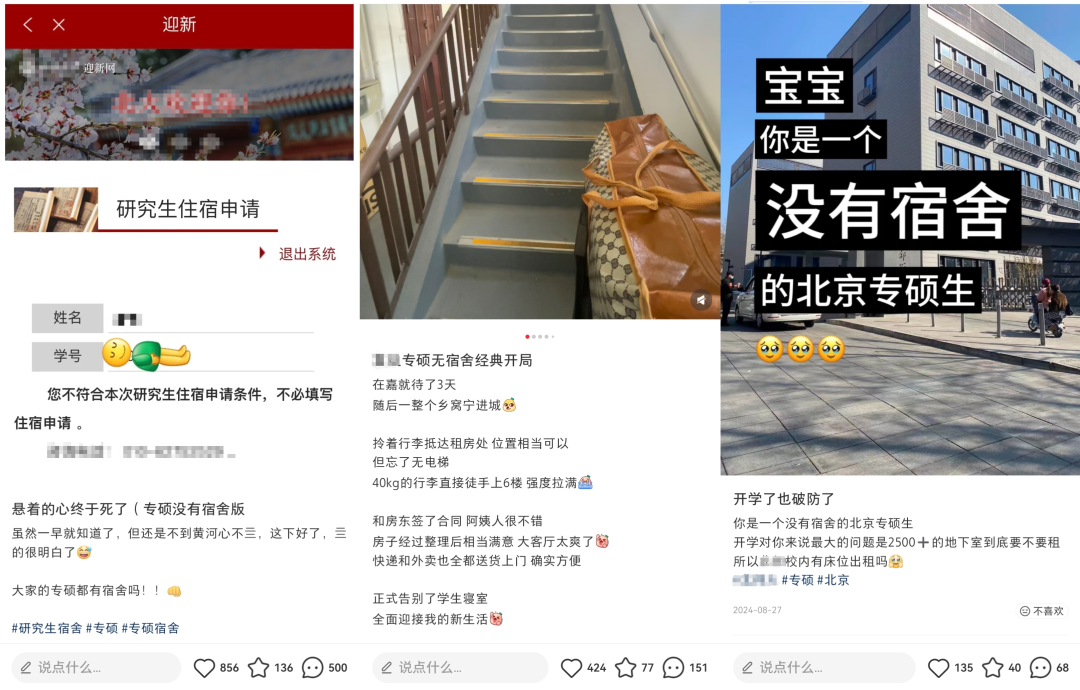
多所大学明确:专硕,不提供宿舍
Hu Xiu· 2025-09-02 13:46
Core Viewpoint - The increasing number of graduate students in China has led to a shortage of on-campus accommodation, particularly affecting professional master's students who are often left without housing options [2][3][4][8]. Group 1: Current Situation of Graduate Student Accommodation - Many universities, including Fudan University and Peking University, have stopped providing on-campus accommodation for full-time professional master's students, forcing them to seek off-campus housing [4][10]. - The cost of off-campus housing is significantly higher, with reports indicating monthly rents in cities like Shanghai reaching 3000 yuan, while on-campus accommodation can be as low as 1000-2000 yuan per year [5][6]. - The average living space per student has not met the standards set by the State Council, and this has been declining in recent years [6][7]. Group 2: Reasons for Accommodation Shortage - The rapid expansion of graduate enrollment, which has doubled over the past decade to exceed 1.35 million in 2024, has outpaced the construction of new dormitories [7][8]. - The distinction between academic master's and professional master's programs has led to a prioritization of resources, with professional master's students facing more accommodation challenges due to their shorter study duration and different resource needs [8][10]. Group 3: Responses and Solutions - Universities are encouraged to actively address accommodation shortages rather than shifting the burden to students, as highlighted in a joint directive from several government departments [12][18]. - Initiatives are underway in various universities to build new dormitories, purchase idle properties for student housing, and renovate old dormitories to improve living conditions [16][20][21]. - For instance, Inner Mongolia University plans to invest 188 million yuan to build new student dormitories, while Guizhou University has initiated projects to provide additional accommodation for graduate students [16][17].

大模型内生安全概念验证平台启动建设 人工智能与先进计算融合创新学术会议在上海开幕
Jie Fang Ri Bao· 2025-08-31 02:23
Group 1 - The deep integration of artificial intelligence and advanced computing is becoming a core direction and important trend in the technological revolution [1] - The traditional von Neumann computing architecture is approaching physical limits and economic cost ceilings, while the brain's intelligence model provides important insights for developing more efficient computing power [1] - The "mesoscopic scale computing paradigm" is viewed as a key to breaking through the computing power ceiling, transitioning from a "complex nodes + simple interconnections" model to a "simple nodes + complex interconnections" structure [1] Group 2 - The mesoscopic scale computing paradigm represents a fundamental change in computing paradigms, allowing "simple nodes" to exhibit "overall intelligence greater than the sum of its parts" [1] - A new platform for "inherent safety of large models" was launched in collaboration with Fudan University, aiming to facilitate the full-chain transformation from scientific works to commercial products [2] - The platform will focus on various sectors including medical insurance auditing models, intelligent construction models, smart driving models, and cybersecurity insurance models [2]
教育部:今年新增1839个本科专业点,增设29种急需专业
Nan Fang Du Shi Bao· 2025-08-29 11:22
Core Viewpoint - The article discusses the recent implementation of the "Higher Education Discipline and Major Adjustment and Optimization Action Plan (2025-2027)" by the Central Education Work Leading Group, emphasizing the importance of discipline and major adjustments in higher education to meet national strategic needs and promote talent cultivation [1][2]. Group 1: Adjustments in Higher Education - In the past year, 1,839 new undergraduate majors were added, while 1,428 were canceled and 2,220 stopped enrolling, indicating a significant adjustment in academic disciplines [1]. - The introduction of 29 new undergraduate majors, including International Cruise Management and Health and Medical Security, reflects the focus on urgent economic and social development needs [1][2]. Group 2: Mechanisms for Discipline Optimization - The plan establishes six mechanisms, including a coordination mechanism and a supply-demand matching mechanism, to streamline the adjustment process of academic disciplines [2]. - Actions such as the promotion of foundational disciplines and the incubation of emerging and interdisciplinary fields are part of the strategy to enhance the quality and relevance of higher education [2][3]. Group 3: Focus on National Needs - The article highlights the necessity for academic disciplines to align with national strategic needs, urging higher education institutions to shift their focus from self-development to serving national development [3]. - The Ministry of Education supports the establishment of new disciplines like "Low Altitude Technology and Engineering" to address specific strategic areas, breaking traditional constraints on discipline authorization [3]. Group 4: Pilot Programs for Talent Development - The plan encourages differentiated educational approaches among institutions, with a focus on cultivating applied talents and vocational skills in local colleges and vocational schools [4][5]. - Pilot programs are being launched in various regions, such as Tianjin and Guangdong, to explore new models for discipline construction driven by major national and regional development needs [5]. Group 5: Curriculum and Teaching Innovations - The plan emphasizes the need for updating educational content and enhancing teaching methodologies, particularly through the integration of artificial intelligence in education [6]. - Institutions are encouraged to develop new talent cultivation platforms and promote successful educational models to improve the quality of higher education [6].
“学术型学科博士+专业型AI硕士”,复旦大学创新双学位培养
Xin Jing Bao· 2025-08-29 09:04
Group 1 - Fudan University is implementing a dual-degree program combining academic doctoral degrees with professional AI master's degrees, focusing on ten key disciplines including philosophy, economics, and biology [1][2] - The university is optimizing its academic program structure to accelerate the development of disciplines that are urgently needed by the nation, including fields like integrated circuits and national security [1] - A new talent cultivation model called "integration of undergraduate and graduate education" will be launched in 2024, targeting urgent talent needs and emphasizing innovation capabilities [2] Group 2 - The dual-degree program aims to cultivate high-level interdisciplinary talents with a strong ability in cross-disciplinary research and practical application, leveraging AI technology [2][3] - Fudan University has established a mechanism for adjusting academic programs to better align with national strategic needs, focusing on urgent disciplines such as quantum science and technology [1][2] - The university's approach emphasizes project-based learning and interdisciplinary integration as effective methods for addressing future challenges and nurturing innovative talents [3]
增设“国际邮轮管理”等29个专业 高等教育“更新学科专业地图”
Yang Shi Xin Wen· 2025-08-28 05:23
Core Points - The Ministry of Education is accelerating the adjustment and optimization of higher education disciplines and majors to align with market needs and emerging industries such as artificial intelligence and low-altitude economy [1][2] - A new mechanism for the rapid layout of urgently needed disciplines has been initiated, allowing universities to set up new programs outside the traditional three-year review cycle [2] - A national talent supply and demand data platform has been launched to provide precise predictions of future talent needs, aiding in the decision-making for academic programs and student employment [3] Group 1 - The Ministry of Education is leading a "major reshuffle" of academic disciplines to better match the future needs of the country and improve job prospects for students [1] - The new mechanism supports universities like Tsinghua University and Nanjing University of Aeronautics and Astronautics in establishing new disciplines such as "Low Altitude Technology and Engineering" to quickly address talent shortages [2] - In 2024, 1,839 new undergraduate programs will be added, while 1,428 programs will be removed and 2,220 will stop enrollment to ensure effective allocation of higher education resources [2] Group 2 - The national talent supply and demand platform integrates various data sources to analyze supply and demand, providing employment support and professional warnings [3] - Eighteen provinces and 97 universities have submitted 290 pilot task proposals to explore new paths for discipline reform, focusing on urgent national and regional development needs [4] - The "reveal and take charge" mechanism aims to stimulate grassroots innovation and create replicable reform experiences in higher education [4]
Cell:复旦大学粟硕团队绘制全球首个哺乳动物高分辨率微生物与耐药基因图谱
生物世界· 2025-08-27 08:00
编辑丨王多鱼 排版丨水成文 哺乳动物体内微生物及其携带的抗生素耐药基因 (ARG) 的跨宿主传播,是潜藏的重大公共卫生风险源。 然而,现有研究面临多重技术瓶颈:低丰度微生物难以检测导致潜在病原漏报;大量未报道的微生物物种缺失限制了多样性认知;物种及功能注释精 度不足阻碍了明确 ARG 与可移动遗传元件 (MGE) 的关联;现有宏基因组分析方法分辨率有限 (通常仅到物种或属水平) ,难以精确追踪不同 宿主同源菌株或基因的传播,使得解析复杂的跨宿主传播网络极具挑战。 2025 年 8 月 26 日,复旦大学 公共卫生学院 粟硕 教授团队 ( 在读博士生 石宇旗 、 李昱星 为论文共同第一作者 ) 在国际顶尖学术期刊 Cell 上 发表了题为: Extensive cross-species transmission of pathogens and antibiotic resistance genes in mammals neglected by public health surveillance 的研究论文。据悉,这是 复旦大学 公共卫生学院首次作为主要完成单位在 Cell 期刊发表研究成果。 该研究基于 ...

我读|在思想和生活之间:《陈绛口述历史》释读
Xin Lang Cai Jing· 2025-08-27 06:32
Core Viewpoint - The oral history of Chen Jiang provides insights into the complex interplay between life and thought during the revolutionary era in China, reflecting the multifaceted relationships of intellectuals with communism and the evolving ideological landscape [2][3]. Group 1: Historical Context - Chen Jiang was born in 1929 in Fuzhou and experienced significant ideological shifts during his formative years, particularly influenced by his father's traditional Confucian values and the broader societal movements of the 1930s [3][4]. - The 1930s marked a transition in Chinese intellectual circles from individual awakening to collective ideologies, leading to a focus on various "isms" as a means for social transformation [3][4]. Group 2: Education and Influences - Chen Jiang attended St. John's University, known for its emphasis on English education and liberal arts, which significantly shaped his academic and professional trajectory [5][6]. - The university's curriculum included a broad range of subjects, fostering a well-rounded education that influenced Chen Jiang's later work in economic history and modern Chinese studies [5][6]. Group 3: Political Engagement - After graduating in 1949, Chen Jiang was involved in the establishment of the new government, working in the United Front Work Department, which was crucial for integrating various social groups into the communist framework [8][9]. - His early career was marked by a supportive environment within the department, where he engaged with prominent figures and participated in discussions about the political landscape of the time [8][9]. Group 4: Academic Contributions - Chen Jiang later joined the Shanghai Economic Research Institute, where he contributed to the study of the socialist transformation of capitalism in Shanghai, reflecting the complexities of economic policies during the early years of the People's Republic of China [12][14]. - His work on the "Red Book," which examined the socialist transformation of Shanghai's capitalist enterprises, faced significant political scrutiny and criticism, illustrating the challenges of academic freedom during that period [14][15]. Group 5: Legacy and Reflection - Chen Jiang's later years were characterized by a prolific output of scholarly work, addressing various aspects of modern Chinese history and economics, demonstrating his commitment to understanding the complexities of China's past [16][17]. - His oral history serves as a testament to the struggles and reflections of a generation of intellectuals who navigated the tumultuous political landscape of 20th-century China, providing valuable insights into the interplay of ideology, personal experience, and historical change [17][18].