
沃飞长空

Search documents
《苏州市低空经济促进条例》正式施行,沃飞长空商业化再提速 | 投研报告
Zhong Guo Neng Yuan Wang· 2025-10-14 02:31
Core Insights - The low-altitude economy sector outperformed the market during the period from September 29 to October 12, with the Wind Low Altitude Economy Index rising by 3.92%, surpassing the Shanghai Composite Index by 2.12 percentage points, the CSI 300 Index by 2.46 percentage points, and the ChiNext Index by 5.14 percentage points [1][2] - The National General Aviation Index increased by 2.35%, outperforming the Shanghai Composite Index by 0.55 percentage points, the CSI 300 Index by 0.88 percentage points, and the ChiNext Index by 3.56 percentage points [1][2] Policy Developments - The first local government legislation for low-altitude economy, the "Suzhou Low Altitude Economy Promotion Regulations," came into effect on October 1, outlining responsibilities for city and county governments to promote low-altitude infrastructure planning, construction, and operation [2] - The "Implementation Details for Several Measures to Support High-Quality Development of Low Altitude Economy" by the Shenzhen Transportation Bureau will take effect on October 9, 2025, focusing on key funding projects across the low-altitude economy industry chain, with individual project rewards up to 15 million yuan [3] Industry Advancements - Zero Gravity Aircraft Industry announced nearly 300 million yuan in financing to support the development of its ZG-ONE and ZG-T6 aircraft, as well as the establishment of a national green aviation flight camp [3] - The Guangdong Province Low Altitude Equipment Verification Testing Base was inaugurated to provide a professional platform for low-altitude equipment research, design, manufacturing, and application [3] Product Innovations - Yingwu Intelligent received the first national license for ultra-lightweight single-person flying cars and unveiled the S-ONE flying vehicle, featuring AI capabilities for autonomous operations [4] - WoFei ChangKong's first passenger eVTOL product, AE200-100, has completed major assembly and is preparing for manned test flights, with a backlog of 1,000 commercial orders [4] Market Trends - AirCar Technology and Aviation announced the opening of pre-orders for its LightSport eVTOL, with the first 100 units sold out within days, expected to be delivered by 2027 [5] - The national strategy is increasingly focusing on the low-altitude economy, with various local policies being implemented and state-owned enterprises establishing low-altitude economy companies [5]
香港低空经济提速:试点扩大,明年拟推跨境航线
Xin Lang Cai Jing· 2025-10-14 01:11
Core Insights - Hong Kong's low-altitude economy is experiencing significant breakthroughs, with the introduction of pilot projects and cross-border routes [1][3] - The government is actively promoting the development of the low-altitude industry, with a focus on regulatory frameworks and infrastructure [4][5] Group 1: Pilot Projects and Regulatory Framework - The "regulatory sandbox" allows industry participants to test and experiment with project concepts within designated routes, with 38 out of 72 applications approved as pilot projects [1][4] - As of October 9, 17 pilot projects have been implemented, with an expectation to add up to 11 more by the end of October [1][4] - The next phase will focus on more complex applications, including cross-border routes between Hong Kong and mainland China [1][4] Group 2: Market Potential and Applications - The eVTOL aircraft can carry a maximum load of 400 kilograms and has a range exceeding 250 kilometers, making it suitable for the Greater Bay Area [3][7] - The company has prior experience with cross-city routes, having completed flights between Shenzhen and Zhuhai, covering approximately 52 kilometers in under 20 minutes [3][6] - The long-term potential for the manned market is significant, but cross-border logistics scenarios are also crucial due to existing traffic congestion [7][8] Group 3: Infrastructure and Development Initiatives - The Hong Kong government aims to establish a low-altitude innovation hub in the Asia-Pacific region, with plans to optimize the regulatory sandbox and develop low-altitude economic insurance products [3][5] - Legislative changes have been made to expand the regulation of drones weighing between 25 to 150 kilograms, and further regulations for heavier aircraft are in development [4][5] - The government is also planning to introduce dedicated communication frequencies and develop infrastructure for takeoff and landing sites, satellite positioning, and intelligent low-altitude traffic management systems [4][6]


滴滴入局低空经济产业资本加速抢占“空中的士”赛道
Shang Hai Zheng Quan Bao· 2025-10-12 17:07
Core Viewpoint - Didi Chuxing has established a new subsidiary, Beijing Didi Low Altitude Technology Co., Ltd., signaling its entry into the low-altitude economy and the potential development of a "Didi for the skies" model [1] Group 1: Industry Developments - The low-altitude economy is gaining traction, with various companies aiming to create low-altitude transportation services similar to ride-hailing [2][3] - Didi's entry into the low-altitude sector is seen as a strategic move to defend its position and capitalize on future opportunities in this emerging market [1][2] - Competitors like Cao Cao Travel have already begun to establish their presence in the low-altitude space, forming partnerships to create integrated transportation networks [2] Group 2: Market Dynamics - The eVTOL (electric vertical takeoff and landing) aircraft are expected to follow a "to G/to B, then to C" service model, initially targeting businesses and government entities before expanding to individual consumers [3] - The pricing for eVTOL services is projected to be positioned at 2 to 3 times the cost of high-end car services, indicating a premium market entry strategy [3] Group 3: Investment Opportunities - The eVTOL sector is viewed as a key area for investment, with companies in the battery and technology sectors actively pursuing opportunities related to low-altitude transportation [4][5] - Several publicly listed companies have announced their involvement in the eVTOL market, particularly in battery technology, indicating a growing interest in the low-altitude economy [5][6] - Companies like Ganfeng Lithium and Funeng Technology are developing specialized batteries for eVTOL applications, highlighting the technological advancements being made in this field [5][6]

滴滴,布局低空
Shang Hai Zheng Quan Bao· 2025-10-12 07:22
Core Insights - Didi Chuxing has established a new subsidiary, Beijing Didi Low Altitude Technology Co., Ltd., indicating its strategic entry into the low-altitude economy sector [1] - The establishment of this company may be a defensive move to secure a position in the emerging low-altitude transportation market, especially as competitors like Cao Cao Mobility are already making strides in this area [1][2] - The low-altitude economy is expected to evolve with various applications, starting from tourism and urban sightseeing to emergency rescue and air commuting, ultimately leading to the realization of "air taxis" [2] Company Developments - Beijing Didi Low Altitude Technology Co., Ltd. is fully owned by Beijing Xiaoju Technology Group, the parent company of Didi Chuxing, with Chen Kai as the legal representative [1] - Didi's entry into the low-altitude sector comes as other companies, such as Cao Cao Mobility, have already begun developing their own low-altitude transportation services [1][2] Industry Trends - The low-altitude version of "Didi" is seen as a crucial player in connecting aircraft operators, service providers, and end-users, which is essential for the commercialization of the low-altitude economy [2] - The industry consensus suggests that the rollout of eVTOL (electric Vertical Take-Off and Landing) applications will progress from remote areas to densely populated regions, and from low-frequency to high-frequency scenarios [2] - Several regions have announced their own low-altitude "Didi" platforms, such as the "Low Altitude Smart Travel" service platform in Mianyang and the "Jinan Low Altitude" app, which aim to simplify low-altitude travel similar to traditional ride-hailing services [3]
低空经济从概念走向现实,复合翼eVTOL率先落地运输场景
Xin Lang Zheng Quan· 2025-10-11 03:26
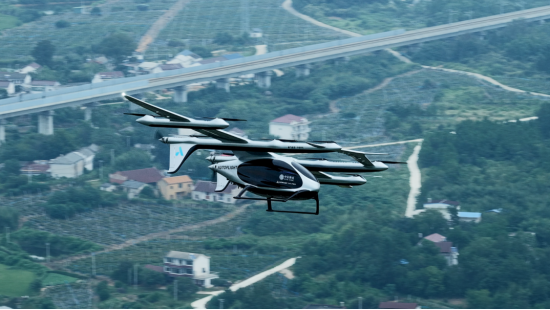
Core Insights - The article highlights the significant advancements in the eVTOL (electric Vertical Take-Off and Landing) industry, particularly focusing on the successful intercity logistics applications of the "Kai Rui Ou" eVTOL by Fengfei Aviation, marking a transition from the research phase to operational value creation [1][7] Group 1: Technological Developments - The "Kai Rui Ou" eVTOL, utilizing a compound wing technology, has a range of 200 kilometers, a cruising speed of over 180 kilometers per hour, and a payload capacity of 400 kilograms [3][7] - The compound wing design combines the benefits of fixed-wing and multi-rotor technologies, allowing for both vertical take-off and high-speed forward flight, which enhances flight efficiency and reduces battery consumption [8][10] - As of June 2025, 42% of global eVTOL manufacturers are adopting the compound wing configuration, making it the most popular choice among the three main eVTOL designs [6][8] Group 2: Market Applications - The successful completion of the first-ever sea platform logistics flight by the "V2000CG Kai Rui Ou" is seen as a pivotal event in the realization of low-altitude economic applications [7][8] - The compound wing eVTOLs are particularly suited for urban and intercity commuting and logistics due to their efficiency and operational reliability [8][10] Group 3: Competitive Landscape - The eVTOL market features three main technological routes: multi-rotor, compound wing, and tilt-rotor, each with distinct advantages and applications [5][9] - The tilt-rotor technology, while still under development, offers higher speeds and efficiency, making it a strong contender for future urban air mobility solutions [9][10] - The competition among manufacturers is not solely based on design innovation but also on the ability to achieve airworthiness certification and establish stable, high-frequency operations [11]
车企入局聚合智能产业新机遇
Jing Ji Ri Bao· 2025-10-07 22:05
Core Insights - The integration of smart vehicles, intelligent robots, and low-altitude flying vehicles is seen as a hallmark of new productive forces, with a trend of accelerated convergence among these industries [1][3][4] Industry Overview - The recent first Aggregated Intelligent Industry Development Conference highlighted the potential for these three sectors to merge, leveraging shared technologies and resources to create a cohesive industrial ecosystem [1][3] - Tesla's recent focus on AI and robotics in its "Master Plan" indicates a shift towards valuing these technologies, with Musk suggesting that 80% of Tesla's future value may come from its Optimus robot [3][4] Market Dynamics - Domestic automakers are actively entering the intelligent robotics and low-altitude flight sectors, with over ten companies already involved through various strategies such as investment and joint R&D [3][4] - The supply chain overlap between the automotive industry and these emerging sectors is significant, with a reported 60% compatibility in supply chain elements [5][6] Technological Synergies - Key technologies such as AI, energy systems, and materials are common across smart vehicles, robots, and low-altitude vehicles, facilitating their integration [4][5] - Innovations in battery technology, particularly solid-state batteries, are critical for the development of these industries, as they require high energy density solutions [5][6] Challenges and Opportunities - The industry faces challenges in standardization, collaboration, and cost management, which need to be addressed for successful integration [7][8] - The potential for cost reduction in flying cars and robots is significant, with expectations that prices could drop from millions to hundreds of thousands within a few years through automotive supply chain efficiencies [6][7] Strategic Recommendations - A shift from isolated development to a more integrated approach is necessary, promoting cross-industry collaboration and shared technological platforms [8] - The cultivation of interdisciplinary talent and enhanced cooperation between government, industry, and academia is essential for overcoming barriers to development [8]

寻求第二增长曲线,小鹏、长安等瞄准万亿市场加速飞行汽车布局
Bei Ke Cai Jing· 2025-09-30 14:12
Core Viewpoint - Chinese automotive companies are accelerating their investments in the flying car sector, with several firms announcing plans for production and development timelines for flying vehicles by 2026 and beyond [1][2][4]. Group 1: Company Developments - Changan Automobile announced the establishment of a joint venture for flying cars and plans to launch a flight-capable vehicle by 2030 [1]. - Xiaopeng Motors aims to mass-produce the world's first "car + airplane" combination flying car by 2026, having developed seven prototype models with significant investment [2][4]. - GAC has also made strides in the flying car market, with plans to deliver its GOVY AirCab by the end of 2026, priced under 1.68 million yuan [4]. - Other companies like Geely and FAW are still in the research and testing phases, with FAW's flying car expected to make its first flight this year [5]. Group 2: Market Potential - Morgan Stanley predicts that the flying car industry could reach a market size of $300 billion by 2030 and $9 trillion by 2050, with China potentially becoming the largest urban low-altitude transportation market [2]. - The low-altitude economy is expected to create three trillion-dollar segments: low-altitude vehicle manufacturing, infrastructure, and operational services [8]. Group 3: Industry Trends - The flying car sector is seen as a response to the saturation of the smart automotive market, with companies seeking new growth avenues [7]. - The Chinese government has recognized the low-altitude economy as a strategic emerging industry, providing a favorable policy environment for its development [7]. Group 4: Challenges - Despite the promising outlook, flying cars face challenges such as high costs and regulatory hurdles that must be addressed for widespread adoption [3][10]. - The current high costs are attributed to the immature supply chain and the need for technological advancements in core components [10][11].



吉利控股:沃飞长空AE200-100首架机下线
Zheng Quan Shi Bao Wang· 2025-09-30 03:07
Core Insights - Geely Holding Group's subsidiary, WoFei ChangKong, has successfully completed the assembly and core system installation of its large manned eVTOL product, AE200-100, marking a significant milestone in the domestic eVTOL development [1] Group 1 - The first unit of the AE200-100 has officially rolled off the production line in Chengdu as of September 29 [1] - The product is nearing the requirements for manned flight testing, indicating progress towards operational readiness [1] - WoFei ChangKong is entering a critical phase for airworthiness certification and pre-production of mass-produced models [1]

天成自控座椅交付,搭载沃飞长空国内首款载客eVTOL飞机下线!
Quan Jing Wang· 2025-09-30 00:37
Core Insights - The first AE200-100 eVTOL aircraft developed by WoFei ChangKong has officially rolled off the production line, marking a significant step for China's passenger transport eVTOL industry from concept to reality [1] - Tiancheng Zikong, a key partner in the low-altitude industry, has successfully entered the low-altitude economy sector by providing specialized seating solutions for the AE200-100 [1][2] - The AE200-100 aims to obtain the Type Certificate (TC) from the Civil Aviation Administration of China (CAAC) and align with international aviation safety standards, indicating potential competitiveness in the global market [1][2] Industry Overview - The low-altitude economy, particularly represented by eVTOL, is rapidly developing, driven by the demand for green transportation and urban vertical mobility, making it a new focal point in global aviation and transportation [2] - China is projected to become a core region for low-altitude economic development, with the market expected to exceed 1 trillion RMB by 2026, reflecting a compound annual growth rate of nearly 28% [2] - The industry is evolving towards a collaborative and efficient "air-ground integration" ecosystem [2] Company Positioning - Tiancheng Zikong is recognized as a hidden champion in the domestic seating sector, possessing the capability for eVTOL seat R&D and production, along with extensive certification experience [3] - The company has established a comprehensive industrial layout covering engineering machinery, commercial vehicle seats, passenger vehicle seats, and aviation seats through a "vertical integration + horizontal collaboration" development model [3] - Tiancheng Zikong's UK subsidiary, Acro Aircraft Seating Limited, is a well-known supplier of aircraft seats, certified by EASA and FAA, and serves major aircraft manufacturers like Boeing and Airbus [3] Technological Advancements - The company has long-term investments in lightweight materials and collaborates with domestic and international research institutions, mastering key technologies in carbon fiber composites and aluminum alloys [4] - The development of carbon fiber composite aircraft seats has provided the company with a competitive edge in lightweight and comfort aspects [4] - The company is leveraging its experience in manufacturing, design, certification, and lightweight material applications to capture opportunities in the eVTOL seating market [4]

沃飞长空大型载客eVTOL首架机下线 储备订单已达千架
Xin Hua Cai Jing· 2025-09-29 13:51
Core Insights - WoFei ChangKong has launched China's first passenger electric vertical takeoff and landing aircraft (eVTOL), the AE200-100, marking a significant milestone in the low-altitude travel sector [1] - The AE200-100 features a range of 200 kilometers and is designed for various applications including intercity travel, airport shuttles, scenic tours, and emergency rescue, with operational costs significantly lower than comparable helicopters [1] - The company has secured 1,000 commercial orders for the AE200, with initial production capacity being released and strong market demand observed across key economic regions [1] Company Developments - The AE200-100 has completed major assembly and core system installation, moving towards manned flight testing and certification processes [1] - WoFei ChangKong's global headquarters in Chengdu High-tech Zone is set to be operational by 2026, which will enhance production capacity and efficiency for the AE200 and future products [2]