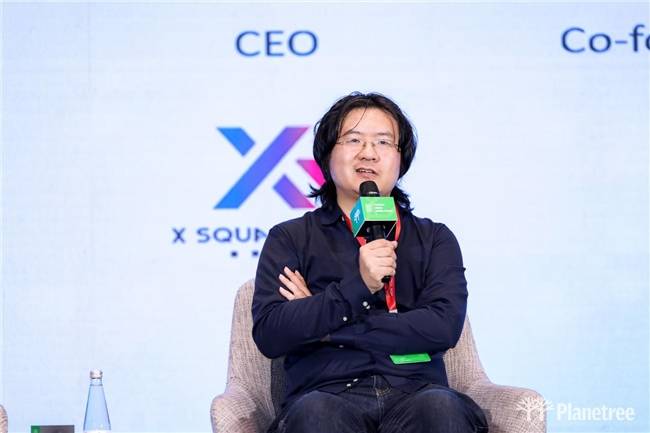
自变量机器人

Search documents
Q4融资超过亿元的具身公司.......
具身智能之心· 2025-12-15 01:04
Core Insights - The article provides an overview of the financing situation for embodied robotics companies, highlighting investments over 100 million yuan across various funding rounds from angel to Series C [1]. Company Summaries - **AI² Robotics**: Secured hundreds of millions in funding, focusing on AGI-native general intelligent robots, with applications in semiconductor, automotive, electronics, biotechnology, and public services [4]. - **Self-Variable Robotics**: Raised 1 billion yuan, specializing in AI and robotics technology innovation, building general intelligent agents based on large robot models [5]. - **Xingyuan Intelligent Robotics**: Received 300 million yuan, developing a general embodied brain technology aimed at creating a universal brain for physical world interaction [6]. - **Micro Differential Intelligence**: Funded 100 million yuan, focusing on aerial robotics and intelligent systems for industrial and urban applications [7]. - **Dyna Robotics**: Raised 120 million yuan, dedicated to AI-driven robotics for various tasks, emphasizing cost-effective learning in real production scenarios [8]. - **Motorevo**: Secured 100 million yuan, specializing in robotic joints and power units for various robotic applications [9][18]. - **Lexiang Technology**: Funded 200 million yuan, focusing on general household robotics in the AI era [10]. - **Qianjue Robotics**: Raised 100 million yuan, developing high-dimensional multi-modal tactile perception technology for robotics [11]. - **Leju Robotics**: Secured 1.5 billion yuan, focusing on humanoid robot commercialization and technology accumulation [12]. - **Lingxin Qiaoshou**: Received hundreds of millions, developing a platform centered on dexterous hands and cloud intelligence [13]. - **Songyan Power**: Funded 300 million yuan, focusing on humanoid robot development and manufacturing [14]. - **Wubai Intelligent**: Raised 500 million yuan, a state-owned enterprise focusing on bionic intelligence and robotics [15]. - **Shengshi Weisheng**: Secured 100 million yuan, developing intelligent robots for manufacturing automation [16]. - **Zhongke Optoelectronics**: Funded 215 million yuan, focusing on high-end intelligent robot products for military and manufacturing sectors [17]. - **Deepwood Intelligent**: Raised 200 million yuan, specializing in general embodied intelligent robotics [19]. - **Wujie Power**: Secured 300 million yuan, focusing on building a "universal brain" for robotics [20]. - **Yuanli Lingji**: Funded hundreds of millions, focusing on industrial and logistics automation solutions [21]. - **Accelerated Evolution**: Raised 100 million yuan, developing humanoid robots with advanced motion capabilities [22]. - **Stardust Intelligent**: Secured hundreds of millions, focusing on commercial humanoid robots with strong operational performance [23]. - **Guanglun Intelligent**: Developing solutions for robotics using high-quality simulation and physical AI technology [24]. - **New Era Intelligent**: Raised 100 million yuan, focusing on commercial cleaning robots [25]. - **Star Motion Era**: Secured over 1 billion yuan, focusing on general humanoid robotics technology [26]. - **Aoyi Technology**: Funded 160 million yuan, specializing in non-invasive brain-machine interfaces and rehabilitation robotics [27]. - **Daimeng Robotics**: Raised 100 million yuan, focusing on multi-modal tactile perception and wearable remote operation systems [28]. - **Luming Robotics**: Secured hundreds of millions, focusing on family-oriented intelligent robotics [29]. - **UniX AI**: Funded 300 million yuan, specializing in AI and humanoid robotics technology [30]. - **Ling Sheng Technology**: Raised 100 million yuan, focusing on integrated systems for humanoid and embodied intelligent robotics [31]. - **Cloud Deep Technology**: Funded 500 million yuan, specializing in quadruped robot development [32].


人形机器人头部企业争相布局河南——2025豫粤具身智能产业企业家恳谈会见闻
He Nan Ri Bao· 2025-12-12 23:12
Core Insights - The article highlights the rapid development of humanoid robotics in Henan, with companies like Zhongqing and UBTECH making significant investments and establishing manufacturing bases in the region [1][2][3] Group 1: Company Developments - Zhongqing Robotics has completed A1+ and A2 financing rounds, with the A2 round led by Henan Investment Group, and is constructing a 200-acre manufacturing base in Zhengzhou to produce 5,000 humanoid robots annually [1][2] - UBTECH has established its Central China headquarters in Zhengzhou and is actively collaborating with multiple cities in Henan, indicating a strong commitment to the region [2] - Other companies, such as Self-Variable Robotics and Shanghai Tashih Technology, are also expressing interest in investing in Henan's humanoid robotics sector [3] Group 2: Investment and Ecosystem Development - Henan Investment Group has set up an AI industry fund to stimulate investment in local hardware and software development, including significant investments in domestic GPU and server companies [3][4] - The provincial government is focusing on building a robust ecosystem for humanoid robotics, aiming for the industry to reach a scale of over 100 billion yuan by 2030 [4] - The region is enhancing its capabilities in product development, supporting technologies, and application scenarios, which is expected to accelerate the growth of the humanoid robotics industry [3][4]

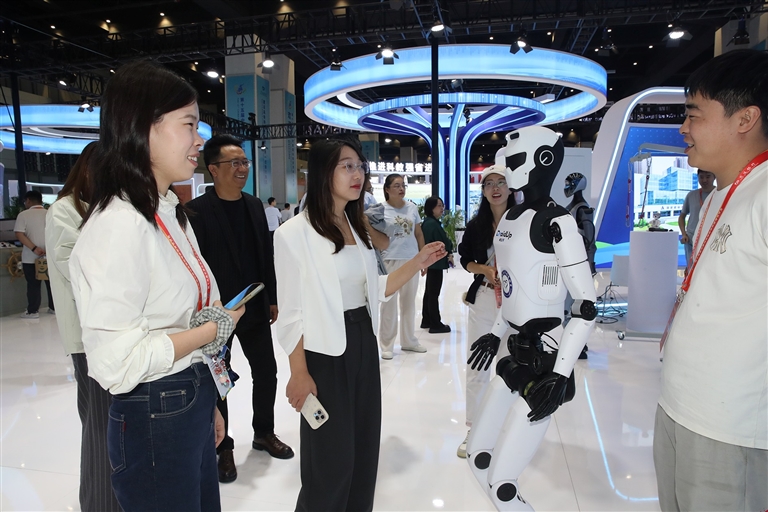
人形机器人头部企业争相布局河南
He Nan Ri Bao· 2025-12-12 22:26
Core Insights - The article highlights the rapid development of the humanoid robotics industry in Henan, with companies like Zhongqing Robotics and UBTECH planning significant investments and expansions in the region [2][3]. Group 1: Company Developments - Zhongqing Robotics has completed A1+ and A2 funding rounds, with the A2 round led by Henan Investment Group, and is establishing a 200-acre manufacturing base in Zhengzhou to produce 5,000 humanoid robots annually [2][3]. - UBTECH has established its Central China headquarters in Zhengzhou and is actively collaborating with multiple cities in Henan [3]. - Other companies, including self-variable robotics and various technology firms, expressed interest in forming closer industrial partnerships with Henan [4]. Group 2: Investment and Infrastructure - Henan Investment Group has set up an artificial intelligence industry fund and is investing in key hardware and software companies to support the local AI ecosystem [4][5]. - Investments include nearly 2 billion yuan in leading server companies and support for domestic GPU leaders to establish R&D centers in Henan [4]. - The local government aims to create a robust ecosystem for humanoid robotics, targeting an industry scale of over 100 billion yuan by 2030 [5]. Group 3: Industry Outlook - The humanoid robotics sector in Henan is experiencing accelerated growth, with advancements in product development, supporting capabilities, and technological innovation [4][5]. - Key components for humanoid robots, such as bearings and flexible sensors, are being produced by local companies, achieving over 90% market share in their respective fields [5]. - The provincial government is focused on leveraging Henan's manufacturing strengths to establish it as a significant hub for humanoid robotics innovation [5].
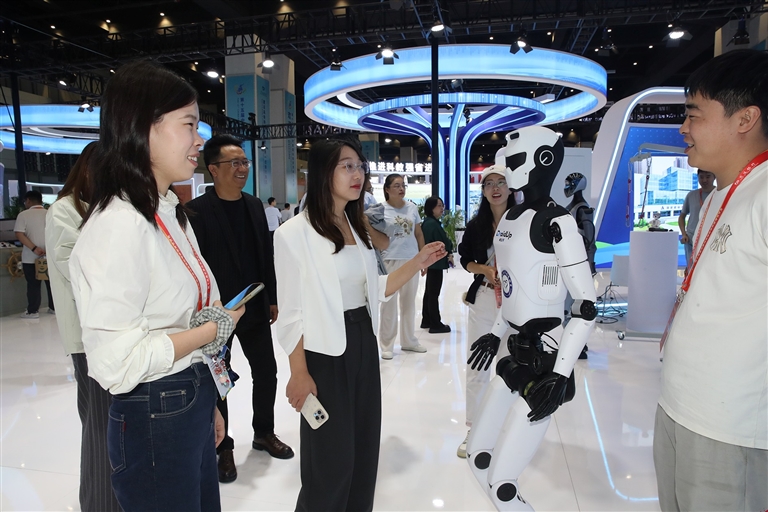
深圳经济生机勃勃 向“新”向“高”发展活力奔涌
Zhong Guo Fa Zhan Wang· 2025-12-11 09:28
Economic Performance - In 2024, Shenzhen's R&D investment reached 245.307 billion yuan, ranking second among major cities in China [1] - Shenzhen's total foreign trade import and export volume ranked first in the country, achieving 32 consecutive months of export growth [1] - By the end of 2024, Shenzhen's industrial output value and industrial added value ranked first in the country for three consecutive years [1] - The GDP of Shenzhen for the first three quarters was 27,896.44 billion yuan, with a year-on-year growth of 5.5% [1] Innovation and R&D - Shenzhen's R&D investment intensity reached 6.67%, the highest among major cities in China [2] - Basic research funding in Shenzhen grew by 21.2% in 2024, with a total of 11.591 billion yuan, outpacing overall R&D funding growth by 11.5 percentage points [3] - The city has established a scientific alliance with Dongguan to promote collaborative innovation in the Guangdong-Hong Kong-Macao Greater Bay Area [3] Industrial Development - Shenzhen has over 74,000 companies related to robotics, leading the nation, with 34 listed companies in this sector [5] - The city is recognized as a global leader in the low-altitude economy, having implemented the first national legislation on low-altitude economic development [4] - Shenzhen's policies have fostered a complete ecosystem for robotics, from core components to application scenarios [5] Foreign Investment - Since the 14th Five-Year Plan, Shenzhen has seen the establishment of 34,600 foreign-invested enterprises, accounting for 14.7% of the national total [7] - The actual utilization of foreign capital reached approximately 274.23 billion yuan, 1.2 times that of the previous five-year period [7] - Shenzhen has become a strategic hub for foreign investment, with over 200 active foreign R&D centers and more than 30,000 R&D personnel [7]


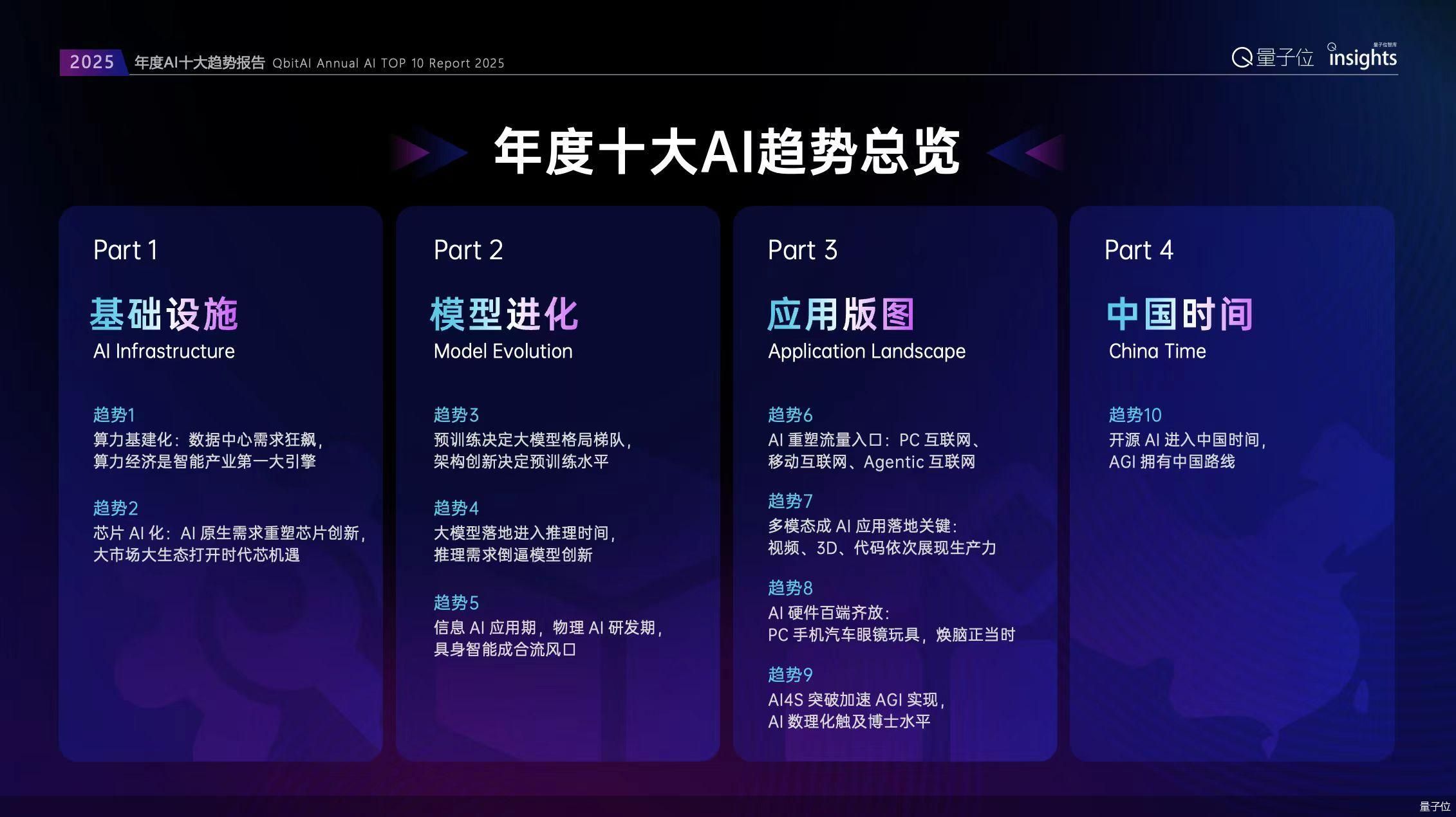
AI应用下一个突破口在哪
Bei Jing Shang Bao· 2025-12-10 15:44
Core Insights - The report indicates that AI is transitioning from the "tool era" to the "partner era" by 2025, with a clearer development trend for 2026 [1] Infrastructure - The report emphasizes the importance of computing power and chips, identifying the computing economy as the primary engine of the intelligent industry, with unprecedented global demand for AI computing power driving the construction of large-scale data centers [3] - These data centers are evolving from traditional server hosting to AI company-led powerhouses integrating massive computing, storage, and network resources [3] - Cloud computing vendors are shifting investments from general computing resources to dedicated computing infrastructure that meets AI demands, leading to strategic partnerships with AI companies [3] - The rise of AI-native demands is reshaping chip innovation, with GPU dominance being challenged by NPU and growth in ASIC/FPGA technologies [3] - China is accelerating the construction of a self-controlled computing ecosystem, with domestic "chip + SDK + framework" solutions validated in trillion-level model training [3] Model Innovation - Pre-training determines the hierarchy of large models, while architectural innovation influences pre-training levels, with hybrid expert models becoming mainstream under computational constraints [4] - In 2025, large models will enter the "inference time," with breakthroughs in multi-modal deep inference and adaptive reasoning [4] - The report highlights a surge in research and development in physical AI and embodied intelligence, with world models and VLA frameworks becoming focal points [4] - A new order collaboration was announced by UBTECH, involving humanoid robot sales exceeding 50 million yuan, showcasing integration with AI large models [4] Application Landscape - AI is reshaping traffic entry points, transitioning from "people finding services" to "services finding people," marking a new interaction paradigm [7] - AI agents are developing closed-loop capabilities in perception, planning, decision-making, and execution, gradually replacing traditional apps [7] - The new generation of AI systems can process and understand multiple information types simultaneously, enhancing performance in complex scenarios and opening new possibilities for creative content generation and intelligent interaction [7] - The report predicts that as technology matures in the next 2-3 years, AI will become a standard tool across various industries, transitioning from a competitive advantage to a necessity [7] - The AI hardware sector is also gaining attention, with lightweight models and edge computing technologies driving AI capabilities to mobile devices, cars, and IoT devices [7] - More smart devices are gaining local AI processing capabilities, addressing data privacy, network latency, and cost efficiency issues [7]
AI的下一个突破口在哪
Bei Jing Shang Bao· 2025-12-10 13:12
Core Insights - The report indicates that AI is transitioning from the "tool era" to the "partner era" by 2025, with clearer development trends emerging for 2026 [1] Group 1: Infrastructure and Computing Power - The report emphasizes that computing power is the primary engine of the intelligent industry, with unprecedented global demand for AI computing power driving the construction of large-scale data centers [5] - Cloud computing vendors are shifting investments from traditional general computing resources to dedicated computing infrastructure that meets AI demands, evolving their partnerships with AI companies into deep strategic collaborations [5] - The demand for AI is reshaping chip innovation, with a significant market opening up for new opportunities in chip technology, challenging the dominance of GPUs and promoting the adoption of NPUs and custom chips [6] Group 2: Model Innovation - Pre-training determines the hierarchy of large models, while architectural innovation influences pre-training levels, with hybrid expert models becoming mainstream due to their cost-effective design [7] - By 2025, large models will enter a "reasoning time," with continuous breakthroughs in multi-modal deep reasoning and adaptive reasoning frameworks [7] Group 3: Embodied Intelligence and Applications - There is a growing trend in the research and development of physical AI and embodied intelligence, with significant orders being placed for humanoid robots, indicating a shift towards broader application exploration [8] - The report highlights that AI is reshaping traffic entry points, transitioning from "people finding services" to "services finding people," which is becoming the next generation of interaction paradigms [10] - The emergence of lightweight models and edge computing technologies is facilitating the proliferation of AI capabilities in devices such as smartphones, cars, and IoT devices, addressing key issues of data privacy and cost efficiency [10]
自变量机器人岗位招募来啦!强化学习/世界模型/VLN/物理仿真等方向
具身智能之心· 2025-12-08 10:00
Company Overview - The company, Self-Variable Robotics, was established in December 2023, focusing on developing embodied intelligent general models to achieve universal robotics [5] - The founder and CEO, Wang Qian, is a graduate of Tsinghua University and one of the earliest scholars to introduce attention mechanisms in neural networks [1] - Co-founder and CTO, Wang Hao, holds a PhD in computational physics from Peking University and has led the development of significant multimodal models in China [3] Technology and Development - Self-Variable Robotics has established a technology path that integrates end-to-end unified models for general embodied intelligence, with a simultaneous development of software and hardware [5] - The company has developed the "WALL-A" model, which is claimed to be the largest end-to-end unified embodied intelligence model globally, surpassing existing models in multiple dimensions [8] - The company emphasizes the importance of real data for training algorithms and maintains a high proportion of PhD-level researchers within its teams [8] Commercial Applications - The company has identified commercial applications in various sectors, including hotels, elderly care, logistics, industry, and hospitals [5] - It is actively recruiting talented individuals in the field of embodied intelligence to drive the implementation of general artificial intelligence [5] Job Opportunities - The company is offering various positions, including algorithm engineers focused on reinforcement learning, world model development, and physical simulation [9][20][24] - Candidates are expected to have strong backgrounds in computer vision, artificial intelligence, robotics, and related fields, with proficiency in deep learning frameworks [13][17][23]

自变量机器人参与成立RoboChallenge组委会 开源协作开启标准化新阶段
Sou Hu Cai Jing· 2025-12-08 06:40
Core Insights - The article highlights the rapid growth and innovative approach of a Shenzhen-based startup, Zivariable Robotics, which has successfully raised over 2 billion yuan in funding within two years, positioning itself as a significant player in the embodied intelligence sector [1][11]. Company Overview - Zivariable Robotics was founded in December 2023 and has quickly gained attention for its advanced robotic capabilities, exemplified by a robot named "Xiaoliang" that can prepare drinks efficiently [1]. - The company has received substantial backing from major players like Alibaba and Meituan, which has contributed to its impressive funding achievements [1][11]. Leadership and Vision - The founder and CEO, Wang Qian, is a Tsinghua University graduate with a strong background in neural networks and robotics, aiming to make general-purpose robots an integral part of everyday life [3][4]. - Wang's vision includes leveraging China's advantages in hardware manufacturing and data collection to drive innovation in robotics [4][6]. Technological Approach - Zivariable Robotics adopts a unique "end-to-end model" approach, which integrates perception, planning, and control into a single framework, contrasting with traditional modular designs [7][8]. - The company's technology has demonstrated significant capabilities, including a high success rate in complex tasks and the ability to adapt to new scenarios without retraining [9][10]. Data Strategy - The company emphasizes the importance of high-quality real-world data for training its models, rejecting reliance on simulation data for complex physical interactions [10]. - A multi-channel data collection system has been established to ensure robust data quality, supporting the development of its models [10]. Funding and Market Position - Zivariable Robotics has completed eight funding rounds, raising over 2 billion yuan, with notable investments from Alibaba Cloud and Meituan, indicating strong market confidence [11]. - The company is strategically positioned to capitalize on the growing household robotics market, which is projected to be significant due to the high demand for automation in domestic tasks [12]. Future Plans - The company plans to initially target B2B markets before expanding into the consumer market, with expectations of launching early products within 3-4 years [12]. - Wang predicts that the price range for consumer robots will be around 100,000 yuan, with ongoing efforts to reduce costs through supply chain optimization [12]. Challenges and Ecosystem Development - Despite its progress, Zivariable Robotics acknowledges the challenges in the robotics industry, particularly in developing the "brain" of robots rather than just focusing on hardware [13]. - The company is actively working on building an ecosystem for embodied intelligence, including the release of an open-source foundational model to foster innovation [13].
具身智能时代,谁将成为下一个“中国巴菲特”?
3 6 Ke· 2025-12-05 12:37
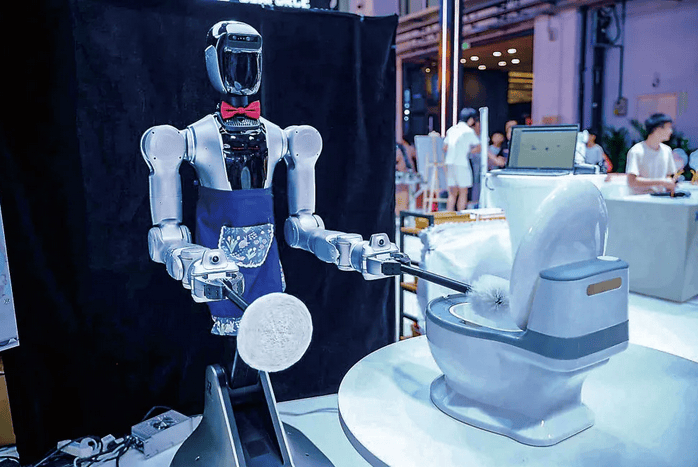
Core Insights - The initial successful application of humanoid robots is in the short video industry, showcasing their quirky and often clumsy behaviors, which have become a source of entertainment [1][4] - The humanoid robot industry is transitioning from experimental phases to real-world applications, with significant investment flowing into the sector, indicating a potential for substantial growth [4][10] Industry Development - In the first eight months of 2025, the financing amount in China's robotics sector reached 38.624 billion yuan, highlighting the increasing financial interest in humanoid robots [4] - Global consulting firm Bain predicts that humanoid robots will reshape industrial production and significantly impact commercial services and home life over the next decade [4] Technological Approaches - The U.S. focuses on creating advanced "super brains" for robots, emphasizing a technology-driven approach, while China adopts a more pragmatic strategy, prioritizing hardware development and real-world applications [5][7] - Chinese companies are rapidly developing the physical components of robots, such as advanced sensors and dexterous hands, to enhance their functionality and reduce costs [8][10] Investment Landscape - Venture capital firms like Sequoia Capital and Matrix Partners are strategically investing in various segments of the humanoid robot industry, aiming to capture value across the entire supply chain [11][12] - Major tech companies like Tencent and Alibaba are also investing in robotics, providing not only capital but also valuable application scenarios and resources [14] Government and Institutional Support - National investment entities are aligning their strategies with government initiatives, focusing on securing the supply chain and advancing critical technologies in the humanoid robot sector [15] - The involvement of over 3,331 investment institutions in humanoid robot projects indicates a robust interest in the industry, with significant contributions from state-backed funds [15] Market Challenges - Despite the excitement in the humanoid robot market, there are concerns about product redundancy and the potential for oversaturation, which could hinder innovation and development [17] - The industry faces challenges in achieving sustainable cash flow and viable commercialization paths, as highlighted by the closure of previously promising companies [17][19]
自变量机器人:端到端基础模型,押注通用机器人未来
Sou Hu Cai Jing· 2025-12-05 03:48
Core Insights - A Shenzhen-based startup, Zivariable Robotics, has raised over 2 billion RMB in less than a year and a half, backed by major investors like Alibaba and Meituan, with a vision to bring general-purpose robots into households [1][17]. Group 1: Company Overview - Zivariable Robotics was founded by Wang Qian, a Tsinghua University graduate, who has a strong background in neural networks and robotics [2][3]. - The company has completed 7 rounds of financing, with a total amount exceeding 2 billion RMB, positioning itself as a leading player in the embodied intelligence sector [17][19]. Group 2: Technology and Innovation - The company adopts a unique technology path with an "end-to-end large model" approach, which integrates perception, planning, and control into a single model, contrasting with traditional layered architectures [8]. - The WALL-A model, developed by Zivariable, showcases significant advancements, achieving a task success rate of over 95% for complex operations [9][10]. - The model demonstrates three major breakthroughs: multi-modal information fusion, zero-shot generalization capability, and significant progress in dynamic environment perception and real-time task planning [11]. Group 3: Data Strategy - Zivariable Robotics emphasizes high-quality real-world data collection, avoiding reliance on simulation data for complex physical interactions [4][12]. - The data collection strategy includes centralized data collection sites, distributed real-world environments, and data feedback from deployed robots [12]. Group 4: Market Position and Future Plans - The company aims to commercialize its technology by initially targeting B2B scenarios before expanding to B2C, with a focus on household robots [20]. - Wang Qian predicts that the household robot market could be larger than industrial applications, with a potential price point of around 100,000 RMB [20]. - Zivariable Robotics is actively building an ecosystem for embodied intelligence, planning to release an open-source foundational model to foster innovation in the field [22].