雷鸟

Search documents
核心新股周巡礼系列6:视涯科技招股书梳理-20250810
Huaan Securities· 2025-08-10 14:46
Investment Rating - The industry investment rating is "Overweight" [1] Core Insights - The report highlights that the company, Visionary Technology, has become one of the few global enterprises with full-stack self-research capabilities in silicon-based OLED technology, including display chips, micro-displays, and optical systems [3][15] - Visionary Technology is the first company globally to achieve mass production of silicon-based OLED micro-displays using 12-inch wafer backplanes, positioning itself as a key player in China's silicon-based OLED industry [3][15] - The company's silicon-based OLED micro-displays are expected to benefit significantly from the rapid growth of the XR (Extended Reality) market, with a projected compound annual growth rate (CAGR) of 67.3% from 2024 to 2030 [7][8] Summary by Sections Company Overview - Visionary Technology has established itself as a leading provider of micro-display solutions, with its core product being silicon-based OLED micro-displays [15] - The company has been recognized as a national leader in the new display industry chain and is tasked with enhancing the resilience and security of the supply chain [3][15] Financial Performance - From 2022 to 2024, the company's revenue from silicon-based OLED micro-displays is projected to increase from 61.71% to 79.70% of its total revenue, indicating its core product's growing importance [4][32] - The company's total revenue for 2022, 2023, and 2024 is expected to be 190.39 million, 215.45 million, and 280.06 million yuan respectively, with a significant portion coming from its main business [32][37] Market Position and Strategy - Visionary Technology has formed deep partnerships with major clients in the XR field, which is crucial for future bulk orders [4][7] - The company has a strategic focus on developing high-performance silicon-based OLED micro-displays that meet the increasing demands of the XR industry, outperforming traditional silicon-based OLED manufacturers [3][4] Industry Trends - The global XR device market is expected to grow from 31.89 billion yuan in 2024 to 700.04 billion yuan by 2030, with silicon-based OLED technology being the only mass-produced display technology applicable to both AR and VR industries [7][8] - The report indicates that the silicon-based OLED display market is projected to grow from 390 million yuan in 2020 to 1.27 billion yuan in 2024, with a CAGR of 34.3% [8] Customer Base - Visionary Technology has established itself as a strategic supplier for numerous leading clients, including ByteDance and Lenovo, with significant market share in the XR device sector [7][18] - The company has contracts with major clients that ensure a steady demand for its products, contributing to its revenue growth [7][18]
AI眼镜市场持续升温!消费电子ETF下跌0.11%,蓝思科技上涨4.22%
Xin Lang Cai Jing· 2025-08-07 03:04
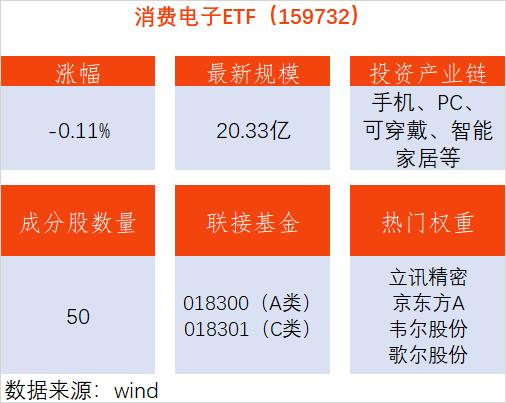
Group 1 - The A-share market experienced a collective decline on August 7, with the Shanghai Composite Index down by 0.14% during the session, while sectors such as beauty care, textiles, and banking showed positive performance, and steel and non-ferrous metals faced significant declines [1] - In the consumer electronics sector, the Consumer Electronics ETF (159732.SZ) saw a slight decrease of 0.11%, with individual stocks like Lens Technology, Luxshare Precision, and Crystal Optoelectronics showing gains of 4.22%, 3.45%, and 2.29% respectively, while companies like Shenghong Technology and Jingchen Technology reported declines of -5.01% and -3.10% [1] Group 2 - Global AI smart glasses sales are projected to reach 870,000 units in Q2 2025, marking a year-on-year increase of 222%, primarily driven by strong sales of Ray-Ban Meta smart glasses, which sold 720,000 units compared to 250,000 units in the same period last year [3] - The report from Caixin Securities indicates that the sustained interest in the AI smart glasses market, along with strong sales growth and the upcoming releases of new AI+AR glasses from tech giants like Alibaba, Google, and Meta, will provide significant growth momentum for the overall AI smart glasses sales this year [3] - The launch of Oakley Meta Glasses is expected to contribute to the sales of sports AR glasses, with integrated display functions and deep ecosystem integration being identified as key development directions for future AI smart glasses [3]


希荻微(688173.SH):高性能芯片产品已通过ODM厂商实现向雷鸟等国内科技公司销售
Ge Long Hui· 2025-08-06 08:02
Core Viewpoint - The company is actively exploring commercial opportunities for chip products in the AI application sector, particularly in collaboration with partners [1] Group 1: Company Developments - The company has expressed a strong focus on the development trends of AI applications at the edge [1] - High-performance chip products have been sold to domestic tech companies such as Thunderbird through ODM manufacturers [1] - These chips are being applied in end products like AI glasses, although the sales volume and revenue contribution remain relatively small [1]

硬件厂商在ChinaJoy“大秀肌肉” 还有企业上演 “分身术”
Guang Zhou Ri Bao· 2025-08-05 03:16
Group 1 - The esports industry continues to grow, attracting more hardware companies to participate in ChinaJoy, showcasing products like displays, chips, and mobile devices [1] - Thunderobot's esports-themed exhibition area featured events such as a League of Legends fan match and giveaways, highlighting the company's strategic positioning in the esports market [1] - The Thunderobot He 6 Ultra TV was prominently displayed, showcasing its capabilities during the King of Glory World Championship, emphasizing its low-reflective screen technology [1] Group 2 - Hardware manufacturers are adopting a new approach at ChinaJoy, integrating their products into entertainment experiences rather than traditional display methods [2] - This strategy focuses on creating a natural connection between products and entertainment, moving away from the conventional "display machine + flyers" model [2]
AI录音机也能卖爆?巨头血亏,“小而美”AI硬件却在闷声发财
3 6 Ke· 2025-08-04 05:58
Core Insights - The AI hardware sector is witnessing the emergence of significant players with "blockbuster" potential, such as Meta's AI smart glasses and Plaud.AI's AI voice recorder, both achieving sales in the millions [1] - A clear trend is observed where companies focus on niche markets and specific scenarios rather than mass-market products, which has become a standard formula in AI hardware [1] - The Chinese AI hardware market is projected to reach 1.1 trillion yuan in 2025, with a year-on-year growth of 13.4% and a compound annual growth rate of 18% over the next five years [1] Group 1: Emerging Products and Companies - The AI toy sector is thriving with innovative products like BubblePal, an interactive toy that has sold over 250,000 units since its launch, generating sales exceeding 100 million yuan [4] - FoloToy, another player in the AI toy market, aims to sell 300,000 units this year, significantly increasing its sales target compared to the previous year [4] - In the AI meeting recording space, Plaud.AI's voice recorder has surpassed 1 million units sold, while TicNote has achieved over 10,000 units sold, ranking 11th in its category on JD.com [7][9] Group 2: Market Dynamics and Trends - The AI hardware market is characterized by a focus on solving specific user problems, with successful products integrating AI capabilities to enhance user experience rather than serving as standalone solutions [15][18] - The competition in the AI glasses segment is intensifying with major players like Alibaba and Xiaomi entering the market, indicating a shift from niche to mass-market potential [14] - The future of AI hardware is expected to evolve along two main lines: continuous exploration of vertical scenarios and the application of AI in more physical interaction contexts [23] Group 3: Challenges and Opportunities - Despite the promising outlook for AI hardware, there is currently no standout product that has defined the category akin to the iPhone for smartphones, indicating that many products are still in the exploratory phase [21] - The market is described as being in an early "Warring States" period, where identifying a killer application could lead to significant competitive advantages [23][24] - The potential for disruption often comes from smaller, niche companies rather than established giants, highlighting opportunities for startups in the AI hardware space [24]

五大明星智能眼镜横评:Rokid表现最均衡,Meta水土不服
3 6 Ke· 2025-08-04 05:46
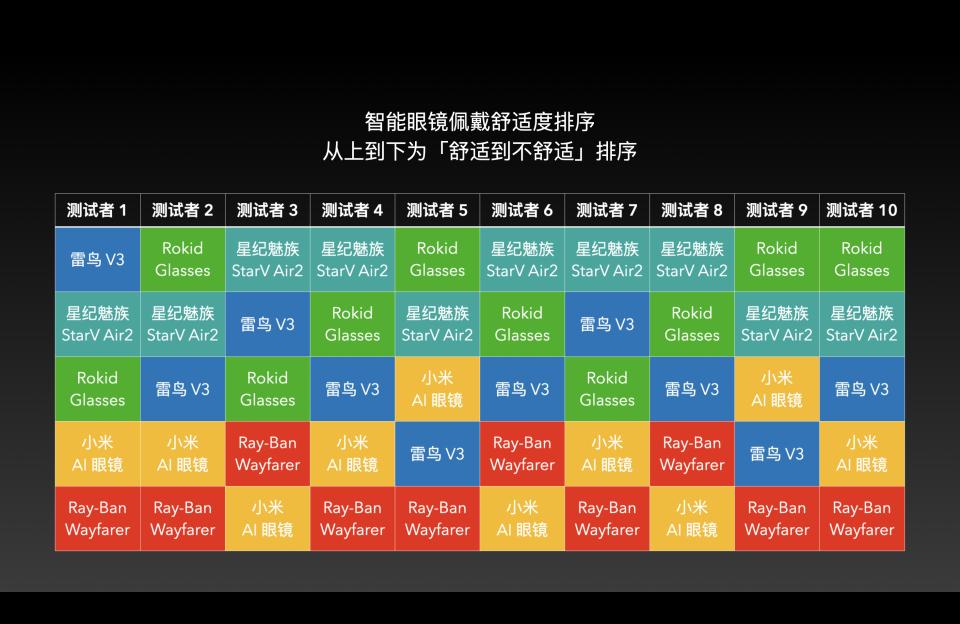
Core Viewpoint - Smart glasses have evolved from niche gadgets to practical devices, with various brands like Meta, Ray-Ban, Rokid, and Xiaomi launching their versions, each focusing on different functionalities and user experiences [1][5]. Group 1: Comfort and Usability - Comfort is crucial for wearable devices, and the best experiences were reported with StarV Air2 and Rokid Glasses, attributed to their weight distribution [2][4]. - A comparative ranking of five smart glasses showed StarV Air2 and Rokid as the top choices, with StarV Air2 excelling in design features [4][7]. Group 2: Performance and Features - In terms of imaging capabilities, Rokid Glasses and Meta Ray-Ban Wayfarer were noted for their superior photo and video quality, while StarV Air2 lacks a camera [12][22]. - Rokid Glasses demonstrated excellent video performance with some motion blur, while Ray-Ban Wayfarer provided high-quality images but was less suitable for Asian users due to design issues [21][11]. Group 3: AI Capabilities - AI functionalities varied significantly among the glasses, with Xiaomi's AI assistant being highly interactive but sometimes overly verbose, while Rokid's AI was more mature and context-aware [23][31]. - StarV Air2, lacking a camera, had limited AI capabilities but maintained good voice interaction performance [40]. Group 4: Audio and Display - Rokid and StarV Air2 were the only models with display capabilities, both using optical waveguide technology, while Meta Ray-Ban excelled in audio quality [44][45]. - The audio performance of Meta Ray-Ban was noted for its clarity and low distortion, making it stand out among the other models [44]. Group 5: Battery Life and Charging - All five models exhibited limited battery life, with Xiaomi AI glasses being the most reliable, while the Ray-Ban and Rokid models offered charging cases [46][48]. - The charging mechanisms varied, with Ray-Ban's case being more aesthetically pleasing but less user-friendly compared to others [50][52]. Group 6: Market Positioning - The analysis suggests that Rokid Glasses are the most balanced option, while StarV Air2 and Thunder V3 serve as good alternatives for users not needing extensive features [55][57]. - Meta Ray-Ban Wayfarer is recommended against for domestic users due to compatibility issues, positioning it more as a fashion accessory than a practical tool [59].
科技与二次元的生态跨界,汽车、机器人也来ChinaJoy“凑热闹”
Tai Mei Ti A P P· 2025-08-03 09:00
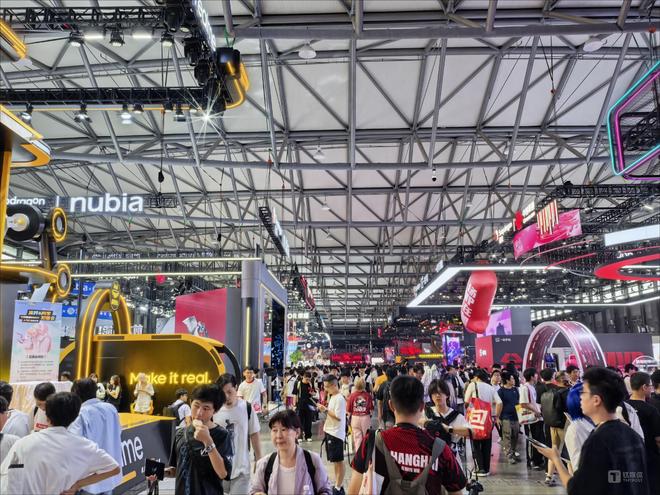
Core Insights - The ChinaJoy event showcases the booming e-sports market and its impact on related industries, with 743 companies participating and an expected daily footfall of over 55,000 visitors [2][3] - The event highlights the integration of cutting-edge technology and gaming, with a focus on mobile gaming and e-sports, as well as the rise of AI and XR technologies [5][12] Industry Trends - The e-sports industry in China generated revenues of 12.761 billion yuan in the first half of 2025, marking a year-on-year growth of 6.1% [2] - E-sports monitors have seen a penetration rate of 62% in the online market, with a projected growth of 1.6% in overall PC monitor shipments and a 12.4% increase in the e-sports monitor market by 2025 [3] Technology and Product Innovations - Major brands like TCL, Samsung, and Xiaomi showcased their latest advancements in e-sports displays and smart devices at ChinaJoy [5] - Qualcomm's Snapdragon Pavilion featured over 100 devices and more than 50 multi-device game demonstrations, emphasizing the importance of high-performance smartphones in the gaming ecosystem [5][16] Cross-Industry Collaborations - The event saw collaborations between mobile manufacturers and game developers, with Qualcomm working closely with companies like NetEase to enhance gaming experiences through AI capabilities [16][17] - Companies are leveraging popular game IPs to promote their products, with limited edition releases aimed at attracting new users [12][19] Future Outlook - The blending of technology and gaming is expected to continue, with a focus on creating immersive experiences across various platforms, including mobile, PC, and XR [19] - The presence of humanoid robots and automotive brands at the event indicates a growing trend of cross-industry engagement, further blurring the lines between technology and entertainment [10][19]




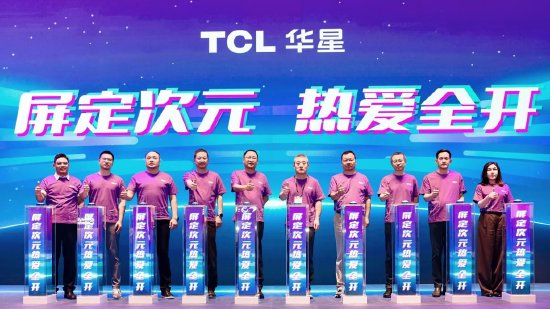
直击CJ | TCL华星“屏宇宙”进阶亮相,发布电竞MNT显示技术
Xin Lang Cai Jing· 2025-08-02 00:15
Core Viewpoint - The 22nd ChinaJoy showcased TCL Huaxing's advancements in esports display technology, emphasizing their leadership in the global market and commitment to enhancing user experience through innovative products and technologies [1][3]. Group 1: Market Position and Strategy - TCL Huaxing is projected to hold the number one global market share and shipment volume in esports MNT displays from 2022 to 2024, with one in three esports monitors utilizing TCL Huaxing screens [3]. - The company aims to develop a comprehensive range of esports products across various formats, including mobile phones, tablets, laptops, monitors, and gaming TVs, to meet global consumer demands [3]. Group 2: Technological Innovations - TCL Huaxing has made significant advancements in display quality, eye protection, and green technology, focusing on enhancing user experience through its APEX brand, which emphasizes visual health and sustainability [4]. - New display technologies introduced include HVA Fast, HVA Black, and HFS Shoot, designed to cater to different gaming needs, achieving high response speeds, superior contrast ratios, and high refresh rates [4][5]. Group 3: Collaborative Efforts - The launch of new products from Samsung's Odyssey series coincided with TCL Huaxing's esports MNT technology release, showcasing a collaborative effort to enhance the gaming experience [6]. - The exhibition featured a variety of esports products from multiple partners, highlighting the extensive application of TCL Huaxing's display technologies across the industry [6].

国泰海通:大厂AI眼镜新品陆续发布 政策支持技术创新
智通财经网· 2025-07-31 08:08
智通财经APP获悉,国泰海通发布研报称,根据映维网、JBD公众号,阿里自研的首款自研智能眼 镜"夸克AI眼镜"在WAIC 2025世界人工智能大会期间正式亮相,预计将在年内正式发布。政策面上, 《上海市下一代显示产业高质量发展行动方案》发布,其中《方案》提出,发展AI+AR、AI+MR等多 形态眼镜产品,鼓励下一代硅基微显示的产品模式与眼镜形态创新,加快推动全彩化、便携式智能眼镜 产品研发。看好大厂AI+AR眼镜密集发布催化及大模型多模态迭代对AI+AR眼镜交互能力的提升。 《上海市下一代显示产业高质量发展行动方案》(2026-2030年)于7月22日印发,《方案》提出,发展 AI+AR、AI+MR等多形态眼镜产品,聚焦轻量化、低功耗、高分辨率、大视场角等关键技术指标,推 动显示器件、波导镜片、核心芯片等关键部件迭代创新,持续提升产品性能,鼓励下一代硅基微显示的 产品模式与眼镜形态创新,加快推动全彩化、便携式智能眼镜产品研发。 全球AI眼镜出货量有望高速增长 Meta与雷朋联名的Rayban-MetaAI眼镜自2023年9月推出销量已突破200万台,25年Meta有望发布带显示 的AR眼镜;Rokid Gla ...


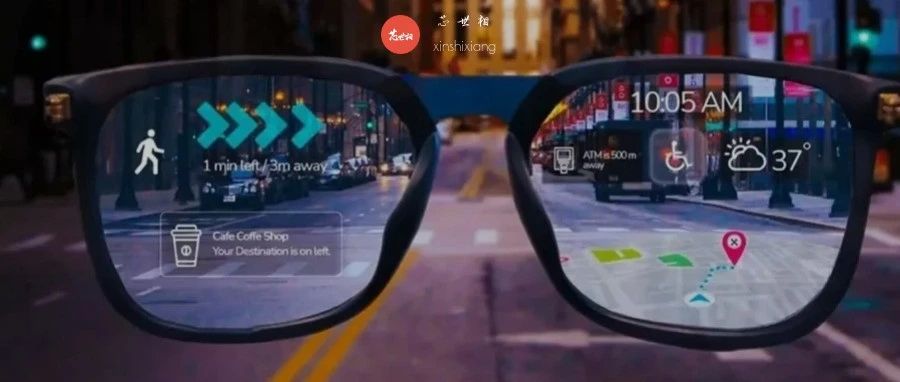
最低78元、顶配450元,华强北向AI眼镜出手了
芯世相· 2025-07-30 05:40
Core Viewpoint - The article discusses the emergence of a new wave in the AI glasses market, termed "Battle of the Glasses 2.0," driven by both tech giants and new entrants launching various AI glasses products at competitive prices [2][4]. Group 1: Market Dynamics - Major companies like Google, Xiaomi, and Rokid have recently launched new AI glasses, with prices ranging from 699 yuan to 8999 yuan [3][4]. - In contrast, lower-priced alternatives from Shenzhen's Huaqiangbei market are selling for around 300 yuan, with some models achieving monthly sales exceeding a thousand units [4][6]. - The average price of AI glasses on platforms like Xianyu is around 300 yuan, with features such as photo capture and voice interaction [6][9]. Group 2: Consumer Behavior - Consumers are increasingly opting for affordable Huaqiangbei models for initial experiences, leading to a high retention rate despite the lower quality compared to premium brands [18][19]. - Feedback from consumers indicates that while Huaqiangbei glasses are functional, they often lack the performance and reliability of higher-end models [15][16]. Group 3: Production and Supply Chain - Huaqiangbei manufacturers are rapidly iterating on AI glasses, with a focus on speed to market, often producing standard models within a week [22][23]. - The production strategy relies heavily on external sourcing for key components, which allows for quick assembly and delivery [22][37]. Group 4: Future Outlook - The global smart glasses market is projected to reach 14.5 million units by 2025, with significant growth expected in China [34]. - However, some industry insiders believe that current AI glasses represent a "pseudo-demand" due to technological immaturity, suggesting that mainstream adoption may take several more years [34][35]. - The competitive landscape indicates that while Huaqiangbei products are currently popular, manufacturers are prepared to pivot to new trends as market dynamics shift [25][40].