浦发银行

Search documents
浦发银行资产托管规模突破20万亿元
Zhong Jin Zai Xian· 2025-12-01 12:26
Core Insights - SPDBank's asset custody business has achieved a significant milestone, with the asset custody scale surpassing 20 trillion yuan by the end of November 2025, ranking fourth in the industry and marking the highest annual growth in nearly a decade [1][2] Group 1: Business Growth and Strategy - The asset custody scale has consistently increased by over one trillion yuan for five consecutive years, indicating robust growth and a new development phase for SPDBank's custody services [1] - The bank has implemented a collaborative strategy, enhancing its custody business through initiatives like "joint custody" and "group custody," which have led to comprehensive breakthroughs across operational goals, collaborative mechanisms, and digital applications [1] Group 2: Innovation and Market Leadership - SPDBank is at the forefront of market innovation, having introduced several industry-first products, including the first floating-rate public fund and the first climate change high-grade bond index fund [2] - The bank's "Kao Pu Custody" brand has received multiple awards, including recognition as an "Excellent Asset Custody Institution" and "Best Innovative Fund Custody Service" by industry authorities, showcasing its strong market presence and professional reputation [2] Group 3: Future Outlook - With a new starting point of 20 trillion yuan, SPDBank aims to align closely with national strategic deployments, enhancing service standards and contributing significantly to the construction of a strong financial nation [2]



股票行情快报:浦发银行(600000)12月1日主力资金净买入3968.89万元
Sou Hu Cai Jing· 2025-12-01 12:26
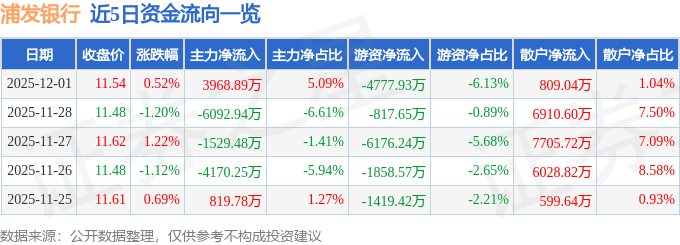
Core Viewpoint - As of December 1, 2025, Shanghai Pudong Development Bank (SPDB) closed at 11.54 yuan, reflecting a 0.52% increase, with a trading volume of 680,000 hands and a transaction value of 779 million yuan [1] Fund Flow Analysis - On December 1, 2025, the net inflow of main funds was 39.69 million yuan, accounting for 5.09% of the total transaction value, while retail investors saw a net inflow of 809.04 million yuan, representing 1.04% of the total [1] - Over the past five days, the fund flow data shows fluctuations, with significant net outflows from main and speculative funds on several days, particularly on November 28 and 27 [2] Company Performance Metrics - SPDB's total market capitalization is 384.35 billion yuan, with a net asset value of 840.84 billion yuan and a net profit of 38.82 billion yuan, ranking 10th in the industry [3] - The bank's price-to-earnings ratio (P/E) is 7.43, while the industry average is 5.99, indicating a relatively higher valuation compared to peers [3] - For the first three quarters of 2025, SPDB reported a year-on-year revenue increase of 1.88% to 132.28 billion yuan and a net profit increase of 10.21% to 38.82 billion yuan [3] Institutional Ratings - In the last 90 days, six institutions have rated SPDB, with five giving a "buy" rating and one an "accumulate" rating, while the average target price set by institutions is 15.79 yuan [4]
解锁金融知识服务破局之道!中国移动咪咕与中国银行总行共创行业新范式
Huan Qiu Wang· 2025-12-01 09:53
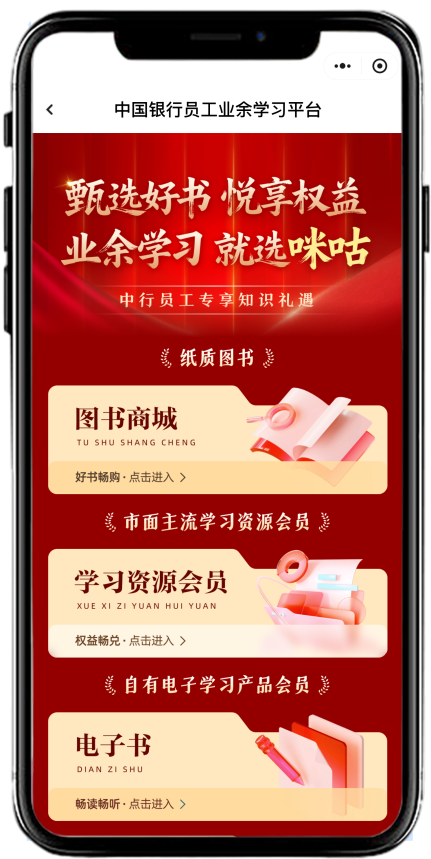
Core Insights - China Mobile's Migu Digital Media has been selected for the Bank of China's employee training project for 2025-2027, highlighting its strength in financial industry training services and addressing the digital talent development needs of state-owned banks [1][3]. Group 1: Challenges in Talent Development - State-owned banks face three main challenges in talent development: rapid changes in compliance policies, significant differences in learning needs across job levels, and difficulties in quantifying training effectiveness [3]. - The Bank of China's project reflects a growing emphasis on compliance accuracy, user experience, and measurable outcomes in training programs [3]. Group 2: Successful Case Studies - Migu has successfully implemented a dual approach of "online digital library + offline reading space" for the Shanghai Pudong Development Bank, achieving over 85% accuracy in AI book recommendations [4]. - In collaboration with various branches of the Industrial and Commercial Bank of China, Migu has tailored its services to meet diverse employee learning needs, achieving 100% participation in specific projects [4]. Group 3: Key Advantages of Migu's Training Solutions - Migu has developed a comprehensive compliance content matrix that addresses specific job requirements, leveraging a vast library of resources and partnerships with leading educational content providers [7]. - The use of AI technology allows for personalized learning experiences, enhancing engagement and participation rates by 35% [8]. - Migu offers a full-service solution that includes program design, system integration, and real-time tracking of training effectiveness, significantly reducing operational costs for banks [9]. Group 4: Financial Sector Focus - Migu has served over ten thousand corporate clients, impacting more than ten million employees, and has established a strong presence in the financial sector, covering all major state-owned banks and various non-bank financial institutions [14]. - The partnership with the Bank of China represents an opportunity for Migu to further enhance its capabilities in digital talent development, reinforcing its position as a key player in the financial industry's digital transformation [14].

浦发银行获批收购重庆铜梁浦发村镇银行
Bei Jing Shang Bao· 2025-12-01 08:49
Core Viewpoint - The National Financial Regulatory Administration has approved Shanghai Pudong Development Bank's acquisition of Chongqing Tongliang Pudong Village Bank and the establishment of a new branch in Chongqing [1] Group 1: Acquisition Details - Shanghai Pudong Development Bank will acquire Chongqing Tongliang Pudong Village Bank and establish a new branch named Shanghai Pudong Development Bank Chongqing Tongliang Branch [1] - The acquisition includes the assets, liabilities, business, and employees of Chongqing Tongliang Pudong Village Bank after the completion of asset verification [1] Group 2: Regulatory Requirements - The acquisition must comply with the Company Law and the Commercial Banking Law of the People's Republic of China, along with other relevant laws and regulations [1] - Chongqing Tongliang Pudong Village Bank is required to handle the dissolution of its legal entity as per regulations [1] - After the establishment of the new branch, Shanghai Pudong Development Bank must apply for approval to commence operations from the National Financial Regulatory Administration [1]
中信集团、招商银行、兴业银行、浦发银行、上海银行、青岛银行迅速驰援!
Jin Rong Shi Bao· 2025-12-01 07:11
Core Viewpoint - The financial institutions in Hong Kong have rapidly mobilized to provide support and aid following the fire incident at Hong Kong's Tai Po Wang Fuk Court, demonstrating a commitment to disaster relief and community support [1]. Group 1: Contributions from Financial Institutions - CITIC Group has pledged HKD 15 million to support rescue efforts, victim relocation, and post-disaster reconstruction, while also organizing teams to deliver essential supplies and encouraging employee blood donations [2]. - China Merchants Bank has committed HKD 10 million for disaster relief and has established emergency service channels to provide immediate financial support to affected citizens [3]. - Industrial Bank has donated HKD 10 million to the designated "Tai Po Wang Fuk Court Relief Fund" to assist with medical care for the injured and support for the families of victims [4]. - Pudong Development Bank has also contributed HKD 10 million to the Bai Yulan Charity Foundation for emergency relief and reconstruction efforts, while organizing volunteer teams to assist affected residents [5]. - Shanghai Bank has donated HKD 10 million to the Bai Yulan Charity Foundation, with funds arriving promptly to support rescue and recovery efforts, and has mobilized employees for volunteer work [6]. - Qingdao Bank has opened a cross-border RMB donation "green channel" to facilitate donations to the affected area, waiving remittance fees for quicker support [7].



第七届金麒麟银行业最佳分析师第一名浙商证券梁凤洁最新观点:银行股Q4深蹲起跳 推荐稳健高股息大行
Xin Lang Zheng Quan· 2025-12-01 03:49
Core Insights - The article discusses the performance of the banking sector in October 2025, highlighting a decline in credit demand and a shift in deposit trends, indicating ongoing challenges in the financial landscape [1][2][3]. Credit Performance - Excluding non-bank financial institutions, credit showed a negative growth in October, with a decrease in both retail and corporate loans. Residential loans fell by 360.4 billion yuan, a year-on-year decrease of 520.4 billion yuan, indicating a contraction in consumer credit demand [1][2]. - Corporate loans saw an increase of 350 billion yuan, but short-term loans decreased by 190 billion yuan, reflecting limited demand for medium to long-term projects [2]. Social Financing - In October, social financing increased by 815 billion yuan, a year-on-year decrease of 597 billion yuan. Government bond issuance was 489.3 billion yuan, down 560.2 billion yuan from the previous year, suggesting a weakening support from government debt [3]. Deposit Trends - The M1 growth rate decreased to 6.2%, while M2 growth was at 8.2%. There is a continued trend of deposits moving towards non-bank financial institutions, with total deposits increasing by 610 billion yuan, but household deposits fell by 1.3 trillion yuan [4]. - The total scale of wealth management products reached a historical high of 33.2 trillion yuan, reflecting a significant increase of 1.1 trillion yuan from the previous month [4]. Banking Sector Performance - For the first three quarters of 2025, listed banks showed resilience with revenue growth of 0.9% and profit growth of 1.6%. State-owned banks performed well, while the performance of smaller banks varied [5][6]. - The net interest margin for listed banks stabilized at 1.37%, with a slight improvement in the interest spread for smaller banks, indicating a recovery in profitability [9]. Investment Recommendations - The article suggests that the banking sector may experience a rebound in Q4, driven by a rebalancing of market styles and increased interest in high-dividend stocks. Recommendations include both smaller banks in economically developed regions and larger, stable banks [12].


11月红利主题基金月度成立规模新高|财富周历 动态前瞻
Sou Hu Cai Jing· 2025-12-01 00:45
A股 - Minmetals Capital's announcement of a related party transaction has drawn industry attention, with its subsidiary Minmetals Trust planning to jointly invest in a joint venture with Minmetals Real Estate, injecting 300 million yuan in cash and an asset package valued at 16.29 billion yuan [2] - The results of the subscription for Moer Thread, known as the "first domestic GPU stock," were announced, with public funds, social security funds, and pension funds acquiring approximately 38.59 million shares, accounting for 98.44% of the offline final issuance [2] - Yunnan Aluminum announced plans to acquire stakes in three aluminum companies from Yunnan Metallurgical Group, while AVIC Helicopter's subsidiary plans to merge with another wholly-owned subsidiary [2] 港股 - The Hong Kong IPO market is experiencing a surge, surpassing the NYSE and NASDAQ, aiming to become the top global fundraising market for new stocks by 2025, with 81 new listings raising a total of 215.98 billion HKD in the first ten months of the year [3] - More than half of the fundraising amount in Hong Kong has come from 14 A-share companies, with notable price discrepancies between A-shares and H-shares, exemplified by CATL's H-share price being over 14% higher than its A-share price [3] 理财 - In November, nine dividend-themed funds were established, raising a total of 6.615 billion yuan, marking a new monthly high for the year, with significant contributions from several funds launched on November 25 [4] - Major state-owned banks and some joint-stock banks have begun to withdraw 5-year large-denomination time deposits, focusing on shorter-term products, with a broad impact across various banks [4] - Sixteen technology-themed funds have been approved, including several ETFs focused on artificial intelligence and semiconductor sectors, with some products receiving approval on the same day they were submitted [4] 个人养老金 - As the year-end personal pension contribution window approaches, banks are intensifying promotional efforts, offering exclusive benefits to attract customers to open accounts and contribute funds, with potential subsidies of around 600 yuan for maximum contributions [5] 债务 - The issuance of new local special bonds in November is expected to reach 492.2 billion yuan, an increase of over 200 billion yuan from the previous month, alongside a significant rise in refinancing bonds [5] 其他 - From January to October, profits of large-scale industrial enterprises in China totaled 595.03 billion yuan, a year-on-year increase of 1.9%, with equipment manufacturing and high-tech manufacturing being the main profit growth drivers [6] - China remains the world's largest market for industrial robots, with significant improvements in performance and quality, and a projected increase in domestic multi-joint robot sales [6] - The National Development and Reform Commission announced a new credit repair management method, effective from April 1, 2026, allowing credit subjects to apply for credit repair under certain conditions [6] - China's foreign direct investment reached 1,033.23 billion yuan in the first ten months, a year-on-year increase of 7%, with investments made in 9553 overseas enterprises across 152 countries and regions [7] - The Chinese medical device market is expected to reach 1.22 trillion yuan by 2025, driven by innovation, with a record number of approved innovative medical devices [7]




五洲特种纸业集团股份有限公司 关于为控股子公司提供担保的进展公告
Zhong Guo Zheng Quan Bao - Zhong Zheng Wang· 2025-11-30 22:34
Group 1 - The company has signed a loan guarantee contract with a syndicate of banks to provide a joint liability guarantee for its subsidiary, Wuzhou Special Paper (Jiangxi), for a loan amount not exceeding 150,000 million yuan [2][12] - The collateral for the loan includes land located in the high-tech industrial park in Hukou County, ensuring that the company's daily operations remain stable and that the guarantee does not adversely affect the interests of the company or its shareholders, especially minority shareholders [2][7] - The total amount of external guarantees provided by the company and its subsidiaries is 840,225.60 million yuan, which accounts for 237.94% of the company's latest audited net assets attributable to shareholders [8] Group 2 - The company has approved a guarantee limit of up to 7 billion yuan for the year 2025, which includes various forms of guarantees such as credit guarantees, mortgage guarantees, and performance guarantees [3] - The guarantee period for the loan contract is set to three years from the effective date of the guarantee contract, extending to three years after any debt extension or early maturity declaration by the lender [5][6] - The company maintains effective control over the operational risks and decisions of its wholly-owned subsidiary, ensuring that the guarantee is necessary and reasonable for supporting its normal production operations [7] Group 3 - The company will pay interest on its convertible bonds on December 8, 2025, with a coupon rate of 1.50% for the fourth year, resulting in a payment of 1.50 yuan per bond [23][18] - The convertible bonds were issued on December 8, 2021, with a total issuance amount of 670 million yuan and a maturity period of six years [19][15] - The initial conversion price for the bonds was set at 18.50 yuan per share, with the latest conversion price adjusted to 13.65 yuan per share [12][15]

车市遇增利压力,汽车金融变阵“稳消费”
Bei Jing Shang Bao· 2025-11-30 15:43
Core Insights - The automotive finance sector is becoming a crucial driver for growth in automotive consumption amidst increasing market competition [1][3] - The automotive industry is undergoing significant adjustments, with automotive finance being recognized as essential for maintaining the smooth operation of the automotive supply chain [1][3] - Digitalization is identified as a major trend for the future development of the automotive finance industry [1][9] Market Performance - In the first ten months of the year, retail sales of passenger vehicles reached 19.25 million units, a year-on-year increase of 7.9%, while used car transactions totaled 16.49 million units, up 3.53% [3] - The operating costs of large-scale automotive manufacturing enterprises increased by 8.6% year-on-year, with total profits rising by 3.4% [3] - The retail sales of automotive consumer goods amounted to 4 trillion yuan, showing a slight decline of 0.2% year-on-year [3] Dealer Challenges - Only 20% of dealerships are currently profitable, highlighting the challenges faced by automotive dealers due to low sales margins and intense market competition [4] - The loss ratio among automotive dealers increased to 52.6% in the first half of the year, with new car gross margins contributing negatively at -22.3% [3][4] - The contribution of after-sales and financial insurance to dealership gross margins was significantly higher than that of new car sales, at 63.8% and 36.2% respectively [4] Policy Support - Recent policies aim to enhance financial support for automotive consumption, including measures to increase credit support for automotive loans and optimize financial products for various purchasing scenarios [5] - The People's Bank of China and other departments have issued a plan to boost consumption through financial support, particularly for new energy vehicles [5] Financial Product Innovation - The automotive finance sector is shifting from traditional credit growth to structural optimization and product innovation [6] - Retail sales of new energy passenger vehicles reached 10.15 million units, marking a 21.9% increase, indicating a shift in focus for automotive finance products [6] - The trend is moving towards providing comprehensive lifecycle services for consumers, including insurance, maintenance, and mobility solutions [6][7] Digital Transformation - The integration of big data, artificial intelligence, and blockchain is reshaping the financial landscape within the automotive sector [9][10] - Financial institutions are increasingly adopting intelligent methods for risk management, combining human expertise with AI for better risk identification [9][10] - The future of automotive finance is expected to be characterized by smart financial solutions that leverage technology for cost reduction and enhanced service quality [10]
金融业,变!
Sou Hu Cai Jing· 2025-11-30 10:26
Core Insights - Financial institutions are facing unprecedented challenges and opportunities due to rapid fintech evolution, with trends such as narrowing net interest margins, increasing demand for digital talent, and the rising value of data driving a shift from traditional business models to digital and intelligent transformations [1][3] Group 1: Digital Transformation - The Chinese government has issued policies to guide financial institutions in their digital transformation, emphasizing the integration of AI into financial services and encouraging banks to establish technology-focused branches [3][4] - Financial institutions are moving from pilot projects to systematic implementation of AI applications, with a focus on enhancing service personalization and risk management capabilities [4][6] Group 2: AI Application and Talent Acquisition - Many banks are actively procuring AI-related technology and recruiting high-level talent in AI and fintech to support their digital transformation efforts [5][6] - Specific recruitment initiatives highlight the need for expertise in economics, finance, statistics, computer science, and artificial intelligence, with a preference for candidates with financial industry experience [5][6] Group 3: Progress and Achievements - Financial institutions are making significant progress in their digital transformation, with examples such as Qinghai Bank's new retail platform and Beijing Bank's digital operation framework that enhance customer service and risk management [6][7] - The digital transformation landscape shows a differentiation between large state-owned banks and smaller institutions, with larger banks leading in AI application while smaller banks adopt niche strategies [7][8] Group 4: Future Trends - The future of digital transformation in financial institutions is expected to feature deeper technology integration, democratization of services through AI, and collaborative ecosystems with tech companies and universities [8] - Financial institutions are urged to leverage policies, technology, and business foundations to navigate the transformation and achieve a leap from "digitalization" to "intelligentization" [8]