
爱玛科技

Search documents
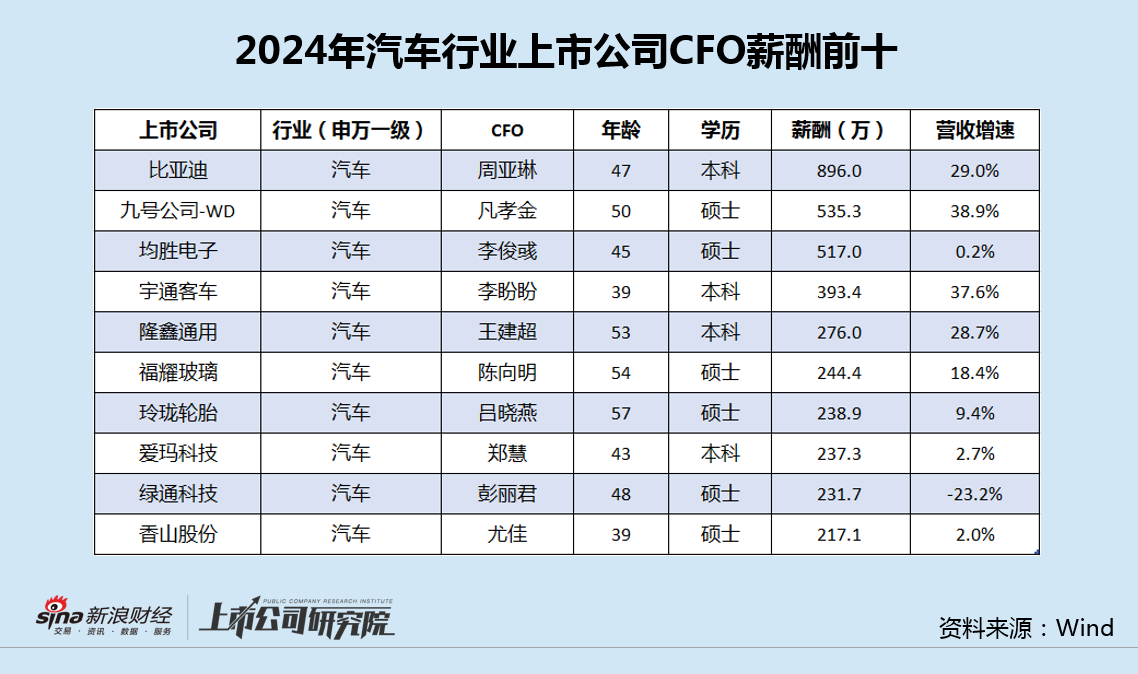
汽车行业CFO薪酬榜:比亚迪周亚琳896万超平均年薪10倍 断层式领先业内同行
Xin Lang Zheng Quan· 2025-07-31 01:54
| 上市公司 | 行业(申万一级) | CFO | 年龄 | 学历 | 薪酬(万) | 营收增速 | | --- | --- | --- | --- | --- | --- | --- | | 比亚迪 | 汽车 | 周亚琳 | 47 | 本科 | 896.0 | 29.0% | | 九号公司-WD | 汽车 | 凡孝金 | 50 | 硕士 | 535.3 | 38.9% | | 均胜电子 | 汽车 | 李俊或 | વર્ત | 硕士 | 517.0 | 0.2% | | 宇通客车 | 汽车 | 李胎龄 | ਤੇਰੇ | 本科 | 393.4 | 37.6% | | 降鑫通用 | 汽车 | 王建超 | 53 | 本科 | 276.0 | 28.7% | | 福耀玻璃 | 汽车 | 陈向明 | ਟੇ4 | 硕士 | 244.4 | 18.4% | | 玲珑轮胎 | 汽车 | 昌晓莱 | 57 | 硕士 | 238.9 | 9.4% | | 爱玛科技 | 汽车 | 郑慧 | 43 | 本科 | 237.3 | 2.7% | | 绿通科技 | 汽车 | 彭丽君 | 48 | 硕士 | 231.7 | -23.2% | ...


国金证券:首次覆盖爱玛科技给予买入评级,目标价56.64元
Zheng Quan Zhi Xing· 2025-07-31 00:48
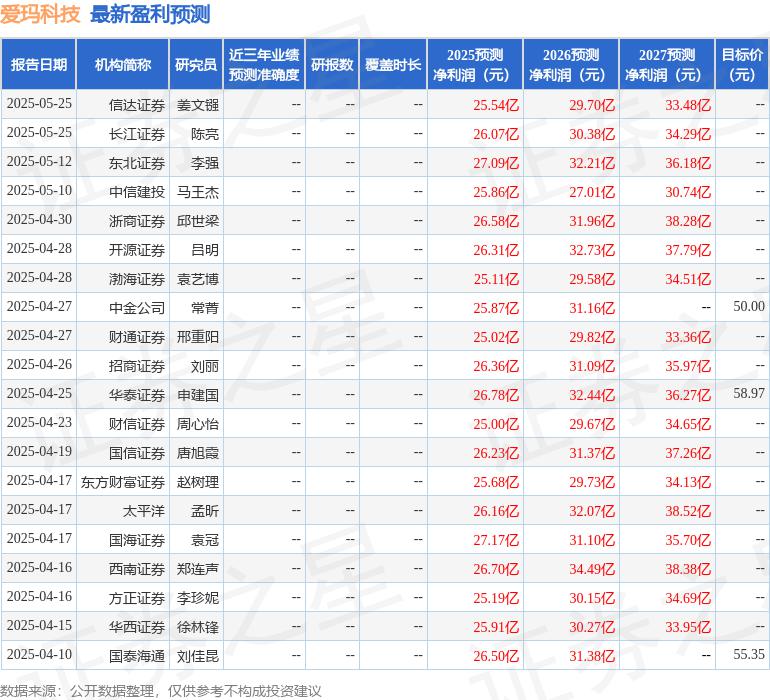
Core Viewpoint - Aima Technology (爱玛科技) is positioned for growth driven by product and channel optimization, with a target price of 56.64 yuan and a "buy" rating from Guojin Securities [1] Group 1: Product and Channel Optimization - The average selling price (ASP) is expected to rise due to advancements in three-electric technology and increased smart features in products [2] - The company is expanding its product line to attract a broader consumer base, particularly targeting male customers [2] - There is potential for channel growth with over 30,000 stores, focusing on improving store efficiency and upgrading locations in first and second-tier cities [2] Group 2: Industry Dynamics - The electric two-wheeler industry is anticipated to benefit from new national standards, product launches, and trade-in policies, enhancing market conditions [2] - In the first half of 2025, domestic sales of electric two-wheelers are projected to reach 32.32 million units, a year-on-year increase of 29.5%, with Aima's sales growing by 39.2% [2] Group 3: New Growth Areas - The electric three-wheeler segment is expected to generate 1.95 billion yuan in revenue in 2024, with a gross margin of 22.4% and sales of 550,000 units, reflecting a year-on-year growth of 29% [3] - Aima is expanding its brand internationally, with over 100 stores in Southeast Asia and plans to enter the European and American markets through e-bikes [3] Group 4: Financial Projections and Valuation - Forecasted net profits for 2025, 2026, and 2027 are 2.46 billion, 2.92 billion, and 3.32 billion yuan, respectively, representing year-on-year growth of 23.8%, 18.8%, and 17.1% [4] - The company is valued at a 20x P/E ratio for 2025, aligning with its industry leadership and channel advantages [4]


大厂「AI」智能体,等待 DeepSeek 时刻
3 6 Ke· 2025-07-30 23:56
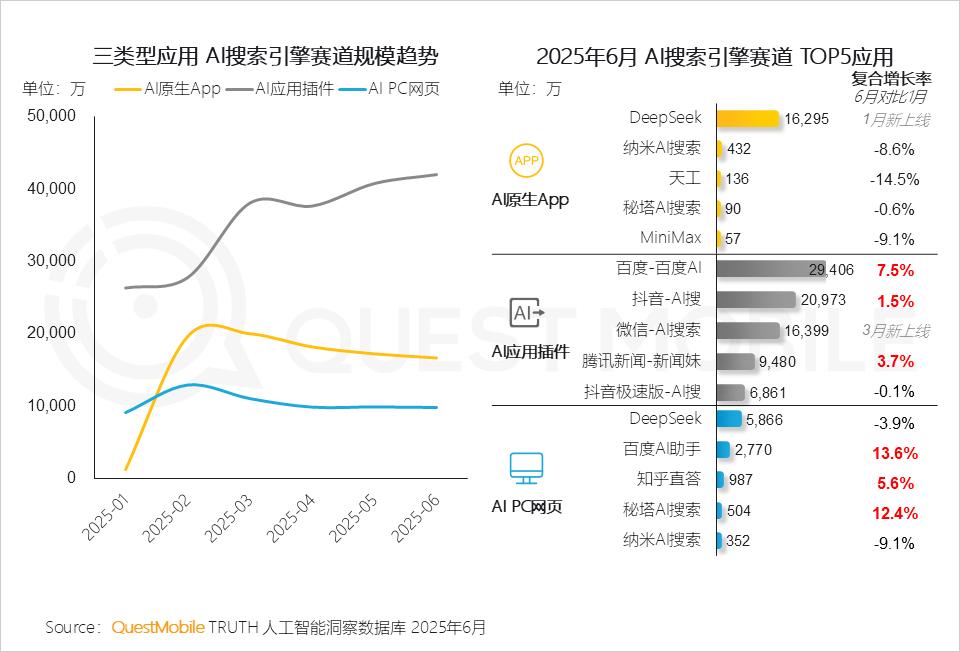
Core Insights - The AI industry remains dominated by major internet companies, with TikTok, Tencent, Alibaba, and Baidu leading the market, collectively holding a user base of over 46 billion [2][5][21] - The AI application market is primarily driven by internet enterprises, with 80% of the top 30 applications coming from these companies, and the four major groups accounting for 66.7% of the market share [2][4] - The focus of major companies this year is on accelerating the deployment of B-end AI agents in specific scenarios, emphasizing the need for both general capabilities and scenario-specific applications [5][21] Company Strategies - Tencent showcased a comprehensive strategy at WAIC, presenting over 10 AI agents across various verticals, including health management and marketing, indicating a broad approach to AI applications [6][21] - Alibaba's cloud platform, with over 200,000 customers and 700,000 agent applications, has emerged as a leader in the practical implementation of AI agents, demonstrating significant market penetration [8][21] - ByteDance has opted for an open-source approach with its Coze Studio and Coze Loop platforms, allowing developers to build and iterate on AI agents, which has garnered significant attention in the developer community [12][13] Market Trends - The growth of AI plugins is outpacing that of native apps, as traditional apps increasingly integrate AI capabilities, indicating a shift in how AI is being utilized across platforms [4][21] - The competition among major internet companies for AI agent commercialization is intensifying, with significant contracts awarded to various players, highlighting the competitive landscape [16][21] - The emergence of AI agents as personal intelligent partners rather than mere tools signifies a shift in market perception, with both B-end and C-end applications being explored [21]




电动自行车有了新国标 多环节推进新标准落地
Jing Ji Ri Bao· 2025-07-30 23:48
Core Viewpoint - The implementation of the mandatory national standard "Safety Technical Specification for Electric Bicycles" will officially begin on September 1, 2023, with the aim of enhancing product quality and safety in the electric bicycle industry [1][2]. Group 1: New Standards and Implementation - The new standard sets two implementation timelines: production will start on September 1, 2023, and sales will commence on December 1, 2023 [1]. - The Ministry of Industry and Information Technology (MIIT) has issued an opinion to ensure a sufficient supply of products that comply with the new standards, focusing on production management, certification, sales supervision, and consumer protection [1][2]. - The new technical specifications include stricter fire resistance requirements, limiting the plastic weight ratio to below 5.5% of the total vehicle weight, and imposing restrictions on the maximum motor speed to prevent overspeeding [2][3]. Group 2: Transition and Market Readiness - The weight limit for lead-acid battery models has been adjusted from 55 kg to 63 kg, allowing for a range of 60 to 70 km, which reduces charging frequency [3]. - The new standards encourage the installation of safety features such as rearview mirrors and turn signals, enhancing overall vehicle safety [3]. - A smooth transition from old to new standards is emphasized, with a three-month sales grace period for vehicles produced under the old standards until December 1, 2023 [6]. Group 3: Industry Compliance and Self-Regulation - A "white list" system has been established to guide companies in compliance with the new standards, promoting self-regulation and discouraging illegal modifications [5][6]. - Major brands have proactively developed and certified new models that meet the new standards ahead of the transition period [6]. - The MIIT is working with designated certification bodies to ensure timely product testing and certification, facilitating the market entry of compliant electric bicycles [4][6]. Group 4: Battery Recycling and Safety - The MIIT has initiated guidelines for the health assessment and recycling of used lithium batteries, addressing safety concerns related to aging batteries [8][9]. - A comprehensive recycling system is being developed to ensure that old batteries are properly assessed and disposed of, reducing safety hazards [8][9]. - Consumers will have access to local health assessment and recycling service points for their electric bicycle batteries, promoting responsible disposal and recycling practices [9].
电动自行车有了新国标
Jing Ji Ri Bao· 2025-07-30 22:20
Core Viewpoint - The implementation of the mandatory national standard "Safety Technical Specifications for Electric Bicycles" will officially begin on September 1, with production and sales phases set for September and December respectively, aiming to enhance product quality and safety in the electric bicycle industry [1][2]. Group 1: New Standards Implementation - The new standard aims to improve the safety and quality of electric bicycles, with a focus on fire resistance, speed limitations, and anti-tampering measures for critical components [2][3]. - The weight limit for lead-acid battery models has been adjusted from 55 kg to 63 kg, allowing for a range of 60 to 70 km, thus reducing charging frequency and enhancing practicality [3]. - The standard encourages the installation of safety features such as rearview mirrors and turn signals to improve overall safety during operation [3]. Group 2: Industry Transition and Support - The Ministry of Industry and Information Technology (MIIT) has issued guidelines to ensure a smooth transition to the new standards, including regular updates on the progress of product development and certification [4]. - A "white list" system has been established to promote compliance among manufacturers, with leading brands already developing vehicles that meet the new standards [5][6]. - The new standards provide a three-month sales transition period for vehicles produced under the old standards, allowing for a gradual phase-out [6]. Group 3: Battery Recycling and Safety - The MIIT emphasizes the importance of establishing a recycling system for old lithium batteries, addressing safety concerns related to battery quality and usage conditions [8][9]. - Guidelines for health assessments and recycling of lithium batteries have been issued, with pilot programs initiated in several regions to evaluate battery conditions and facilitate proper disposal [8][9]. - Consumers will have access to local service points for battery health assessments, ensuring safe and efficient recycling processes [9].
传音,想给非洲兄弟们造「小米SU7」
创业邦· 2025-07-30 03:10
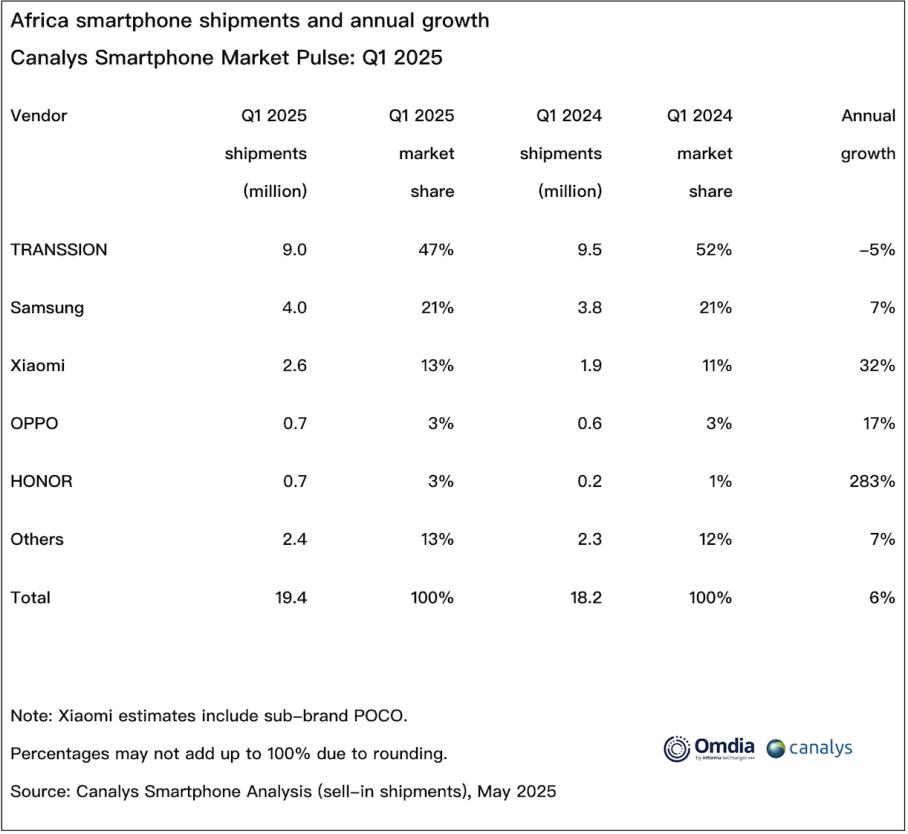
Core Viewpoint - Transsion Holdings, known as the "King of Mobile Phones in Africa," is venturing into the electric vehicle market with its new electric motorcycle brand, TankVolt, aiming to replicate its previous success in the mobile phone sector in Africa [4][7][10]. Group 1: Market Entry and Product Launch - Transsion has launched the electric three-wheeler TankVolt in Uganda and has expanded to Nigeria, Kenya, Tanzania, and Ethiopia within two years [9][10]. - The company has also introduced a two-wheeler electric motorcycle brand, Revoo, with multiple models available in markets like Pakistan and Bangladesh [6][12]. - The electric three-wheeler is priced at approximately $1,500, providing a competitive edge against local rivals [20][42]. Group 2: Market Dynamics and Competition - The African smartphone market has become increasingly competitive, with brands like Xiaomi, OPPO, and others aggressively entering the market, leading to a decline in Transsion's market share [13][16][18]. - In Q1 2025, Transsion's market share in Africa dropped to 47%, down from 52% in Q1 2024, while competitors like Xiaomi and Honor saw significant growth [17][18]. - The electric motorcycle market in Africa is projected to grow significantly, with an estimated market size of $17.41 billion in 2025, expected to reach $28.3 billion by 2030 [28]. Group 3: Consumer Demand and Market Trends - The demand for short-distance travel in Africa is high, with over 200 million daily trips, primarily using motorcycles and three-wheelers due to their affordability and flexibility [21][22]. - The cost of operating electric motorcycles is significantly lower than that of fuel-powered ones, with savings of 40% to 60% reported by delivery riders switching to electric [26]. - Political support for electric vehicles is growing, with several African nations implementing policies to promote electric mobility [27]. Group 4: Challenges and Infrastructure - The success of electric motorcycles in Africa is contingent on the availability of stable electricity and charging infrastructure, which remains a challenge [32][35]. - Transsion is adopting a battery-as-a-service (BaaS) model to address charging issues and reduce the upfront cost for consumers [20][35]. - The competitive landscape includes established local players like Spiro and Ampersand, which have already built extensive battery swapping networks, posing a challenge for Transsion [39][40][44].


中国“电鸡”,驶向东南亚
21世纪经济报道· 2025-07-29 13:30
Core Viewpoint - The electric bicycle market in Southeast Asia is experiencing rapid growth, driven by government incentives and increasing market demand, presenting opportunities for Chinese brands like Yadea, Aima, and Tailg to expand their presence in the region [2][3]. Market Overview - China has over 350 million electric two-wheelers, indicating limited future growth domestically, while Southeast Asia has a motorcycle household penetration rate of 75%, significantly higher than the global average of 29% [3]. - The ASEAN electric two-wheeler market is projected to reach USD 1.0778 billion in 2024 and grow to USD 2.232 billion by 2030, with a compound annual growth rate (CAGR) of 12.90% from 2025 to 2030 [3]. Government Policies - Southeast Asian governments are implementing favorable policies to encourage the transition from fuel to electric vehicles, such as zero tariffs on electric motorcycle imports in the Philippines and a target for 25% of two-wheel sales to be electric in Vietnam by 2030 [6]. - Vietnam plans to establish 10,000 public charging points to support the adoption of electric motorcycles, although the lack of standardized charging infrastructure may hinder penetration rates [6]. Competitive Landscape - Traditional fuel motorcycle manufacturers like Honda, Yamaha, and Suzuki dominate the market but are slow to transition to electric, creating opportunities for Chinese electric two-wheeler manufacturers to enter Southeast Asia [9][10]. - Chinese brands are investing in local production facilities in countries like Indonesia, Vietnam, and Thailand, with Yadea already operating over 400 stores in Vietnam [10]. Consumer Preferences - Southeast Asian consumers prioritize economic practicality, reliable range, and affordable pricing when choosing electric two-wheelers, which aligns with the strengths of Chinese manufacturers in cost control and supply chain integration [12]. - The demand for electric motorcycles with a range of over 100 kilometers and low maintenance costs is significant, especially in regions with challenging climates and infrastructure [14]. Industry Trends - The development of battery swapping models is seen as a key trend in the electric motorcycle market, similar to the initial growth path of electric vehicles in China [12]. - The focus on practical and economical solutions in Southeast Asia contrasts with the emphasis on lightweight and high energy density in the European and American markets [13].




传音,想给非洲兄弟们造“小米SU7”
3 6 Ke· 2025-07-29 10:53
Core Viewpoint - Transsion is entering the electric vehicle market in Africa with its new electric motorcycle brand TankVolt, aiming to replicate its success in the mobile phone sector [2][3][4]. Group 1: Market Entry and Product Launch - Transsion has launched the electric three-wheeler TankVolt in Uganda and expanded to Nigeria, Kenya, Tanzania, and Ethiopia within two years [3]. - The company is also introducing a two-wheeler electric motorcycle brand Revoo, with multiple models already available in markets like Pakistan and Bangladesh [4][7]. - The electric three-wheeler TankVolt is priced at approximately $1,500, offering a competitive edge against local competitors [7][17]. Group 2: Market Dynamics and Competition - The African smartphone market is becoming increasingly competitive, with brands like Xiaomi, OPPO, and others aggressively entering the market, impacting Transsion's market share [5][7]. - In Q1 2025, Transsion's market share in Africa dropped to 47%, down from 52% in Q1 2024, while competitors like Xiaomi and Honor saw significant growth [6][7]. - The electric motorcycle market in Africa is projected to grow significantly, with an estimated annual gap of 2 million units for electric motorcycles as traditional fuel options are phased out [11]. Group 3: Market Potential and Demand - Africa's population exceeds 1.4 billion, with a growing urban population that drives demand for short-distance transportation, primarily through motorcycles and three-wheelers [8]. - The cost of operating electric motorcycles is significantly lower than that of fuel-powered ones, making them an attractive option for consumers and businesses alike [10]. - Political support for electric vehicles is increasing, with several African nations implementing policies to promote electric mobility [10][11]. Group 4: Challenges and Infrastructure - The success of electric motorcycles in Africa is contingent upon the development of stable electricity infrastructure, which remains a challenge in many regions [13]. - Transsion is adopting a battery-as-a-service (BaaS) model to address charging issues and reduce the upfront cost for consumers [7][13]. - The company faces competition from established local players who have already developed comprehensive battery swapping networks [14][15][18].
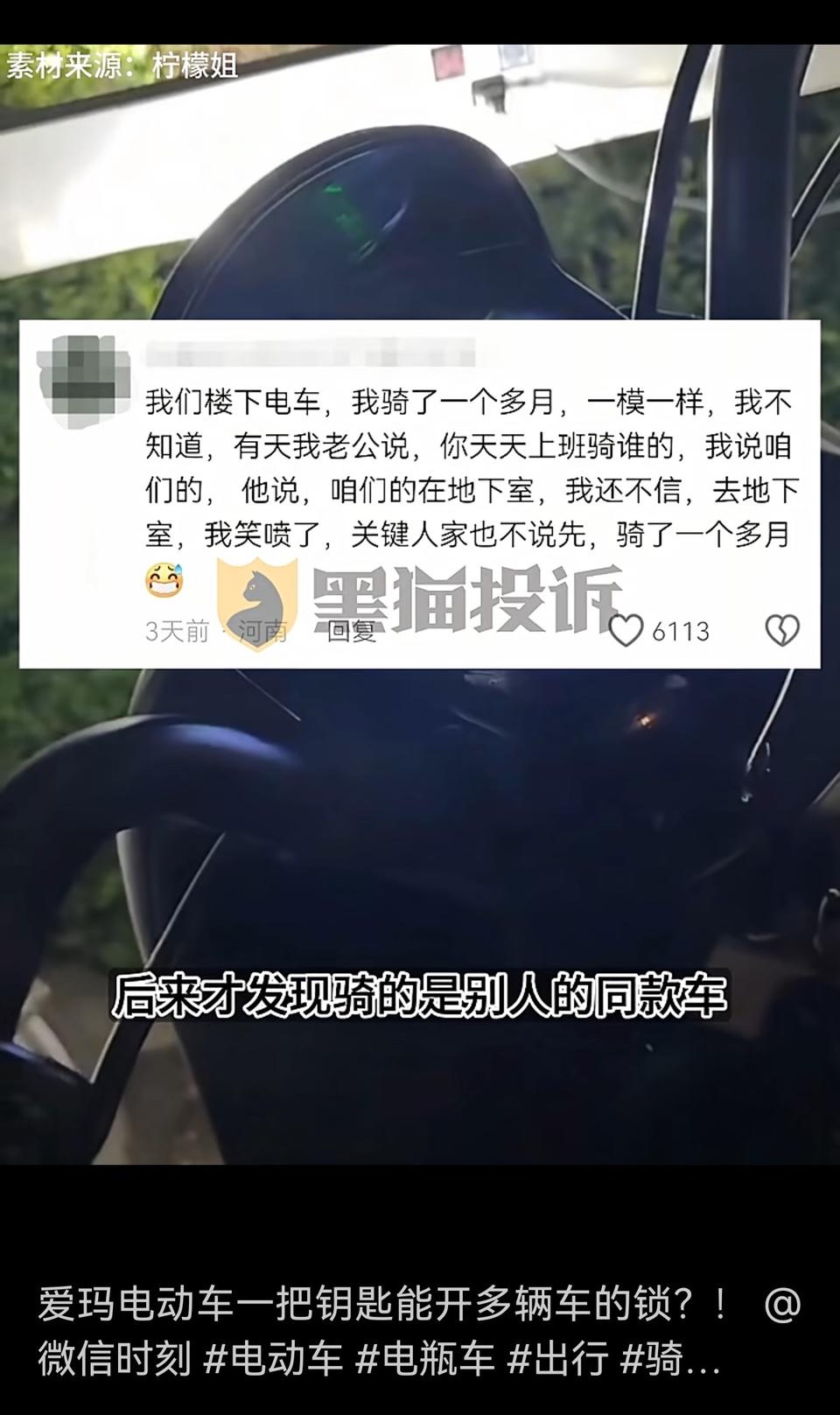
爱玛电动车一把钥匙开多辆车?爱玛回应
Qi Lu Wan Bao· 2025-07-29 10:11
Core Points - Recent reports indicate that a single key can unlock multiple Aima electric vehicles, raising concerns about security and design flaws [1][3][5] - Users have shared their experiences on social media, highlighting instances where they mistakenly used someone else's vehicle due to key compatibility issues [3][5] - Aima's customer service has not received formal complaints regarding this issue, but they suggest users verify their vehicles at local stores [1][5] Group 1 - A user reported that their key opened several Aima electric vehicles, which was corroborated by multiple similar experiences shared online [1][3] - One incident involved a user finding their vehicle being used by another person, who had mistakenly taken it due to the similarity in appearance and key functionality [3] - Aima's public relations team has not provided a response to inquiries about the key compatibility issue, despite attempts to reach them [1][5] Group 2 - Aima's customer service indicated a lack of awareness regarding the key compatibility issue and recommended contacting the purchase store for resolution [5] - Previous media reports suggested that while keys are not designed to be universal, the similarity in lock cylinders could lead to compatibility issues [5] - Industry experts noted that the probability of mechanical lock compatibility may arise from cost-cutting measures by suppliers, resulting in higher key duplication rates [5]
强化配件阻燃性能、提升防篡改功能 电动自行车强制性国家标准升级了
Ren Min Ri Bao· 2025-07-28 21:41
Core Viewpoint - The implementation of the new national standard for electric bicycles in China, effective from September 1, 2025, aims to enhance product quality and safety, addressing long-standing concerns in the industry and among consumers [1][2]. Group 1: Key Changes in the New Standard - The new standard includes over 200 revised technical indicators after extensive consultations and testing, which involved more than 160 technical discussions and 220 experimental verifications [1]. - Fire hazards will be reduced by optimizing fire-resistant technical indicators, limiting the plastic weight ratio to below 5.5% of the total vehicle weight, thereby slowing fire spread and reducing toxic gas emissions during fires [1][2]. - Traffic accident risks will be minimized by imposing strict limits on the maximum motor speed and enhancing braking performance, reducing the maximum braking distance by approximately 50% [1][2]. Group 2: Enhancements in Safety and Consumer Experience - The new standard aims to effectively prevent illegal modifications by improving technical indicators for battery packs and controllers, thus raising the threshold for unauthorized alterations [2]. - Overall vehicle safety will be enhanced through dynamic monitoring of critical safety information, allowing consumers to identify and address issues promptly [2]. - The weight limit for lead-acid battery models has been increased from 55 kg to 63 kg, improving the range to 60-70 km, which reduces charging frequency and enhances user experience [2]. Group 3: Implementation and Market Readiness - To ensure a smooth transition to the new standard, the Ministry of Industry and Information Technology (MIIT) and other departments have outlined specific measures, including accelerating the development and production of new standard vehicles [3]. - Four companies, including Yadea and Aima, have already obtained 14 new standard CCC certificates, indicating readiness for market supply [3]. - Consumers can identify new standard models by checking for the CCC mark on the vehicle, which confirms compliance with the new national standards [3].