
宇树科技

Search documents
纳思达:极海已发布全球首款基于ArmCortex-M52双核架构DSP芯片G32R501
Zheng Quan Ri Bao· 2026-01-13 13:15
Core Insights - Nasda has launched the world's first DSP chip G32R501 based on Arm® Cortex®-M52 dual-core architecture, designed for embodied robot applications, offering high computational performance, sensitive signal acquisition, and precise real-time control [2] Group 1: Product Features - The G32R501 chip utilizes Arm Helium technology and proprietary Zidian mathematical instruction extension units to meet the high computing power, efficiency, and precision requirements for perception, decision-making, motion control, and efficient human-robot interaction in embodied robots [2] - The company provides high-voltage servo controller solutions and six-axis robot joint drive controller solutions based on the G32R501 and EtherCAT communication chips, employing a dual-core parallel processing design to enhance dynamic performance, load capacity, precision, and response speed of robots [2] Group 2: Product Portfolio - The product lineup for humanoid robots includes joint controllers, real-time control DSP chips for dexterous hands, smart encoder chips, cerebellum computing chips, battery management master control chips, visual radar sensor chips, and torque sensor chips [2] - Some products have already been shipped in bulk to companies in the robotics and industrial automation sectors, such as Yushu Technology and Huichuan Technology [2]


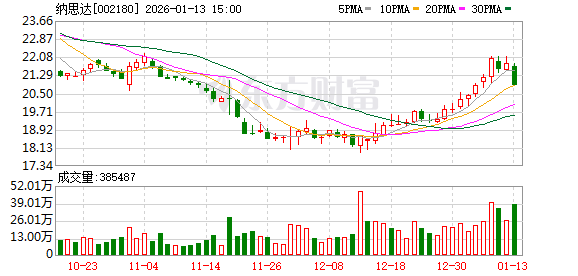
纳思达:极海已发布全球首款基于Arm Cortex -M52双核架构DSP芯片G32R501
Zheng Quan Ri Bao Wang· 2026-01-13 13:14
Core Viewpoint - Nasda has launched the world's first DSP chip G32R501 based on Arm Cortex-M52 dual-core architecture, targeting applications in embodied robotics, emphasizing high computational performance, sensitive signal acquisition, and precise real-time control [1] Group 1: Product Features - The G32R501 chip leverages Arm Helium technology and proprietary Zidian mathematical instruction extension units to meet the high computing power, efficiency, and precision requirements of embodied robotics in perception and decision-making, motion control, and human-machine interaction [1] - The company offers high-voltage servo controller solutions and six-axis robotic joint drive controller solutions based on the G32R501 and EtherCAT communication chips, utilizing a dual-core parallel processing design to enhance dynamic performance, load capacity, precision, and response speed of robots [1] Group 2: Product Lineup - The product lineup for humanoid robots includes joint controllers, real-time control DSP chips for dexterous hands, smart encoder chips, cerebellum computing chips, battery management main control chips, visual radar sensor chips, and torque sensor chips [1] - Some products have already been shipped in bulk to companies in the robotics and industrial automation sectors, such as Yushu Technology and Huichuan Technology [1]
CES 2026观察:软硬协同仍是业界的共同挑战
Mei Ri Jing Ji Xin Wen· 2026-01-13 12:55
Core Insights - The CES 2026 highlighted a significant focus on physical AI and robotics, showcasing advancements in various applications from home environments to industrial uses, with notable participation from both international and Chinese companies [1][3][7] - The competition in the robotics industry is shifting towards building reliable physical perception systems that can generate real-world data and translate it into scalable intelligent capabilities [2][4] Industry Focus on Robotics - Chinese companies occupied over half of the humanoid robot exhibition space at CES 2026, with both new entrants and established players showcasing their innovations [3] - The event emphasized the market's growing demand for robots capable of autonomously executing complex tasks, reflecting a shift towards practical applications of embodied intelligence [3][4] Technological Advancements - Key advancements in robotics are centered around enhancing the ability of robots to perform tasks autonomously, with a focus on deep interaction between AI and the physical world, particularly through tactile perception [5][6] - The industry is moving from showcasing capabilities to solving real-world problems, with an emphasis on robots operating reliably in complex environments [4][6] Competitive Landscape - Established companies like Boston Dynamics and LG demonstrated their latest robotic technologies, with Boston Dynamics showcasing its Atlas robot capable of various industrial tasks [7] - Chinese firms are gaining confidence, claiming significant advancements in motion control and cognitive decision-making, alongside a competitive edge in manufacturing costs and quality [8][9] Market Trends - The integration of AI with hardware and software is becoming a dominant theme, with a noticeable trend towards the consolidation of functionalities in smart devices [11][12] - Companies are increasingly focusing on creating multi-functional products that can serve various purposes, reflecting a shift in consumer expectations and technological capabilities [13]
杭州六小龙,排队IPO
混沌学园· 2026-01-13 12:01
Core Viewpoint - The article discusses the current status and future prospects of the "Hangzhou Six Little Dragons," a group of six technology companies that have gained significant attention and are now preparing for IPOs amidst intense competition and market pressures [2][3][4]. Group 1: Company Status and IPO Progress - Four out of the six companies are preparing for IPOs: Yushu Technology, Qunhe Technology, Yundong Technology, and Qiangnao Technology [2][8]. - Yushu Technology has achieved annual revenue exceeding 1 billion yuan and has been profitable for five consecutive years, with a significant order volume [13][14]. - Qiangnao Technology recently completed a financing round of approximately 2 billion yuan, positioning itself as a leading player in the brain-computer interface sector [10][11]. - Yundong Technology has seen its revenue double in 2024 and is also preparing for an IPO [16][17]. - Qunhe Technology has established itself as a leader in the space design software market, with a significant market share and a stable revenue model [18][38]. Group 2: Financial Performance and Market Position - Game Science has generated over 9 billion yuan in revenue from its flagship game, demonstrating strong cash flow and market demand [19][20]. - DeepSeek, the parent company of DeepSeek, reported a revenue of 5 billion yuan, showcasing its financial strength and market potential [22]. - Yushu Technology's competitive pricing strategy has contributed to its leading market share in the quadruped robot segment, with over 60% of the global market [45][46]. - Qiangnao Technology aims to make advanced prosthetics affordable, significantly reducing the price of its products compared to imported alternatives [56]. Group 3: Innovations and Product Developments - Game Science is expanding its IP commercialization efforts, launching new products and establishing a flagship store to enhance brand presence [20][27]. - DeepSeek has introduced innovative models that improve efficiency in AI training and inference, positioning itself as a cost-effective solution in the AI landscape [29][33]. - Qunhe Technology has developed spatial language models that enable direct generation of interactive 3D designs, marking a significant advancement in spatial intelligence [38][40]. - Yushu Technology has launched new robotic products, including the Unitree H2 humanoid robot, showcasing advancements in robotics technology [44][45]. Group 4: Industry Challenges and Competitive Landscape - The technology sector is experiencing intense competition, particularly in the fields of robotics and AI, with numerous new entrants emerging [58][61]. - The article highlights the need for companies to innovate continuously and adapt to market pressures to survive in a rapidly evolving industry [65]. - The competition is not only about technology but also about the ability to create sustainable business models and long-term value [65][73].

新加坡银行:中美AI代差缩小 应用端潜力尚未变现
Xin Lang Cai Jing· 2026-01-13 11:54
炒股就看金麒麟分析师研报,权威,专业,及时,全面,助您挖掘潜力主题机会! 市场数据显示,全球人形机器人出货量前六名均为中国企业,头部企业智元、宇树科技合计垄断71%的 全球市场份额,而美国三大巨头合计份额仅3%,差距显著。 在无人驾驶领域,霍慧敏认为中国同样具备政策与技术双重优势。 市场资料显示,目前,中国已通过"附条件准入"等政策创新推动L3级自动驾驶迈入受控商业化阶段,北 京、上海、深圳等城市已形成"车+路"的智能网联生态闭环,在测试场景开放、法规配套完善等方面走 在全球前列。 新加坡银行中国股票策略师霍慧敏在年度市场展望会中回答新浪财经表示,中美在AI模型领域差距显 著缩小,在讨论AI 时,市场易陷入"AI即芯片"的认知偏差。她认为。中国拥有庞大的用户基础,为AI 应用创新提供了广阔空间,而目前这些发展空间大多尚未完成货币化(monetize),而这部分未变现的 应用潜力,正是未来AI领域最值得期待的投资想象空间。 "Deepseek moment"推动中美AI代差缩小 据新加坡银行研究报告显示,中美在AI领域的差距曾出现过两个相当接近的节点,其中关键的差距缩 小节点与中国开源模型产业的爆发式发展密切相 ...
5家坤元资产FOF生态伙伴闪耀CES 2026 中国智造称霸国际舞台
Cai Fu Zai Xian· 2026-01-13 08:58
Core Insights - The 2026 International Consumer Electronics Show (CES) showcased groundbreaking technologies and products, highlighting the advancements in AI, robotics, and smart living, with a significant presence of Chinese manufacturing companies [1][2][10]. Group 1: Event Overview - CES 2026 featured over 4,500 companies from more than 150 countries, focusing on AI, chips, automotive, and robotics, with a notable emphasis on the integration of AI and hardware [2]. - Chinese exhibitors numbered 942, accounting for 22% of the total, reflecting a new landscape of "full industry chain coverage" and increased global influence of Chinese manufacturing [2]. Group 2: Key Exhibitors and Technologies - Cloudwalk Technology showcased its UP robot, marking the first large-scale service by a Chinese service robot at a global landmark [4]. - Yushun Technology presented a series of humanoid robots, including the G1 combat robot, which drew significant attention for its agility and performance [4]. - Hesai Technology displayed its upgraded ATX laser radar, featuring enhanced performance metrics, including a range of 230 meters and a point frequency of 3.84 million points per second [7][8]. Group 3: Market Position and Growth - Hesai Technology announced plans to double its laser radar production capacity from 2 million units in 2025 to 4 million units in 2026, with a new factory in Bangkok expected to start production in early 2027 [8]. - Black Sesame Intelligence demonstrated its A2000 driving assistance chip and showcased its multi-dimensional intelligent computing platform, emphasizing its role in the smart automotive sector [9]. Group 4: Industry Trends and Future Outlook - The collective presence of Chinese tech firms at CES 2026 signifies a shift from "individual efforts" to "ecosystem collaboration," showcasing a higher maturity and openness in global operations [10]. - The report indicates that by 2025, China's overseas sales of automobiles, particularly electric vehicles, are expected to reach 2.32 million units, marking a 52% year-on-year increase [11]. - The global market for humanoid robots is projected to see over 13,300 units shipped in 2025, with Chinese manufacturers contributing over 90% [11]. Group 5: Capital and Investment - The success of Chinese tech firms at CES 2026 is attributed to long-term capital support, with 90% of companies on the Sci-Tech Innovation Board receiving venture capital investments [13]. - The Chinese government is focusing on integrating technology innovation with industrial development, emphasizing early and sustained investment in hard tech [13][14]. - Kun Yuan Asset has supported 95 companies in entering capital markets, with a significant portion in the hard tech sector, demonstrating a strong ecosystem effect [14].

具身智能企业已超230家,行业“洗牌”风声四起
Nan Fang Du Shi Bao· 2026-01-13 07:08
Core Insights - The investment landscape for embodied intelligence startups has seen a significant surge, with a 219% increase in financing events and a 327% rise in investment amounts in 2025 compared to the previous year [1] - The current number of embodied intelligence companies in China exceeds 230, with over 100 humanoid robot firms, indicating a competitive environment reminiscent of the "hundred groups battle" during the mobile internet era [1] - Industry experts predict a potential "shakeout" in 2026 due to an oversupply of companies that may not sustain their operations without significant orders and continuous funding [2] Investment Trends - Investors are experiencing a fear of missing out (FOMO), leading to rapid valuation increases for startups, often without substantial due diligence [1][4] - Valuations for some companies have doubled within months, raising concerns about the sustainability of such growth [3] - The market is witnessing inflated valuations, with companies like Galaxy General seeing their valuation rise from over $800 million to $3 billion within a year [3] Market Dynamics - The focus of investment is shifting from flashy demonstrations to actual order fulfillment and revenue generation, as the industry matures [2][6] - Many startups are under pressure to commercialize quickly, often prioritizing immediate financial performance over long-term technological development [11][12] - The industry is facing a potential oversaturation of similar business models, leading to a risk of homogenization in product offerings [9][10] Commercialization Challenges - Companies are exploring various commercial applications, including research, entertainment, and retail, to find willing customers for their technologies [6][7] - The urgency for commercialization is driven by the need to attract further investment and prepare for potential IPOs, with several companies actively pursuing public listings [11] - There is a concern that the rush to commercialize may detract from necessary research and development efforts, potentially stalling technological progress [12][13] Future Outlook - The industry is expected to see a clearer distinction between leaders and laggards as capital and talent concentrate on companies with stronger AI capabilities and commercial viability [2] - The next wave of growth in the embodied intelligence sector is anticipated to hinge on advancements in "brain" technologies that enhance the functionality of humanoid robots [5] - The emphasis on practical applications and the ability to deliver results in real-world scenarios will be crucial for the survival and success of companies in this space [9][13]
国泰海通:中国人形机器人公司在CES 2026表现亮眼 全球范围内商业化进程有望加速
Zhi Tong Cai Jing· 2026-01-13 07:05
Group 1 - The humanoid robot industry is entering its initial commercialization phase, with significant progress observed in both domestic and international markets, indicating a potential acceleration in the global commercialization process of humanoid robots [1] - At CES 2026, over 4,000 companies participated, with nearly 25% being Chinese exhibitors, particularly in the humanoid robot sector, where at least 28 Chinese companies showcased their innovations, demonstrating China's technological capabilities [1] - Notable Chinese companies like Zhiyuan Robotics and Yushu Technology presented their flagship products, including the Lingxi X2 and the G1 humanoid robot, which showcased advanced functionalities and interactive capabilities [1] Group 2 - Several international companies also made strides in humanoid robotics at CES 2026, with LG introducing its first humanoid robot CLOiD for home applications, and Boston Dynamics unveiling the new electric Atlas robot with advanced features [2] - The Atlas robot, equipped with 56 degrees of freedom and a battery life of 4 hours, is set to collaborate with Google DeepMind for future enhancements, indicating a strong focus on innovation in the robotics field [2] Group 3 - Hangzhou Xinjian Electromechanical Transmission Co., Ltd. has initiated its listing guidance, with plans to prepare for an IPO, highlighting its role as a core component supplier for Tesla's humanoid robot, Optimus [3] - The company specializes in manufacturing various components, including worm gears and electric drive joints, and is recognized as a "little giant" enterprise in China [3]

去年扭秧歌、赛跑、格斗 今年机器人们要出门“打零工”了?
Nan Fang Du Shi Bao· 2026-01-13 07:00
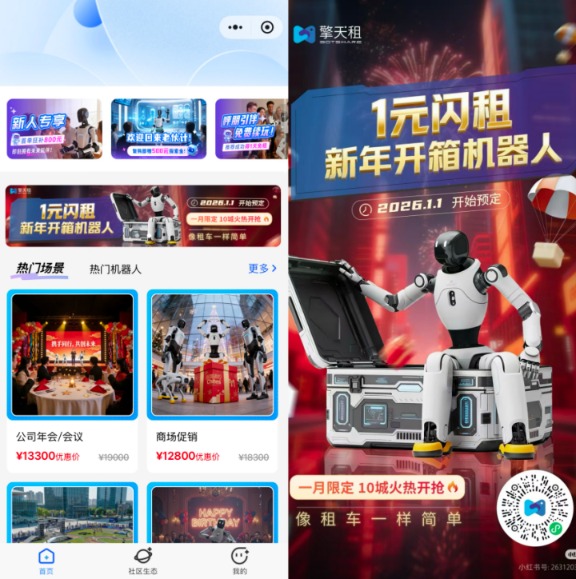
Core Insights - The year 2025 is projected to be a significant year for robotics, with "embodied intelligence" being highlighted as a key focus in the government's work report, indicating strong state support for the industry [1] - The robotics sector has seen a surge in investment, with a notable increase in financing events and amounts, suggesting a booming interest in the market [2][3] - The emergence of a robot rental business model is gaining traction, driven by demand for flexible solutions in various scenarios such as corporate events and weddings [1][14] Investment Trends - In the first three quarters of 2025, the domestic robotics sector recorded approximately 500 billion yuan in cumulative financing, marking a 2.5 times increase compared to the same period last year [2] - The third quarter alone saw financing reach 198.13 billion yuan, a 172% year-on-year increase, indicating a peak in investment enthusiasm [2] - The number of financing events in the robotics industry doubled to 610 in the first three quarters of 2025 compared to 294 in the same period of the previous year [2] Market Dynamics - The robotics industry is expected to undergo a reshuffling in 2026, with predictions that only 10 to 20 companies may survive from the current hundreds, similar to the trajectory of the electric vehicle sector [5] - Concerns about the sustainability of the current investment boom are being voiced, particularly regarding the unclear commercialization paths for humanoid robots [2][5] - The market is witnessing a shift from one-time sales to service-oriented models, with the Robot as a Service (RaaS) model expected to gain traction [19] Application and Innovation - Robots are increasingly being deployed in various sectors, including industrial manufacturing, commercial sales, and logistics, with significant orders reported from major automotive companies [9] - New applications for robots are emerging, such as a humanoid robot successfully selling popcorn, showcasing the potential for robots in service-oriented roles [11] - The customization of robots for specific scenarios is seen as a key area for future growth, as different environments require tailored solutions [12] Rental Business Model - The robot rental market is projected to exceed 10 billion yuan, with expectations to reach at least 100 billion yuan by 2026 as the model becomes more mainstream [17] - The rental model is viewed as a way to lower entry barriers for businesses, allowing more companies to experiment with robotic solutions without significant upfront costs [18] - The growth of the rental market is supported by favorable policies and increasing demand for cost-effective automation solutions in various industries [19]

期待“具身智能”长大成“人”
Xin Lang Cai Jing· 2026-01-12 21:04
Core Insights - The article highlights the rapid growth and commercialization of humanoid robots, marking a significant shift towards integrating robotics into everyday consumer markets [1] - The development of embodied intelligence is driven by continuous advancements in technology and the cultivation of specialized talent in educational institutions [3][4] - The future of the robotics industry is characterized by the emergence of new job roles and the need for innovative talent to address the challenges of technology implementation [4] Group 1: Industry Developments - Humanoid robots have gained popularity since their debut at the CCTV Spring Festival Gala, with the first offline store of Yuzhu Technology opening in 2025, showcasing robots to consumers [1] - Research at Nanjing University of Science and Technology focuses on enhancing the movement capabilities of robots, including bipedal and quadrupedal designs, to improve their computer vision and motion control [1][2] - The Jiangsu region is witnessing a surge in the development of various advanced technologies, including brain-computer interfaces and quantum technology, alongside embodied intelligence [4] Group 2: Talent Development - Universities in Jiangsu are actively cultivating talent in embodied intelligence, with programs integrating various disciplines such as artificial intelligence, robotics, and biomedical engineering [3] - The establishment of new academic programs, such as the "Embodied Intelligence Engineering Technology" undergraduate major, reflects a systematic approach to building a skilled workforce [3] - Companies are seeking creative and responsible talent, including roles like "embodied intelligence architect" and "interaction designer," to drive innovation in the robotics sector [4] Group 3: Future Perspectives - The article emphasizes that while humanoid robots can enhance human capabilities, they are not merely replacements for human labor but partners in expanding human potential [5] - The ongoing evolution of embodied intelligence is expected to reshape daily life, with engineers and robots evolving together to create a more integrated future [5]