SpaceX

Search documents
Reusable Rockets 3 Takeaways | Big Ideas 2026
ARK Invest· 2026-03-03 15:02
All right. What are the biggest takeaways of reusable rockets. Well, here are my top takeaways.Uh, I would say number one is how early we still are, which is, you know, right now SpaceX has 9,000 satellites in orbit, which is 66% of all active satellites orbiting Earth. And if you went back five years, this would seem crazy. uh it would be seen as a crazy high number, but we think this is going to be low.SpaceX just filed for a million satellites uh with the FCC for orbital data centers. Number two is the c ...


X @Elon Musk
Elon Musk· 2026-03-03 14:20
RT ApoStructura (@ApoStructura)SpaceX launched 12 rockets in February, the rest of the world launched 6. https://t.co/c1Ysd8Gnei ...
星链:天基骨干筑网,手机直连拓界
HUAXI Securities· 2026-03-03 13:25
Investment Rating - The report provides a positive investment outlook for the Starlink industry, highlighting its potential for significant growth and profitability driven by vertical integration and innovative technology [2]. Core Insights - Vertical integration is reshaping the business model, with Starlink leveraging an 80% vertical integration strategy and a "72-hour factory" production line to reduce costs significantly, establishing a strong competitive advantage [2]. - Starlink is transitioning from a satellite broadband provider to a global mobile operator, with plans for an IPO potentially valuing the company at over $1.75 trillion [2]. - The global supply chain is being restructured, with a collaborative ecosystem between the U.S. and Taiwan enhancing manufacturing capabilities and creating technological barriers [3]. - The Chinese supply chain is entering the Starlink ecosystem, providing cost-effective solutions for high-frequency and high-volume satellite deployment [4]. - Starlink's mobile direct connection technology is set to redefine the global communication landscape, enabling service to over 5 billion smartphone users [5]. Summary by Sections 01 Starlink Research and Production System - Starlink's development history shows a shift from traditional aerospace practices to a rapid, modular production approach, reducing satellite manufacturing costs to approximately $500,000 to $1 million per unit [12]. - The Falcon 9 rocket's launch cost is estimated at 14,000 to 18,000 RMB per kilogram, significantly lower than competitors, establishing a cost advantage [15]. - The Redmond factory achieves a production efficiency of 72 hours per satellite, with a daily output of 10 satellites [20]. 02 Core Suppliers in Taiwan and the U.S. - Taiwan's supply chain has formed a tight manufacturing loop for satellite components, with companies like Taiyo Yuden and Unimicron showing over 40% growth due to high demand [52][53]. - The U.S. supply chain maintains control over critical materials and strategic assets, ensuring rapid iteration and cost control [58]. 03 Domestic Core Suppliers - China's photovoltaic supply chain is transitioning to flexible solar panels, providing significant cost advantages for Starlink's energy needs [67]. - The domestic laser communication industry is evolving towards automated precision manufacturing, enhancing production efficiency [74]. 04 Mobile Direct Connection Technology - Starlink's mobile direct connection technology addresses coverage gaps in the U.S., potentially serving a market of over 5 billion smartphone users [93]. - The integration of eNodeB technology into satellites allows seamless connectivity for existing devices without the need for new hardware [99].
X @Tesla Owners Silicon Valley
Tesla Owners Silicon Valley· 2026-03-03 13:05
🚨NEWS: SpaceX holds 8,285 Bitcoin in Coinbase Prime custody now worth about $545M, down $235M from a $780M valuation three months ago, per CoinDesk https://t.co/gZ3O4rDu2S ...
175 亿美元清债背后:马斯克的资本棋局正在收官?
美股研究社· 2026-03-03 12:45
Core Viewpoint - Elon Musk is undertaking a "capital-level restructuring" of his business empire by repaying approximately $17.5 billion in debt, reshaping valuations, and strategically positioning for an IPO [2][3][17]. Debt Repayment - Musk's companies, X and xAI, will fully repay a combined debt of $17.5 billion, which has led to a significant increase in the price of high-yield bonds associated with xAI, rising to about 117 cents on the dollar, a jump of approximately 3 points in a single day [6]. - The repayment is not merely a financial optimization but aims to eliminate negative pricing in the overall valuation system, which has been under pressure due to high debt levels since the acquisition of X [6][17]. - Clearing this debt is expected to enhance the overall valuation, akin to a spring being released from pressure, allowing for a natural upward adjustment in valuation multiples [6][7]. Integration of xAI - The acquisition of xAI by SpaceX is a strategic move to consolidate technology assets, with the combined valuation reaching $1.25 trillion [9][10]. - This integration allows for a more cohesive narrative that combines social media data, AI capabilities, and aerospace technology, enhancing the overall market perception and valuation of the group [10][11]. - The merger is designed to create a comprehensive ecosystem that connects physical and digital realms, positioning the companies favorably for future growth and investment [10][11]. IPO Preparation - SpaceX is reportedly preparing to file for an IPO as early as this month, targeting a June listing, which reflects Musk's acute awareness of market cycles [13]. - The timing is seen as optimal, with a favorable risk appetite for tech stocks and ongoing interest in AI themes, despite uncertainties in monetary policy [13][14]. - The debt repayment and asset consolidation are critical steps in presenting a clean balance sheet to potential investors, signaling a healthy cash flow and strong risk resilience [7][14]. Investor Considerations - The success of the IPO will hinge on three key factors: the acceptance of the $1.25 trillion valuation, the sustainability of growth narratives, and the clarity of the capital structure post-debt repayment [14][15]. - While the initial market response may be driven by narrative, long-term valuation will ultimately depend on actual cash flow generation [18]. - The restructuring is positioned as a significant opportunity for investors, but caution is advised regarding the sustainability of the high valuation amidst potential market corrections [18].
X @Bloomberg
Bloomberg· 2026-03-03 11:10
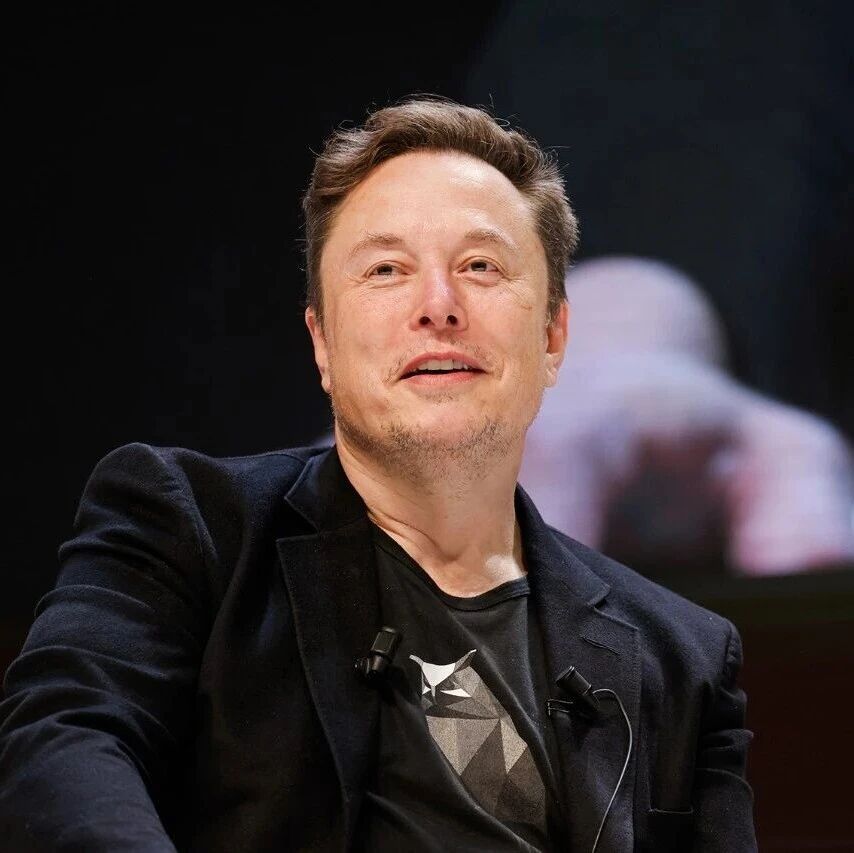
A $1.75 trillion valuation for billionaire Elon Musk’s SpaceX in an IPO would be “justifiable,” according to a PitchBook analyst https://t.co/iYKAS5l5Ay ...
Starlink V2 2027上線!150Mbps太空5G來了#Starlink #SpaceX #ElonMusk #SatelliteInternet
大鱼聊电动· 2026-03-03 09:09
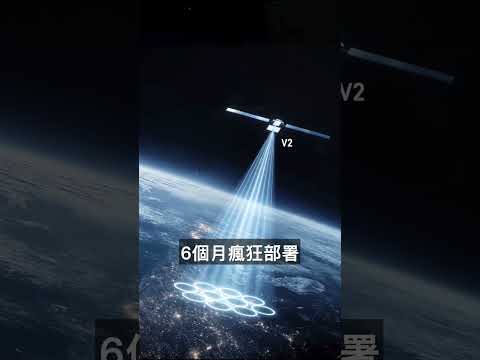
荒山野嶺 手機沒訊號 的那種絕望 你有過嗎? 2027年中起 這將全部改變! Starlink Mobile V2 衛星要用 Starship 一次射50顥 6個月瘋狂部署 1200顆 直接覆蓋 全球連極地 都不放過! 下載速度衝到 150Mbps 這已經是 太空版5G了! 以前偏遠地區 上網像龜速 現在手機 直連衛星 速度跟城市 5G差不多 海上沙漠 北極圈 全通了! 馬斯克這是要 把全世界從 訊號死角裡 救出來啊! V2一上線 全球通訊規則 將直接被重寫. ...
West Asia conflict presses IPO hopefuls to get deals done
BusinessLine· 2026-03-03 08:33
Core Viewpoint - Companies planning IPOs are assessing how to navigate market volatility caused by recent events in the Middle East, with some firms proceeding with their plans while others hesitate [1][2]. IPO Market Sentiment - The recent shift in market sentiment threatens to disrupt what was anticipated to be a strong year for IPOs, especially with potential major listings from companies like SpaceX and AI firms on the horizon [3]. - Investors are currently processing the implications of the weekend's events, with hopes that tensions do not escalate further [4]. Sector-Specific Insights - The ongoing conflict has bolstered the investment case for military suppliers, with Vincorion planning to accelerate its IPO marketing in Frankfurt [5]. - The success of IPOs may depend on sector exposure and the readiness of companies to enter the market quickly [6]. IPO Activity and Trends - Despite IPO volumes remaining below pandemic-era records, there was optimism from last year's activity, with Asia experiencing significant fundraising, particularly in Hong Kong [7]. - In Asia, deal-making continues, with Sunway Healthcare halting investor orders for its Malaysia listing earlier than expected, while India's National Highways Authority is preparing for an IPO [8]. Notable IPOs - PayPay Corp., backed by SoftBank, is aiming for a $1.1 billion IPO, which would set a record for a Japanese firm on a US exchange [9]. - MiniMed's IPO is reportedly oversubscribed and set to price soon, indicating a potentially easier sell due to its association with a listed company [12]. Market Challenges - The US IPO market was already showing signs of distress prior to the conflict, with several companies withdrawing their listings amid a selloff in tech and financial stocks [10]. - Recent IPOs have struggled, leading to a perception that the IPO window is effectively closed for most companies in the near term [11]. - If the conflict in the Middle East persists, it could significantly delay the recovery of the IPO market [13].

构建申万宏源策略未来产业定价体系:敢问梦想价值几何?
Shenwan Hongyuan Securities· 2026-03-03 08:09
Group 1: Valuation Models - The report introduces a "Future Industry Pricing System" to address the limitations of traditional DCF models for early-stage tech companies that are often unprofitable and have high uncertainty[3]. - Seven valuation sub-models are proposed, including Real Options Method, Risk-Adjusted NPV (rNPV), Milestone Method, User Value Method, Ecological Niche Valuation Method, Factor Cost Method, and Relative Valuation Method[3]. - The Real Options Method quantifies the value of management's choices in uncertain environments, treating uncertainty as an asset rather than a liability[14][19]. Group 2: Investor Behavior and Market Dynamics - The report categorizes investors into three types: industrial investors using Factor Cost Method for valuation, institutional investors focusing on high-frequency data with rNPV and User Value Method, and visionary capitalists valuing long-term potential with Real Options and Ecological Niche methods[3]. - Market temperature is divided into nine levels, influencing the weighting of valuation models based on investor sentiment, with optimistic models dominating during market peaks[4]. Group 3: Case Studies - SpaceX's valuation is segmented into three business lines: Starlink valued at $429.1 billion using comparable valuation, space computing at $312.1 billion using Real Options Method, and Mars exploration using Factor Cost Method[4]. - OpenAI's valuation ranges from $400 billion (conservative) to $1.28 trillion (optimistic), with a weighted final valuation of $780.8 billion closely aligning with market estimates[4].
聚焦ETF市场 | 权重超20%!亿万富豪Ron Baron大举投资SpaceX
彭博Bloomberg· 2026-03-03 06:07
Core Viewpoint - The article discusses the significant investment in SpaceX by the Baron First Principles ETF (RONB), which has increased its allocation to SpaceX to 22%, marking the highest weight of private equity in an ETF. This ETF is positioned to become a leading player in the actively managed ETF space, providing substantial exposure to innovative companies under Elon Musk, including xAI and Tesla [1][4]. Group 1: RONB's Investment Strategy - RONB has notably increased its stake in SpaceX, achieving a 22% weight in its portfolio, which is unprecedented for any ETF regarding this company [4]. - The ETF also holds a 5.5% stake in xAI, making it the largest ETF with direct exposure to private equity, unlike others that use special purpose vehicles (SPVs) [4][6]. - The demand for ETFs with private equity exposure is evident, as shown by the recent influx of $1.1 billion into XOVR, which has a smaller allocation to SpaceX [4][6]. Group 2: Market Trends and Performance - XOVR's success highlights the strong investor interest in private equity within ETFs, with its assets surpassing $1 billion, making it one of the top ETFs in terms of inflows and trading volume [6]. - The valuation of xAI has reached $230 billion, nearly doubling in less than a year, with projected revenues of $500 million in 2025, reflecting a 400% year-over-year growth [10]. - RONB's asset size has approached $100 million within a month of its launch, indicating a growing trend of ETFs incorporating private equity, particularly in sectors like AI and healthcare [7][10].