
龙源电力

Search documents
李忠军,当选南京市市长
Huan Qiu Wang· 2026-01-24 10:16
据新华日报·交汇点消息,2026年1月24日,南京市第十七届人民代表大会第五次会议,选举李忠军为南京市市长。 李忠军 资料图 编辑:施 予 校对:王亚天 审核:张晓雅 2024年10月,李忠军到江苏工作,任江苏省政府党组成员,次月获任江苏省副省长。 2025年11月,南京市第十七届人大常委会第二十二次会议决定,任命李忠军为南京市人民政府副市长、代理市长,至此番去代转正。 来源:人民网江苏综合 公开信息显示,李忠军,男,1972年6月出生,研究生学历,经济学硕士,高级经济师,中共党员。 李忠军曾任国电电力发展股份公司副总经理,国电安徽电力公司执行董事、总经理,神皖能源公司董事长,国能神皖能源公司董事长,龙源电力集团股份 有限公司董事长,中国东方电气集团有限公司副总经理等职。 ...

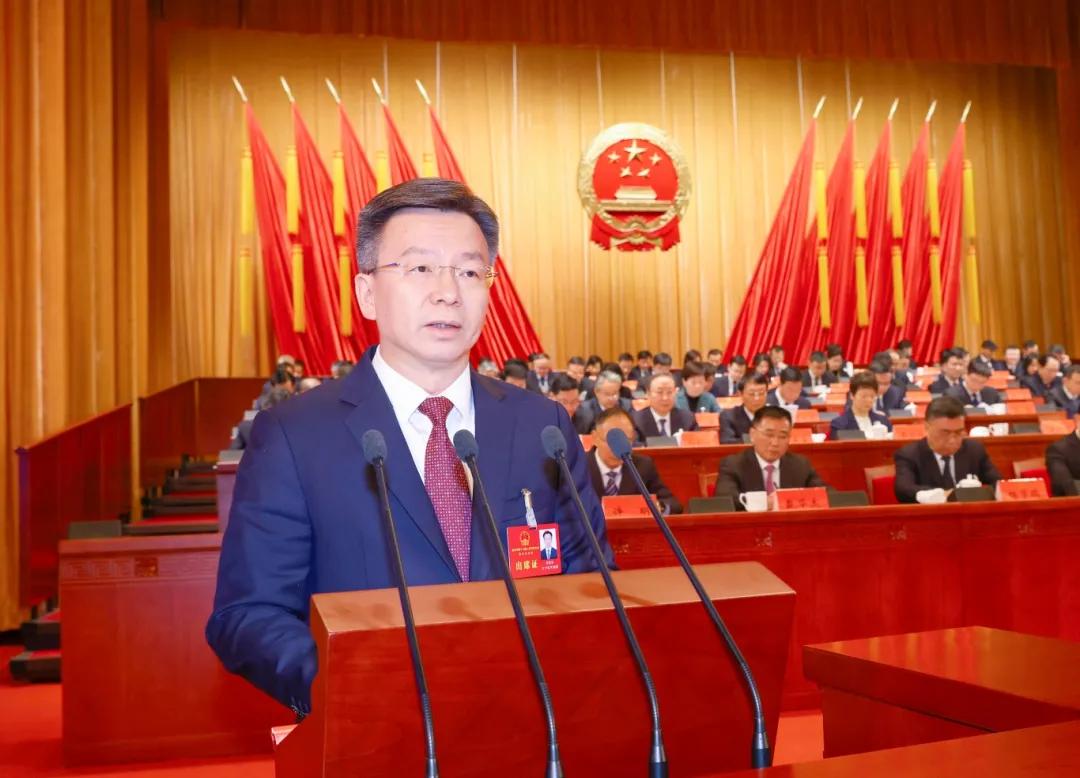
李忠军当选南京市市长
中国能源报· 2026-01-24 10:07
2024年10月,李忠军任江苏省政府党组成员,随后任江苏省副省长。 南京市第十七届人民代表大会第五次会议,选举李忠军为南京市市长 。 江苏省委组织部网站消息,202 6年1月24日,南京市第十七届人民代表大会第五次会议,选举李忠军为南京市市长。 公开资料显示,李忠军,197 2年6月出生,毕业于中国人民大学,经济学硕士,高级经济师。李忠军历任国电电力发展股份公司证券 投资部副经理,证券融资部副经理,证券融资部副主任(主持工作)、证券事务代表,证券融资部主任,副总经理、党委委员、董事 会秘书。 2018年11月,李忠军任国电安徽电力有限公司执行董事、总经理、党委副书记,后出任国能神皖能源公司董事长、党委书记,2 02 1年 6月任龙源电力集团股份有限公司党委书记、董事长,2022年7月任中国东方电气集团有限公司副总经理、党组成员。 来源:江苏省委组织部网站、澎湃新闻 End 欢迎分享给你的朋友! 出品 | 中国能源报(c ne ne rgy) 编辑丨赵方婷 拥抱中阿新机遇,彰显中企硬实力! 《阿拉伯国家采购需求对接 中国优良供应商名录(2026-2030)》征集 7 中国研究报 发起组织 公开征集 光伏、风电、 ...

2025年北京市能源生产情况:北京市发电量435.2亿千瓦时,同比增长0.7%
Chan Ye Xin Xi Wang· 2026-01-24 02:47
上市企业:金房能源(001210)、龙源电力(001289)、北京科锐(002350)、京能热力(002893)、 万邦达(300055)、潜能恒信(300191)、天壕能源(300332)、双杰电气(300444)、新雷能 (300593)、新特电气(301120) 相关报告:智研咨询发布的《2026-2032年中国能源行业市场研究分析及投资前景评估报告》 2025年12月,北京市发电52.7亿千瓦时,同比增长4.9%。2025年,北京市发电435.2亿千瓦时,同比增 长0.7%。分品种看,2025年,北京市火力发电量418.4亿千瓦时,占总发电量的96.1%,同比下滑0.4%; 北京市水力发电量13亿千瓦时,占总发电量的3%,同比增长46%;北京市风力发电量1.5亿千瓦时,占 总发电量的0.3%,同比增长1.5%;北京市太阳能发电量2.34亿千瓦时占总发电量的0.5%,同比增长 24.4%。 由于规模以上工业企业范围每年发生变化,为保证本年数据与上年可比,计算产品产量等各项指标同比 增长速度所采用的同期数与本期的企业统计范围相一致,和上年公布的数据存在口径差异。 2018-2025年北京市各品种发电量累计 ...

国投证券(香港)港股晨报-20260123
国投证券(香港)· 2026-01-23 07:06
港股晨报 2026 年 1 月 23 日 国投证券(香港)有限公司 • 研究部 1. 国投证券国际视点:科技股分化与消费韧性的博弈,金 价逻辑重构 昨日,港股三大指数涨跌互现,其中,恒生指数涨 0.17%,国企指数跌 0.09%, 恒生科技指数涨 0.28%。大市成交金额 2,348.60 亿元,主板总卖空金额 353.83 亿元,占可卖空股票总成交额比率为 17.01%。南向资金北水方面,港股通交易 净流入 139.30 亿港元。港股通 10 大成交活跃股中,北水净买入最多的是盈富 基金 2800.HK、恒生中国企业 2828.HK、阿里巴巴 9988.HK;净卖出最多的是中 国移动 941.HK、腾讯 700.HK、华虹半导体 1347.HK。 板块方面,建材水泥板块显著上扬,其中,中国建材 3323.HK 涨 6.83%,海螺 水泥 914.HK 涨 5.38%,华润建材科技 1313.HK 涨 4.97%,华新水泥 6655.HK 涨 4.18%。根据国家统计局数据,2025 年全国累计水泥产量 16.93 亿吨,同比下 降 6.9%,降幅与 1-11 月持平,较去年同期收窄 2.6 个百分点,产量为 ...
中泰国际每日晨讯-20260123
ZHONGTAI INTERNATIONAL SECURITIES· 2026-01-23 02:07
Market Overview - On January 22, Hong Kong stocks opened high but closed lower, with the Hang Seng Index slightly up by 44 points (0.2%) at 26,629 points; the Hang Seng Tech Index rose by 16 points (0.3%) to close at 5,762 points; total market turnover was HKD 234.9 billion[1] - Net inflow of southbound funds was HKD 5.24 billion[1] Key Stock Movements - Baidu Group (9888 HK) increased by 4.1% following the release of its Wenxin large model 5.0, attracting attention for AI applications[1] - Bilibili (9626 HK) rose by 3.3% due to progress in its content ecosystem and commercialization[1] - Alibaba (9988 HK) and JD Group (9618 HK) both saw approximately 1.0% gains, reflecting stable e-commerce demand[1] - The gold sector experienced a general pullback, with Lingbao Gold (3330 HK) down 3.2%, Zhaojin Mining (1818 HK) down 3.7%, and Zijin Mining (2899 HK) down 2.3%[1] Macroeconomic Insights - The People's Bank of China plans to implement a moderately loose monetary policy by 2026, indicating room for rate cuts and reserve requirement ratio reductions[3] - Structural tools will be optimized, including a 0.25 percentage point reduction in the re-lending rate and a new CNY 1 trillion re-lending for private enterprises[3] Industry Dynamics - The automotive sector shows high activity, with Minth Group (425 HK) rising 23% over two days, driven by its liquid cooling business and AI server orders[4] - Renewable energy and utilities stocks generally rose, with notable increases for companies like Flat Glass (6865 HK) up 3.5% and Longyuan Power (916 HK) up 2.3%[4] - The healthcare sector saw the Hang Seng Healthcare Index decline by 1.0%, while InSilico Medicine (3696 HK) continued to rise due to upcoming presentations at a major conference[5]
中国电力何时见底系列i:中美电价剪刀差:大国的相同与不同
HTSC· 2026-01-21 07:25
Investment Rating - The report maintains an "Overweight" rating for the public utility sector and the power generation sector [2]. Core Viewpoints - The report argues that the core logic determining the valuation of power stocks has changed in the new energy era, with expectations of a rebound in electricity prices and stock valuations as coal prices stabilize [4][6]. - It highlights that the most challenging phase for electricity supply and demand in China has passed, with expectations of a recovery in demand starting in 2026 [4][7]. - The report emphasizes that the valuation gap between U.S. and Chinese power stocks has widened significantly, with U.S. power stocks trading at 2-4 times the price-to-book (PB) ratio of their Chinese counterparts [4][6][7]. Summary by Sections Investment Recommendations - The report recommends several undervalued power operators, including Huaneng International, Guodian Power, and China Power [3][8]. - It suggests that the capacity price increase in 2026 will benefit thermal power, while the stabilization of energy prices will favor nuclear, green, and hydropower [8]. Market Dynamics - The report notes that both China and the U.S. are experiencing similar electricity shortages due to a slowdown in the growth of base-load power sources, with structural demand exceeding expectations potentially leading to supply crises [5][26]. - It discusses the significant differences in electricity pricing structures between the two countries, with U.S. electricity prices being significantly higher due to various systemic costs [56][58]. Price Trends and Projections - The report predicts that by 2026, the industrial electricity prices in China will be significantly lower than those in the U.S., enhancing the competitiveness of Chinese manufacturing [6][11]. - It highlights that the electricity price gap between the two countries is expected to continue to widen, benefiting China's manufacturing sector [6][8]. Supply and Demand Outlook - The report indicates that the most severe supply-demand imbalance in China has passed, with expectations of a recovery in electricity demand driven by increased manufacturing investment [7][8]. - It also notes that the U.S. is facing a similar situation, with a projected decline in gas-fired electricity generation and a potential increase in coal-fired generation [5][30].





平安证券(香港)港股晨报-20260121
Ping An Securities Hongkong· 2026-01-21 02:19
Market Overview - The Hong Kong stock market experienced a downward trend, with the Hang Seng Index closing at 23,831 points, down 145 points or 0.61% [1][5] - The market turnover decreased to 82.799 billion, with net inflows of 484 million from the Stock Connect [1][5] - The technology sector led the decline, with notable drops in stocks like SMIC and Sunny Optical, while real estate stocks showed resilience [1][5] US Market Performance - The US stock market saw significant declines, with the Dow Jones falling 1.8% and the S&P 500 down 2.1%, marking the worst single-day performance since October of the previous year [2] - The technology sector was particularly affected, with Nvidia and Tesla experiencing drops of 4.4% and 4.2% respectively [2] Market Outlook - The report highlights that both Hong Kong and A-shares achieved a positive start in 2026, with net inflows of 45.1 billion HKD from southbound funds [3] - Key investment themes include "technological self-reliance" and AI applications, with leading companies in these sectors expected to benefit in the medium to long term [3] - Recommendations for investment focus on sectors supported by policies for "expanding domestic demand," including sports apparel and non-essential services [3] Company Spotlight: Li Ning - Li Ning, a leading sports brand in China, reported a revenue of 14.817 billion for the first half of 2025, reflecting a year-on-year growth of 3.3% [10] - The company's gross margin was 50%, a slight decrease of 0.4 percentage points, attributed to increased promotional competition [10] - Li Ning's net profit was 1.737 billion, down 11% year-on-year, with a net profit margin of 11.7% [10] - The company is expected to enhance its brand presence in professional sports through a partnership with the Chinese Olympic Committee [10]
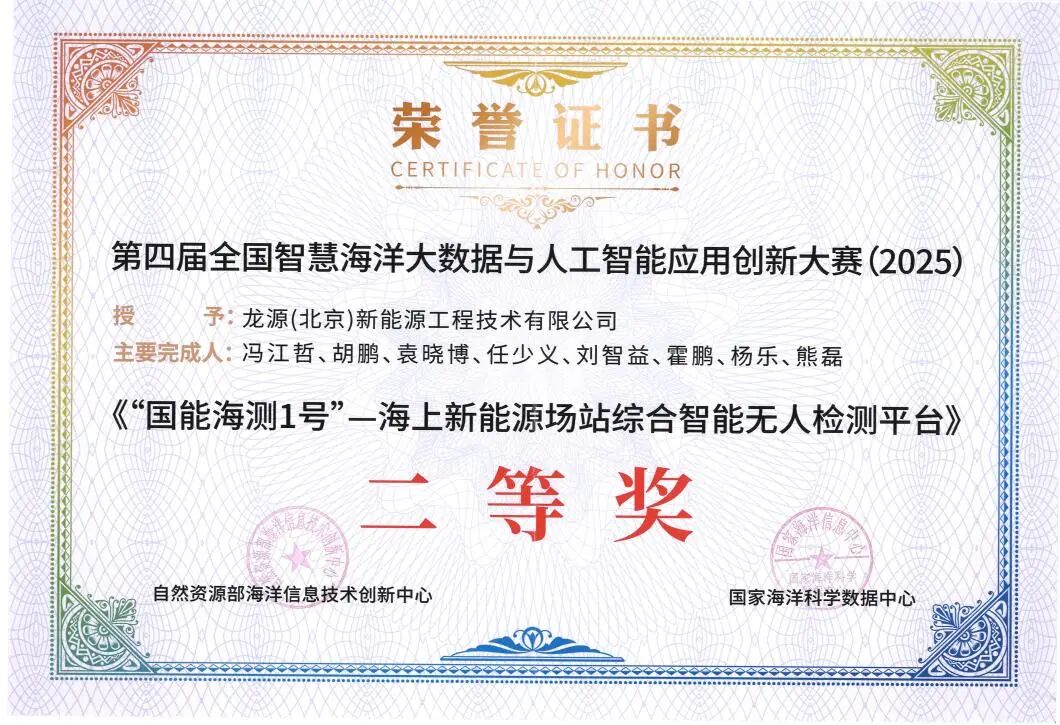
龙源电力获全国智慧海洋大数据与AI应用创新奖
Xin Lang Cai Jing· 2026-01-20 13:39
Core Viewpoint - The "National Smart Ocean Big Data and Artificial Intelligence Application Innovation Competition (2025)" was successfully held in Hainan, where Longyuan Power's engineering technology company won the second prize (first place in the intelligent equipment group) for its "National Energy Marine Survey No. 1" comprehensive intelligent unmanned detection platform for offshore renewable energy stations [1][3]. Group 1 - The platform innovatively combines "unmanned surface vessels + underwater robots" for unmanned offshore operations [3][5]. - The average fault location time for submarine cables has been significantly reduced from 22 days to 2-3 days, achieving a 90% reduction in fault location cycle [3][5]. - The accuracy of underwater equipment routing and fault detection has improved to ±0.1 meters [3][5]. Group 2 - The platform has been certified by the China Electromechanical Engineering Society, with its overall technology reaching an internationally leading level [3][5]. - It enables full lifecycle management of offshore wind power assets and supports the development of deep-sea resources, guiding the direction of industry development [3][5]. - Longyuan Power plans to enhance its capabilities in acquiring, processing, and applying marine data elements, achieving comprehensive situational awareness and intelligent task scheduling to support the rapid development of offshore wind power [3][5].

报告发布丨中智咨询《央企A股上市公司战新产业布局和模式路径比较研究报告》
Sou Hu Cai Jing· 2026-01-20 08:25
Core Insights - Strategic emerging industries have become the core battlefield for state-owned enterprises (SOEs) to explore a "second growth curve" under the national strategy of cultivating new productive forces [1] Group 1: Industry Overview - A report by Zhongzhi Consulting indicates that among 402 SOE-controlled A-share listed companies, 257 have over 30% of their revenue from strategic emerging industries, which are included in the study [6] - By the end of 2024, strategic emerging industry enterprises are expected to contribute 26% of operating income and 31.27% of total profit with approximately 25% of total assets, showing a net asset return rate superior to traditional industries [7] Group 2: Structural Layout - Nearly 80% of enterprises focus on advantageous fields such as new-generation information technology, new materials, and new energy, but there is a relative weakness in key areas like industrial mother machines and biomanufacturing, necessitating increased investment to enhance industry influence [8] - 43.85% of manufacturing enterprises in strategic emerging industries are actively upgrading to high-value-added segments like new materials and high-end equipment, while the share of strategic emerging business in transportation and financial service companies is less than 1% [9] Group 3: R&D Investment - Overall R&D investment intensity in strategic emerging industry enterprises is higher than that of traditional industries, but sectors like biotechnology, new materials, and energy conservation have lower R&D investment intensity compared to the average level of SOE A-shares (5.86%), indicating a gap with industry leaders [12] Group 4: Sector-Specific Insights - In the new energy sector, SOEs have established a full industrial chain layout covering power generation operations, equipment manufacturing, and technical services, transitioning from "scale competition" to "quality and efficiency competition" [14] - In the new materials sector, advanced steel materials face industry pressures, while advanced non-ferrous metal materials show high profitability and R&D investment, with companies adopting niche market and industry chain extension strategies [16] - In the biotechnology sector, many enterprises are positioned in relatively mature areas like raw materials and trade, but there is insufficient investment in innovative drugs and precision instruments, indicating a need to strengthen overall industry resilience [18] Group 5: Strategic Recommendations - Establish a full-cycle evaluation and adjustment mechanism for emerging industries, transitioning from experience-based to data-driven decision-making [21] - Implement a "one enterprise, one strategy; one industry, one model" incubation path to guide enterprises in selecting flexible combinations of business extensions, platform incubation, equity cooperation, and fund investment [21] - Optimize resource allocation mechanisms driven by innovation and capital, enhancing collaborative innovation resources and establishing special funds for emerging development [21] - Focus on creating an economic empowerment organization characterized by "small teams, large platforms" to enhance industry leadership and ecological construction capabilities [21]

电力行业月报:2025年全社会用电增速5%,12月火电发电降幅收窄
GOLDEN SUN SECURITIES· 2026-01-20 08:24
Investment Rating - The report suggests a positive outlook for the electricity sector, with a projected growth rate of 5% in total electricity consumption for 2025 [8][10]. Core Insights - Total electricity consumption in 2025 is expected to reach 103,682 billion kWh, reflecting a year-on-year increase of 5% [8][10]. - In December, total electricity consumption was 9,080 billion kWh, showing a year-on-year growth of 2.77% [8]. - The contribution of the tertiary industry and urban-rural residential electricity consumption to the growth of total electricity consumption is projected to reach 50% in 2025 [10]. - The electricity consumption growth rates for different sectors in 2025 are as follows: primary industry at 1,494 billion kWh (9.9% growth), secondary industry at 66,366 billion kWh (3.7% growth), tertiary industry at 19,942 billion kWh (8.2% growth), and urban-rural residential consumption at 15,880 billion kWh (6.3% growth) [10]. Summary by Sections Demand Side - The demand for electricity is driven significantly by the tertiary industry and urban-rural residential sectors, with notable growth in the charging and battery swapping services, as well as information transmission, software, and IT services, which grew by 48.8% and 17.0% respectively [10][13]. Supply Side - In December, the decline in thermal power generation narrowed, while the growth rates of other power sources slowed down. The total industrial power generation in December was 8,586 billion kWh, with a slight year-on-year increase of 0.1% [27]. - The year-on-year decline in industrial thermal power was 3.2%, which is a narrowing of 1.0 percentage points compared to November. Other power sources such as hydro, nuclear, wind, and solar also experienced slowed growth rates [34]. Investment Recommendations - The report recommends focusing on high-dividend thermal power leaders and companies with stable electricity prices and coal-electricity integration, such as Huaneng International, Huadian International, Guodian Power, Datang Power, Inner Mongolia Huadian, and Shaanxi Energy [49]. - It also suggests paying attention to wind and solar sectors, including Xintian Green Energy, Longyuan Power, and Zhongmin Energy. For gas sectors, it highlights quality leaders like Chengran, New Hope Energy, Kunlun Energy, and China Resources Gas [49].