台积电

Search documents
陆家嘴财经早餐2025年3月26日星期三
Wind万得· 2025-03-25 22:29
3、 小米集团宣布以"先旧后新"方式,折让6.6%配售8亿股,募资425亿港元,成为港股年内继比亚迪后又一起大规模配售案。配售事项完成后,雷军的持 股比例将为23.4%。 小米集团股价昨日大跌超6%,"天量"成交718亿港元。南向资金逆市抄底,当日大举净买入小米集团近85亿港元。 4、 阿里巴巴集团董事长蔡崇信在汇丰全球投资峰会上指出,目前全球数据中心建设速度超出人工智能(AI)的初始需求,警告可能出现泡沫风险。 另 外,高盛分析师团队调低今明两年全球AI训练服务器出货量,并全线下调相应供应链股价预期。 5、摩根士丹利上调中国股指目标,转而更加看涨中国,称企业业绩超预期; 预计恒生指数年底为25800点,恒生中国企业指数料为9500点。 6、 苹果公司计划在6月9日当周举行年度全球开发者大会,届时料将宣布重新设计的iPhone、iPad和Mac操作系统。 苹果称,除了周初的现场主题演示 外,其他活动将在线上举行。苹果一直在人工智能领域努力追赶竞争对手,不过AI不太可能成为此次活动的主要焦点。预计人工智能功能的重大增强和 改进要到晚些时候才会实现。 // 环球市场 // 1、 美国三大股指小幅收涨, 道指涨0. ...




大摩闭门会 :英伟达GTC大会与内存行业更新 AI芯片需求强劲 Blackwel1架构引领下一代计算革命
2025-03-25 12:35
Summary of Key Points from NVIDIA GTC Conference Call Company and Industry - **Company**: NVIDIA - **Industry**: AI Chips and Data Center Solutions Core Insights and Arguments - **Vibrant Atmosphere at NVIDIA GTC**: The atmosphere at the NVIDIA GTC conference was described as lively, contrasting sharply with the current skeptical sentiment in the stock market [2] - **Significant Increase in AI Chip Shipments**: AI chip shipments are expected to rise from 1.4 million Hopper chips in 2024 to 3.6 million in 2025, including 1.8 million Blackwell chips, driven by demand from four major hyperscale manufacturers [2][3] - **Revenue Growth Projections**: The average selling price (ASP) of chips is projected to increase from $22,000 to $35,000, leading to an estimated revenue growth of approximately 115%, potentially reaching 140% when considering additional demand factors [2][3] - **NVIDIA's Market Dominance**: Despite competition from ASICs, NVIDIA maintains a dominant market position, with Google expected to increase its spending on Blackwell chips from $4-5 billion in 2024 to $10-12 billion in 2025 [2][4] - **Product Roadmap Confidence**: NVIDIA's 2025 product roadmap includes Blackrap Rubin Ultra and GV300, indicating confidence in executing plans without creating excessive demand or alerting competitors [2][5] - **Growth Potential in Robotics and AI**: Recent announcements highlight significant growth potential in robotics and physical AI, presenting new investment opportunities [2][9] - **Data Center Business Evolution**: The data center business has evolved from focusing on convolutional neural networks for autonomous vehicles to utilizing video ASICs for training robots [10] - **Investment in High-Performance Computing**: Continuous investment in high-performance computing clusters is driven by the demand for new functionalities beyond traditional language processing [13] - **Impact of Multi-Modal Language Models**: Multi-modal language models are crucial for advancing robotics by integrating various input types into cohesive systems [12] Other Important Insights - **NVIDIA's Response to Microsoft and ASIC Concerns**: NVIDIA effectively addressed concerns regarding Microsoft's investment delays and ASIC competition, highlighting ongoing investments from other major players like Oracle [4] - **Google Cloud Platform Comparison**: Google's cloud platform is significantly smaller than Amazon's, indicating less need for extensive investment in cloud infrastructure [4] - **Performance Disclosure of GV300**: The performance disclosure of GV300 was not surprising, as it has been well-publicized, but it is now seen as a backup plan due to previous production issues with GV200 [6] - **NVIDIA's Competitive Position**: Despite competition from companies like Intel and AMD, NVIDIA's roadmap and product offerings remain strong, with a focus on maintaining margins [7][8] - **China's Influence on NVIDIA**: China's demand for AI GPUs is expected to remain strong if geopolitical conditions allow for continued trade relations [19] - **Concerns Over Profit Margin Dilution**: There are minimal concerns regarding profit margin dilution from cost-sharing with TSMC, as the impact is expected to be small [30] - **Investor Concerns**: The primary investor concerns revolve around profit margin declines and competition from Broadcom, although recent data suggests improvements in order volumes [32] This summary encapsulates the key points discussed during the NVIDIA GTC conference call, highlighting the company's growth prospects, market dynamics, and strategic positioning within the AI chip industry.

3.25犀牛财经晚报:多家银行上调消费贷额度上限 哪吒汽车与134家核心供应商达成超20亿元债转股协议
Xi Niu Cai Jing· 2025-03-25 10:26
Group 1: Consumer Loans - Multiple banks have raised the upper limit for internet consumer loans from 200,000 yuan to 300,000 yuan, with potential increases to 1,000,000 yuan for certain borrowers [1] - Banks are advised to focus on risk management and monitoring of fund flows as consumer loan limits increase [1] Group 2: Fund Management - Numerous fund companies have announced changes to their performance benchmarks, with 82 products adjusting their benchmarks since mid-March [1] - Many equity products are shifting from broad indices like the CSI 300 to more specific industry indices, aligning better with fund manager strategies [1] Group 3: Telecommunications - China Telecom reported a net profit of 33.01 billion yuan for 2024, an increase of 8.4% year-on-year, with total revenue reaching 523.57 billion yuan, up 3.1% [2] Group 4: Steel Industry - The social inventory of five major steel products in 21 cities decreased by 370,000 tons to 10.85 million tons in mid-March, marking a 3.3% decline [3] - Year-to-date, the inventory has increased by 4.26 million tons, a rise of 64.6% compared to the beginning of the year [3] Group 5: Automotive Industry - Neta Auto has reached a debt-to-equity swap agreement with 134 core suppliers, amounting to over 2 billion yuan, to prepare for resuming operations [5] - The debt restructuring plan involves converting 70% of the suppliers' debt into equity and repaying the remaining 30% in cash over 15 months [5] Group 6: AI Talent Recruitment - Alibaba Cloud has initiated its largest AI talent recruitment campaign in recent years, targeting top global universities for roles in various AI fields [5] Group 7: Financial Performance - Minfeng Special Paper reported a net profit of 72 million yuan for 2024, a year-on-year increase of 54.09%, despite a revenue decline of 9.82% [9] - Kuaiji Elevator's net profit for 2024 decreased by 8.46% to 132 million yuan, with a revenue drop of 4.93% [11]




雪上加霜!三星电子联席CEO去世
半导体芯闻· 2025-03-25 10:02
Core Viewpoint - The sudden death of Samsung Electronics' co-CEO Han Jong-hee has shocked the company during a period of business decline, highlighting the leadership crisis the company is facing [1][2]. Group 1: Leadership Changes - Han Jong-hee, who was appointed co-CEO in December 2021, passed away due to cardiac arrest, leaving the company without a clear successor [1][2]. - Following Han's death, Jun Young-hyun will become the sole CEO, having been appointed co-CEO just a week prior [2]. Group 2: Business Challenges - Samsung is experiencing significant challenges in the semiconductor sector, lagging behind competitors like SK Hynix and TSMC in the AI chip market [2][4]. - The company's stock price has dropped approximately 22% over the past year, contrasting sharply with the stock price increases of Apple, SK Hynix, and TSMC, which have risen at least 25% [3][4]. Group 3: Market Position and Competition - Samsung's market share in the global AMOLED smartphone display market has decreased by 20 percentage points to 40% due to competition from emerging Chinese companies [4]. - Chinese semiconductor manufacturers are rapidly closing the gap with Samsung, with SMIC now being the third-largest contract chip manufacturer globally [4]. Group 4: Financial Performance - Samsung's annual revenue is projected to grow by 16% in 2024, reaching approximately 301 trillion KRW (about 205 billion USD), with the components division, including semiconductors, recovering from previous losses [4]. - The operating profit for the components division is expected to be 15.1 trillion KRW, which is only about one-third of the pre-pandemic peak [4]. Group 5: Future Outlook - Despite current challenges, Samsung retains the largest chip manufacturing capacity globally and has the financial resources to continue investing in key technologies [5].
半导体,暂逃一劫
半导体行业观察· 2025-03-25 01:27
Core Viewpoint - The semiconductor industry is experiencing a positive outlook, driven by demand from AI and high-performance computing (HPC), with specific companies like TSMC, UMC, and World Advanced receiving favorable ratings from Citigroup Global Markets [1][2]. Group 1: TSMC and Market Dynamics - TSMC's stock price has fluctuated, closing at 972 NTD, with foreign investors showing renewed interest despite concerns about the company's short-term outlook [1]. - Citigroup maintains a positive view on TSMC's long-term prospects, indicating that any potential joint ventures will not alter the advanced semiconductor landscape [1]. - The overall semiconductor market is expected to improve due to demand recovery in various sectors, including PMIC, WiFi-7, and 10G PON products [1]. Group 2: UMC and World Advanced Ratings - Citigroup upgraded UMC's investment rating from "Sell" to "Buy," predicting a reasonable stock price increase from 40 NTD to 53 NTD, citing that the market has already absorbed the risks of price and margin declines [2]. - World Advanced's rating was also raised from "Neutral" to "Buy," with an expected stock price increase to 112 NTD, driven by rising PMIC demand and recovery in consumer electronics [2]. - The semiconductor industry is seeing healthier inventory levels in PCs, smartphones, and consumer electronics, reducing the risk of inventory adjustments [2].
深夜,全线大涨!
券商中国· 2025-03-24 15:16
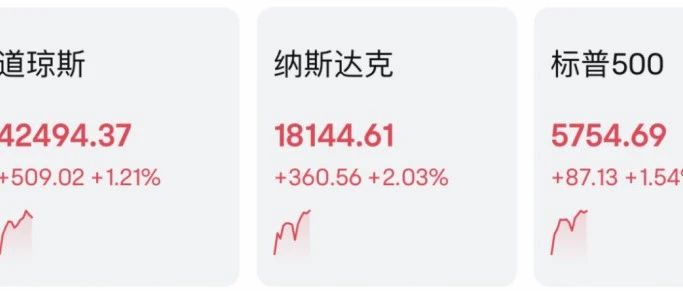
Core Viewpoint - The U.S. stock market staged a strong rebound, with major indices experiencing significant gains, driven by optimism surrounding potential changes in tariff policies announced by the Trump administration [2][5]. Group 1: Market Performance - The three major U.S. indices opened high and continued to rise, with the Dow Jones up 1.21%, Nasdaq up 2.03%, and S&P 500 up 1.54% [5]. - Major tech stocks saw substantial increases, with Tesla rising over 10%, Amazon up over 3%, and other companies like Nvidia, Google A, TSMC ADR, and Broadcom rising over 2% [6]. Group 2: Investment Trends - Investors are currently ignoring the risks posed by a potential full-scale trade war, as significant capital continues to flow into global equity markets. In the week ending last Wednesday, global equity funds saw an inflow of approximately $43.4 billion, the highest level this year [3][10]. - Retail investors in the U.S. have been actively buying Tesla shares, with a cumulative investment of $8 billion over 13 consecutive trading days, marking the largest inflow since 2015 [3][10]. - South Korean investors have also been heavily investing in U.S. stocks, with a net investment of $2.2 billion in Tesla shares this year, making it the most popular trade among them [11]. Group 3: Tariff Policy Insights - The Trump administration's upcoming tariff policy, set to be announced on April 2, is expected to be more targeted than previously suggested, which has contributed to market optimism [7][8]. - Officials have indicated that the new tariffs may exclude certain countries and will not simply be an addition to existing steel and aluminum tariffs, particularly regarding the automotive and semiconductor sectors [7][8].

英伟达引爆CPO新战场
半导体芯闻· 2025-03-24 10:20
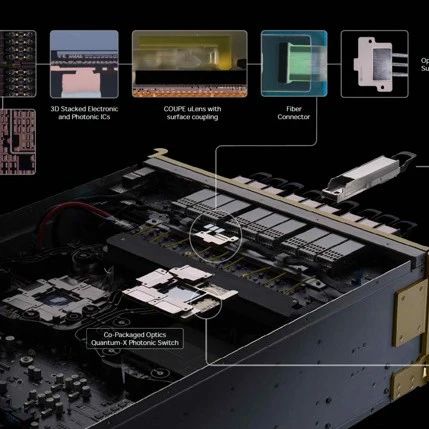
Core Viewpoint - NVIDIA has officially launched two CPO (Co-Packaged Optics) switch products, Quantum-X Photonics for InfiniBand and Spectrum-X Photonics for Ethernet, with the InfiniBand CPO expected to debut in the second half of 2025 and the Ethernet CPO in the second half of 2026 [1][2]. Group 1: CPO Technology and Market Position - CPO will be an optional configuration, and NVIDIA will continue to offer traditional switch systems with pluggable modules [2]. - The primary driver for NVIDIA's investment in CPO technology is power optimization, with a significant reduction in power consumption from 30W to 9W for a 1.6T port, achieving a 70% decrease [2]. - NVIDIA's CPO solution utilizes new micro-ring modulators (MRM) for enhanced energy efficiency, contrasting with Broadcom's CPO solution that achieved a 50% power reduction using traditional Mach-Zehnder modulators (MZM) [2]. Group 2: Ecosystem and Partnerships - The technology involves a multi-component ecosystem, integrating electronic and photonic chips through 3D stacking, with TSMC's compact optical engine technology playing a key role [3]. - NVIDIA's CPO partners include major industry players such as Browave, Coherent, Corning, Fabrinet, Foxconn, Lumentum, Senko, SPIL, Sumitomo, Tianfu Communication, and TSMC [3]. Group 3: Strategic Implications and Future Developments - LightCounting notes that NVIDIA's first CPO product is an InfiniBand switch, which has been overshadowed by Ethernet in NVIDIA's AI strategy, indicating that the initial deployment will primarily serve NVIDIA's own clusters [4]. - The Spectrum-X platform aims to elevate Ethernet performance to match that of InfiniBand, with potential for significant GPU interconnectivity in future architectures [4]. - NVIDIA's entry into the CPO market is expected to invigorate the ecosystem, with both NVIDIA and Broadcom projected to release single-channel 200G CPO switches by 2027, leading to a more mature industry landscape [4]. Group 4: Technical Challenges and Innovations - Scale-out is seen as a low-risk entry point for CPO, while scale-up is critical for success, particularly for the mixed expert (MoE) model requiring rapid response times across GPUs [5]. - NVIDIA has previously announced fiber-based NVLink plans, with at least one cluster built internally, but large-scale deployment has been hindered by high power consumption of timing modules [6]. - The NVLink CPO is scheduled for 2028, allowing NVIDIA to validate technology feasibility over two product cycles, significantly reducing future integration risks [6].
台积电2nm,4月1日开始接单
半导体芯闻· 2025-03-24 10:20
Core Insights - TSMC has achieved a significant milestone with a 60% yield rate for its 2nm technology and will start accepting orders from April 1 [1][2] - Apple is expected to be the first customer for TSMC's 2nm wafers, with the A20 chip designed for the iPhone 18 series set to launch in the second half of 2026 [1][2] - TSMC aims to reach a monthly production target of 50,000 wafers by the end of 2025, with the potential to increase capacity to 80,000 wafers [2] Production and Capacity - TSMC's production will focus on two factories located in Kaohsiung and Baoshan, with an expansion ceremony scheduled for March 31 [1] - The first batch of 2nm wafers is expected to be delivered to Hsinchu Baoshan by late April [1] - The company plans to implement the "CyberShuttle" service to help reduce customer costs associated with wafer testing [2] Market Demand - There is high demand for 2nm wafers, surpassing that for 3nm wafers, with several major clients including AMD, Intel, Broadcom, and AWS lining up for orders [2] - The estimated cost per wafer is around $30,000, indicating a significant investment in advanced semiconductor technology [2]

台积电员工每天做啥?流程曝光!
半导体行业观察· 2025-03-24 01:23
Core Viewpoint - TSMC, referred to as the "guardian mountain" of Taiwan, plays a crucial role in the economic and technological development of Taiwan, symbolizing its achievements in the semiconductor industry [2][3]. Group 1: TSMC's Role and Impact - TSMC was established in 1987 and pioneered the foundry model, quickly becoming a leader in the global semiconductor industry [2]. - The company's rapid advancements in logic process technology are largely attributed to the dedication of its engineers, who work tirelessly to push R&D efforts forward [3]. - TSMC's overseas expansion has raised concerns about technology leakage and regional security, despite its contributions to Taiwan's economic growth and technological image [3][4]. Group 2: Semiconductor Manufacturing Challenges - TSMC's manufacturing facilities include a research center, a main factory, several high-volume manufacturing plants, and advanced packaging facilities, making it a model of a comprehensive semiconductor ecosystem [4][5]. - The manufacturing process involves complex roles and modules, including lithography, etching, thin films, and diffusion, requiring precise management of the overall process [6][7]. - Engineers face a demanding work environment, often needing to be on call 24/7, which poses challenges to work-life balance [7][8]. Group 3: Corporate Culture and Recruitment - TSMC's corporate culture is influenced by Confucian values, emphasizing discipline, professionalism, and integrity, while adapting to cultural differences in global operations [10]. - The company plans to recruit approximately 8,000 new employees, with an average annual salary of 2.2 million New Taiwan Dollars for master's degree holders [11]. - TSMC's recruitment efforts also include a summer internship program aimed at undergraduate students, with high-performing interns potentially receiving job offers [11]. Group 4: Key Aspects of Semiconductor Foundries - Knowledge transfer and technical legacy are critical, as new engineers rely on mentorship from experienced colleagues to gain practical skills [31]. - System integration in foundries requires extensive experience and data analysis capabilities to create a seamless manufacturing system [32]. - The high-pressure work environment necessitates effective talent retention strategies, especially as TSMC expands its operations internationally [33]. Group 5: Production Optimization and Market Dynamics - Maximizing yield and capacity utilization is essential for foundries, as each process step is interconnected, impacting overall production efficiency [34]. - Pricing strategies directly affect profitability, with aggressive pricing from competitors like China putting pressure on global pricing [36]. - Advanced packaging is becoming a key trend in the industry, with TSMC investing in facilities to support cutting-edge processes [39].
博通芯片,麻烦不小
半导体行业观察· 2025-03-24 01:23
Core Viewpoint - The article discusses the evolving relationship between Broadcom and its largest customer, Apple, particularly focusing on the potential impact of Apple switching to its own Wi-Fi chips, which could significantly affect Broadcom's revenue from this segment [2][5][8]. Group 1: Revenue Impact from Wi-Fi Chip Transition - Apple plans to replace Broadcom's Wi-Fi and Bluetooth chips with its internal Proxima chips in upcoming products, which could lead to a revenue loss for Broadcom estimated at $2.74 billion in 2025, decreasing to $3.24 billion by 2028 [7][8]. - The Wi-Fi chip segment currently contributes approximately 33.6% to Broadcom's revenue from Apple, but this is expected to drop to 4.3% in 2025 and further to 3.3% by 2028 [8][9]. - Broadcom's market share in the Wi-Fi chip market could decline from 24% to 12.5% if Apple transitions to its own chips, highlighting Broadcom's dependency on Apple for this revenue stream [9]. Group 2: RF Business Analysis - Broadcom supplies RF components to Apple, which accounted for about 65.2% of its revenue from Apple, with a previous agreement valued at $15 billion over three years [10][11]. - Despite the competitive landscape, Broadcom holds a significant position in the RF market, with a stable growth rate and a strong share of Apple's RF revenue, estimated at 32.7% [15][16]. - The RF business is crucial for Broadcom, and while it faces competition from Qualcomm and others, it has maintained a solid relationship with Apple, which is expected to continue in the near term [12][16]. Group 3: AI Chip Opportunities - Broadcom is collaborating with Apple on the Baltra AI chip, which is expected to be produced in 2026, potentially offsetting losses from the Wi-Fi chip transition [18][20]. - Apple's commitment to invest $50 billion over the next four years in AI infrastructure could create significant revenue opportunities for Broadcom, estimated at $12.53 billion annually from custom ASICs [21][22]. - The partnership with major tech companies like Google and Meta in the custom ASIC market positions Broadcom favorably to benefit from Apple's AI initiatives [19][22]. Group 4: Market Outlook and Valuation Concerns - Broadcom's optimistic market outlook, particularly in the custom accelerator space, has faced scrutiny as the company’s valuation has declined since reaching a $1 trillion market cap [24][29]. - The company’s revenue growth is projected to be strong, but there are concerns that the market's expectations for growth may be overly optimistic, particularly in light of competitive pressures from Nvidia and others [24][29]. - Broadcom's current market valuation appears high compared to its growth projections, suggesting potential downward pressure on its stock if growth does not meet expectations [28][29].