零跑汽车

Search documents
零跑汽车:董事长朱江明及股东傅利泉增持215万股 金额超1亿元港币
Xin Lang Cai Jing· 2025-12-11 12:38
来源:第一财经 零跑汽车在港交所公告,近期本公司股东、董事长兼首席执行官朱江明及本公司股东傅利泉于市场内合 共购入2150600股本公司H股,平均价格为每股股份约50.51港币,合共增持金额超1亿元港币。紧随本次 增持后,于本公告日期,朱江明及傅利泉及所属的本公司单一最大股东集团合共持有本公司209100538 股H股及128517839股内资股,占本公司已发行总股数的23.75%。 (本文来自第一财经) ...

零跑汽车(09863)获股东朱江明及傅利泉增持合共215.06万股H股 增持金额超1亿港元
智通财经网· 2025-12-11 12:34
紧随本次增持后,于本公告日期,朱江明先生及傅利泉先生及所属的本公司单一最大股东集团合共持有 本公司2.09亿股H股及1.285亿股内资股,占本公司已发行总股数的 23.75%。朱江明先生及傅利泉先生 确认,本次增持符合相关法律法规以及《香港联合交易所有限公司证券上市规则》相关要求。 智通财经APP讯,零跑汽车(09863)发布公告,基于对本公司未来发展的强烈信心,为促进本公司持续、 稳定、健康发展,维护广大公众投资者利益,于近期本公司股东、董事长兼首席执行官朱江明先生及本 公司股东傅利泉先生于市场内合共购入215.06万股本公司H股(本次增持),平均价格为每股股份约50.51 港币,合共增持金额超1亿元港币。 ...
零跑汽车获股东朱江明及傅利泉增持合共215.06万股H股 增持金额超1亿港元
Zhi Tong Cai Jing· 2025-12-11 12:31
紧随本次增持后,于本公告日期,朱江明先生及傅利泉先生及所属的本公司单一最大股东集团合共持有 本公司2.09亿股H股及1.285亿股内资股,占本公司已发行总股数的23.75%。朱江明先生及傅利泉先生确 认,本次增持符合相关法律法规以及《香港联合交易所有限公司证券上市规则》相关要求。 零跑汽车(09863)发布公告,基于对本公司未来发展的强烈信心,为促进本公司持续、稳定、健康发 展,维护广大公众投资者利益,于近期本公司股东、董事长兼首席执行官朱江明先生及本公司股东傅利 泉先生于市场内合共购入215.06万股本公司H股(本次增持),平均价格为每股股份约50.51港币,合共增 持金额超1亿元港币。 ...
零跑汽车(09863) - 自愿公告股东增持本公司股份
2025-12-11 12:23
香港交易及結算所有限公司及香港聯合交易所有限公司對本公告的內容概不負責,對其準確性 或完整性亦不發表任何聲明,並明確表示,概不對因本公告全部或任何部分內容而產生或因倚 賴該等內容而引致的任何損失承擔任何責任。 股東增持本公司股份 本公告乃由浙江零跑科技股份有限公司(「本公司」)自願作出。 基於對本公司未來發展的強烈信心,為促進本公司持續、穩定、健康發展,維護 廣大公眾投資者利益,於近期本公司股東、董事長兼首席執行官朱江明先生及本 公司股東傅利泉先生於市場內合共購入2,150,600股本公司H股(「本次增持」),平 均價格為每股股份約50.51港幣,合共增持金額超1億元港幣。緊隨本次增持後, 於本公告日期,朱江明先生及傅利泉先生及所屬的本公司單一最大股東集團合共 持有本公司209,100,538股H股及128,517,839股內資股,佔本公司已發行總股數的 23.75%。朱江明先生及傅利泉先生確認,本次增持符合相關法律法規以及《香港 聯合交易所有限公司證券上市規則》相關要求。 股東及潛在投資者於買賣本公司證券時務請審慎行事。 承董事會命 ZHEJIANG LEAPMOTOR TECHNOLOGY CO., LT ...
11月多家新能源汽车销量大增,零跑、小鹏、小米完成全年目标
高工锂电· 2025-12-11 11:10
Core Insights - The article highlights the surge in the electric vehicle (EV) market driven by the impending end of the new energy vehicle purchase tax exemption policy, leading to a year-end consumption peak [2][3] - The battery supply chain is experiencing a rare high production rhythm in December, with material prices rising across the board, prompting several battery companies to announce or plan price increases [2][8] Group 1: Market Performance - In November, the production and sales of new energy vehicles reached 1.88 million and 1.823 million units respectively, both showing a year-on-year increase of 20%, with a penetration rate exceeding 53% [2] - From January to November, cumulative production and sales of new energy vehicles reached 14.907 million and 14.78 million units, respectively, with year-on-year growth exceeding 31% and a penetration rate of 47.5% [2] - Several major automakers, including Li Auto and NIO, have achieved or exceeded their annual sales targets ahead of schedule due to consumer demand driven by the tax policy change [3][4] Group 2: Sales Growth and Market Concentration - Notable sales growth in November includes Leap Motor with a 75.1% year-on-year increase, and Xiaomi Auto with a 99.7% increase [4] - The top fifteen new energy vehicle manufacturers collectively sold 14.072 million units from January to November, representing a year-on-year growth of 32.6% and accounting for 95.2% of total sales [5] - The top three manufacturers (BYD, Geely, SAIC) hold a combined market share of 50.5%, indicating a strengthening head effect in the market [5] Group 3: Battery Production and Pricing - The battery production in December is expected to remain stable at around 220 GWh, marking the first time since late 2022 that production has not decreased in December [6] - The demand from non-power sectors is contributing significantly to the overall production stability, supporting high operational levels in the supply chain [7] - Battery companies are initiating price increases due to rising raw material costs, with Dejia Energy announcing a 15% price hike effective December 16 [9][10]





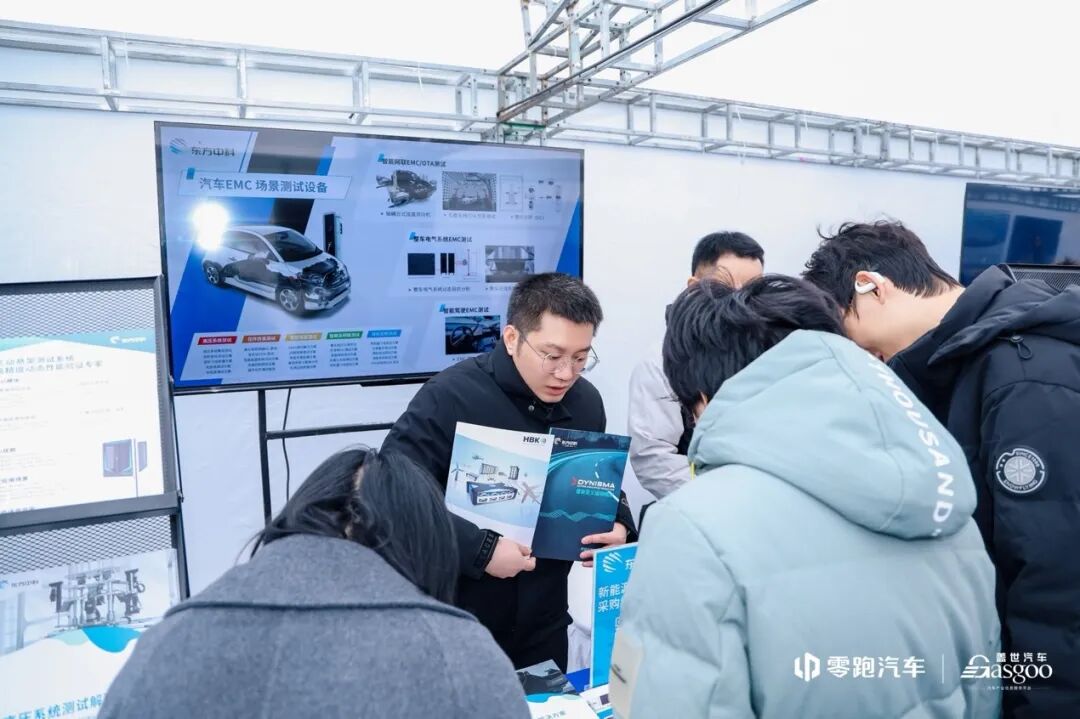
圆满落幕 | 2025东方中科走进零跑智能汽车技术展
Xin Lang Cai Jing· 2025-12-11 10:17
Core Insights - Leap Motor has maintained its position as the top-selling brand among new forces in China's automotive market, achieving monthly sales leadership for seven consecutive months as of September 2025 [1][8] - The company celebrated the production of its one millionth vehicle on September 25, marking it as the second new force automaker in China to enter the "million club" [1][8] - Leap Motor has successfully transitioned from technology research and development to scalable profitability, becoming the second new force automaker in China to achieve profitability [1][8] Company Strategy - Leap Motor emphasizes self-research of core technologies, driving development through technological innovation, and aims to produce high-quality, well-equipped, and competitively priced products [4][11] - The company focuses on three main themes: "cost reduction through technology, global co-creation, and full-stack evolution," asserting that continuous technological innovation is key to building core competitiveness [4][11] - Leap Motor advocates for close collaboration with partners to implement advanced technological solutions, ensuring functionality, performance, and safety to create an exceptional user experience [4][11] Industry Collaboration - The company is engaging in deep exchanges with partners regarding advanced testing technologies in areas such as assisted driving, intelligent cockpits, smart chassis, and battery motors [3][10] - Leap Motor's vice president, Shu Chun Cheng, highlighted the importance of collaboration in overcoming industry challenges and achieving mutual development [5][12] - The event aims to foster a shared vision among suppliers and partners, promoting the next generation of intelligent electric vehicles [5][12]
国泰海通:11月乘用车市场优惠力度持续减弱 行业内部结构性分化加剧
Zhi Tong Cai Jing· 2025-12-11 08:49
Core Insights - The passenger car market in November 2025 shows a continued decrease in discount rates, indicating a shift from price wars to refined operations in the domestic market [2][3]. Summary by Category Overall Market Performance - The average discount rate for the passenger car market in November 2025 is 18.3%, with a month-on-month decrease of 0.3 percentage points and a year-on-year increase of 1.0 percentage points. The average price stands at 159,000 yuan, remaining stable month-on-month but down nearly 9,900 yuan year-on-year [2][3]. New Energy Vehicle Market - The average discount rate for traditional energy vehicles is 26.4%, with a month-on-month increase of 0.1 percentage points and a year-on-year increase of 2.6 percentage points. The average wholesale price is 164,000 yuan, stable month-on-month but down approximately 14,000 yuan year-on-year. In contrast, new energy vehicles have an average discount rate of 12.2%, with a month-on-month decrease of 0.5 percentage points and a year-on-year increase of 1.0 percentage point, and an average wholesale price of 156,000 yuan, also stable month-on-month but down about 5,000 yuan year-on-year [3]. Brand Strategy and Market Dynamics - Among domestic brands, new energy brands maintain a stable pricing system, with lower discount rates such as 6.2% for AITO and 11.4% for Leap Motor, indicating strong market demand and pricing power. Non-luxury joint venture brands have higher discount rates, typically between 25% and 32%, reflecting pressure from the transition to new energy and competition from domestic brands [4]. Luxury Brand Pricing Strategies - Tesla China has a discount rate of 4.3%, while traditional luxury brands like Mercedes-Benz, BMW, and Audi have discount rates ranging from 28% to 31%, indicating a strategy of exchanging price for volume. Second-tier luxury brands like Volvo Asia-Pacific and Cadillac exhibit even higher discount rates. The market is characterized by "new energy leaders with stable pricing and traditional brands relying on discounts for volume," a trend expected to deepen with the increase in electric vehicle penetration [5].

大电池增程会是未来主流吗?
数说新能源· 2025-12-11 06:31
Group 1: China's Energy Landscape - China's reliance on imported crude oil has increased, with self-sufficiency dropping to 28% as of 2023, down from 39.4% in 2015 [1] - The primary use of crude oil in China is for transportation, accounting for 53.6% of consumption, followed by chemical products (28.9%) and industrial use (8%) [1] - China has a significant advantage in coal resources and a leading position in the global photovoltaic (PV) industry, with the cost of solar components at 0.7 yuan/W and total installation costs under 1.8 yuan/W [1] Group 2: Photovoltaic Potential - If 10% of China's desertified land (approximately 168,000 square kilometers) were covered with PV panels, it could generate 18.9 trillion kWh annually, exceeding the projected total electricity generation of 10 trillion kWh for 2024 [2] Group 3: Economic Comparison of Energy Sources - The cost of gasoline derived from crude oil is approximately 2.86 yuan per liter, leading to a driving cost of 0.14-0.28 yuan per kilometer for gasoline vehicles [3][4][5] - In contrast, the cost of electricity for electric vehicles (EVs) is between 0.5-1 yuan per kWh, resulting in a driving cost of 0.08-0.16 yuan per kilometer, which is more economically favorable as it supports domestic distribution [6] Group 4: Electric Vehicle Challenges - The current infrastructure for public charging stations is insufficient during winter months, leading to increased wait times for charging [6][9] - To meet the commuting needs in first-tier cities, EV batteries should ideally be designed with a capacity of 80-100 kWh to counteract winter range reduction [7] Group 5: Battery Size Considerations - Increasing battery size to 200 kWh may lead to resource and financial waste, as larger batteries significantly increase vehicle weight and cost [12] - The current trend is towards larger battery packs in range-extended electric vehicles (REEVs), with models like the Li Auto L6 and others increasing battery capacities to meet consumer demands [17][18] Group 6: Market Trends - The market for REEVs is evolving, with manufacturers increasing battery sizes to enhance electric driving capabilities while maintaining the option for range extension [18]

中国电池欧洲造,正夯
Zhong Guo Qi Che Bao Wang· 2025-12-11 02:33
Core Insights - The article highlights the rapid expansion of Chinese battery manufacturers in Europe, particularly through significant investments in local production facilities to meet the growing demand for electric vehicle batteries [2][4][6]. Investment and Expansion - CATL and Stellantis have initiated a joint investment of €4.1 billion to establish a lithium iron phosphate battery factory in Zaragoza, Spain [2]. - Chinese battery companies are intensifying their investments in Europe, with multiple factories planned to be operational by 2026, creating a comprehensive production network across Western, Central, and Southern Europe [4][5]. - Guoxuan High-Tech has launched a battery factory project in Slovakia with an investment of up to €1.234 billion, aiming for an initial capacity of 20GWh [4]. Technology and Production Capacity - The article emphasizes the technological advantages of Chinese companies, particularly in lithium iron phosphate battery technology, which is crucial for the European market's shift towards affordable electric vehicles [7][8]. - CATL's second-generation battery technology allows for rapid charging and long-range capabilities, enhancing its competitive edge in the European market [7]. Market Dynamics - Despite a slowdown in the European electric vehicle market, the long-term potential remains strong due to stringent carbon emission regulations, prompting Chinese companies to invest heavily in local production [6][10]. - The article notes that European battery manufacturers are facing significant challenges, with several companies experiencing financial difficulties, which opens opportunities for Chinese firms to fill the supply gap [8][9]. Regulatory Environment - The implementation of the EU's new battery law presents both challenges and opportunities for Chinese companies, necessitating compliance with stringent regulations while enhancing their competitive positioning [10][11]. - Chinese firms are proactively adapting to these regulations by integrating compliance into their production processes and establishing local partnerships for battery recycling [11][12]. Collaboration with Automotive Industry - Chinese battery manufacturers are forming strategic partnerships with major European automakers, ensuring a stable supply of batteries for electric vehicles [13][14]. - The collaboration between Chinese battery companies and European car manufacturers is expected to strengthen as more Chinese automakers enter the European market, creating a synergistic effect [14][15].



港股高开,科网股多数上涨
第一财经· 2025-12-11 01:45
Market Overview - The Hang Seng Index opened up by 0.66% at 25,710.61 points, while the Hang Seng Tech Index rose by 0.55% to 5,611.93 points [1][2]. Sector Performance - The Hang Seng Biotechnology Index increased by 0.44% to 15,159.39 points, and the Hang Seng China Enterprises Index gained 0.58% to 9,006.27 points [2]. - The Hang Seng Composite Index saw a rise of 0.71%, reaching 3,940.90 points [2]. Notable Stocks - Stocks such as Pop Mart, Zijin Mining, and HSBC opened with gains exceeding 2% [2]. - Tech stocks showed strength, with companies like NetEase, Alibaba, and Bilibili all rising over 1% [3]. Individual Stock Movements - Kingdee International rose by 2.00% to 14.250, while Midea Group increased by 1.63% to 90.450 [4]. - Alibaba's stock price reached 155.000, reflecting a 1.17% increase, and NetEase rose to 213.200, up by 1.14% [4]. - Other notable movements included Tencent Holdings at 609.000 (+1.00%) and BYD Company at 98.400 (+0.66%) [4].