
全球共创

Search documents
营收超1700亿元!浦东文创出海迈向“全球共创”丨出海观察
21世纪经济报道· 2026-01-15 06:04
Core Viewpoint - The article highlights the rapid growth of China's cultural industry, particularly in the context of cultural products going global, with Shanghai as a key player in this transformation [1][2]. Group 1: Cultural Industry Growth - The significant increase in overseas revenue is a prominent feature of China's cultural industry development, especially in gaming and online literature [3][5]. - The self-developed products generated overseas sales revenue of $20.455 billion (approximately 143.056 billion RMB), marking a year-on-year growth of 10.23% [5]. - The overseas market for Chinese online literature is projected to reach 4.815 billion RMB in 2024, with a year-on-year growth of 10.68% [5]. Group 2: Evolution of Cultural Products - The evolution of online literature has progressed through three stages: translation of content, establishment of overseas platforms, and deep integration into global entertainment industries [5][6]. - The current phase of cultural products going global is characterized by a shift from mere content export to collaborative creation across various cultural sectors [6][7]. Group 3: Localized Strategies and Globalization - Localized strategies are crucial for gaming companies expanding into overseas markets, with teams established in key regions to enhance community engagement and user feedback [11][12]. - The trend of simultaneous global launches and prioritizing overseas versions reflects the growing capabilities of cultural enterprises in international markets [12][13]. Group 4: Regional Support and Policy Framework - Regional policies, such as those from Shanghai's Pudong New Area, provide comprehensive support for cultural enterprises going global, including investment, financial services, and legal assistance [7][13]. - The establishment of the "Micro Short Drama Outbound Base" aims to facilitate the entire industry chain for micro short dramas, enhancing cultural exchange and dissemination [20][24]. Group 5: Industry Collaboration and Ecosystem Building - The cultural industry's success in going global relies on a collaborative ecosystem that supports content creation, distribution, and local operations [16][18]. - The "Cultural IP Industry Development Pudong Initiative" aims to strengthen innovation, reform systems, and enhance global resource allocation capabilities [18][24].



营收超1700亿元!浦东文创出海迈向“全球共创”丨出海观察
2 1 Shi Ji Jing Ji Bao Dao· 2026-01-13 10:33
Core Insights - The article highlights the rapid growth of China's cultural industry, particularly in the context of cultural products going global, with Shanghai as a key player in this transformation [1][3][21] Group 1: Cultural Products and Globalization - Shanghai's cultural products, which blend traditional elements with modern creativity, are increasingly popular among international tourists [1] - The overseas revenue of China's cultural industry, especially in gaming and online literature, has seen significant growth, with self-developed games generating $20.455 billion in overseas sales, a 10.23% increase year-on-year [3] - The cultural industry is transitioning from merely exporting content to creating a global collaborative ecosystem, enhancing the value of Chinese IPs in international markets [4][14] Group 2: Industry Evolution and Trends - The evolution of online literature has progressed through three stages: translation, platform establishment for local creators, and deep integration into global entertainment industries [4][5] - The demographic of creators is becoming younger, with 50% of WebNovel's signed authors being born after 2000, indicating a shift in creative dynamics [5] - The cultural industry is increasingly focusing on localizing content for international markets, enhancing user engagement and acceptance [10][11] Group 3: Policy Support and Infrastructure - Shanghai's Pudong New Area has implemented supportive policies for cultural enterprises going global, providing comprehensive services in investment, finance, and legal support [6][12] - The establishment of the "Micro Short Drama Export Base" aims to facilitate the global distribution of Chinese cultural products, leveraging Shanghai's unique policies [17] - The region's cultural industry cluster is rapidly developing, with 603 registered cultural creative enterprises and a total revenue of 172.8 billion yuan in 2024 [21]

营收超1700亿元!浦东文创出海迈向“全球共创”
2 1 Shi Ji Jing Ji Bao Dao· 2026-01-13 10:18
Core Insights - The article highlights the rapid growth of China's cultural industry, particularly in the context of cultural products going global, with Shanghai as a key player in this transformation [1][2][5]. Group 1: Cultural Products and Globalization - Shanghai serves as a vibrant hub for cultural exchange, blending traditional elements with modern creativity, attracting international tourists [1]. - The overseas revenue from China's cultural industry, especially in gaming and online literature, has seen significant growth, with self-developed games generating $20.45 billion (approximately 143.06 billion RMB) in overseas sales, marking a 10.23% year-on-year increase [2]. - The online literature sector is also expanding, with projected overseas revenue of 4.815 billion RMB in 2024, reflecting a 10.68% growth [2]. Group 2: Industry Transformation - The cultural industry's evolution is marked by a shift from mere content translation to a more integrated approach involving local creators and global co-creation [3]. - The CEO of a leading online literature company notes that the industry has progressed through three stages: translation, platform establishment, and global co-creation, enhancing the value of Chinese IP in international markets [3]. - The focus has shifted from simply exporting content to creating mechanisms and platforms that foster deeper engagement with global audiences [3][4]. Group 3: Ecosystem Development - The establishment of supportive regional policies, such as those from Shanghai's Pudong New Area, has been crucial in facilitating cultural enterprises' international expansion [5]. - These policies provide comprehensive support, including investment, cross-border finance, and legal services, enabling cultural companies to focus on creativity and overseas growth [5]. - The cultural industry is increasingly leveraging local insights and experiences to enhance its global operational capabilities, moving towards simultaneous global launches of products [7]. Group 4: Local Adaptation and Global Strategy - Local teams are essential for cultural companies to effectively engage with overseas markets, adapting strategies to fit regional preferences and cultural nuances [7][8]. - The gaming sector exemplifies this trend, with companies developing products from a global perspective to ensure broader acceptance among international users [7]. - The integration of local cultural elements into products, such as the incorporation of Chinese folklore in games, helps bridge cultural gaps and enhances user engagement [8]. Group 5: Collaborative Efforts and Industry Events - The cultural industry's success relies on collaborative efforts across the entire value chain, from content creation to local operations [10]. - The establishment of a micro-short drama export base in Pudong aims to create a comprehensive ecosystem for the micro-short drama industry, facilitating cultural exchange and innovation [11]. - Major international events hosted in Pudong, such as ChinaJoy and various esports tournaments, further enhance the region's role as a key platform for cultural dissemination [13]. Group 6: Future Outlook - The cultural industry in Pudong is poised for a critical transformation, shifting from scale expansion to quality enhancement, driven by digital innovation and consumer upgrades [13]. - The region's cultural creative industry comprises 603 enterprises, employing 77,000 people and generating a total revenue of 172.8 billion RMB, indicating a robust growth trajectory [13].
专访阅文集团总裁侯晓楠:AI+IP蓄能,网文出海迈向共创期
21世纪经济报道· 2026-01-04 06:51
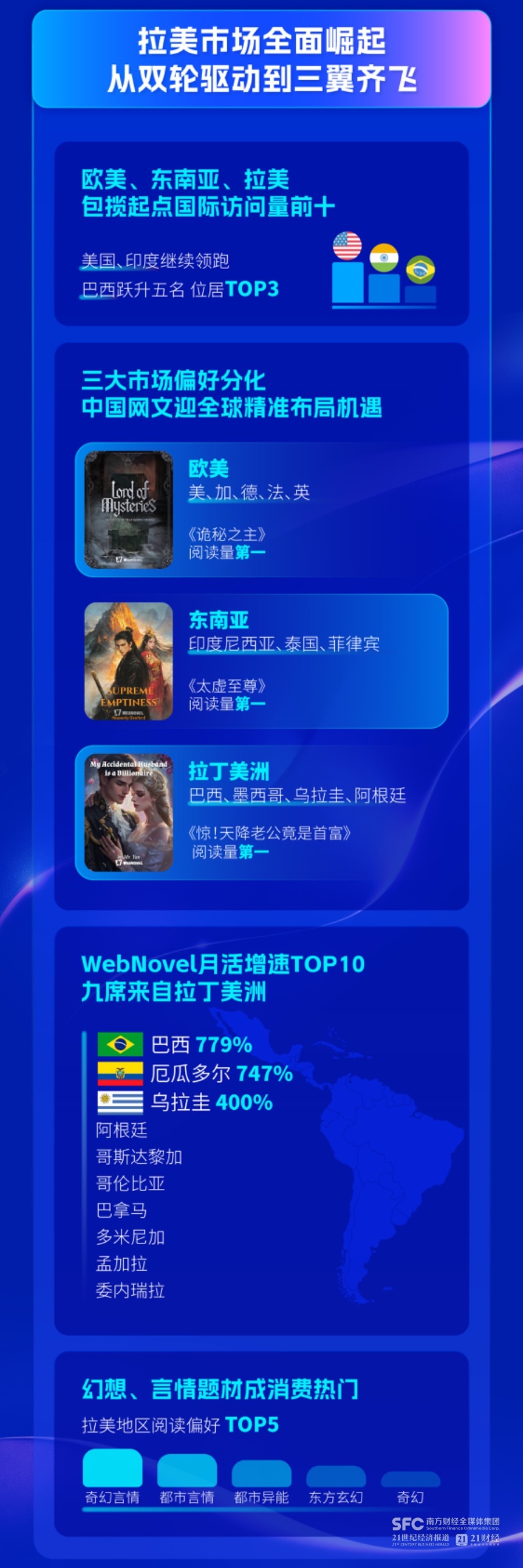
Core Viewpoint - The article discusses the rapid globalization of Chinese online literature, highlighting the transition from merely translating content to creating a collaborative global ecosystem for IP development and cultural exchange [1][2]. Group 1: Global Expansion of Online Literature - The "2025 China Online Literature Going Global Trend Report" indicates that online literature will experience rapid global proliferation, with Latin America emerging as a significant market alongside North America and Eurasia [1]. - The CEO of Yuewen Group, Hou Xiaonan, outlines three phases of internationalization: 1.0 focused on content translation, 2.0 on establishing overseas platforms, and 3.0 on global co-creation [1][2]. Group 2: Growth Drivers and Market Dynamics - In 2025, the growth of online literature is driven by cultural consumption upgrades, the maturation of new formats like short dramas and comic adaptations, and the improvement of the cultural export industry [4]. - The article notes that the keyword for 2025 is "accumulation," reflecting both external environmental changes and the internal release of accumulated capabilities [4]. Group 3: Future Trends and Innovations - For 2026, the focus will shift from speed to stability and depth, with short dramas and comic adaptations expected to accelerate growth [5]. - The article emphasizes the importance of a diversified growth engine rather than relying on a single business model, with a focus on high-quality content and expanding themes [5]. Group 4: Collaborative Ecosystem and IP Development - Yuewen Group aims to create an open and win-win ecosystem for derivative products, balancing the development of proprietary IP with collaborations with top industry IPs [7]. - The company has established systematic capabilities across product development, supply chain coordination, and multi-channel marketing, aiming for integrated operations between content and merchandise [8]. Group 5: Regional Market Strategies - The article highlights the significant growth in the Latin American market, particularly in Brazil, where monthly active users surged by nearly 800% [9][10]. - Strategies for different regions include localized IP selection and accurate translation to maintain cultural integrity, with a focus on emotional narratives that resonate with local audiences [9][10]. Group 6: Future Growth Points - The future of Chinese online literature is expected to focus on deepening local market penetration, accelerating industry chain development, and expanding offline experiences and consumption [15].

21专访|阅文集团侯晓楠:AI+IP蓄能,网文出海迈向共创期
2 1 Shi Ji Jing Ji Bao Dao· 2025-12-30 07:38
Core Insights - The article discusses the rapid global expansion of Chinese online literature, highlighting its increasing influence and the emergence of a new market structure driven by Latin America, North America, and Eurasia [3][20]. Group 1: Global Expansion of Online Literature - By 2025, online literature is expected to enter a phase of rapid global proliferation, with Latin America emerging as a significant market alongside North America and Eurasia [3]. - As of October 31, 2025, WebNovel has nearly 400 million global users and has nurtured around 530,000 writers and over 820,000 original works, with a 20% year-on-year increase in total works [3]. - The global creative force is becoming significantly younger, with 50% of WebNovel's signed authors being born after 2000 [3]. Group 2: Evolution of Online Literature Export - The export of Chinese online literature has progressed through three stages: content translation, establishment of overseas platforms, and deep integration of IP into global industries [4][5]. - The current phase emphasizes the need for Chinese IP to transition from merely "going out" to "integrating in" [5]. Group 3: Market Dynamics and Growth Drivers - The year 2025 is characterized by a cultural consumption upgrade, with quality IP becoming a valuable asset across various media [6]. - New formats like short dramas and animated series are maturing rapidly, enhancing IP conversion efficiency [6]. - The growth of online literature is now described as a "multi-level growth" pattern, particularly with the explosive rise of the Latin American market [20]. Group 4: Strategies for Localization and Cultural Integration - The company employs data insights for differentiated IP selection, recognizing that emotional themes are universal but regional preferences vary significantly [20]. - In translation, the focus is on maintaining the original essence of the stories, supported by a comprehensive terminology database for accurate cultural representation [21]. Group 5: Future Directions and Challenges - The company aims to establish itself as a "global IP source," focusing on creating a self-sustaining ecosystem for overseas original content [25]. - Current barriers include cross-cultural understanding, localized operations, and the complexities of international copyright protection [25].

阅文集团侯晓楠:AI+IP蓄能,网文出海迈向共创期
2 1 Shi Ji Jing Ji Bao Dao· 2025-12-30 07:11
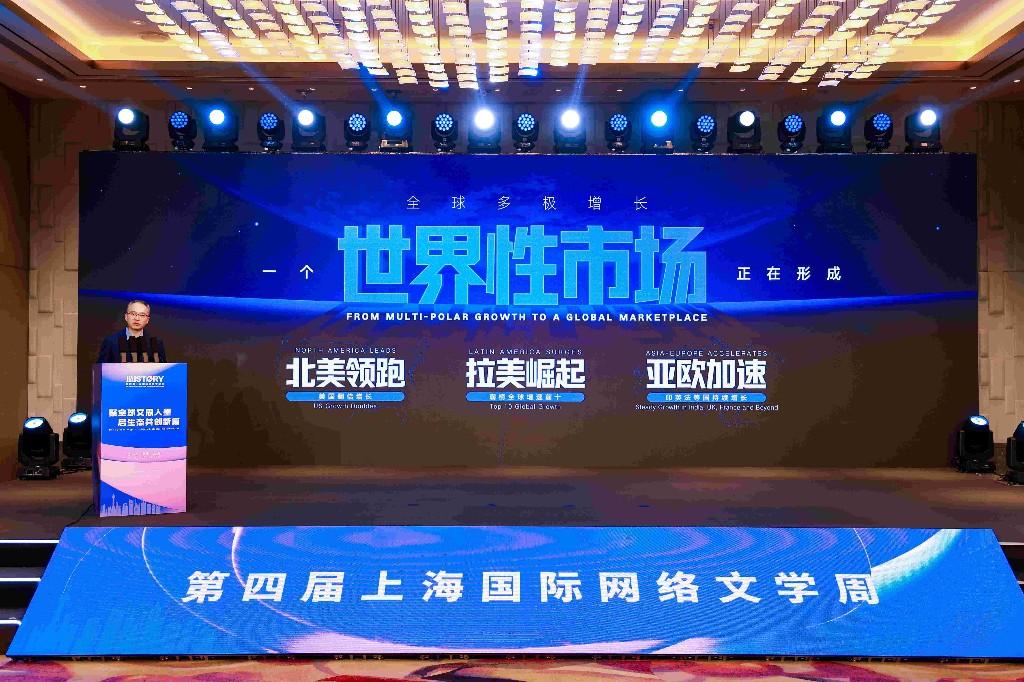
Core Insights - The article discusses the rapid global expansion of Chinese online literature, highlighting its transition from a national to a global IP source, with significant growth expected by 2025 [1][25]. Group 1: Global Expansion of Chinese Online Literature - A diverse group of online literature writers from 14 countries participated in the fourth Shanghai International Online Literature Week, indicating the global interest in Chinese IP [1]. - According to the "2025 China Online Literature Going Global Trend Report," the online literature market is expected to see rapid global adoption, particularly in Latin America, creating a tripartite market structure with North America, Eurasia, and Latin America [1]. - By October 31, 2025, WebNovel (Qidian International) is projected to have nearly 400 million cumulative global users and over 820,000 original works, with a 20% year-on-year increase in total works [1]. Group 2: Evolution of Online Literature Export Strategies - The CEO of Yuewen Group, Hou Xiaonan, outlined three phases of online literature export: 1.0 focused on content translation, 2.0 on establishing overseas platforms like WebNovel, and 3.0 on global co-creation integrating IP into various industries [2]. - The current phase emphasizes the need for Chinese IP to transition from merely "going out" to "integrating in" global markets [3]. Group 3: Future Growth and Market Dynamics - The keyword for 2025 is "accumulation," driven by cultural consumption upgrades and the maturation of new formats like short dramas and comics, which enhance IP conversion efficiency [4]. - The company aims to diversify its growth engines rather than relying on a single source, with short dramas, comics, and derivative products expected to accelerate in 2026 [7]. - The short drama model has been validated commercially, focusing on quality and thematic expansion, while AI technology is expected to enhance the production of comics [8]. Group 4: Market Trends and Regional Strategies - The global online literature market is experiencing profound changes, with Latin America emerging as a significant player, evidenced by Brazil's user base growing nearly eightfold [19]. - The company employs data insights for differentiated IP selection, adapting to regional preferences while maintaining the essence of the original content [21]. - The success in Latin America demonstrates the global applicability of China's online literature industry model, which can be replicated in other emerging markets [21]. Group 5: Challenges and Opportunities in Global IP Development - The transition to a "global IP source" is measured by the ability to establish a self-sustaining overseas original ecosystem and integrate into international industry chains [22]. - Current barriers include cross-cultural understanding, localization depth, and the complexities of global copyright protection [22]. - The company is focused on creating emotional connections and cultural resonance in international markets through its IP [24].
中国网络文学构建全球多极增长市场
Huan Qiu Wang Zi Xun· 2025-12-25 01:40
Core Insights - The report indicates that by 2025, Chinese online literature will enter a phase of rapid global proliferation, establishing a market structure characterized by simultaneous growth in North America, Eurasia, and Latin America, with "IP leading the enhancement of cultural and tourism value" becoming a global industry phenomenon [1][3]. Market Growth - In 2024, the revenue scale of the Chinese online literature market is projected to reach 49.55 billion RMB, reflecting a year-on-year growth of 29.37%, marking three consecutive years of accelerated growth [3]. - The overseas market revenue is expected to be 4.815 billion RMB, with a year-on-year increase of 10.68%, indicating a steady growth trend [3]. Global Influence and Content Ecosystem - The global influence of Chinese online literature is reaching new heights, with a multi-polar growth global market already formed. By the end of 2024, the cumulative scale of Chinese online literature works is expected to reach approximately 42.1 million [3]. - As of October 31, 2025, the overseas portal WebNovel under Yuedu Group has nearly 400 million cumulative global users, nurturing around 530,000 writers and over 820,000 original works, with a total work volume increasing by 20% [3][4]. Young Creators and Community Engagement - There is a notable trend of increasing youth involvement in global creative forces, with 50% of signed authors on WebNovel being born after 2000, and the number of authors born after 2005 growing by 55.9% [4]. - The platform has seen a cumulative total of over 14 million comments and interactions, with discussions about Chinese culture exceeding 400,000, establishing a new bridge for cultural exchange [4]. Translation and IP Development - By 2025, the total number of translated works from Chinese online literature is expected to exceed 13,600, with significant growth in various languages, including a 349% increase in Indonesian, 336% in Spanish, and 278% in Portuguese compared to 2024 [4]. - The deep integration of "IP + cultural tourism" is creating a "new continent" of IP value, exemplified by collaborations such as "Dao Gui Yi Xian" with Universal Studios Singapore and "Full-Time Expert" with the Swiss National Tourism Board [4]. Cultural Impact - Online literature has evolved from a Chinese cultural phenomenon to a cross-cultural and cross-linguistic trend, becoming a fertile ground for the emergence of a new generation of global IP [5].
圆满落幕 | 2025东方中科走进零跑智能汽车技术展
Xin Lang Cai Jing· 2025-12-11 10:17
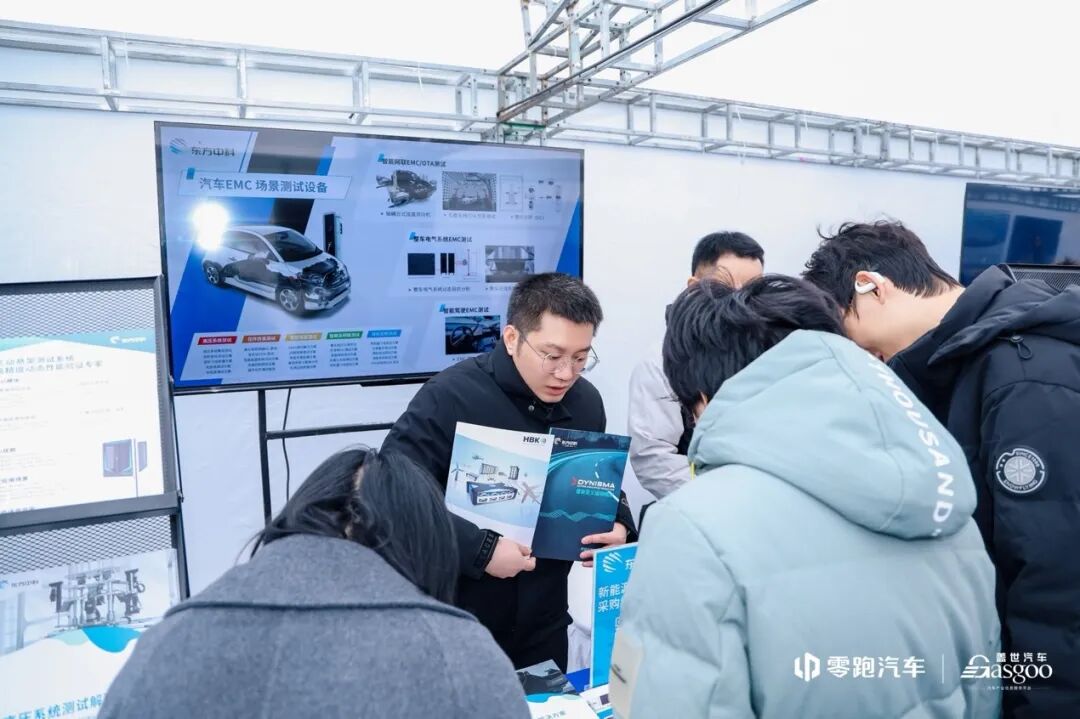
Core Insights - Leap Motor has maintained its position as the top-selling brand among new forces in China's automotive market, achieving monthly sales leadership for seven consecutive months as of September 2025 [1][8] - The company celebrated the production of its one millionth vehicle on September 25, marking it as the second new force automaker in China to enter the "million club" [1][8] - Leap Motor has successfully transitioned from technology research and development to scalable profitability, becoming the second new force automaker in China to achieve profitability [1][8] Company Strategy - Leap Motor emphasizes self-research of core technologies, driving development through technological innovation, and aims to produce high-quality, well-equipped, and competitively priced products [4][11] - The company focuses on three main themes: "cost reduction through technology, global co-creation, and full-stack evolution," asserting that continuous technological innovation is key to building core competitiveness [4][11] - Leap Motor advocates for close collaboration with partners to implement advanced technological solutions, ensuring functionality, performance, and safety to create an exceptional user experience [4][11] Industry Collaboration - The company is engaging in deep exchanges with partners regarding advanced testing technologies in areas such as assisted driving, intelligent cockpits, smart chassis, and battery motors [3][10] - Leap Motor's vice president, Shu Chun Cheng, highlighted the importance of collaboration in overcoming industry challenges and achieving mutual development [5][12] - The event aims to foster a shared vision among suppliers and partners, promoting the next generation of intelligent electric vehicles [5][12]

“数字丝路”赋能文化出海,中国数字文化扬帆全球新蓝海
Guo Ji Jin Rong Bao· 2025-12-10 09:29
Core Insights - The seminar "Building the Digital Silk Road" focused on the challenges and opportunities for Chinese digital cultural products in global markets, emphasizing the shift from simple content export to deeper integration and interaction [1][3] Group 1: Digital Cultural Products - The rise of "digital new three samples" (short videos, online literature, and games) has fostered a thriving cultural ecosystem, with platform technology reshaping cultural connections along the Silk Road [1] - Chinese digital content is transitioning from a "one-way output" model to a "two-way interaction" model, positioning itself as a significant leader in the global market [1][2] Group 2: Global Acceptance and Integration - More Chinese digital lifestyles are being accepted overseas, with innovations like mobile payment and mini-programs enhancing cross-cultural connections [2] - The evolution of cultural export has progressed through four stages, culminating in a phase of deep integration where aesthetic and lifestyle elements are shared globally [3] Group 3: Role of Youth and Technology - Global youth are becoming key definers and promoters of cross-cultural exchanges, actively participating in content creation rather than being passive consumers [3] - Digital technologies, such as Tencent's mixed model, are lowering creative barriers, enabling international students to produce culturally blended 3D works [3] Group 4: Future of Cultural Export - The process of cultural export differs significantly from previous corporate expansions, with a proactive response to global curiosity about Chinese culture [4] - The future of cultural export relies on emotional resonance with young audiences, leveraging platform power, technological advancements, and global co-creation models to facilitate cross-border cultural exchange [4]
宇树科技王兴兴:机器人能取得快速发展的最大原因是全球共创,明年还会给大家带来惊喜丨直击乌镇
Xin Lang Ke Ji· 2025-11-07 08:49
Core Insights - The "Hangzhou Six Little Dragons" leaders gathered at the 2025 World Internet Conference in Wuzhen to discuss advancements in robotics and AI technology [1] Group 1: Robotics Development - Yushutech's founder Wang Xingxing highlighted that the company has been researching in the robotics hardware field for nine years, starting self-development of core hardware components in 2016 [1] - The company has produced more affordable quadruped and humanoid robots, which have been sold to top global laboratories and universities for software and application development [1] - The rapid development of robotics is attributed to global collaboration, similar to early computer development, where many developers contributed to software creation [1] Group 2: Future Prospects - Wang emphasized that advancements in AI are likely to accelerate the development of robotics, with many previously sci-fi concepts becoming reality in the past year [1] - He anticipates that more sci-fi concepts will continue to materialize in the coming years, suggesting that practical applications in robotics are increasingly aligned with visionary ideas [1] - Wang hinted at delivering more surprises in the robotics field in the next year or two [1]
