OPPO

Search documents
OPPO与蚂蚁集团:10月23日签约,多领域展开合作
Sou Hu Cai Jing· 2025-10-24 06:47
Core Viewpoint - OPPO and Ant Group have established a strategic partnership to collaborate in various fields including AI, service ecosystems, healthcare, and user experience [1] Group 1: Strategic Collaboration - The signing ceremony for the strategic cooperation took place in Hangzhou on October 23 [1] - The partnership will focus on areas such as AI intelligent agents, healthcare services, insurance, and enhancing user experience [1] Group 2: Previous Developments - In 2025, during the OPPO Developer Conference, OPPO and Alipay introduced the multi-agent interconnection and collaboration solution called AgentHubAccess [1] - This solution enables collaboration between OPPO's system-level AI and Alipay's agents, covering services in transportation, government affairs, and healthcare [1]
OPPO与蚂蚁集团签署战略合作:10月底推出“支付宝碰一下发红包”功能
Feng Huang Wang· 2025-10-24 04:12
Core Viewpoint - OPPO and Ant Group have signed a strategic cooperation agreement to collaborate in various fields including AI, service ecosystems, near-field interaction, healthcare, and insurance [1] Group 1: AI and Technology Collaboration - The partnership aims to advance the multi-end intelligent agent collaboration solution, Agent Hub Access (AHA), which was showcased at the 2025 OPPO Developer Conference [1] - The AHA solution is designed to enable efficient collaboration between OPPO's system-level AI and Alipay's agents, covering smart service scenarios such as transportation, government services, healthcare, logistics, food delivery, and utility payments [1] Group 2: New Features and Services - A new feature, "Alipay Tap to Send Red Envelopes," will be launched by the end of October, marking the first implementation of this function in domestic smartphones [1] - OPPO Wallet will collaborate with Ant Insurance to cover various insurance types, including auto insurance and accident insurance [1] Group 3: Healthcare Initiatives - The two companies will enhance their collaboration in healthcare services, promoting the popularization and service upgrade of AI health applications [1] Group 4: Strategic Importance - OPPO's Senior Vice President and Chief Product Officer, Liu Zuohua, stated that the cooperation aims to explore multi-agent collaboration in vertical fields and to jointly create industry-leading AI technology solutions [1] - This partnership is viewed as a significant practice in AI ecosystem development between terminal manufacturers and internet service platforms [1]
5家被投冲击港股,博世创投迎来第一波上市潮,孙晓光揭秘投资密码和AI布局
创业邦· 2025-10-24 03:34
Core Insights - The article discusses the optimistic outlook of Bosch Ventures in the Chinese market, particularly in the fields of AI, advanced manufacturing, and automation, predicting significant developments by 2025 [5][17]. Investment Performance - Bosch Ventures has invested in seven companies in China from 2018 to 2021, with five of them currently preparing for IPOs, indicating a successful investment strategy [3][9]. - The companies that Bosch Ventures invested in share common traits, such as unique and leading core technologies, strong execution capabilities, and experienced founding teams [9][10]. Market Trends - There is a growing recognition of Chinese innovation in international capital markets, with a shift in perception regarding the investment potential in China [5][6]. - The electric vehicle industry in China is highlighted as a clear example of a thriving sector, with significant advancements in AI capabilities being acknowledged by international media [6][8]. AI and Technology Focus - Bosch Ventures is actively investing across the entire AI value chain, from hardware to applications, with a focus on creating value through vertical models based on open-source large models [11][13]. - The company emphasizes the importance of hardware advancements, such as specialized integrated circuits (ASICs), to enhance AI functionalities [13][14]. Strategic Positioning - Bosch Ventures aims to empower its portfolio companies by leveraging its global network and industry resources, positioning itself as a partner in the growth of Chinese hard-tech enterprises [17]. - The company believes that China is transitioning from a "manufacturing giant" to a "smart manufacturing powerhouse," and it seeks to play a significant role in this transformation [17].


OPPO 牵手蚂蚁集团,双方将在AI 智能体、服务生态等领域开展合作
Sou Hu Cai Jing· 2025-10-24 03:09
Core Insights - OPPO and Ant Group have signed a strategic cooperation agreement to collaborate in various fields including AI, service ecosystems, healthcare services, insurance, and user experience [1] Group 1: AI Collaboration - The partnership will focus on AI intelligent agents, aiming to enhance service collaboration based on user needs and scenarios [1] - OPPO's Xiaobu voice assistant will integrate with Ant Group's Alipay app, allowing users to access services like the Alipay ride code through voice commands [1] - Alipay's AI services will also provide precise recommendations to users on OPPO mobile device home screens, enhancing the user experience [1] Group 2: Healthcare Services - Ant Group's AI health application AQ will collaborate with OPPO to strengthen efforts in medical popularization and AI health services [1]
2025年中国CPI膜行业产业链、发展现状及未来发展趋势研判:受益于折叠屏手机加速放量,CPI膜需求不断增加[图]
Chan Ye Xin Xi Wang· 2025-10-24 01:15
Core Insights - CPI film, or transparent polyimide film, is a new type of functional film with excellent properties such as chemical stability, heat resistance, flame retardancy, and good ductility, making it suitable for applications in flexible displays, aerospace, and other industries [1][2][5] Industry Overview - The CPI film market in China is experiencing steady growth, with demand expected to reach nearly 4 million square meters by 2024, driven by rapid developments in downstream industries like electronics and aerospace [5][8] - The production of CPI films involves a complex supply chain, including upstream raw materials, midstream processing, and downstream applications [8] Market Dynamics - The CPI film market is characterized by high technical barriers, with few manufacturers primarily located in Japan and South Korea, such as KOLON and Sumitomo Chemical [5][8] - Chinese manufacturers, including Ruihua Tai and Changyang Technology, are relatively new entrants but have significant potential for domestic market replacement [5][8] Application Areas - The primary application of CPI films is in foldable smartphones, where the shift from LCD to OLED displays is driving demand for flexible display technologies [8][9] - In the solar energy sector, CPI films are used as substrate materials for solar cells, benefiting from their excellent heat and weather resistance [10] Industry Trends - Performance enhancement through molecular structure design and hybrid modifications is a key focus for future CPI film development [11] - Cost reduction strategies, including optimizing production processes and increasing local sourcing of raw materials, are essential for the industry's growth [11] - Expansion into new application areas such as 5G communication, IoT devices, and medical technology is anticipated, highlighting the versatility of CPI films [12]


曝京东管控商家定价:不许比京东低,违规或罚500万起;超过60岁不能办eSIM?中国电信被喷后改口;Meta AI裁员600人
雷峰网· 2025-10-24 00:45
Group 1 - JD.com has formed a patrol team to monitor merchant pricing during the Double Eleven shopping festival, prohibiting prices on other platforms from being lower than those on JD.com, with penalties starting at 5 million yuan for violations [3] - Lu Weibing from Xiaomi stated that future smartphone brands will be divided into two categories: those with self-developed chips and those without, emphasizing the importance of self-developed chips for better integration of hardware and software [6] - CEO of Leap Motor, Zhu Jiangming, reflected on his decision to enter the automotive industry, describing it as a choice made without fear due to his lack of prior experience in the sector [7][8] Group 2 - TikTok has undergone organizational adjustments, with the operations department's reporting structure shifting to the product team, enhancing the influence of young executive Zhi Ying [9] - A report from the China Electronic Commerce Association revealed that OPPO had the lowest complaint rate among major smartphone brands over the past five years, with a total of 32,680 complaints recorded [11] - Hesai Technology continues to lead the market in automotive lidar installations, achieving a market share of 46% and planning to produce over 2 million units annually [12] Group 3 - Xiaopeng Motors' CEO, He Xiaopeng, explained the company's strategy to develop range-extended electric vehicles, emphasizing the need to meet diverse global demands [17] - JD.com announced a record auction price of 78.19 million yuan for its "001" vehicle, with plans to reward participants with additional benefits [20] - Alibaba's Quark app has launched an AI dialogue assistant, integrating search and conversational capabilities to enhance user experience [22] Group 4 - Meta has laid off approximately 600 employees from its AI department, focusing on streamlining operations within its "superintelligent laboratory" [32] - Tesla's CEO Elon Musk revealed that TSMC and Samsung will collaborate on the production of the AI5 chip, while maintaining the use of NVIDIA's processors for certain tasks [34] - Reports indicate that Apple may skip the iPhone 19 and directly release the iPhone 20 in 2027 to commemorate the 20th anniversary of the iPhone [36]


拍月亮变“P月亮”,当手机摄影被AI算法入侵
Hu Xiu· 2025-10-23 23:48
Core Viewpoint - The article discusses the advancements in smartphone imaging technology, particularly the integration of AI algorithms, and the resulting debates over the authenticity of images produced by flagship devices [6][27][39]. Group 1: Advancements in Imaging Technology - Major flagship smartphones are pushing the limits of imaging capabilities, with models like Xiaomi 17 Pro featuring a Leica ultra-dynamic main camera with a dynamic range of 16.5 EV, and OPPO Find X9 Pro equipped with a Hasselblad 200 million pixel telephoto lens supporting up to 120x digital zoom [1]. - AI technology has become deeply integrated into the imaging processes of flagship smartphones, enhancing features such as image correction and post-processing [8][10]. - The trend of AI-enhanced photography is evident in devices like vivo X300 Pro, which has been developed in collaboration with suppliers to optimize AI algorithms for better user experiences [9]. Group 2: User Experience and AI Algorithms - Users often prefer "one-click" operations for photography, leading manufacturers to default to AI algorithms in the background to simplify the process [7][10]. - Despite the benefits of AI in enhancing photo quality, there are concerns about the "algorithmic taste" overshadowing the authenticity of images, particularly in extreme scenarios like long-distance zoom or high saturation scenes [11][17]. - The debate continues over the balance between realistic photography and algorithmic enhancements, with some users expressing dissatisfaction when AI alters images in unexpected ways [5][6]. Group 3: Industry Trends and Future Directions - The smartphone industry is moving away from purely hardware-based improvements, such as larger sensors, towards software solutions to meet growing consumer demands for better imaging [22][39]. - Companies are recognizing the need to balance AI enhancements with the authenticity of captured images, with some manufacturers like OPPO and vivo aiming to reduce the computational traces in their photography [38][41]. - The evolution of smartphone photography is expected to continue focusing on simplifying user experience while improving image quality through AI, but with a renewed emphasis on maintaining the integrity of real-world scenes [39][40].

旗舰手机“涨”声雷动 成本飙升下的高端突围战
Zhong Guo Jing Ying Bao· 2025-10-23 14:31
Core Insights - The smartphone market is experiencing a significant price increase for flagship models due to rising costs of core components and increased R&D investments, leading to a new phase characterized by high investment, high pricing, and high experience [1][4][6] Pricing Strategies - Major brands like vivo, OPPO, and realme have raised prices for their flagship models, with increases ranging from 100 to 500 yuan compared to previous generations [1][2][3] - iQOO 15's price increased by approximately 5% to 6%, while realme GT8 series saw price hikes of 300 to 500 yuan [2][3] - The new Xiaomi 17 series has introduced a Pro Max version to attract high-end consumers, indicating a strategic shift to higher-priced models [3] Cost Pressures - The surge in prices for chips and storage components is a primary driver of the price increases, with flagship chips seeing price hikes of 16% to 24% [4][5] - The transition of storage chips to data centers is causing a tight supply of DDR4/LPDDR4, further pushing up prices [4] - Increased R&D costs associated with custom screens and advanced features are also contributing to the overall price rise [4][5] Market Trends - There is a growing consumer demand for high-end smartphones, with a reported 8% year-on-year increase in global high-end smartphone sales in the first half of 2025 [6] - The trend towards high-end devices is evident as consumers are willing to spend more for better experiences, which supports the price increases [6][7] Company Strategies - Companies like iQOO and realme are focusing on enhancing product quality to justify price increases, emphasizing the importance of delivering value to consumers [7][8] - Realme aims to maintain healthy operations while providing superior products, with a focus on stable pricing strategies that align with product capabilities [7][8] - The upcoming "Double 11" sales event is expected to see growth targets despite cost pressures, highlighting the importance of effective product planning and brand strength [7][8]
OPPO回应“绿线门”事件:购机4年内免费更换屏幕
Guo Ji Jin Rong Bao· 2025-10-23 13:40
Core Viewpoint - OPPO is facing a significant consumer trust crisis due to the "green line" issue affecting multiple smartphone models, coinciding with a critical period of new product launches in the smartphone market [1][4][6]. Group 1: Product Quality Issues - Multiple OPPO users have reported the appearance of green lines on their smartphone screens, particularly in the Find X series, Reno series, and OnePlus series, with most devices being less than four years old [1]. - A total of 30 out of 65 OPPO models are identified as "green line hotspots," primarily including models from the Find X2, X3, X5 series, and Reno 5, 6, 9 series, with complaints concentrated from 2019 to 2023 [2]. - The green line issue is a common problem in smartphones, often linked to hardware failures such as screen connection issues or damage, and can also be related to software problems [2]. Group 2: Consumer Response and Company Actions - Consumer dissatisfaction is exacerbated by OPPO's inadequate after-sales service, with reports of customers being told that screen warranty lasts four years, and any issues beyond that would incur costs [4]. - OPPO has responded to the complaints by offering free screen replacements for devices within four years of purchase and discounted replacement options for devices older than four years [4]. Group 3: Market Context - The Chinese smartphone market is currently undergoing adjustments, with a competitive landscape becoming increasingly tight among leading manufacturers [6]. - According to Omdia, the smartphone market in mainland China is projected to decline by 3% year-on-year by Q3 2025, with major brands like vivo, Huawei, Apple, and Xiaomi competing closely for market share [8].

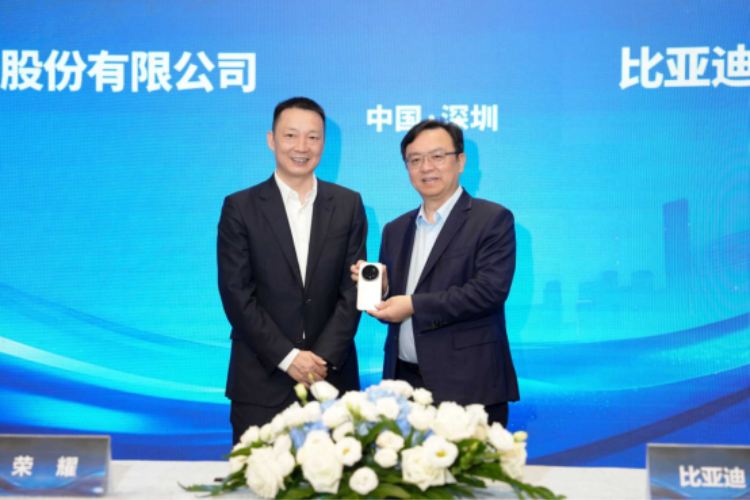
AI智能体“上车”加速,荣耀联手比亚迪,聚焦AI智慧出行
Nan Fang Du Shi Bao· 2025-10-23 10:57
Core Insights - AI is reshaping the terminal ecosystem, with smart agents being viewed as the next "super entry point" following operating systems [2][4] - Honor has invested over 10 billion yuan in AI research and development, indicating a strong commitment to AI technology [2] - A strategic partnership between Honor and BYD has been established to integrate AI smart agents into the automotive sector, marking a shift from functional connectivity to ecological integration [2][3] Group 1: Company Developments - Honor announced the upgrade of its interconnection platform to "HONOR AI Connect," launching AI solutions covering eight major scenarios, including "smart vehicle connectivity" [3] - The collaboration with BYD aims to create a seamless smart experience in transportation, focusing on technology co-research and ecosystem building [2][3] - Honor's CEO emphasized that the partnership represents a comprehensive strategic collaboration in the AI era, with smart mobility as a key focus [2] Group 2: Industry Trends - The automotive industry is evolving from traditional transportation to becoming a "mobile smart terminal," with AI applications becoming increasingly significant [3] - Major smartphone manufacturers are replicating their AI and operating system capabilities in vehicles, indicating a trend of "getting on the car" [3] - The competition is shifting from single-point technology to ecosystem-level battles, as the integration of AI smart agents enhances user interaction and service provision [4]