
成都银行

Search documents
金融政策落地,银行板块红利价值加速兑现,国企红利ETF(159515)投资机遇备受关注
Xin Lang Cai Jing· 2025-05-08 05:36
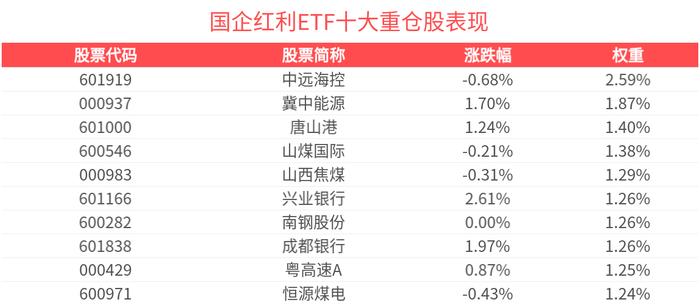
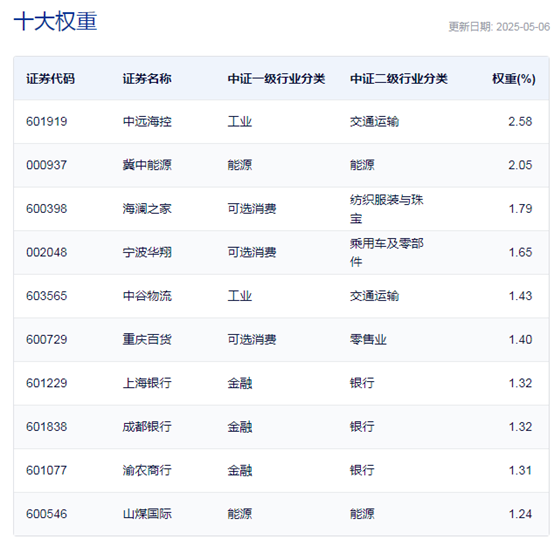
Group 1 - The core viewpoint of the news is the positive performance of the state-owned enterprise dividend index and its constituent stocks, indicating a favorable market environment for the banking sector [1][2] - The China Securities State-Owned Enterprise Dividend Index (000824) has shown an increase of 0.18% as of May 8, 2025, with notable gains in constituent stocks such as Industrial Bank (601166) up by 2.61% and China Merchants Bank (600036) up by 2.57% [1] - The National Enterprise Dividend ETF (159515) has also increased by 0.28%, reflecting a growing interest in high-dividend stocks [1] Group 2 - Recent financial policies, including interest rate cuts and liquidity releases, are expected to enhance the banking sector's fundamentals and accelerate the entry of medium to long-term capital into the market [2] - The National Enterprise Dividend ETF closely tracks the China Securities State-Owned Enterprise Dividend Index, which includes 100 listed companies with high and stable cash dividend yields [2] - As of April 30, 2025, the top ten weighted stocks in the index account for 15.18% of the total index weight, with China COSCO Shipping (601919) being the highest at 2.59% [2][3]

金融调研②“非硝烟”之争:谁是银行人才储备座上宾?
Nan Fang Du Shi Bao· 2025-05-08 02:36
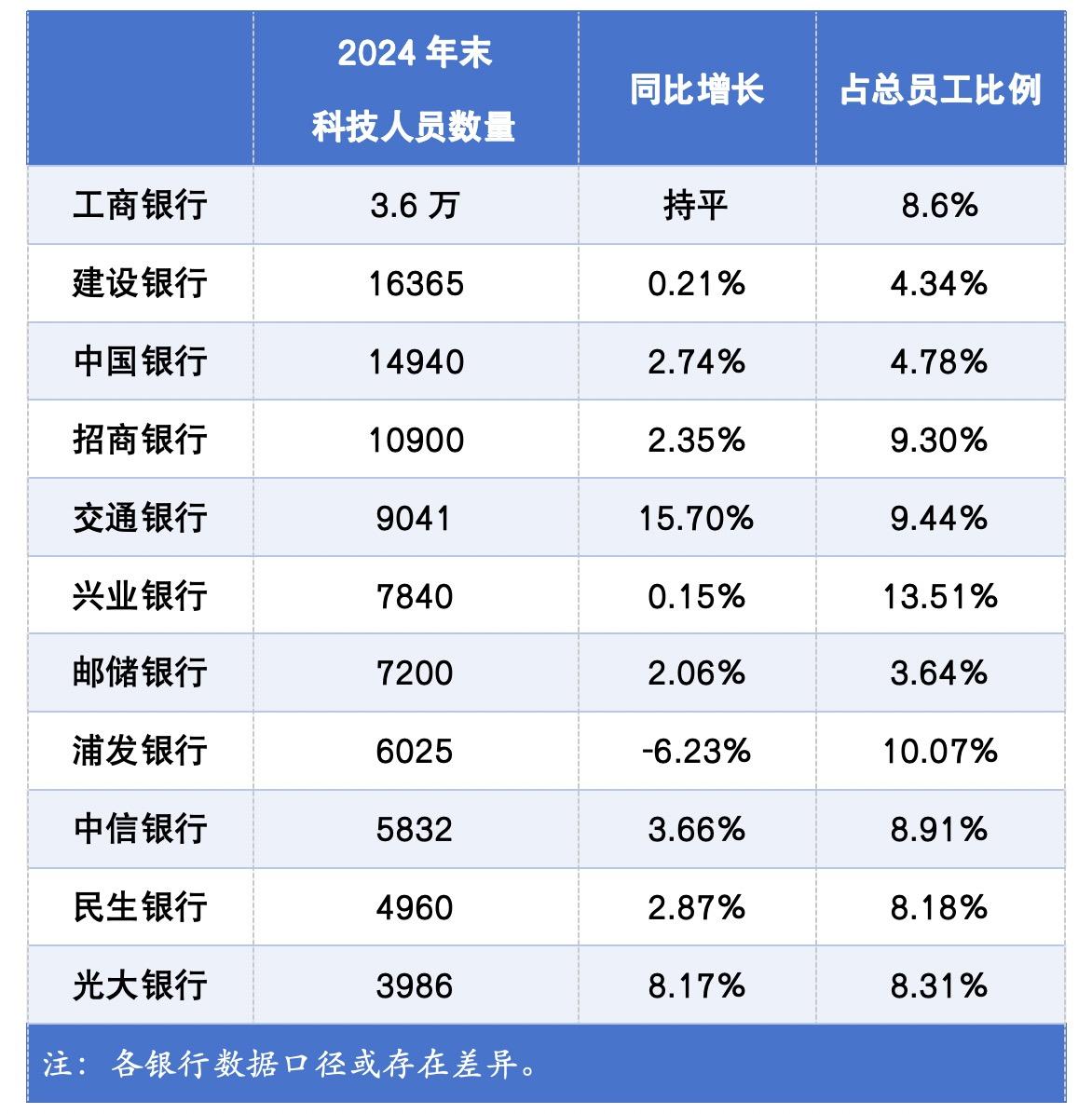
Core Viewpoint - The Chinese banking industry is increasingly focusing on the recruitment and development of dual-skilled talent in finance and technology to support the growth of technology-driven financial services [1][10]. Talent Development - Banks are actively recruiting technology professionals, with some offering salaries as high as 800,000 yuan for AI talent [2][3]. - The demand for dual-skilled talent is evident, as banks emphasize the need for professionals who understand both finance and technology [2][3]. - Many banks are adjusting their recruitment strategies to prioritize candidates with engineering backgrounds over traditional finance degrees [6][7]. Performance Assessment - The implementation of a "duty exemption" system is being developed to encourage innovation while managing risks associated with technology finance [11][12]. - Banks are establishing internal guidelines for the duty exemption system, which aims to protect employees from penalties if they have acted diligently [11][13]. - The lack of standardized quantitative measures for assessing performance in technology finance remains a challenge, leading to subjective interpretations of responsibility [15][16]. Industry Trends - The number of technology personnel in major banks has generally increased, with notable growth in institutions like the Bank of Communications, which saw a 15.7% increase in technology staff [4][5]. - The proportion of technology personnel within banks is higher in joint-stock banks compared to state-owned banks, indicating a trend towards greater emphasis on technology expertise [4][5]. - Regulatory bodies are also setting standards for the number of technology specialists in banks, reflecting the importance of technology in financial services [9][10].






降准降息落地,多举措稳经济
HTSC· 2025-05-08 02:25
Investment Rating - The report maintains an "Overweight" rating for the banking sector [7] Core Insights - The central bank has implemented a series of monetary policies including a 0.5 percentage point reduction in the reserve requirement ratio (RRR), injecting approximately 1 trillion yuan into the market to stabilize the economy [1][2] - The reduction in the Loan Prime Rate (LPR) by about 0.1 percentage points is expected to alleviate the pressure on banks' net interest margins [3] - Structural monetary policies have been introduced to support key sectors such as technology innovation and consumption [4] - The expansion of financial asset investment company (AIC) pilot programs is anticipated to increase insurance capital inflows into the market [5] Summary by Sections Monetary Policy Actions - The central bank's RRR reduction from 6.6% to 6.2% is aimed at providing long-term liquidity of about 1 trillion yuan [2] - The LPR is expected to decrease by 10 basis points, which will positively impact banks' net interest margins and net profit growth [3] - Structural monetary policies include an increase of 300 billion yuan in re-lending for technology innovation and a 500 billion yuan re-lending for service consumption and elderly care [4] Financial Sector Support - The report highlights the importance of financial support for technology innovation, with a focus on increasing re-lending quotas and creating risk-sharing tools for tech bonds [4] - The insurance sector is encouraged to increase long-term investments, with a proposed reduction in investment risk factors to stimulate market participation [5] Stock Recommendations - Recommended stocks include high-quality banks such as Chongqing Rural Commercial Bank, Chengdu Bank, and Shanghai Bank, with target prices set above current market levels [11][17] - The report emphasizes the dividend advantages of major Hong Kong-listed banks like ICBC and ABC, suggesting they are attractive investment options [1][5]




上市城商行排行榜(一):资产质量篇——谁在稳健前行,谁在踩雷边缘?
Sou Hu Cai Jing· 2025-05-08 02:05
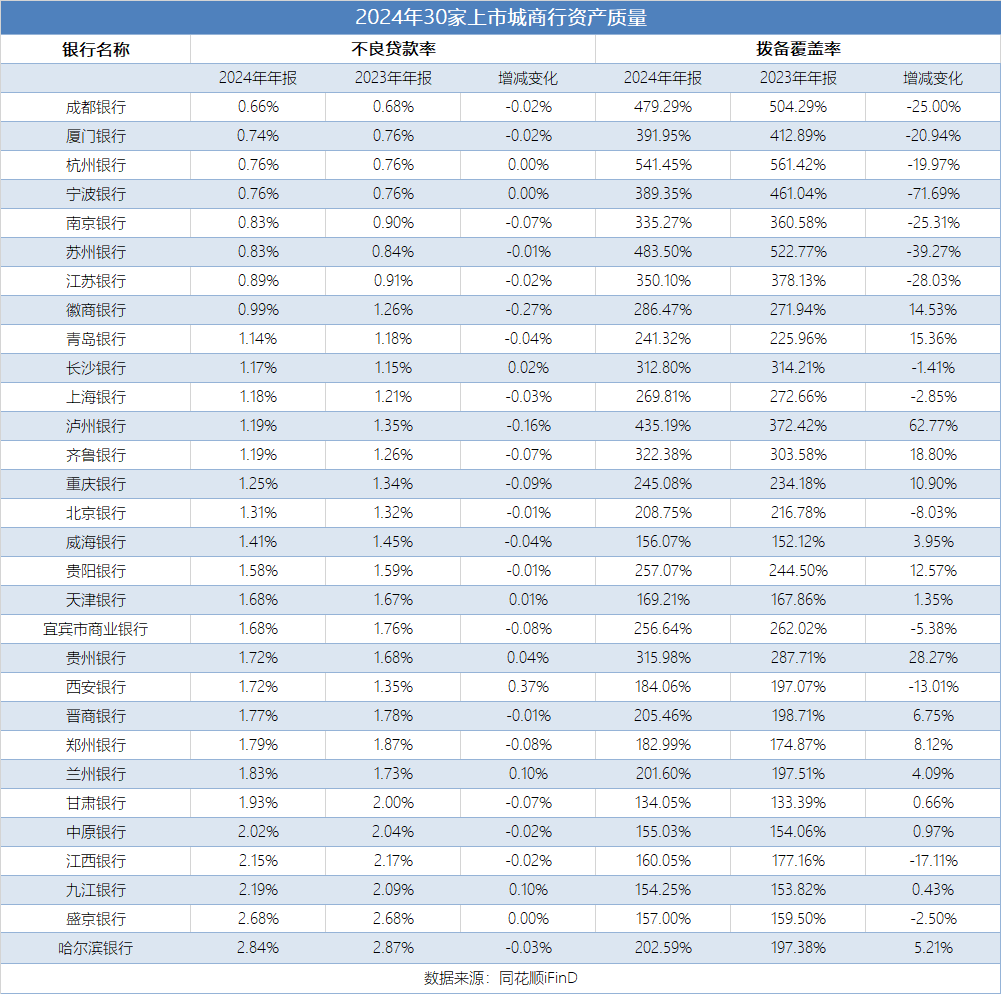
Core Viewpoint - The asset quality data of 30 listed city commercial banks in 2024 shows significant divergence, with varying non-performing loan (NPL) ratios and provision coverage ratios reflecting different operational strategies and regional economic impacts [1][3][5]. Non-Performing Loan Ratios - Chengdu Bank has the lowest NPL ratio at 0.66%, continuing a three-year improvement trend, while Harbin Bank has the highest at 2.84% [1][3]. - The first tier of banks, including Chengdu, Xiamen, Hangzhou, Ningbo, Nanjing, and Suzhou, all maintain NPL ratios below 1% [3]. - The second tier consists of 17 banks with NPL ratios between 1% and 2%, indicating manageable risk levels despite narrowing net interest margins [3]. - The tail end, including Harbin Bank and Shengjing Bank, shows NPL ratios exceeding 2%, with Harbin Bank slightly decreasing from 2.89% in 2022 to 2.84% in 2024 [3][4]. Provision Coverage Ratios - Hangzhou Bank leads with a provision coverage ratio of 541.45%, significantly above the regulatory requirement of 150%, despite a decline from its peak [4]. - Suzhou Bank and Chengdu Bank follow with coverage ratios of 483.50% and 479.29%, respectively, forming a quality defense line in the Yangtze River Delta and Chengdu-Chongqing regions [4]. - A middle tier of 14 banks has coverage ratios between 200% and 400%, indicating basic coverage of regional economic risks, but some banks show signs of accelerated provision consumption [4]. Regional Economic Impact - The asset quality is closely linked to regional economic vitality, with the Chengdu-Chongqing economic circle providing unique advantages for Chengdu Bank, which saw a 21% year-on-year increase in infrastructure loans [5][6]. - The Yangtze River Delta shows a mixed performance, with Hangzhou and Ningbo maintaining low NPL ratios due to strengths in digital economy and advanced manufacturing [6]. - The Northeast region faces significant pressure, exemplified by Harbin Bank's high NPL ratio, while Qingdao Bank benefits from the marine economy transformation, keeping its NPL ratio at 1.14% [6].


中西部城商行“一哥”年报落地:资产规模千亿级增速领航,营收利润双增长
Di Yi Cai Jing· 2025-05-07 13:38
Core Viewpoint - Chengdu Bank has demonstrated strong growth and stability, achieving significant increases in both assets and profits, while also expanding its deposit and loan portfolios, positioning itself as a leading city commercial bank in the western region of China [1][2][7]. Financial Performance - As of the end of last year, Chengdu Bank's total assets reached 1,250.1 billion yuan, an increase of 158.9 billion yuan, representing a growth rate of 14.56% [2][4]. - The bank's total deposits amounted to 885.9 billion yuan, up by 105.4 billion yuan, with a growth rate of 13.51% [2]. - Total loans reached 742.6 billion yuan, increasing by 116.8 billion yuan, with a growth rate of 18.67% [2]. - The bank's net profit for the reporting period was 128.6 billion yuan, reflecting a year-on-year increase of 11.9 billion yuan, or 10.17% [7]. Business Strategy - Chengdu Bank focuses on a strategy of "stable deposits and efficient assets," emphasizing "refined, digital, and large retail" transformation [2]. - The bank has developed three main business areas: government finance, entity business, and retail liabilities, which serve as its competitive advantages [2]. Loan and Deposit Breakdown - Company deposits stood at 405.5 billion yuan, growing by 3.79%, while personal deposits reached 438.4 billion yuan, with a significant growth of 23.79% [3]. - The bank's loan structure is robust, with corporate loans at 602.6 billion yuan, growing by 20.25%, and personal loans at 138.7 billion yuan, increasing by 12.46% [4]. Investment and Innovation - Chengdu Bank has been active in investment banking, achieving record-high credit bond underwriting and launching several innovative financial products [5][6]. - The bank has successfully issued the first asset-backed debt financing tool without external guarantees, reducing local enterprises' financing costs [6]. Shareholder Confidence - Major shareholders, including Chengdu Jiaozi Financial Holding Group, have increased their stakes in the bank, reflecting confidence in its future growth [11][12]. - The bank's board proposed a cash dividend of 8.91 yuan per 10 shares, totaling 3.776 billion yuan, which is 30.04% of the net profit attributable to shareholders [7]. Future Outlook - Chengdu Bank aims to enhance its strategic support for key industries and social welfare while adhering to the principles outlined in the "Five Major Financial Actions" [8][9][12].
成都银行2024年年报出炉:资产、存贷规模连续四年千亿级增长 不良率九年连降
经济观察报· 2025-05-07 13:05
Core Viewpoint - Chengdu Bank focuses on its core responsibilities and explores a business model that aligns with the development rules of urban commercial banks, emphasizing clarity in its strategic direction and reducing internal competition that hinders value creation [1][2]. Financial Performance - As of the end of 2024, Chengdu Bank's total assets exceeded 1.25 trillion yuan, with a year-on-year revenue growth of 5.89% to 22.982 billion yuan and a net profit increase of 10.17% to 12.858 billion yuan [4][5]. - The bank's non-performing loan ratio decreased to 0.66%, marking a nine-year decline and maintaining a leading position in the industry [5]. Business Strategy - Chengdu Bank is committed to a balanced approach between quality and efficiency, risk and return, and total volume and structure, continuing its trend of steady progress and quality improvement [4]. - The bank is actively integrating into national strategies and regional economic development, focusing on key projects and industrial upgrades to support the Chengdu-Chongqing economic circle [12]. Transformation Initiatives - The bank is pursuing three major transformations: large retail, digitalization, and precision management, aiming to create a diverse business ecosystem and enhance its management system [7][8]. - In large retail, the bank expanded its customer base to over 10 million, achieving a record increase in savings deposits of 84.3 billion yuan [8]. - Digital transformation efforts include the implementation of a management platform for corporate clients and the use of robotic process automation to enhance operational efficiency [8][9]. Regional Economic Integration - Chengdu Bank plays a crucial role in regional financial center development, leveraging its local presence to support the economic growth of the Chengdu and Chengdu-Chongqing areas [11][12]. - The bank has provided financial support for significant projects in urban construction and major industries, enhancing its asset quality and service capabilities [12]. Cross-Border Financial Services - The bank supports the stable operation of the China-Europe Railway Express and promotes its unique cross-border financial service brand, "Rongyi Hui," to enhance transaction efficiency for enterprises [13]. - By the end of 2024, the bank's "Free Trade通" financial services had supported 101 enterprises in cross-border transactions totaling 569 million USD [13].

国有大行又起舞,政策“十箭齐发”如何影响银行?
Sou Hu Cai Jing· 2025-05-07 10:30
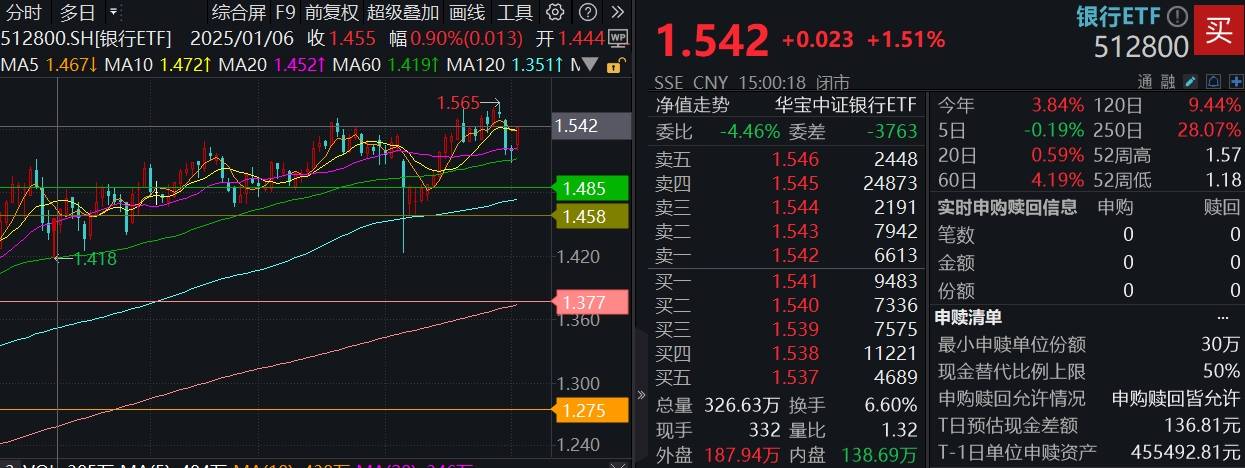
央行官宣降准又降息,银行全天走势较强。截至2025年5月7日收盘,A股顶流银行ETF(512800)高开高走,场内价格上涨1.51%,连收5日、10日线,重返 所有均线上方,全天成交额超5亿元,环比放量逾1亿。 | 分时 多日 = | 综合屏 F9 前复权 超级参加 画线 工具 ◇ ② » | | | | | | --- | --- | --- | --- | --- | --- | | 512800.SHI银行ETFI 2025/01/06 收 1.455 幅0.90%(0.013) 开 1.444 四 | | | 1 542 +0.023 +1.51% | | | | MA5 1.467 MA10 1.4721 MA20 1.4521 MA60 1.4191 MA120 1.3511 NY = 0 | | | | | | | | | | SSE CNY 15:00:18 闭市 | | | | | | | 净值走势 华宝中证银行ETF | | 文生 3.84% | | 1.542 | | 委比 | -4.46% 委差 | -3763 | 5 5 -0.19% | | | | 375 | 1.546 | 24 ...
行业ETF风向标丨降准消息落地,红利ETF易方达(515080)等产品配置价值凸显
Mei Ri Jing Ji Xin Wen· 2025-05-07 09:49
Core Viewpoint - The People's Bank of China announced a 0.5 percentage point reduction in the reserve requirement ratio for financial institutions, expected to provide approximately 1 trillion yuan in long-term liquidity to the market, alongside a 0.1 percentage point decrease in policy interest rates, creating a favorable environment for high-dividend assets [1] Group 1: Monetary Policy Impact - The recent monetary policy adjustments are aimed at implementing a more proactive macroeconomic policy, which is expected to support the performance of dividend assets in the long term [1] - The decline in the risk-free interest rate is anticipated to enhance the attractiveness of stable dividend income, positioning dividend assets as a key focus for long-term capital seeking value [1] Group 2: ETF Products Overview - E Fund's dividend series ETFs have been progressively developed, with the recent launch of the Dividend Value ETF (563700) complementing existing products like the E Fund Dividend ETF (515180) and the Dividend Low Volatility ETF (563020), providing comprehensive coverage of A-share and Hong Kong markets [1] - The four E Fund dividend ETFs are designed with a core focus on high dividend yields and feature a low management and custody fee of 0.20% per year, which can enhance long-term returns [2] Group 3: Index Composition - The E Fund Dividend ETF (515180) tracks the CSI Dividend Index, which selects 100 stocks with high cash dividend yields and stable dividends, reflecting the overall performance of high-dividend stocks [2] - The Dividend Value ETF (563700) tracks the CSI Dividend Value Index, selecting 50 stocks with good liquidity, continuous dividends, and high dividend yields, using a dividend yield weighting approach [4] - The Dividend Low Volatility ETF (563020) tracks the CSI Dividend Low Volatility Index, focusing on 50 stocks with low volatility and high dividend yields, catering to long-term capital allocation needs [6] Group 4: Dividend Distribution Policies - The three ETFs (563700, 563020, 159545) evaluate excess returns quarterly, with distinct distribution evaluation dates throughout the year, ensuring coverage of dividend distributions across all 12 months [4] - The Heng Seng Dividend Low Volatility ETF (159545) evaluates excess returns and distributable profits on the last trading day of January, April, July, and October [4]
银行行业资金流入榜:民生银行、平安银行等净流入资金居前
Zheng Quan Shi Bao Wang· 2025-05-07 09:42
沪指5月7日上涨0.80%,申万所属行业中,今日上涨的有26个,涨幅居前的行业为国防军工、银行,涨 幅分别为3.70%、1.49%。银行行业位居今日涨幅榜第二。跌幅居前的行业为传媒、计算机,跌幅分别 为0.56%、0.42%。 银行行业资金流向排名 资金面上看,两市主力资金全天净流出254.59亿元,今日有6个行业主力资金净流入,国防军工行业主 力资金净流入规模居首,该行业今日上涨3.70%,全天净流入资金41.90亿元,其次是农林牧渔行业,日 涨幅为0.71%,净流入资金为6.66亿元。 主力资金净流出的行业有25个,计算机行业主力资金净流出规模居首,全天净流出资金79.55亿元,其 次是电子行业,净流出资金为67.25亿元,净流出资金较多的还有通信、非银金融、医药生物等行业。 银行行业今日上涨1.49%,全天主力资金净流入5.86亿元,该行业所属的个股共42只,今日上涨的有42 只;。以资金流向数据进行统计,该行业资金净流入的个股有28只,其中,净流入资金超5000万元的有 7只,净流入资金居首的是民生银行,今日净流入资金1.25亿元,紧随其后的是平安银行、建设银行, 净流入资金分别为1.24亿元、951 ...


金融行业事件点评:降准降息,股票投资的风险因子进一步调降10%
Dongguan Securities· 2025-05-07 09:27
Investment Rating - The report maintains an "Overweight" rating for the banking and insurance sectors, indicating an expectation that these sectors will outperform the market index by more than 10% over the next six months [1]. Core Insights - The report highlights the necessity for increased domestic policy support in response to external disturbances, emphasizing the importance of stabilizing economic growth and market expectations [3]. - Recent monetary policy measures, including a 0.5% reduction in the reserve requirement ratio, are expected to inject approximately 1 trillion yuan into the market, enhancing banks' lending capabilities and supporting economic recovery [4]. - A 0.1% decrease in policy interest rates is anticipated to boost market confidence and stimulate financing demand, particularly benefiting the real estate sector [5]. - The report discusses measures to encourage insurance capital to enter the market, including lowering risk factors for stock investments by 10% and expanding the scope for long-term investments [6][7]. Summary by Sections Banking Sector - The reduction in the reserve requirement ratio is projected to provide banks with more available funds, enhancing their credit issuance capacity and promoting stable business development [4]. - The report suggests focusing on high-dividend, low-valuation banks such as Industrial and Commercial Bank of China, Agricultural Bank of China, Bank of China, and China Construction Bank [7]. Insurance Sector - The report recommends attention to insurance companies with flexible asset management, such as China Life and New China Life, as well as those with stable overall capabilities like China Pacific Insurance and Ping An Insurance [7].


