
智谱

Search documents
智谱、MiniMax港股上市催化GEO行情 AI应用商业化节奏有望提速
Zheng Quan Shi Bao Wang· 2026-01-14 13:56
Core Viewpoint - The AI application sector, particularly in software and media, has seen a significant surge since the beginning of the year, driven by multiple factors including the successful listings of domestic AI companies in Hong Kong, which have catalyzed market interest and investment in AI applications [1][3][4]. Group 1: AI Application Sector Performance - The AI application sector has experienced explosive growth, with numerous concept stocks achieving consecutive price increases, particularly in the AI + e-commerce direction [1]. - Notable stocks include Liou Co., Ltd. (9 days of 6 consecutive price increases), Provincial Advertising Group (4 consecutive price increases), and others like Xinhua Net and People's Daily with 3 consecutive price increases [1]. - The recent AI market rally is primarily driven by the GEO (Generative Engine Optimization) concept, which has gained traction due to the successful market performance of companies like Zhiyu and MiniMax [1][2]. Group 2: Impact of Company Listings - Zhiyu and MiniMax's listings on the Hong Kong stock market have significantly boosted the AI application sector, with both companies experiencing substantial stock price increases shortly after their IPOs [3][4]. - As of January 12, Zhiyu's stock price peaked at over 60% increase, reaching a market capitalization of over 110 billion HKD, while MiniMax's stock also saw significant gains, with a market cap of approximately 123.1 billion HKD [3]. - The successful performance of these companies is seen as a shift from a "financing competition" phase to a "value realization" phase in the AI industry, enhancing the perceived value of AI applications [4]. Group 3: Commercialization of AI - The commercialization of AI is being driven by various sectors, including digital marketing, e-commerce, and content experience, with GEO being a promising area for AI monetization [2][5]. - GEO aims to enhance the visibility of brands and services in AI-generated content, allowing for prioritized mentions and recommendations in AI search results [5]. - The domestic GEO market is expected to start gaining traction in the second half of 2025, with service models still being defined, indicating a potential for growth in AI marketing solutions [6][7].
AI进化速递 | 智谱联合华为开源新模型
Di Yi Cai Jing· 2026-01-14 13:19
Core Insights - The article highlights significant advancements in AI technology, particularly focusing on new models and collaborations in the industry Group 1: New AI Models and Collaborations - Zhipu AI and Huawei have jointly open-sourced the first domestic chip-trained multimodal SOTA model, GLM-Image [1] - Google has announced the launch of the open-source medical model MedGemma 1.5 [1] - OpenAI is reportedly developing an AI device to compete with Apple's AirPods, internally codenamed Sweetpea [1] - Anthropic has released a new intelligent tool called Cowork, designed to enable ordinary users to perform non-technical tasks easily [1] - MiniMax has introduced the OctoCodingBench benchmark, which defines production-level standards for Coding Agents [1] - Aish Technology has launched the world's first universal real-time world model, PixVerse R1, capable of 1080P resolution [1] - Visual China and PureblueAI have reached a strategic cooperation to provide comprehensive services around "data supply + GEO marketing" [1] - KKR's fund has led a new financing round for DeepWisdom, which will primarily focus on the continued development of multi-agent systems [1] - AI chip startup Etched has raised $500 million at a valuation of $5 billion [1]
智谱与Minimax港股对决 或引爆2026年人工智能上市潮
Zhong Guo Jing Ying Bao· 2026-01-14 12:38
Core Insights - The recent IPOs of domestic AI model companies, Zhipu (02513.HK) and MiniMax (00100.HK), have attracted significant investor interest, showcasing different business models and market performances [1][2] - Zhipu focuses on the B-end market with a MaaS (Model as a Service) approach, achieving a 325% year-on-year revenue increase in the first half of 2025, while MiniMax targets the C-end market with over one million paid users and more than 70% of revenue from overseas [1][2] Company Summaries - Zhipu's business model is centered around B2B and G2B services, emphasizing long-term contracts and service delivery, which aligns with stable growth and long-term value investment logic [2][5] - MiniMax's strategy involves a balanced revenue stream from both individual and enterprise clients, with a focus on high-frequency usage and user engagement, reflecting an internet product logic [3][4] Market Performance - Both companies are currently in a loss-making phase, indicating that traditional valuation metrics like PE and PB are not applicable for pricing these AI model firms [4] - The recent IPOs have catalyzed a surge in the Hong Kong AI sector, with the AI application index rising over 4% in a single day, breaking the pessimistic expectations of a "capital winter" [6][7] Future Outlook - The AI industry is expected to see continued growth driven by policy support and market demand, with a focus shifting from model strength to industrial application and value realization [7][8] - The competition in AI is viewed as a critical battleground for global technology restructuring, with the need for continuous innovation and ecosystem development to maintain a competitive edge [7][8]
智通港股解盘 | 午后突发降温消息 港股不惧AI题材持续扩散
Zhi Tong Cai Jing· 2026-01-14 12:32
Market Overview - The market experienced a sudden drop in the afternoon after a strong morning performance, with the Hong Kong stock market recovering to close up 0.56% [1] - Trading volume increased to 340.4 billion [1] - A regulatory change raised the minimum margin requirement for margin trading from 80% to 100%, aimed at reducing leverage, but existing contracts remain unaffected [1] - Historical data suggests that similar regulatory actions have not significantly impacted market trends, indicating that this adjustment is more about tempering an overheated market [1] Economic Indicators - The U.S. core CPI for December rose by 0.2% month-on-month and 2.6% year-on-year, both below expectations [2] - The conditions for potential interest rate cuts by the Federal Reserve are becoming more favorable, despite the current data not being sufficient for immediate action [2] Gold and Silver Market - Gold prices continue to rise, with silver experiencing a significant increase, reaching a historical high of $90 [2] - The total market value of silver has surpassed $5 trillion, making it the second-largest asset globally [2] - The performance of gold mining companies, such as the increase in production capacity for Zijin Mining, is expected to contribute positively to their stock prices [2] AI and Technology Sector - The launch of a new image generation model by Zhiyuan in collaboration with Huawei marks a significant advancement in AI technology, with the stock rising nearly 19% [3] - Jefferies' report indicates that Chinese AI stocks have further upside potential due to increased capital expenditure and favorable policy signals [3] Healthcare and Pharmaceuticals - Alibaba's Qianwen app has surpassed 100 million monthly active users, indicating strong growth in the healthcare AI sector [4] - The approval of a key laboratory for multi-modal intelligent diagnosis systems highlights the ongoing advancements in medical AI applications [4][5] - The global pharmaceutical industry is increasingly recognizing Chinese innovative drug assets as essential for evaluation in mergers and acquisitions [8][9] Gaming and Entertainment - Bilibili is integrating AI technology into its marketing strategies, leading to a stock increase of over 5% [6] - The successful launch of the mobile game "Goose Goose Duck" by Kingsoft has resulted in significant user growth and engagement [6] Industrial Sector - Innovation and strong growth in the industrial AI market are reflected in the performance of companies like Innovation Qizhi, which leads in market share [5] - Sany International's recent delivery of automated port equipment signifies progress in the automation and smart construction of ports, with a revenue increase of 14.7% year-on-year [10][11] Gaming and Consumer Goods - The consumer electronics sector is seeing strong performance, with companies like Hillstone Technology reporting a profit increase of 400% to 450% [6] - The return of Haidilao's founder to management is expected to bring new expectations, resulting in a stock increase of over 9% [6] Macau Gaming Industry - Macau's gaming revenue is projected to grow significantly, with a year-on-year increase of 18% noted in early January [7] - Galaxy Entertainment is favored due to its strategic positioning in hosting major events, contributing to its stock performance [7]
王小川时隔一年多再露面谈医疗行业痛点:百川智能一定会“出海”,也会走上IPO道路
Xin Lang Cai Jing· 2026-01-14 12:26
Core Insights - Wang Xiaochuan reaffirms Baichuan's commitment to the medical AI sector, indicating a strategic shift to focus solely on healthcare applications after diversifying into other areas previously [1][3] - The healthcare industry is experiencing a transformation with major AI companies entering the medical field, suggesting that large models are beginning to be applied effectively in healthcare [3] Group 1: Industry Challenges - Wang identifies two core issues in the healthcare sector: "insufficient supply" of qualified doctors and "structural imbalance" in the medical system [4] - The emergence of AI doctors is seen as a potential solution to the long-standing problem of doctor shortages, with expectations that by 2025, AI capabilities will surpass those of human doctors [4] - The existing medical system often leads to a disconnect between patients and doctors, where patients lack understanding of treatment options and risks [4][5] Group 2: Technological Approach - Wang emphasizes that the core of AI technology in healthcare should focus on language and symbols rather than multi-modal approaches, arguing that intelligence is derived from the ability to abstract problems [7][8] - He believes that many current healthcare issues are fundamentally decision-making problems, and that future AI applications will likely involve specialized models for image interpretation, with results processed by language models [9] - Wang critiques the overemphasis on data quality in model development, asserting that the essence of successful AI lies in the knowledge extraction from literature rather than raw data [9] Group 3: Future Plans - Baichuan plans to launch two consumer-facing products in the first half of 2026, focusing on directly assisting patients rather than serving healthcare providers [10] - The company aims to charge for services that provide value in decision-making for patients, while maintaining a cautious approach to regulatory boundaries [10] - Wang outlines Baichuan's competitive advantages as having a leading model, targeting high-value scenarios, and maintaining a different innovation pace compared to larger firms [11] Group 4: Market Expansion and IPO - Baichuan intends to expand internationally, with Wang asserting that companies that do not pursue global markets are not viable [11] - The company is also considering an IPO in the future, acknowledging that while it may take longer than other AI firms, it aims to optimize its business model before going public [12]

陈琦:港股AI上市潮,滚烫的不止是资本
Sou Hu Cai Jing· 2026-01-14 12:15
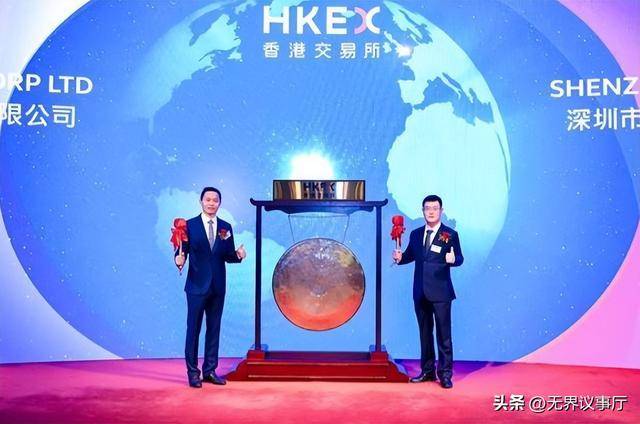
Group 1 - The core viewpoint of the article highlights the surge of AI companies listing on the Hong Kong Stock Exchange, driven by the current AI boom and the favorable regulatory environment, marking a significant milestone in the capitalisation of China's AI industry [2][3] - A total of six AI companies have gone public within a month, creating a cluster with a market value exceeding 100 billion, indicating an unprecedented concentration of AI in the Hong Kong market [2] - AI companies are facing severe funding challenges, with all listed firms currently operating at a loss, making IPOs a crucial avenue for survival as private funding channels tighten [2] Group 2 - The introduction and optimization of Chapter 18C of the Hong Kong Stock Exchange listing rules provide a green light for unprofitable yet high-growth potential tech companies, aligning well with the characteristics of AI firms [3] - Unlike the early internet boom's focus on mere traffic, the current AI listing trend in Hong Kong emphasizes tangible business validation over speculative narratives, with a preference for companies demonstrating revenue growth and user engagement [5] - The capital market is increasingly concentrating on key segments of the AI industry, with upstream companies focused on computing power and downstream AI applications receiving significant attention due to their ability to generate cash flow [5] Group 3 - The valuation models for AI companies on the Hong Kong Stock Exchange have evolved beyond traditional PE frameworks, now incorporating a three-dimensional assessment based on technological barriers, commercialization progress, and ecosystem synergy [6] - The global competitive landscape is diverging, with Chinese AI companies opting for public fundraising to enhance independent R&D, contrasting with international giants pursuing acquisitions to strengthen competitive barriers [8] - Despite the emergence of several billion-dollar companies, long-term challenges persist in the AI industry, including reliance on foreign advanced chip manufacturing processes and unclear commercialization paths for many firms [8][9] Group 4 - The current wave of AI listings in Hong Kong mirrors the biotech boom of 2018, which produced both successful companies and numerous "zombie stocks," raising questions about the sustainability of AI firms once market valuations normalize [8] - Investors face both opportunities and challenges, as they can share in the benefits of China's AI wave while needing to discern which companies possess genuine competitive advantages capable of enduring market fluctuations [9]

AI里的明争暗斗:马斯克的甜言蜜语,和我们20%的胜率
Sou Hu Cai Jing· 2026-01-14 11:36
Core Viewpoint - There are contrasting perspectives on China's AI development from tech leaders in China and the US, highlighting a significant gap in AI capabilities and the underlying capital competition [4][6][12]. Group 1: Perspectives on AI Development - Chinese AI experts express skepticism about surpassing the US in AI, with a probability of only 20% due to substantial computational power disparities [6][9]. - In contrast, US tech giants like Elon Musk and Jensen Huang predict that China will lead in AI capabilities, with Musk suggesting that China will dominate AI computing power [6][7]. - The differing views reflect a deeper competition, where the visible technological gap is coupled with a covert battle for capital and resources [6][12]. Group 2: Computational Power Disparities - The US has a computational power advantage over China, estimated to be one to two orders of magnitude greater, allowing for more exploratory and innovative research [9][11]. - Chinese developers often focus on immediate profit-generating applications due to limited computational resources, hindering breakthrough innovations [9][11]. - Experts emphasize the need for China to enhance "intelligent efficiency" and explore new technological paths rather than merely accumulating data and computational power [11][12]. Group 3: Foreign Capital Risks - Foreign capital is increasingly targeting Chinese AI firms, acquiring core assets and technologies, as seen in the acquisition of Manus by Meta for $2 billion [12][13]. - The process involves foreign investors buying stakes in promising Chinese AI startups, leading to a "de-Chinese" transformation of these companies [15][16]. - This trend poses risks to China's AI industry, including loss of talent, control over technology, and potential data security issues [20][21][22]. Group 4: Strategies for Improvement - To address the computational power shortfall, China needs to invest in domestic chip production and optimize existing computational resources [25][27]. - The government should support local capital to invest in critical areas like chips and algorithms, reducing reliance on foreign investment [28]. - A collaborative approach involving academia, research institutions, and industry is essential to create a sustainable ecosystem for AI development [29].
智谱上市遇冷Minimax狂欢,港股资本不买账,藏AI定价核心密码
Sou Hu Cai Jing· 2026-01-14 10:10
Core Insights - The contrasting performances of Minimax and Zhipu AI on their respective IPOs highlight the evolving expectations of capital markets towards AI companies, with a focus on profitability and cash flow rather than just growth narratives [1][10][18] Financial Performance - Zhipu AI's revenue surged by over 300%, from 57.41 million yuan in 2022 to 312 million yuan in 2024, with a significant increase to 191 million yuan in the first half of 2025 [2] - Despite the revenue growth, Zhipu AI reported a net loss of 1.752 billion yuan in the first half of 2025, which is 9.17 times its revenue for that period [2] - The company's R&D expenses, particularly for computing services, reached 1.145 billion yuan in the first half of 2025, six times its revenue [2] Business Structure - 85% of Zhipu AI's revenue comes from localized deployments, which involve installing large-scale models on private servers for major banks and state-owned enterprises, yielding high customer prices and a gross margin of 60% [4] - The remaining 15% of revenue is from cloud deployment, which has seen a drastic decline in gross margin from 76.1% in 2022 to 3.4% in 2024, and negative margins in the first half of 2025 due to price competition [6] Market Reception - Zhipu AI's IPO on January 8, 2026, was met with lukewarm reception, with its stock price initially dropping below the issue price before closing up 13.17%, while Minimax saw a 109.09% increase on its debut [7][10] - The difference in market reception is attributed to the varying preferences of investors, with a strong inclination towards AI companies that demonstrate clear paths to profitability and robust cash flows [10][12] Strategic Focus - Zhipu AI's strategy appears to prioritize user acquisition and ecosystem penetration over immediate profitability, viewing current losses as a necessary investment for future market positioning [15] - The company must navigate two critical challenges: maintaining technological leadership in a rapidly evolving field and achieving cost reductions through technological optimization and economies of scale [17]
英伟达H200“解禁”次日,智谱联手华为发布全国产开源多模态模型!
Guan Cha Zhe Wang· 2026-01-14 09:34
Core Viewpoint - The launch of the GLM-Image model by Zhiyuan in collaboration with Huawei marks a significant advancement in the domestic AI landscape, demonstrating that high-end computing power no longer needs to rely on imports for top-tier model training [1][16]. Group 1: Model Development and Performance - GLM-Image is the first state-of-the-art (SOTA) multimodal model trained entirely on domestic chips, showcasing the feasibility of training cutting-edge models on a fully domestic computing stack [1][12]. - The model employs a hybrid architecture of "autoregressive + diffusion decoder," achieving a combination of image generation and language modeling [1][13]. - In performance benchmarks, GLM-Image outperforms competitors like Qwen-Image and Z-Image, achieving top scores in various metrics, including a Word Accuracy of 0.9116 and a NED of 0.9557 [6][7][8]. Group 2: Economic Impact and Market Response - Following the announcement, Zhiyuan's stock surged by 18%, nearly doubling from its initial public offering price of 116.2 HKD, with a market capitalization exceeding 100 billion HKD [5]. - The model's ability to generate commercial-grade images at a cost of only 0.1 yuan per image demonstrates the economic viability of domestic computing power against international standards [15]. Group 3: Technological Innovation and Training Process - The training process for GLM-Image is optimized through a custom-built training suite that leverages Huawei's Ascend Atlas 800T A2 devices and the MindSpore AI framework, ensuring end-to-end optimization from data preprocessing to large-scale pre-training [10][12]. - The model's architecture allows for flexible image size generation without post-processing, accommodating various formats such as social media covers and movie posters [13]. Group 4: Industry Context and Future Implications - The timing of the GLM-Image launch coincides with the U.S. lifting export restrictions on NVIDIA's H200, indicating a shift in the competitive landscape where domestic solutions are now viable alternatives [16]. - This development signifies a potential turning point in China's AI industry, moving from imitation to innovation, as domestic models begin to dominate in complex Chinese language and visual generation tasks [17].

智谱AI概念涨4.21%,主力资金净流入34股
Zheng Quan Shi Bao Wang· 2026-01-14 09:33
Core Viewpoint - The Zhipu AI concept has shown a significant increase of 4.21%, ranking 10th among concept sectors, with notable stocks like Guangyun Technology and Zhidema reaching a 20% limit up [1][2]. Group 1: Market Performance - The Zhipu AI concept saw 63 stocks rise, with Guangyun Technology and Zhidema both hitting a 20% limit up, while stocks like People's Daily and Tianyuan Dike also performed well with increases of 10.01% and 18.61% respectively [1][2]. - The overall market for the Zhipu AI concept experienced a net inflow of 5.81 billion yuan, with 34 stocks receiving net inflows, and 14 stocks exceeding 100 million yuan in net inflows [2][3]. Group 2: Key Stocks and Their Performance - People's Daily led the net inflow with 6.83 billion yuan, followed by Tianyuan Dike and Donghua Software with net inflows of 5.85 billion yuan and 5.40 billion yuan respectively [2][3]. - The net inflow ratios for key stocks were notable, with People's Daily at 22.86%, Tianyuan Dike at 21.02%, and Donghua Software at 13.27% [3].


